

P2099 on 2008-2009 Pontiac G8 6.0L V8: Causes for Post-Catalyst Rich Fuel Trim
On a 2008-2009 Pontiac G8 with the 6.0L V8, code P2099 is most often caused by a leaking fuel injector on Bank 2 (passenger side). A GM Technical Service Bulletin advises testing the fuel injectors before replacing the more commonly suspected oxygen sensor to avoid misdiagnosis. Forum discussions from G8 owners corroborate that replacing injectors is the common fix after failed attempts at replacing O2 sensors.
- Do not immediately replace the oxygen sensor. For a P2099 code on a 2008-2009 Pontiac G8, the most likely cause is a leaking fuel injector on the passenger side.
- Reference GM Technical Service Bulletin PIP4964F, which specifically identifies this issue.
- Always check for exhaust leaks between the engine and the downstream O2 sensor, as this is another common cause.
- Addressing this code promptly can prevent costly damage to the catalytic converter.
What's Unique About the 2008-2009 Pontiac G8
For this specific vehicle, the diagnostic approach is different from the generic advice for P2099. General Motors issued a Technical Service Bulletin (TSB PIP4964F) that highlights leaking fuel injectors as a primary and common cause for this code on the G8's L76 engine. This bulletin directs technicians to perform a fuel injector balance test early in the diagnostic process, as a faulty injector is more probable than a bad oxygen sensor, which is a frequent misdiagnosis on this platform. Multiple owner accounts on forums like G8Board.com confirm that replacing the O2 sensors did not fix the P2099 code, and the problem was ultimately resolved by replacing one or more leaking fuel injectors on Bank 2.
Symptoms You May Notice
- Check Engine Light illuminated
- Decreased fuel economy
- Sluggish or rough acceleration
- A smell of gasoline from the exhaust
- Rough idle
- Replacing the Bank 2 downstream oxygen sensor without first testing the fuel injectors or checking for exhaust leaks. The official GM TSB for this vehicle points to injectors as the more likely culprit.
Most Likely Causes
- Leaking Fuel Injector(s) on Bank 2 🔴 High Probability A specific GM Technical Service Bulletin (PIP4964F) identifies faulty fuel injectors as a primary cause for this code on the 2008-2009 Pontiac G8. Owner experiences on G8 forums frequently cite leaking injectors as the definitive fix after other attempted repairs failed.
How to confirm: Perform a fuel injector balance test using a capable scan tool (like a GM Tech 2) or an Active Fuel Injector Tester (AFIT) to measure the flow from each injector on Bank 2. Another method is to pull the spark plugs on Bank 2 and inspect them; a plug that is dark, black, and sooty indicates a rich condition in that cylinder.
Typical fix: Replace the faulty fuel injector(s) on the passenger side bank. It is often recommended to replace all four on that bank at the same time to prevent future failures.
Est. part cost: $50-$100 per injector - Exhaust Leak 🟡 Medium Probability The same TSB that points to injectors also mentions that small exhaust leaks, particularly at the gasket for the catalytic converter outlet (before the downstream O2 sensor), can cause this code. Leaks can also occur at the exhaust manifold gasket. While a leak typically causes a lean code, it can confuse the O2 sensor and trigger a rich code under certain conditions.
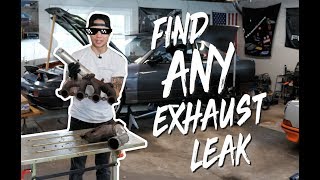
How to confirm: Visually inspect the exhaust system from the manifold to the post-catalyst O2 sensor for black soot marks, cracks, or audible leaks. A smoke test is the most effective method to pinpoint the exact location of a leak. 🎬 Watch: This quick trick helps you find any exhaust leak. TSB PIP4964F recommends pressurizing the exhaust to 5-8 PSI and applying a soapy solution to find leaks.
Typical fix: Replace the leaking gasket or repair the cracked exhaust component.
Est. part cost: $10-$50 for gaskets - Faulty Downstream Oxygen Sensor (Bank 2, Sensor 2) 🟡 Medium Probability
How to confirm: Use a scan tool to monitor the voltage of the Bank 2 Sensor 2. If it is stuck high (above 0.8V) and does not fluctuate, and injectors/exhaust leaks have been ruled out, the sensor is likely faulty. Compare its reading to the Bank 1 Sensor 2 for reference; if Bank 2 is consistently high while Bank 1 is stable and fluctuating normally, the sensor may be the issue.
Typical fix: Replace the downstream (post-catalyst) oxygen sensor on the passenger side.
Est. part cost: $40-$120 - High Fuel Pressure ⚪ Low Probability
How to confirm: Connect a fuel pressure gauge to the fuel rail and check if the pressure is within the manufacturer's specifications. The L76 has a returnless system, so the regulator is in the tank. Expected pressure is 380-410 kPa (55-60 psi).
Typical fix: Replace the fuel pump module, which typically contains the integrated fuel pressure regulator.
Est. part cost: $200-$400
Rare But Worth Checking
- Mechanical Valvetrain Issue: TSB PIP4964F notes that if no injector or exhaust leak issues are found, a rare mechanical problem like a sticking valve or a lifter issue could be the cause. This would likely be accompanied by other symptoms like engine noise or misfires. L76 engines are known to sometimes have issues with lifters, particularly related to the Active Fuel Management (AFM) system.
- Failing Catalytic Converter: While a failing converter can cause this code, it's more often the victim of a persistent rich condition, not the root cause. If the converter becomes inefficient, it can't properly store oxygen, leading to incorrect readings by the downstream O2 sensor.
- Contaminated or Dirty Mass Airflow (MAF) Sensor: A dirty MAF sensor can under-report airflow, causing the PCM to command an overly rich fuel mixture across both banks. While this often sets codes for both banks, it can sometimes manifest on only one bank initially.
Diagnosis Steps
- Check for other diagnostic trouble codes. If codes like P0175 or cylinder misfire codes for Bank 2 are present, they reinforce the likelihood of a fuel injector issue.
- Following GM TSB PIP4964F, perform a fuel injector balance test to check for leaking or malfunctioning injectors on Bank 2 (passenger side).
- Inspect the Bank 2 spark plugs. A dark, sooty, or fuel-fouled plug is a strong indicator of a rich condition in that specific cylinder, often caused by a leaking injector.
- Thoroughly inspect the exhaust system for leaks, especially around the Bank 2 exhaust manifold gasket and the downstream O2 sensor flange gasket. A smoke test or low-pressure test (5-8 PSI) with soapy water is effective.
- If injectors and the exhaust system are confirmed to be good, use a scan tool to observe the live data for the Bank 2, Sensor 2 (downstream) oxygen sensor. A steady, high voltage (e.g., >0.8V) indicates a rich condition.
- Compare the Bank 2 Sensor 2 voltage to the Bank 1 Sensor 2 voltage. If Bank 2 is consistently high while Bank 1 is stable and lower, and all other causes are ruled out, the sensor itself may be faulty.
- As a final, less common check, verify fuel pressure is within specification (380-410 kPa or 55-60 psi) to rule out a faulty fuel pressure regulator.
Parts You'll Likely Need
- Fuel Injector
(OEM #12576341)— Identified by a GM Technical Service Bulletin as the most probable cause for P2099 on this specific vehicle.
Trusted brands: ACDelco, Bosch
OEM price range: $90-$150
Aftermarket price range: $40-$80 - Downstream Oxygen Sensor (Bank 2, Sensor 2)
(OEM #ACDelco 213-4229 (GM 12609457))— This sensor provides the reading that triggers the code. It may fail, but should only be replaced after ruling out fuel injectors and exhaust leaks.
Trusted brands: ACDelco, Denso, Bosch
OEM price range: $80-$150
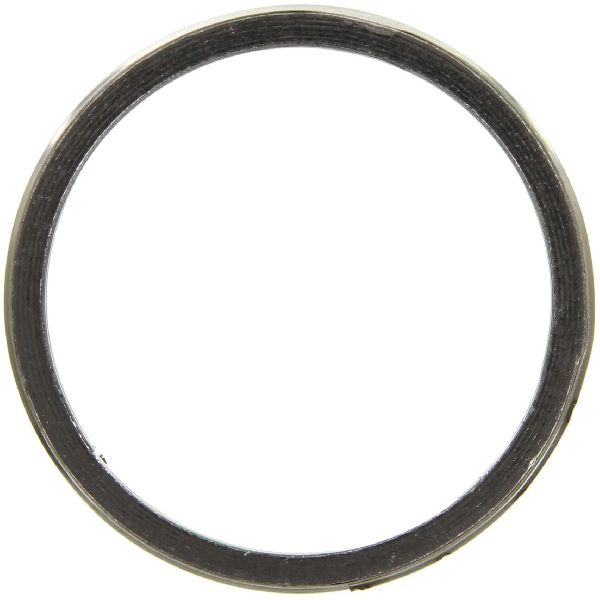
Aftermarket price range: $40-$90 - Exhaust Flange Gasket — An exhaust leak at the catalytic converter outlet flange is a common cause of this code.
Trusted brands: ACDelco, Fel-Pro, Walker Exhaust
OEM price range: $15-$30
Aftermarket price range: $5-$15
Related Codes That Often Appear With This One
- P0175 — P0175 means 'System Too Rich Bank 2' and is detected by the *upstream* oxygen sensor. If both P0175 and P2099 are present, it strongly points to a significant fuel delivery issue on Bank 2, such as a badly leaking injector.
- P0300, P0302, P0304, P0306, P0308 — These are misfire codes for Bank 2 cylinders (2, 4, 6, 8). A leaking fuel injector can foul the spark plug and cause misfires on the affected cylinder(s).
Technical Service Bulletins (TSBs) & Recalls
- PIP4964F: This GM TSB advises checking for faulty fuel injectors or exhaust leaks as the primary causes for P2097/P2099 codes, noting this is a common issue. This bulletin is critical for avoiding misdiagnosis by replacing O2 sensors unnecessarily. According to Bulletin #PIP4964F, technicians should perform an injector balance test or use an Active Fuel Injector Tester prior to proceeding with further diagnostics.
Platform-Specific Known Issues
- GM Technical Service Bulletin PIP4964F specifically calls out P2097/P2099 on the 2008-2009 Pontiac G8 and directs technicians to check for faulty fuel injectors or exhaust leaks as the primary causes, rather than immediately suspecting the O2 sensors.
- Multiple owner repair stories on G8Board.com detail experiences where replacing the Bank 2 downstream O2 sensor did not resolve the P2099 code. The issue was only fixed after one or more leaking fuel injectors on the passenger side were replaced, confirming the TSB's guidance.
Mechanic-Grade Diagnostic Values
- Fuel Pressure (Key On, Engine Off, Pump Commanded On) — expected: 380-410 kPa (55-60 psi). Failure: Pressure above or below this range indicates a fuel pump or regulator issue.
- Fuel Pressure Leak-Down Test — expected: Pressure should not decrease more than 34 kPa (5 psi) in 1 minute after the pump is shut off.. Failure: A pressure drop greater than 34 kPa (5 psi) in one minute indicates a leaking fuel injector, fuel line, or check valve in the pump.
- Fuel Injector Balance Test (Pressure Drop) — expected: The pressure drop value for each injector should be within 20 kPa (3 psi) of the average pressure drop of all injectors.. Failure: An injector with a significantly larger pressure drop is likely leaking. An injector with a smaller drop may be clogged.
- OEM Fuel Injector Coil Resistance — expected: Approximately 12.0 Ohms (High Impedance). Failure: A reading significantly higher (open circuit) or lower (shorted) than the specification indicates a failed injector coil.
Scan Tool Commands That Help
- GM Tech 2 / GDS2: Fuel Injector Balance Test — This is the primary diagnostic step recommended by TSB PIP4964F to identify a leaking or faulty fuel injector, which is the most common cause of P2099 on this vehicle.
- GM Tech 2 / GDS2: Fuel Pump Relay Command ON/OFF — Used to manually run the fuel pump to test for correct fuel pressure (55-60 psi) without the engine running.
- GM Tech 2 / GDS2: Cylinder Power Balance — Used to identify cylinders that are not producing their designed power output by individually disabling injectors and measuring the RPM drop. This can help pinpoint a cylinder affected by a bad injector or mechanical issue.
Wiring & Ground Locations
- G101 — Located at the front of the engine, on the lower block.. This ground point is specified as the ground for the Engine Control Module (ECM) and Transmission Control Module (TCM). A poor connection here could cause erratic behavior and incorrect readings from any sensor, including the oxygen sensors that trigger P2099.
- G102 — Located at the left rear of the engine.. This ground point serves the 8 ignition coils. While not directly related to the fuel trim code, a poor ground here could lead to weak spark and incomplete combustion, potentially contributing to a rich condition or misfires that might accompany P2099.
Real Owner Repair Stories
- G8Board.com owner compilation (2008-2009 Pontiac G8 GT (6.0L V8)) — Check Engine Light with code P2099, sometimes with a rough idle and fuel smell from the exhaust.
❌ Tried (didn't work) Replacing the Bank 2, Sensor 2 (downstream) oxygen sensor., Replacing both oxygen sensors on Bank 2., Cleaning the MAF sensor.
✅ What actually fixed it The issue was resolved by replacing one or more leaking fuel injectors on Bank 2 (passenger side), which aligns directly with the guidance in GM TSB PIP4964F.
"I Checked Everything" — The Actual Cause
- According to GM TSB PIP4964F, if a fuel injector balance test passes and an exhaust smoke/pressure test finds no leaks, the root cause may be a mechanical valvetrain issue. This could be a sticking valve or a problem with a lifter, which would not be found by typical fuel and exhaust system diagnostics.
OEM Part Supersession History
12576341→N/A (This remains the primary OEM number)— N/A
Heads up: This is a Bosch 0280158051 42 lb/hr injector. Do not confuse with injectors from the truck L76 engine, which had different heads, intake, and used Variable Valve Timing (VVT), which the G8's L76 did not have.
Model Year Variations Within This Range
- 2009 only: For the 2009 model year, the G8 GT received two additional catalytic converters compared to the 2008 model. This change slightly reduced the official horsepower rating to 355. While not a direct cause, it represents a change in the exhaust system where the relevant sensors are located.
Diagnostic Flowchart
Other Known Issues on This Vehicle
Issues unrelated to this code that are worth knowing about as an owner of this generation:
- AFM/DOD Lifter Failure 🔴 High — Common enough to be a well-known issue on forums, can occur at various mileages (some reports as low as 28k miles, others over 100k). Often presents as a loud ticking noise and misfire codes.
- Front Strut Mount Collapse 🟠 Medium — A very common failure point. The factory rubber mounts compress and fail over time, causing clunking, popping, or clicking noises from the front suspension, especially when turning or stopping.
- Steering Wheel/Seat Vibration at Highway Speeds 🟡 Low — Some owners report a persistent vibration or boom/moan noise between 55-70 mph. GM issued a TSB to address this, which could be caused by engine mounts, propshaft balance, or tire/wheel runout. (Ref: TSB 10-03-09-001B)
- Radius Rod Bushing Failure 🟠 Medium — The front radius rod bushings are a known weak point and frequently fail, leading to front-end clunks, brake pedal pulsation, and imprecise steering feel. Upgrading to aftermarket polyurethane bushings is a common fix.
Used vs. New Parts: Buying Guide for This Vehicle
When a used part is the smart pick: For fuel injectors, buying used parts from a junkyard is NOT recommended for this repair unless they are from a specialist who has professionally cleaned, flow-tested, and matched them as a set. The high probability of injectors being the root cause means a used, untested part has a high risk of failure.
Donor-vehicle mileage cap: roughly under 60000 miles for the part to have meaningful remaining life.
What to inspect on the donor part:
- Ask for proof of flow-testing and cleaning with before/after results.
- Ensure the part number (12576341 or Bosch 0280158051) is an exact match.
- Inspect o-rings for cracks or flattening; they should always be replaced anyway.
- Check the electrical connector for corrosion or damage.
OEM-only on this vehicle (don't cheap out):
- While not strictly OEM-only, fuel injectors are critical. A high-quality OEM (ACDelco/Bosch) or reputable performance brand is strongly advised over cheap, unbranded aftermarket parts to ensure proper flow rates and longevity.
Aftermarket brands forum-validated for this vehicle:
- Bosch (OEM supplier)
- Fuel Injector Clinic (FIC)
- DeatschWerks
- FAST
Brands owners have reported issues with on this vehicle:
- Unbranded, generic injectors from online marketplaces like eBay or Amazon are a significant gamble, with reports of inconsistent flow rates and premature failure.
Real Owner Stories
Aggregated from forums and TSBs cited above. Mileages and costs reflect what owners reported in those sources.
2008 Pontiac G8 L76 6.0L V8
Symptoms: The Check Engine Light came on for code P2099. The first attempt to fix it by replacing the Bank 2 downstream O2 sensor did not solve the issue.
What fixed it: The problem was ultimately resolved by replacing one or more leaking fuel injectors on the passenger side (Bank 2).
Source hint: G8Board.com
Related OBD-II Codes
Frequently Asked Questions
I have a P2099 code on my 2008 G8. Should I just replace the oxygen sensor?
What does TSB PIP4964F say about the P2099 code on the Pontiac G8?
How can I confirm a leaking fuel injector is causing the P2099 code on my L76 V8?
What's the best way to find an exhaust leak that might be causing this code?
What is the correct fuel pressure for a 2009 Pontiac G8 with the 6.0L L76 engine?
Are other vehicles with the L76 engine, like the Chevy Silverado, also prone to this issue?
Helpful Videos
Used OEM Parts in Stock

New Aftermarket Parts Available


The information in this article is provided for general reference and educational purposes only. Vehicle specifications, procedures, and part compatibility can vary by production date, trim level, and region. Always consult your vehicle's factory service manual and verify part numbers before purchasing or performing repairs. Safety-critical components such as airbags, seat belts, and braking systems should be installed by a qualified professional.
- Pontiac G8:
- 🎬 Helpful Videos
- 🛍️ Shop This Part
- What's Unique About the 2008-2009 Pontiac G8
- Symptoms You May Notice
- Most Likely Causes
- Rare But Worth Checking
- Diagnosis Steps
- Parts You'll Likely Need
- Related Codes That Often Appear With This One
- Technical Service Bulletins (TSBs) & Recalls
- Platform-Specific Known Issues
- Mechanic-Grade Diagnostic Values
- Scan Tool Commands That Help
- Wiring & Ground Locations
- Real Owner Repair Stories
- "I Checked Everything" — The Actual Cause
- OEM Part Supersession History
- Model Year Variations Within This Range
- Diagnostic Flowchart
- Other Known Issues on This Vehicle
- Used vs. New Parts: Buying Guide for This Vehicle
- Real Owner Stories
- 2008 Pontiac G8 L76 6.0L V8
- Related OBD-II Codes
- Frequently Asked Questions
- 🎟️ Get 5% Off