

P2015 on 2012-2019 Chevrolet Sonic 1.8L: Intake Runner Sensor Causes and Fixes
On the 1.8L Chevy Sonic, code P2015 is almost always caused by a broken plastic linkage arm on the intake manifold's runner control actuator. The easiest fix is to replace the actuator motor assembly with an upgraded part (like Dorman 911-929) for about $40-$70, which is a simple DIY job. The dealer will often quote a full intake manifold replacement, which is unnecessary for this specific failure.
- P2015 on your Sonic 1.8L almost certainly means the small plastic arm on your intake manifold actuator is broken.
- Before buying any parts, visually inspect this arm. It's in plain sight at the front of the engine.
- The most cost-effective and reliable fix is to buy an aftermarket actuator assembly (like Dorman 911-929) which has an improved metal-reinforced arm.
- This is a very easy DIY repair that can be done in under 30 minutes with basic tools, saving you hundreds of dollars compared to a shop replacing the entire manifold.
- Do not replace the entire intake manifold unless you have confirmed the internal flaps are stuck or the manifold is cracked.
What's Unique About the 2012-2019 Chevrolet Sonic
The 1.8L Ecotec engine in the Sonic and Cruze is known for a specific weak point that triggers this code. The actuator motor that moves the intake runners is connected by a small plastic linkage arm. This arm becomes brittle from engine heat and vibrations and frequently breaks or pops off its plastic ball-and-socket joint. This mechanical failure is the root cause of the problem far more often than an actual electrical sensor failure. Dorman makes an OE FIX part (911-929) with a more durable brass ball stud to permanently correct this design flaw.
Symptoms You May Notice
- Check Engine Light is on
- Reduced engine power and poor acceleration, especially at lower RPMs
- Rough or unstable idle
- Decreased fuel economy
- Engine hesitation or stumble
- A rattling or buzzing sound from the front of the engine where the broken plastic arm is vibrating against the manifold
- Replacing the entire intake manifold when only the external actuator arm has failed. Always visually inspect the linkage arm first, as replacing just the actuator assembly is much cheaper and easier. A mechanic quoted one owner $1200 for a full manifold replacement when the issue was just the disconnected arm.
Most Likely Causes
- Broken Intake Manifold Runner Control Linkage Arm 🔴 High Probability The original arm is made of plastic and is located in a high-heat area of the engine bay, causing it to become brittle and fail over time. The connection point is a small plastic ball-and-socket joint that wears out and pops off.
How to confirm: Visually inspect the intake manifold at the front of the engine. Locate the black plastic actuator motor. Check if the small plastic arm connecting the motor to the manifold's runner lever is disconnected, cracked, or broken. You can often reach down and feel if it's hanging loosely. This is often the only diagnostic step needed.
Typical fix: Replace the actuator motor assembly, which includes a new, often upgraded, linkage arm. This is a simple repair that usually doesn't require removing the entire intake manifold. Some owners have even fashioned a fix using a small screw and nut to reconnect the original arm as a temporary solution.
Est. part cost: $40-$70 for an aftermarket actuator assembly. - Failed Intake Manifold Runner Control (IMRC) Actuator 🟡 Medium Probability The electric motor inside the actuator can fail, though it's less common than the linkage arm breaking. Since the arm and motor are typically replaced as one unit, this is fixed concurrently.
How to confirm: If the linkage arm is intact, use a bi-directional scan tool to command the IMRC actuator to open and close. If the arm doesn't move, and power/ground to the actuator are confirmed, the motor has failed.
Typical fix: Replace the IMRC actuator motor assembly.
Est. part cost: $40-$70 - Carbon Buildup on Intake Runner Flaps ⚪ Low Probability Like many engines, carbon can accumulate in the intake manifold, potentially causing the runner flaps to stick. However, on this specific engine, the external linkage failure is far more common.
How to confirm: If the actuator and linkage are working but the code persists, disconnect the linkage and try to move the manifold's runner lever by hand. If it is stiff, 🎬 Watch: How to fix a stuck intake manifold runner. binding, or won't move smoothly, the internal flaps are likely seized with carbon.
Typical fix: Clean or replace the entire intake manifold assembly.
Est. part cost: $250-$600 for a new manifold assembly.
Rare But Worth Checking
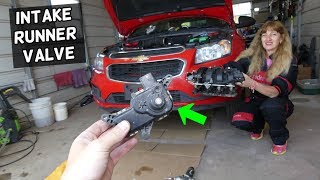
- Wiring Harness Issue: Damage to the wires or the 4-pin oval connector for the IMRC 🎬 See this walkthrough for locating and replacing the control valve. actuator could cause a loss of signal, but this is much less common than the mechanical failure of the linkage arm.
- Faulty Powertrain Control Module (PCM): This is extremely rare and should only be considered after all other possibilities have been exhaustively ruled out.
Diagnosis Steps
- Read the code with an OBD-II scanner to confirm P2015 and/or P2076 is present. 🎬 Watch: This easy fix for P2076 on the 1.8L engine.
- Open the hood and locate the intake manifold at the front of the 1.8L engine.
- Visually inspect the IMRC actuator motor and its plastic linkage arm. The arm connects the black motor to a lever on the manifold itself. Look for obvious signs of breakage or disconnection. The arm may be hanging loose or missing entirely.
- If the arm is broken or disconnected, the diagnosis is complete. The actuator assembly needs to be replaced.
- If the arm is intact, check the 4-pin electrical connector at the actuator for a secure fit and any signs of damage or corrosion.
- If available, use a bi-directional scan tool to command the IMRC actuator open and closed while observing the linkage. If it does not move, the actuator motor is likely faulty.
- If the actuator moves but the code returns, disconnect the linkage and manually move the lever on the intake manifold. If it feels stuck or gritty, the internal flaps are binding, likely due to carbon buildup, which would require manifold service or replacement.
Parts You'll Likely Need
- Intake Manifold Runner Control Motor and Arm
(OEM #N/A (GM sells the full manifold))— This is the most common failure point. The assembly includes the actuator motor and the failure-prone plastic linkage arm. The Dorman 911-929 is a popular aftermarket version that features an improved brass ball stud for durability.
Trusted brands: Dorman (OE FIX 911-929)
OEM price range: N/A
Aftermarket price range: $40-$70 - Intake Manifold Assembly
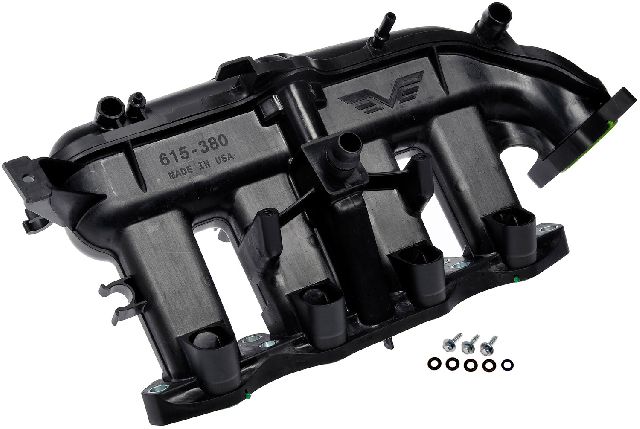
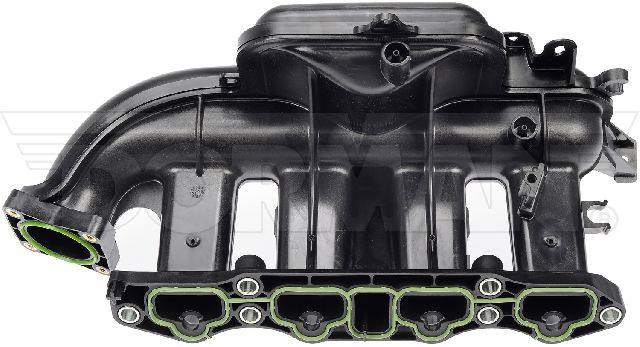
(OEM #55570283)— This is needed if the internal runner flaps are broken, seized by carbon, or if the manifold itself is cracked. This is a much less common fix for P2015 alone but may be necessary at high mileage or if other causes are ruled out.
Trusted brands: ACDelco (GM Genuine Parts)
OEM price range: $450-$650
Aftermarket price range: $150-$400
Related Codes That Often Appear With This One
- P2076 — This code, 'Intake Manifold Tuning (IMT) Valve Position Sensor/Switch Circuit Range/Performance', is a direct companion to P2015. They are often triggered simultaneously by the exact same failure of the linkage arm, as the sensor's reported position (P2015) becomes nonsensical when the mechanical control (P2076) is broken.
- P0171 — A 'System Too Lean' code can occur if the broken IMRC components create a vacuum leak, or if the intake manifold itself develops a crack, allowing unmetered air into the engine.
Platform-Specific Known Issues
- The plastic intake manifold on the 1.8L LUW/LWE engine is susceptible to cracking over time due to heat cycles, which can cause vacuum leaks and various performance-related trouble codes.
- The entire cooling system on the Sonic is known for its use of brittle plastic components, including the thermostat housing, coolant reservoir, and various hose connectors, which frequently fail and cause leaks.
Mechanic-Grade Diagnostic Values
- IMRC Position Sensor Voltage — expected: A smooth sweep from approximately 0.5V (closed) to 4.5V (open) as the actuator is commanded to move.. Failure: Voltage that is stuck at one value, shows 0V, is out of the 0.5-4.5V range, or does not change when the actuator is commanded.
- IMRC Position Sensor Resistance — expected: Typically in the 1-5 kΩ range.. Failure: Infinite resistance (open circuit) or zero resistance (short circuit) when measured with a multimeter.
Scan Tool Commands That Help
- GM GDS2 (Global Diagnostic System 2): Intake Manifold Runner Control Actuator Test — This is the factory-level bidirectional control used to command the actuator motor to move. It is used to verify if the motor and linkage are physically capable of moving when commanded by the ECM. This test is essential if the linkage arm is found to be intact but the code persists.
- GM GDS2 or other professional scan tool: IMRC Position Sensor Relearn/System Initialization — Some sources suggest that after replacing components in an IMRC system, a relearn or calibration procedure may be required to teach the ECM the new sensor's position values. While not explicitly documented for this specific failure on the Sonic, it is a possibility if a code returns immediately after replacing a functional part.
Wiring & Ground Locations
- IMRC Actuator Connector — On the IMRC actuator motor, located on the front of the intake manifold.. This is a 4-pin oval connector that provides power, ground, and signal communication for the actuator. Corrosion or damage to the pins or wires at this connector can mimic a failed actuator motor or sensor.
- Engine Wiring Harness — Runs along and under the intake manifold.. The harness is susceptible to damage from heat and rodents. A forum user reported a rodent chewing through wires for another sensor located on the bottom side of the intake manifold, indicating a potential vulnerability for the IMRC wiring in the same area.
Real Owner Repair Stories
- YouTube video by user 'P2076 CHEVY SONIC INTAKE MANIFOLD POSITION ACTUATOR' (Chevrolet Sonic (year not specified, but within range)) — Check Engine Light with code P2076 (often appears with P2015).
❌ Tried (didn't work) The owner was quoted nearly $1200 by a shop to replace the entire intake manifold.
✅ What actually fixed it The owner inspected the IMRC actuator and found the plastic linkage arm had simply popped off its connection point. He was able to reach it by hand and snap it back into place, which resolved the Check Engine Light. This confirmed the issue was the common mechanical linkage failure, not a problem requiring a full manifold replacement.
OEM Part Supersession History
N/A (Actuator assembly not sold separately by GM)→Dorman 911-929 (Full Actuator Assembly) or 911-929A (Arm only)— GM's solution is to replace the entire intake manifold (PN 55570283). Dorman created an 'OE FIX' part to address the common failure of the plastic linkage arm, allowing for the replacement of only the failed component.
Heads up: The Dorman part is an aftermarket solution, not a direct OEM supersession. It is designed to be a more durable and cost-effective repair than replacing the entire OEM manifold.
Model Year Variations Within This Range
- 2019: Some aftermarket parts catalogs, like Dorman's, list compatibility for the IMRC actuator (911-929) only up to the 2018 model year for the Chevrolet Sonic. While the 2019 model still used the 1.8L engine, this discrepancy could indicate a minor change in the part for the final model year or simply incomplete catalog data. Owners of 2019 models should double-check part fitment before purchasing.
Diagnostic Flowchart
Other Known Issues on This Vehicle
Issues unrelated to this code that are worth knowing about as an owner of this generation:
- Cracked Plastic Thermostat Housing & Water Outlet 🔴 High — Very common, often occurs after 80,000 miles. The plastic becomes brittle from heat cycles and can lead to sudden coolant loss and overheating.
- Leaking Oil Cooler / Oil Filter Housing Gaskets 🔴 High — Extremely common failure. The gaskets between the oil cooler and the engine block degrade, causing oil to leak externally onto the exhaust or internally into the cooling system.
- Failing Ignition Coil Pack 🟠 Medium — A frequent cause of misfires (P0300-P0304). The single coil pack assembly is prone to cracking, leading to spark arcing. Often fails in conjunction with a leaking valve cover gasket that fouls the spark plug wells with oil.
- Leaking Valve Cover Gasket 🟠 Medium — The gasket, which includes the spark plug tube seals, becomes hard and brittle, allowing oil to leak into the spark plug tubes, which can destroy the ignition coil pack.
- Failing EVAP Purge Valve Solenoid 🟡 Low — A common cause for EVAP leak codes like P0496, P0455, and P0442. The valve, located on the engine, gets stuck open. It's an inexpensive and easy part to replace. (Ref: 21-NA-124 (Diagnostic tips for P0442/P0455))
- 1.8L Engine Timing Belt Replacement 🔴 High — This is a critical maintenance item, not a failure. The 1.8L is an interference engine with a timing belt that has a scheduled replacement interval (typically around 100,000 miles). Failure to replace it will result in catastrophic engine damage.
Used vs. New Parts: Buying Guide for This Vehicle
When a used part is the smart pick: A used intake manifold assembly from a verified low-mileage donor vehicle can be a cost-effective option ONLY if your problem has been diagnosed as seized or broken internal runner flaps, not the common external actuator failure.
Donor-vehicle mileage cap: roughly under 60000 miles for the part to have meaningful remaining life.
What to inspect on the donor part:
- For a used manifold, ensure there are no visible cracks in the plastic housing, especially around mounting points.
- Manually actuate the runner lever on the side of the manifold; it should move smoothly with light spring resistance and no binding.
- AVOID buying a used OEM actuator/arm assembly. The original plastic linkage is the primary failure point, and a used one has no reliable remaining lifespan.
OEM-only on this vehicle (don't cheap out):
- There are no parts for this specific repair where OEM-only is recommended. The dealer solution (full manifold replacement) is excessively expensive for the common failure.
Aftermarket brands forum-validated for this vehicle:
- Dorman (specifically part 911-929) is the most widely cited and trusted aftermarket solution, as it directly addresses the OEM design flaw with a more durable brass ball stud.
Real Owner Stories
Aggregated from forums and TSBs cited above. Mileages and costs reflect what owners reported in those sources.
Chevrolet Sonic 1.8L
Symptoms: The owner experienced repeated struggles with the intake runner control system, where the issue progressed from a simple linkage arm failure to an eventual motor failure.
What fixed it: Replacement of the intake runner control actuator motor.
Source hint: reddit.com/r/ChevySonic: A thread titled 'P2076 help'
2012-2019 Chevrolet Sonic 1.8L
Symptoms: Check engine light with a rattling or buzzing sound coming from the front of the engine where a plastic arm was vibrating against the manifold.
What fixed it: Replacing the actuator motor assembly with an upgraded linkage arm.
Cost: $40-$70
Source hint: Article context symptom and common cause analysis
Related OBD-II Codes
Frequently Asked Questions
Is there a TSB for the P2015 code on my 2012-2019 Chevrolet Sonic?
Can I just replace the plastic linkage arm, or do I need a whole new intake manifold?
Why does the linkage arm keep failing on the Sonic 1.8L?
I hear a buzzing sound from the front of my engine along with the P2015 code. What is that?
Is the P2015 issue common on other vehicles besides the Sonic?
Can I fix the broken arm myself without buying parts?
Helpful Videos
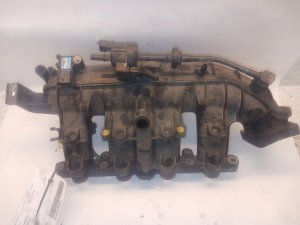
Used OEM Parts in Stock
New Aftermarket Parts Available





The information in this article is provided for general reference and educational purposes only. Vehicle specifications, procedures, and part compatibility can vary by production date, trim level, and region. Always consult your vehicle's factory service manual and verify part numbers before purchasing or performing repairs. Safety-critical components such as airbags, seat belts, and braking systems should be installed by a qualified professional.
- Chevrolet Sonic:
- 🎬 Helpful Videos
- 🛍️ Shop This Part
- What's Unique About the 2012-2019 Chevrolet Sonic
- Symptoms You May Notice
- Most Likely Causes
- Rare But Worth Checking
- Diagnosis Steps
- Parts You'll Likely Need
- Related Codes That Often Appear With This One
- Platform-Specific Known Issues
- Mechanic-Grade Diagnostic Values
- Scan Tool Commands That Help
- Wiring & Ground Locations
- Real Owner Repair Stories
- OEM Part Supersession History
- Model Year Variations Within This Range
- Diagnostic Flowchart
- Other Known Issues on This Vehicle
- Used vs. New Parts: Buying Guide for This Vehicle
- Real Owner Stories
- Chevrolet Sonic 1.8L
- 2012-2019 Chevrolet Sonic 1.8L
- Related OBD-II Codes
- Frequently Asked Questions
- 🎟️ Get 5% Off