

P1778 on 2007-2016 Jeep Compass: CVT Stepper Motor Failure Causes and Fixes
On a 2007-2016 Jeep Compass, code P1778 almost always points to a failed stepper motor inside the continuously variable transmission (CVT). This part is located on the transmission valve body and requires professional service to replace. Ignoring this code can lead to poor drivability and eventual transmission failure. The issue is extremely common due to the design of the Jatco JF011E transmission used in this vehicle.
- P1778 on your Jeep Compass means the CVT stepper motor has a functional problem and is not changing gear ratios as commanded.
- Do not ignore this code. Driving with P1778 can quickly lead to the destruction of the entire transmission.
- The most likely fix is replacing the stepper motor, which is located inside the transmission oil pan.
- This is not a DIY-friendly repair. It requires specialized knowledge of CVTs and should be handled by a professional.
- Always use the specified Mopar CVTF+4 fluid when servicing this transmission.
What's Unique About the 2007-2016 Jeep Compass
The first-generation Jeep Compass (2007-2016) uses a Continuously Variable Transmission (CVT) manufactured by Jatco, specifically the JF011E model (also known as the RE0F10A by Nissan or CVT2 by Jeep/Dodge). This specific transmission is notorious for a high failure rate of its stepper motor. The issue is so common that it affects a wide range of vehicles from different manufacturers that used this CVT, including the Dodge Caliber, Jeep Patriot, Nissan Rogue, and Mitsubishi Lancer. The stepper motor is considered the primary weak point of this otherwise widely-used transmission.
Symptoms You May Notice
- Vehicle hesitates or has a significant lag when accelerating
- Feeling like the transmission is stuck in a high gear or in 'limp mode'
- Whining or humming noise from the transmission, especially after warming up.
- Transmission overheating or going into 'limp mode', especially at highway speeds.
- Illuminated Check Engine Light or Transmission Warning Light
- Noticeable decrease in fuel economy.
- Car revs high but does not accelerate properly.
- Replacing the entire transmission when only the stepper motor is needed. Due to the severity of the symptoms, some shops may recommend a full replacement without diagnosing the specific internal component. Many owners in forums report being told they need a new transmission, only to fix the issue by replacing the stepper motor themselves.
- Replacing the stepper motor when the root cause is a clogged valve body or an aftermarket filter with an incorrectly sized pickup tube blocking fluid flow.
Most Likely Causes
- Failed CVT Stepper Motor 🔴 High Probability The stepper motor used in the Jatco JF011E CVT is a well-documented, common failure point across all vehicles that use this transmission due to its design and operational stress.
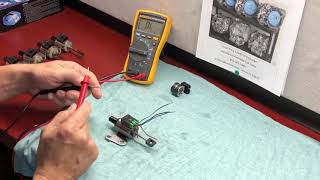
How to confirm: A technician can use a scan tool to monitor the commanded vs. actual gear ratio. A more direct, but advanced, method involves a bench test: with the valve body removed, one can apply voltage to specific pins (pins 6&7 and 8&9 on the connector) to see if the motor actuates correctly. 🎬 See this guide on how to test the stepper motor However, the presence of code P1778 (especially with P1777) is often considered confirmation enough. 🎬 Watch: How to fix CVT transmission codes P1778 and P1777
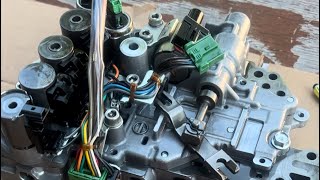
Typical fix: Replace the stepper motor. This involves removing the transmission oil pan and valve body to access the motor. A real-world repair story from a Nissan owner with the same transmission involved ordering the part online for under $40 and replacing it at home, which successfully resolved the code. 🎬 Watch a real-world walkthrough of the stepper motor replacement
Est. part cost: $40-$100 - Low or Dirty CVT Fluid 🟡 Medium Probability CVTs are extremely sensitive to fluid level and condition. The Jatco JF011E requires a specific fluid (Mopar CVTF+4), and using incorrect fluid or running it low/dirty can cause components like the stepper motor and valve body to stick or operate slowly, triggering the code.
How to confirm: Check the CVT fluid level and condition using the dipstick. The fluid should be at the correct level and not appear dark, burnt, or contain metallic debris. Ensure the correct Mopar CVTF+4 fluid is being used.
Typical fix: Perform a transmission fluid and filter change. If the fluid is very dirty, a more involved flush may be needed by a professional. In some cases, simply correcting the fluid is not enough if damage has already occurred.
Est. part cost: $120-$240 for fluid and filter - Failing Transmission Valve Body ⚪ Low Probability The valve body houses the stepper motor and a complex network of hydraulic passages and solenoids. Debris from normal wear or degraded fluid can clog these passages or cause valves to stick, preventing the stepper motor's action from correctly changing ratios.
How to confirm: This is difficult to confirm without specialized equipment. A technician would perform a line pressure test to see if the transmission's hydraulic pump and valve body are maintaining the correct pressure. Often, a valve body is replaced after a new stepper motor fails to fix the issue.
Typical fix: The valve body is typically replaced as a complete unit, which often includes a new stepper motor. This is a significant and expensive repair.
Est. part cost: $600-$1000
Rare But Worth Checking
- Wiring Harness Damage: While P1778 is a functional code, damage to the wiring leading to the stepper motor can cause intermittent operation that gets flagged as a functional failure instead of a purely electrical one (like P1777). This could be at the main connector on the transmission case.
- Faulty Transmission Control Module (TCM): It is rare for the TCM itself to fail, but it's a possibility if all other mechanical and electrical components check out. In some cases, replacing the transmission or valve body may require a TCM re-learn or re-flash with a factory scan tool. This should be the last item to consider.
Diagnosis Steps
- Scan the TCM for all stored trouble codes to see if P1778 appears with others like P1777 or P0868.
- Check the level and condition of the CVT fluid. Ensure the correct Mopar CVTF+4 fluid is being used.
- If the fluid is low or dirty, perform a fluid and filter change and re-evaluate. Be cautious with aftermarket filters, as some have been reported to have incorrect dimensions that restrict fluid flow.
- If the code persists, the vehicle should be taken to a professional, or an advanced DIYer can proceed. The next step is to drop the transmission pan for a visual inspection of the fluid, pan magnet for debris, and wiring.
- The technician will inspect the wiring to the stepper motor for any visible damage.
- The primary suspect is the stepper motor itself, which is typically replaced at this stage.
- If a new stepper motor does not resolve the issue, as reported in some forum cases, further diagnosis of the valve body for sticking valves or blockages is required. At this point, professional intervention is strongly recommended.
Parts You'll Likely Need
- CVT Stepper Motor
(OEM #203452A (Jatco designation))— This is the most common failure point for code P1778 in the Jatco CVT used by the Jeep Compass.
Trusted brands: Rostra, Sonnax, Mopar (OEM - often only sold with the valve body)
OEM price range: $100-$150
Aftermarket price range: $30-$80 - CVT Transmission Pan Gasket
(OEM #05191890AA (This is for the filter, gasket is often included or sold separately))— The transmission pan must be removed to access the stepper motor, and the gasket should always be replaced to prevent leaks.
Trusted brands: Fel-Pro, Mahle, Mopar (OEM)
OEM price range: $20-$40
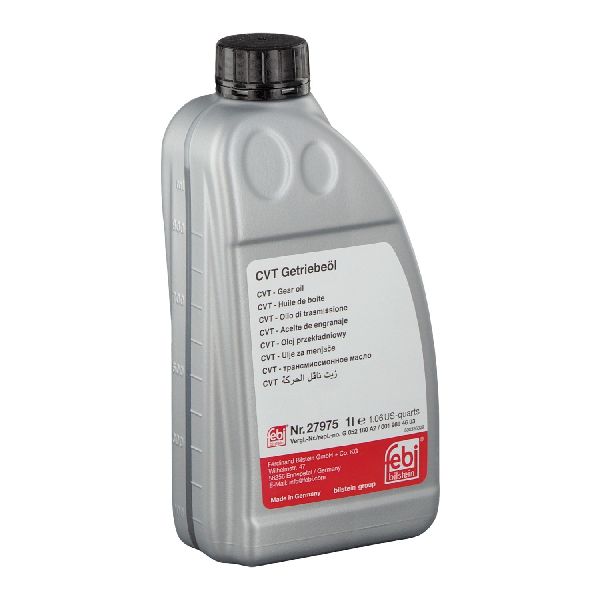
Aftermarket price range: $10-$25 - Mopar CVTF+4 Transmission Fluid
(OEM #05191184AB (supersedes 05191184AA))— Using the correct manufacturer-specified fluid is critical for the health and function of a CVT. This is the specified fluid for the Compass with the CVT2 transmission.
Trusted brands: Mopar
OEM price range: $25-$35 per quart
Related Codes That Often Appear With This One
- P1777 — P1777 indicates a direct electrical fault in the stepper motor circuit, such as 'Stepper Motor Circuit Shorted or Open'. If you see both codes, it almost guarantees the stepper motor or its immediate wiring is the problem.
- P0868 — This code means 'Secondary Pressure Down,' indicating low hydraulic pressure in the transmission. It suggests the problem may be broader than just the stepper motor, possibly involving a clogged filter, failing oil pump, or a faulty valve body.
Platform-Specific Known Issues
- The Jatco JF011E CVT in the 2007-2016 Compass is widely known for stepper motor failures, leading to P1778. This is a design and component issue rather than a result of abuse or poor maintenance.
Mechanic-Grade Diagnostic Values
- TCC Control Solenoid Resistance — expected: 3 to 9 Ohms. Failure: Reading outside of this range indicates a faulty solenoid.
- Lockup Select Switch Solenoid Resistance — expected: 15 to 30 Ohms. Failure: Reading outside of this range indicates a faulty solenoid.
- CVT Primary and Secondary Pulley Circuit Pressure — expected: 72 to 870 PSI. Failure: Pressure readings below the expected range, especially at idle, can indicate a worn valve body, failing pump, or internal leaks, which can trigger a P1778 code even with a good stepper motor.
- Stepper Motor Bench Test — expected: Applying voltage to pins 6 & 7 and then 8 & 9 on the transmission connector should cause the motor's pintle to extend and retract.. Failure: No movement when voltage is applied indicates a failed motor.
Hidden / Shadow Codes Worth Checking
- P167A: Calibration Mismatch. This code sets when the Transmission Control Module (TCM) or the entire CVT assembly has been replaced and not properly initialized to the vehicle's VIN via a capable scan tool. (see via Professional scan tools like Chrysler's WiTECH software.)
Scan Tool Commands That Help
- Chrysler WiTECH or equivalent professional scanner: TCM Initialization — This function is mandatory after replacing the CVT assembly or the valve body/TCM. It programs the new module with the vehicle's VIN and configuration. Failure to perform this will result in a P167A code and the transmission may not shift correctly.
- Professional scan tool: CVT Relearn / Shift Adaptation Reset — After major repairs like a fluid change or component replacement, resetting the adaptive learn values can help the transmission operate more smoothly by clearing old, potentially incorrect learned data.
Wiring & Ground Locations
- Transmission Connector (Stepper Motor Pins) — The main electrical connector on the CVT case.. Pins 6, 7, 8, and 9 in this connector lead directly to the two coils of the stepper motor. A bench test can be performed here by applying voltage to pairs (6&7, 8&9) to check for motor actuation without dropping the pan.
Real Owner Repair Stories
- YouTube video from 'Cleber o negociante da america' (2012 Nissan Sentra (uses same Jatco JF011E transmission)) — After driving for about an hour, the car would lose power. Turning it off and on would temporarily resolve it. Code P1778 was present.
❌ Tried (didn't work) The video directly proceeds to the successful repair.
✅ What actually fixed it The owner dropped the transmission pan, removed the valve body, and replaced the stepper motor. The video details the process of removing the numerous valve body bolts and disconnecting the motor. This resolved the P1778 code and the drivability issues. - YouTube video from 'Silverback Automotive' (2009 Nissan Altima 2.5 (uses same Jatco JF011E transmission)) — Vehicle had weak acceleration and would not go over 30-40 MPH. Codes P1778 and P1777 were stored.
❌ Tried (didn't work) The video directly proceeds to the successful repair.
✅ What actually fixed it The mechanic replaced the stepper motor located on the valve body. The video highlights the importance of correctly engaging the lever on the new stepper motor with the ratio control arm during reassembly. The repair fixed the acceleration issue and cleared the codes.
When the Usual Fixes Don't Work
- While P1778 is most commonly caused by a failed stepper motor, industry experts caution that this part is frequently over-replaced. The code technically means there is a mismatch between the commanded gear ratio and the actual gear ratio reported by the speed sensors. This can be caused by any issue that prevents proper hydraulic pressure from being applied to the pulleys, such as a worn flow control valve in the oil pump, a sticking valve in the valve body, or internal leaks from the pulleys themselves. Therefore, if a new stepper motor does not fix the code, the root cause is almost certainly a deeper hydraulic system problem, often requiring valve body or full transmission replacement.
OEM Part Supersession History
05191184AA→05191184AB— Standard part number update by Mopar.
Heads up: The two part numbers are fully interchangeable. 05191184AB is the currently available version of Mopar CVTF+4 fluid.
Model Year Variations Within This Range
- 2011-2016: For the 2011 model year, the Jeep Compass received a facelift and a revised suspension. More importantly for this issue, an optional 'Freedom Drive II Off-Road Package' became available, which included a CVT with a low-range setting. While still a JF011E, this version has different programming and may have durability differences not present in the standard CVT.
- 2010 and later: In 2010, Jatco eliminated the primary pressure switch on the JF011E valve body. Using a pre-2010 valve body on a 2010+ vehicle (or vice-versa) can cause fault codes because the TCM expects to see a sensor that is not there (or vice-versa).
Diagnostic Flowchart
Other Known Issues on This Vehicle
Issues unrelated to this code that are worth knowing about as an owner of this generation:
- Front and Rear Subframe Corrosion 🔴 High — Very common, especially in regions that use road salt. Can become structurally unsafe. An extended warranty (X69) was issued by Chrysler, but has since expired for most vehicles. (Ref: Warranty Extension X69 (now expired))
- Water Leaks into Cabin 🟠 Medium — Commonly reported issue, often stemming from clogged sunroof drains or poor sealing around the roof, leading to wet headliners and potential electrical problems.
- TIPM (Totally Integrated Power Module) Failure 🔴 High — A well-known issue across many Chrysler products of this era. Can cause a wide range of bizarre electrical problems, including no-start conditions, horn honking randomly, and lights malfunctioning. Onset is often around 100,000 miles.
- Prematurely Leaking Struts and Failing Suspension Components 🟠 Medium — Owners report failure of front struts, tie rods, and control arm bushings earlier than expected, leading to a rough ride and unusual noises.
- CVT Overheating 🔴 High — Particularly noted on 2011 models, the CVT can overheat during high-speed driving or in hot weather, causing whining noises and loss of power as it enters a protective limp mode.
Used vs. New Parts: Buying Guide for This Vehicle
When a used part is the smart pick: For a complete valve body assembly, a low-mileage, tested used unit can be a cost-effective alternative to a new one, which is very expensive. However, for the stepper motor itself, it is not recommended.
Donor-vehicle mileage cap: roughly under 80000 miles for the part to have meaningful remaining life.
What to inspect on the donor part:
- Verify the donor vehicle's mileage is under 80,000 miles.
- Ensure the part comes from a reputable salvage yard with a warranty or return policy.
- Check the fluid color from the donor transmission if possible; it should not be black or smell burnt.
- Confirm the model year of the donor vehicle to avoid valve body compatibility issues (pre- vs. post-2010).
OEM-only on this vehicle (don't cheap out):
- CVT Fluid (Mopar CVTF+4). Using non-specified fluid is a leading cause of CVT failure.
Aftermarket brands forum-validated for this vehicle:
- Rostra (for stepper motors)
- Sonnax (for valve body repair kits and individual components)
- TransGo (for valve body shift kits/repair kits)
Brands owners have reported issues with on this vehicle:
- Unbranded, no-name stepper motors from online marketplaces can have high failure rates.
- Aftermarket transmission filters with incorrectly sized pickup tubes have been reported to cause fluid starvation and trigger P0868 alongside P1778.
Real Owner Stories
Aggregated from forums and TSBs cited above. Mileages and costs reflect what owners reported in those sources.
Nissan Altima with JF011E CVT
Symptoms: Check Engine Light illuminated with diagnostic trouble code P1778.
What fixed it: The owner ordered a new stepper motor online and replaced it at home. This successfully resolved the code.
Cost: $30-$40
Source hint: my4dsc.com - 'P1778 Nissan Altima / Maxima CVT Transmission Step Motor Fix (JF011E RE0F10E JATCO)'
Related OBD-II Codes
Frequently Asked Questions
Is the P1778 code a common problem on the 2007-2016 Jeep Compass?
What is the most likely part I need to replace to fix P1778 on my Compass?
My transmission is whining and overheating on the highway. Is this related to the P1778 code?
Do I have to use a specific transmission fluid for my Jeep Compass CVT?
I replaced the stepper motor, but the P1778 code is still there. What's the next step?
My Dodge Caliber has code P1778. Is the repair the same as for the Jeep Compass?
Can I replace the stepper motor myself to save money?
Helpful Videos

We Have This Part in Stock



The information in this article is provided for general reference and educational purposes only. Vehicle specifications, procedures, and part compatibility can vary by production date, trim level, and region. Always consult your vehicle's factory service manual and verify part numbers before purchasing or performing repairs. Safety-critical components such as airbags, seat belts, and braking systems should be installed by a qualified professional.
- Jeep Compass:
- 🎬 Helpful Videos
- 🛍️ Shop This Part
- What's Unique About the 2007-2016 Jeep Compass
- Symptoms You May Notice
- Most Likely Causes
- Rare But Worth Checking
- Diagnosis Steps
- Parts You'll Likely Need
- Related Codes That Often Appear With This One
- Platform-Specific Known Issues
- Mechanic-Grade Diagnostic Values
- Hidden / Shadow Codes Worth Checking
- Scan Tool Commands That Help
- Wiring & Ground Locations
- Real Owner Repair Stories
- When the Usual Fixes Don't Work
- OEM Part Supersession History
- Model Year Variations Within This Range
- Diagnostic Flowchart
- Other Known Issues on This Vehicle
- Used vs. New Parts: Buying Guide for This Vehicle
- Real Owner Stories
- Nissan Altima with JF011E CVT
- Related OBD-II Codes
- Frequently Asked Questions
- 🎟️ Get 5% Off