

P1775 on 2009-2010 Dodge Challenger 3.5L: Solenoid Switch Valve Causes and Fixes
This code means the transmission's Solenoid Switch Valve is stuck, forcing the car into 'limp mode' (stuck in 2nd gear). The most common cause is a worn valve body bore, which requires replacing the valve body and solenoid pack assembly, or reaming the bore and installing a repair kit. Expect to pay $800-$1500 for a professional repair.
- P1775 means your Challenger's transmission is stuck in 2nd gear ('limp mode') because a critical valve is jammed.
- The most likely cause is a worn-out bore in the transmission valve body, a known issue with this 42RLE transmission.
- Simply replacing the cheaper solenoid pack is often a temporary fix; the problem usually returns. The correct repair is typically a complete valve body assembly.
- Do not drive extensively with this code. You risk overheating the transmission, which can lead to a much more expensive complete rebuild.
- This is not a beginner-friendly DIY job. Professional service is strongly recommended due to the complexity and risk of further damage.
What's Unique About the 2009-2010 Dodge Challenger
The 42RLE automatic transmission used in this generation of Challenger, along with many other Chrysler/Dodge/Jeep products like the Jeep Wrangler and Dodge Charger, is known for this specific issue. The problem is often not the electronic solenoid pack itself, but rather the physical bore in the aluminum valve body that the steel switch valve moves within. Over time, this bore can wear out, causing the valve to bind and stick, especially when the transmission fluid is hot and thin. This platform-wide weakness means that simply replacing the solenoid pack might only be a temporary fix if the worn valve body isn't also addressed.
Symptoms You May Notice
- Check Engine Light is on
- Vehicle is in 'limp mode' (stuck in 2nd gear)
- Poor or sluggish acceleration from a stop
- Harsh clunk or jerk when slowing to a stop (as the transmission fails to downshift to 1st)
- Inability to manually shift into 1st gear
- Transmission may feel like it's slipping or hesitating
- Replacing only the solenoid pack when the valve body bore is worn. The code will often return shortly after the repair because the new solenoid's valve is still binding in the worn bore.
- Mistaking the issue for a bad Transmission Control Module (TCM) without proper diagnostics. While possible, TCM failure is far less common than the mechanical wear inside the transmission.
Most Likely Causes
- Worn Solenoid Switch Valve (SSV) Bore in Valve Body 🔴 High Probability The 42RLE transmission uses an aluminum valve body where repeated movement of the steel switch valve can wear the bore, causing the valve to stick. This is a well-documented wear item across all vehicles using this transmission.
How to confirm: This is difficult to confirm without disassembly. A technician may use a vacuum tester on the valve body on a bench to check for leaks past the valve. Often, it is diagnosed by exclusion after a new solenoid pack fails to resolve the issue. The problem is often more pronounced when the transmission is hot.
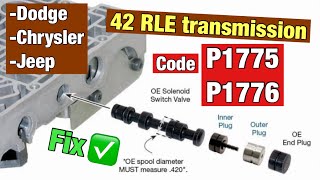
Typical fix: Replace the entire valve body assembly, which typically includes a new solenoid pack. Alternatively, a specialist can ream the worn bore and install an oversized valve kit, such as the TransGo SK 42RLE. 🎬 Watch: Understanding how the solenoid switch valve latches and fails.
Est. part cost: $400-$700 for a remanufactured valve body with solenoids - Failed Transmission Solenoid Pack 🔴 High Probability The solenoid pack (also called the solenoid block) is a complex electronic and hydraulic component that is prone to failure from heat cycles and contaminated fluid over its service life. Internal seals can fail or electrical windings can short out.
How to confirm: A professional scan tool can sometimes detect electrical faults within the solenoid pack. Resistance checks can be performed on the solenoid terminals, but this won't detect an internal mechanical or hydraulic issue, which is common. For example, the L/R solenoid should read between 1.0 and 3.0 ohms.
Typical fix: Replace the solenoid pack, which is mounted to the valve body inside the transmission oil pan. This also requires a new transmission filter and fluid.
Est. part cost: $150-$300 - Low or Degraded Transmission Fluid 🟡 Medium Probability The 42RLE can be sensitive to fluid level and condition. Old, burnt, or contaminated fluid can lead to poor hydraulic performance and cause valves to stick or solenoids to malfunction.
How to confirm: Check the transmission fluid dipstick for level and condition. The fluid should be reddish-pink and not smell burnt. Dark brown/black fluid or glittery metal particles indicate a severe internal problem requiring a rebuild.
Typical fix: Perform a transmission fluid and filter change. If the fluid is severely degraded, this may be a symptom of a larger issue rather than the root cause.
Est. part cost: $75-$150 for fluid and filter
Rare But Worth Checking
- Outdated Powertrain Control Module (PCM) Software: In some cases, the logic for detecting the fault can be overly sensitive. A software update (reflash) from a dealership can sometimes correct the issue without replacing any parts. It's worth checking for available TSBs, like TSB 21-017-08, before performing major repairs.
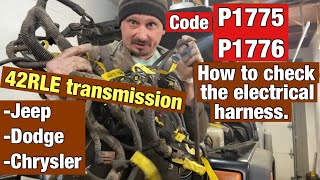
- Wiring Harness Damage: The wiring harness leading to the transmission can become damaged from heat or chafing, causing short circuits or open circuits. A diagnostic check of the (T50) L/R Pressure Switch Sense circuit would be required to rule this out. 🎬 Watch: How to properly test the transmission electrical harness. This is less common than internal transmission component failure.
Diagnosis Steps
- Check the transmission fluid level and condition. If low, top it off. If dark, burnt, or full of metal, a transmission rebuild is likely needed.
- Use a professional scan tool to confirm P1775 is the active code and check for any other related transmission codes like P0700 or P1776.
- Check for any available Technical Service Bulletins (TSBs) related to P1775 for this vehicle. A PCM software update may be required. TSB 21-017-08 is a known update for shift improvements.
- If no TSBs apply, the next step is internal transmission work. Drop the transmission oil pan and inspect for excessive metal debris on the magnet. A small amount of fine gray material is normal, but large flakes or chunks are not.
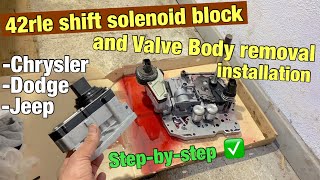
- Remove the valve body assembly. This process is detailed in many online videos. 🎬 See this step-by-step guide for removing the valve body.
- Visually inspect the Solenoid Switch Valve for free movement within its bore. Any sticking or binding indicates a worn valve body. A vacuum test is the professional method to confirm a worn bore.
- Test the solenoid pack's electrical circuits for correct resistance values. However, this may not identify an internal mechanical failure.
- Based on findings, replace the solenoid pack, the complete valve body assembly, or have the original valve body reamed for an oversized valve kit (e.g., TransGo SK 42RLE).
- Install a new transmission filter, reinstall the pan with a new gasket, and refill with the correct type of ATF (ATF+4).
- Perform a 'quick learn' procedure with a compatible scan tool to allow the TCM to adapt to the new components.
Parts You'll Likely Need
- Transmission Solenoid Pack
(OEM #5143151AA (Superseded by 4800171AA))— This is the electronic control unit mounted to the valve body and is a very common failure point for this transmission. It is often replaced along with the valve body.
Trusted brands: Mopar, Standard Motor Products (SMP), Rostra
OEM price range: $250-$350
Aftermarket price range: $120-$220 - Transmission Valve Body
(OEM #N/A (Typically sold as remanufactured))— A worn valve body bore is the most probable root cause of P1775. Most shops replace the entire valve body, which usually comes with a new solenoid pack pre-installed.
Trusted brands: Mopar (Remanufactured), Rostra, Next Gen Drivetrain
OEM price range: $500-$700 (Reman)
Aftermarket price range: $350-$550 (Reman) - Transmission Filter and Pan Gasket Kit
(OEM #5013470AC (Filter))— This is required for any repair that involves dropping the transmission pan.
Trusted brands: Mopar, ATP, Wix
OEM price range: $30-$50
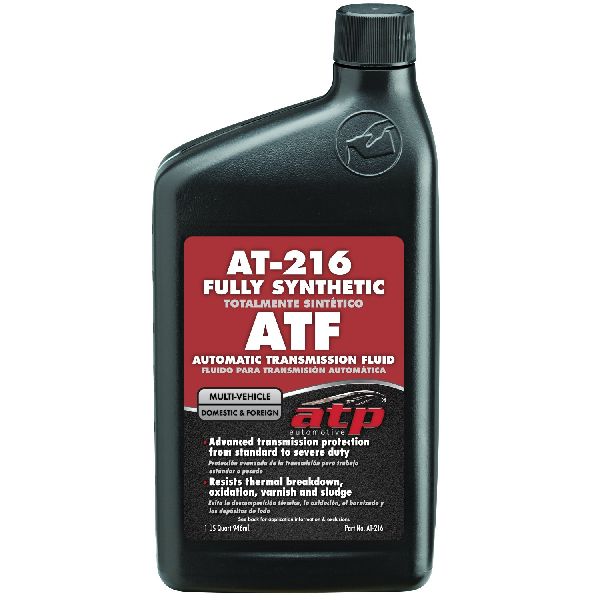
Aftermarket price range: $15-$30 - ATF+4 Transmission Fluid
(OEM #68218057AC (Replaces MS-9602))— This is the specific fluid required for the 42RLE transmission. A pan drop and valve body replacement will require approximately 6-8 quarts.
Trusted brands: Mopar, Valvoline, Castrol
OEM price range: $12-$18 per quart
Aftermarket price range: $8-$12 per quart
Related Codes That Often Appear With This One
- P0700 — P0700 is a generic code that simply means the Transmission Control Module (TCM) has stored a fault code. It almost always appears alongside a more specific transmission code like P1775 to signal the driver that a transmission-specific problem exists.
- P1776 — P1776 is 'Solenoid Switch Valve Latched in LR Position'. It is the sister code to P1775 and indicates the same valve is stuck in the opposite position. Finding these codes together or intermittently points strongly to a problem with the Solenoid Switch Valve, its bore in the valve body, or the related hydraulic circuit.
Technical Service Bulletins (TSBs) & Recalls
- While no specific TSB number was found for the 2009-2010 Challenger in the search, one source noted that Chrysler has issued multiple TSBs for this code on other vehicles that recommend a PCM reflash as a potential fix.
Mechanic-Grade Diagnostic Values
- Solenoid Coil Resistance — expected: 1.0 - 3.0 Ohms (cold or hot). Failure: A reading of infinite Ohms indicates an open coil, while a reading near zero indicates a shorted coil.
- (T50) L/R Pressure Switch Sense Circuit Voltage — expected: Below 0.5 Volts. Failure: Voltage above 0.5 volts with the ignition on (engine off) and the transmission connector disconnected points to a short to voltage in the wiring harness.
- (T50) L/R Pressure Switch Sense Circuit Resistance to Ground — expected: Above 5.0 Ohms. Failure: Resistance below 5.0 Ohms indicates a short to ground in the circuit.
Scan Tool Commands That Help
- wiTECH or other professional bidirectional scanner: Quick Learn Procedure — This function must be performed after replacing the valve body or solenoid pack. It allows the TCM to learn the hydraulic and electrical characteristics of the new components for proper shift timing and pressure control.
- wiTECH or other professional bidirectional scanner: L/R Pressure Switch State (Live Data PID) — While monitoring this PID, a technician can command shifts into 1st gear. If the switch state does not change as expected, it helps confirm a hydraulic or mechanical issue (like a stuck valve) rather than a purely electrical one.
- wiTECH or other professional bidirectional scanner: System Test - Pressure Switch Test — This is a specific system test that actuates the solenoids and monitors the pressure switch response. If the L/R pressure switch state does not change from open to closed during this test, it points directly to an internal transmission failure, such as the solenoid switch valve.
Wiring & Ground Locations
- Transmission Solenoid/Pressure Switch Assembly Connector — A 10-pin round connector on the driver's side of the transmission case.. This is the main electrical interface for the solenoid pack. All resistance and voltage tests for the internal components are performed at this connector or its corresponding pins at the PCM. It is a common spot for corrosion or fluid intrusion.
- (T50) L/R Pressure Switch Sense Circuit — This is a specific wire running from the Transmission Solenoid Assembly connector to the Powertrain Control Module (PCM).. Code P1775 is directly related to the state of the L/R pressure switch. A short or open in this specific circuit can mimic the symptoms of a failed internal component, making it a critical part of the electrical diagnosis.
- Engine Block / Bellhousing Ground — A primary ground strap typically connects from the chassis or battery negative terminal to a stud on the engine block or bellhousing, often near the starter motor.. While not a direct cause, a poor engine-to-chassis ground can cause a host of electrical issues in computer-controlled transmissions, including erratic sensor readings and incorrect solenoid operation. Verifying this ground is clean and tight is a fundamental step.
- G300 — A common ground point located below the driver's side 'B' pillar.. Multiple interior and body modules use this ground. While less likely to be the primary cause for a transmission code, verifying major body grounds is good practice when chasing intermittent electrical faults.
Real Owner Repair Stories
- 2CarPros Forum User (2003 Chrysler Concorde (42RLE Transmission)) — Initially had trouble shifting from 2nd to 3rd with codes P0841 and P0700. After replacing the solenoid pack, the shifting issue was fixed but a new problem appeared: code P1775 and a harsh jerk when slowing to a stop below 5 MPH.
❌ Tried (didn't work) Replacing the transmission solenoid pack (this fixed the original codes but introduced P1775)., Attempting a 'quick learn' procedure, which the transmission shop claimed the car would not accept.
✅ What actually fixed it The final advice from the technician on the forum, based on the symptoms and history, was that the valve body itself was the likely culprit due to a worn bore, and recommended replacing the valve body with a rebuilt unit. This aligns with the common understanding that replacing the solenoid alone is often insufficient.
Documented NHTSA Reports
- NHTSA ODI #10314835: An owner of a vehicle with the same manufacturer and transmission reported receiving codes P1775 (Solenoid Switch Valve Latched in TCC Position) and P0218 (Trans-High Temp Activated). The diagnostic recommendation was to remove the transmission and break it down to find internal failure or replace the transmission entirely.
OEM Part Supersession History
5143151AA→4800171AA— Standard part revision and update by the manufacturer.
Heads up: The new part number (4800171AA) is the correct service replacement for the original. No incompatibility issues are noted; it is a direct replacement.
Model Year Variations Within This Range
- 2007-2009: In 2009, a check ball (#2) was eliminated from the 41TE/42RLE valve body design. When servicing the valve body, it's important to note whether the separator plate has a hole for this check ball or not, to ensure correct reassembly.
- Pre-April 28, 2008: 42RLE transmissions with Variable Line Pressure (VLP) built before this date should have their PCM software updated to the latest version. The update improves low-speed torque converter clutch operation and can affect overall shift quality and diagnostics.
Diagnostic Flowchart
Other Known Issues on This Vehicle
Issues unrelated to this code that are worth knowing about as an owner of this generation:
- Timing Belt Failure (3.5L V6) 🔴 High — This is a required maintenance item. The belt must be replaced at the manufacturer's recommended interval, typically around 100,000 miles. Failure to do so will lead to catastrophic engine damage.
- Shifter Stuck in Park ('Pink Thingy' Failure) 🟠 Medium — Very common issue across many Chrysler/Dodge vehicles of this era. Tends to happen without warning.
- Front Suspension Clunks/Wear 🟠 Medium — Common as the vehicle ages, typically starting around 60,000-80,000 miles. Affects control arm bushings and tie rod ends.
- Alternator Failure 🟠 Medium — A fairly common failure item, often occurring between 80,000 and 120,000 miles.
- Missing Front Wheel Spindle Nut 🔴 High — Affected a specific batch of vehicles from the factory. (Ref: NHTSA Recall ID: 09V414000)
Used vs. New Parts: Buying Guide for This Vehicle
When a used part is the smart pick: A used valve body assembly from a low-mileage donor vehicle can be a cost-effective alternative to a new or remanufactured unit. However, this is a significant gamble, as the primary cause of P1775 is wear in the valve body bore itself. A used part may have the same wear or develop it shortly after installation.
Donor-vehicle mileage cap: roughly under 80000 miles for the part to have meaningful remaining life.
What to inspect on the donor part:
- Verify the donor vehicle's mileage if possible; lower is always better.
- Inspect the transmission fluid from the donor car. If it's dark, burnt, or contains metal particles, reject the part immediately.
- When the part is removed, look at the solenoid switch valve bore for any visible scoring or wear marks, though this is hard to see without proper tools.
- Ensure the electrical connector pins are clean, straight, and free of corrosion.
OEM-only on this vehicle (don't cheap out):
- Transmission Solenoid Pack: While aftermarket options exist, the Mopar OEM part is generally recommended for reliability and compatibility, especially concerning software and electronic communication with the TCM.
Aftermarket brands forum-validated for this vehicle:
- TransGo (for valve body repair/shift kits).
- Rostra (for complete solenoid packs and remanufactured valve bodies).
Brands owners have reported issues with on this vehicle:
- Unbranded, no-name solenoid packs sold on marketplaces like Amazon or eBay are a high risk. Many forum users report these parts failing within weeks or months, or being dead-on-arrival.
Real Owner Stories
Aggregated from forums and TSBs cited above. Mileages and costs reflect what owners reported in those sources.
Dodge Caravan (with 42RLE trans)
Symptoms: A rough, harsh downshift from 2nd to 1st gear when coming to a stop, accompanied by fault code P1775.
What fixed it: Replacing the entire valve body assembly was the final solution after initial attempts to fix it with fluid changes and a new solenoid pack failed.
Source hint: DodgeForum.com: Thread titled '2-1 rough downshift, fault code P1775...'
Related OBD-II Codes
Frequently Asked Questions
Is there a software update or TSB for the P1775 code on my 2009 Challenger?
My Challenger is stuck in 2nd gear with the check engine light on. What's happening?
I replaced the solenoid pack, but the P1775 code came back. What's the most likely problem now?
What is the 'TransGo SK 42RLE' kit mentioned for this repair?
What type of transmission fluid does my 2009 Challenger 3.5L take?
Are other Chrysler or Dodge cars known to have this same P1775 transmission problem?
Helpful Videos
Used OEM Parts in Stock

New Aftermarket Parts Available


The information in this article is provided for general reference and educational purposes only. Vehicle specifications, procedures, and part compatibility can vary by production date, trim level, and region. Always consult your vehicle's factory service manual and verify part numbers before purchasing or performing repairs. Safety-critical components such as airbags, seat belts, and braking systems should be installed by a qualified professional.
- Dodge Challenger:
- 🎬 Helpful Videos
- 🛍️ Shop This Part
- What's Unique About the 2009-2010 Dodge Challenger
- Symptoms You May Notice
- Most Likely Causes
- Rare But Worth Checking
- Diagnosis Steps
- Parts You'll Likely Need
- Related Codes That Often Appear With This One
- Technical Service Bulletins (TSBs) & Recalls
- Mechanic-Grade Diagnostic Values
- Scan Tool Commands That Help
- Wiring & Ground Locations
- Real Owner Repair Stories
- Documented NHTSA Reports
- OEM Part Supersession History
- Model Year Variations Within This Range
- Diagnostic Flowchart
- Other Known Issues on This Vehicle
- Used vs. New Parts: Buying Guide for This Vehicle
- Real Owner Stories
- Dodge Caravan (with 42RLE trans)
- Related OBD-II Codes
- Frequently Asked Questions
- 🎟️ Get 5% Off