

P1758 on 1994-2002 Honda Accord: Lock-Up Solenoid 'B' Fault Causes and Fixes
This code almost always points to a faulty automatic transmission lock-up solenoid 'B' or its wiring. A flashing 'D4' light is the most common symptom. Replacing the solenoid assembly is the typical fix, costing around $50-$150 for an aftermarket part and is a DIY-friendly job for many.
- P1758 on a 94-02 Accord is almost always an issue with the lock-up solenoid 'B' or its connector.
- A flashing 'D4' light is the key symptom to look for.
- Before buying parts, test the solenoid. It should read 12-25 ohms and click when 12V power is applied.
- Always inspect the electrical connector for corrosion first, as a simple cleaning might fix the problem.
- Use only Genuine Honda ATF DW-1 fluid when refilling the transmission.
What's Unique About the 1994-2002 Honda Accord
On these 5th and 6th generation Accords, the automatic transmissions are known for having externally mounted solenoids that are relatively easy to access, typically on the top or front of the transmission case. Unlike many other vehicles where solenoids are inside the transmission pan, this design makes diagnosing and replacing the lock-up solenoid for a P1758 code a much simpler task. The issue is very common across this era of Honda/Acura vehicles, and the root cause is frequently simple corrosion on the electrical connector pins or a failed solenoid coil. In some cases, a connector pin can break off entirely.
Generation note: This guide covers the 5th generation (1994-1997) 🎬 Watch: Easy guide to fixing D4 flashing codes on 94-97 models. and 6th generation (1998-2002) Honda Accord. 🎬 Watch: Step-by-step removal and replacement for 1998-2002 dual linear solenoids. The cause, symptoms, and repair process for code P1758 are very similar for both generations. However, the specific part numbers for the solenoids are different. The 5th gen (94-97) uses a single lock-up solenoid, while the 6th gen (98-02) uses a dual-linear solenoid assembly that combines shift and lock-up functions.
Symptoms You May Notice
- Flashing 'D4' or 'D' gear indicator light
- Harsh or erratic automatic shifting
- Transmission feels stuck in one gear (limp mode)
- Check Engine Light is on
- Reduced fuel economy due to lack of torque converter lock-up
- Vehicle may hesitate or feel like it's slipping between gears
- Replacing the entire transmission without first testing the external solenoids.
- Replacing the PCM/TCM before verifying the solenoid and wiring harness are good.
- Mistaking the P1758 code for a major internal transmission failure when it's just an external, easily-replaced part.
Most Likely Causes
- Faulty Lock-Up Solenoid 'B' 🔴 High Probability The solenoid can fail electrically over time due to heat cycles and vibration, causing an internal open or short in its coil windings. The screens can also become clogged with debris from normal transmission wear, impeding its mechanical function.
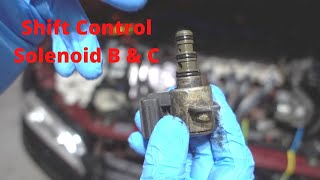
How to confirm: Remove the solenoid and test the resistance between its electrical pins using a multimeter. The reading should be between 12 and 25 ohms. A reading of infinity indicates an open circuit, while a reading near zero indicates a short. You can also apply 12V power directly to the pins; a healthy solenoid will make an audible 'click'. No click means the solenoid is seized or electrically dead. Also, inspect the small filter screens on the solenoid for metallic debris or sludge.
Typical fix: Replace the lock-up solenoid assembly. It is typically mounted on the exterior of the transmission housing with three 10mm bolts. It is highly recommended to use a new gasket.
Est. part cost: $50-$170 - Damaged Wiring or Corroded Connector 🟡 Medium Probability The solenoid's location makes its electrical connector susceptible to moisture, oil, and road grime, leading to corrosion on the pins which disrupts the electrical signal. Wires can also become brittle and break near the connector.
How to confirm: Visually inspect the connector for green or white corrosion, bent pins, or broken wires. One user on a forum found the pin had broken off completely inside the connector. If the solenoid tests good, use a multimeter to check for continuity on the harness wires between the solenoid connector and the TCM. Wiggle the harness during testing to check for intermittent breaks.
Typical fix: Clean the connector terminals thoroughly with an electrical contact cleaner and a small brush. If a wire or pin is broken, the connector pigtail or harness section will need to be repaired or replaced.
Est. part cost: $5-$30 - Low or Degraded Transmission Fluid ⚪ Low Probability While not a direct cause of an electrical code like P1758, very low or burnt fluid can cause erratic solenoid operation, overheating, and accelerated wear, which can lead to electrical failure. Using non-Honda ATF can also cause issues.
How to confirm: Check the transmission fluid level and condition using the dipstick with the engine warm and off. The fluid should be at the correct level, red/brown in color, and not smell burnt.
Typical fix: Perform a transmission fluid drain and fill (or multiple, for a more complete fluid exchange) using only Honda ATF DW-1. The original fluid was Honda ATF-Z1, which has been superseded by DW-1.
Est. part cost: $40-$80
Rare But Worth Checking
- Faulty Transmission Control Module (TCM) or Powertrain Control Module (PCM): This is very uncommon and should only be considered after the solenoid and wiring have been exhaustively tested and confirmed to be in good working order. One owner reported replacing the transmission only to have the code return, suspecting a computer or wiring issue was the true cause.
Diagnosis Steps
- Scan for codes. Confirm P1758 is present, likely with P0700. Note any other transmission codes like P0758.
- Check the transmission fluid level and condition. The engine should be off and warm. If the fluid is low, black, or smells burnt, address this first.
- Locate the lock-up solenoid assembly. On 4-cylinder models, it's typically on the top of the transmission case. On V6 models, it's on the front. It's held on by three 10mm bolts.
- Disconnect the electrical connector. Inspect it and the solenoid pins for any signs of corrosion (green/white powder), moisture, or physical damage like broken or bent pins.
- Use a multimeter set to Ohms (Ω) to measure the resistance across the pins on the solenoid itself. A reading between 12 and 25 ohms is expected. If it's significantly outside this range (e.g., OL or near 0), the solenoid has failed electrically.
- (Functional Test) Use jumper wires to carefully apply 12V from the car battery to the solenoid's pins. You should hear a distinct 'click' sound. A weak or non-existent click indicates a mechanical failure. One user noted a weak click on the failed solenoid compared to the good one.
- If the solenoid tests good, the problem is in the wiring. Inspect the harness for visible damage. Check for continuity from the solenoid connector back to the TCM/PCM connector. Wiggle the harness while testing to find intermittent breaks. A poor ground at G101 can also cause erratic electrical issues.
- If the solenoid is faulty, replace the assembly with a new gasket. Clean the mounting surface before installation. Clear the codes with a scan tool and test drive the vehicle to confirm the 'D4' light does not return and shifting is smooth.
Parts You'll Likely Need
- Lock-Up Solenoid Assembly
(OEM #28300-PX4-003 (94-97 4-Cyl) / 28250-P6H-024 (98-02 4-Cyl & V6))— This is the component that fails most frequently, causing the P1758 code. The solenoid coil burns out or the internal valve seizes.
Trusted brands: Genuine Honda, Denso, WVE (Standard Motor Products), Rostra
OEM price range: $150-$310
Aftermarket price range: $50-$170 - Honda Automatic Transmission Fluid DW-1
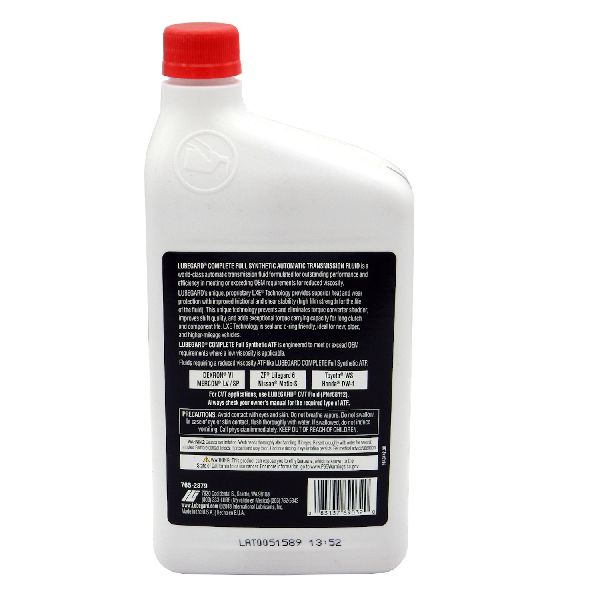
(OEM #08200-9008)— The original ATF-Z1 is discontinued. DW-1 is the official replacement from Honda and is required for proper transmission function. It's wise to perform a drain and fill when servicing transmission components.
Trusted brands: Genuine Honda
OEM price range: $10-$15 per quart
Aftermarket price range: N/A - Solenoid Gasket
(OEM #Included with most new solenoids)— The old gasket can be compressed or brittle, leading to leaks if reused. Always install a new gasket with the new solenoid.
Trusted brands: Genuine Honda, Fel-Pro
OEM price range: $5-$15
Aftermarket price range: $3-$10
Related Codes That Often Appear With This One
- P0700 — P0700 is a generic code that simply means the Transmission Control Module (TCM) has stored a fault code. It will almost always be present when any specific transmission code like P1758 is logged, acting as a 'check engine light' for the transmission system.
- P0758 — This code refers to an electrical fault in 'Shift Solenoid B'. On 6th generation Accords (98-02), the lock-up solenoid is part of the same dual-linear solenoid assembly as the shift solenoids, so a failure in the assembly or its connector can trigger multiple codes simultaneously. A user with a '97 Accord reported getting both P1758 and P0758 simultaneously.
Platform-Specific Known Issues
- A user on Honda-Tech with a '96 Accord experienced the P1758 code after removing and reinstalling the transmission for a rear main seal job, suggesting the connector was either damaged or not fully seated during reassembly.
- Another owner on Honda-Tech reported an intermittent P1758 code that would only appear after a 35-minute drive. The solenoid tested within spec but had a 'weak' click compared to a known good one, indicating a potential heat-related internal failure.
Mechanic-Grade Diagnostic Values
- Lock-Up Solenoid Coil Resistance — expected: 12 - 25 Ohms. Failure: A reading of infinity (OL) or near-zero Ohms indicates a failed coil.
- Solenoid Resistance at PCM Connector (97 Accord) — expected: 16 Ohms. Failure: A significant deviation from this value, or an open/short reading, points to a problem in the wiring harness between the PCM and the solenoid.
- Solenoid Functional Test — expected: Audible 'click' when 12V is applied to the solenoid's power and ground pins.. Failure: No click, or a very weak click, indicates the solenoid is mechanically stuck or electrically failing, even if resistance is in spec.
Scan Tool Commands That Help
- Honda Diagnostic System (HDS): Clear A/T DTCs — After a repair is completed, the HDS is used to clear the stored transmission fault codes. A test drive is then required to verify the fix and ensure the OBD STATUS for the DTC shows 'PASSED'.
Wiring & Ground Locations
- G101 — On 4-cylinder models, this critical ground is located on the intake manifold plenum on the driver's side. On some models, it is on the thermostat housing.. G101 is a main ground termination point for the ECU/TCM. A loose or corroded connection here can cause a wide range of erratic electrical problems and fault codes, including transmission solenoid codes, as the TCM may not have a stable ground reference.
- Lock-up Solenoid Connector — On top of or on the front of the transmission housing, connecting directly to the solenoid assembly.. This is the primary point of failure for wiring issues. The pins can corrode, or the wires can break from vibration and heat, causing an open or short in the solenoid circuit that directly triggers P1758.
- PCM Connector Pins (97 Accord) — At the Powertrain Control Module (PCM), typically located in the passenger footwell area.. For advanced diagnosis, testing can be done at the PCM. One user identified pins B4 and A9/A22 as being related to the lock-up solenoid circuit, allowing for a complete harness check from the control module.
Real Owner Repair Stories
- Honda-Tech forum user (1997 Honda Accord) — Check engine light and flashing D4 light with code P1758. The car ran fine otherwise.
❌ Tried (didn't work) A transmission shop diagnosed the solenoids as OK and recommended a transmission rebuild., The user replaced the entire transmission after the clutch failed., The P1758 code immediately returned even with the new transmission.
✅ What actually fixed it The user concluded the problem had to be the computer (PCM/TCM) or the wiring harness, as replacing the entire transmission (which included new solenoids) did not resolve the electrical fault code. - Honda-Tech forum user (1996 Honda Accord) — CEL and flashing D4 light with code P1758 appeared immediately after reinstalling the transmission for a rear main seal job.
❌ Tried (didn't work) Clearing the code (it returned immediately).
✅ What actually fixed it The user's final update indicated they tried a junkyard solenoid which worked intermittently, suggesting the original solenoid was indeed faulty or the replacement was also marginal. The root cause was confirmed to be the solenoid assembly itself or its connection, which was likely disturbed during the transmission R&R. - Honda-Tech forum user (1999 Honda Civic EX (Similar system)) — P1758 code appeared instantly, even with key in ignition position II without starting the engine.
❌ Tried (didn't work) Replacing the torque converter., Repairing other damaged sensor wires (ECT)., Clearing the code (it came back instantly).
✅ What actually fixed it The user tested the solenoid and found it had 0 ohms resistance, indicating a dead short. The final fix was replacing the faulty lock-up solenoid assembly.
When the Usual Fixes Don't Work
- In one documented case, a transmission shop diagnosed the solenoids as functional and recommended a full transmission replacement. The owner had the transmission replaced, but the P1758 code returned immediately. This strongly indicates that the root cause was not the solenoid or any internal transmission component, but rather an issue in the vehicle's wiring harness or the Transmission Control Module (TCM) itself, which is a rare but important possibility to consider if a new solenoid doesn't fix the code.
OEM Part Supersession History
28250-P6H-004→28250-P6H-024— Standard part revision by the manufacturer for improved reliability or manufacturing process change.
Heads up: The new part number (28250-P6H-024) is a direct replacement for the old one and is fully compatible with all specified 1998-2002 Accords (and other models).
Model Year Variations Within This Range
- 1994-1997: These models use a different lock-up solenoid assembly (PN: 28300-PX4-003) than the later generation. The diagnostic principle is the same, but the part is not interchangeable with 98-02 models.
- 1998-2002: These models use a dual-linear solenoid assembly (PN: 28250-P6H-024) that integrates multiple functions. A failure in this single assembly can potentially trigger other codes alongside P1758, such as P0758 for Shift Solenoid B.
Diagnostic Flowchart
Other Known Issues on This Vehicle
Issues unrelated to this code that are worth knowing about as an owner of this generation:
- Automatic Transmission Failure (1998-2002) 🔴 High — Extremely common, especially on V6 models, but also affects 4-cylinders. Often occurs between 60,000 and 120,000 miles. (Ref: Honda issued warranty extensions and recalls (e.g., NHTSA 04V176 for similar Acura models) due to a design flaw causing overheating of the 2nd gear clutch pack.)
- Faulty Ignition Switch 🔴 High — Widespread across many 1997-2000 Honda models, including the Accord. Can cause intermittent stalling or a no-start condition. (Ref: Yes, American Honda issued a major recall in May 2002 to replace the electrical contact portion of the ignition switch due to premature wear.)
- PGM-FI Main Relay Failure 🟠 Medium — A classic Honda issue from this era. Solder joints inside the relay crack over time, especially with heat, causing intermittent no-start or stalling.
- Ignition Switch Interlock Failure 🟠 Medium — Common enough to warrant a recall. Allows the key to be removed from the ignition without the shifter being in Park. (Ref: Yes, Honda recalled 1999-2002 Accords (and others) to repair the interlock mechanism (Recall 05V-025).)
- Clogged EGR Ports 🟡 Low — Very common, especially on V6 models. Leads to a rough idle, stalling, and Check Engine Light with EGR-related codes.
Used vs. New Parts: Buying Guide for This Vehicle
When a used part is the smart pick: A used OEM solenoid from a junkyard can be a cost-effective option, especially if you can test it before purchase or if it comes from a low-mileage vehicle. Given the external mounting, it's a low-risk part to swap if the used one is also faulty. One owner successfully used a junkyard part, though it was intermittent.
Donor-vehicle mileage cap: roughly under 120000 miles for the part to have meaningful remaining life.
What to inspect on the donor part:
- Check the electrical connector pins for any corrosion, bending, or breakage.
- Inspect the filter screens; they should be clean and free of excessive metallic debris.
- If possible, perform a resistance test (should be 12-25 ohms) and a 12V click test before buying.
- Look for a donor vehicle that does not show signs of being in a major front-end collision, which could have damaged the transmission case or connectors.
OEM-only on this vehicle (don't cheap out):
- Transmission Control Module (TCM) - Used TCMs can be problematic and may have compatibility issues. If the TCM is suspected, a new or professionally remanufactured unit programmed for the vehicle is the safest bet.
Aftermarket brands forum-validated for this vehicle:
- Denso (Often the original OEM manufacturer)
- Rostra
- WVE (Standard Motor Products)
Brands owners have reported issues with on this vehicle:
- Unbranded, no-name parts from online marketplaces can have high failure rates. While they may be cheap, they often do not last and can fail to resolve the code.
Real Owner Stories
Aggregated from forums and TSBs cited above. Mileages and costs reflect what owners reported in those sources.
1996 Honda Accord
Symptoms: The P1758 code appeared immediately after the transmission was removed and reinstalled for a rear main seal replacement.
What fixed it: The issue was traced to the solenoid's electrical connector, which was not fully seated or was damaged during reassembly. Properly connecting it resolved the code.
Source hint: vehicle_specific_issues from article context
High-mileage Honda Accord — ~190000 miles
Symptoms: An intermittent P1758 code and flashing D4 light that would only appear after driving for about 35 minutes when the car was fully warmed up.
What fixed it: The owner tested the solenoid and found it had a 'weak' click compared to a new one, indicating a heat-related internal failure. Replacing the solenoid assembly resolved the issue.
Source hint: Honda-Tech: 'P1758 & sometimes flashing D4 after 35-min drive'
1997 Honda Accord
Symptoms: The car would not crank and the D4 light was flashing. A scan revealed codes P1758 and P0758 were present.
What fixed it: The problem was caused by a severe solenoid circuit issue interfering with the neutral safety switch. Fixing the underlying electrical fault with the transmission solenoids (e.g., wiring or solenoid replacement) resolved the no-start condition.
Source hint: Honda Accord Forum: 'No Crank/D4 Flashing'
Related OBD-II Codes
Frequently Asked Questions
Where is the lock-up solenoid 'B' located on my 1998 Honda Accord?
What resistance reading should I get when testing the lock-up solenoid on my Accord?
What is the correct automatic transmission fluid for my 2001 Accord?
I just did a rear main seal job and now my D4 light is flashing with a P1758 code. What happened?
My D4 light is flashing, the car won't start, and I have codes P1758 and P0758. Is this related?
Is the P1758 solenoid problem common on other Hondas or Acuras from this era?
Helpful Videos
We Have This Part in Stock


The information in this article is provided for general reference and educational purposes only. Vehicle specifications, procedures, and part compatibility can vary by production date, trim level, and region. Always consult your vehicle's factory service manual and verify part numbers before purchasing or performing repairs. Safety-critical components such as airbags, seat belts, and braking systems should be installed by a qualified professional.
- Honda Accord:
- 🎬 Helpful Videos
- 🛍️ Shop This Part
- What's Unique About the 1994-2002 Honda Accord
- Symptoms You May Notice
- Most Likely Causes
- Rare But Worth Checking
- Diagnosis Steps
- Parts You'll Likely Need
- Related Codes That Often Appear With This One
- Platform-Specific Known Issues
- Mechanic-Grade Diagnostic Values
- Scan Tool Commands That Help
- Wiring & Ground Locations
- Real Owner Repair Stories
- When the Usual Fixes Don't Work
- OEM Part Supersession History
- Model Year Variations Within This Range
- Diagnostic Flowchart
- Other Known Issues on This Vehicle
- Used vs. New Parts: Buying Guide for This Vehicle
- Real Owner Stories
- 1996 Honda Accord
- High-mileage Honda Accord — ~190000 miles
- 1997 Honda Accord
- Related OBD-II Codes
- Frequently Asked Questions
- 🎟️ Get 5% Off