

OBD-II Code P1753: Torque Converter Clutch Solenoid Circuit Malfunction
What P1753 means, why it triggers, and how to fix it
- Code P1753 flags an electrical fault in the torque converter clutch circuit, but definitions vary: it means a TCC solenoid on Hondas, but a Throttle Valve Actuator on 2005-2007 Dodge Rams.
- Always check the #6 (15A) and #15 (7.5A) interior fuses on 1998-2005 Honda and Acura models before replacing any transmission parts.
- Test the TCC solenoid's electrical resistance with a multimeter; a healthy Honda solenoid reads between 12 and 25 Ohms, while an 'OL' reading confirms a dead part.
- Stop driving the vehicle immediately; the unlocked torque converter generates extreme heat that destroys internal clutches, turning a $150 solenoid repair into a $3,500 transmission rebuild.
What Does P1753 Mean?

P1753 indicates the Powertrain Control Module (PCM) or Transmission Control Module (TCM) detected an electrical fault in the torque converter clutch (TCC) solenoid circuit. This solenoid is an electronic valve managing hydraulic fluid to engage the torque converter clutch. At cruising speeds, this creates a 1:1 mechanical lock between the engine and transmission, improving fuel efficiency and reducing heat. Code P1753 means the circuit's voltage or resistance is outside the expected range, pointing to an open circuit, short circuit, or failed solenoid.
Technical definition: While P1753 is a manufacturer-specific code, its most common definition is 'Torque Converter Clutch Solenoid Valve Circuit Malfunction.' Meaning varies significantly by brand. For Honda and Acura, it is 'A/T Lockup Solenoid Valve A Circuit Malfunction'. For Dodge Ram trucks with the 48RE transmission, it means 'Transmission Throttle Valve Mechanical Performance,' pointing to a completely different part. For many Hyundai models, it translates to 'Shift Solenoid A Electrical.' This guide focuses on the most prevalent definitions related to transmission solenoids and actuators.
Can I Drive With P1753?
Yes, But With Caution. You can drive the vehicle, but it enters 'limp mode,' locking the transmission in 2nd or 3rd gear and limiting speed to 30-40 mph. Continuing to drive generates excess heat from the unlocked torque converter, accelerating wear on clutches and seals. This turns a $150 solenoid fix into a $3,500 transmission rebuild. Diagnose and repair promptly to prevent catastrophic damage and unsafe merging.
Common Causes

- Blown Interior Fuse (Honda/Acura) (Very Common) — On Hondas and Acuras, a blown 7.5A or 15A fuse in the interior fuse panel cuts power to the transmission solenoids, instantly triggering this code.
- Failed Torque Converter Clutch (TCC) Solenoid (Very Common) — The solenoid fails electrically due to an internal short or open in its coil windings, or fails mechanically by becoming stuck open or closed from debris.
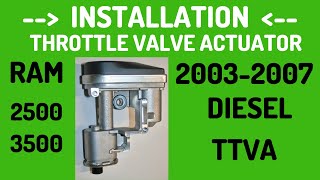
- Faulty Transmission Throttle Valve Actuator (Dodge 48RE) (Very Common) — Specific to Dodge Ram trucks with the 48RE transmission, this code points to a mechanical failure of the TTVA motor, not the TCC solenoid. The actuator's motor fails or its gears strip.
- Wiring Harness or Connector Damage (Common) — Electrical wires leading to the solenoid fray, corrode, short to ground, or break due to heat and vibration. Connector pins corrode or become loose, causing an intermittent connection.
- Low or Contaminated Transmission Fluid (Common) — If the fluid is old, burnt, and full of clutch material or metallic debris, it clogs the tiny passages and filter screen on the solenoid, causing it to stick.
- Poor Ground Connection (Less Common) — A corroded or broken ground strap for the transmission or PCM causes erratic voltage and communication problems with sensors and solenoids.
- Faulty Powertrain Control Module (PCM) (Rare) — The internal driver circuit that sends the voltage signal to the solenoid fails. Consider this only after ruling out all wiring and grounds.
Symptoms

- Illuminated Check Engine Light — The code P1753 is stored in the vehicle's computer memory, triggering the primary warning light.
- Flashing 'D' or 'D4' Light (Honda/Acura) — Honda and Acura vehicles flash the drive indicator light on the instrument cluster to signal a transmission-specific fault code.
- Limp Mode Activation — The transmission defaults to a single gear (often 2nd or 3rd) to prevent damage, resulting in poor acceleration and a severely limited top speed.
- Harsh or Delayed Shifting — The vehicle shifts roughly between gears, fails to shift at the correct time, or slips.
- Decreased Fuel Economy — Because the torque converter does not lock up at cruising speeds, the engine runs at a higher RPM, consuming significantly more fuel.
- Engine Stalls When Stopping — If the torque converter clutch gets stuck in the 'locked' position, it fails to disengage when stopping, causing the engine to stall.
Diagnostic Flowchart
Tap your situation to follow the diagnostic path that matches what you're seeing on this code.
Common Fixes & Costs
- Replace Blown Fuse — Parts: $1-$5, Labor: $0, ~0.1 hr book time (DIY)
- Replace Torque Converter Clutch (TCC) Solenoid
— Parts: $50-$150, Labor: $150-$300, ~1.5 hr book time
(Intermediate)
: OEM - Replace Transmission Throttle Valve Actuator (TTVA)
— Parts: $150-$250, Labor: $100-$150, ~0.8 hr book time
(DIY)
: OEM - Repair Damaged Wiring or Replace Connector — Parts: $15-$50, Labor: $150-$350, ~2 hr book time (Intermediate)
- Transmission Fluid and Filter Change — Parts: $60-$120, Labor: $100-$200, ~1.2 hr book time (DIY)
Used vs. New Parts: Buying Guide
When a used part is worth it: For a simple, externally-mounted TCC solenoid or Dodge TTVA on a high-mileage vehicle, a used part from a reputable salvage yard is a budget-friendly option. Never use a used part for solenoids located inside the transmission pan.
Donor-vehicle mileage cap: roughly under 100000 miles for the part to have meaningful remaining life.
Donor quality checklist:
- Verify the donor vehicle's mileage and reason for being salvaged (accident damage is better than transmission failure).
- Inspect electrical connector pins for corrosion or damage.
- Match the part number exactly; manufacturer revisions are not interchangeable.
Decision logic:
- If The part is internal to the transmission (requires pan removal) → Buy new. The labor cost is too high to risk installing a used part with an unknown lifespan.
- If The vehicle is less than 10 years old or has under 120k miles → Buy new (OEM or quality aftermarket). The reliability and warranty are worth the extra cost.
- If The vehicle is older, high-mileage, and the part is external and easy to access (e.g., Dodge TTVA) → A used part with a 90-day warranty is a cost-effective choice.
Warranty tradeoff: Used parts offer a 30-90 day functional warranty covering the part only. New aftermarket parts come with a 1-year to limited-lifetime warranty. New OEM parts offer the best warranty at the highest cost.
Worst-case if a used part fails: $250-600 if a used external part fails after the warranty period, requiring repeat labor and another part.
What Happens If You Wait — Timeline
- 0-1 month: Code P1753 is set and the Check Engine Light illuminates. The torque converter stops locking up at highway speeds, causing engine RPM to run 300-500 RPM higher than normal during cruise. (MPG impact: 5-15%% · Added cost: $20-$60 in wasted fuel.)
- 1-3 months: Constant slippage of the unlocked torque converter generates significant excess heat. The transmission fluid runs hotter than designed, accelerating breakdown and losing lubricating properties. The vehicle feels sluggish. (MPG impact: 10-20%% · Added cost: $50-$150 in wasted fuel, plus initial heat damage to fluid and seals.)
- 3-6 months: Transmission fluid turns dark, burnt, and contaminated with fine debris from accelerated wear. Excess heat hardens internal seals and glazes clutch surfaces. A fluid flush at this point risks dislodging debris and causing immediate failure. (MPG impact: 15-25%% · Added cost: $200-$500 for a transmission service that cannot fix the underlying damage.)
- 6+ months: Catastrophic internal failure occurs. Extreme heat and contaminated fluid destroy clutch packs, warp metal components, and clog the valve body. The transmission slips badly or fails to engage gears, requiring a complete rebuild. (MPG impact: N/A (Vehicle likely undrivable)% · Added cost: $2,500-$5,000 for a replacement or rebuilt transmission.)
Cost of Not Fixing It
- 0-1 month: Decrease in fuel economy (5-15% drop). The engine runs at a higher RPM during cruise, wasting fuel. (Added cost: $20-$60 in extra fuel costs.)
- 1-6 months: Constant slippage in the torque converter generates excess heat. This breaks down the transmission fluid, reducing lubricating properties and accelerating wear on internal seals and clutches. (Added cost: $200-$500 for a transmission fluid flush in an attempt to mitigate damage.)
- 6+ months: Catastrophic transmission failure. Overheated, contaminated fluid leads to glazed clutches and damaged seals, turning a simple solenoid issue into a complete transmission rebuild. (Added cost: $2,500-$5,000 for a full transmission rebuild or replacement.)
Diagnosis Steps

- Inspect Fuses and Grounds (Honda/Acura Focus)
Thoroughly inspect all relevant fuse boxes. For Hondas/Acuras, check the #6 (15A) and #13/#15 (7.5A) fuses in the interior panels. Inspect the main ground straps from the battery to the chassis and transmission case for corrosion.
Tools: Fuse puller, Multimeter (Beginner) - Test Dodge TTVA Function (Dodge Focus)
For Dodge Ram trucks with a 48RE transmission, remove the TTVA from the side of the transmission but leave it plugged in. Turn the ignition key to 'ON' (engine off). The 'D' shaped shaft on the TTVA motor must cycle through a self-test calibration. If it does not move, the TTVA is faulty.
Tools: Basic hand tools (Intermediate) - Check Transmission Fluid Level and Condition
Verify the transmission fluid is at the correct level. The fluid must be pink or red and translucent. Dark brown or black fluid with a burnt smell or visible metal particles indicates significant internal wear causing the solenoid issue.
Tools: Rag, Dipstick (Beginner) - Visually Inspect the Wiring Harness
Inspect the wiring harness leading to the transmission's external solenoids for chafing, melting, or rodent damage. Unplug the connector to the suspect solenoid and check for bent or corroded pins.
Tools: Flashlight (Beginner) - Test Solenoid Resistance (Pro Tip)
Disconnect the solenoid's electrical connector. Use a multimeter set to Ohms (Ω) to measure resistance between the solenoid's two pins. For most Honda/Acura TCC solenoids, the specification is 12 to 25 Ohms. A reading of infinite resistance (OL) or near zero means the solenoid is electrically faulty and must be replaced.
Tools: Multimeter (Intermediate) - Check for Power and Ground at the Harness Connector
Turn the ignition key to the 'ON' position (engine off). Using a multimeter set to DC Volts, probe the power wire in the solenoid's harness connector. You must have battery voltage (~12V). Check the ground wire for continuity to the chassis ground. No voltage points to a problem upstream in the wiring or PCM.
Tools: Multimeter (Advanced) - Test Solenoid Mechanical Function
If resistance passes, test the mechanical action. Using jumper wires, apply 12V power from the battery directly to the solenoid's pins. You must hear a distinct 'click' as the internal valve actuates. No click means the solenoid is mechanically stuck and requires replacement.
Tools: Jumper wires, 12V power source (Intermediate) - Analyze Scan Tool Live Data (Advanced)
Connect a professional scan tool and monitor 'TCC Solenoid Commanded State' and 'TCC Slip Speed' while driving. When the solenoid is commanded on, the slip speed must drop to near zero RPM. If the PCM commands lock-up but slip speed remains high, it confirms a hydraulic or mechanical issue.
Tools: Professional Bi-Directional Scan Tool (Advanced) - Back-Probe the PCM Connector (Advanced)
Identify the TCC solenoid control wire pin at the PCM connector using a wiring diagram. With the engine running, back-probe this pin. Command the TCC to lock up with a scan tool and watch for the PCM to send the ground signal. If the signal is not sent, the PCM is faulty.
Tools: Multimeter, Back-probe kit (Advanced)
When This Code Triggers (Freeze-Frame Conditions)
- Engine Coolant Temp: 175-210°F (The engine must be at full operating temperature before the PCM commands torque converter lock-up.)
- Vehicle Speed: 40-55 mph (Lock-up is commanded at steady highway cruising speeds.)
- Engine RPM: 1500-2500 RPM (Occurs at a steady engine speed, not during heavy acceleration or deceleration.)
- Throttle Position: 15-40% (The fault is set under light to moderate, steady throttle input, indicating a cruise condition.)
Related Codes
- P0700 — A generic transmission fault code meaning the TCM stored a code. It provides no diagnostic information on its own but almost always appears alongside P1753.
- P0740 — The generic equivalent for 'TCC Circuit Malfunction.' If both are present, it strongly points to the TCC solenoid, its wiring, or its connector.
- P1768 — On Honda and Acura vehicles, this code often appears with P1753. Check shared electrical points first, like the #6 (15A) fuse in the driver's fuse box and main transmission ground wires.
- P1751 — On Dodge trucks with the 48RE transmission, this code frequently accompanies P1753. P1753 indicates a mechanical failure to move, while P1751 indicates the actuator's position sensor reading is out of range. Replace the TTVA.
Climate & Environmental Factors
- High Humidity / Salt Belt Regions: Moisture and road salt significantly accelerate corrosion on electrical connectors, wiring, and ground points. A corroded ground strap or connector pin causes the erratic voltage readings that trigger P1753.
- Extreme Cold Weather: In very cold temperatures, transmission fluid becomes thicker, causing delayed solenoid operation. The added strain exposes pre-existing electrical weaknesses.
How to Talk to a Mechanic About This Code
Say this: "I have a P1753 code on my [Vehicle Year, Make, Model]. I'd like to schedule a diagnostic. Based on the vehicle, the code could mean a few different things, so I'd like you to please confirm if it's a TCC solenoid circuit issue, a blown fuse, or something else like a TTVA on a Dodge. Can you please test the component and circuit before recommending a replacement?"
This signals you've done your research and understand the code is manufacturer-specific. It steers the mechanic away from just replacing the most obvious part and encourages proper electrical diagnosis, which saves you money.
Avoid saying:
- 'My transmission is acting weird.'
- 'My check engine light is on, can you just fix it?'
- 'I think I need a new transmission.'
Questions to ask before authorizing the repair:
- What specific diagnostic steps did you take to confirm the failure? Did you test the solenoid's resistance and check for power at the connector?
- If you are recommending a solenoid replacement, did you inspect the fluid and the old solenoid's screen for heavy debris that might indicate a larger transmission problem?
- Is the recommended part an OEM part or aftermarket, and what is the warranty on both the part and the labor?
- Could you provide a detailed breakdown of the parts and labor costs in the estimate?
Where to Take It: Dealer vs Independent vs Chain
- Dealer:
A strong, safe choice, especially for less common makes or if you suspect a complex electronic issue. They are most likely to know the specific 'quirk' for your car.
Best for: Vehicles under warranty, Complex manufacturer-specific issues (e.g., Audi Tiptronic switch, Hyundai TSBs), Newer vehicles where having factory-trained technicians and OEM parts is a priority.
Downsides: Highest labor rates, often 1.5-2x an independent shop., May be more inclined to replace a whole assembly (like a valve body) rather than a single component. (Typical cost: +50% vs. baseline) - Independent Shop:
Excellent fit, but choose wisely. Look for a shop that specializes in transmissions or has ASE-certified technicians with strong electrical diagnostic skills.
Best for: Out-of-warranty vehicles where cost is a major factor., Common vehicles with well-documented P1753 issues (Hondas, Dodge Rams)., Building a relationship with a local mechanic you trust.
Downsides: Quality and expertise vary widely. You must find one with strong diagnostic and transmission experience., May not have access to the very latest manufacturer TSBs or specialized tools. (Typical cost: +0% vs. baseline) - Chain Shop:
High risk. While they offer a 'free diagnostic', it's often a basic code scan. The complexity and vehicle-specific nature of P1753 make it a poor fit for most chain shops. Use for a second opinion on a quote, but be wary of their diagnosis.
Best for: Basic fluid and filter services.
Downsides: High potential for misdiagnosis of electrical faults., Often a business model based on upselling, which leads to recommending a full transmission rebuild when only a minor repair is needed., Technician skill and experience can be inconsistent. (Typical cost: -10% vs. baseline)
When to Walk Away From the Repair
If the estimated repair cost exceeds 50% of the vehicle's private-party value, sell or trade in the vehicle.
- Car worth $4000, fix is $800: Fix it. This cost is well within the reasonable threshold for a critical repair.
- Car worth $3000, fix is $2000: Walk away. The repair cost is over 60% of the car's value. It's not a sound investment.
- Car worth $15000, fix is $3500: Borderline, but likely fix it. This is a major repair, but still less than 25% of the car's value. A new transmission gives many more years of life.
What Scan Tool You Need for This Code
Minimum: A scanner capable of reading manufacturer-specific codes and displaying live data like 'TCC Commanded State' and 'TCC Slip Speed' to verify the computer is commanding the solenoid.
A basic $20 scanner only shows a generic P0700 'Transmission Fault' code. You need a scanner capable of reading manufacturer-specific codes and displaying live data to verify the computer is commanding the solenoid.
Budget: OBDeleven / Basic Foxwell or Autel models (~$70-120) — Reads and clears manufacturer-specific transmission codes. Some, like OBDeleven, offer live data for certain brands. Good for confirming the code and ruling out simple fixes.
Mid-range: BlueDriver Pro / Foxwell NT510 Elite / Innova 5610 (~$120-250) — This is the sweet spot. These scanners read enhanced codes (ABS, Airbag, Transmission) for most major brands and display critical live data PIDs like transmission fluid temperature, solenoid command status, and torque converter slip. This determines if the issue is electrical or mechanical.
Professional: Autel MaxiCOM MK808 / XTOOL D7W (~$450-800) — Offers full bi-directional control. This allows you to command the TCC solenoid on and off directly from the scan tool to test its mechanical function without having to manually apply voltage. This is the closest a DIYer gets to professional-grade diagnostic capability.
Rent vs buy: For a one-time diagnosis, many auto parts stores rent out scanners for free (with a deposit). However, for P1753, a rental scanner is often too basic. Buying a mid-range tool is a good investment for any DIYer, as it is used for all future car issues, saving diagnostic fees over time.
How to Clear the Code After You Fix It
- Use an OBD-II scan tool to erase the P1753 trouble code.
- Perform a complete OBD-II drive cycle to allow the readiness monitors to run.
- If the battery was disconnected, all monitors reset and require a longer drive cycle.
Drive cycle (~20 minutes): 1. Cold start and idle for 2-3 minutes. 2. Drive in mixed city traffic for 5-10 minutes. 3. Accelerate to a steady highway speed (55-60 mph) and maintain for 5-10 minutes. 4. Coast down to 20 mph without braking, then stop. This allows system monitors to complete self-tests.
Readiness monitors affected: Comprehensive Component Monitor, Catalyst Monitor, Oxygen Sensor Monitor
Before emissions retest: drive at least 50 miles to fully set monitors.
Watch out for:
- Clearing the code without performing a drive cycle results in a 'Not Ready' status, causing an automatic emissions inspection failure.
- The code returns immediately if the underlying electrical fault is not repaired.
Will This Fail Emissions / State Inspection?
Yes — this code typically fails an OBD-II emissions inspection.
- California: An active Check Engine Light results in an automatic smog check failure. After repair, a full drive cycle must be completed to set all readiness monitors before a re-test.
- New York: A vehicle with an illuminated Malfunction Indicator Lamp fails the mandatory OBD-II emissions inspection. Clearing the code just before the test results in failure due to 'Not Ready' monitors.
- Texas: An illuminated Check Engine Light is an automatic failure. For 2001 and newer vehicles, only one readiness monitor can be 'Not Ready' to pass.
Most Commonly Affected Vehicles
- Honda Accord (1998-2003) — These model years are notorious for automatic transmission issues. P1753 is a very common code, often a precursor to transmission failure due to internal debris clogging the solenoid screens.
- Honda Civic (1999-2005) — Frequently caused by a disconnected plug, a blown fuse, or a failing external solenoid, making it a common DIY repair.
- Acura TL (1999-2003) — These models used a transmission known for 2nd and 3rd gear clutch pack failures. P1753 is an early warning sign. Frequent fluid changes are critical for longevity.
- Dodge Ram 2500/3500 (with 48RE transmission) (2005-2007) — P1753 points specifically to a 'Transmission Throttle Valve Mechanical Performance' issue. The cause is almost always a failed Transmission Throttle Valve Actuator (TTVA), not a TCC solenoid.
- Honda Odyssey (1999-2004) — The automatic transmissions in these minivans were a weak point. P1753 frequently indicates solenoid failure caused by excessive clutch material contaminating the fluid.
- Hyundai Elantra, Sonata, Santa Fe (2010-2018) — P1753 indicates 'Shift Solenoid A Electrical'. Hyundai issued TSB 19-AT-015H providing a specific diagnostic and replacement procedure for the affected solenoid and internal wire harness.
- Toyota Land Cruiser, LX470 (1998-2007) — Code P1753 indicates a 'Shift Solenoid No.4 Circuit Malfunction', pointing to a fault with a specific gear-shifting solenoid rather than the TCC solenoid.
- Nissan Sentra, Altima (2000-2006) — P1753 refers to a general TCC solenoid circuit fault. Diagnosis follows standard electrical checks of the solenoid and wiring.
- BMW 3 Series (E46), 5 Series (E39) (1999-2006) — P1753 is defined as 'Transmission fluid pressure regulating solenoid D - circuit failure', pointing to a specific pressure control solenoid within the Mechatronics unit.
Manufacturer-Specific Notes
- Honda/Acura: This code is extremely common and is almost always accompanied by a flashing 'D' ('D4' or 'D5') light. ALWAYS check the #6 (15A) fuse in the driver's interior fuse box before replacing parts.
- Dodge/Chrysler/Jeep: On trucks with the 48RE transmission, P1753 means 'Transmission Throttle Valve Mechanical Performance'. The problem is the Transmission Throttle Valve Actuator (TTVA), not the TCC solenoid.
- Hyundai: For many 2010-2018 models, P1753 is 'Shift Solenoid A Electrical', and TSB 19-AT-015H details the repair. On other models, it counterintuitively indicates a CAN bus communication issue with a wheel speed sensor.
- Audi/Volkswagen: Code 18161/P1753 points to an 'Implausible Signal' from the Tiptronic Switch (F189) in the gear selector assembly. This fault causes the PRNDL indicator to light up entirely and prevents manual shifting.
Real Owner Stories
2000 Honda Civic with multiple codes and shifting issues
Check engine light on, flashing D4 light, speedometer flickering, harsh shifting, and no power on takeoff. Codes P1753, P1768, and P1298 were present.
Outcome: The actual cause was a single blown 7.5A fuse (#15 in the interior fuse box) labeled 'alternator SP sensor'. Replacing the fuse resolved all symptoms and codes.
Lesson: On Hondas, multiple unrelated transmission and engine codes are frequently caused by a single blown fuse. Always check the interior fuse box before replacing expensive components.
2005 Dodge Ram 2500 with 48RE Transmission
Check engine light illuminated, putting the truck into 'limp mode' with severe power loss while towing a 14,000 lb trailer. Codes P1753 and P1751 were stored.
Outcome: The root cause for P1753 on a 2005-2007 Dodge Ram is the TTVA (Part #53041140AB). The repeated failures were traced to a wiring harness short and interference from an aftermarket towing module.
Lesson: On a 48RE-equipped Dodge Ram, P1753 points to a mechanical performance issue with the TTVA, not the TCC solenoid. If replacing the TTVA fails, inspect the wiring harness for intermittent shorts and disconnect aftermarket electronic modules.
1999 Acura TL with 104k miles
After sitting for 10 days, the car started, threw code P1753, and would not move in D4, though reverse worked.
Outcome: This scenario is a classic symptom of internal transmission failure where debris clogs the solenoid. On these Acura/Honda transmissions, contaminated fluid from clutch pack wear blocks solenoid screens, causing them to stick.
Lesson: If P1753 appears with shifting problems on an early 2000s Honda or Acura, suspect a hydraulic issue before an electrical one. Check the fluid for debris. Cleaning the solenoid screen is a temporary fix; the transmission requires a rebuild.
How to Prevent This Code From Triggering
- Perform transmission fluid drain-and-fills (Every 30,000-50,000 miles) — Clean fluid prevents the buildup of clutch material and metallic debris that clogs the fine mesh screens on solenoids, causing them to stick or fail.
- Use OEM-specified transmission fluid (Every fluid change) — Using universal ATF instead of manufacturer-specific fluid causes chemical incompatibilities, leading to seal degradation and improper solenoid operation.
- Clean transmission ground straps (During oil changes or other maintenance) — A corroded ground strap between the transmission, chassis, and battery causes erratic voltage and faulty signals to the solenoids and TCM, triggering P1753.
- Install an auxiliary transmission cooler (Once, for vehicles used for towing) — Excessive heat is the primary cause of fluid breakdown. An auxiliary cooler prevents overheating and extends the life of all components, including solenoids.
- Apply dielectric grease to transmission connectors (When servicing any transmission sensor or solenoid) — In high-humidity or salt-belt regions, dielectric grease keeps moisture out, preventing the pin corrosion that leads to intermittent electrical faults.
Frequently Asked Questions
Can I fix P1753 myself?
For many vehicles, yes. If the cause is a blown fuse, a loose connector, or an externally-mounted solenoid (like the Dodge TTVA), a DIY repair is very possible for someone with basic mechanical skills. If the solenoid is inside the transmission oil pan or the issue is a complex wiring short, it is better left to a professional.
How much does it cost to fix P1753?
Repair costs range from $5 for a blown fuse to $800+ for internal transmission wiring repairs. Replacing an external TCC solenoid or Dodge TTVA at a shop typically costs $250 to $450 including parts and labor. Professional diagnostics add $100 to $150 to the final bill.
Will clearing the code fix the problem?
No. Clearing the code only erases the fault from the computer's memory and turns off the check engine light temporarily. The underlying electrical or mechanical problem still exists, and the code will return as soon as the computer's self-test runs again, usually within one or two drive cycles.
I replaced the solenoid but the P1753 code came back. What now?
This confirms the issue is in the electrical circuit, not the solenoid itself. Re-trace the entire circuit from the solenoid back to the TCM/PCM to find intermittent shorts, broken wires, or corroded connector pins. If the wiring and grounds are perfect, the Powertrain Control Module (PCM) itself is likely faulty.
What is the most common misdiagnosis for P1753?
The single biggest mistake is immediately replacing the solenoid without performing basic electrical checks. Always test the circuit before buying parts. The second major error is not knowing the manufacturer-specific definition, for example, replacing the TCC solenoid on a Dodge Ram when the code actually points to the TTVA.
Is a P1753 code a sign of a bad transmission?
Not necessarily, as P1753 primarily indicates an electrical circuit fault. However, if metallic debris from failing internal clutches clogs the solenoid, the code becomes a symptom of catastrophic transmission failure. This is a notorious issue on 1999-2003 Acura TLs and Honda Accords.
Can I just clean the solenoid instead of replacing it?
Sometimes. If the solenoid's filter screen is simply clogged with debris, cleaning it thoroughly with brake or carburetor cleaner can restore its function. However, if the solenoid has failed electrically (testing with incorrect resistance) or is mechanically seized, cleaning will not fix it and it must be replaced.
Key Takeaways
- Code P1753 flags an electrical fault in the torque converter clutch circuit, but definitions vary: it means a TCC solenoid on Hondas, but a Throttle Valve Actuator on 2005-2007 Dodge Rams.
- Always check the #6 (15A) and #15 (7.5A) interior fuses on 1998-2005 Honda and Acura models before replacing any transmission parts.
- Test the TCC solenoid's electrical resistance with a multimeter; a healthy Honda solenoid reads between 12 and 25 Ohms, while an 'OL' reading confirms a dead part.
- Stop driving the vehicle immediately; the unlocked torque converter generates extreme heat that destroys internal clutches, turning a $150 solenoid repair into a $3,500 transmission rebuild.
Helpful Videos

The information in this article is provided for general reference and educational purposes only. Vehicle specifications, procedures, and part compatibility can vary by production date, trim level, and region. Always consult your vehicle's factory service manual and verify part numbers before purchasing or performing repairs. Safety-critical components such as airbags, seat belts, and braking systems should be installed by a qualified professional.
- 🎬 Helpful Videos
- What Does P1753 Mean?
- Can I Drive With P1753?
- Common Causes
- Symptoms
- Diagnostic Flowchart
- Common Fixes & Costs
- Used vs. New Parts: Buying Guide
- What Happens If You Wait — Timeline
- Cost of Not Fixing It
- Diagnosis Steps
- When This Code Triggers (Freeze-Frame Conditions)
- Related Codes
- Climate & Environmental Factors
- How to Talk to a Mechanic About This Code
- Where to Take It: Dealer vs Independent vs Chain
- When to Walk Away From the Repair
- What Scan Tool You Need for This Code
- How to Clear the Code After You Fix It
- Will This Fail Emissions / State Inspection?
- Most Commonly Affected Vehicles
- Manufacturer-Specific Notes
- Real Owner Stories
- 2000 Honda Civic with multiple codes and shifting issues
- 2005 Dodge Ram 2500 with 48RE Transmission
- 1999 Acura TL with 104k miles
- How to Prevent This Code From Triggering
- Frequently Asked Questions
- Can I fix P1753 myself?
- How much does it cost to fix P1753?
- Will clearing the code fix the problem?
- I replaced the solenoid but the P1753 code came back. What now?
- What is the most common misdiagnosis for P1753?
- Is a P1753 code a sign of a bad transmission?
- Can I just clean the solenoid instead of replacing it?
- Key Takeaways
- 🎟️ Get 5% Off