

P1682 on 2011-2017 Chevrolet Caprice PPV: Ignition Circuit Fault Causes and Fixes
This code typically indicates a fault with an ignition relay, the ignition switch, or related wiring. The most common symptoms are a crank-no-start condition or intermittent stalling. Swapping the ignition relay in the underhood fuse box with an identical one is often the quickest and cheapest first diagnostic step.
- P1682 means the ECM is seeing a disagreement between its two main ignition power sources, which often results in a crank-no-start condition.
- Before performing complex diagnostics, always check the simple things first: fuses and relays. Swapping the ignition relay with a known-good one is a fast and free diagnostic step.
- The most likely causes are a bad ignition relay, a worn-out ignition switch, or a poor connection at the underhood fuse box.
- Do not automatically replace the ECM; it is rarely the cause of this specific code.
- Verify part numbers with your vehicle's VIN, especially for the ignition switch, as there are differences between early (2011-13) and late (2014-17) models.
What's Unique About the 2011-2017 Chevrolet Caprice PPV
The Caprice PPV is a unique vehicle based on the Australian Holden Commodore (VE/VF) Zeta platform, sharing its core electrical architecture with the Pontiac G8 and Chevrolet SS. While the P1682 code follows standard GM electrical logic, owners of these platform-mates have reported that issues can stem from relays, the ignition switch, or even a failing battery causing voltage discrepancies. Unlike some GM trucks and SUVs where a specific fuse box terminal (like pin 51 on the X3 connector) is a known failure point documented in TSBs, diagnosis on the Zeta platform should follow a logical electrical troubleshooting path starting with the battery and relays before moving to more complex components.
Generation note: The 2011-2017 Caprice PPV is a single generation, but it received a major interior and systems update in 2014. 2011-2013 models share an interior design with the Pontiac G8, while 2014-2017 models are closer to the Chevrolet SS. This can affect the part number for the ignition switch. A recall (NHTSA 14V540000) for 2011-2013 models addressed the key being bumped out of the 'Run' position, though this was a key modification, not a switch replacement.
Symptoms You May Notice
- Engine cranks but will not start
- Intermittent stalling while driving
- Engine will not shut off with the key
- Check Engine Light is on
- Multiple warning lights may appear, such as for the Anti-lock Brake System (ABS) or Traction Control
- "Reduced Engine Power" message displayed on the instrument cluster
- No-crank, no-click condition
- Replacing the Mass Airflow (MAF) sensor. A GM TSB for other vehicles notes that a wiring issue in the fuse box can cause both P1682 and a MAF sensor code (P0101) to appear together, leading to unnecessary MAF sensor replacement.
Most Likely Causes
- Faulty Ignition or Run/Crank Relay 🔴 High Probability Relays are electro-mechanical switches that wear out over time. On many GM vehicles, including platform-mates like the Pontiac G8, this is a common failure point for a P1682 code. Heat and vibration in the underhood fuse box contribute to their failure.
How to confirm: Locate the ignition and run/crank relays in the underhood fuse box. A diagram for the VE/VF Commodore or Chevy SS can help identify them. Swap the suspect relay with an identical one from a non-critical circuit (e.g., the horn relay). If the car starts and the code clears, the relay is bad. A Pontiac G8 owner with P1682 identified the R12 relay as the culprit.
Typical fix: Replace the faulty relay.
Est. part cost: $10-$25 - Faulty Ignition Switch 🟡 Medium Probability The electrical contacts inside the ignition switch can wear or fail, leading to an improper voltage signal being sent to the ECM. This was a common fix on similar GM vehicles of the era. A user on the Just Commodores forum with a 2016 Holden Maloo (VF platform) reported changing the ignition switch as a first step for this code. A Pontiac G8 owner found that wiggling the key in the ignition would cause multiple electrical faults to occur, pointing to a worn switch.
How to confirm: This requires testing the voltage on the output wires of the ignition switch harness with a multimeter while turning the key. A wiring diagram for your specific year is needed to identify the correct wires to test.
Typical fix: Replace the ignition switch assembly.
Est. part cost: $30-$90 - Poor Connection at Underhood Fuse Box (UBEC) ⚪ Low Probability Corrosion or loose terminal connections within the fuse box connectors can cause intermittent voltage drops, triggering the code. GM has issued TSBs for other models (like Traverse and Acadia) pointing to compromised connector pins as a root cause. On similar platforms like the Trailblazer SS, heat can cause internal fuse box copper traces to crack and fail, leading to P1682.
How to confirm: Visually inspect the fuses and the large connectors on the underside of the fuse box for any signs of corrosion, water intrusion, or backed-out pins. Wiggling the ECM-related fuses or relays while the key is on may replicate the fault; a loose fuse socket was the confirmed fix for a P1682 on a GM vehicle.
Typical fix: Clean the corroded terminals, repair the specific wire/terminal connection, or tighten loose fuse sockets. In severe cases, the entire fuse box may need replacement.
Est. part cost: $5 (for terminal repair) - $400+ (for fuse box replacement) - Weak or Failing Battery ⚪ Low Probability The Holden Commodore VF (the basis for the 2014+ Caprice) is known to be critically dependent on good battery voltage. A failing battery can cause numerous, seemingly unrelated electrical faults and DTCs, including those related to ignition voltage plausibility.
How to confirm: Have the battery professionally load tested, even if it seems to hold a charge. A simple voltage check is often not sufficient to identify a weak battery.
Typical fix: Replace the vehicle's battery.
Est. part cost: $150-$250
Rare But Worth Checking
- Faulty Engine Control Module (ECM): This is rare. The ECM is often mistakenly blamed. Before replacing the ECM, all other possibilities, including wiring, relays, and the ignition switch, should be exhaustively ruled out. An ECM failure may also be accompanied by other communication codes (U-codes).
Diagnosis Steps
- Read all stored fault codes with an OBD-II scanner. If codes like P0685, P0689, P2534, or P2610 are present, diagnose them first or as part of a holistic ignition circuit diagnosis.
- Have the battery load-tested. The Zeta platform is sensitive to low voltage, which can cause this code.
- Check all fuses related to the ECM and ignition circuits in both the underhood and interior/luggage compartment fuse panels. Replace any blown fuses.
- Locate the Run/Crank and/or Ignition relays in the underhood fuse box. Swap the suspect relay with an identical relay from a non-essential system (like the horn) to see if the no-start condition is resolved. A Pontiac G8 owner with P1682 noted the issue was with the R12 relay. If swapping works, replace the faulty relay.
- If relays are good, use a multimeter to check for battery voltage at the ignition-related fuse terminals in the fuse box with the key in the 'ON' position. A lack of voltage points to a problem upstream (e.g., the ignition switch).
- Inspect the wiring and connector at the ignition switch for any signs of damage, looseness, or corrosion.
- If accessible, inspect the large electrical connectors at the Underhood Bussed Electrical Center (UBEC) for corrosion or backed-out pins, as noted in TSBs for similar GM electrical architectures.
- If all wiring, fuses, and relays are confirmed to be good, the ignition switch itself may be faulty and require testing and likely replacement.
- As a final step, inspect the wiring and connectors at the ECM for any damage before considering an ECM replacement.
Parts You'll Likely Need
- Multi-Purpose Relay
(OEM #13500114)— This is the most common and easiest part to fail in the circuit. It is responsible for switching power to one of the ECM's ignition circuits. This part number supersedes many older GM relay numbers.
Trusted brands: ACDelco, Standard Motor Products
OEM price range: $15-$25
Aftermarket price range: $10-$20 - Ignition Switch
(OEM #23276089 (2014-2017), 92235499 (2011-2013, unverified))— The internal contacts wear out, causing incorrect voltage signals. Part numbers differ between 2011-2013 and 2014-2017 models. 23276089 is cited for 2014+ models and many other GM vehicles. The earlier part number is less certain but appears to be distinct.
Trusted brands: ACDelco, Duralast, Standard Motor Products
OEM price range: $40-$90
Aftermarket price range: $25-$60
Related Codes That Often Appear With This One
- P0689 — This code relates to the ECM/PCM Power Relay Control Circuit Low Voltage. Since P1682 involves a discrepancy in the ECM's power feeds, a fault in one can often trigger a fault in the other. It is mentioned in TSBs alongside P1682.
- P0101 — TSB 21-NA-032 for GM trucks explicitly states that a compromised wire in the underhood fuse box can cause P1682 and P0101 (Mass Air Flow Sensor Performance) to set together. The root cause is electrical, not the MAF sensor itself.
- P2534 — This code for 'Ignition 1 Switch Circuit Low Voltage' was reported alongside P1682 on a 2014 Holden Maloo, a direct platform-mate. This combination strongly points to an issue with the ignition switch or its related power supply.
- P2610 — This code for 'ECM/PCM Internal Engine Off Timer Performance' was also reported with P1682 and P2534 on the Holden Maloo, indicating a comprehensive failure of the ignition-off logic, which can manifest as the engine refusing to shut down.
Technical Service Bulletins (TSBs) & Recalls
- 21-NA-032: While for Silverado/Sierra, it highlights that a compromised connection in the underhood fuse box (UBEC) can cause P1682 and P0101 together, advising against immediate MAF sensor replacement. This establishes a known GM pattern of UBEC issues causing this code.
- PIT5546G: Also for Silverado/Sierra, it notes that water intrusion into headlamp assemblies can short circuits and cause P1682, leading to a no-start or dead battery. This points to water intrusion as a possible, though unconfirmed, cause on other GM platforms.
Platform-Specific Known Issues
- Sensitivity to Battery Voltage: Owners of the Holden Commodore VF, the Australian counterpart to the 2014-2017 Caprice, report on the 'Just Commodores' forum that the vehicle's complex electronic systems are critically dependent on a healthy battery. A battery that is beginning to fail can cause a cascade of seemingly unrelated fault codes, including P1682, before it gets weak enough to cause a no-crank condition. Therefore, a professional load test of the battery is a crucial early diagnostic step on these vehicles.
- Underhood Fuse Box (UBEC) Failure on Similar Platforms: While not as widely documented on the Caprice PPV specifically, internal failures of the UBEC are a very common cause of P1682 on other GM platforms from the same era, such as the Trailblazer SS and Lambda-platform SUVs (Traverse, Acadia). These failures range from cracked internal copper traces due to heat cycling to corrosion and poor pin tension at the large harness connectors underneath. This pattern of failure is worth keeping in mind if initial relay and ignition switch checks do not resolve the issue.
Mechanic-Grade Diagnostic Values
- Scan Tool Live Data: Ignition 1 Voltage vs. EC Ignition Relay Feedback — expected: Both parameters should display battery voltage with no more than a 3-volt difference between them.. Failure: A difference greater than 3 volts for more than one second will set the code.
- Ignition Voltage Circuit Resistance — expected: Less than 5-6 Ohms.. Failure: A resistance of 5-6 Ohms or greater in the circuit between the UBEC and the ECM is sufficient to cause the DTC to set.
- Standard 12V Relay Coil Resistance — expected: Between 50 and 120 Ohms between pins 85 and 86.. Failure: A reading of 'OL' (open loop/infinite resistance) or near 0 Ohms indicates a faulty relay coil.
Scan Tool Commands That Help
- GDS2 / Tech2: Live Data: 'Ignition 1 Voltage' and 'EC Ignition Relay Feedback' — This is the primary diagnostic screen to use with the key on, engine off. It allows you to directly observe the two voltage signals the ECM is comparing. Wiggling relays, fuses, and wiring harnesses while watching these values can help pinpoint an intermittent connection.
Wiring & Ground Locations
- X50A Underhood Fuse Block (UBEC) — Located in the right front (passenger side) of the engine compartment.. This is the central hub for the fault. It houses the powertrain and run/crank relays and fuses. The two ignition voltage circuits pass through it. Internal corrosion, cracked traces, or loose connections on the underside connectors are a common cause of P1682 on many GM vehicles.
- UBEC Connector X3 — One of the large multi-pin connectors on the underside of the Underhood Fuse Block (X50A).. On other GM platforms like the Traverse and Acadia, TSBs #PIT5643 and #19-NA-276 specifically identify poor terminal tension and arcing at pin 51 of this connector as the direct cause of P1682. While not specific to the Caprice, it highlights a known GM weakness in this area.
- G110 — On the right side of the engine block (for 2011 models).. This is a major engine ground. A poor ground connection can cause floating voltages and reference issues for the ECM, potentially contributing to incorrect voltage readings and various electrical faults.
- G100 / G102 — G100 is on the front of the left cylinder bank; G102 is behind the right headlamp assembly (for 2014 models).. These are primary engine and chassis grounds. Ensuring they are clean and tight is a fundamental step in diagnosing any electrical fault, as a bad ground can cause unpredictable issues across multiple systems.
Real Owner Repair Stories
- YouTube video on a Trailblazer SS (2007 Chevrolet Trailblazer SS, 120,000 miles) — Engine turns over but will not crank/start, especially when hot. Code P1682 present.
❌ Tried (didn't work) Replaced ignition switch, Replaced battery, Replaced powertrain and starter relays
✅ What actually fixed it The owner disassembled the underhood fuse block and found a broken 20-gauge copper wire trace inside. The wire would make contact when cold but separate when hot, causing the intermittent no-start. He repaired the broken trace, which permanently resolved the issue. - YouTube video on a GM vehicle (Unspecified GM car) — Engine won't start, P1682 code present.
❌ Tried (didn't work) Initial diagnosis was inconclusive.
✅ What actually fixed it The problem was a loose connection for the 'ECM Throttle Count 15 amp' fuse (Fuse #5) in the underhood fuse box. The fuse itself was not blown, but the socket in the fuse box was loose, causing an intermittent connection. Wiggling the fuse would make the car start and clearing the code confirmed the fix. - Pontiac G8 Forum user (2008 Pontiac G8) — No-crank condition, code P1682 present.
❌ Tried (didn't work) Searching for a replacement relay.
✅ What actually fixed it The user identified the problem as the R12 relay in the fuse box, which was related to the ignition crank circuit.
OEM Part Supersession History
25799293, 20939745, 20912838→23276089— Standard part consolidation and design updates by GM.
Heads up: Part number 23276089 is the current replacement for many GM vehicles, including the 2014-2017 Caprice PPV.
Model Year Variations Within This Range
- 2011-2013 vs 2014-2017: The ignition switch part number is different due to the 2014 interior refresh. 2011-2013 models (VE Commodore based) use a different switch (P/N 92235499, unverified) than the 2014-2017 models (VF Commodore based), which use P/N 23276089.
Diagnostic Flowchart
Used vs. New Parts: Buying Guide for This Vehicle
When a used part is the smart pick: A complete Underhood Fuse Box (UBEC) is a good candidate for a used part, as a new one can be expensive. An ignition switch from a low-mileage donor vehicle can also be a cost-effective option.
Donor-vehicle mileage cap: roughly under 80000 miles for the part to have meaningful remaining life.
What to inspect on the donor part:
- For a UBEC, inspect thoroughly for any signs of white or green corrosion on the terminals, melted plastic around relays, or water lines/stains.
- Check the underside connectors for any pins that look burnt, discolored, or pushed out of the connector body.
- For an ignition switch, ensure the key turns smoothly without binding or excessive play.
OEM-only on this vehicle (don't cheap out):
- Engine Control Module (ECM) - Due to programming (VIN locking) requirements, a new or professionally remanufactured ECM from a reputable source is highly recommended to avoid compatibility issues.
Aftermarket brands forum-validated for this vehicle:
- ACDelco (for all components)
- Standard Motor Products (SMP) (for relays and ignition switches)
Brands owners have reported issues with on this vehicle:
- No-name, unbranded electronic components from online marketplaces, as their quality control can be inconsistent and lead to repeat failures.
Real Owner Stories
Aggregated from forums and TSBs cited above. Mileages and costs reflect what owners reported in those sources.
2008 Pontiac G8
Symptoms: A no-crank condition with a P1682 code present.
What fixed it: The owner identified that the R12 relay in the underhood fuse box was the culprit. Replacing the faulty relay resolved the issue.
Source hint: GRRRR8.net (Pontiac G8 Forum)
Pontiac G8
Symptoms: Multiple electrical faults would occur when wiggling the key in the ignition.
What fixed it: This symptom pointed directly to a worn ignition switch, which was the root cause of the electrical problems.
Source hint: Pontiac G8 owner experience cited in article context
2016 Holden Maloo
Symptoms: P1682 code was present.
What fixed it: The owner reported changing the ignition switch as a first step to fixing the code.
Source hint: Just Commodores (Holden Commodore Forum)
2014 Holden Maloo
Symptoms: The engine would not shut off with the key, and codes P1682, P2610, and P2534 were all stored simultaneously.
What fixed it: The context uses this as a real-world example of symptoms on the VF platform, but does not state the specific repair that fixed this user's vehicle.
Source hint: Just Commodores (Holden Commodore Forum)
Related OBD-II Codes
Frequently Asked Questions
My 2014 Caprice has a P1682 code. Is it true that a weak battery could be the cause, even if the car still starts sometimes?
My engine won't shut off when I turn the key. Could this be related to the P1682 code on my Caprice?
I suspect a bad relay is causing the P1682 on my Caprice. Is there a specific one to check?
What other warning lights or messages might I see with a P1682 code?
The TSBs mentioned in the article (21-NA-032, PIT5546G) are for Silverado/Sierra trucks. How do they relate to my Caprice PPV?
Is the Pontiac G8 similar enough that its P1682 fixes might apply to my Caprice?
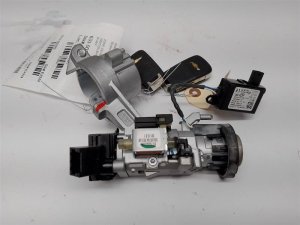
Used OEM Parts in Stock

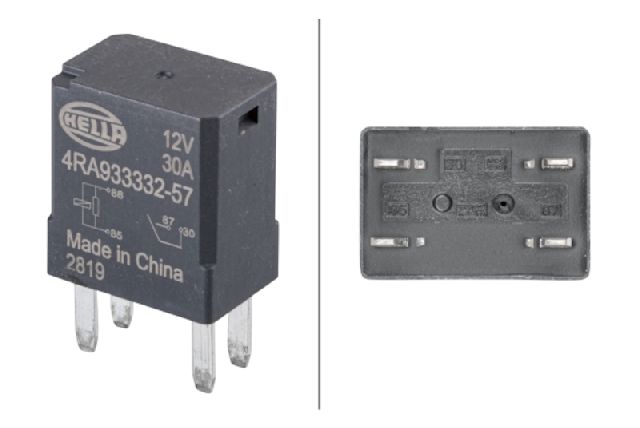
New Aftermarket Parts Available

The information in this article is provided for general reference and educational purposes only. Vehicle specifications, procedures, and part compatibility can vary by production date, trim level, and region. Always consult your vehicle's factory service manual and verify part numbers before purchasing or performing repairs. Safety-critical components such as airbags, seat belts, and braking systems should be installed by a qualified professional.
- Chevrolet Caprice PPV:
- 🛍️ Shop This Part
- What's Unique About the 2011-2017 Chevrolet Caprice PPV
- Symptoms You May Notice
- Most Likely Causes
- Rare But Worth Checking
- Diagnosis Steps
- Parts You'll Likely Need
- Related Codes That Often Appear With This One
- Technical Service Bulletins (TSBs) & Recalls
- Platform-Specific Known Issues
- Mechanic-Grade Diagnostic Values
- Scan Tool Commands That Help
- Wiring & Ground Locations
- Real Owner Repair Stories
- OEM Part Supersession History
- Model Year Variations Within This Range
- Diagnostic Flowchart
- Used vs. New Parts: Buying Guide for This Vehicle
- Real Owner Stories
- 2008 Pontiac G8
- Pontiac G8
- 2016 Holden Maloo
- 2014 Holden Maloo
- Related OBD-II Codes
- Frequently Asked Questions
- 🎟️ Get 5% Off