

OBD-II Code P0689: ECM/PCM Power Relay Sense Circuit Low
The Ultimate Guide to P0689: Meaning, Advanced Diagnosis, and Pro-Level Fixes
- Code P0689 indicates the engine computer detects low voltage (typically under 11.5V) on its own power supply circuit, requiring immediate attention to prevent stalling.
- Swap the PCM power relay with an identical non-critical relay (like the horn) as your first diagnostic step to rule out the most common failure point for zero cost.
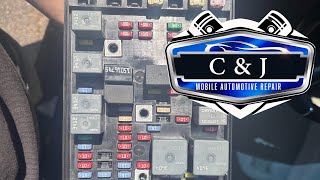
- Inspect the underhood fuse box (UBEC or TIPM) closely on GM, Dodge, and Ford vehicles, as internal corrosion or cracked traces frequently trigger this code.
- Perform a voltage drop test before replacing the PCM; a drop exceeding 0.2V on the power feed or 0.1V on the ground wire proves the issue is wiring, not the computer.
What Does P0689 Mean?

P0689 means your car's main computer, the Powertrain Control Module (PCM), detects a problem with its own power supply. A dedicated sense circuit reports the voltage from the main power relay is too low, preventing the computer from functioning correctly.
Technical definition: The SAE/OBD-II definition is "ECM/PCM Power Relay Sense Circuit Low". The PCM monitors the output of its power relay via a sense circuit to confirm it receives stable voltage after commanding the relay to turn on. If this voltage falls below the manufacturer's specified threshold, the PCM sets code P0689.
🎬 Watch: A quick breakdown of P0689 causes and symptoms.Can I Drive With P0689?
No — Do Not Drive. This code indicates a critical fault in the main computer's power supply, causing no-start conditions or intermittent engine stalling. Stalling while driving causes a sudden loss of power steering and braking assist, creating a severe safety hazard.
Common Causes

- Faulty ECM/PCM Power Relay (Very Common) — The relay is an electronic switch controlling power to the computer. Internal contacts wear out or burn, preventing proper voltage delivery. This is the most frequent cause of P0689.
- Blown Fuse or Faulty Fusible Link (Common) — A blown or corroded fuse protecting the PCM circuit restricts voltage to the relay and the sense circuit.
- Corroded or Damaged Wiring/Connectors (Common) — Corroded, loose, or damaged wires between the power relay and the PCM create high resistance. This causes a voltage drop, especially common in the main underhood fuse box.
- Poor PCM/Engine Ground Connection (Common) — The PCM requires a solid ground connection to the chassis or engine block to measure voltages accurately. A corroded or loose main ground strap causes the PCM's ground reference to float, resulting in false low-voltage readings.
- Weak or Failing Battery/Alternator (Less Common) — A weak battery (below 12.2V at rest) or failing alternator lowers overall system voltage. This triggers P0689 during engine cranking when voltage naturally dips.
- Faulty Ignition Switch (Less Common) — A worn ignition switch creates a weak signal, preventing the relay from activating fully and causing low voltage on the sense circuit.
- Improperly Installed Aftermarket Accessories (Less Common) — Improperly installed remote starters or alarms tapped into PCM power circuits draw excess current or create high resistance at the splice, triggering the code.
- Software or Calibration Glitch (Rare) — Outdated PCM firmware misinterprets normal voltage fluctuations as a fault. An ECU re-flash resolves this.
- Faulty Powertrain Control Module (PCM) (Rare) — The internal sense circuit inside the PCM fails, causing it to misread a healthy voltage signal. This is rare and requires exhaustive elimination of wiring issues first.
Symptoms

- Engine will not start — The engine cranks but will not fire because the PCM lacks power to operate fuel injectors and ignition coils.
- Intermittent stalling — The engine suddenly shuts off while driving or idling, posing a serious safety risk.
- Check Engine Light is on — The Malfunction Indicator Lamp (MIL) illuminates immediately.
- Reduced engine performance — The vehicle hesitates during acceleration or idles roughly due to improper engine management.
- Delayed engine start — The engine cranks for several seconds before firing.
- No communication with scan tool (also visible on scanner) — An OBD-II scanner cannot connect to the vehicle's computer due to a total loss of PCM power.
Diagnostic Flowchart

Tap your situation to follow the diagnostic path that matches what you're seeing on this code.
Common Fixes & Costs
- Replace ECM/PCM Power Relay — Parts: $15-$50, Labor: $0, ~0.1 hr book time (DIY)
- Replace Blown Fuse — Parts: $1-$5, Labor: $0, ~0.1 hr book time (DIY)
- Repair Wiring or Clean Terminals — Parts: $5-$25, Labor: $150-$450, ~1.5 hr book time (Intermediate)
- Replace Underhood Fuse Box Assembly (UBEC/TIPM) — Parts: $200-$900, Labor: $150-$350, ~1.5 hr book time (Professional)
- Replace Powertrain Control Module (PCM) — Parts: $500-$1500, Labor: $125-$250, ~2.5 hr book time (Professional)
DIY vs Professional
- Replace ECM/PCM Power Relay — Beginner:
- Replace Blown Fuse — Beginner:
- Repair Wiring or Clean Terminals — Beginner:
- Replace Underhood Fuse Box (UBEC/TIPM) — Beginner:
- Replace Powertrain Control Module (PCM) — Beginner:
Used vs. New Parts: Buying Guide
When a used part is worth it: For expensive integrated fuse boxes (TIPM/UBEC), a professionally rebuilt unit saves $300-$500 over new. Always buy relays and fuses new.
Donor-vehicle mileage cap: roughly under 80000 miles for the part to have meaningful remaining life.
Donor quality checklist:
- Verify exact part numbers; trim levels change internal wiring.
- Choose a reputable supplier that offers a warranty and tests the unit before shipping.
- Avoid parts from flood-damaged or salt-belt vehicles.
Decision logic:
- If The failed part is a simple relay or fuse → Always buy new; the cost is minimal.
- If The failed part is a TIPM/UBEC and the vehicle is over 100K miles → A professionally rebuilt unit with a warranty offers the best balance of cost and reliability.
- If A used part is the only option due to budget or availability → Source it from a reputable salvage yard with a return policy and match the part number exactly.
Warranty tradeoff: Used salvage parts offer 30-90 day warranties, while rebuilt units offer 1-year warranties. New OEM parts carry a 1-2 year warranty but at a much higher cost.
Worst-case if a used part fails: $300-$600
What Happens If You Wait — Timeline
- 0-1 month: Check Engine Light illuminates. Vehicle experiences slightly longer crank times or a single stall. (MPG impact: 0%% · Added cost: $0)
- 1-4 months: Intermittent stalling becomes frequent. High resistance causes heat buildup in the faulty component. (MPG impact: 0-2%% · Added cost: $150-$400)
- 4-8 months: Vehicle is unreliable. Unstable power cycles stress internal PCM components, risking permanent damage. (MPG impact: 2-5%% · Added cost: $800-$1700)
- 8+ months: Cascading failure. The original fault permanently damages the PCM, starter motor, and battery. (MPG impact: N/A% · Added cost: $1500-$2500)
Cost of Not Fixing It
- Immediate: Vehicle stalls unexpectedly in traffic, causing loss of power steering and braking assist. (Added cost: $200-$500)
- 1-3 months: Repeated low voltage cycles corrupt PCM software or damage internal drivers. (Added cost: $500-$1500)
- 3+ months: Unstable power damages sensitive electronics in the instrument cluster and wears out the starter motor. (Added cost: $300-$2000)
Diagnosis Steps
- Inspect Battery and Connections
Check battery terminals for tightness and corrosion. Test the state of charge with a multimeter; a healthy battery reads 12.4V-12.6V with the engine off. A reading below 12.2V requires charging before further diagnosis.
Tools: Wrench set, battery terminal cleaner, digital multimeter (Beginner) - Locate and Inspect the PCM/ECM Power Relay and Fuse
Find the PCM power relay and fuse in the underhood fuse box. Visually inspect the fuse for breaks and the relay pins for heat damage or corrosion.
Tools: Owner's manual, flashlight (Beginner) - Swap the Relay (The Easiest Test)
Swap the PCM relay with an identical relay from a non-critical circuit (like the horn). If the car starts and the code clears, replace the faulty relay.
Tools: Relay puller pliers (optional) (Beginner) - Test the Relay Socket for Power and Ground
With the relay removed and key on, use a multimeter to verify 12V+ at terminal 30 (main power) and terminal 86 (ignition control). Verify a solid ground on terminal 85.
Tools: Digital multimeter, vehicle-specific wiring diagram (Intermediate) - Check the Sense Circuit Voltage at the PCM
With the relay installed and key on, back-probe the sense circuit wire at the PCM connector. Voltage must be within 0.5V of battery voltage. A larger drop indicates high wiring resistance.
Tools: Digital multimeter, vehicle-specific wiring diagram, T-pins (Advanced) - Advanced: Perform a Voltage Drop Test
With the key on, place one multimeter lead on the positive battery terminal and the other on the relay output pin (terminal 87). A reading above 0.2V indicates excessive resistance. Repeat on the ground side; readings above 0.1V indicate a poor ground.
Tools: Digital multimeter, wiring diagram (Advanced) - Advanced: Test Relay Coil Resistance
Remove the relay and measure resistance between control terminals (85 and 86). A healthy coil reads 50-150 Ohms. Infinity (OL) or near-zero readings mean the relay is dead.
Tools: Digital multimeter (Advanced) - Advanced: Analyze Scan Tool Live Data
Use a scan tool to monitor 'PCM Voltage'. With key on, engine off, this value must match battery voltage. A significantly lower reading confirms the PCM sees low voltage, pointing to wiring or fuse box faults.
Tools: Advanced OBD-II scan tool (Advanced) - Inspect the Underhood Fuse Box (UBEC/TIPM)
Disassemble the fuse box to inspect internal layers for green corrosion, burnt terminals, or cracked solder joints, a known issue on GM and Dodge vehicles.
Tools: Socket set, screwdrivers, flashlight (Advanced) - Professional: Analyze the Relay Control Signal with an Oscilloscope
Connect an oscilloscope to the relay control circuit (pin 85) and ground. A slow, noisy, or incomplete voltage drop when the ignition turns on indicates a weak PCM driver circuit.
Tools: Automotive oscilloscope, wiring diagram (Professional)
When This Code Triggers (Freeze-Frame Conditions)
- Engine State: Key On, Engine Off or Cranking (Sets immediately when ignition turns on if the PCM doesn't see expected voltage.)
- System Voltage: < 11.5V (Shows a PCM voltage reading significantly lower than actual battery voltage.)
- Engine RPM: 0 or > 400 (Occurs before start or during cranking when voltage is lowest.)
- Engine Load: Varies (Occurs under no load or during light throttle when intermittent connections fail.)
Related Codes
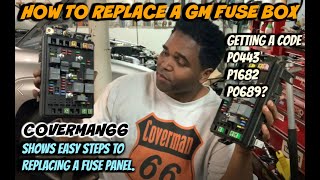
- P1682 — Indicates a discrepancy between two ignition voltage signals. Seeing this with P0689 strongly points to a shared power source failure, like a faulty underhood fuse block.
- P0685 — Points to an open circuit on the low-current control side of the relay. Test pins 85/86 at the relay socket.
- P0690 — Indicates Sense Circuit High. The circuit is shorted to voltage or the relay is stuck closed, keeping power on when it should be off.
- P068A — Means the PCM lost power too quickly after ignition off. Shares root causes with P0689: faulty relay, wiring, or PCM.
Climate & Environmental Factors
- High Humidity / Rain: Moisture seeps into fuse boxes and connectors, causing terminal corrosion. This creates high resistance, directly causing voltage drops.
- Cold Weather: Extreme cold stiffens mechanical relay parts. Freezing moisture prevents contacts from closing, causing a no-power condition.
- Road Salt (Salt Belt Regions): Corrosive salt spray accelerates the deterioration of under-hood wiring, ground straps, and fuse boxes in winter climates.
How to Talk to a Mechanic About This Code
Say this: "I have a P0689 code with intermittent stalling. Please start by checking the PCM power relay, its fuse, and testing for voltage drops at the relay socket."
Directs the mechanic to perform a logical, cost-effective diagnosis instead of immediately quoting an expensive module.
Avoid saying:
- 'My car won't start, just fix it.'
- 'My check engine light is on, can you look at it?'
- 'I think I need a new computer.'
Questions to ask before authorizing the repair:
- Did you perform a voltage drop test on the PCM power and ground circuits? What were the readings?
- Did you test the PCM relay and its socket for proper power and ground signals?
- If you're recommending a fuse box (TIPM/UBEC) or PCM replacement, can you show me the specific test results that prove the original part has failed?
- Are there any Technical Service Bulletins (TSBs) for my vehicle related to a P0689 code?
- What is the warranty on this repair, covering both parts and labor?
Where to Take It: Dealer vs Independent vs Chain
- Dealer:
A strong, safe choice, especially for complex cases, but will likely be the most expensive option.
Best for: Vehicles still under warranty., Known, complex manufacturer-specific issues like Chrysler's TIPM or GM's UBEC failures., When a PCM replacement and programming is confirmed to be necessary.
Downsides: Highest labor rates., May default to replacing an entire assembly (like a TIPM) when a repair might be possible. (Typical cost: +50% vs. baseline) - Independent Shop:
Best overall fit for most out-of-warranty vehicles, provided you find a shop with proven electrical expertise.
Best for: Out-of-warranty vehicles where cost is a factor., Shops with a strong reputation for electrical diagnostics., Getting a second opinion on a costly dealer recommendation.
Downsides: Quality and diagnostic equipment can vary greatly; vet the shop's reviews., May not have the latest manufacturer-specific programming tools for newer vehicles. (Typical cost: +0% vs. baseline) - Chain Shop:
Avoid for initial diagnosis. Their business model is not suited for in-depth electrical testing.
Best for: Simple, confirmed fixes like a battery replacement.
Downsides: Technician skill for complex electrical diagnosis is inconsistent., High pressure to upsell services; risk of misdiagnosis is higher for intermittent codes. (Typical cost: -10% vs. baseline)
When to Walk Away From the Repair
If the estimated repair cost exceeds 40-50% of the car's private-party value, consider selling or scrapping.
- Car worth $3500, fix is $1800: Walk away. The repair cost is over 50% of the car's value. Sell as a 'mechanic's special' or scrap it.
- Car worth $15000, fix is $2000: Fix it. The repair cost is well below the threshold and restores a valuable asset.
- Car worth $5000, fix is $2200: Borderline. Get a second opinion, and if the diagnosis is firm, weigh the car's overall condition before proceeding.
What Scan Tool You Need for This Code
Minimum: A scanner that displays live data PIDs, specifically 'Control Module Voltage'.
A $20 reader won't show the live voltage the PCM actually sees, which is critical for diagnosis.
Budget: BlueDriver Pro Scan Tool (~$100) — Provides reliable live data streaming to compare PCM voltage to battery voltage.
Mid-range: Innova 5610 or Foxwell NT510 Elite (~$180-350) — Offers robust live data graphing and manufacturer-specific codes.
Professional: Autel MaxiCOM MK808 / MK906BT (~$500-1200) — Provides OEM-specific diagnostics and programming capabilities.
Rent vs buy: For a one-time diagnosis, rent a scanner for free. O'Reilly Auto Parts and AutoZone offer loaner tool programs.
How to Clear the Code After You Fix It
- Reconnect the battery if it was disconnected for the repair.
- Use an OBD-II scan tool to formally clear the P0689 and any related fault codes.
- Perform a complete drive cycle to allow the vehicle's readiness monitors to run and complete.
Drive cycle (~20 minutes): A 20-minute drive cycle includes a cold start, 5 minutes idling in drive, 10 minutes mixed city driving, and 5 minutes steady highway driving at 55-65 mph.
Readiness monitors affected: Comprehensive Component Monitor (CCM), Catalyst Monitor, Oxygen (O2) Sensor Monitor, Evaporative System (EVAP) Monitor
Before emissions retest: drive at least 100 miles to fully set monitors.
Watch out for:
- Disconnecting the battery clears the code but resets readiness monitors, causing an automatic emissions failure.
- The code returns immediately if the underlying electrical fault has not been properly fixed.
- The EVAP monitor requires specific conditions like a 15-85% fuel level to run its tests.
Will This Fail Emissions / State Inspection?
Yes — this code typically fails an OBD-II emissions inspection.
- California: An active P0689 is an automatic failure. You must complete a full drive cycle to set readiness monitors to 'Ready' before retesting.
- New York: The NYS DMV OBD-II scan automatically fails any vehicle with an active P0689 code.
- Texas: Illuminated Check Engine Lights cause automatic failures in emissions-testing counties. Texas allows one 'Not Ready' monitor for 2001+ vehicles.
Most Commonly Affected Vehicles
- Chevrolet Silverado, Express, Impala, Cobalt, Traverse (2007-2021) — TSB 21-NA-046 points to compromised wire connections inside the underhood fuse box (UBEC), causing P0689 and P1682.
- GMC Sierra, Savana, Envoy, Acadia (2007-2021) — Sharing platforms with Chevrolet, these models are prone to the same internal UBEC connection failures.
- Ford F-150, Focus, Escape (2004-2014) — Water intrusion into the Battery Junction Box (BJB) corrodes the PCM power relay.
- Dodge / Ram Ram 1500/2500, Durango, Grand Caravan (2006-2018) — Failures link directly to the Totally Integrated Power Module (TIPM), where internal relays fail and require full unit replacement.
- Hyundai / Kia Elantra, Sonata, Optima, Forte (2010-2020) — P0689 is caused by a failure within the main fuse and relay box assembly, often called the 'Junction Block'.
- Subaru Impreza, Forester, Outback (2008-2016) — Common causes include a failing main power relay or corrosion on the main engine-to-chassis ground strap.
- BMW 3-Series (E90/E91/E92), 5-Series (E60) (2005-2013) — Caused by a failing blue DME (ECU) main relay located in the electronics box (E-box) due to water intrusion.
- Volkswagen / Audi Jetta, Golf, A4 (2005-2012) — Suffer from failures of the main power supply relay (labeled '109', '429', or '645'), leading to intermittent stalling.
Manufacturer-Specific Notes
- General Motors (Chevrolet/GMC): Poor terminal connections inside the UBEC cause high resistance. TSB 21-NA-046 requires disassembling and repairing the fuse box.
- Chrysler/Dodge/Jeep/Ram: TIPM power relays are soldered to the circuit board and not individually serviceable, often requiring full TIPM replacement.
- Ford: The Battery Junction Box (BJB) is highly susceptible to water intrusion, corroding relay pins.
- Hyundai/Kia: Integrated Junction Blocks contain sealed relays and fuses. Internal failures require replacing the entire block.
Real Owner Stories
2007 GMC Envoy with 150K+ miles
Vehicle would stall when warm and then refuse to start. Codes P0689 and P1682 were present.
What they tried:
- Verified low voltage on the EC Relay feedback circuit with a scan tool.
- Initial checks on power coming out of the fuse box pointed to an internal issue.
Outcome: Disassembled the UBEC, found a cracked internal copper trace, and soldered it. Fixed the no-start issue permanently.
Lesson: On many mid-2000s GM vehicles, P0689 combined with P1682 is a classic sign of an internal fuse box failure, not a bad relay.
2016 GMC Savana with 242K miles
Towed to shop with a crank-no-start condition and MIL on. Codes P0689 and P1682 were stored.
What they tried:
- Technician checked powers and grounds at the PCM and found the power feeds were weak (less than 12V).
Outcome: Visual inspection revealed corrosion on two fuse connectors. Cleaning the terminals restored full voltage and cleared the codes.
Lesson: Don't immediately assume the most complex failure. A simple visual inspection for corrosion on fuses and terminals reveals easy fixes.
1996 Ford F-150 with unknown mileage
Crank-no-start condition. Owner found that multiple components controlled by the PCM were not working.
What they tried:
- Owner tested powers and grounds at the PCM and confirmed they were good.
- Testing revealed the fuel pump relay driver circuit was dead.
- Further testing found that the fuel pump relay itself had an internal short.
Outcome: A shorted fuel pump relay damaged the driver circuit inside the PCM, requiring replacement of both components.
Lesson: A failed component can damage the computer that controls it. Test the components it controls to ensure the new PCM isn't immediately damaged.
How to Prevent This Code From Triggering
- Apply Dielectric Grease to Relay and Fuse Terminals (Every 3-5 years or when replacing components) — Seals out moisture and oxygen, preventing corrosion on electrical contacts.
- Perform Regular Battery and Terminal Maintenance (Every 6 months) — Cleaning terminals prevents system-wide low voltage issues.
- Inspect and Clean Main Chassis/Engine Ground Connections (Every 2 years, especially in salt-belt regions) — Cleaning main ground straps ensures the PCM receives an accurate voltage reference.
- Check for and Seal Water Entry Points into the Engine Bay (Annually, before the rainy season) — Clearing cowl drains prevents water from overflowing into sensitive electrical areas.
Frequently Asked Questions
Can I just replace the relay to fix P0689?
Yes, replacing the relay is the best first step. Swapping it with an identical non-critical relay rules out the most common cause instantly.
Why won't my car start if it has a P0689 code?
The PCM lacks the stable power required to operate fuel injectors and ignition coils. Without this control, the engine cranks but cannot fire.
Is P0689 an expensive fix?
Costs range from $15 for a simple relay to over $1,000 if the fuse box or PCM requires replacement. Proper diagnosis prevents wasting money on expensive modules.
What is a 'sense circuit'?
A sense circuit is a feedback loop allowing the computer to monitor its own power supply. The PCM uses it to confirm the power relay is supplying the correct voltage.
I replaced the relay and the code is still there. What's next?
Use a multimeter to test for power and ground at the relay socket. Inspect the wiring and fuse box for corrosion or damage.
Can a weak battery cause a P0689 code?
Yes. A weak battery causes system voltage to drop below 10V during cranking. The PCM interprets this temporary sag as a power relay fault.
My mechanic blames my aftermarket remote starter. Could that be the cause?
Yes. Improperly installed remote starters or alarms create high resistance on ignition circuits. This causes a voltage drop that triggers the code.
What does 'de-energized too early' mean for related code P068A?
The PCM lost power faster than expected after turning the key off. A faulty relay or wiring cuts power prematurely, interrupting the shutdown sequence.
My mechanic wants to replace the PCM. Is that necessary?
Replacing the PCM is the absolute last resort. Always perform thorough voltage drop tests on power and ground circuits to rule out wiring issues first.
Key Takeaways
- Code P0689 indicates the engine computer detects low voltage (typically under 11.5V) on its own power supply circuit, requiring immediate attention to prevent stalling.
- Swap the PCM power relay with an identical non-critical relay (like the horn) as your first diagnostic step to rule out the most common failure point for zero cost.
- Inspect the underhood fuse box (UBEC or TIPM) closely on GM, Dodge, and Ford vehicles, as internal corrosion or cracked traces frequently trigger this code.
- Perform a voltage drop test before replacing the PCM; a drop exceeding 0.2V on the power feed or 0.1V on the ground wire proves the issue is wiring, not the computer.
Helpful Videos



The information in this article is provided for general reference and educational purposes only. Vehicle specifications, procedures, and part compatibility can vary by production date, trim level, and region. Always consult your vehicle's factory service manual and verify part numbers before purchasing or performing repairs. Safety-critical components such as airbags, seat belts, and braking systems should be installed by a qualified professional.
- 🎬 Helpful Videos
- What Does P0689 Mean?
- Can I Drive With P0689?
- Common Causes
- Symptoms
- Diagnostic Flowchart
- Common Fixes & Costs
- DIY vs Professional
- Used vs. New Parts: Buying Guide
- What Happens If You Wait — Timeline
- Cost of Not Fixing It
- Diagnosis Steps
- When This Code Triggers (Freeze-Frame Conditions)
- Related Codes
- Climate & Environmental Factors
- How to Talk to a Mechanic About This Code
- Where to Take It: Dealer vs Independent vs Chain
- When to Walk Away From the Repair
- What Scan Tool You Need for This Code
- How to Clear the Code After You Fix It
- Will This Fail Emissions / State Inspection?
- Most Commonly Affected Vehicles
- Manufacturer-Specific Notes
- Real Owner Stories
- 2007 GMC Envoy with 150K+ miles
- 2016 GMC Savana with 242K miles
- 1996 Ford F-150 with unknown mileage
- How to Prevent This Code From Triggering
- Frequently Asked Questions
- Can I just replace the relay to fix P0689?
- Why won't my car start if it has a P0689 code?
- Is P0689 an expensive fix?
- What is a 'sense circuit'?
- I replaced the relay and the code is still there. What's next?
- Can a weak battery cause a P0689 code?
- My mechanic blames my aftermarket remote starter. Could that be the cause?
- What does 'de-energized too early' mean for related code P068A?
- My mechanic wants to replace the PCM. Is that necessary?
- Key Takeaways
- 🎟️ Get 5% Off