

P1607 on 2007-2017 Jeep Compass 2.4L: PCM Timer Fault Explained
On a Jeep Compass, code P1607 indicates a 'PCM Internal Shutdown Timer Rationality' fault. This means the engine computer (PCM) has detected a problem with its internal clock. The most common cause is a software glitch requiring an update from a Jeep dealer, but it can also be triggered by a faulty Engine Coolant Temperature (ECT) sensor, a weak battery, or a failing PCM power relay.
- P1607 on a Jeep Compass most often points to a software bug in the engine computer (PCM), not a failed part.
- Before replacing any parts, contact a Jeep dealer with your VIN to check for available software updates or TSBs related to this code.
- If a software update doesn't fix it, the next most likely causes are a faulty Engine Coolant Temperature (ECT) sensor or a weak battery.
- Do not replace the expensive PCM unless all other possibilities have been ruled out.
- This repair almost always requires a trip to a dealer or a well-equipped shop that can perform OEM software updates.
What's Unique About the 2007-2017 Jeep Compass
For many Chrysler, Dodge, and Jeep vehicles from this era with the 2.4L engine (including the Compass, Patriot, and Caliber), the P1607 code is often not a sign of a catastrophic PCM hardware failure. Instead, it's frequently caused by a software bug that affects the PCM's internal logic, making its self-check too sensitive. There are multiple Technical Service Bulletins (TSBs) across these platforms addressing this issue, which recommend a software reflash as the primary fix. Owners often first suspect a major computer problem, but the solution is commonly a much less expensive software update.
Symptoms You May Notice
- Check Engine Light is on
- Engine may stall, especially when coming to a stop or during a turn
- Hard starting or no-start condition, sometimes with repeated clicking from the starter
- Rough idle
- Reduced engine power or hesitation, may feel like the transmission is slipping
- Erratic automatic transmission shifting
- In some cases, the key may get stuck in the ignition
- Replacing the PCM without first checking for software updates. This is the most common and expensive mistake, as the new PCM will still have the old software and will need to be programmed anyway.
- Replacing the thermostat. While a faulty thermostat can cause cooling system issues, it's less likely to directly cause the P1607 rationality check to fail compared to a faulty ECT sensor or a software bug.
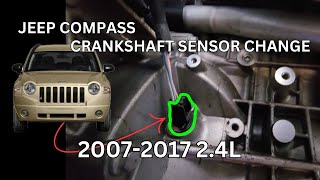
- Replacing the Crankshaft Position Sensor. This is sometimes replaced when stalling occurs, but TSBs show that P0335 (Crank Sensor code) can also be fixed by the same PCM software update that fixes P1607. 🎬 See how to replace the crank sensor to stop stalling
Most Likely Causes
- Outdated PCM Software 🔴 High Probability This is a known issue across many FCA (Chrysler/Dodge/Jeep) vehicles with the 2.4L engine, addressed by multiple TSBs like 18-014-16 Rev. A for similar models. The software's parameters for the timer check are often too strict.
How to confirm: A Jeep dealer or a qualified shop must use a tool like wiTECH to check the current software calibration ID on the PCM against the latest available version from the manufacturer.
Typical fix: Reprogram (reflash) the PCM with the latest software. TSBs often recommend updating the Transmission Control Module (TCM) at the same time.
Est. part cost: $0 (service cost is labor) - Faulty Engine Coolant Temperature (ECT) Sensor 🟡 Medium Probability The PCM uses the ECT sensor reading to validate its shutdown timer. If the sensor gives an incorrect reading (e.g., it's stuck or slow to respond), the PCM's calculation will be off, triggering the code.
How to confirm: Use a scan tool to monitor live data. The ECT reading should be close to ambient temperature when cold and rise steadily to ~180-210°F. Alternatively, test the sensor with a multimeter; its resistance should decrease as temperature increases (e.g., ~38,000 ohms at 68°F, dropping significantly when hot). Unplugging the sensor should result in a scan tool reading of -40°F.
Typical fix: Replace the Engine Coolant Temperature sensor. On the 2.4L, it is typically located on the thermostat housing on the side of the engine.
Est. part cost: $20-$50 - Weak or Failing Battery 🟡 Medium Probability Low system voltage during startup or shutdown can cause various electronic modules, including the PCM, to behave erratically and set internal fault codes. Some owners report the code appearing immediately after charging or replacing a dead battery.
How to confirm: Test the battery with a digital multimeter or a dedicated battery tester. A healthy, fully charged battery should read approximately 12.6 volts at rest and 13.5-14.5 volts when the engine is running.
Typical fix: Replace the vehicle's 12V battery.
Est. part cost: $150-$250
Rare But Worth Checking
- Failing Powertrain Control Module (PCM): While the code points to an internal PCM fault, actual hardware failure is less common than software issues for this specific code on this vehicle. All other possibilities, especially software updates, battery health, and sensor inputs, should be exhausted before condemning the PCM.
- Faulty PCM Power Relay: A failing relay can cause intermittent power loss to the PCM, leading to various fault codes, including P1607. This is a simple and inexpensive part to check before considering PCM replacement. One owner of a Dodge Journey with the 2.4L engine fixed this code by replacing the K5 PCM relay for under $20.
- Low Coolant Level or Cooling System Issue: If the engine cools down abnormally fast (e.g., due to a stuck-open thermostat or very cold/windy parking conditions), it can fool the PCM's rationality check. Ensure the coolant level is correct and the system is free of leaks.
Diagnosis Steps
- Check for TSBs: Contact a Jeep dealer with your VIN to see if there are any open recalls or Technical Service Bulletins (TSBs) related to P1607 or PCM software updates. Specifically mention TSBs for powertrain diagnostic improvements.
- Test the Battery and Charging System: Ensure the battery voltage is above 12.4V with the engine off and between 13.5V and 14.5V with the engine running. A weak battery is a known cause of this code.
- Inspect PCM Power and Ground Connections: Check the PCM connectors for corrosion or damage. Locate and test the PCM power relay (often in the under-hood fuse box), as a faulty relay can mimic PCM failure for a fraction of the cost.
- Analyze ECT Sensor Data: Using a scan tool, monitor the Engine Coolant Temperature sensor reading from a cold start. It should be close to the ambient air temperature and rise smoothly as the engine warms up. If it's erratic, stuck, or doesn't match a physical thermometer reading, the sensor is likely faulty.
- Perform PCM Software Update: If a TSB exists or is recommended for these symptoms and the previous steps check out, have the PCM (and likely the TCM) reprogrammed by a dealer or qualified shop. This is the most common resolution.
- Consider PCM Replacement: If all other steps fail to resolve the code, the PCM itself may have an internal hardware fault and require replacement. This is the last resort. 🎬 Watch: Step-by-step guide to diagnosing and fixing code P1607
Parts You'll Likely Need
- Engine Coolant Temperature (ECT) Sensor
(OEM #5149077AB)— This sensor provides the critical data the PCM uses for the self-check that triggers P1607. A faulty sensor is a common hardware cause. This part number also fits the 2.4L in the 2017+ MP Compass and 2015+ KL Cherokee.
Trusted brands: Mopar, NTK, Delphi
OEM price range: $30-$50
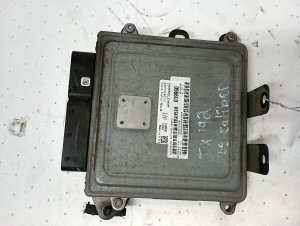
Aftermarket price range: $15-$30 - Powertrain Control Module (PCM) — Though less common than a software issue, a hardware failure within the PCM can cause this code. Replacement is the only fix for a failed module.
Trusted brands: Mopar (OEM), Cardone (Remanufactured), FS1 (Remanufactured)
OEM price range: $600-$900
Aftermarket price range: $300-$500
Related Codes That Often Appear With This One
- P2610 — Stands for 'PCM Internal Engine Off Timer Performance'. This code is very similar to P1607 and is often resolved by the same PCM software update, as noted in TSB 18-014-16 Rev. A.
- P0335 — Stands for 'Crankshaft Position Sensor Circuit'. This code is also mentioned in TSBs alongside P1607 as being potentially resolved by a PCM software update, indicating a logic rather than hardware fault.
- P0456 — Stands for 'EVAP System Small Leak'. The TSBs that address P1607 often list P0456 as another code that is resolved by the same PCM software update, suggesting the update corrects diagnostic logic for multiple systems.
- U0402 — Stands for 'Implausible Data Received From TCM'. This indicates a communication issue with the Transmission Control Module, which can be a side effect of the PCM software fault.
Technical Service Bulletins (TSBs) & Recalls
- TSB 18-014-16 Rev. A: While officially for the 2016 Jeep Cherokee 2.4L, this TSB is highly relevant as it explicitly lists P1607 and P2610 as being fixed by a PCM software update, demonstrating the known software bug in this engine family.
- TSB 18-064-16: Applies to 2014 Jeep Compass/Patriot with 2.4L engine, involves a PCM reprogram to fix other codes like P0335 and U0140, showing a pattern of software fixes for this platform.
Platform-Specific Known Issues
- Customer Satisfaction Notification W20 was issued for some 2017-2018 Compass models with the 2.4L engine to reprogram the PCM to address issues that could lead to excessive oil consumption. This same software update may resolve other codes like P1607, as it alters the PCM's core logic.
- A warranty extension (XB1) to 7 years/100,000 miles was offered for some 2017-2018 models for issues related to excessive oil consumption, which are linked to PCM calibration. This highlights FCA's history of using software updates to fix engine-related issues on this platform.
Mechanic-Grade Diagnostic Values
- Battery Voltage (Resting, Engine Off) — expected: ~12.6 Volts. Failure: A reading below 12.4V indicates a weak or discharged battery that can cause erratic PCM behavior and trigger P1607.
- Charging System Voltage (Engine Running) — expected: 13.5 - 14.5 Volts. Failure: Voltage outside this range points to a faulty alternator or voltage regulator, which can cause unstable power to the PCM.
- PCM Power Relay Coil Resistance — expected: Approximately 150 Ohms or more. Failure: Significantly lower resistance or an open circuit (infinite ohms) when tested with a multimeter indicates a failed relay.
- PCM Power Supply Pin Voltage (Key On) — expected: Battery Voltage (approx. 12.6V). Failure: Low or no voltage at the PCM's main power input pins (e.g., Pin 16 on C1 connector for some models) indicates a wiring, fuse, or relay issue upstream of the PCM.
- PCM Ground Pin Voltage Drop — expected: Less than 0.1 Volts (100mV). Failure: Voltage reading higher than 0.1V between the PCM ground pin (e.g., Pin 52/53 on C1) and the negative battery terminal indicates a poor ground connection, a common cause of electronic issues.
Scan Tool Commands That Help
- wiTECH 2.0: Flash PCM / Reprogram ECU — This is the primary function used to perform the most common fix for P1607: updating the PCM software to the latest calibration as specified in Technical Service Bulletins (TSBs).
- wiTECH 2.0: Restore Vehicle Configuration — This is a critical step after replacing a PCM, especially with a used or unprogrammed unit. It synchronizes the VIN and other essential data from the vehicle's central gateway (like the TIPM) to the new module, ensuring all systems can communicate.
- wiTECH 2.0: Learn ETC (Electronic Throttle Control) — This procedure is often required after a PCM has been reprogrammed or replaced to recalibrate the throttle body's position and ensure proper idle and throttle response.
Wiring & Ground Locations
- PCM Power Relay (K5) — Located within the Totally Integrated Power Module (TIPM), which is the main fuse and relay box in the engine compartment.. A faulty K5 relay can cause intermittent or complete power loss to the PCM, directly leading to shutdown timer faults and other internal errors. It's a cheap part that can mimic a much more expensive PCM failure.
- PCM C1 Connector Grounds — On the main PCM connector (often labeled C1), specific pins are dedicated grounds. For example, on 2015-2016 models, pins 52, 53, and 72 are all grounds (Z905, Z909 circuits).. A poor ground connection at the PCM itself can cause internal voltage irregularities, leading to logic faults like P1607. Verifying these pins have a solid connection to chassis ground is a key diagnostic step.
- PCM C1 Connector Power Input — On the main PCM connector (C1), a specific pin receives constant battery power. For a 2010 model, this is Pin 16 (Red/White wire).. This is the main power feed for the PCM's memory and internal timers. If this circuit has high resistance or is intermittent, it will corrupt the shutdown timer logic and trigger P1607.
Real Owner Repair Stories
- YouTube user 'Repairs101' (2010 Dodge Journey SE 2.4L (platform-mate to the Compass with shared powertrain/electronics)) — Check Engine Light with code P1607 'PCM shutdown timer'.
❌ Tried (didn't work) The owner initially feared the PCM was faulty and would be an expensive repair.
✅ What actually fixed it The owner inspected the PCM power relay (K5) in the fuse box and found it was corroded. He replaced the relay for about $14, which completely resolved the P1607 code.
OEM Part Supersession History
RL150607AC→5150762AB— Part revision and update for early model year (2007-2008) PCMs.
Heads up: Using an incorrect hardware number, even if it physically fits, can cause communication errors or no-start conditions. Always verify the part number against the VIN.Multiple, e.g., 68172303AA→Multiple, e.g., 68172303AE— PCMs for this vehicle have numerous part numbers and revisions, often changing multiple times within a single model year. The final letters (AA, AB, AC, etc.) denote software and hardware updates.
Heads up: A replacement PCM must be programmed with the vehicle's VIN and latest software. A used module from another vehicle will not work without being professionally reprogrammed.
Model Year Variations Within This Range
- 2007-2017 (MK Generation): This article primarily applies to the first-generation (MK) Jeep Compass, which was produced up to and including the 2017 model year. These models share a platform with the Dodge Caliber and Jeep Patriot and often use the 2.4L 'World Engine'.
- 2017 (MP Generation): For the 2017 model year, Jeep sold both the old MK Compass and the all-new second-generation (MP) Compass. The new MP model uses a different platform and a revised 2.4L 'Tigershark' engine. While the P1607 code's meaning is the same, TSBs and specific parts (like the PCM) are different between the two 2017 versions.
- 2014+: In 2014, a 6-speed automatic transmission began to replace the Continuously Variable Transmission (CVT) on most models, which can affect related diagnostic codes and software updates for the powertrain.
Diagnostic Flowchart
Used vs. New Parts: Buying Guide for This Vehicle
When a used part is the smart pick: For this repair, a used part is generally only recommended for simple electrical components like the PCM power relay. A used relay from a donor vehicle is a cost-effective and reliable option.
Donor-vehicle mileage cap: roughly under 120000 miles for the part to have meaningful remaining life.
What to inspect on the donor part:
- For a relay, check for clean, corrosion-free terminals.
- For a PCM, visually inspect for any signs of water damage, corrosion on the case or pins, or physical damage to the connectors.
- Ensure the donor vehicle was not involved in a flood or fire.
OEM-only on this vehicle (don't cheap out):
- Powertrain Control Module (PCM): While remanufactured units are available, they require careful VIN programming. A used PCM from a junkyard is a very high-risk purchase as it is 'locked' to the donor vehicle's VIN and security system (SKIM/WIN). It cannot be installed without specialized tools to unlock and reprogram it, often costing more in labor than a properly pre-programmed remanufactured unit.
Aftermarket brands forum-validated for this vehicle:
- FS1 (Flagship One)
- Car Computer Exchange
- Module Mechanics
Brands owners have reported issues with on this vehicle:
- Cardone (Remanufactured): Multiple forum discussions across various vehicle makes report a high failure rate and inconsistent quality for Cardone remanufactured electronics, including PCMs. While sometimes the only option, it should be considered with caution.
Real Owner Stories
Aggregated from forums and TSBs cited above. Mileages and costs reflect what owners reported in those sources.
2016 Jeep Cherokee 2.4L
Symptoms: The Check Engine Light was illuminated with diagnostic trouble codes P1607 and/or P2610 stored in the Powertrain Control Module.
What fixed it: The Powertrain Control Module (PCM) was reprogrammed (reflashed) with updated software to correct the internal timer logic.
Source hint: TSB 18-014-16 Rev. A
2011 Jeep Compass 2.4L
Symptoms: After a recent battery change, the vehicle would hesitate while idling and suddenly lose power while driving, feeling 'groggy'. The P1607 code was present.
What fixed it: The source highlights the connection to the battery replacement but does not state the final repair. The most likely fixes based on this scenario are ensuring the new battery is healthy and fully charged, or performing a PCM software update.
Source hint: Reddit r/CarRepair thread cited in forum_citations
2015-2016 Dodge Journey / Chrysler 200 2.4L
Symptoms: Vehicle presented with a P1607 fault code, which is a well-documented issue on these platform mates.
What fixed it: The confirmed solution from the manufacturer is a PCM software reflash, as detailed in related TSBs for these models (e.g., 18-081-17, 18-080-17).
Source hint: Platform Mates section citing TSBs for Dodge Journey / Chrysler 200
Related OBD-II Codes
Frequently Asked Questions
My 2017 Jeep Compass has high oil consumption and now this P1607 code. Are these issues related?
I just replaced the battery in my Compass and the P1607 check engine light came on. Did I do something wrong?
Is replacing the PCM the first thing I should do for P1607?
The engine in my Compass is stalling when I come to a stop. Is that a symptom of P1607?
My mechanic thinks the ECT sensor is bad. Where is it located on the 2.4L engine?
I saw TSB 18-014-16 Rev. A mentioned for P1607, but it's for a Jeep Cherokee. Does it apply to my Compass?
Helpful Videos
We Have This Part in Stock





The information in this article is provided for general reference and educational purposes only. Vehicle specifications, procedures, and part compatibility can vary by production date, trim level, and region. Always consult your vehicle's factory service manual and verify part numbers before purchasing or performing repairs. Safety-critical components such as airbags, seat belts, and braking systems should be installed by a qualified professional.
- Jeep Compass:
- 🎬 Helpful Videos
- 🛍️ Shop This Part
- What's Unique About the 2007-2017 Jeep Compass
- Symptoms You May Notice
- Most Likely Causes
- Rare But Worth Checking
- Diagnosis Steps
- Parts You'll Likely Need
- Related Codes That Often Appear With This One
- Technical Service Bulletins (TSBs) & Recalls
- Platform-Specific Known Issues
- Mechanic-Grade Diagnostic Values
- Scan Tool Commands That Help
- Wiring & Ground Locations
- Real Owner Repair Stories
- OEM Part Supersession History
- Model Year Variations Within This Range
- Diagnostic Flowchart
- Used vs. New Parts: Buying Guide for This Vehicle
- Real Owner Stories
- 2016 Jeep Cherokee 2.4L
- 2011 Jeep Compass 2.4L
- 2015-2016 Dodge Journey / Chrysler 200 2.4L
- Related OBD-II Codes
- Frequently Asked Questions
- 🎟️ Get 5% Off