

P1605 on 2006-2014 Ford Transit: Keep Alive Memory (KAM) Failure Causes and Fixes
On a 2006-2014 Ford Transit, code P1605 almost always means the engine computer (PCM) lost power. This is most often caused by a weak battery, corroded terminals, or a bad ground strap. Before replacing any major parts, fully test the battery and clean all main power connections, especially the main engine/gearbox earth strap which is prone to corrosion. Note that disconnecting the battery for service will also set this code, which can be cleared and ignored if no symptoms are present.
- P1605 on your Transit means the engine computer lost its memory, usually from a power interruption.
- The most likely culprit is a weak battery. Have your battery and charging system tested before buying any parts.
- Thoroughly inspect and clean your battery terminals and the main ground straps connected to the vehicle's frame and engine.
- Check the specific fuse for the PCM's Keep Alive Memory. Its location varies by generation, so consult a diagram for your exact year.
- Do not assume the PCM is bad. It is almost always the last thing to fail.
What's Unique About the 2006-2014 Ford Transit
For the Ford Transit, P1605 is fundamentally an electrical issue, not an internal engine problem. Unlike on some other manufacturers where it might point to a rough idle, on the Transit it's a direct signal of power loss to the computer. Given these vans are often used as work vehicles with high electrical loads from accessories and frequent start-stop cycles, the battery and charging system are especially common failure points leading to this code. A particularly well-documented issue is water ingress from a leaking windscreen scuttle panel dripping onto the Central Junction Box (fuse box), causing corrosion and numerous electrical faults, including P1605.
Generation note: The 2006-2014 range covers two generations: the Mk7 (2006-2013) and the start of the V363/Custom generation (2012+). While the meaning of the code and its primary causes (battery, grounds, fuses) are the same for both, the location of the fuse boxes that house the PCM's keep-alive fuse differs significantly. On the Mk7, the relevant fuses are often in the Central Junction Box behind the glovebox, while later models have them in the engine bay and under the dash. The later models (typically 2012+) also incorporate a Battery Monitoring System (BMS) that requires a reset procedure after a new battery is installed to ensure proper charging.
Symptoms You May Notice
- Check Engine Light is on
- Engine is hard to start or will not start
- Engine may stall unexpectedly
- Rough or unstable idle
- Reduced fuel economy
- Other warning lights may illuminate on the dashboard
- Vehicle runs in a default or 'limp' mode
- Replacing the PCM first. The PCM is rarely the actual problem. The issue is almost always in the power supply TO the PCM.
- Replacing ignition coils or fuel injectors. While these can cause rough running, they do not directly cause a P1605 code on a Ford. The rough running is a symptom of the PCM losing its adaptive memory, not the cause of the code.
Most Likely Causes
- Weak or Failing Battery 🔴 High Probability Work vans like the Transit often have high electrical demands and frequent start-stop cycles, which can wear out batteries faster. A voltage drop below 10.5V during cranking is a primary trigger for this code. On later models with a Battery Monitoring System (BMS), failing to reset the system after a battery change can also cause charging issues leading to an undercharged battery.
How to confirm: Check the battery's voltage with a multimeter. It should be above 12.4V with the engine off and 13.7-14.7V while running. For a definitive test, have the battery load-tested at an auto parts store, as a battery can show good voltage but fail under load.
Typical fix: Replace the vehicle's battery. On models equipped with a BMS (typically 2012+), perform a BMS reset procedure so the system recognizes the new battery. 🎬 Watch: How to perform a BMS reset on newer Transit models
Est. part cost: $150-$300 - Corroded or Loose Battery Terminals / Ground Straps 🔴 High Probability Corrosion is common on battery terminals and ground points. The main engine/gearbox to chassis ground strap 🎬 Watch: How to fix common Mk7 ground strap and electrical issues is particularly susceptible to corrosion and breakage on the Mk7 Transit, causing a wide range of electrical issues including P1605.
How to confirm: Visually inspect the battery terminals for buildup. Follow the negative battery cable to the chassis. Critically, locate and inspect the braided strap that connects the gearbox to the inner wing/chassis area; check for corrosion, fraying, or looseness.
Typical fix: Disconnect the battery. Clean the terminals, posts, and chassis/engine ground points with a wire brush until shiny. Replace the ground strap if it is frayed or heavily corroded.
Est. part cost: $10-$30 - Blown PCM/KAM Fuse 🟡 Medium Probability A dedicated fuse provides constant power to the PCM. If this fuse blows, the KAM will be erased every time the ignition is turned off. This can also be caused by water ingress into the fuse box from a leaking scuttle panel.
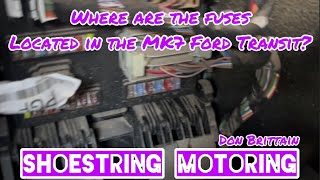
How to confirm: Consult the owner's manual for your specific year. On Mk7 models, check fuse F30 in the Central Junction Box (behind the glove box). 🎬 See this guide to locating all Mk7 Transit fuse boxes Also check fuse F26 in the engine bay fuse box. Visually inspect the fuse and test for continuity with a multimeter.
Typical fix: Replace the blown fuse. If it blows again, there is an underlying short circuit that needs to be diagnosed, often related to water damage in the fuse box or a chafed wire.
Est. part cost: $1-$5 - Failing Alternator ⚪ Low Probability An alternator that isn't recharging the battery properly will lead to a chronically undercharged battery, causing the KAM to be lost. The high electrical demands on these vans can put a strain on the alternator.
How to confirm: With the engine running, check the battery voltage. If it's below 13.5V or fluctuating wildly, the alternator is likely faulty. Most auto parts stores can test the charging system for free.
Typical fix: Replace the alternator.
Est. part cost: $250-$500
Rare But Worth Checking
- Faulty Powertrain Control Module (PCM): This is the least likely cause. Before condemning the PCM, all other power and ground issues must be exhaustively ruled out. A final check involves testing for stable voltage and good ground directly at the PCM connector pins before considering replacement.
- Damaged Wiring Harness: Physical damage or corrosion on the wires providing constant power (KAPWR) to the PCM can cause an intermittent loss of KAM power. This often occurs where the harness may rub against the chassis or engine components, or due to water intrusion.
- Water Ingress into Central Junction Box (Fuse Box): A known and significant issue on the Mk7 Transit is water leaking from the windscreen scuttle panel directly onto the fuse box located behind the glove compartment. This causes corrosion on the fuse terminals and internal board, leading to P1605 and a host of other bizarre electrical faults.
Diagnosis Steps
- Scan for any other trouble codes. If other codes are present, diagnose them first, as P1605 can be a secondary code.
- If the battery was recently disconnected or replaced, clear the code and see if it returns after a few drive cycles. If not, it was normal.
- Visually inspect the battery terminals, cable ends, and main chassis/engine ground straps for corrosion or looseness. Pay special attention to the gearbox-to-chassis ground strap.
- With the engine off, use a multimeter to test battery voltage. It should be at least 12.4V.
- Start the engine and test the battery voltage again. It should be between 13.7V and 14.7V, indicating a healthy charging system.
- If voltage tests are good, have the battery professionally load-tested to ensure it's not failing under load.
- Locate the fuse for the PCM Keep Alive Memory (often F26 or F30). Visually inspect the fuse and test it with a multimeter.
- Inspect the area around the interior fuse box (Central Junction Box) for signs of water staining or corrosion, which points to a leaking scuttle panel.
- If all of the above check out, perform a voltage drop test on the main power and ground circuits to the PCM. A reading of more than 0.2V indicates excessive resistance that needs to be traced.
- As a final step before condemning the PCM, check for battery voltage and a clean ground signal directly at the PCM's main connector pins with the key on. The Keep Alive Power (KAPWR) circuit pin must have constant battery voltage (>12.4V) even with the key off.
Parts You'll Likely Need
- Vehicle Battery — A weak battery that drops voltage during startup is the most frequent cause of KAM loss.
Trusted brands: Motorcraft, Varta, Bosch
OEM price range: $200-$350
Aftermarket price range: $150-$300 - Engine/Gearbox Ground Strap — This specific ground strap is a common failure point due to corrosion, leading to intermittent power loss to the PCM and other components.
Trusted brands: Ford (OEM), Dorman
OEM price range: $25-$50
Aftermarket price range: $15-$30 - PCM Power Fuse — This fuse provides the constant power required for the Keep Alive Memory. If it's blown, the memory will be lost on key-off.
Related Codes That Often Appear With This One
- P0603 — P0603 is another Keep Alive Memory (KAM) error code. They often appear together as they both relate to the PCM's internal memory and power supply.
- U0100 — If the power loss to the PCM is severe, it can cause a loss of communication with other modules on the CAN bus network, triggering communication codes like U0100.
- P1603 — This code indicates an EEPROM Malfunction, another internal self-test failure within the PCM. When seen with P1605, it strengthens the suspicion of a power supply interruption or, more rarely, an actual PCM fault.
Platform-Specific Known Issues
- Corroded Gearbox Ground Strap: A user on the Ford Transit Forum reported that their P1605 code and intermittent non-start condition was resolved by replacing the main earth strap from the gearbox to the chassis. The original strap was heavily corroded, causing a poor ground connection. This is a very common fix reported by multiple owners.
- Water Leak onto Fuse Box: Multiple owners have traced persistent P1605 and other electrical faults to water leaking from the scuttle panel (under the windscreen) onto the Central Junction Box (interior fuse box). A post on the Ford Transit Forum details sealing the scuttle and drying out the fuse box to resolve the issue. This is a critical check for any Transit with unexplained electrical problems.
- Normal Code After Battery Replacement: Several owners have confirmed that P1605 will appear after disconnecting or replacing the battery. One user on a forum noted that after replacing their battery, the code was present but the van ran perfectly. Clearing the code with a scanner resolved the check engine light, and it did not return, confirming it was simply a log of the power interruption.
Mechanic-Grade Diagnostic Values
- Keep Alive Power (KAPWR) circuit voltage at PCM connector — expected: >12.4V with key off. Failure: Voltage below 10.5V, or no voltage present, indicates a break in the power supply wire or a blown fuse.
- Battery Voltage (Engine Off) — expected: >12.4V. Failure: Voltage below 12.4V suggests a discharged or failing battery.
- Charging System Voltage (Engine Running) — expected: 13.7V - 14.7V. Failure: Voltage below 13.5V or fluctuating wildly points to a faulty alternator or charging system issue.
Scan Tool Commands That Help
- Ford IDS, FORScan: Battery Monitoring System (BMS) Reset — This must be performed after replacing the battery on models 2012 and newer. Failing to reset the BMS tells the PCM the battery is still old, which can lead to improper charging, a chronically undercharged new battery, and the P1605 code returning.
- Manual Procedure (No Scan Tool): Manual Battery Monitoring System (BMS) Reset — If a scan tool is unavailable, a manual reset can be attempted after battery replacement on 2012+ models. With the ignition on (engine off), flash the high beams 5 times, then press the brake pedal 3 times. The battery light on the dash should flash to confirm the reset.
Wiring & Ground Locations
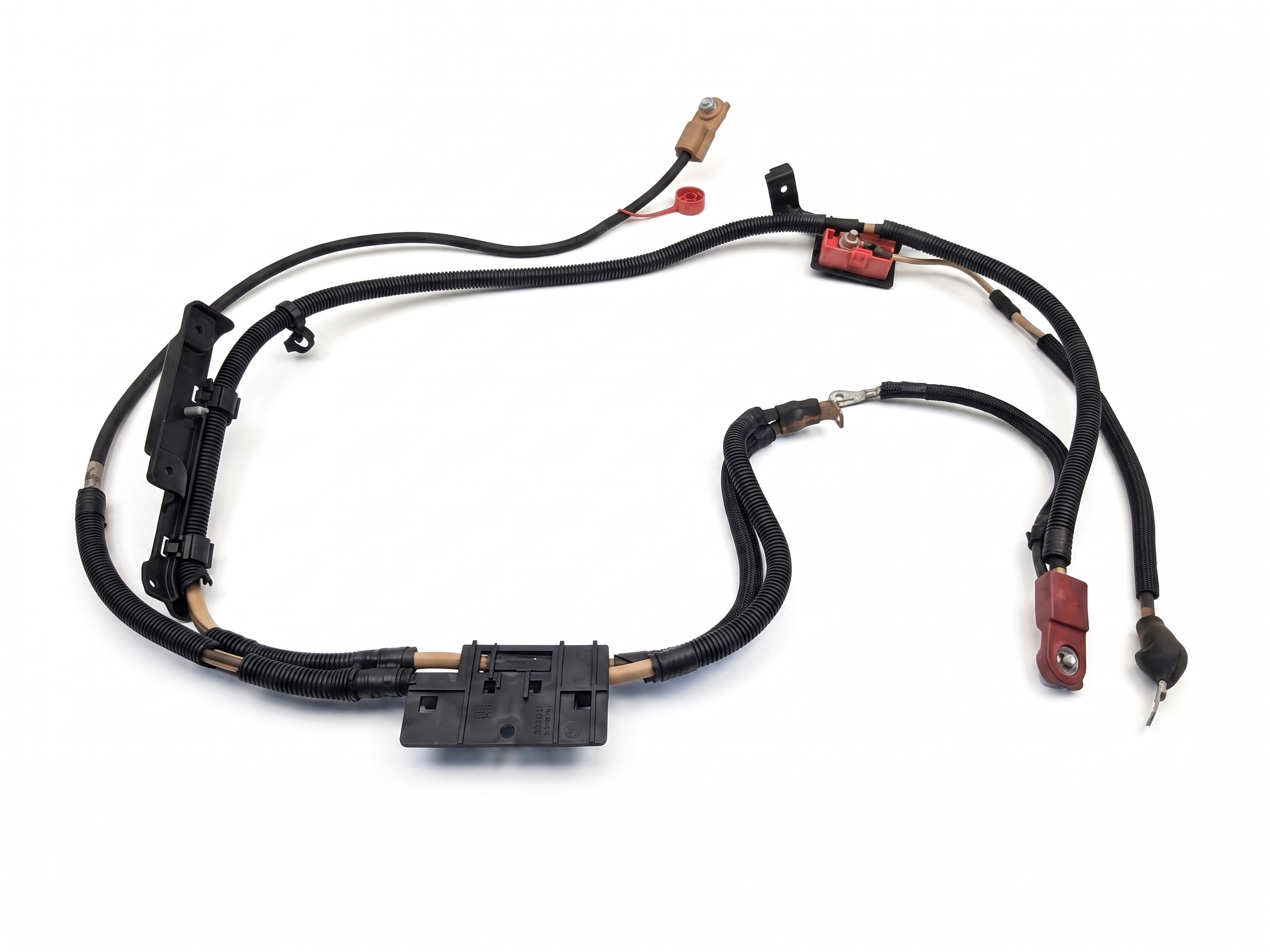
- Main Engine/Gearbox Ground Strap — On a Mk7 Transit, this braided strap connects the gearbox to the inner wing area, often below or near the under-hood fuse box.. This is a primary and notorious failure point for P1605. It is exposed to the elements and frequently corrodes or breaks, causing an intermittent loss of the main ground path for the engine and PCM.
- PCM Keep Alive Power (KAPWR) Pin — This requires a vehicle-specific wiring diagram to identify the exact pin on the PCM's main electrical connector. For Mk7 models, there are typically two battery-positive feeds and two ignition-positive feeds to the PCM.. This is the pin that supplies constant battery power to the PCM to maintain its memory. Testing for voltage directly at this pin is the definitive way to confirm if the PCM is receiving the power it needs.
- Grounds near Engine Bay Fuse Box — On the Mk7 RWD, there are critical earth points near the fuse box that can become corroded.. Poor connections at these points can interrupt power to essential relays and the PCM, directly causing a KAM failure.
Real Owner Repair Stories
- Ford Transit Forum user 'Colin K' (Ford Transit Mk7 2.4 RWD (2006)) — No ignition, no start.
❌ Tried (didn't work) Connecting a new earth strap from the starter motor mounting bolt to a crossmember bolt.
✅ What actually fixed it The owner discovered the earth connections near the engine bay fuse box were 'rubbish'. After repositioning and cleaning these grounds, the ignition worked and the engine started immediately. The owner noted that a 'slightly bigger earth by the fuse box is blooming critical'.
Model Year Variations Within This Range
- 2012-2014: These later models are equipped with a Battery Monitoring System (BMS). When replacing the battery, a BMS reset procedure is required. If this step is skipped, the charging system may not correctly charge the new battery, leading to a low voltage condition and a recurring P1605 code.
- 2006-2013 (Mk7): The well-documented issue of water leaking from the windscreen scuttle panel onto the Central Junction Box (behind the glovebox) is most prevalent on the Mk7 generation, causing P1605 and other electrical faults.
Diagnostic Flowchart
Other Known Issues on This Vehicle
Issues unrelated to this code that are worth knowing about as an owner of this generation:
- Body and Chassis Rust 🔴 High — Extremely common on Mk7 models, especially on sills, wheel arches, underbody, and around the windscreen. Can appear within 3-4 years from new.
- Windscreen Scuttle Panel Leak 🔴 High — Common issue where the plastic scuttle panel under the windscreen warps or its seals fail, allowing water to leak into the engine bay, often directly onto the fuse box (Central Junction Box) or injectors, causing severe electrical problems.
- Dual Mass Flywheel (DMF) Failure 🟠 Medium — On manual transmission models, the DMF can fail, typically around 100,000 miles, but sometimes much earlier. Symptoms include heavy vibration under acceleration, rattling or knocking noises at idle, and difficulty shifting.
- EGR Valve Clogging/Failure 🟠 Medium — The EGR valve is prone to clogging with carbon deposits, leading to poor engine performance, hesitation, black smoke, and reduced fuel economy.
- Timing Chain Wear 🟠 Medium — While more reliable than the later 'wet belt' engines, the timing chain on the 2.2 TDCi can stretch over time, especially with poor maintenance or incorrect oil. This can cause rattling noises and, if ignored, lead to catastrophic engine failure.
- Injector Failure / Over-fueling 🔴 High — A known issue where the ECU commands the injectors to deliver too much fuel, which can wash oil from the cylinder bores, leading to piston and bore damage. Faulty injectors can also cause rough running, misfires, and cutting out.
Used vs. New Parts: Buying Guide for This Vehicle
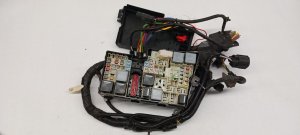
When a used part is the smart pick: For this repair, used parts are a viable option for components like a replacement fuse box (Central Junction Box) or a section of wiring harness, provided they are from a vehicle with no signs of water damage or corrosion. A used PCM can also be an option, but it will require professional reprogramming to your vehicle's VIN and security information.
Donor-vehicle mileage cap: roughly under 100000 miles for the part to have meaningful remaining life.
What to inspect on the donor part:
- For a fuse box: Inspect all terminals for any green or white corrosion. Check the plastic housing for cracks or signs of water staining.
- For a wiring harness: Look for any cuts, chafing, or brittle insulation. Ensure all connector pins are straight and clean.
- For a PCM: Check the case for physical damage or corrosion. Verify the part number matches your original unit exactly.
OEM-only on this vehicle (don't cheap out):
- Vehicle Battery: While aftermarket is acceptable, using an OEM-spec battery (especially AGM type if originally equipped) is crucial for vehicles with a Battery Monitoring System to ensure the charging profile is correct.
- Ground Straps: OEM straps are recommended due to their precise length and fit, but a high-quality, correctly sized aftermarket strap is a reasonable alternative.
Aftermarket brands forum-validated for this vehicle:
- Batteries: Varta, Bosch, Motorcraft
- Ground Straps: Dorman
Brands owners have reported issues with on this vehicle:
- No-name, unbranded electrical components like fuse boxes or PCMs from online marketplaces should be avoided due to high failure rates and lack of quality control.
Real Owner Stories
Aggregated from forums and TSBs cited above. Mileages and costs reflect what owners reported in those sources.
Mk7 Ford Transit
Symptoms: P1605 code and an intermittent non-start condition.
What fixed it: The owner replaced the main earth strap from the gearbox to the chassis. The original strap was found to be heavily corroded, causing a poor ground connection.
Source hint: vehicle_specific_issues - Corroded Gearbox Ground Strap
Mk7 Ford Transit
Symptoms: Persistent P1605 code along with other unexplained electrical faults.
What fixed it: The owner traced the issue to a water leak from the scuttle panel under the windscreen. The fix involved sealing the scuttle panel and thoroughly drying out the Central Junction Box (interior fuse box).
Source hint: vehicle_specific_issues - Water Leak onto Fuse Box
Mk7 Ford Transit
Symptoms: The P1605 code and Check Engine Light appeared immediately after the owner replaced the vehicle's battery, but the van ran perfectly fine.
What fixed it: The owner simply cleared the code using a scan tool. The code did not return, confirming it was just a historical log of the power being disconnected.
Source hint: vehicle_specific_issues - Normal Code After Battery Replacement
Related OBD-II Codes
Frequently Asked Questions
I just replaced the battery in my Transit and now the Check Engine Light is on with code P1605. Is this normal?
Where is the main ground strap that commonly causes P1605 on the Mk7 Transit?
My Transit has random electrical problems and a P1605 code. I heard water leaks can be a cause. Where should I check?
Which specific fuses should I check for a P1605 code on my Ford Transit?
Do I need to perform a special procedure after replacing the battery on my newer (2012+) Transit?
My battery voltage seems fine, but I keep getting the P1605 code. What else could be wrong with the battery?
Helpful Videos


We Have This Part in Stock




The information in this article is provided for general reference and educational purposes only. Vehicle specifications, procedures, and part compatibility can vary by production date, trim level, and region. Always consult your vehicle's factory service manual and verify part numbers before purchasing or performing repairs. Safety-critical components such as airbags, seat belts, and braking systems should be installed by a qualified professional.
- Ford Transit:
- 🎬 Helpful Videos
- 🛍️ Shop This Part
- What's Unique About the 2006-2014 Ford Transit
- Symptoms You May Notice
- Most Likely Causes
- Rare But Worth Checking
- Diagnosis Steps
- Parts You'll Likely Need
- Related Codes That Often Appear With This One
- Platform-Specific Known Issues
- Mechanic-Grade Diagnostic Values
- Scan Tool Commands That Help
- Wiring & Ground Locations
- Real Owner Repair Stories
- Model Year Variations Within This Range
- Diagnostic Flowchart
- Other Known Issues on This Vehicle
- Used vs. New Parts: Buying Guide for This Vehicle
- Real Owner Stories
- Mk7 Ford Transit
- Mk7 Ford Transit
- Mk7 Ford Transit
- Related OBD-II Codes
- Frequently Asked Questions
- 🎟️ Get 5% Off