

OBD-II Code P1603: Internal Control Module Memory or Engine Stall History
What P1603 means, why it triggers, and how to fix it for your specific vehicle
- Identify your manufacturer's specific definition for P1603 first; it means 'EEPROM Memory Error' on Fords and VWs, but simply 'Engine Stall History' on Toyotas and Subarus.
- Test your battery and alternator before replacing any parts, as voltage drops below 12.4V are the leading cause of P1603 memory corruption.
- Clean the throttle body and check the air filter on Toyota and Lexus vehicles, as restricted airflow causing a low-RPM stall triggers this code 80% of the time.
- Never replace the $1,000+ Engine Control Module (ECM) without first verifying power, ground, and checking for dealer software updates (TSBs).
- Analyze the OBD-II freeze frame data to pinpoint the exact RPM and engine load when the fault occurred, which instantly separates an electrical glitch from a mechanical stall.
What Does P1603 Mean?

P1603 is a manufacturer-specific code with two distinct definitions. On Ford, VW, and BMW, it indicates an internal memory failure (KAM or EEPROM) inside the Engine Control Module (ECM) due to voltage loss. On Toyota, Lexus, and Subaru, it simply acts as a history log confirming the engine stalled unexpectedly.
Technical definition: Because P1603 is manufacturer-specific, official definitions vary. The most common are Internal Control Module Keep Alive Memory (KAM) Error, EEPROM Malfunction, Engine Stall History, and TCM Communication Error.
Can I Drive With P1603?
Yes, But With Caution. You can drive, but the risk depends on the cause. If the code stems from a stall, the engine shuts off unexpectedly in traffic, creating a serious safety hazard. If caused by an internal ECM failure, continued driving leads to unpredictable performance and sudden breakdowns. Driving with a stalling engine forces unburnt fuel into the exhaust, which destroys the catalytic converter—a repair costing $800 to $2,500.
Common Causes

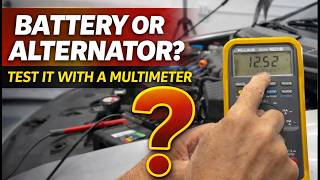
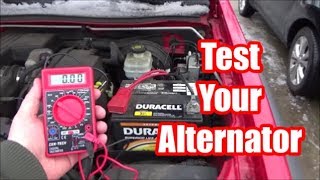
- Weak or dying battery (Very Common) — The most frequent cause is a battery failing to provide stable voltage (below 12.4V at rest). 🎬 Watch: How to test your battery and alternator with a multimeter. This corrupts the ECM's keep-alive memory during startup, especially on Ford and VW models.
- Failing alternator (Common) — An alternator producing fluctuating voltage (outside the 13.7-14.7 volt range) disrupts ECM operation and triggers memory faults.
- Dirty throttle body or clogged air filter (Toyota/Lexus) (Common) — On Toyota and Lexus vehicles, P1603 indicates 'Engine Stall History.' This is most often caused by a dirty throttle body or severely clogged air filter restricting airflow at idle.
- Poor electrical connections (Common) — Corroded battery terminals, loose cables, or degraded chassis ground straps prevent the ECM from receiving consistent power, causing voltage drops and communication errors.
- Fuel system issues (Common) — A failing fuel pump, clogged fuel filter, or running out of gas starves the engine, causing a stall that logs a P1603 code on Toyota and Subaru models.
- ECM software glitch (Less Common) — Specific Subaru models suffer from software defects causing stalls under high A/C load at idle. A dealer-installed software update resolves this.
- Faulty Engine Control Module (ECM) (Rare) — The ECM's internal EEPROM memory chip or processors fail. This is confirmed when P1603 appears alongside fatal internal fault codes like P0606.
- Damaged wiring or aftermarket interference (Rare) — Shorted wiring harnesses or poorly installed aftermarket remote starters interfere with the ECM's power supply or CAN bus network.
Symptoms

- Check Engine Light is on — The Malfunction Indicator Lamp (MIL) illuminates on your dashboard.
- Engine stalls unexpectedly — The engine shuts off while driving at low speeds, when coming to a stop, or immediately after starting.
- No-start or hard-start condition — The engine cranks but fails to start, or takes an excessive amount of time to turn over.
- Rough or unstable idle (also visible on scanner) — The engine's RPM fluctuates wildly or feels shaky when the car is stopped.
- Reduced power or Limp Mode (also visible on scanner) — The vehicle enters a reduced power mode to protect the engine, limiting speed, RPMs, and acceleration.
Diagnostic Flowchart

Tap your situation to follow the diagnostic path that matches what you're seeing on this code.
Common Fixes & Costs
- Replace the car battery — Parts: $150-$300, Labor: $50-$100, ~0.5 hr book time (DIY)
- Clean or replace battery terminals/cables — Parts: $10-$50, Labor: $50-$100, ~0.8 hr book time (DIY)
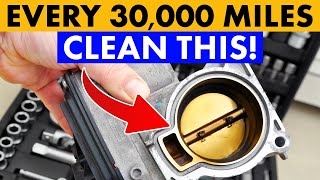
- Clean the throttle body — Parts: $10-$20, Labor: $100-$200, ~1 hr book time (DIY)
- Replace the alternator — Parts: $300-$600, Labor: $150-$300, ~2 hr book time (Intermediate)
- Update ECM Software (at dealership) — Parts: $0, Labor: $100-$250, ~1 hr book time (Professional)
- Replace the Engine Control Module (ECM) — Parts: $250-$1200, Labor: $150-$600, ~1.5 hr book time (Professional)
DIY vs Professional
- Replace the car battery — Beginner:
Tools: Wrench set (typically 10mm, 12mm, 13mm), battery terminal cleaner brush. - Clean the throttle body — Beginner:
Tools: Screwdriver or socket set to remove the air intake tube, throttle body cleaner spray, clean rags. - Replace the alternator — Beginner:
Tools: Socket/wrench set, serpentine belt tool or breaker bar to release belt tension, multimeter. - Replace the Engine Control Module (ECM) — Beginner:
Tools: Basic hand tools for removal, specialized OEM diagnostic tools for programming and security key relearning.
Used vs. New Parts: Buying Guide
When a used part is worth it: A used ECM is a high-risk option. It only makes sense for older vehicles on a tight budget, provided a reputable shop guarantees they can program the used module to your car's VIN and immobilizer system before purchase.
Donor-vehicle mileage cap: roughly under 100000 miles for the part to have meaningful remaining life.
Donor quality checklist:
- Part number MUST be an exact match to your original ECM.
- Obtain the VIN of the donor car to aid in potential programming.
- Buy from a reputable salvage yard with a return policy and warranty (typically 30-90 days).
Decision logic:
- If Vehicle is less than 10 years old and is your primary transportation → Buy a new or professionally remanufactured ECM. The reliability and warranty are worth the cost.
- If You cannot find a shop willing to program a used ECM for your specific model → Do not buy a used ECM. It will not work.
- If The cost of a used ECM plus programming is more than 70% of a remanufactured unit → Opt for the remanufactured unit for its warranty and guaranteed compatibility.
Warranty tradeoff: Used ECMs typically have a 30-90 day part-only warranty. New OEM and quality remanufactured units carry a 1-year to lifetime warranty and are guaranteed to be programmable.
Worst-case if a used part fails: $500-$1000 if used ECM is faulty or non-programmable. This includes the cost of the part, repeat diagnostic fees, and labor for installation attempts.
What Happens If You Wait — Timeline
- 0-1 month: Code P1603 appears. If caused by a battery issue, you notice slightly longer crank times. If caused by a stall, you experience an occasional, isolated stall at a stoplight. (MPG impact: 0-2%% · Added cost: $0)
- 1-4 months: Stalling becomes more frequent. The engine hesitates when accelerating from a stop. Hard-starting becomes common, putting extra strain on the starter and battery. (MPG impact: 3-8%% · Added cost: $150-$350 (Towing fee from being stranded) plus $50-$100 in wasted fuel.)
- 4-9 months: The root cause worsens. A failing alternator causes headlights to dim at idle. A severely clogged throttle body leads to stalling almost every time you stop. Constant hard starts wear out the starter motor. (MPG impact: 8-15%% · Added cost: $400-$800 (Premature starter and battery replacement).)
- 9+ months: Catastrophic secondary failures occur. If stalling was due to a rich fuel condition, the catalytic converter is destroyed. If caused by an internal ECM fault, continued operation damages other modules. (MPG impact: 15-25%% · Added cost: $1500-$4000 (Catalytic converter replacement or ECM replacement).)
Cost of Not Fixing It
- Immediate: Unexpected engine stalling in traffic creates a serious safety hazard. The vehicle fails to restart, leaving you stranded. (Added cost: $150-$350 (Towing service))
- 1-3 months: Increased wear on the starter motor and battery from frequent hard starting or restarting after stalls. (Added cost: $200-$600 (Premature battery and/or starter replacement))
- 3-12 months: Unburnt fuel enters the exhaust and destroys the catalytic converter. (Added cost: $1200-$2800 (Catalytic converter replacement))
- Long-term: Continued operation with an internal ECM fault leads to unpredictable engine behavior and damage to other electronic components. (Added cost: $1500-$4000+ (ECM replacement plus other electronic repairs))
Diagnosis Steps
- Read Codes & Freeze Frame Data
Use an OBD-II scanner to read all codes. Analyze the freeze frame data to capture sensor readings at the exact moment of the fault. For Toyota/Subaru, this reveals the engine load and RPM just before the stall.
Tools: OBD-II Scanner (Beginner) - Perform Battery & Charging System Test
Test battery voltage with a multimeter (minimum 12.4V engine off). Start the engine and verify alternator output is 13.7V-14.7V. Auto parts stores perform comprehensive load tests for free.
Tools: Multimeter or professional battery tester (Beginner) - Inspect Air Intake & Throttle Body
For 'Engine Stall History' codes, inspect the air filter for severe clogging. Remove the intake boot and check the throttle body for heavy carbon buildup restricting idle airflow.
Tools: Basic hand tools, throttle body cleaner (Beginner) - Check for TSBs & Software Updates
Search for Technical Service Bulletins (TSBs) related to your specific year, make, and model. Subaru and GM frequently issue software updates to resolve P1603.
Tools: Internet access (Beginner) - Perform Voltage Drop Test
With the engine running, use a multimeter on a low DC Volts scale to measure resistance between the battery posts and the ECM's power/ground pins. Readings above 0.2V indicate excessive resistance.
Tools: Multimeter, vehicle-specific wiring diagram (Advanced) - Test Fuel Pressure
Connect a mechanical fuel pressure gauge to the fuel rail. Verify pressure meets manufacturer specifications (typically 40-65 PSI) to rule out a failing fuel pump causing the stall.
Tools: Fuel pressure gauge, vehicle-specific service manual (Advanced) - Inspect ECM Wiring & CAN Bus
Visually inspect the ECM wiring harness for chafing or corrosion. Measure resistance between CAN High (Pin 6) and CAN Low (Pin 14) at the OBD-II port; a healthy network reads 60 ohms.
Tools: Multimeter, DLC pinout diagram, basic hand tools (Intermediate) - Test the ECM
If all power, ground, and communication circuits test perfectly, the ECM is the likely culprit. Stop DIY diagnosis and consult a professional shop equipped with OEM programming tools.
Tools: Advanced scan tool, oscilloscope (Professional)
When This Code Triggers (Freeze-Frame Conditions)
- Engine RPM: 0-400 RPM (Engine stalling or just before stall. Freeze frame shows a rapid drop from a higher RPM.)
- Vehicle Speed: 0-10 mph (Occurs at low speeds, when coming to a stop, or immediately after starting.)
- Calculated Engine Load: 15-40% (Load elevates if an accessory like the A/C compressor kicks on, triggering a stall on a weak-idling engine.)
- Short/Long Term Fuel Trim: > +/- 15% (Abnormal fuel trims suggest a pre-existing vacuum leak or fuel delivery issue caused the stall.)
- Battery Voltage: < 10.5V (During engine cranking, a weak battery's voltage dips low enough to corrupt the ECM's memory.)
Related Codes
- P1605 — On Toyota vehicles, P1605 ('Rough Idling') is almost always stored alongside P1603 ('Engine Stall History'). Seeing them together strongly suggests a physical cause like a dirty throttle body or vacuum leak, not an ECM fault.
- P1604 — 'Startability Malfunction.' If P1604 appears with P1603, the diagnostic focus shifts to why the engine failed to start correctly, such as low fuel pressure or a weak starter.
- P0562 — 'System Voltage Low.' Seeing P1603 with P0562 confirms the memory error was caused by an electrical problem. Diagnose the battery, alternator, and connections immediately.
- P0606 — 'PCM Processor Fault.' This indicates a serious internal failure of the ECM's central processor. If you see both, the ECM requires replacement.
Climate & Environmental Factors
- Cold Weather: Low temperatures reduce battery efficiency, causing voltage dips during cold starts that corrupt the ECM's Keep Alive Memory (KAM), triggering P1603 on Fords and VWs.
- High Heat: High ambient temperatures increase A/C load, triggering stalls on weak-idling engines. This is addressed by Subaru TSB WTT-79R.
- High Humidity: Humidity accelerates corrosion on battery terminals and ground straps, creating resistance and voltage drops that cause communication errors.
- High Altitude: High altitude reduces air density, leaning out the air-fuel mixture and causing rough running or stalling under load.
How to Talk to a Mechanic About This Code
Say this: "I have a P1603 code and I'd like to schedule a diagnostic. On my car, this code can mean different things. I'd like you to start by testing the battery, alternator, and ground connections. If it's a Toyota/Subaru, please also inspect the throttle body and check the freeze frame data for what caused the stall."
This shows you've done your research and guides the mechanic toward the most common, inexpensive causes first. It prevents them from immediately quoting an expensive and often unnecessary ECM replacement.
Avoid saying:
- 'My check engine light is on, can you just fix it?'
- 'I think I need a new computer, how much is it?'
- 'Just do whatever you think is necessary.'
Questions to ask before authorizing the repair:
- What were the results of the battery and charging system load test?
- Can you provide the freeze frame data that was stored with the code?
- If you are recommending an ECM replacement, what specific tests did you perform to condemn the old one?
- Is there a software update (TSB) available for this issue?
- What is the warranty on this specific repair, including parts and labor?
Where to Take It: Dealer vs Independent vs Chain
- Dealer:
Recommended only if a known TSB/recall applies or if initial diagnostics at an independent shop are inconclusive.
Best for: Vehicles under warranty., Known manufacturer-specific issues covered by a TSB or recall (e.g., Subaru ECM software updates)., Complex electrical issues on German brands (VW, BMW) where specialized diagnostic tools are required.
Downsides: Highest labor rates., May be quick to recommend expensive module replacement before exhausting simpler diagnostic steps. (Typical cost: +50% vs. baseline) - Independent Shop:
Best choice for most P1603 situations. They are well-equipped to handle common electrical and mechanical causes without the high cost of a dealership.
Best for: Most P1603 scenarios on common vehicles (Toyota, Ford, GM)., Out-of-warranty vehicles where cost is a factor., Diagnosing and fixing the most common causes: battery, alternator, grounds, and throttle body issues.
Downsides: Quality varies, so choose a shop with good reviews and ASE-certified technicians., May lack the latest manufacturer-specific programming tools for a final ECM replacement. (Typical cost: +0% vs. baseline) - Chain Shop:
Acceptable for getting a free battery test to start your diagnosis, but AVOID for the full diagnosis and repair of a P1603 code.
Best for: Free or low-cost battery and alternator testing.
Downsides: Technician skill varies greatly., High pressure to upsell parts., Often lack the in-depth diagnostic experience for a code with multiple possible meanings like P1603. (Typical cost: -10% vs. baseline)
When to Walk Away From the Repair
If the estimated repair cost exceeds 50% of your car's private-party value, you should seriously consider selling or trading it in instead of repairing it.
- Car worth $4000, fix is $2200: Walk away. The repair cost is over 50% of the car's value, and other age-related issues are likely.
- Car worth $12000, fix is $1500: Fix it. The cost is well below the threshold and is a reasonable investment to keep a more valuable car running.
- Car worth $3000, fix is $800: Borderline. The cost is below the 50% rule, but you should consider the car's overall condition and whether other major repairs are looming before proceeding.
What Scan Tool You Need for This Code
Minimum: A scanner that can read and clear codes, and critically, display both Freeze Frame and Live Data.
A basic $20 code reader only gives you the 'P1603' number. It won't show you the vital Freeze Frame data (the engine's stats at the moment of the fault) or Live Data (like battery voltage and fuel trims) needed to figure out *why* the code was set.
Budget: ANCEL BD300 or similar Bluetooth scanner (~$50) — Connects to your smartphone and displays live data and freeze frame data, which is essential for diagnosing a stall (Toyota) or a voltage drop (Ford).
Mid-range: Foxwell NT510 Elite (~$180) — Provides all necessary live/freeze data plus manufacturer-specific codes. Crucially, it includes functions like Battery Registration, which is needed on many modern cars (BMW, Ford) after a battery replacement.
Professional: Autel MaxiCOM MK808S or XTOOL D7S (~$450-550) — These bidirectional tools allow you to send commands to the car. For a P1603, you can command an idle relearn procedure or test specific components. If the final diagnosis is a bad ECM, these tools perform the necessary ECU coding for the new module.
How to Clear the Code After You Fix It
- Reconnect the battery if it was disconnected for the repair.
- Use an OBD-II scan tool to formally clear the P1603 code and any other related codes.
- Perform a complete drive cycle to allow the vehicle's readiness monitors to run their self-tests.
Drive cycle (~20 minutes): Start with a cold engine. 1) Idle for 2-3 minutes with A/C and rear defrost on. 2) Accelerate to 55 mph and hold for 3-5 minutes. 3) Let the vehicle coast down to 20 mph without using the brakes. 4) Accelerate back to 55-60 mph and hold for 5 minutes. 5) Coast down to a stop.
Readiness monitors affected: Catalyst Monitor, O2 Sensor Monitor, EGR System Monitor, EVAP System Monitor
Before emissions retest: drive at least 50 miles to fully set monitors.
Watch out for:
- Disconnecting the battery clears the code but resets all readiness monitors to 'Not Ready', causing an automatic emissions failure.
- The code returns immediately if the root cause (e.g., weak alternator, dirty throttle body) is not fixed.
- The EVAP monitor requires the fuel tank to be between 1/4 and 3/4 full to run.
Will This Fail Emissions / State Inspection?
Yes — this code typically fails an OBD-II emissions inspection.
- California: An illuminated Check Engine Light is an automatic failure. After repair, all or most readiness monitors must be set to 'Ready' to pass the test. CARB rules are strict, so simply clearing the code results in a 'Not Ready' failure.
- New York: Your vehicle automatically fails the emissions portion of the NYS inspection if the Check Engine Light is on. After repairs, a drive cycle must be completed to set the readiness monitors before a re-test.
- Texas: In the 17 counties requiring emissions testing, an active P1603 code with the Check Engine Light on is an automatic fail. The vehicle also fails if the readiness monitors are not set after clearing the code.
Most Commonly Affected Vehicles
- Toyota RAV4, Camry, Corolla, Vitz (2005-2018) — Prone to P1603 (Engine Stall History) caused by a dirty throttle body, clogged air filter, or failing fuel pump. Often appears with P1605.
- Ford Focus, F-150, Mondeo, Explorer (2005-2015) — Commonly logs P1603 (EEPROM Malfunction) after the battery has been discharged, disconnected, or replaced. Clearing the code after charging the battery often resolves it.
- Subaru Impreza, Crosstrek (2017-2019) — Subject to recall WRE-21 for an ECM issue shorting the ignition coil, and TSB WTT-79R for an ECM software update to fix stalling under A/C load.
- Chevrolet / GM Silverado, Cruze, Equinox (2007-2017) — P1603 indicates a communication failure between the ECM and TCM. TSB #09-06-03-004C addresses intermittent communication loss caused by fretting corrosion on connector pins.
- Hyundai Tucson, Trajet (2005-2010) — Defines P1603 as a 'CAN Communication - Bus Error', pointing to a fault in the data network connecting various control modules.
- Nissan Altima, Sentra, Rogue (2007-2016) — Logs P1603 related to TCM-ECM communication issues, triggered by low battery voltage or faulty ground connections.
- Volkswagen / Audi Golf, Passat, A3, A4 (2004-2015) — Cites P1603 as 'Internal Control Module - Defective'. TSB 01-05-02 warns technicians not to replace the ECM until a low battery voltage condition is completely ruled out.
- BMW 3 Series, 5 Series, X3, X5 (2003-2012) — Experiences P1603 related to internal self-tests of the control module (DME), which is highly sensitive to battery voltage and condition.
- Jeep Wrangler (TJ), PT Cruiser (2005-2006) — P1603 relates to an internal PCM/TCM communication failure. It is often accompanied by P0700 and points to an issue with the PCM itself.
Manufacturer-Specific Notes
- Toyota / Lexus: P1603 does not mean the ECM is bad. It is a historical code meaning 'the engine stalled.' Diagnosis focuses on what caused the stall by analyzing freeze frame data.
- Ford: P1603 means 'EEPROM Malfunction.' This happens after the battery dies or is disconnected. Simply clearing the code after ensuring the battery is fully charged resolves the issue.
- Subaru: For 2017-2019 Impreza and Crosstrek models, P1603 is caused by software or hardware defects covered by recalls (WRE-21) and TSBs (WTT-79R). Always check for recall applicability before replacing parts.
- Volkswagen / Audi: Although the code definition is 'Control Module Defective,' TSB 01-05-02 strongly advises against replacing the ECM until a low voltage condition from a weak battery is ruled out.
- GM / Chevrolet: P1603 points to a loss of communication with another module. TSB #09-06-03-004C notes this is caused by 'fretting corrosion' on connector pins, fixed by applying dielectric lubricant.
Real Owner Stories
2013 Toyota RAV4 with P1603 & P1605
Check engine light came on with codes P1603 (Engine Stall History) and P1605 (Rough Idling). The engine was misfiring and running poorly at idle.
What they tried:
- Read codes with a scan tool.
- Monitored live data, which confirmed misfires.
- Inspected the throttle body and found it heavily clogged with carbon.
Outcome: The throttle body was too dirty to clean and was replaced. After replacement, the codes were cleared, and a road test confirmed the engine idled smoothly.
Lesson: On Toyota vehicles, the combination of P1603 and P1605 strongly points to a physical cause for the stall, like a severely dirty throttle body, rather than an ECM failure.
2007 Mitsubishi Colt CZT with 77k miles
Bought the car with the engine light on. The seller claimed it appeared after changing the battery. The code was P1603.
What they tried:
- Checked wiring and attempted to clear the code, but the light remained on.
Outcome: The issue was unresolved in the forum thread, but the circumstances point to a classic misdiagnosis scenario. The code appearing after a battery change strongly suggests an electrical issue.
Lesson: Be skeptical when a seller blames a check engine light on a simple battery change. While it's a common cause for P1603, it clears easily if the charging system is healthy. A persistent light indicates a deeper problem.
2020 Toyota 4Runner with intermittent stalling
Vehicle stalled intermittently, about once every 1,000 miles, storing a P1603 code.
What they tried:
- Took it to two different dealerships. Neither could reproduce the stall.
- One mechanic suggested replacing the fuel pump, but Toyota wouldn't cover it under warranty without reproducing the fault.
Outcome: The owner was advised to carry a Bluetooth OBD2 scanner to capture data if it happened again and to try different gas stations to rule out contaminated fuel.
Lesson: For intermittent stalling that sets a P1603 history code, diagnosis is difficult without reproducing it. Ruling out simple things like bad fuel is a good first step.
2022 Lexus GX460 with P1603 after DIY repair
Owner disconnected the battery to install an OEM transmission cooler. After reconnecting, the engine started, stalled once, then ran normally, but logged code P1603.
What they tried:
- Attempted to clear the code with a Foxwell scanner, but it would not clear.
- Purchased a different scanner (ANCEL AD310), which successfully erased the code.
Outcome: The code was successfully cleared. The initial stall was a normal result of the ECM losing its learned idle settings after the battery was disconnected.
Lesson: Disconnecting the battery causes a temporary stall and sets a P1603 code as the ECM relearns its settings. This is normal. If the code doesn't clear, it might be an issue with the scan tool itself.
How to Prevent This Code From Triggering
- Perform regular battery and terminal maintenance. (Every 6 months) — Corrosion on battery terminals creates resistance, causing voltage drops that corrupt ECM memory. Cleaning terminals prevents this.
- Test battery and charging system health. (Annually) — A weak battery or failing alternator is the number one cause of electrical-related P1603 codes. An annual load test identifies a failing battery before it triggers codes.
- Clean the throttle body. (Every 30,000-50,000 miles) — On Toyota and Subaru, carbon buildup in the throttle body is a primary cause of stalling at idle. Proactively cleaning it prevents airflow restriction.
- Replace the engine air filter at recommended intervals. (Every 12,000-15,000 miles) — A severely clogged air filter starves the engine of air, causing it to stall and trigger a P1603 history code.
- Use a fuel system cleaner. (Every 5,000-10,000 miles) — Using a quality fuel system cleaner removes deposits from fuel injectors, preventing rough idling and stalling.
- Avoid frequent short trips. (Daily habit) — Short drives do not allow the alternator enough time to fully recharge the battery, gradually weakening it and causing low-voltage P1603 codes.
Frequently Asked Questions
Can I just clear the P1603 code and keep driving?
You can clear the code, but if the underlying problem isn't fixed, it returns. If the cause was a one-time event like a drained battery, it stays off. On Toyotas, if you ran out of gas, the code will not return after refueling and clearing.
What is the most common misdiagnosis for P1603?
The most common and costly mistake is replacing the Engine Control Module (ECM) without ruling out other causes. Always thoroughly test the battery, charging system, and ground connections first. On Toyotas, check the throttle body before assuming an electrical fault.
Does a P1603 code always mean I need a new computer (ECM)?
No. A bad ECM is one of the least likely causes. For most vehicles, P1603 signals a power supply issue, while on Toyotas it simply logs a past engine stall. Always test the battery, alternator, and grounds before condemning the computer.
My battery is new, why did I get a P1603 code?
Even with a new battery, the code triggers from loose terminal connections, a failing alternator, a bad chassis ground, or a stored 'memory' of a fault from before the battery was replaced.
Can aftermarket accessories cause a P1603 code?
Yes. Improperly installed aftermarket parts like remote starters or alarms cause electrical interference or voltage drops on the circuits powering the ECM. This corrupts its memory or disrupts communication.
How can I prevent code P1603?
Keep your battery terminals clean and tight, test your battery seasonally, and replace it every 3-5 years. Ensure all ground straps are secure. On Toyota vehicles, keeping your engine air filter clean and periodically cleaning the throttle body prevents stall-related codes.
What does 'EEPROM Error' mean?
EEPROM stands for Electrically Erasable Programmable Read-Only Memory. It is a memory chip inside your ECM storing vital data like the VIN and adaptive fuel trims. A P1603 EEPROM error means this data corrupted due to a sudden loss of power.
What is the difference between P1603, P1604, and P1605 on a Toyota?
They form a diagnostic trio on Toyota vehicles. P1603 means the engine stopped, P1604 means it struggled to start, and P1605 indicates rough idling. Seeing them together confirms a physical failure sequence, like a clogged throttle body, rather than an electrical glitch.
Key Takeaways
- Identify your manufacturer's specific definition for P1603 first; it means 'EEPROM Memory Error' on Fords and VWs, but simply 'Engine Stall History' on Toyotas and Subarus.
- Test your battery and alternator before replacing any parts, as voltage drops below 12.4V are the leading cause of P1603 memory corruption.
- Clean the throttle body and check the air filter on Toyota and Lexus vehicles, as restricted airflow causing a low-RPM stall triggers this code 80% of the time.
- Never replace the $1,000+ Engine Control Module (ECM) without first verifying power, ground, and checking for dealer software updates (TSBs).
- Analyze the OBD-II freeze frame data to pinpoint the exact RPM and engine load when the fault occurred, which instantly separates an electrical glitch from a mechanical stall.
Helpful Videos



The information in this article is provided for general reference and educational purposes only. Vehicle specifications, procedures, and part compatibility can vary by production date, trim level, and region. Always consult your vehicle's factory service manual and verify part numbers before purchasing or performing repairs. Safety-critical components such as airbags, seat belts, and braking systems should be installed by a qualified professional.
- 🎬 Helpful Videos
- What Does P1603 Mean?
- Can I Drive With P1603?
- Common Causes
- Symptoms
- Diagnostic Flowchart
- Common Fixes & Costs
- DIY vs Professional
- Used vs. New Parts: Buying Guide
- What Happens If You Wait — Timeline
- Cost of Not Fixing It
- Diagnosis Steps
- When This Code Triggers (Freeze-Frame Conditions)
- Related Codes
- Climate & Environmental Factors
- How to Talk to a Mechanic About This Code
- Where to Take It: Dealer vs Independent vs Chain
- When to Walk Away From the Repair
- What Scan Tool You Need for This Code
- How to Clear the Code After You Fix It
- Will This Fail Emissions / State Inspection?
- Most Commonly Affected Vehicles
- Manufacturer-Specific Notes
- Real Owner Stories
- 2013 Toyota RAV4 with P1603 & P1605
- 2007 Mitsubishi Colt CZT with 77k miles
- 2020 Toyota 4Runner with intermittent stalling
- 2022 Lexus GX460 with P1603 after DIY repair
- How to Prevent This Code From Triggering
- Frequently Asked Questions
- Can I just clear the P1603 code and keep driving?
- What is the most common misdiagnosis for P1603?
- Does a P1603 code always mean I need a new computer (ECM)?
- My battery is new, why did I get a P1603 code?
- Can aftermarket accessories cause a P1603 code?
- How can I prevent code P1603?
- What does 'EEPROM Error' mean?
- What is the difference between P1603, P1604, and P1605 on a Toyota?
- Key Takeaways
- 🎟️ Get 5% Off