

P1604 on 2014-2019 Toyota Corolla: Startability Malfunction Causes and Fixes
P1604 means your Corolla failed to start or took too long to crank, often over 30 seconds. It's frequently caused by a weak battery, poor fuel delivery, or even running out of gas. Start by testing the battery; if it's healthy, suspect a fuel system issue like a failing pump or clogged filter. This code is a symptom log, not a direct component failure indicator.
- P1604 means your Corolla had trouble starting, but it doesn't specify the exact fault.
- Always check for other trouble codes first; they will provide the best clues to the actual problem.
- Start your diagnosis with the simplest and most common causes: the battery and the fuel level.
- Do not assume the expensive ECM is the problem; it is almost always something simpler like the battery or fuel pump.
What's Unique About the 2014-2019 Toyota Corolla

For the 11th generation Corolla (2014-2019), the P1604 code acts as a general 'flag' for any condition that prevents a quick, clean start. Because modern engine controls are so precise, the ECM expects the engine to start within a very specific timeframe. Anything from a weak battery due to cold weather to a slightly clogged fuel filter can cause enough of a delay to trigger this code. Owners report that if the cause is temporary and obvious, like running out of fuel or having a dead battery, the code can simply be cleared after resolving the issue and may not return. A Reddit user specifically noted that if the cause is known (like a dead battery or running out of fuel), you can just clear the code and move on.
Symptoms You May Notice
- Engine cranks for a long time before starting.
- Engine cranks but does not start at all.
- Engine starts and then immediately stalls.
- Illuminated Check Engine Light.
- Rough idle after starting.
- Immediately replacing the ECM. The ECM is rarely the cause and should be the last item to be diagnosed.
- Replacing fuel injectors without confirming a fuel pressure or delivery issue first.
- Ignoring simple issues like a bad battery ground or corroded terminals.
Most Likely Causes

- Weak or Failing Battery 🔴 High Probability This is a common failure point on all modern vehicles. The ECM requires a stable voltage during cranking to function correctly; a weak battery can cause voltage to drop, triggering the code. Extremely cold weather can also weaken a battery's performance enough to cause this code.
How to confirm: Use a multimeter to check the battery voltage; it should be above 12.4V (ideally 12.6V) when the car is off. Most auto parts stores can perform a load test to check the battery's overall health.
Typical fix: Replace the 12V battery and clean any corrosion from the terminals. Ensure all connections are tight.
Est. part cost: $150-$300 - Fuel Delivery Issue 🟡 Medium Probability Problems like a failing fuel pump, clogged fuel filter, or even running out of gas can prevent the engine from getting the fuel it needs to start quickly. The in-tank fuel filter sock can become clogged with debris, restricting flow.
How to confirm: Listen for the fuel pump to prime (a faint humming sound from the rear of the car for 2-3 seconds) when you turn the key to the 'ON' position. A fuel pressure test is the definitive way to confirm a fuel delivery problem, though many Toyotas lack an easy-to-access test port on the fuel rail.
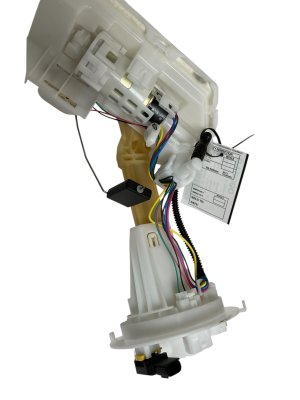
Typical fix: Replace the failing fuel pump or clogged fuel filter. The fuel filter on this Corolla is typically part of the fuel pump assembly inside the gas tank.
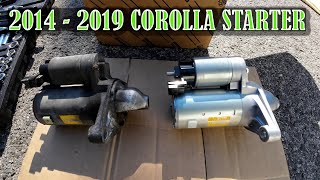
Est. part cost: $200-$500 - Defective Starter ⚪ Low Probability A starter that is drawing too much current or turning the engine too slowly can cause a delayed start and trigger the code, even with a good battery.
How to confirm: If you hear a clicking sound but the engine doesn't crank, or if it cranks very slowly despite a healthy battery, the starter is a likely culprit. A starter current draw test can confirm failure. 🎬 See this step-by-step walkthrough for replacing the starter motor.
Typical fix: Replace the starter motor.
Est. part cost: $150-$400 - Ignition System Fault ⚪ Low Probability Worn spark plugs or failing ignition coils can produce a weak spark, making it difficult for the engine to start promptly.
How to confirm: Inspect the spark plugs for wear or fouling. If other codes for misfires (P0300-P0304) are present, they can point to a specific faulty coil. A visual inspection of a spark plug can reveal if it is black with soot or has worn electrodes.
Typical fix: Replace worn spark plugs or the failing ignition coil(s).
Est. part cost: $50-$200
Rare But Worth Checking
- Faulty Crankshaft Position Sensor (CKP): The CKP sensor tells the ECM that the engine is spinning. If its signal is weak or absent, the ECM won't know to fire the spark plugs and injectors, leading to a no-start or hard-start condition.
- Engine Control Module (ECM) Malfunction: This is very rare, but an internal failure of the ECM can cause a P1604 code. This should only be considered after all other possibilities have been exhausted.
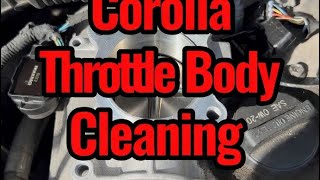
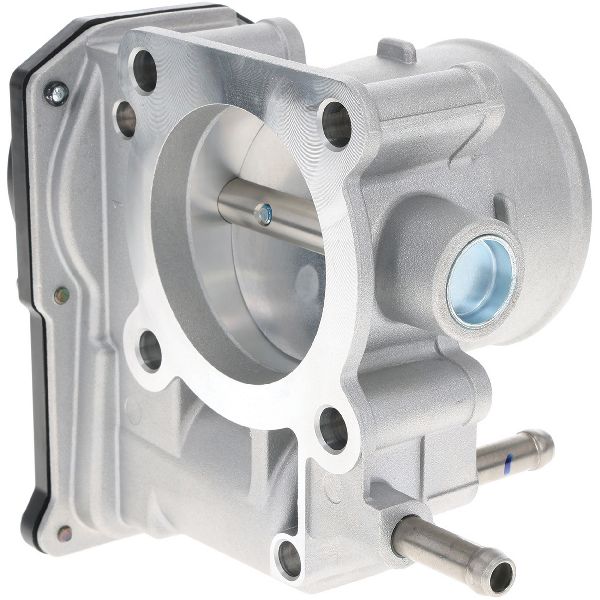
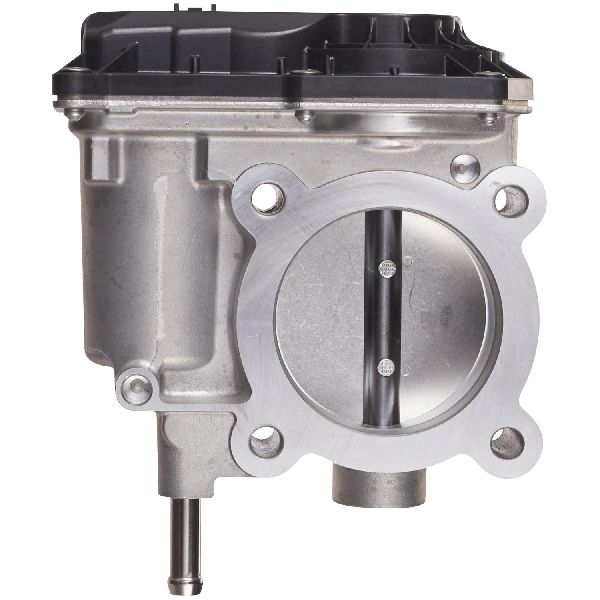
- Dirty Throttle Body or MAF Sensor: A dirty throttle body or a malfunctioning Mass Air Flow (MAF) sensor can disrupt the air-fuel mixture enough to cause starting issues.
- Transmission/Torque Converter Issues: In some instances, P1604 can appear alongside transmission-related codes. NHTSA ODI #11723306 describes a vehicle where P1604 was retrieved along with P0741 and P2757, which were related to the torque converter and CVT.
Diagnosis Steps
- Read all stored DTCs with an OBD-II scanner. Pay close attention to any other codes that accompany P1604, as they provide critical clues to the root cause.
- Check for simple user errors. Is there fuel in the tank? Was the battery recently disconnected or replaced? Sometimes the code is stored after a known event and can be cleared.
- Check the battery and charging system. Ensure the battery is fully charged (12.6V+). Have it load-tested. Check for clean, tight terminals. Verify alternator output is between 13.7-14.7V when running.
- Inspect the fuel system. Listen for the fuel pump priming for 2-3 seconds when the ignition is first turned on. If you hear nothing, check the EFI and fuel pump fuses and relays. 🎬 Watch: How to check the fuses and relays for a no-start. The EFI relay is often located in the engine bay fuse box and can sometimes be swapped with a non-critical relay (like the horn) for a quick test.
- If the pump primes, consider fuel quality and pressure. Old or low-quality fuel can cause this issue. A fuel pressure test is the next step, though it may be difficult without special tools on this model.
- Inspect the ignition system. Check the condition of the spark plugs for wear or fouling. If you also have misfire codes, investigate the corresponding ignition coils.
- Inspect critical sensors. Test the crankshaft and camshaft position sensors with a multimeter. Check the MAF sensor for dirt or contamination.
- Only consider the ECM as the final possibility if all other components, wiring, and ground connections have been verified as good.
Parts You'll Likely Need

- 12V Battery — A weak or dead battery is the most frequent cause of starting issues and the P1604 code.
Trusted brands: Toyota TrueStart, Interstate, DieHard
OEM price range: $180-$250
Aftermarket price range: $150-$220 - Fuel Pump Assembly
(OEM #77020-02411 (replaces 77020-02410))— A failing fuel pump that provides low pressure is a common reason for extended cranking and setting this code. The filter is typically integrated into this assembly.
Trusted brands: Denso, Aisin, Toyota OEM
OEM price range: $400-$600
Aftermarket price range: $150-$300
Related Codes That Often Appear With This One
- P1603 — P1603 is often for 'Engine Stall Malfunction'. These two codes frequently appear together as a failed start can sometimes be interpreted as a stall by the ECM.
- P03xx (e.g., P0300) — Misfire codes can point to an underlying ignition or fuel problem that is severe enough to also cause a starting issue.
- P0171 — A 'System Too Lean' code could indicate a vacuum leak or a weak fuel pump, both of which can make the engine difficult to start.
- P0420 — While a 'Catalyst System Efficiency' code isn't a direct cause, a user on Reddit reported seeing P1604 alongside P0420, suggesting that an underlying fuel delivery issue could potentially cause both codes to appear over time.
Mechanic-Grade Diagnostic Values
- Fuel Pressure — expected: 304 - 343 kPa (44 - 50 psi). Failure: If pressure is higher, the in-tank fuel pressure regulator is likely faulty. If pressure is lower, check the fuel pump, fuel filter, and for leaks in the fuel lines.
- Crankshaft Position Sensor Resistance — expected: Cold: 1630 - 2740 Ω. Hot: 2065 - 3225 Ω.. Failure: A reading near 0 Ω indicates a short; an infinite (OL) reading indicates an open circuit. Readings outside the specified range indicate a faulty sensor.
- Scan Tool Live Data: Engine Speed (RPM) while cranking — expected: A non-zero value should be displayed while the engine is physically turning over.. Failure: If the 'Engine SPD' parameter remains at 0 while cranking, it confirms a total loss of signal from the CKP sensor or its circuit.
- Techstream Freeze Frame Data — expected: N/A - This is a data log, not a single value.. Failure: Analyze the 5 sets of freeze frame data to understand the exact engine conditions (fuel trims, sensor readings, engine temp, etc.) at the moment the startability malfunction was detected. This data is crucial for diagnosing an intermittent fault.
Scan Tool Commands That Help
- Toyota Techstream: Active Test: Control the Fuel Pump / Speed — Use this command to manually activate the fuel pump with the engine off. This is required to build pressure in the fuel rail to perform a fuel pressure test without cranking the engine. The path is Powertrain / Engine / Active Test / Control the Fuel Pump / Speed.
- Toyota Techstream: Utility: Fuel Density Learning Value Reset — This is a specific reset that may be required if the ECM has incorrectly adapted to fuel with high alcohol content, which can cause starting issues. This should be used if poor fuel quality is suspected and after confirming A/F learn values are at 0%.
- Toyota Techstream: Immobilizer Reset / Key Registration — If an immobilizer fault is suspected (e.g., after an ECM or key replacement), Techstream can be used to reset the security system and re-register the keys to the vehicle's computer.
Wiring & Ground Locations
- ECM (Engine Control Module) — In the engine bay, directly behind the 12V battery. It is secured by two 10mm bolts and has two large wiring harness connectors.. The ECM is the brain that sets the P1604 code. All sensor inputs and starting system outputs are routed through it. A poor connection or ground at the ECM can cause this code.
- Engine Bay Ground Points (AA, AB, AC, AD) — These are the primary ground points for the engine wiring harness, located on the cylinder head and engine block. A specific cluster of ground wires attaches to a boss on the top/side of the cylinder head.. A loose or corroded engine ground is a common cause of intermittent electrical issues, including no-start conditions and false sensor readings that can lead to a P1604 code.
- ST Relay (Starter Relay) — In the engine compartment fuse box on the driver's side. It is often a distinct purple relay.. This relay sends power to the starter motor. If it fails, the engine will not crank, which can lead to a P1604 if the ECM sees a start attempt (STA signal) without engine rotation.
- EFI-MAIN Relay — In the engine compartment fuse box. It is often the same type as the horn relay and can be swapped for quick diagnosis.. This relay powers the Electronic Fuel Injection system, including the fuel pump and injectors. A failure here will cut fuel supply, causing a crank-no-start condition.
- Interior Fuel Pump Relay & IGN Fuse — Some diagrams indicate a non-serviceable fuel pump relay is integrated into the Body Control Module (BCM) under the driver's side dashboard. It is protected by a fuse labeled 'IGN' in the interior fuse panel.. If the under-hood EFI relay and fuses are good but the pump still doesn't prime, this interior fuse is the next component to check before condemning the pump or wiring.
Real Owner Repair Stories
- YouTube channel 'Fixing cars and stuff' (2013-2018 Toyota Corolla (exact year not specified)) — Check Engine Light with code P1604 stored.
❌ Tried (didn't work) Visual inspection of air intake system., Smoke test performed on the intake system, which showed no leaks.
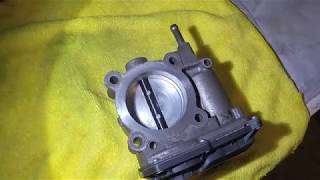
✅ What actually fixed it The technician visually inspected the throttle body and found it was heavily clogged with carbon deposits. Cleaning the throttle body thoroughly to remove the buildup resolved the issue. The code was cleared and did not return after a road test. - Reddit user in r/MechanicAdvice (2013 Toyota Corolla) — P1604 code appeared after replacing the battery 4 months prior. The car had trouble starting one morning, requiring multiple attempts where it would just turn over (crank no-start).
❌ Tried (didn't work) The battery was relatively new.
✅ What actually fixed it The suggested fix, and a common edge case, was that the immobilizer system lost sync with the key after the battery change. The resolution is to perform an immobilizer relearn procedure. One method involves leaving the key in the 'ON' position for 10-15 minutes to allow the system to re-authenticate the key. - NHTSA ODI #11602854 — An owner reported that after retrieving DTC code P1604 (Startability Malfunction), an independent mechanic determined that the electronic control module needed to be replaced.
- NHTSA ODI #10551666 — An owner reported that their vehicle stuttered on the drive, and an OBD 2 tester found a Toyota code P1604 ECM error; the dealership subsequently performed tests on fuel samples and kept the car for several days.
"I Checked Everything" — The Actual Cause
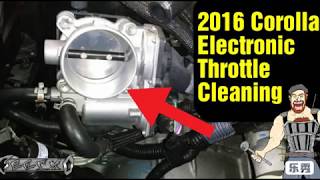
- A known case for P1604 on this platform involved the vehicle passing a smoke test for vacuum leaks, but the root cause was a severely carbon-fouled throttle body. The restricted airflow at startup was enough to cause a startability issue, but not a large enough leak to be detected by smoke. The fix was a thorough cleaning of the throttle body bore and plate.
Diagnostic Flowchart
Real Owner Stories
Aggregated from forums and TSBs cited above. Mileages and costs reflect what owners reported in those sources.
2014 Toyota Corolla — 217480 miles
Symptoms: P1604 code present, also P0420. User was asking for the meaning of the code.
What fixed it: The user was advised that P1604 means 'Start ability malfunction' and can be set by a long crank time (e.g., from a dying battery) or running out of fuel. The user was advised to clear the code if the cause was known and resolved.
Source hint: Reddit r/MechanicAdvice
2015 Toyota Corolla XLi 1.6L
Symptoms: It's taking a while to start sometimes.
What fixed it: No solution reported in the thread. The owner hit diagnostic dead ends after replacing the battery, spark plugs, inlet air filter, fuel pump, and cleaning the fuel injectors.
Source hint: KBB forum
2014 Toyota Corolla
Symptoms: Engine turns off when running AC, P1604 code present.
What fixed it: The original post was deleted and no final fix was reported by the owner. A commenter suggested taking it to a dealer after the owner had already tried replacing the battery.
Source hint: Reddit r/MechanicAdvice
Related OBD-II Codes
Frequently Asked Questions
Is the fuel filter easy to replace on my 2014-2019 Corolla to fix a P1604 code?
Can extremely cold weather cause the P1604 code on my Corolla?
I have a P1604 code and my 2014 Corolla cranks slowly. Could it be the starter?
Where is the EFI relay located on the 2014-2019 Corolla, and how can I test it?
Does the P1604 code mean my Corolla's ECM is failing?
Are there other Toyota models that share this P1604 startability issue?
Helpful Videos
Used OEM Parts in Stock



New Aftermarket Parts Available


The information in this article is provided for general reference and educational purposes only. Vehicle specifications, procedures, and part compatibility can vary by production date, trim level, and region. Always consult your vehicle's factory service manual and verify part numbers before purchasing or performing repairs. Safety-critical components such as airbags, seat belts, and braking systems should be installed by a qualified professional.
- Toyota Corolla:
- 🎬 Helpful Videos
- 🛍️ Shop This Part
- What's Unique About the 2014-2019 Toyota Corolla
- Symptoms You May Notice
- Most Likely Causes
- Rare But Worth Checking
- Diagnosis Steps
- Parts You'll Likely Need
- Related Codes That Often Appear With This One
- Mechanic-Grade Diagnostic Values
- Scan Tool Commands That Help
- Wiring & Ground Locations
- Real Owner Repair Stories
- "I Checked Everything" — The Actual Cause
- Diagnostic Flowchart
- Real Owner Stories
- 2014 Toyota Corolla — 217480 miles
- 2015 Toyota Corolla XLi 1.6L
- 2014 Toyota Corolla
- Related OBD-II Codes
- Frequently Asked Questions
- 🎟️ Get 5% Off