

P1604 on 2006-2013 Lexus IS: Startability Malfunction Causes and Fixes
On a 2006-2013 Lexus IS, code P1604 almost always points to a weak battery, corroded terminals, or a failing alternator. Before replacing major parts, fully test the battery and charging system, as this often resolves the issue for under $200. The code is triggered when the engine cranks for an extended period (e.g., 15-30 seconds) without starting or stalls immediately after starting.
- P1604 means 'Startability Malfunction' and is triggered by long cranking or stalling after a start.
- The most common cause by far is a weak battery or failing alternator. Always test the battery and charging system first.
- Do not ignore this code, as it indicates a problem that will likely leave you stranded eventually.
- If the battery and alternator are good, the next most likely causes are related to fuel delivery, such as a weak fuel pump.
What's Unique About the 2006-2013 Lexus IS

The second-generation Lexus IS is a reliable platform, but like many modern cars, it is highly sensitive to battery voltage. The P1604 code often appears as the first sign of a weakening battery or charging system issue. Owners on forums like ClubLexus frequently report that this code appears intermittently at first, sometimes for months, before the starting problem becomes consistent. One user noted the car would crank and die, then start normally on the second attempt, a classic symptom that eventually pointed to a battery issue. It's crucial to address it by checking the battery and alternator before assuming a more complex fuel or sensor issue. For the IS250 specifically, severe carbon buildup on the intake valves, a known issue with the 4GR-FSE direct-injection engine, can also lead to rough idling and starting problems that may trigger a P1604.
Symptoms You May Notice
- Engine cranks for a long time before starting
- Engine starts and then immediately stalls.
- Intermittent no-start condition.
- Check Engine Light is on (though sometimes the code is stored without illuminating the light).
- A single 'crank-and-die' event, followed by a normal start on the second try.
- Replacing the starter motor when the battery is the actual problem.
- Replacing fuel system components before verifying battery health and alternator output.
- Assuming a major engine issue on an IS250 before considering carbon buildup as a potential cause.
Most Likely Causes

- Weak or Failing Battery 🔴 High Probability Modern electronics in the Lexus IS require stable voltage. A battery that can no longer hold a proper charge or has a weak cell will cause extended cranking or low voltage during start-up, triggering the P1604 code. Cold weather can exacerbate a weak battery's condition.
How to confirm: Test the battery voltage with a multimeter. It should be at least 12.6V with the engine off. Perform a load test to check its health; most auto parts stores do this for free. A simple voltage check isn't enough, as a battery can show 12V+ but fail under load.
Typical fix: Replace the vehicle's 12V battery.
Est. part cost: $150-$250 - Failing Alternator 🟡 Medium Probability If the alternator isn't recharging the battery effectively, the battery will become progressively weaker, leading to the low voltage condition that causes starting issues and the P1604 code.
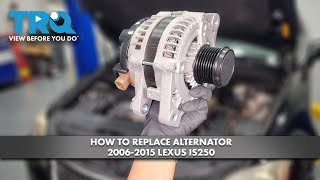
How to confirm: With the engine running, test the voltage at the battery terminals. It should be between 13.7V and 14.7V. If the voltage is low, does not increase when the engine is running, or fluctuates wildly, the alternator is likely failing. 🎬 See this step-by-step guide to replacing your Lexus alternator.
Typical fix: Replace the alternator.
Est. part cost: $200-$450 - Corroded or Loose Battery Terminals 🟡 Medium Probability
How to confirm: Visually inspect the battery terminals and cable ends for white or greenish corrosion. Ensure the clamps are tight and cannot be moved by hand. Also, check the body ground connection from the negative terminal for corrosion or looseness.
Typical fix: Disconnect the battery and clean the terminals, clamps, and ground points with a wire brush and a baking soda/water solution. Replace corroded cable ends if necessary.
Est. part cost: $5-$30 - Fuel Delivery Issue ⚪ Low Probability While less common than electrical issues for this code, a weak fuel pump or clogged fuel filter can cause low fuel pressure, leading to long crank times. This is more likely on higher-mileage vehicles.
How to confirm: Listen for the fuel pump to prime (a faint hum from the rear of the car) when the ignition is turned on. For a definitive test, connect a fuel pressure gauge to the fuel rail to check if pressure is within specification.
Typical fix: Replace the failing fuel pump or clogged fuel filter.
Est. part cost: $150-$400
Rare But Worth Checking
- Failing Starter Motor: While the engine may crank, a weak starter can draw excessive current, lowering system voltage and contributing to a P1604 code. This is less common than a simple battery issue.
- Faulty Crankshaft Position Sensor: The ECM needs a signal from this sensor to know the engine is rotating. An intermittent failure can prevent the ECM from initiating spark and fuel, causing a long crank and a P1604 code.
- Leaking Fuel Injectors: A forum user on ClubLexus noted that a start-then-stall issue was related to leaking injectors causing a rich condition, especially after the car sat overnight.
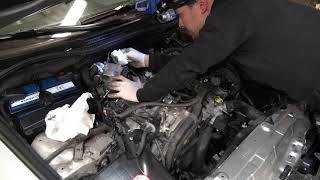
- Carbon Buildup (IS250): Specific to the IS250's 4GR-FSE engine, heavy carbon deposits on the intake valves can restrict airflow, causing rough idle, stalling, and hard starting. This was subject to a Customer Support Program from Lexus. The fix often involves a top-engine cleaning or walnut shell blasting of the valves. 🎬 Watch: How to clean carbon buildup on your IS250 engine.
Diagnosis Steps

- Scan for any other stored trouble codes. P1604 is often a symptom of another problem, and other codes can point you in the right direction.
- Visually inspect the battery terminals for corrosion and ensure they are tight. Clean if necessary. Check the main ground wire from the battery to the chassis for corrosion.
- Test the battery. Check the static voltage (should be >12.6V) and, more importantly, perform a load test to confirm its health.
- With the engine running, check the alternator output at the battery terminals (should be 13.7V-14.7V).
- If the battery and charging system are good, investigate the fuel system. Listen for the fuel pump priming. If possible, test the fuel pressure.
- For IS250 models, if symptoms include rough idle or stalling, investigate carbon buildup. This may require a borescope inspection of the intake valves.
- Inspect the ignition system, including spark plugs and ignition coils, for wear or damage, especially on higher-mileage vehicles.
- If all else fails, the issue could be a sensor (like the crankshaft position sensor) or, in rare cases, the ECM itself.
Parts You'll Likely Need

- 12V AGM Battery — This is the most frequent cause of P1604, as low voltage during cranking is the primary trigger for the code.
Trusted brands: Interstate, DieHard, Duralast, Lexus OEM
OEM price range: $250-$350
Aftermarket price range: $150-$250 - Alternator
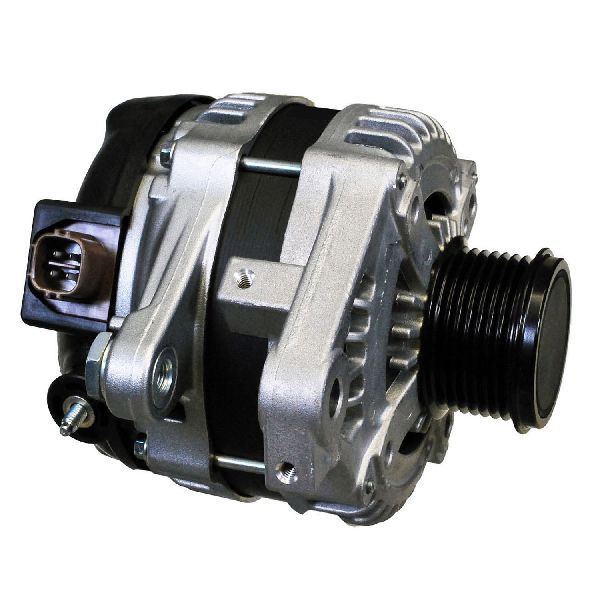
(OEM #27060-31062 (or superseding part numbers like 27060-31211, check by VIN))— A failing alternator will not properly charge the battery, leading to the low voltage condition that sets P1604. Denso is the original equipment manufacturer (OEM).
Trusted brands: Denso (OEM Remanufactured), Bosch, AC Delco
OEM price range: $350-$500
Aftermarket price range: $200-$450 - Fuel Pump Assembly
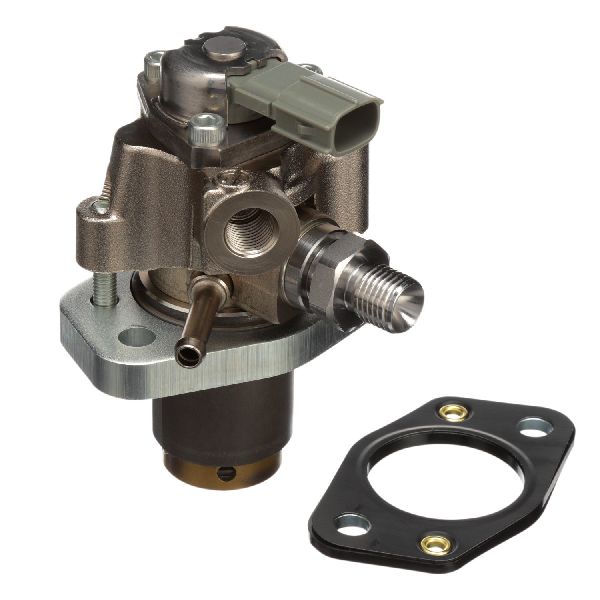
(OEM #23220-31340 (or superseding part numbers, check by VIN))— If the battery and alternator are healthy, a weak fuel pump causing low pressure is the next most likely culprit for extended cranking.
Trusted brands: Denso (OEM), Aisin, Carter
OEM price range: $300-$450
Aftermarket price range: $150-$300
Related Codes That Often Appear With This One
- P1603 — This code indicates an Engine Stall History, which can occur if the engine starts and then immediately dies, a common symptom of P1604.
- P1605 — This code means Rough Idling, which can be a symptom of the same underlying problems (fuel, spark, air, carbon buildup) that cause the P1604 startability issue.
- Fuel System Codes — Codes related to fuel pressure (e.g., P0087) or lean/rich conditions may accompany P1604 if the root cause is a failing fuel pump or clogged filter.
Technical Service Bulletins (TSBs) & Recalls
- While no TSB is directly for P1604, Lexus issued a Customer Support Program (CSP) / Warranty Extension for carbon buildup on 2006-2010 IS250 models, a root cause of starting and idling issues that can log this code.
Platform-Specific Known Issues
- IS250 Carbon Buildup: The 2.5L 4GR-FSE engine is direct-injection only, which means fuel doesn't wash over the intake valves. This leads to carbon deposits that can restrict airflow, causing rough idle, hesitation, and hard starting, which can trigger P1604. The IS350's 2GR-FSE engine has both port and direct injection, largely preventing this issue. Lexus issued a Customer Support Program (CSP) for 2006-2010 models to address this, extending the warranty for this specific issue. The fix involves cleaning the pistons and valves, which can be done via chemical cleaning (like Seafoam, with mixed results) or more effectively with walnut shell blasting.
Mechanic-Grade Diagnostic Values
- Low-Pressure Fuel System (at idle) — expected: 196 to 588 kPa (2.0 to 6.0 kgf/cm², 28 to 85 psi). Failure: Pressure below specification may indicate a weak in-tank fuel pump or clogged filter. Pressure above may indicate a faulty regulator.
- High-Pressure Fuel System (at idle) — expected: 3.5 to 4.5 MPa (35.7 to 45.9 kgf/cm², 508 to 653 psi). Failure: Pressure outside this range can indicate a problem with the high-pressure fuel pump or the fuel pressure sensor.
- Fuel Pressure Hold Test — expected: Pressure should remain at 147 kPa (1.5 kgf/cm², 21 psi) or more for 5 minutes after the engine is stopped.. Failure: A drop in pressure indicates a leak in the system, potentially from the fuel pump check valve or a leaking injector.
- Crankshaft Position Sensor Resistance — expected: While a specific Ohm value for this generation IS is not readily published, a common test is to check for a consistent signal with an oscilloscope during cranking. Resistance tests can be misleading on modern sensors.. Failure: An erratic or absent signal waveform on an oscilloscope during cranking points to a failed sensor.
Scan Tool Commands That Help
- Toyota Techstream: Active Test: Control the Fuel Pump Speed — This command allows the technician to directly activate the in-tank fuel pump to verify its operation without starting the engine. It's a crucial first step to confirm the pump is receiving power and is functional before performing pressure tests.
- Toyota Techstream: Data List: Fuel Press (High Pressure) — Allows for real-time monitoring of the high-pressure fuel system. This is essential for diagnosing issues with the direct injection pump on both IS250 and IS350 models, as a mechanical gauge is not easily connected to the high-pressure side.
Wiring & Ground Locations
- Ground Points A1, A2, A3, A4, A5 — Located in the engine compartment, typically on the inner fender structures and front of the engine.. These are primary ground points for the Engine Room Main Wire harness. Corrosion or looseness at these points can cause intermittent electrical issues for the ECM and other critical engine sensors, leading to starting problems.
- Ground Points E1, E2 — Located directly on the engine block/cylinder heads.. These are the main grounds for the engine itself and many of its sensors. A poor connection here can cause erratic sensor readings (like from the crankshaft sensor) or insufficient grounding for the ignition coils, leading to a no-start or hard-start condition.
- ECM Connectors (A5, E3, E4, E5, E6) — The ECM is located in the engine bay, typically in a protective box near the battery.. The ECM sends the start request and controls the starter relay. Checking for voltage at specific pins (like the STA signal from the park/neutral switch) on these connectors is a key step if the starter isn't engaging.
Real Owner Repair Stories
- Reddit user in r/Lexus (2008 IS350 with ~220,000 miles) — Starter failure.
❌ Tried (didn't work) Not specified, but the user noted the alternator had been replaced preventatively at 200k miles and the water pump around 220k.
✅ What actually fixed it Replacing the starter motor. The user attributed the failure to a high number of start-stop cycles from delivery driving.
OEM Part Supersession History
27060-31060, 27060-31061, 27060-31062→27060-31062-84 (Remanufactured)— Standard part lifecycle updates and transition to offering remanufactured units.
Heads up: These part numbers are generally interchangeable for the 2006-2013 IS250/IS350, but always confirm with VIN. The '-84' suffix denotes a Lexus-supplied remanufactured part.23221-31020, 23221-31090, 23221-31340→23220-31340— Consolidation of previous part numbers into a single assembly part number.
Heads up: The final part number 23220-31340 is the complete fuel pump assembly. The previous numbers may have referred to sub-components. It is recommended to replace the entire assembly.
Model Year Variations Within This Range
- 2009-2013: A facelift for the 2009 model year included retuned suspension and steering, plus minor exterior and interior styling changes. Critically, the Vehicle Dynamics Integrated Management (VDIM) system became standard on all models. While not directly causing P1604, software and electronic module integration differ slightly from the 2006-2008 models, which could affect advanced diagnostics.
- 2010-2013: A second, minor refresh occurred for the 2011 model year which included further interior updates and the introduction of factory F-Sport models. No major changes to the core powertrain systems related to P1604 were made.
Diagnostic Flowchart
Used vs. New Parts: Buying Guide for This Vehicle
When a used part is the smart pick: Used parts like the starter motor and alternator can be a cost-effective choice for this vehicle, as the OEM Denso units are known for their longevity. Sourcing from a lower-mileage (under 100k miles) donor car is a viable repair strategy.
Donor-vehicle mileage cap: roughly under 100000 miles for the part to have meaningful remaining life.
What to inspect on the donor part:
- For starters and alternators, check for minimal corrosion on the casing and clean, undamaged electrical posts.
- Ask the recycler for the VIN of the donor car to verify mileage and model year compatibility.
- Avoid parts from vehicles that show signs of flood or fire damage.
OEM-only on this vehicle (don't cheap out):
- Fuel Pump Assembly: While the pump motor itself is robust, the complete assembly includes the filter, regulator, and sending unit. Aftermarket assemblies have a higher reported failure rate. It is strongly recommended to use an OEM Denso or Aisin unit.
- Crankshaft Position Sensor: This sensor is critical for engine operation. Aftermarket sensors have a high rate of being dead-on-arrival or failing prematurely. Stick with OEM Denso for this part.
Aftermarket brands forum-validated for this vehicle:
- Denso (for alternator, starter, fuel pump, sensors - this is the Original Equipment Manufacturer)
- Aisin (often an OEM supplier for fuel and water pumps)
Brands owners have reported issues with on this vehicle:
- Unbranded or 'white-box' fuel pump assemblies and engine sensors from online marketplaces are frequently cited on forums as being unreliable and a common cause of repeat repairs.
Real Owner Stories
Aggregated from forums and TSBs cited above. Mileages and costs reflect what owners reported in those sources.
Lexus IS (2nd Gen)
Symptoms: On a cold engine, the car cranks but doesn't start on the first attempt. It starts normally on the second attempt. Throws code P1604.
What fixed it: No resolution was reported by the owner, but another user suggested checking the low pressure fuel rail. The owner confirmed the battery was new and the fuel pump had been replaced under a recall.
Source hint: No Start After First Try - ClubLexus - Lexus Forum Discussion
Lexus IS (2nd Gen)
Symptoms: The car cranks, dies, then starts fine on the second try.
What fixed it: The final fix was not specified, but forum discussion immediately pointed to getting the battery load tested and checking terminal and ground connections for corrosion as the primary diagnostic steps.
Source hint: ClubLexus - 'P1604 Code' thread (Oct 2020)
Lexus GS350 (Platform Mate)
Symptoms: The vehicle would not start and displayed a P1604 code immediately following a battery replacement.
What fixed it: The resolution was not detailed, but the problem was directly linked to the battery replacement, highlighting the importance of a healthy, correctly installed battery for the vehicle's sensitive electrical system.
Source hint: ClubLexus - '4th gen gs350 WONT START HAS P1604 DTC' thread (May 2023)
Lexus GS350 (Platform Mate)
Symptoms: Owner experienced intermittent starting problems where the car would labor to start. A mechanic found a pending P1604 code.
What fixed it: The source does not mention what the final repair was, but it corroborates the intermittent nature of the fault.
Source hint: Reddit r/Lexus - 'Experience startup issues with my 2014 GS350 F Sport' (Aug 2020)
Documented NHTSA Reports
Lexus RX (Cross-Model Reference)
Symptoms: A technician scanned a vehicle that had to be towed and found codes P0335, P1603, P1604, and P1605. After bore-scoping the cylinders, the technician was unable to turn the motor by hand.
What fixed it: NHTSA ODI #11620473 describes a severe engine failure where the motor could not be rotated manually after these codes were stored.
Source hint: NHTSA ODI #11620473
Related OBD-II Codes
Frequently Asked Questions
My 2008 IS250 has a P1604 code and a rough idle. Is this related to the carbon buildup issue?
Is the carbon buildup cleaning for my IS250 covered by any Lexus program?
My IS starts, immediately dies, but then starts perfectly on the second try. Is this a common P1604 symptom?
My mechanic says my battery is fine because it shows 12.6V. Could it still be the cause of P1604?
I just replaced the battery in my Lexus and now I have a P1604 code. What happened?
Is P1604 more likely a battery problem or a fuel pump problem on my Lexus IS?
Helpful Videos
Used OEM Parts in Stock


New Aftermarket Parts Available




The information in this article is provided for general reference and educational purposes only. Vehicle specifications, procedures, and part compatibility can vary by production date, trim level, and region. Always consult your vehicle's factory service manual and verify part numbers before purchasing or performing repairs. Safety-critical components such as airbags, seat belts, and braking systems should be installed by a qualified professional.
- Lexus IS:
- 🎬 Helpful Videos
- 🛍️ Shop This Part
- What's Unique About the 2006-2013 Lexus IS
- Symptoms You May Notice
- Most Likely Causes
- Rare But Worth Checking
- Diagnosis Steps
- Parts You'll Likely Need
- Related Codes That Often Appear With This One
- Technical Service Bulletins (TSBs) & Recalls
- Platform-Specific Known Issues
- Mechanic-Grade Diagnostic Values
- Scan Tool Commands That Help
- Wiring & Ground Locations
- Real Owner Repair Stories
- OEM Part Supersession History
- Model Year Variations Within This Range
- Diagnostic Flowchart
- Used vs. New Parts: Buying Guide for This Vehicle
- Real Owner Stories
- Lexus IS (2nd Gen)
- Lexus IS (2nd Gen)
- Lexus GS350 (Platform Mate)
- Lexus GS350 (Platform Mate)
- Documented NHTSA Reports
- Lexus RX (Cross-Model Reference)
- Related OBD-II Codes
- Frequently Asked Questions
- 🎟️ Get 5% Off