

P1450 on 2009-2014 Ford F-150: Causes and Fixes for Excessive Fuel Tank Vacuum
On a 2009-2014 F-150, code P1450 is almost always caused by a faulty canister purge valve that is stuck open, leading to hard starts after refueling. Replacing this part is a simple, 15-minute DIY job with a part cost of around $30-$60. The most common part number for the 5.4L V8 is Motorcraft CX-2220.
- P1450 on your 2009-2014 F-150 almost always points to a bad canister purge valve.
- A key symptom is the truck struggling to start right after you fill the gas tank.
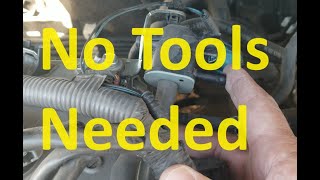
- You can test the purge valve yourself in minutes with no special tools. If you can feel suction from it at idle when it's unplugged, it's bad.
- Replacing the purge valve is a very easy DIY fix that costs under $60 and takes about 15 minutes.
- If the purge valve isn't the issue, check the vent solenoid and filter near the spare tire for dirt or blockages.
What's Unique About the 2009-2014 Ford F-150

For the 12th generation F-150 (2009-2014), the P1450 code is exceptionally common and very frequently traced back to a single, inexpensive part: the canister purge valve. While other EVAP system failures can cause this code, the purge valve is the culprit in a vast majority of cases for this specific truck. Owners often experience difficulty starting the truck immediately after refueling, which is a classic symptom pointing directly to the purge valve failing on this platform. There was also a related recall (19S22) and a Technical Service Bulletin (TSB 19-2345) for some Ford vehicles concerning fuel tank deformation where P1450 was a primary indicator, often caused by a faulty purge valve.
Symptoms You May Notice
- Check Engine Light is on
- Difficulty starting the engine, especially right after getting gas. The engine may crank for an extended period before starting, or start and then immediately stall.
- Rough or unstable idle.
- Slight decrease in fuel economy.
- A 'whoosh' sound from the gas cap area when opening it (on models with caps) or when inserting the fuel nozzle (on capless systems). This is air rushing *into* the tank to equalize the vacuum.
- Difficulty filling the fuel tank, with the pump clicking off repeatedly (less common symptom).
- Replacing the gas cap. While a bad gas cap can cause other EVAP codes (like P0455 or P0457 for leaks), P1450 is specifically about excessive vacuum, which a faulty cap is unlikely to cause.
- Replacing the charcoal canister first. The canister can be a cause, but it's much less frequent than a failed purge valve or blocked vent. It should be diagnosed, not replaced on a guess.
Most Likely Causes

- Canister Purge Valve Stuck Open 🔴 High Probability This specific part is a very common failure point on many Ford vehicles from this era, including the F-150. It gets stuck internally, allowing continuous engine vacuum to be pulled on the fuel tank when it should be sealed.
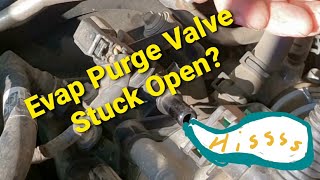
How to confirm: Disconnect the electrical connector from the purge valve. Disconnect the EVAP line that runs from the valve towards the back of the truck. Start the engine. Place your finger over the port on the valve where you removed the line. If you feel any vacuum suction, the valve is stuck open and must be replaced. With the electrical connector unplugged, the valve should be fully closed and allow no vacuum to pass through. 🎬 Watch: A quick video guide on testing for a stuck valve.
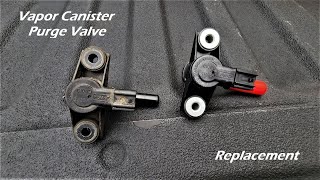
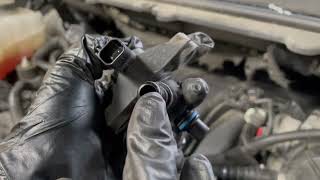
Typical fix: Replace the canister purge valve. On the 5.4L V8, it is located on the top rear of the engine near the firewall. On the 5.0L and 3.5L, it's on the driver's side of the intake manifold. It is typically held in place by two 8mm or 10mm bolts. 🎬 See this step-by-step purge valve replacement for 5.0L engines.
Est. part cost: $30-$60 - Blocked Canister Vent Solenoid or Filter 🟡 Medium Probability The vent solenoid assembly is located near the rear axle by the spare tire, where it is exposed to road grime, dust, and debris. Spiders and insects are also known to build nests in the vent tube, causing a blockage. This prevents fresh air from entering the system to relieve vacuum.
How to confirm: Inspect the vent solenoid and its filter box (located near the charcoal canister by the spare tire) for dirt, mud, or other blockages. One owner on f150forum.com found their pre-filter box completely filled with dirt, and cleaning it resolved the code. You can test the solenoid's function by applying 12v power to its terminals; it should click open and closed.
Typical fix: Clean the debris from the vent filter and solenoid housing. If the solenoid itself is faulty or the filter is saturated, the entire vent solenoid assembly needs to be replaced.
Est. part cost: $40-$80 - Kinked or Blocked EVAP Hose ⚪ Low Probability
How to confirm: Visually inspect all EVAP hoses, particularly the lines running from the engine bay to the charcoal canister at the rear of the truck. Look for any obvious kinks, collapses, or damage.
Typical fix: Straighten any kinked hoses or replace damaged sections.
Est. part cost: $10-$30
Rare But Worth Checking
- Faulty Fuel Tank Pressure (FTP) Sensor: While less common, the sensor that reports the vacuum level to the PCM can fail, providing incorrect data. This is usually diagnosed after confirming the purge and vent valves are working correctly.
- Saturated Charcoal Canister: Repeatedly 'topping off' the fuel tank after the pump clicks off can force liquid fuel into the charcoal canister, which is designed only for vapor. This can clog the canister and restrict airflow, leading to this code.
Diagnosis Steps

- Confirm the P1450 code is present using an OBD-II scanner.
- Check for the most common symptom: difficulty starting after refueling. If present, this strongly suggests a faulty purge valve.
- Locate the canister purge valve. On the 5.4L V8, it's on the top rear of the engine. On other engines like the 5.0L, it's on the driver's side of the intake manifold.
- Test the purge valve: Disconnect the electrical plug and the EVAP line going to the rear of the truck. Start the engine. If you feel suction from the valve's port, it has failed and needs to be replaced. This is the most definitive and common fix.
- If the purge valve test passes (no suction), the next step is to inspect the EVAP system at the rear of the truck.
- Locate the charcoal canister and the attached canister vent solenoid near the spare tire.
- Inspect the vent solenoid's filter and housing for any blockages like dirt, mud, or spider webs. A user on f150forum.com noted a small pre-filter box that was completely clogged with dirt.
- If the vent path is clear, further diagnosis may require a smoke machine to check for hidden restrictions or a professional scan tool to command the vent solenoid and monitor the Fuel Tank Pressure sensor.
- Check the fuse for the EVAP purge valve. In the under-hood power distribution box, this is often a 20A fuse shared with other components. On a 2012 F-150, for example, it is the second fuse from the left on the bottom row.
Parts You'll Likely Need

- Canister Purge Valve / Solenoid
(OEM #Motorcraft CX-2220 (also 9U5Z-9C915-H) for 5.4L V8; Motorcraft AU5Z-9C915-B (superseded by AU5Z-9C915-E) for other engines like 3.7L/5.0L.)— This is the most common failure item for code P1450 on this vehicle. It gets stuck open, allowing constant engine vacuum to pull on the fuel tank.
Trusted brands: Motorcraft, Dorman, Standard Motor Products
OEM price range: $40-$70
Aftermarket price range: $25-$50 - Canister Vent Solenoid / Valve
(OEM #Motorcraft 9U5Z-9F945-F)— This is the second most likely cause. It gets clogged with dirt and debris or fails electrically, preventing the system from venting to the atmosphere.
Trusted brands: Motorcraft, Dorman
OEM price range: $60-$100
Aftermarket price range: $40-$80
Technical Service Bulletins (TSBs) & Recalls
- TSB 19-2345: While the final version of this TSB addresses a water leak, it superseded a previous version that some owners associated with EVAP problems and the P1450 code.
Platform-Specific Known Issues
- Ford issued Technical Service Bulletin (TSB) 19-2345 for some 2018-2020 F-150s (and other models) for an unrelated water leak, but a previous version of this TSB was rumored to be related to EVAP issues. More directly, Customer Satisfaction Program 19N07 and Recall 19S22 were issued for some Ford vehicles, including F-150s, related to fuel tank deformation. The P1450 code was a primary indicator of this issue, which was often caused by a faulty purge valve. The fix involved a PCM reflash and, in many cases, replacement of the purge valve. Owners have reported dealers attempting to only perform the software update without replacing the faulty valve, which does not fix the root cause.
Mechanic-Grade Diagnostic Values
- Fuel Tank Pressure (FTP) Sensor Voltage, Key On Engine Off (KOEO), system at atmospheric pressure (gas cap off) — expected: 2.4V - 2.6V.. Failure: A reading significantly outside this range indicates a faulty sensor or wiring issue. A reading below 2.4V indicates vacuum, while above 2.6V indicates pressure.
- Fuel Tank Pressure (FTP) Sensor Voltage, engine running, canister purge valve commanded open — expected: Voltage should drop below 2.4V, approaching 0.5V as vacuum increases.. Failure: If the purge valve is commanded open and the voltage does not drop, it indicates a blockage in the purge line or a faulty purge valve. If the voltage is low when the purge valve is commanded closed, it indicates the purge valve is stuck open.
- Canister Purge Valve Solenoid Resistance — expected: While specific OEM values are not published, a typical solenoid of this type will have a resistance between 15 and 30 ohms. An open circuit (infinite resistance) or short circuit (near zero resistance) indicates a failed solenoid coil.. Failure: Reading of 'OL' or a value near 0 ohms on a multimeter.
Hidden / Shadow Codes Worth Checking
- Mode $06, Test ID $39: This test monitor is for the EVAP system leak detection. It checks the fuel tank's ability to hold pressure/vacuum. A failure here, even without a specific DTC, can point to an emerging issue. (see via A professional scan tool or advanced DIY software like FORScan that can access Mode $06 test results.)
- PID 1639 (FTP Sensor A/D Count): This is the raw Analog-to-Digital converter count from the PCM for the Fuel Tank Pressure sensor. It can be used to calculate the voltage manually using the formula (A*256+B)/13107, providing a more granular view than the standard voltage PID. (see via Advanced scan tools or software like Torque Pro or FORScan where custom PIDs can be entered.)
Scan Tool Commands That Help
- FORScan / Professional Scan Tool: Commanded Evaporative Purge (EVAPCV) — This bidirectional control allows you to manually open the canister purge valve by a specific percentage (e.g., 10%, 50%). You can command it open while monitoring FTP sensor voltage to confirm the valve is opening and that the line to the tank is clear.
- FORScan / Professional Scan Tool: Evaporative Canister Vent Valve (EVAPCVV) — This command allows you to manually close the normally-open canister vent solenoid. This is used to seal the system for a leak test, either with a smoke machine or by watching for vacuum decay on the FTP sensor after commanding the purge valve open briefly.
- FORScan / Professional Scan Tool: On-Demand Self-Test (KOER) — Running the Key-On-Engine-Running self-test can force the EVAP monitor to run, which may help confirm a fix or identify other related issues after a repair has been performed. The EVAP monitor requires specific conditions to run, and this can help initiate it.
Wiring & Ground Locations

- PCM Ground — Located on the firewall, in the engine bay. There may be one or two ground points depending on the model year and engine.. The PCM controls and receives signals from all EVAP system components. A poor ground can cause erratic sensor readings and solenoid operation, potentially leading to a P1450 code.
- Main Frame Ground Lug — Behind the vertical frame rail near the front of the truck, on both the driver and passenger sides.. This is a primary chassis ground point. While not directly tied to the EVAP system, ensuring all major grounds are clean and secure is a crucial step in diagnosing any electrical fault.
- Canister Purge Valve Connector — On the purge valve itself. On the 5.4L V8, it's on the top rear of the engine. On the 5.0L/3.5L, it's on the driver's side of the intake manifold.. This connector provides power and control signal to the purge valve. The pins can be back-probed to check for voltage and ground signal from the PCM.
- Fuse F20 (2012 model year example) — In the under-hood power distribution box, it is a 20A fuse located in the second position from the left on the bottom row.. This fuse supplies power to the canister purge valve solenoid. A blown fuse will prevent the valve from operating, though this typically causes a P0443 (purge control circuit) code rather than P1450. However, it's a relevant circuit to check.
Real Owner Repair Stories
- f150forum.com user 'ahlbe1cl' (2008 F-150 5.4L (Note: Pre-generation but same P1450 issue and components)) — P1450 code present, hard to start after filling the fuel tank.
❌ Tried (didn't work) Initial inspection did not reveal the problem.
✅ What actually fixed it The user located a small 'prefilter' box attached to the EVAP canister assembly near the spare tire. This box was completely filled with dirt and debris. After blowing out the filter box and the canister with compressed air, the hard-start symptom after refueling was gone and the code was resolved.
OEM Part Supersession History
AU5Z-9C915-B→AU5Z-9C915-E— Standard part revision by Ford, likely for improved durability or material changes.
Heads up: The new part number (AU5Z-9C915-E) is a direct replacement for the old one and is fully compatible.9U5Z-9C915-H (For 5.4L V8)→CX-2220 (Motorcraft Service Part Number)— CX-2220 is the service part number corresponding to the engineering number 9U5Z-9C915-H.
Model Year Variations Within This Range
- 2009-2010: These years primarily used the 4.6L 3V and 5.4L 3V V8 engines. The canister purge valve (Motorcraft CX-2220) is located on the top rear of the engine, near the firewall.
- 2011-2014: These years introduced the 3.5L EcoBoost, 3.7L V6, and 5.0L V8 engines. On these engines, the purge valve (Motorcraft AU5Z-9C915-B/E) is typically located on the driver's side of the intake manifold, making it easier to access.
Diagnostic Flowchart
Used vs. New Parts: Buying Guide for This Vehicle
When a used part is the smart pick: For this specific repair, buying a used part is generally not recommended. The canister purge valve is a known high-failure item and is inexpensive to buy new. The risk of getting a used part that has already failed or will fail soon is high.
Donor-vehicle mileage cap: roughly under 30000 miles for the part to have meaningful remaining life.
What to inspect on the donor part:
- If considering a used part, ensure it comes from a low-mileage, collision-damaged vehicle.
- Visually inspect for any cracks in the plastic housing or corrosion on the electrical connector pins.
- Attempt to blow through the valve; if any air passes, it is already faulty.
OEM-only on this vehicle (don't cheap out):
- While not strictly OEM-only, many forum users report the highest success rate and longevity with genuine Motorcraft parts for EVAP components. Aftermarket parts can be a viable alternative, but OEM is preferred for first-time replacement.
Aftermarket brands forum-validated for this vehicle:
- Dorman is a widely available aftermarket option that many DIYers use successfully, though some forum posts mention shorter lifespans compared to OEM.
- Standard Motor Products (SMP) is another reputable aftermarket brand.
Brands owners have reported issues with on this vehicle:
- Avoid unbranded, no-name parts from online marketplaces, as their quality and reliability are highly questionable.
Real Owner Stories
Aggregated from forums and TSBs cited above. Mileages and costs reflect what owners reported in those sources.
2008 Ford F-150 5.4L Flex Fuel
Symptoms: The truck had a hard time starting after filling the tank and would throw the P1450 code only when the tank was over 3/4 full.
What fixed it: The owner removed the EVAP canister and solenoid assembly and found a 'prefilter' box completely filled with dirt. Cleaning out the filter box and blowing out the canister with an air hose resolved the issue.
Source hint: f150forum.com - P1450 Error Code Excessive Fuel tank Vacuum
2015 F-150 2.7L EcoBoost
Symptoms: The check engine light was on with error code P1450.
What fixed it: Replaced the evaporation valve solenoid (purge valve) with Duralast part# PV967. The check engine light went out after 4 days.
Cost: $60
Source hint: f150forum.com - Thread 'P1450 2015 f-150 3.5l'
2014 F-150 XLT 3.7L — 211000 miles
Symptoms: The truck stalls frequently when idling or slowing down. After fueling up, it takes a very long time to start.
What fixed it: The owner's report focused on symptoms and did not state the final repair.
Source hint: Reddit r/FordF150
Related OBD-II Codes
Frequently Asked Questions
Where is the canister purge valve located on my 2009-2014 F-150?
What is the most common cause for a P1450 code on this truck?
How can I test the canister purge valve myself?
I'm having a hard time starting my truck right after I get gas. Is this related to the P1450 code?
I heard about a recall for this issue. Does it apply to my truck?
My dealer only did a software update for the recall, but the P1450 code came back. Why?
Where is the canister vent solenoid located?
Helpful Videos

Used OEM Parts in Stock

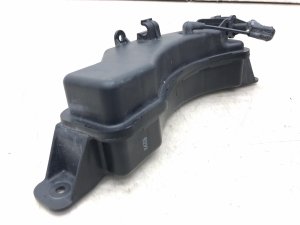
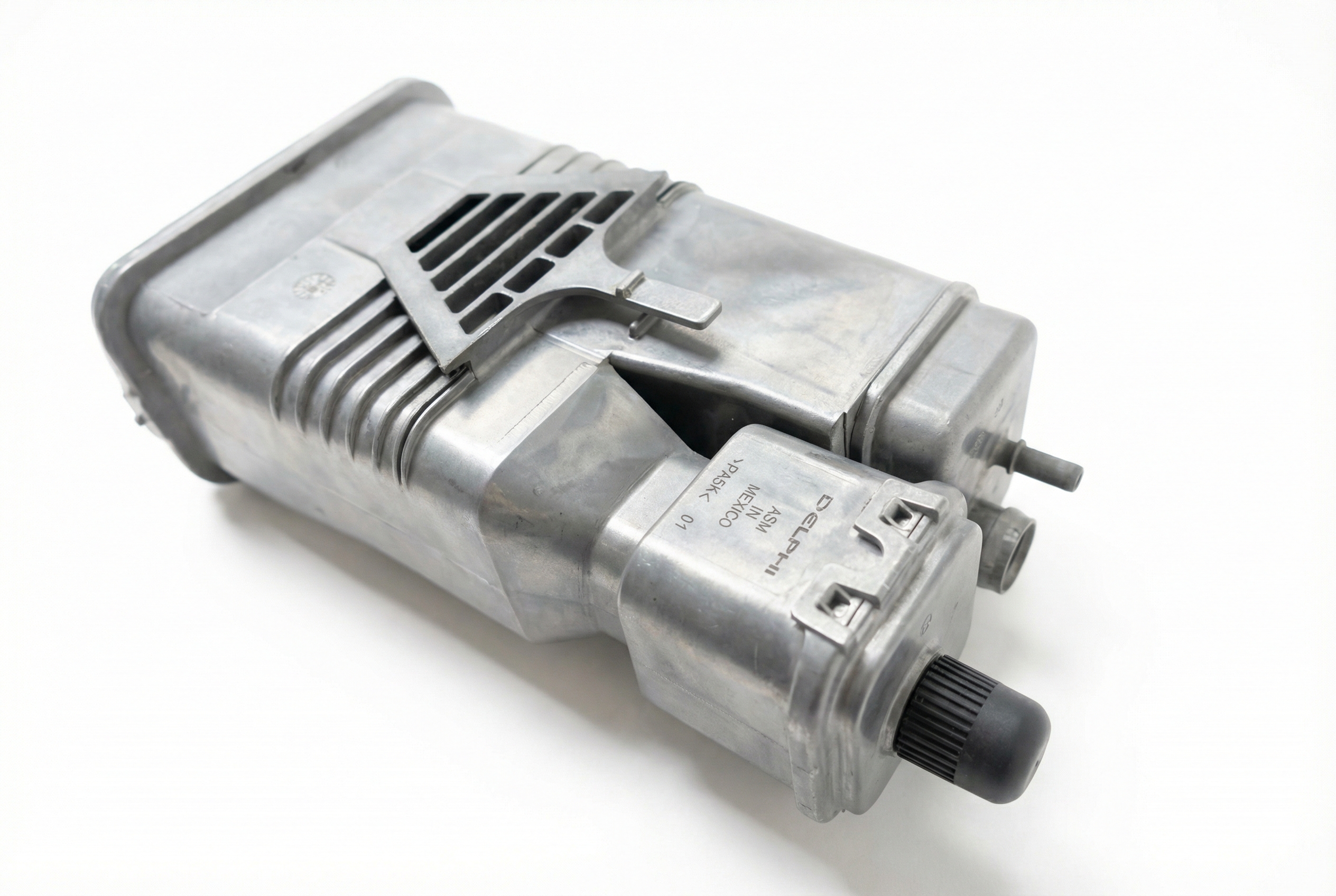
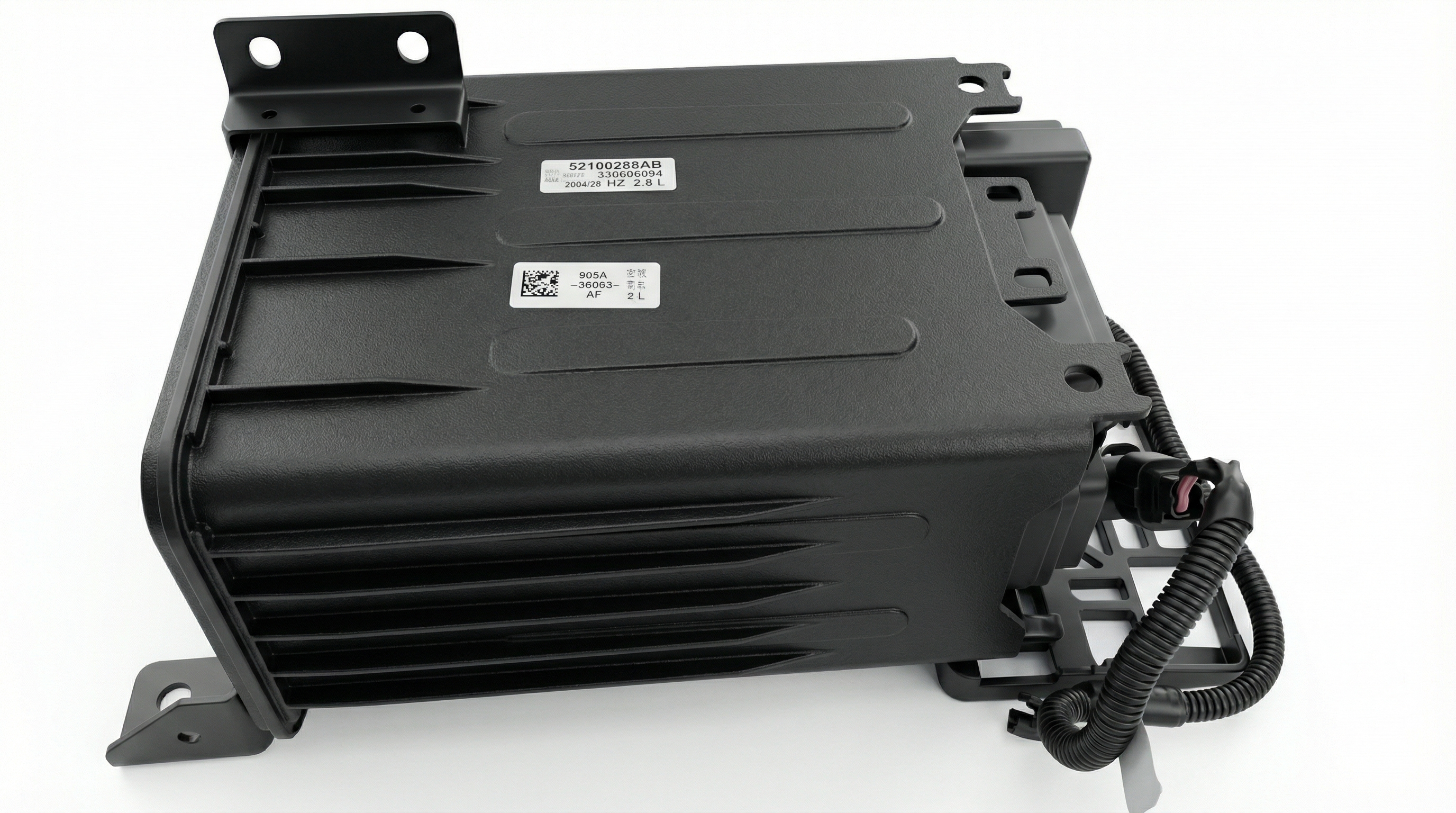
New Aftermarket Parts Available

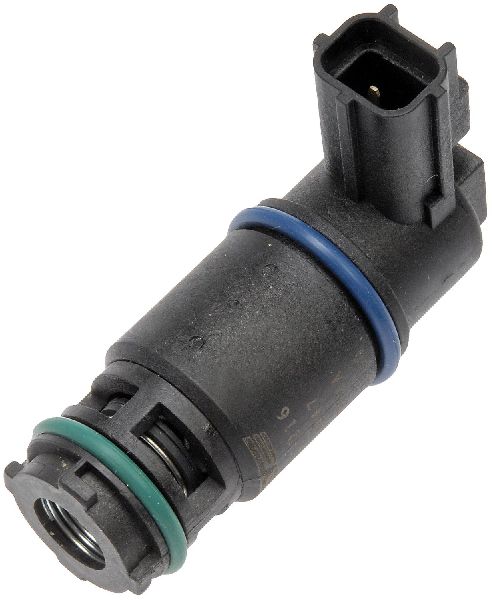

The information in this article is provided for general reference and educational purposes only. Vehicle specifications, procedures, and part compatibility can vary by production date, trim level, and region. Always consult your vehicle's factory service manual and verify part numbers before purchasing or performing repairs. Safety-critical components such as airbags, seat belts, and braking systems should be installed by a qualified professional.
- Ford F-150:
- 🎬 Helpful Videos
- 🛍️ Shop This Part
- What's Unique About the 2009-2014 Ford F-150
- Symptoms You May Notice
- Most Likely Causes
- Rare But Worth Checking
- Diagnosis Steps
- Parts You'll Likely Need
- Technical Service Bulletins (TSBs) & Recalls
- Platform-Specific Known Issues
- Mechanic-Grade Diagnostic Values
- Hidden / Shadow Codes Worth Checking
- Scan Tool Commands That Help
- Wiring & Ground Locations
- Real Owner Repair Stories
- OEM Part Supersession History
- Model Year Variations Within This Range
- Diagnostic Flowchart
- Used vs. New Parts: Buying Guide for This Vehicle
- Real Owner Stories
- 2008 Ford F-150 5.4L Flex Fuel
- 2015 F-150 2.7L EcoBoost
- 2014 F-150 XLT 3.7L — 211000 miles
- Related OBD-II Codes
- Frequently Asked Questions
- 🎟️ Get 5% Off