

P1449 on 2013-2020 Subaru BRZ: EVAP System Clog Causes and Fixes
On a 2013-2020 Subaru BRZ, code P1449 almost always indicates a clogged EVAP system vent filter located near the rear of the car. The most common symptom, besides the check engine light, is the gas pump nozzle shutting off repeatedly when refueling. Replacing this small, inexpensive filter is the typical fix. This issue is also common on its platform mates, the Scion FR-S and Toyota 86.
- P1449 on your BRZ means the EVAP vent filter is clogged, not that there is a system leak.
- The most obvious symptom you'll experience is the gas pump shutting off every few seconds when you try to refuel.
- Do not replace the purge valve in the engine bay; the problem is with the vent filter located at the rear of the car, above the differential.
- To prevent recurrence, avoid topping off your gas tank after the pump automatically stops.
- The repair is straightforward for a DIYer but may require lowering the rear differential for access on this specific platform.
What's Unique About the 2013-2020 Subaru BRZ

While this guide is for the BRZ, P1449 is a very common code across the entire Subaru lineup from this era, including the Impreza, WRX, and Forester. The issue is not a design flaw unique to the BRZ but rather a sensitivity in the Subaru EVAP system design where the atmospheric vent filter is prone to clogging from road dust, debris, or even spider webs. Overfilling the gas tank can also contribute by forcing liquid fuel and/or charcoal pellets from the vapor canister into the filter, saturating and clogging it.
Symptoms You May Notice
- Check Engine Light is on.
- Other warning lights (ABS, Traction Control, etc.) may illuminate simultaneously, which is standard behavior for Subarus when a CEL is triggered.
- Gas pump nozzle clicks off repeatedly and frequently during refueling, making it difficult to fill the tank.
- No noticeable impact on drivability or engine performance.
- A 'whoosh' or hissing sound from the fuel tank when opening the gas cap, indicating pressure buildup from the inability to vent.
- Replacing the canister purge valve/solenoid. This part is located in the engine bay and is related to a different function of the EVAP system (purging stored vapors to the engine). A faulty purge valve typically sets different trouble codes and may cause a rough idle after refueling.
Most Likely Causes


- Clogged EVAP Vent Filter / Drain Separator 🔴 High Probability The filter's location near the rear underside of the car, often above the rear differential, makes it susceptible to collecting road dust, fine debris, and spider webs.
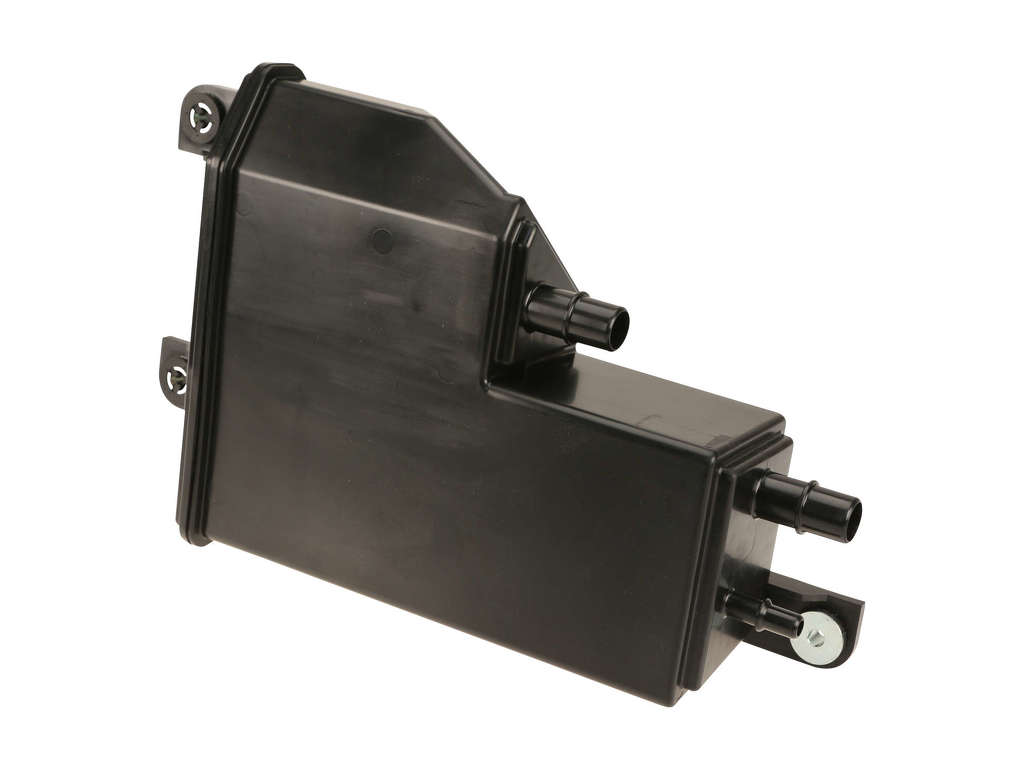
How to confirm: Locate the filter assembly (a small black plastic box) above the rear differential/subframe area. Disconnect it and attempt to blow through it with your mouth or low-pressure air. If air does not pass through easily or if a cloud of dust comes out, it is clogged. A new filter will allow air to pass through freely.
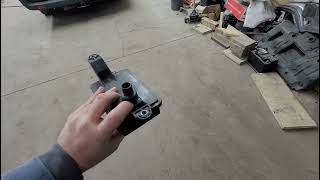
Typical fix: Replace the EVAP vent filter assembly. Cleaning is sometimes possible but replacement with the updated part is the recommended 🎬 Watch: How to fix a clogged filter and gas nozzle popping., long-term solution. On the BRZ/FR-S/86 platform, accessing the filter may require lowering the rear differential for clearance.
Est. part cost: $40-$70 - Saturated Charcoal Canister 🟡 Medium Probability Repeatedly overfilling the gas tank (i.e., continuing to pump after the nozzle first clicks off) can force liquid fuel into the charcoal canister, breaking down the charcoal pellets which then travel and clog the vent filter.
How to confirm: When you remove the clogged vent filter, check it and the connecting hoses for small, black charcoal pellets. Finding these pellets is a strong indicator that the canister is compromised and is the source of the debris. 🎬 See this guide on testing for a failed charcoal canister.
Typical fix: Replace the charcoal canister in addition to the vent filter to prevent the new filter from clogging again. This is a more involved and expensive repair.
Est. part cost: $150-$250 - Blocked or Kinked EVAP Hoses ⚪ Low Probability
How to confirm: Visually inspect all rubber hoses leading to and from the charcoal canister and vent filter. Look for sharp bends, kinks, or visible blockages. Use low-pressure compressed air to blow through the lines to ensure they are clear.
Typical fix: Straighten any kinked hoses or replace any that are damaged or blocked internally.
Est. part cost: $10-$30
Rare But Worth Checking
- Faulty Canister Vent Valve/Solenoid (part of the canister assembly)
- Spider webs or insect nests inside the vent hoses or filter box.
Diagnosis Steps

- Confirm the P1449 code with an OBD-II scanner.
- Check the gas cap to ensure it is tight and the seal is intact. A loose gas cap usually sets a different code (e.g., P0457), but it is a simple first step.
- Listen for a 'whoosh' of pressure when opening the gas cap, which suggests the tank is not venting properly.
- Attempt to refuel the vehicle. If the gas pump nozzle clicks off repeatedly, this strongly points to a vent path restriction.
- Safely raise and support the rear of the vehicle.
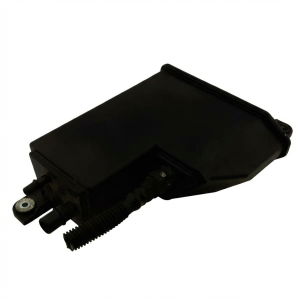
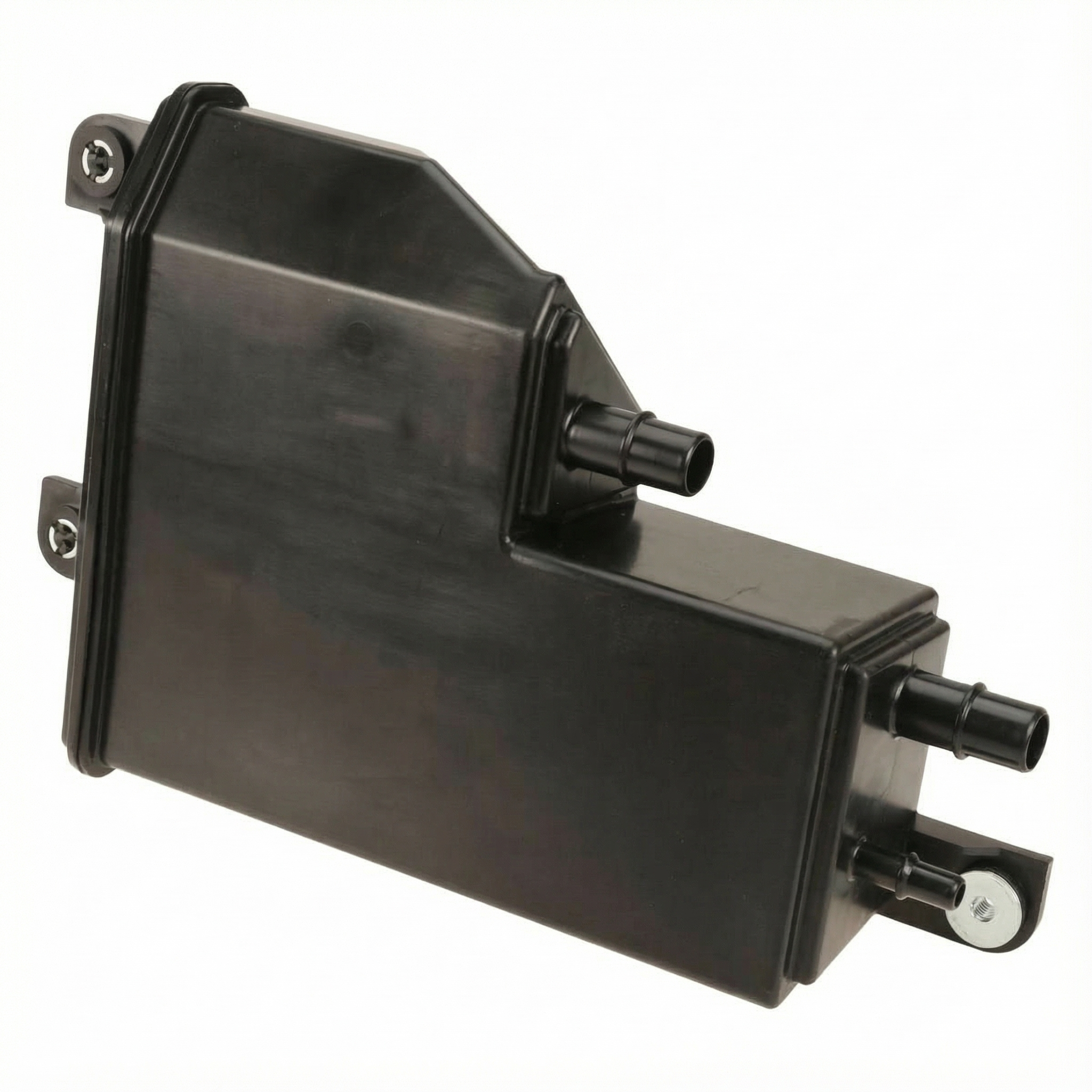
- Locate the EVAP vent filter assembly. It is a small, black plastic box with a hose attached, typically mounted above the rear differential. On the BRZ, this may be difficult to access without lowering the differential slightly.
- Inspect the attached rubber hose for any obvious kinks, cracks, or damage.
- Disconnect the hose and unbolt the filter assembly (usually held by two 10mm bolts).
- Attempt to blow through the filter. If it is restricted, it is clogged and is the source of the code. Inspect the inlet for black charcoal pellets.
- If charcoal pellets are present, the charcoal canister is likely compromised and should also be replaced to prevent a repeat failure.
- If the filter is clogged, replace it with a new part. It's also wise to blow low-pressure compressed air through the hose leading to the filter to clear any residual debris.
- If the filter is not clogged, the issue may be further up the line, such as a faulty vent valve on the canister itself or a blockage in another hose, though this is less common for this specific code.
- Once the part is replaced, clear the code with a scanner and perform a drive cycle to ensure the light does not return.
Parts You'll Likely Need

- EVAP System Vent Filter
(OEM #42072VA000)— This filter is the most common failure point, becoming clogged with dust and debris, which directly triggers the P1449 code.
Trusted brands: Subaru (OEM)
OEM price range: $40-$70
Aftermarket price range: $30-$50 - Charcoal Canister — If the original canister has failed and sent charcoal pellets into the system, it must be replaced to prevent the new vent filter from clogging again. This is often caused by repeatedly topping off the fuel tank.
Trusted brands: Subaru (OEM), Denso
OEM price range: $200-$300
Aftermarket price range: $150-$250
Related Codes That Often Appear With This One
- P0453 - Evaporative Emission System Pressure Sensor/Switch High Input (can occur if the clog causes a pressure sensor reading outside of its expected range)
Technical Service Bulletins (TSBs) & Recalls
- 11-205-25R: Addresses DTC P1449 on various other Subaru models by introducing a new drain filter assembly with a protector. The principles are directly applicable to the BRZ.
- TSB Bulletin #11-205-25: This manufacturer bulletin announces the specific repair procedures to be followed when DTC P1449 (EVAP System Clog Detected) is detected by the Engine Control Module (ECM).
Platform-Specific Known Issues
- Subaru issued Technical Service Bulletin (TSB) 11-205-25R for other models (Impreza, Crosstrek, Forester, WRX, Ascent), which details a redesigned drain filter with a protector to better prevent debris buildup. While the BRZ is not explicitly listed on this specific TSB, the problem and solution are identical, and the issue is well-documented on BRZ/FR-S/86 forums.
- Accessing the charcoal canister and vent filter on the BRZ/FR-S/86 can be difficult. The official service procedure may require draining and removing the rear differential to gain clearance, significantly increasing labor time compared to other Subaru models.
Mechanic-Grade Diagnostic Values
- EVAP Canister Vent Valve / Drain Valve resistance — expected: 20 - 30 Ohms. Failure: An open circuit (no reading) or a reading significantly outside the 20-30 Ohm range indicates a failed valve coil.
- Voltage supply at EVAP Canister Vent Valve harness connector — expected: ~12 Volts (Battery Voltage) with ignition ON. Failure: No voltage or significantly low voltage points to a wiring or ECM driver issue, not a faulty valve.
Scan Tool Commands That Help
- Subaru Select Monitor (SSM): Evaporative System Leak Test — This is the primary dealer-level function to command the EVAP system to perform a self-test after a repair. It pressurizes the system and monitors pressure decay to confirm the clog is resolved and the system is sealed.
- Toyota Techstream: Evaporation System Check — For the Scion FR-S and Toyota 86 platform mates, this command in Toyota's diagnostic software initiates the EVAP system self-test, equivalent to the Subaru SSM function.
Wiring & Ground Locations
- Engine Ground Straps (Multiple) — There are three primary engine grounds: one on each side of the front bottom of the engine going to the frame rails, and one from the passenger side top-rear of the transmission to the transmission tunnel.. While not a direct cause of P1449, poor grounding can cause erratic behavior in various electronic modules and sensors. Ensuring these main grounds are clean and tight is a good practice during any electrical diagnosis.
- Dash Cam Ground Point — A common ground point for accessories is a bolt on the metal frame under the dash, to the right of the driver-side interior fuse panel.. This is not directly related to the EVAP system but provides a known-good grounding location in the cabin for testing purposes or if other electrical issues are present.
Real Owner Repair Stories
- Reddit user on r/subaru (2015 Subaru WRX) — Persistent P1449 code, failing emissions test.
❌ Tried (didn't work) Replaced the rear wheel house canister (vent filter) twice with new OEM parts., Replaced the ELCM (Evaporative Leak Check Module) with a new OEM part., Replaced the 'big canister' (charcoal canister) with a new OEM part., Blew compressed air through accessible lines and the filler neck.
✅ What actually fixed it The user reported the car was still undriveable and the issue was unresolved, considering an ECM replacement next. This is a valuable counter-example showing that replacing all common parts may not fix the issue, pointing towards a potential wiring or ECM fault. - ft86club.com forum user (Subaru BRZ/Scion FR-S (model year not specified)) — CEL with P1449
❌ Tried (didn't work) Standard diagnosis for EVAP clogs.
✅ What actually fixed it The user had an aftermarket flex fuel kit that used the EVAP solenoid line as an input for the flex sensor. The EVAP system was disabled, but the P1449 code was not disabled in the engine tune, causing the CEL. The fix was to have the tuner disable the code. - Reddit user on r/subaru (2018 Subaru WRX) — P1449 code with all associated dash lights.
❌ Tried (didn't work) Checking gas cap and resetting code.
✅ What actually fixed it The user recalled a previous incident with the same code that was fixed by the dealer at no charge. The cause was a spider web inside one of the EVAP hoses. This highlights that the clog is often external debris and not a failed part.
Documented NHTSA Reports
- An owner reported in NHTSA ODI #11081337 that their check engine and traction control lights came on simultaneously; a diagnostic scan confirmed DTC P1449 indicating an EVAP system clog at the air filter.
- NHTSA ODI #10935185 describes a case where a technician discovered code P1449 and found spider webs inside the EVAP drain and valve assembly, leading to a recommendation to replace the assembly.
When the Usual Fixes Don't Work
- In one documented case on a similar Subaru platform (2015 WRX), a technician replaced the vent filter twice, the charcoal canister, and the leak detection module with new OEM parts, yet the P1449 code persisted. This indicates that in rare instances, the fault may not be with the common components but could lie in the wiring harness or the Engine Control Module (ECM) itself.
OEM Part Supersession History
42072VA000→N/A - Incorrect Part for Vehicle— This part number is for the EVAP vent filter on a 2015-2021 Subaru WRX/STI, not the BRZ. It is commonly misidentified for this repair.
Heads up: This part does not fit the 2013-2020 Subaru BRZ.42035FJ020→42035FJ010— Part number change based on vehicle production date. 42035FJ020 is for early production models.
Heads up: 42035FJ020 is for BRZ models produced up to July 3, 2012. 42035FJ010 is for models produced from July 4, 2012 onward. These are the part numbers for the entire charcoal canister assembly.
Model Year Variations Within This Range
- 2013: There was a mid-year part change for the charcoal canister assembly. Models built up to July 3, 2012 use part number 42035FJ020, while models built from July 4, 2012 onward use 42035FJ010.
Diagnostic Flowchart
Other Known Issues on This Vehicle
Issues unrelated to this code that are worth knowing about as an owner of this generation:
- Valve Spring Fracture (2013 Models) 🔴 High — Common enough to trigger a major recall (NHTSA #18V772, Subaru #WTY-84) affecting 2013 BRZ, 2013 XV Crosstrek, and 2012-2014 Impreza models. Can lead to engine stall or failure. (Ref: Recall WTY-84 / 18V-772)
- High-Pressure Fuel Pump 'Chirping' 🟡 Low — A very common, non-damaging noise described as 'crickets' or 'chirping' from the high-pressure fuel pump at idle when the engine is warm. Most prevalent on early models. (Ref: TSB 09-54-12R)
- Tail Light Condensation/Leaking 🟡 Low — Extremely common across all model years. The foam gasket that seals the tail light assembly to the body fails over time, allowing water to enter the housing. (Ref: TSB S-SB-0040-13 (Scion FR-S))
- Excess RTV Sealant in Oil Pan 🟠 Medium — Some engines were assembled with excess RTV sealant on the oil pan and timing cover. Pieces can break off and clog the oil pickup tube, potentially leading to oil starvation and engine damage.
- Throwout Bearing/Clutch Fork Noise 🟡 Low — A common complaint of a squeaky clutch pedal or noisy operation due to insufficient grease on the clutch fork and throwout bearing from the factory.
- Low-Pressure Fuel Pump Failure 🔴 High — Subject to a recall on 2018-2019 models. The low-pressure fuel pump located in the fuel tank can fail, leading to engine stalling. (Ref: Recall WRD-20 / NHTSA #20V218000)
Used vs. New Parts: Buying Guide for This Vehicle
When a used part is the smart pick: A used charcoal canister assembly from a reputable auto recycler can be a cost-effective option if the original has failed due to saturation from overfilling the tank. It is not recommended to buy other smaller EVAP components like valves or filters used.
Donor-vehicle mileage cap: roughly under 60000 miles for the part to have meaningful remaining life.
What to inspect on the donor part:
- Source from a vehicle that was not in a major rear-end collision.
- Inspect all plastic hose ports on the canister for cracks or damage.
- Shake the canister lightly; there should be no sound of loose, broken charcoal pellets inside.
- Confirm the part number matches your vehicle's production date (early 2013 vs. late 2013-2020).
OEM-only on this vehicle (don't cheap out):
- EVAP Vent Filter / Drain Separator: Since this is the primary failure point due to clogging with fine dust, a new OEM part is the only reliable fix.
- EVAP Hoses: Replace with new OEM or equivalent quality hose to prevent kinks and premature cracking.
Aftermarket brands forum-validated for this vehicle:
- Denso (Often the Original Equipment Manufacturer for Subaru)
Brands owners have reported issues with on this vehicle:
- No-name, unbranded parts from online marketplaces, as they often have poor quality control and may not meet emissions system specifications.
Real Owner Stories
Aggregated from forums and TSBs cited above. Mileages and costs reflect what owners reported in those sources.
2013-2016 Scion FR-S 2.0L 4U-GSE
Symptoms: The car had a Check Engine Light and it was extremely difficult to refuel; the gas pump nozzle would click off constantly.
What fixed it: The cause was determined to be a clogged EVAP vent filter. In some cases, owners also found that the charcoal canister was compromised and had to be replaced as well to prevent the new filter from clogging again.
Source hint: ft86club.com: Multiple threads discuss P1449 on the BRZ, Scion FR-S, and Toyota 86.
2013 Scion FR-S 2.0L 4U-GSE
Symptoms: The Check Engine Light and Traction Control light both came on. A scan revealed code P1449.
What fixed it: The owner was advised that the likely culprits were blockages in the various EVAP lines or filters within the charcoal canister system.
Source hint: Reddit (r/ft86): A user with a 2013 Scion FR-S reported code P1449...
Related OBD-II Codes
Frequently Asked Questions
I saw TSB 11-205-25R for other Subarus with code P1449. Does this apply to my 2013-2020 BRZ?
Why is it so hard to refuel my BRZ? The gas pump keeps clicking off.
Is it difficult to replace the EVAP vent filter on a BRZ myself?
My Check Engine Light came on, but so did my ABS and Traction Control lights. Is this related to P1449?
I keep topping off my gas tank after the pump clicks. Could that have caused this P1449 code?
Does this P1449 information also apply to the Scion FR-S and Toyota 86?
Helpful Videos

Used OEM Parts in Stock
New Aftermarket Parts Available



The information in this article is provided for general reference and educational purposes only. Vehicle specifications, procedures, and part compatibility can vary by production date, trim level, and region. Always consult your vehicle's factory service manual and verify part numbers before purchasing or performing repairs. Safety-critical components such as airbags, seat belts, and braking systems should be installed by a qualified professional.
- Subaru BRZ:
- 🎬 Helpful Videos
- 🛍️ Shop This Part
- What's Unique About the 2013-2020 Subaru BRZ
- Symptoms You May Notice
- Most Likely Causes
- Rare But Worth Checking
- Diagnosis Steps
- Parts You'll Likely Need
- Related Codes That Often Appear With This One
- Technical Service Bulletins (TSBs) & Recalls
- Platform-Specific Known Issues
- Mechanic-Grade Diagnostic Values
- Scan Tool Commands That Help
- Wiring & Ground Locations
- Real Owner Repair Stories
- Documented NHTSA Reports
- When the Usual Fixes Don't Work
- OEM Part Supersession History
- Model Year Variations Within This Range
- Diagnostic Flowchart
- Other Known Issues on This Vehicle
- Used vs. New Parts: Buying Guide for This Vehicle
- Real Owner Stories
- 2013-2016 Scion FR-S 2.0L 4U-GSE
- 2013 Scion FR-S 2.0L 4U-GSE
- Related OBD-II Codes
- Frequently Asked Questions
- 🎟️ Get 5% Off