

P1440 on 2005-2015 Mazda MX-5: EVAP System Fault Causes and Fixes
On the 2005-2015 'NC' Mazda MX-5, code P1440 typically points to a fault in the Evaporative Emission (EVAP) system, most often a failing purge valve solenoid that is stuck open. Replacing this valve is a common, DIY-friendly fix costing around $80-$150 for an OEM part.
- P1440 on an NC Miata means there's a fault in the EVAP (emissions) system.
- The most probable cause is a faulty purge valve solenoid located in the engine bay, which is a DIY-friendly replacement.
- Always check the gas cap first; make sure it's tight and the seal isn't cracked.
- If the purge valve and gas cap are good, a smoke test is the best way to find a leak in an EVAP hose.
- There are no known safety recalls for this issue on the 2005-2015 MX-5.
What's Unique About the 2005-2015 Mazda MX-5
For the third-generation (NC) Mazda MX-5, while any EVAP component can fail, the purge valve solenoid is a very frequent culprit for EVAP-related codes. This part is known to fail by sticking open, causing incorrect vapor flow and often leading to a rough idle or stalling immediately after refueling. The good news for owners is that on the NC Miata, this valve is very accessible in the engine bay, making diagnosis and replacement more straightforward than on many other vehicles where components are buried near the fuel tank.
Generation note: The 2005-2015 range covers the entire third generation (NC) of the MX-5. This includes the pre-facelift NC1 (2005-2008) and the facelifted NC2/NC3 (2009-2015). While the EVAP system functions similarly, the purge valve solenoid has different part numbers and a slightly different location between these versions. On the NC1, it is on the driver's side near the dipstick. On NC2/NC3 models, it is located more centrally on the intake manifold. A video guide for the NC1 shows a specific procedure that will differ slightly for NC2/NC3 models.
Symptoms You May Notice
- Check Engine Light is on
- Slightly reduced fuel economy
- Possible fuel smell near the car.
- Difficulty starting or a rough, unstable idle immediately after refueling.
- In some cases, the engine may stall at idle.
- Replacing the charcoal canister when the actual problem is a much cheaper and easier-to-access purge valve or a loose gas cap.
- Replacing O2 sensors for a lean code (P2187) when the lean condition is actually induced by a stuck-open purge valve creating a vacuum leak.
Most Likely Causes
- Faulty Purge Valve Solenoid 🔴 High Probability This is a widely documented common failure point for the NC MX-5, frequently cited in owner forums and repair videos as the direct fix for P1440 and associated codes like P0455 and P2187.
How to confirm: With the engine running at idle, disconnect the EVAP line from the purge valve that leads to the intake manifold. Place your finger over the valve's port; there should be no vacuum felt. If vacuum is present, the valve is stuck open and must be replaced. You can also use a scan tool to command the valve open and closed, listening for an audible click. A faulty valve is most often stuck open.
Typical fix: Replace the purge valve solenoid. On the NC1 (2006-2008), it is located on the driver's side of the engine bay, near the dipstick. On NC2/NC3 (2009-2015), it's on the intake manifold. The replacement involves disconnecting the electrical connector and two hoses.
Est. part cost: $80-$150 - Loose or Faulty Gas Cap 🟡 Medium Probability A loose or worn-out gas cap seal is a common cause for all EVAP codes on any vehicle. Mazda issued TSB 01-013/16 for related EVAP codes on 2006-2014 models, which involved a redesigned fuel filler pipe to address sealing issues, highlighting the sensitivity of the system to cap and filler neck sealing.
How to confirm: Inspect the gas cap for cracks in the plastic or damage to the rubber O-ring seal. Ensure it is tightened until it clicks at least once. If the seal is worn or damaged, the cap should be replaced with an OEM part, as aftermarket caps can sometimes cause sealing issues.
Typical fix: Tighten the gas cap correctly or replace it with a new OEM-quality cap if the seal is compromised.
Est. part cost: $20-$40 - Cracked or Disconnected EVAP Hose ⚪ Low Probability Rubber hoses can become brittle and crack over time due to age and heat cycles in the engine bay. The hoses connecting directly to the purge valve are the most common suspects.
How to confirm: Visually inspect all accessible EVAP hoses in the engine bay and under the car near the charcoal canister for cracks, loose connections, or obvious damage. A smoke test is the most effective way to find small, hard-to-see leaks.
Typical fix: Replace the cracked or damaged section of hose.
Est. part cost: $10-$50
Rare But Worth Checking
- Failed Canister Vent Valve/Solenoid: This valve, located near the charcoal canister by the fuel tank, can also stick or fail. It's less common than the engine-bay-mounted purge valve but should be tested if other causes are ruled out. Failure can be due to corrosion or electrical faults.
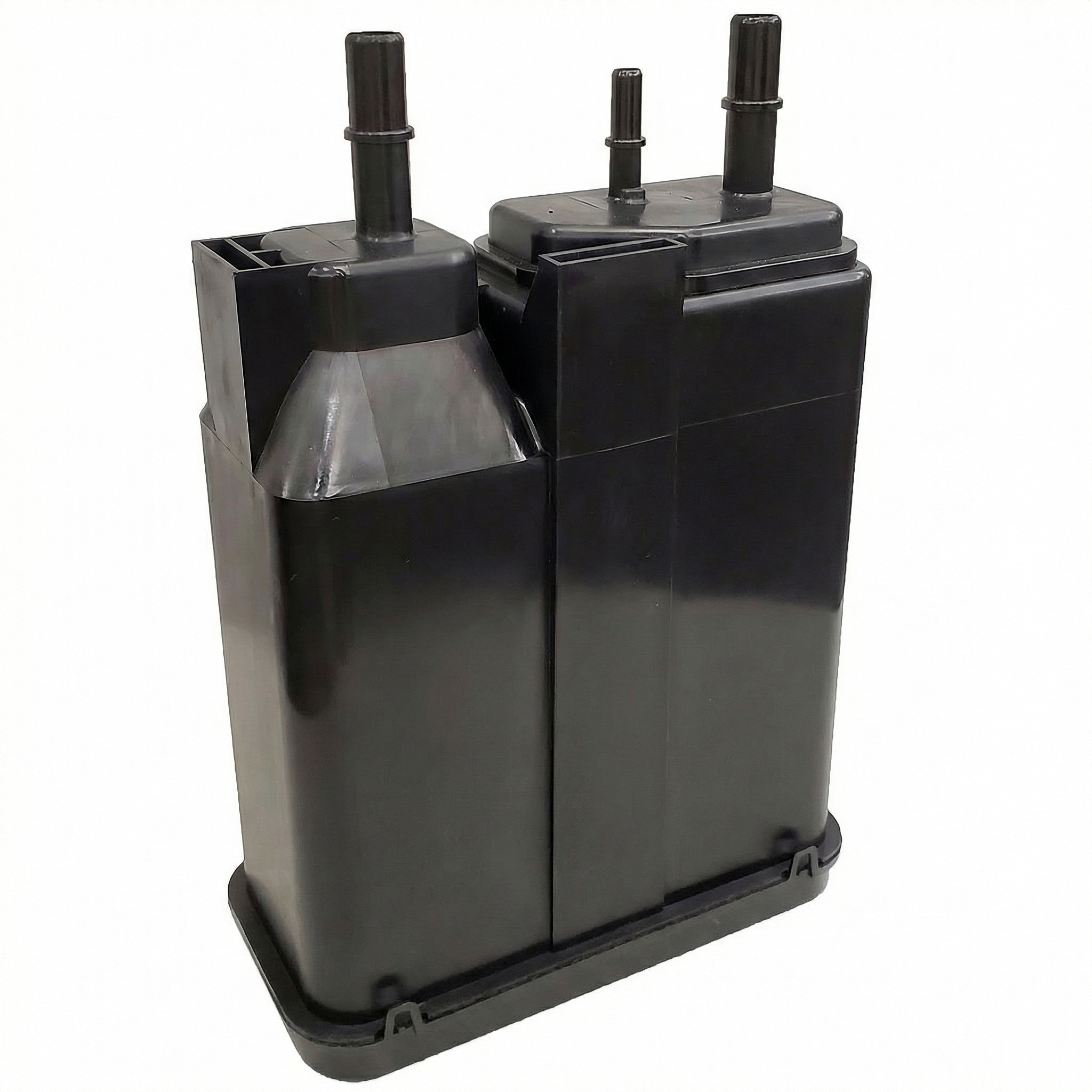
- Faulty Charcoal Canister: The canister itself can become saturated with fuel over time or crack, causing a leak. This is usually a last resort after checking valves and hoses.
- Wiring Issue to Purge or Vent Valve: An open or short in the wiring harness leading to one of the EVAP solenoids can prevent it from operating correctly, triggering a code. This can be caused by corrosion in a connector or physical damage to the wires.
Diagnosis Steps
- Check the Gas Cap: Ensure the gas cap is tight and clicks. Inspect the rubber seal for any cracks or damage. If it looks worn, replace it with an OEM part.
- Scan for Other Codes: Use an OBD-II scanner to check for any other pending or stored codes. P0455 and P2187 are strong indicators pointing towards the purge valve.
- Test the Purge Valve (Most Likely Cause): Locate the purge valve in the engine bay. For NC1 (2006-2008), it's on the driver's side near the oil dipstick. For NC2/NC3 (2009-2015), it's on the intake manifold. With the engine at idle, disconnect the hose leading from the valve to the intake manifold. If you feel any suction from the valve's port, it is stuck open and must be replaced.
- Visual Inspection of Hoses: Trace the EVAP lines from the purge valve and around the engine bay, looking for any obvious cracks or loose connections.
- Perform a Smoke Test: If the purge valve tests good and no obvious cause is found, the next step is to introduce smoke into the EVAP system using a smoke machine. Smoke will escape from any cracks or leaks, revealing the source of the problem.
- Inspect Vent Valve and Canister: If the smoke test reveals no leaks, the canister vent valve (located near the fuel tank) should be tested for proper operation using a scan tool to command it open and closed.
Parts You'll Likely Need
- Purge Valve Solenoid (2006-2008 NC1)
(OEM #LFG1-18-741B)— This is the most frequently failed component for EVAP codes on the early NC MX-5 and is relatively easy to replace.
Trusted brands: Mazda (OEM), Dorman, APA/URO Parts
OEM price range: $80-$120
Aftermarket price range: $30-$80 - Purge Valve Solenoid (2009-2015 NC2/NC3)
(OEM #L518-18-741)— The purge valve for the facelifted NC models has a different part number and location. It is also a common failure item.
Trusted brands: Mazda (OEM), Dorman (911-490), A-Premium
OEM price range: $80-$120
Aftermarket price range: $40-$80 - Fuel Filler Cap
(OEM #FEY2-42-250)— A faulty gas cap seal is a simple but common cause for all EVAP system codes. An updated part was noted to fix leak issues per TSB 01-013/16.
Trusted brands: Mazda (OEM), Gates, Motorad
OEM price range: $25-$40
Aftermarket price range: $15-$25
Related Codes That Often Appear With This One
- P0455 — Indicates a large EVAP leak. Often appears with P1440 because a purge valve stuck wide open is interpreted by the PCM as a large leak.
- P2187 — Indicates the system is too lean at idle. A stuck-open purge valve allows un-metered fuel vapors (and air) into the intake manifold at idle when it should be closed, disrupting the air-fuel ratio and causing a lean condition.
Technical Service Bulletins (TSBs) & Recalls
- TSB 01-013/16: While not directly for P1440, this TSB addresses related EVAP leak codes (P0442, P0455, P0456) on 2006-2014 MX-5s (among other models). It describes a modified fuel filler pipe to improve sealing with the fuel cap, indicating a known sensitivity in this area. This corroborates the gas cap as a potential cause.
Platform-Specific Known Issues
- A common owner experience is having difficulty starting the car or experiencing a severe rough idle right after filling the fuel tank. This is a classic symptom of a stuck-open purge valve, which allows raw fuel vapors to flood the intake manifold.
- Disconnecting the battery on an NC Miata can cause the ECU to 'forget' its idle parameters, leading to a rough or unstable idle for a period of time as it relearns. While this is a separate issue, it can sometimes be confused with an EVAP-related idle problem if the battery was recently disconnected during troubleshooting.
Mechanic-Grade Diagnostic Values
- Purge Valve Solenoid Coil Resistance — expected: 15-30 Ohms. Failure: A reading of infinity (open circuit) or zero (short circuit) indicates a failed solenoid coil.
- Long Term Fuel Trim (LTFT) at Idle — expected: Within +/- 10%. Failure: A persistently high positive LTFT (e.g., > +15%) at idle that returns to normal at higher RPM strongly suggests a vacuum leak. A stuck-open purge valve is a common cause of this specific vacuum leak scenario.
Scan Tool Commands That Help
- Mazda IDS (or advanced aftermarket scanner): EVAP System Leak Test — This is a guided diagnostic function that automatically commands the vent and purge valves to seal the system and uses the fuel tank pressure sensor to monitor for a pressure drop, confirming a leak without a smoke machine.
- Advanced Scan Tool: Purge Valve Duty Cycle / Command PID — To confirm if the PCM is commanding the valve open when it shouldn't be. At idle, the command should be 0%. If the command is 0% but a vacuum is still present at the valve's port, it confirms the valve is mechanically stuck open.
- Advanced Scan Tool: Vent Valve/Solenoid Command — During a smoke test, commanding the vent valve closed is necessary to seal the EVAP system and allow it to build pressure. If the valve fails to close when commanded, it will be impossible to find other leaks.
Wiring & Ground Locations
- G1 — Left rear corner of the engine compartment on a 2006 MX-5.. A poor engine bay ground can cause erratic behavior in electronically controlled components like the purge solenoid. Ensuring this ground is clean and tight is a crucial step in diagnosing electrical faults.
- G3 — Left rear corner of the engine compartment on a 2006 MX-5.. Similar to G1, this is another primary engine bay ground point. Verifying the integrity of main grounds is essential before condemning a component.
- Purge Solenoid Valve Connector — On the NC1 (2006-2008), it's a 2-pin connector on the valve located on the left side of the engine compartment. On NC2/3, it's on the intake manifold.. This is the connector where voltage and resistance tests are performed. One pin should have battery voltage with the key on, and the other is the ground-side control from the PCM.
Real Owner Repair Stories
- YouTube user 'The Interior Auto Mechanic' (2006-2008 (NC1) Mazda Miata MX-5) — Check Engine Light with codes P0455 (EVAP Leak) and P2187 (Lean Idle). Also reported difficulty starting and a rough idle after refueling.
❌ Tried (didn't work) The user notes that they went straight to the most likely cause based on the combination of codes.
✅ What actually fixed it Replacing the purge valve solenoid (Part No. LFG1-18-741B) resolved all symptoms and cleared the codes. The user strongly recommends using the OEM Mazda part.
"I Checked Everything" — The Actual Cause
- In some cases, a smoke test may not reveal a leak if the issue is an intermittently sticking purge valve or a vent valve that is not being commanded closed correctly during the test. If codes P0455 and P0441 appear after a smoke test showed no leaks, and the gas cap has been replaced, the purge valve itself becomes the primary suspect, as it may be failing under specific vacuum conditions not replicated by a static smoke test.
OEM Part Supersession History
LFG1-18-741, LFG1-18-741A→LFG1-18-741B— Standard part revision and improvement by the manufacturer.
Model Year Variations Within This Range
- 2006-2008 (NC1): The purge solenoid valve is located on the driver's side of the engine bay, near the oil dipstick, and uses part number LFG1-18-741B.
- 2009-2015 (NC2/NC3): The purge solenoid valve is located more centrally on the intake manifold and uses a different part number, L518-18-741. The Dorman aftermarket equivalent is 911-490.
Diagnostic Flowchart
Other Known Issues on This Vehicle
Issues unrelated to this code that are worth knowing about as an owner of this generation:
- Cracked Plastic Coolant Expansion Tank 🔴 High — Very common across all years. The plastic tank becomes brittle with heat cycles and can crack suddenly, leading to rapid coolant loss and potential engine overheating.
- Worn Anti-Roll Bar (Sway Bar) Drop Links 🟡 Low — Common wear item, typically needing replacement every 40,000-60,000 miles. Causes a knocking or clunking sound from the front or rear suspension over bumps.
- Sticking/Seizing Brake Calipers 🟠 Medium — More common on vehicles that are stored for long periods or not driven frequently. Can cause the car to pull to one side when braking and generate excessive heat at one wheel.
- Stiff Shifting from 1st to 2nd Gear When Cold 🟡 Low — A characteristic of the manual transmission. The shift action is notably stiff until the transmission fluid warms up. Changing the turret oil is a common owner fix to improve feel.
- Stuck-Open Thermostat 🟠 Medium — A known issue where the thermostat fails in the open position, preventing the engine from reaching full operating temperature. This leads to poor fuel economy and can cause long-term engine wear.
- Clogged Convertible Top Drains 🟠 Medium — Common if the car is parked outdoors. Debris clogs the drains located behind the seats, causing rainwater to back up and spill into the cabin, resulting in wet carpets behind the seats.
Used vs. New Parts: Buying Guide for This Vehicle
When a used part is the smart pick: For a simple, non-critical electronic component like the purge valve solenoid, a used OEM part from a reputable salvage yard or a low-mileage donor car can be a cost-effective option. Given its easy accessibility, the labor for a potential second replacement is minimal if the used part fails prematurely.
Donor-vehicle mileage cap: roughly under 80000 miles for the part to have meaningful remaining life.
What to inspect on the donor part:
- Check for any visible cracks or damage to the plastic housing and hose nipples.
- Ensure the electrical connector pins are clean, straight, and free of corrosion.
- If possible, test the resistance across the two pins with a multimeter; it should fall within the 15-30 Ohm range.
OEM-only on this vehicle (don't cheap out):
- Fuel Filler Cap - While not strictly 'OEM-only', owner forums and TSBs suggest that some aftermarket caps do not seal as effectively as the Mazda original, potentially causing EVAP codes to persist. Given the small price difference, OEM is highly recommended.
Aftermarket brands forum-validated for this vehicle:
- Dorman (911-490 for NC2/NC3) is a widely available aftermarket alternative, though some user reviews are mixed.
Brands owners have reported issues with on this vehicle:
- No-name, unbranded parts from online marketplaces should be avoided. Some owners have reported issues with very cheap aftermarket valves failing quickly or being faulty out of the box. One owner explicitly recommended sticking with the OEM part after a bad experience.
Real Owner Stories
Aggregated from forums and TSBs cited above. Mileages and costs reflect what owners reported in those sources.
2004-2013 Mazda 3 (2.0L/2.3L MZR)
Symptoms: Stalling after getting gas, along with a check engine light.
What fixed it: Replacement of the stuck-open purge solenoid valve.
Source hint: Mazda 3 Issues...can anyone help? - Mazdas247
2006-2015 Mazda MX-5 (NC)
Symptoms: Difficulty starting or a severe rough idle right after filling the fuel tank.
What fixed it: Replacing the purge valve solenoid, which was stuck open and flooding the intake with fuel vapors.
Source hint: vehicle_specific_issues
Related OBD-II Codes
Frequently Asked Questions
Does TSB 01-013/16 apply to my 2006-2014 Mazda MX-5 regarding EVAP issues?
Where is the purge valve located on my 2007 MX-5 (NC1)?
Where is the purge valve located on my 2012 MX-5 (NC2)?
Why does my MX-5 have a rough idle only after I fill up the gas tank?
I just disconnected my battery and now my idle is unstable; is this related to P1440?
Can I use an aftermarket gas cap to fix this code?
We Have This Part in Stock

The information in this article is provided for general reference and educational purposes only. Vehicle specifications, procedures, and part compatibility can vary by production date, trim level, and region. Always consult your vehicle's factory service manual and verify part numbers before purchasing or performing repairs. Safety-critical components such as airbags, seat belts, and braking systems should be installed by a qualified professional.
- Mazda MX-5:
- 🛍️ Shop This Part
- What's Unique About the 2005-2015 Mazda MX-5
- Symptoms You May Notice
- Most Likely Causes
- Rare But Worth Checking
- Diagnosis Steps
- Parts You'll Likely Need
- Related Codes That Often Appear With This One
- Technical Service Bulletins (TSBs) & Recalls
- Platform-Specific Known Issues
- Mechanic-Grade Diagnostic Values
- Scan Tool Commands That Help
- Wiring & Ground Locations
- Real Owner Repair Stories
- "I Checked Everything" — The Actual Cause
- OEM Part Supersession History
- Model Year Variations Within This Range
- Diagnostic Flowchart
- Other Known Issues on This Vehicle
- Used vs. New Parts: Buying Guide for This Vehicle
- Real Owner Stories
- 2004-2013 Mazda 3 (2.0L/2.3L MZR)
- 2006-2015 Mazda MX-5 (NC)
- Related OBD-II Codes
- Frequently Asked Questions
- 🎟️ Get 5% Off