

P1440 on 2008-2018 Mazda 3: EVAP Purge Valve and Leak Causes & Fixes
For a 2008-2018 Mazda 3, code P1440 usually points to a faulty EVAP purge valve solenoid that is stuck open. This is a very common failure and is a relatively inexpensive and simple DIY fix, with the part costing between $40 and $100. Key symptoms include a Check Engine Light and a rough idle or difficulty starting immediately after refueling.
- P1440 on a Mazda 3 is an EVAP system code, most often caused by a faulty purge valve that is stuck open.
- The most telling symptom is a rough idle, difficulty starting, or stalling right after you finish refueling.
- Always check the gas cap first. Make sure it's tight and the seal is in good condition.
- Replacing the purge valve is a common and effective fix, and is a manageable DIY job for most people.
- If a new purge valve and gas cap don't solve the issue, a smoke test is the next logical step to find a hidden leak.
What's Unique About the 2008-2018 Mazda 3

For the Mazda 3 across these years, the P1440 code is a straightforward emissions issue without unique, widespread platform defects causing it. The primary components, like the purge valve and vent solenoid, are standard designs. However, owners of the third-generation (2014-2018) models sometimes report that the purge valve is located in a less accessible position under the engine cover compared to the second-generation (2008-2013) models, making inspection or replacement slightly more challenging.
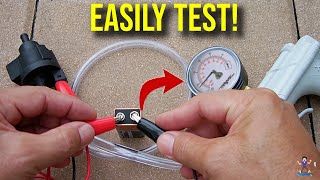
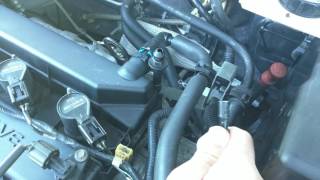
Generation note: This guide covers the second generation (2008-2013, BL) and the third generation (2014-2018, BM/BN) of the Mazda 3. While the causes of P1440 are similar, the exact location and part numbers for the purge valve solenoid differ. The 2nd-gen valve is typically on the passenger side of the engine bay and very accessible. 🎬 See this walkthrough for replacing the 2nd-gen purge control valve. The 3rd-gen (Skyactiv) valve is located on the engine near the intake manifold and requires removing the engine cover and air cleaner assembly for access.
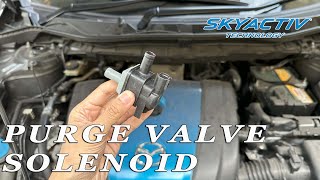
🎬 Watch: How to replace the Skyactiv purge valve to fix erratic idle.Symptoms You May Notice
- Check Engine Light is on
- Difficulty starting the engine, rough idle, or stalling immediately after refueling
- Slightly reduced fuel economy
- A faint or strong smell of fuel, particularly around the engine bay or airbox when the engine is off
- Slightly rough idle during normal operation
- Replacing the oxygen sensors. While O2 sensors are part of the emissions system, they are not directly related to the EVAP system's vapor control function that triggers P1440.
- Replacing the fuel injectors. A stuck-open purge valve can mimic injector issues by causing a rich condition and rough idle, especially after refueling. The problem is un-metered vapor, not the injectors themselves.
Most Likely Causes

- Faulty EVAP Purge Valve Solenoid 🔴 High Probability This is a common failure point in many modern EVAP systems due to constant use and exposure to fuel vapors. The valve commonly fails by sticking open.
How to confirm: A classic symptom is a rough idle or stall right after filling the gas tank. 🎬 Watch: Why your engine stalls or idles rough after refueling. With the engine off, disconnect the hose leading from the valve to the intake manifold and try to blow through the valve; if air passes, it's stuck open and bad. You can also check for a strong fuel smell in the airbox area. Using a multimeter, the valve's resistance should be between 15 and 30 Ohms.
Typical fix: Replace the purge valve solenoid.
Est. part cost: $40-$100 - Loose or Faulty Gas Cap 🟡 Medium Probability The seal on the gas cap can wear out over time, or the cap may simply not have been tightened correctly after filling up. This is a common trigger for all EVAP codes.
How to confirm: Inspect the gas cap for any visible cracks or damage to the rubber seal. Ensure it is tightened until it clicks at least once. If the seal is worn or damaged, replacement is the best option.
Typical fix: Tighten or replace the gas cap. Always opt for an OEM or high-quality aftermarket cap to ensure a proper seal, as some aftermarket caps are known to cause issues.
Est. part cost: $15-$40 - Cracked or Disconnected EVAP Hoses ⚪ Low Probability Rubber and plastic hoses in the engine bay become brittle over time with exposure to heat and can crack or split.
How to confirm: Visually inspect all accessible EVAP hoses running from the charcoal canister (usually near the fuel tank) to the purge valve in the engine bay. Look for obvious cracks, loose connections, or brittleness. A smoke test is the most effective way to find small, hard-to-see leaks.
Typical fix: Replace the damaged section of hose or re-secure the connection.
Est. part cost: $10-$30
Rare But Worth Checking
- Faulty EVAP Vent Solenoid or Charcoal Canister: These components are located near the fuel tank. The vent solenoid can get stuck, and the charcoal canister can become saturated with fuel if you habitually 'top off' your tank. On the 2nd-gen Mazda 3, the vent solenoid is notoriously difficult to replace as it sits above the rear subframe, often requiring the subframe to be lowered for access.
- Water in Canister Vent Hose (Cold Climates): Mazda issued a TSB for the related code P0451 on 2014-2016 models where water can accumulate and freeze in the EVAP canister vent hose during cold weather, causing a blockage. The fix involves cutting the hose at its lowest point to allow water to drain. This could potentially trigger a P1440 under certain conditions.
- Faulty Fuel Tank Pressure (FTP) Sensor: The computer relies on the FTP sensor to monitor the EVAP system. If the sensor provides incorrect readings, it can trigger a P1440 code even if there are no leaks or valve issues. This is less common than a purge valve failure.
Diagnosis Steps

- Read the code with an OBD-II scanner to confirm P1440 is the primary code.
- Inspect the gas cap. Remove it, check the seal for cracks, and reinstall it, ensuring it clicks several times. Clear the code and drive.
- If the code returns, check for the most telling symptom: Does the car idle roughly or stall immediately after refueling? If yes, the purge valve is highly suspect.
- Locate the EVAP purge valve solenoid in the engine bay. On 2nd-gen models, it's often on the passenger side. On 3rd-gen Skyactiv models, it's on the engine near the intake manifold.
- With the engine off, check for a strong fuel smell in the air intake hose or air filter box. This indicates vapors are leaking past the purge valve.
- Perform the 'blow-through' test: Disconnect the valve, and try to blow air through it. If air passes, it is stuck open and must be replaced.
- If the valve is not stuck open, test its electrical function. Use a multimeter to check for resistance across the two pins. A healthy reading is typically between 15 and 30 Ohms.
- If the purge valve and gas cap are good, the next step is a professional smoke test to check for small leaks in the EVAP hoses, charcoal canister, and vent valve.
Parts You'll Likely Need

- EVAP Canister Purge Valve Solenoid
(OEM #2nd Gen (2008-2013): Z504-18-741A, L301-18-741, or L518-18-741. 3rd Gen (2014-2018): PE01-18-741 or PE01-18-751.)— This is the most common component to fail and cause the P1440 code. It can get stuck open or closed, disrupting the flow of fuel vapors.
Trusted brands: Mazda OE, Bosch, Dorman, Standard Motor Products
OEM price range: $80-$150
Aftermarket price range: $40-$100 - Fuel Cap — A worn or loose gas cap is a very common cause for EVAP system codes, as it creates a large leak.
Trusted brands: Mazda OE, Stant, Gates
OEM price range: $25-$50
Aftermarket price range: $15-$40
Related Codes That Often Appear With This One
- P0451 (EVAP Pressure Sensor Range/Performance)
- P0442 (EVAP Small Leak)
- P0455 (EVAP Gross Leak)
- P0456 (EVAP Very Small Leak)
Technical Service Bulletins (TSBs) & Recalls
- TSB 01-002/18: While not for P1440 specifically, this bulletin outlines the official Mazda procedure for diagnosing EVAP leak codes like P0442/P0455/P0456, which involves using a smoke tester and is directly applicable to finding a leak that could cause P1440.
- TSB 01-015/15 (referenced for 2015 models): Addresses a related code, P0451, that can occur in freezing temperatures when water gets trapped and freezes in the canister vent hose. This represents a rare but possible related cause for EVAP system faults.
Platform-Specific Known Issues
- Hard Start or Rough Idle After Refueling: This is the most definitive symptom of a stuck-open purge valve on the Mazda 3. When you refuel, the fuel tank is filled with vapor. If the purge valve is stuck open, this vapor is immediately drawn into the intake manifold when you start the car. This creates an overly rich fuel mixture that the engine isn't prepared for, causing it to stumble, idle erratically, or even stall. Multiple owners have confirmed this exact scenario, which was resolved by replacing the purge valve.
Mechanic-Grade Diagnostic Values
- Purge Valve Solenoid Resistance — expected: 15 - 30 Ohms. Failure: A reading outside this range, or an open/infinite reading, indicates a failed solenoid coil.
- Purge Valve Connector Voltage — expected: One pin should have ~12V (battery voltage) with Key On, Engine Off.. Failure: Absence of 12V power points to a problem in the power supply circuit, such as a fuse or wiring issue, not the valve itself.
- Live Data: Short-Term/Long-Term Fuel Trims — expected: Close to 0% at idle when the purge valve is commanded closed.. Failure: Consistently negative fuel trim values (e.g., -10% or more) at idle suggest the engine is trying to correct a rich condition, which can be caused by a stuck-open purge valve leaking un-metered fuel vapors.
Hidden / Shadow Codes Worth Checking
- Mode $06, Test ID $3A: This is the onboard diagnostic monitor for the small (0.020") EVAP system leak test. It runs automatically under specific conditions. A failure in this monitor can indicate a pending issue before the Check Engine Light comes on for a code like P0456. (see via Use an advanced OBD-II scan tool (like FORScan for Mazda) that can display Mode $06 data. A 'Fail' status on this test ID confirms a small leak.)
Scan Tool Commands That Help
- Mazda IDS / FORScan: EVAP System Leak Test — This is a guided, automated test that commands the entire EVAP system to seal itself (closing both the purge and vent valves) and then monitors the fuel tank pressure sensor for any drop, precisely confirming if a leak exists.
- Mazda IDS / FORScan / Advanced Bidirectional Scanners: Purge Solenoid Valve (or Output State Test) — This command allows you to manually open and close the purge valve while the engine is off. You should hear an audible click from the valve. This directly tests the solenoid's electrical operation and the integrity of the control circuit from the PCM.
- Mazda IDS / FORScan / Advanced Bidirectional Scanners: Canister Vent (CV) Solenoid On/Off — This is critical for performing a smoke test. The vent solenoid is normally open. You must use this command to close it to seal the EVAP system from the atmospheric vent, allowing the smoke machine to build pressure and reveal leaks.
Wiring & Ground Locations
- Purge Solenoid Connector (2014+ Skyactiv) — On the purge solenoid itself, near the intake manifold.. A 2015 wiring diagram shows the two wires are Violet (VIO) and Brown (BRN), leading back to the PCM. Checking for 12V on the power wire and for a ground signal from the PCM on the control wire is a key electrical test.
- Engine/Chassis Grounds — Key grounding points are on the strut towers, engine block, transmission case, and intake manifold area.. A poor ground connection for the PCM or engine sensors can cause erratic behavior and false codes. On a 2013 model, a main ground was found improperly attached to the oil filter housing, which is isolated by a gasket, leading to communication (U-codes) issues. This highlights the importance of checking that main grounds are on clean, metal-to-metal contact points.
Real Owner Repair Stories
- Mazda Forum user 'nhlatl' (2008 Mazda 3) — Car sputtered at a stop light and the Check Engine Light came on.
❌ Tried (didn't work) The dealer service advisor insisted over the phone that the gas cap was loose, even though the tank was half full and hadn't been filled in over a week.
✅ What actually fixed it The dealer diagnosed and replaced the faulty purge valve, which resolved the issue. - Reddit user 'Mazda3-2007' (2007 Mazda 3 2.3L) — Check Engine Light with codes P0455 (Gross EVAP Leak) and P0171 (System Too Lean), plus hard starting after refueling.
✅ What actually fixed it Replacing the stuck-open purge valve. The user confirmed this immediately fixed the hard-starting symptom after filling the gas tank, strongly indicating the lean code was also caused by the same vacuum leak.
"I Checked Everything" — The Actual Cause
- A common reason a smoke test shows 'no leak' is an improper test procedure. The EVAP canister vent solenoid is normally open to the atmosphere. If the technician does not use a scan tool to command the vent solenoid closed, the smoke will simply exit through the vent hose, and the system will not build pressure to reveal a leak. One owner reported a mechanic saw smoke coming from the vent area and incorrectly dismissed it as a normal vent, failing to find the actual leak.
OEM Part Supersession History
z50418740, z50418741→Z504-18-741A— Standard part revision and consolidation by the manufacturer.
Model Year Variations Within This Range
- 2008-2013 (2nd Gen): The purge valve solenoid is mounted to a bracket which is held to the engine with two 10mm hex screws. The solenoid itself is then attached to this bracket with a smaller 8mm hex screw. This requires removing the entire bracket assembly to swap the solenoid.
Diagnostic Flowchart
Used vs. New Parts: Buying Guide for This Vehicle
When a used part is the smart pick: A used OEM purge valve from a low-mileage wrecked vehicle is a reasonable option. The part is not a high-wear item, and a genuine Mazda part is often more reliable than a cheap aftermarket alternative.
Donor-vehicle mileage cap: roughly under 80000 miles for the part to have meaningful remaining life.
What to inspect on the donor part:
- Inspect the plastic housing for any cracks or signs of heat damage.
- Ensure the electrical connector pins are straight and free of corrosion.
- If possible, attempt the 'blow-through' test; no air should pass through when unpowered.
- Check that the hose connection points are not brittle or broken.
OEM-only on this vehicle (don't cheap out):
- Gas Cap: Aftermarket gas caps are a frequent cause of recurring EVAP codes due to improper sealing. It is strongly recommended to use a genuine Mazda OEM cap for this part.
Aftermarket brands forum-validated for this vehicle:
- Standard Motor Products
- Bosch
Brands owners have reported issues with on this vehicle:
- Dorman: While widely available, some owners of similar vehicles have reported premature failure of Dorman purge valves compared to OEM.
- Unbranded/Generic (e.g., from Amazon/eBay): Quality is highly inconsistent and can lead to repeat failures.
Real Owner Stories
Aggregated from forums and TSBs cited above. Mileages and costs reflect what owners reported in those sources.
Mazdaspeed 3
Symptoms: The car's RPMs would drop very low and it would almost stall every time after a fill-up, accompanied by EVAP codes.
What fixed it: Replacing the 'purge valve cannister/solenoid again'.
Source hint: reddit.com/r/mazdaspeed3 - Thread 'Weird idle every time after filling tank' (2022)
2008 Mazda 3
Symptoms: The car was sputtering at a stoplight, which triggered the Check Engine Light.
What fixed it: The final repair was a faulty purge valve, after the dealer service department initially and incorrectly blamed the gas cap.
Source hint: mazda3forums.com - Thread 'Purge Valve' (2008)
2012 Mazda 3 2.5
Symptoms: A strong gas smell was coming from the airbox, even with the engine off.
What fixed it: The symptom was caused by the purge valve being stuck open, which requires replacement of the valve.
Source hint: youtube.com - Video '2012 Mazda 3 2.5 purge solenoid location 6 speed manual'
Related OBD-II Codes
Frequently Asked Questions
My Mazda 3 stalls or idles very roughly right after I get gas. Is this related to the P1440 code?
I replaced my gas cap with a cheap one and now I have a P1440 code. Could that be the problem?
How can I test the purge valve on my Mazda 3 myself before buying a new one?
Where is the EVAP purge valve located on my Mazda 3?
Are there any official Mazda TSBs that help with diagnosing P1440?
My friend's Ford Focus has a P1440 code. Is it the same issue as on my Mazda 3?
Helpful Videos
Used OEM Parts in Stock


New Aftermarket Parts Available



The information in this article is provided for general reference and educational purposes only. Vehicle specifications, procedures, and part compatibility can vary by production date, trim level, and region. Always consult your vehicle's factory service manual and verify part numbers before purchasing or performing repairs. Safety-critical components such as airbags, seat belts, and braking systems should be installed by a qualified professional.
- Mazda 3:
- 🎬 Helpful Videos
- 🛍️ Shop This Part
- What's Unique About the 2008-2018 Mazda 3
- Symptoms You May Notice
- Most Likely Causes
- Rare But Worth Checking
- Diagnosis Steps
- Parts You'll Likely Need
- Related Codes That Often Appear With This One
- Technical Service Bulletins (TSBs) & Recalls
- Platform-Specific Known Issues
- Mechanic-Grade Diagnostic Values
- Hidden / Shadow Codes Worth Checking
- Scan Tool Commands That Help
- Wiring & Ground Locations
- Real Owner Repair Stories
- "I Checked Everything" — The Actual Cause
- OEM Part Supersession History
- Model Year Variations Within This Range
- Diagnostic Flowchart
- Used vs. New Parts: Buying Guide for This Vehicle
- Real Owner Stories
- Mazdaspeed 3
- 2008 Mazda 3
- 2012 Mazda 3 2.5
- Related OBD-II Codes
- Frequently Asked Questions
- 🎟️ Get 5% Off