

P1315 on 1995-2004 Toyota Avalon: Igniter Circuit Malfunction (Cylinder 4) Causes and Fixes
On a 1995-2004 Toyota Avalon, code P1315 almost always means the ignition coil for cylinder #4 has failed. Cylinder #4 is the middle cylinder on the front bank (closest to the radiator). A new OEM-quality coil costs around $40-$70 and is a simple DIY fix. Swapping the coil with a neighboring one is the definitive test.
- P1315 on your Avalon means the ignition coil on cylinder #4 is almost certainly the problem.
- Cylinder #4 is the middle cylinder on the bank closest to the radiator, making it easy to access.
- The easiest way to confirm the diagnosis is to swap the cylinder #4 coil with another one and see if the code 'moves' to the new cylinder.
- This is a simple and inexpensive DIY repair that requires only basic hand tools and about 15-30 minutes.
- To prevent repeat failures, inspect and consider replacing the spark plug for cylinder #4 at the same time.
What's Unique About the 1995-2004 Toyota Avalon
The 1MZ-FE engine in this Avalon generation uses a coil-on-plug Direct Ignition System (DIS), where each spark plug has its own dedicated ignition coil. The 'igniter'—a transistor that controls the coil's firing—is integrated directly into the coil assembly itself. This code is not just a misfire code (like P0304), but a specific electronic fault code. The loss of the IGF feedback signal tells the ECM that the circuit for cylinder #4 is compromised, which almost always points directly to the integrated igniter within that specific coil assembly. This makes diagnosis highly specific and straightforward compared to systems with separate igniter modules controlling multiple cylinders.
Generation note: This guide covers the first generation (XX10; 1995-1999) and second generation (XX20; 2000-2004) Toyota Avalon. Both generations use the 1MZ-FE engine with a similar coil-on-plug ignition system, though part numbers for coils may differ slightly. A Toyota Technical Service Bulletin (TSB EG008-04) was issued regarding failing ignition coils on 1998-1999 models, confirming this is a documented issue for the platform. The issue is common across the entire 1MZ-FE family of engines.
Symptoms You May Notice
- Check Engine Light is on (may be flashing if misfire is severe)
- Rough or shaking idle
- Engine hesitation or stumbling during acceleration
- Noticeable loss of engine power
- Lowered fuel economy
- Hard starting in some cases
- Replacing the fuel injector for cylinder #4. While a bad injector can cause a misfire (P0304), it will not cause the specific igniter circuit feedback code P1315.
- Replacing the crankshaft or camshaft position sensors. While these can cause widespread ignition problems, they typically result in multiple random misfire codes (P0300) or sensor-specific codes, not a single-cylinder igniter code like P1315.
Most Likely Causes
- Failed Ignition Coil on Cylinder #4 🔴 High Probability The integrated igniter circuit within the coil assembly is a common failure point due to age and millions of heat cycles. A TSB (EG008-04) was issued for this exact issue on 1998-1999 models. It is the most cited cause in owner forums.
How to confirm: Swap the ignition coil from cylinder #4 (middle, front bank) with another easily accessible coil, like cylinder #2 (front, passenger side) or #6 (front, driver side). Clear the codes and drive. If the code changes to P1305 (Cylinder 2) or P1325 (Cylinder 6), the coil is definitively faulty. 🎬 See how to diagnose P1315 and replace the ignition coil.
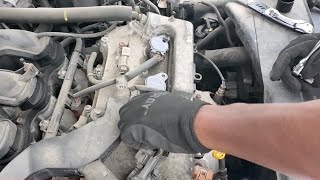
Typical fix: Replace the failed ignition coil. It is held in by a single 10mm bolt. Many owners recommend replacing all three front coils, or even all six, if they are original, as another failure is likely to follow.
Est. part cost: $40-$90 for a quality aftermarket part (e.g., Denso), $90-$130 for a genuine Toyota part. - Worn or Fouled Spark Plug in Cylinder #4 🟡 Medium Probability An old or failing spark plug with a large gap creates high resistance, forcing the ignition coil to work harder and generate more heat. This can lead to premature failure of the coil's internal electronics and is often the root cause of repeat coil failures.
How to confirm: When the ignition coil for cylinder #4 is removed, take the extra five minutes to remove the spark plug. Inspect it for excessive wear on the electrode (a rounded center electrode), carbon fouling, or oil deposits. If the plug's history is unknown, it's worth replacing.
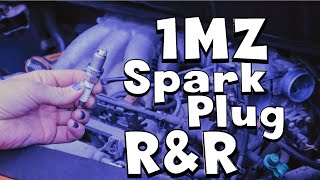
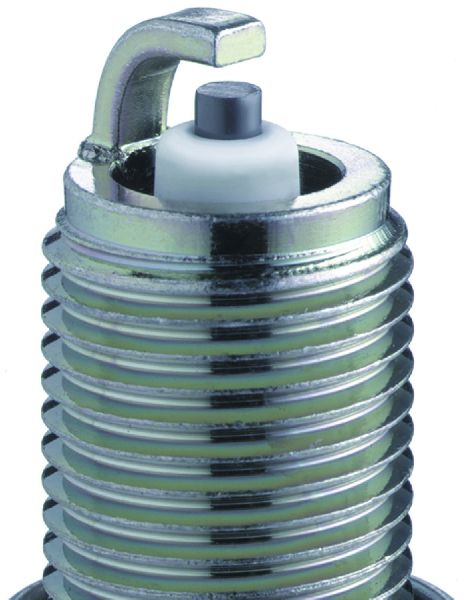
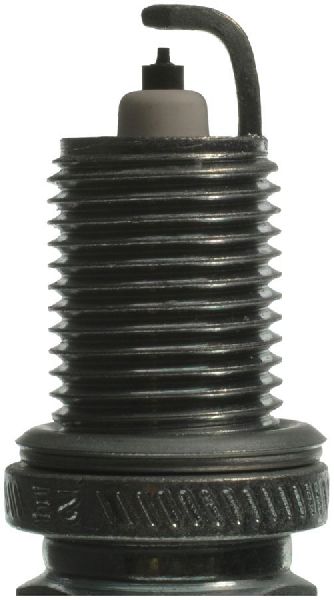
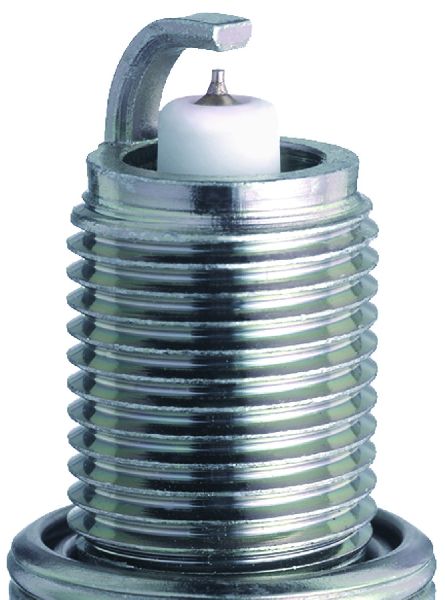
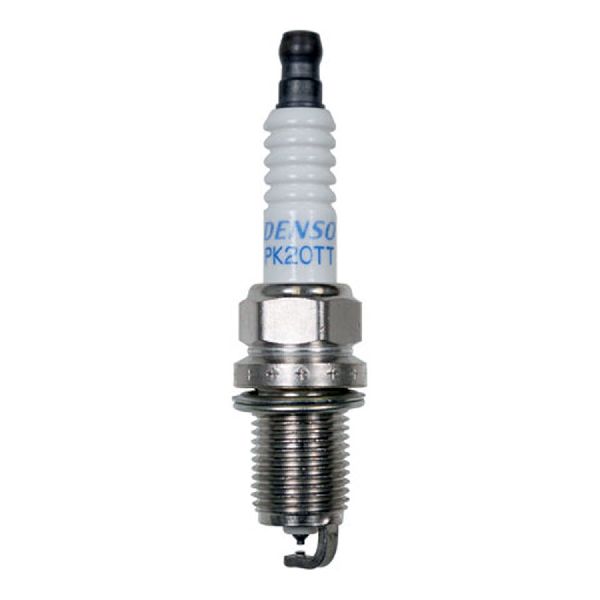
Typical fix: Replace the spark plug. It is best practice to replace all six spark plugs with the correct OEM-spec plugs (Denso or NGK Iridium) if they are near the end of their service life to prevent future coil failures. 🎬 Watch: Pro tips for replacing spark plugs without removing the manifold.
Est. part cost: $8-$20 per plug for quality Iridium plugs. - Damaged Wiring or Connector ⚪ Low Probability After decades of heat cycles, the plastic connector clips become extremely brittle and can break when disconnecting the coil, leading to a poor connection. Wires can also be damaged from engine heat, abrasion, or rodent activity.
How to confirm: Visually inspect the wiring harness and electrical connector for the cylinder #4 ignition coil. Look for cracked or exposed wires, corrosion on the pins, or a loose-fitting connector that doesn't 'click' into place.
Typical fix: Repair the damaged section of wire or replace the connector pigtail. New pigtails are readily available online, and it is possible to replace just the plastic connector housing without cutting any wires.
Est. part cost: $10-$25 for a new pigtail connector.
Rare But Worth Checking
- Faulty Engine Control Module (ECM): This is very rare. The ECM's internal driver for the cylinder #4 ignition circuit can fail, but this should only be considered after definitively ruling out the coil, spark plug, and wiring.
Diagnosis Steps
- Read the trouble codes with an OBD-II scanner to confirm P1315 and check for any other codes like P0304.
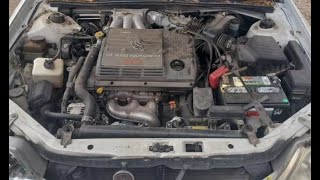
- Locate cylinder #4. On the 1MZ-FE, the cylinders on the front bank (near the radiator) are, from passenger to driver side: 2, 4, 6. Cylinder #4 is the middle one. 🎬 Watch: Visual guide to Toyota V6 cylinder locations and firing order.
- Swap the ignition coil from cylinder #4 with the coil from cylinder #6 (or #2). They are identical parts and easily accessible.
- Clear the trouble codes with the scanner and start the engine. Let it idle and rev it slightly for a minute, then re-read the codes.
- If the code has moved to P1325 (Igniter Circuit Malfunction No. 6), the ignition coil you moved is bad and needs to be replaced. This is the most common outcome.
- If the code P1315 returns, the problem is not the coil. The next step is to inspect the wiring and connector for cylinder #4. Check for damage, corrosion, or a loose connection. The connector clip is likely brittle.
- While the coil is removed, it is wise to inspect and likely replace the spark plug in cylinder #4, especially if its age is unknown. A bad plug can destroy a new coil.
- If wiring and the spark plug are good, the issue could be a lack of power or ground at the connector, which requires a multimeter to test. In very rare cases, it could be the ECM.
Parts You'll Likely Need
- Ignition Coil
(OEM #90919-02212 (for early models, ~1995-1998), 90080-19012 (for ~1999-2001), 90919-02230 (for ~2002-2004, often superseded by 90919-A2005 or 90919-02260))— This is the most common cause of P1315, as the internal igniter circuit fails. It's critical to verify the part number by VIN, but all coils for this engine are physically similar.
Trusted brands: Denso (OEM supplier), NGK, Delphi
OEM price range: $90-$130
Aftermarket price range: $40-$70 (Denso aftermarket part number is often 673-1301 or 673-1309 depending on year) - Spark Plug
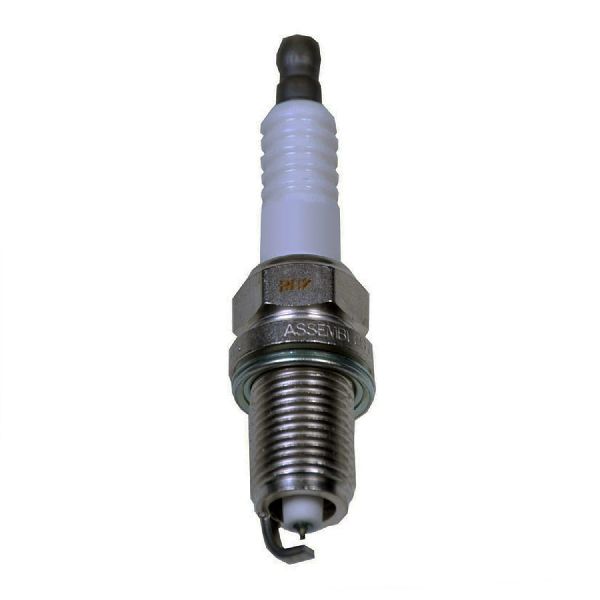
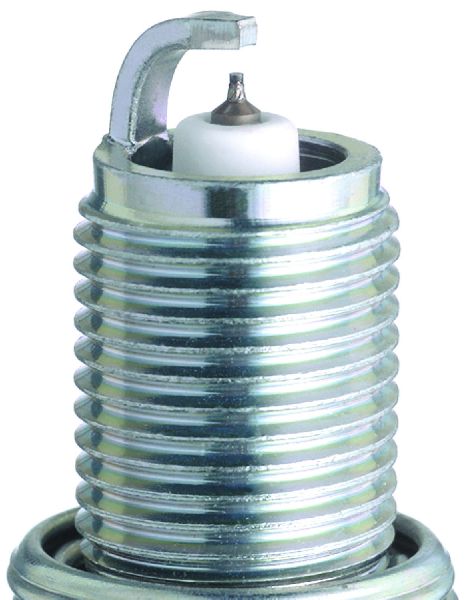
(OEM #Denso SK20R11 or NGK IFR6A11 (for VVT-i models, check specific year))— A worn spark plug can cause the new ignition coil to fail prematurely. It's best practice to replace if its condition is unknown or it's not a dual-iridium plug.
Trusted brands: Denso, NGK
OEM price range: $12-$20
Aftermarket price range: $8-$15
Related Codes That Often Appear With This One
- P0304 — P0304 means 'Cylinder 4 Misfire Detected'. Since P1315 indicates a failure in the ignition circuit for cylinder 4, the cylinder will not fire correctly, directly causing a misfire to be detected. P1315 is the cause, P0304 is the effect.
Technical Service Bulletins (TSBs) & Recalls
- EG008-04: M.I.L. ON 1MZ-FE Engine Misfire DTC P0300-P0306. This TSB addresses failing ignition coils on 1998-1999 Avalon models. While the TSB focuses on misfire codes, the root cause is the failing coil which also triggers the P13xx igniter circuit codes.
Platform-Specific Known Issues
- Toyota issued Technical Service Bulletin (TSB) EG008-04 for 1998-1999 Avalon models (and other 1MZ-FE vehicles) specifically for misfires caused by improperly operating ignition coil assemblies. This TSB essentially acknowledges the high failure rate of these parts.
- Owner experiences frequently show that when one original coil fails, others are likely to fail soon after. A YouTube user with a Lexus ES300 (platform mate) documented getting codes for four different failed coils at once, confirming that replacing them as a set is wise preventative maintenance.
Mechanic-Grade Diagnostic Values
- Ignition Coil Primary Winding Resistance — expected: 0.70 - 0.94 Ohms at 68°F (20°C). Failure: A reading outside this range indicates a faulty coil.
- Ignition Coil Secondary Winding Resistance — expected: 10.8 - 14.9 k-Ohms at 68°F (20°C). Failure: A reading outside this range indicates a faulty coil.
- IGF (Ignition Feedback) Voltage at ECU — expected: 4.5 - 5.5 Volts (with coil connector disconnected, ignition ON). Failure: Voltage outside this range suggests a wiring issue or a fault in the ECM's pull-up resistor circuit.
- IGT (Ignition Trigger) Voltage at Coil Connector — expected: Pulsing voltage between 0.1V and 4.5V while cranking. Failure: No pulse or a steady voltage indicates a problem with the ECM or the wiring from the ECM.
- B+ Voltage at Coil Connector — expected: Battery Voltage (approx. 12V with key ON, 13.5-14.5V with engine running). Failure: Low or no voltage indicates a problem with the power supply circuit, potentially a fuse or relay.
Scan Tool Commands That Help
- Toyota Techstream: Data List Monitoring (Misfire) — While there is no specific bidirectional active test to fire a single coil, a technician can use the Data List to monitor 'Misfire RPM' and 'Misfire Load' to confirm which cylinder is faulting in real-time. A service bulletin notes that the 'Ignition' value on the Data List will change when the misfire monitor is active.
Wiring & Ground Locations
- Ignition Coil Connector (4-pin) — Connects directly to the top of each ignition coil.. This connector provides power, ground, the trigger signal (IGT) from the ECM, and sends the confirmation signal (IGF) back to the ECM. The plastic locking tab becomes extremely brittle with age and frequently breaks, leading to a poor connection that can cause P1315.
- EB1 — Engine wire and sensor wire ground point located on the left-hand (front) bank of the cylinder head.. A poor ground at this location can cause erratic behavior or failure of multiple components on the front bank, including the ignition coils for cylinders 2, 4, and 6.
- EC1 — Engine room main wire ground point, located near the radiator fan.. This is a primary ground point for the engine compartment wiring harness. Corrosion or looseness here can cause various electrical issues.
Real Owner Repair Stories
- YouTube user with a 1999 Lexus ES300 (1999 Lexus ES300 (1MZ-FE VVT-i) with 200,000+ miles) — Check Engine Light on with codes P1305, P1310, P1315, and P1320 simultaneously.
❌ Tried (didn't work) Initially skeptical that four coils could fail at once.
✅ What actually fixed it The owner performed a 'three coil monty' test, swapping known-good coils with the suspect ones. The codes followed the old coils. Replacing the four original, high-mileage coils with new Denso units resolved all the codes. This confirms that multiple coils can fail at or around the same time. - ClubLexus forum user (1999 Lexus ES300 (1MZ-FE VVT-i) with 237,000 miles) — Check Engine Light on with P0300 and all six igniter codes (P1300 through P1325) appearing at once after the engine warms up. Occasional stutter on hard acceleration.
❌ Tried (didn't work) Replacing spark plugs, Replacing A/F sensors, Replacing Oil Control Valves (OCVs) and filters
✅ What actually fixed it The user discovered their alternator was spiking to over 16 volts. After replacing the faulty alternator, the voltage stabilized and the codes were resolved. The over-voltage condition was likely damaging the sensitive electronics in the ignition coils. - YouTube user 'Driven By Satch' (Toyota vehicle, likely Avensis or similar with coil-on-plug.) — Check Engine Light on, rough running. Scanner shows P1315 Igniter Circuit 4.
✅ What actually fixed it The video provides a clear, simple demonstration of the most common fix. The user located cylinder #4, removed the single 10mm bolt, disconnected the brittle connector, swapped in a new ignition coil, and cleared the code. The fix was immediate and successful.
OEM Part Supersession History
90919-02212→90080-19012, then 90919-02230— Internal design and material improvements to increase reliability and prevent premature failure of the integrated igniter.
Heads up: While the coils are physically similar and will bolt in place, it is critical to use the correct part number for the specific model year (non-VVT-i vs. VVT-i) to ensure correct electrical operation and communication with the ECM.90919-02230→90919-A2005, 90919-02260— Continued rolling updates and supplier changes for newer applications, but remains backward compatible for the specified Avalon years.
Model Year Variations Within This Range
- 1995-1999 (First Gen, XX10): These models use the non-VVT-i version of the 1MZ-FE engine. They are more likely to use the earlier ignition coil part numbers like 90919-02212. The TSB for failing coils (EG008-04) specifically calls out the 1998-1999 models.
- 2000-2004 (Second Gen, XX20): These models use the 1MZ-FE engine with VVT-i, which increased horsepower. They use later ignition coil part numbers, such as 90080-19012 and 90919-02230. The fundamental cause of P1315 (coil failure) remains the same across both generations.
Diagnostic Flowchart
Used vs. New Parts: Buying Guide for This Vehicle
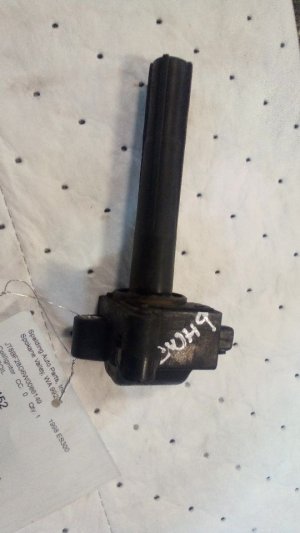
When a used part is the smart pick: For this specific repair, purchasing a used ignition coil from a junkyard is generally not recommended by experienced owners. The failure is due to electronic breakdown from age and heat cycles, so a used part has an unknown and likely limited remaining lifespan. It only makes sense as a temporary, emergency fix while waiting for a new part to arrive.
Donor-vehicle mileage cap: roughly under 80000 miles for the part to have meaningful remaining life.
What to inspect on the donor part:
- Check the plastic housing for any cracks or signs of arcing (white or black burn marks).
- Ensure the connector area is clean and free of corrosion.
- Ask for the mileage of the donor vehicle if possible; lower is always better.
- Avoid coils that appear to have been sitting exposed to the elements.
OEM-only on this vehicle (don't cheap out):
- Ignition Coil
Aftermarket brands forum-validated for this vehicle:
- Denso (This is the Original Equipment Manufacturer; buying Denso from a reputable auto parts store is equivalent to getting the Toyota part without the dealer markup).
- NGK
Brands owners have reported issues with on this vehicle:
- Unbranded, low-cost coil sets from online marketplaces like Amazon or eBay. Forum users report high rates of out-of-the-box failures or very short lifespans with these parts.
Real Owner Stories
Aggregated from forums and TSBs cited above. Mileages and costs reflect what owners reported in those sources.
2000 Lexus ES300 (1MZ-FE engine)
Symptoms: The owner reported getting codes P1305 and P1315.
What fixed it: Forum members confirmed this points to bad coils on cylinders #2 and #4, and the fix is to replace the failed ignition coils.
Source hint: ClubLexus - 'lexus ES300 igniter circuit' thread (2022)
Toyota/Lexus with 1MZ-FE engine
Symptoms: The owner had multiple P13xx codes, including P1315.
What fixed it: The owner was advised that the issue was almost certainly the ignition coils themselves or the connectors, and the fix was to replace the faulty components.
Source hint: ClubLexus - 'Multiple P1305 -P1315' thread (2009)
Toyota with 1MZ-FE engine
Symptoms: Check Engine Light was on with fault code P1315.
What fixed it: The video demonstrated that replacing the ignition coil on cylinder #4 and clearing the code resolved the issue.
Source hint: YouTube - 'Toyota Injector Coil Replace Fault P1315 & Engine Light Turn Off' (2014)
Lexus ES300 (1MZ-FE engine)
Symptoms: The owner reported getting codes for four different failed coils at once.
What fixed it: The experience confirmed that replacing the coils as a set is wise preventative maintenance, implying the fix was to replace all four failed coils.
Source hint: Owner experience cited from YouTube regarding a Lexus ES300
Related OBD-II Codes
Frequently Asked Questions
Where exactly is cylinder #4 on my Avalon's 1MZ-FE engine?
Is there a Toyota TSB for this ignition coil problem on my 1999 Avalon?
What is the fastest way to confirm the ignition coil is the problem before buying a new one?
I replaced the coil for cylinder #4, but the P1315 code came back. What's next?
My mechanic suggests replacing all six coils, but only one is bad. Is this necessary?
The plastic clip on the coil connector broke when I unplugged it. Could this cause the P1315 code?
I have a Lexus ES300 with the same 1MZ-FE engine. Does this P1315 information apply to my car?
Helpful Videos

Used OEM Parts in Stock


New Aftermarket Parts Available

The information in this article is provided for general reference and educational purposes only. Vehicle specifications, procedures, and part compatibility can vary by production date, trim level, and region. Always consult your vehicle's factory service manual and verify part numbers before purchasing or performing repairs. Safety-critical components such as airbags, seat belts, and braking systems should be installed by a qualified professional.
- Toyota Avalon:
- 🎬 Helpful Videos
- 🛍️ Shop This Part
- What's Unique About the 1995-2004 Toyota Avalon
- Symptoms You May Notice
- Most Likely Causes
- Rare But Worth Checking
- Diagnosis Steps
- Parts You'll Likely Need
- Related Codes That Often Appear With This One
- Technical Service Bulletins (TSBs) & Recalls
- Platform-Specific Known Issues
- Mechanic-Grade Diagnostic Values
- Scan Tool Commands That Help
- Wiring & Ground Locations
- Real Owner Repair Stories
- OEM Part Supersession History
- Model Year Variations Within This Range
- Diagnostic Flowchart
- Used vs. New Parts: Buying Guide for This Vehicle
- Real Owner Stories
- 2000 Lexus ES300 (1MZ-FE engine)
- Toyota/Lexus with 1MZ-FE engine
- Toyota with 1MZ-FE engine
- Lexus ES300 (1MZ-FE engine)
- Related OBD-II Codes
- Frequently Asked Questions
- 🎟️ Get 5% Off