

P1299 on 2011-2019 Ford Explorer: Overheating Causes and Fixes
The P1299 code on a 2011-2019 Ford Explorer means the engine is overheating, and the computer has activated a 'fail-safe' cooling mode (limp mode) to prevent damage. The most common causes are low engine coolant due to leaks from places like turbo lines or a faulty Cylinder Head Temperature (CHT) sensor giving false readings. Do not drive the vehicle until this is fixed, as it can lead to catastrophic engine failure.
- P1299 means your Explorer's engine is dangerously hot, or at least the computer thinks it is.
- Do not drive the vehicle. Pull over immediately to prevent catastrophic engine damage.
- The most likely causes are simple: low coolant from a leak or a bad Cylinder Head Temperature (CHT) sensor giving a false reading.
- Start your diagnosis by checking the coolant level and using a scan tool to read the CHT sensor's temperature on a cold engine.
- While some fixes are DIY-friendly (sensor, thermostat), a water pump replacement on this engine is a major job best left to a professional.
What's Unique About the 2011-2019 Ford Explorer

The 3.5L EcoBoost V6 in the fifth-generation Explorer is a powerful, twin-turbocharged engine that generates significant heat. Its cooling system is robust but has specific weak points, such as the internally-housed, timing-chain-driven water pump and various turbocharger coolant lines, that can lead to leaks. Unlike older engines that used a simple Engine Coolant Temperature (ECT) sensor submerged in coolant, many modern Fords, including this Explorer, use a Cylinder Head Temperature (CHT) sensor that infers temperature by measuring the metal of the head. This means a faulty sensor can trigger this code even if the engine isn't actually overheating, a common point of confusion for owners.
Symptoms You May Notice
- Check Engine Light is on or flashing
- Engine Over-Temperature warning light or message on the dashboard
- Sudden and significant loss of engine power (limp mode)
- Engine may run rough, vibrate, or stall
- Cooling fans running at maximum speed
- Air conditioning compressor is disabled, causing A/C to blow warm air
- Temperature gauge on the dashboard suddenly pegs to 'H' (Hot)
- Replacing the PCM. While a faulty PCM is a remote possibility, it is almost never the root cause. All cooling system components, sensors, and wiring should be thoroughly tested before considering PCM replacement.
- Replacing the wrong temperature sensor. Many people mistakenly replace the easier-to-access Engine Coolant Temperature (ECT) sensor when the actual fault is with the Cylinder Head Temperature (CHT) sensor located under the intake manifold.
Most Likely Causes

- Low Engine Coolant Level 🔴 High Probability The 3.5L EcoBoost has multiple potential leak points, including the radiator, hoses, turbocharger coolant lines (a known failure point), and the internal water pump. Even a loose radiator cap or small air pockets can trigger the code.
How to confirm: Visually inspect the coolant reservoir. When the engine is cool, check if the level is between the MIN and MAX lines. Look for visible signs of coolant leaks (orange or yellow fluid) on the ground or around the engine bay, specifically near the turbos and along the subframe. A cooling system pressure test is the definitive way to find hidden leaks.
Typical fix: Find and repair the source of the leak, then refill and bleed the cooling system with the correct Ford-spec coolant. A common leak source is the turbo coolant line fittings.
Est. part cost: $20-$500+ - Faulty Cylinder Head Temperature (CHT) Sensor 🔴 High Probability The sensor itself can fail, sending an incorrect high-temperature reading to the PCM even if the engine is not overheating. This is a very common failure across many Ford models. The sensor is located under the intake manifold, making replacement moderately difficult.
How to confirm: Use an OBD-II scanner to read the live data from the CHT sensor. If it reads an extremely high temperature (e.g., 250°F+) immediately after a cold start, or the temperature reading is erratic, the sensor is almost certainly faulty.
Typical fix: Replace the CHT sensor and inspect its connector pigtail for damage. This requires removing the upper and lower intake manifolds.
Est. part cost: $30-$70 - Stuck Thermostat 🟡 Medium Probability Thermostats can fail over time, getting stuck in the closed position and preventing coolant from circulating to the radiator, causing a genuine overheat.
How to confirm: Feel the upper radiator hose after the engine has warmed up. If it's not hot, but the engine is overheating, the thermostat is likely stuck closed. The lower hose will also remain cool.
Typical fix: Replace the thermostat and gasket. It's often recommended to replace the housing as well.
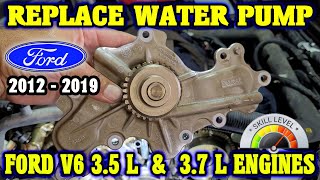
Est. part cost: $40-$100 - Failing Water Pump ⚪ Low Probability The 3.5L EcoBoost features an internal, timing chain-driven water pump. A failing pump impeller can cause poor circulation, but the more notorious failure is a seal leak. This allows coolant to leak directly into the oil pan, which is a catastrophic, engine-destroying failure. This design has been the subject of class-action lawsuits.
How to confirm: Diagnosis is difficult. A small weep hole on the side of the engine block (near the AC compressor/alternator) may show early signs of a seal leak. The definitive sign of a severe failure is milky, contaminated engine oil (looks like a chocolate milkshake on the dipstick).
Typical fix: Replacement of the water pump and timing components (chains, guides, tensioners). This is a very labor-intensive job (10-15+ hours) and extremely expensive.
Est. part cost: $200-$500
Rare But Worth Checking
- Damaged CHT Sensor Wiring: The wiring harness to the CHT sensor, which runs under the intake manifold, can become brittle from heat cycles or damaged by rodents, causing a short or open circuit that leads to a false overheating signal.
- Obstructed Radiator/Condenser: Debris like leaves, plastic bags, or mud can block airflow through the radiator, reducing its cooling efficiency, especially in low-speed traffic.
- Faulty Cooling Fan Assembly: If the cooling fans fail to turn on due to a bad motor, relay, or wiring, the engine will overheat quickly in stop-and-go traffic or at idle.
- Air in the Cooling System: If the cooling system was recently serviced and not properly 'burped' or vacuum-filled, trapped air pockets can form. These can get stuck in the cylinder heads, causing localized hot spots and triggering the P1299 code.
Diagnosis Steps

- DO NOT open the coolant reservoir cap when the engine is hot.
- Check the coolant level in the expansion tank. If it is low, top it off with the correct coolant (Ford VC-13-G Yellow or equivalent) and look for obvious leaks, especially around the turbos.
- Use an OBD-II scanner to confirm the P1299 code and check for any other stored codes.
- Monitor the CHT sensor data with the scanner. On a cold engine, it should read close to the ambient air temperature. If it reads very high (e.g., 250°F+) immediately, the sensor is bad.
- Check the engine oil dipstick. If the oil appears milky or like a coffee-colored milkshake, the internal water pump has likely failed and contaminated the oil. This is a critical failure requiring immediate attention.
- If the CHT reading seems plausible, start the engine and monitor the temperature as it warms up. Observe if the cooling fans turn on at the appropriate temperature (typically around 215-220°F).
- Carefully check the upper and lower radiator hoses. The upper hose should get hot as the engine warms up. Once the thermostat opens, the lower hose should also get warm. If the top is hot and the bottom is cold, suspect a stuck thermostat.
- If the engine is overheating and the hoses are not hot, suspect a stuck thermostat or a failing water pump impeller.
- Inspect the CHT sensor wiring harness for any signs of melting, chafing, or corrosion. This requires removing the intake manifold for a full inspection.
- If no other cause is found, perform a cooling system pressure test to find hard-to-see leaks. Also consider a chemical test for combustion gases in the coolant to rule out a head gasket issue.
Parts You'll Likely Need
- Cylinder Head Temperature (CHT) Sensor
(OEM #9L8Z-6G004-E)— This sensor is a very common failure point that can incorrectly trigger the P1299 code. It is known to send false overheat signals.
Trusted brands: Motorcraft, Standard Motor Products
OEM price range: $40-$60
Aftermarket price range: $25-$45 - Engine Coolant / Antifreeze
(OEM #VC-13-G (Yellow))— Required for refilling the system after any repair. Using the wrong type can cause corrosion and system damage. Ford has superseded the original Orange coolant (VC-3-D) with Yellow coolant (VC-13-G), which is fully compatible.
Trusted brands: Motorcraft, PEAK, Zerex
OEM price range: $20-$30 per gallon
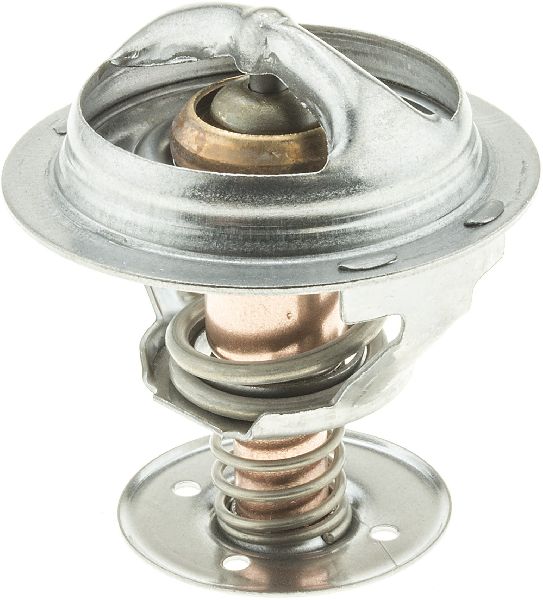
Aftermarket price range: $18-$25 per gallon - Thermostat — Can fail by sticking closed, preventing coolant circulation and causing a genuine overheat condition.
Trusted brands: Motorcraft, Gates
OEM price range: $40-$70
Aftermarket price range: $25-$50 - Turbo Coolant Line — The fittings on the coolant lines that feed the twin turbochargers are a known weak point and a common source of hard-to-find coolant leaks on the 3.5L EcoBoost engine.
Trusted brands: Motorcraft, Dorman
OEM price range: $50-$150 per line
Aftermarket price range: $30-$100 per line
Related Codes That Often Appear With This One
- P0217 — This is a generic code for 'Engine Overtemperature Condition', which often accompanies the manufacturer-specific P1299 when a true overheat occurs.
- P0117 / P0118 — These codes relate to the Engine Coolant Temperature (ECT) sensor circuit (low/high input). While the Explorer uses a CHT, some systems may log these codes in conjunction with a CHT fault, as noted in TSB SSM 49407.
- P1026 — As seen in TSBs for other Ford engines (SSM 51984, SSM 51756, SSM 51333), this code can appear with P1299, often pointing towards a CHT sensor or wiring issue, especially on a cold start.
Technical Service Bulletins (TSBs) & Recalls
- SSM 49407
- SSM 51984
- SSM 51756
- SSM 51333
Platform-Specific Known Issues
- The internal water pump on the 3.5L engine is a notorious failure point. A leak from its seal contaminates the engine oil, leading to major engine damage, often requiring a full engine replacement. An overheat condition can sometimes be an early symptom of a failing pump impeller, though a coolant-in-oil leak is the more definitive and catastrophic sign of failure.
- Coolant leaks from the turbocharger coolant supply and return lines are also a known issue on EcoBoost engines and can be a source of coolant loss leading to a P1299 code. These leaks often occur at the press-in fittings on the turbo itself.
Mechanic-Grade Diagnostic Values
- Cylinder Head Temperature (CHT) Sensor Voltage — expected: Voltage decreases as temperature increases. Approx. 4.3V @ 86°F (30°C), 2.0V @ 194°F (90°C), and 1.7V @ 212°F (100°C).. Failure: Voltage reading is stuck high (near 5V) or low, or does not change smoothly as the engine warms up. An immediate high-temp reading on a cold engine points to a bad sensor.
- Cylinder Head Temperature (CHT) Sensor Resistance — expected: Resistance decreases as temperature increases. Typical values are ~2500 ohms at 68°F (20°C) and ~300 ohms at 176°F (80°C).. Failure: An open circuit (infinite resistance) or short circuit (near zero resistance) at any temperature indicates a failed sensor.
- CHT Sensor Circuit Voltage (Key On, Engine Off, Sensor Unplugged) — expected: Approximately 5.0 volts on the signal wire side of the harness connector.. Failure: No voltage indicates a problem with the PCM or the wiring between the PCM and the sensor.
Hidden / Shadow Codes Worth Checking
- OBDII PID #1685: This is a Ford-specific Parameter ID (PID) that allows a capable scan tool to read the raw CHT sensor voltage directly, which is crucial for diagnosing a faulty sensor versus a wiring issue. (see via Requires an advanced scan tool or software like FORScan or Torque Pro with custom PIDs enabled.)
- Permanent DTC (P1299-P): After a severe overheat event, the PCM may store a 'permanent' version of the P1299 code that cannot be erased with a basic OBD-II code reader. This is a safety feature to ensure a technician investigates the fault. (see via Visible on most OBD-II scanners, but distinguished by its inability to be cleared by the standard 'Clear Codes' command.)
Scan Tool Commands That Help
- FORScan: Clear DTCs / Reset PCM — After a repair is completed (e.g., replacing a hose or sensor), a 'Permanent' P1299 code may not clear with a basic scanner. A more advanced tool like FORScan can often perform the necessary module reset to clear the permanent fault code after the underlying issue is resolved.
Wiring & Ground Locations

- CHT Sensor Connector — Underneath the upper and lower intake manifolds, screwed into the rear cylinder head on the 3.5L EcoBoost.. The location makes the wiring susceptible to heat damage over time. The connector itself or the pigtail can become brittle and fail, causing a false P1299 code. A visual inspection is difficult and requires significant disassembly.
- CHT Sensor Pinout — At the two-wire sensor connector.. For testing purposes, one wire is the signal wire (should show voltage relative to temperature) and the other is the PCM ground reference. Testing continuity and voltage at these specific pins can differentiate a sensor failure from a wiring failure.
Real Owner Repair Stories
- Ford F150 Forum user 'Awakeatground0' (2016 F-150 2.7L EcoBoost, 120k miles (different chassis, similar engine tech and code logic)) — Started with rough idle and fuel smell. After 2 miles, CEL came on, overheat alert flashed, cooling fan on high, and vehicle entered limp mode.
❌ Tried (didn't work) The scan tool initially suggested a thermostat issue.
✅ What actually fixed it Replaced the Cylinder Head Temperature (CHT) sensor (Part #9L8Z-6G004-F). The code had to be cleared with the scan tool, after which the truck returned to normal operation and idled more smoothly than before. - Reddit user 'Expert-Course-967' (2015 Ford Police Interceptor Utility (Explorer Platform)) — Sudden overheat warning, smoke from tailpipe and hood while driving uphill.
❌ Tried (didn't work) Clearing the code with a standard OBD-II reader. Two of three codes cleared, but one remained as 'permanent'.
✅ What actually fixed it The initial cause was the upper radiator hose disconnecting completely. The user reconnected the hose and refilled the system with coolant. The underlying issue was the improper installation of the hose clamp during a previous repair. The permanent code remained even after 500 miles of driving, indicating it may require a dealer-level tool to clear.
OEM Part Supersession History
9L8Z-6G004-B→9L8Z-6G004-E— Standard part revision by the manufacturer.
Heads up: The parts are interchangeable; 'E' is the later, recommended revision.Motorcraft Orange Antifreeze/Coolant (VC-3-D)→Motorcraft Yellow Antifreeze/Coolant (VC-13-G)— Ford introduced a new P-OAT (Phosphate Organic Acid Technology) coolant formulation for improved long-term protection.
Heads up: Motorcraft Yellow (VC-13-G) is fully backward-compatible with and can be mixed with Motorcraft Orange (VC-3-D). A full flush is not required when switching from Orange to Yellow if the system is clean.
Model Year Variations Within This Range
- 2011-2019: While the Explorer had a significant cosmetic and technology facelift for the 2016 model year, the 3.5L EcoBoost V6 powertrain and its associated cooling system remained fundamentally the same. The causes and repair procedures for a P1299 code on this specific engine are consistent across the entire 2011-2019 generation.
Diagnostic Flowchart
Other Known Issues on This Vehicle
Issues unrelated to this code that are worth knowing about as an owner of this generation:
- Internal Water Pump Failure 🔴 High — Common after 80,000-120,000 miles. Failure allows coolant to mix with engine oil, causing catastrophic engine damage. (Ref: Subject of multiple class-action lawsuits (e.g., Case 2:18-cv-12528-LJM-APP).)
- Power Transfer Unit (PTU) Failure 🔴 High — Commonly fails around 100,000 miles. The unit is sealed and not easily serviced, leading to fluid breakdown, overheating, and gear failure.
- Timing Chain Stretch & Phaser Rattle 🟠 Medium — Often presents as a rattling noise on cold startup. Caused by stretched timing chains or failing VCT phasers. If ignored, can lead to engine timing issues.
- Carbon Buildup on Intake Valves 🟠 Medium — Inherent to direct-injection engines. Over time, carbon deposits build up on the back of intake valves, causing misfires, rough idle, and reduced performance.
- Cracked Flex Plate 🟠 Medium — Can occur at various mileages, presenting as a rhythmic ticking or knocking sound from the transmission bellhousing area.
- Electronic Throttle Body Failure 🟡 Low — Can fail and put the vehicle into limp mode, often with codes P2111 and P2112. Relatively common but less expensive to fix than other issues. (Ref: Ford issued an extended warranty for this part on some models.)
Used vs. New Parts: Buying Guide for This Vehicle
When a used part is the smart pick: For this repair, used parts are generally not recommended due to the low cost of new sensors and the critical nature of the cooling system. However, if the intake manifold is damaged during removal, a used manifold from a reputable auto recycler is a viable and cost-effective option.
Donor-vehicle mileage cap: roughly under 100000 miles for the part to have meaningful remaining life.
What to inspect on the donor part:
- For an intake manifold, ensure all mounting points are intact and there are no visible cracks or warping.
- Verify the donor vehicle was not in a front-end collision.
- Ask for the donor vehicle's VIN to check its history if possible.
OEM-only on this vehicle (don't cheap out):
- Internal Water Pump: Given the high-labor cost of replacement and the history of failures on this engine, using a new OEM Motorcraft part is strongly advised to ensure longevity and avoid a repeat catastrophic failure.
Aftermarket brands forum-validated for this vehicle:
- CHT Sensor: Motorcraft (OEM), Standard Motor Products (SMP)
- Coolant: Zerex, PEAK (ensure it meets Ford's WSS-M97B44-D or WSS-M97B57-A2 specification)
Brands owners have reported issues with on this vehicle:
- Avoid unbranded, 'white-box' electronic sensors like the CHT sensor. A faulty replacement sensor can lead to a repeat of the same symptoms and diagnostic headache for a minimal cost saving.
Real Owner Stories
Aggregated from forums and TSBs cited above. Mileages and costs reflect what owners reported in those sources.
2015 Ford Explorer Police Interceptor Utility 3.5L
Symptoms: A main radiator hose came loose, leading to a massive coolant loss and an overheat event that triggered the P1299 code.
What fixed it: Reattaching the coolant hose and refilling the system; however, the owner noted the code remained in the ECU memory as a 'permanent' code.
Source hint: Reddit thread titled 'Coolant Hose fall off - P1299 Explorer - Police Interceptor Utility -2015'
2013 Ford Explorer 3.5L EcoBoost
Symptoms: Cylinder Head Temperature sensor failure leading to P1299.
What fixed it: Replacement of the CHT sensor using a shortcut method that involved only partially removing the intake manifold.
Source hint: YouTube video '2013 Ford Explorer 3.5 ecoboost P1299 Cylinder Head Tempature Sensor. SHORT CUT FIX'
2011-2019 Ford Explorer 3.5L EcoBoost
Symptoms: False overheat indications and P1299 codes appearing even when the engine was not actually hot.
What fixed it: Replacing the Cylinder Head Temperature (CHT) sensor, which is a common culprit for false readings across various Ford models.
Source hint: Ford Truck Enthusiasts Forums thread 'false overheat indication code P1299'
Related OBD-II Codes
Frequently Asked Questions

My 2015 Explorer Police Interceptor Utility just threw a P1299 after a hose came off. Is this code permanent?
Are there any TSBs I should be aware of for my 3.5L EcoBoost regarding overheating or sensor issues?
I suspect a CHT sensor failure on my 2013 Explorer 3.5L EcoBoost. Do I really have to remove the whole intake manifold?
Why is my A/C blowing warm air at the same time the 'Engine Over-Temperature' light came on?
Is the internal water pump failure on the 3.5L EcoBoost really as bad as people say?
What specific coolant should I use for my 2011-2019 Explorer to avoid cooling system issues?
Helpful Videos

Used OEM Parts in Stock

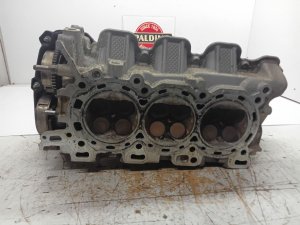
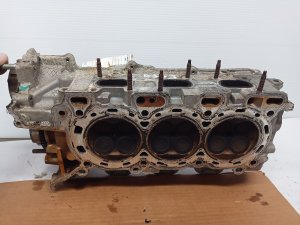

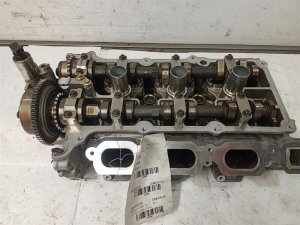
New Aftermarket Parts Available


The information in this article is provided for general reference and educational purposes only. Vehicle specifications, procedures, and part compatibility can vary by production date, trim level, and region. Always consult your vehicle's factory service manual and verify part numbers before purchasing or performing repairs. Safety-critical components such as airbags, seat belts, and braking systems should be installed by a qualified professional.
- Ford Explorer:
- 🎬 Helpful Videos
- 🛍️ Shop This Part
- What's Unique About the 2011-2019 Ford Explorer
- Symptoms You May Notice
- Most Likely Causes
- Rare But Worth Checking
- Diagnosis Steps
- Parts You'll Likely Need
- Related Codes That Often Appear With This One
- Technical Service Bulletins (TSBs) & Recalls
- Platform-Specific Known Issues
- Mechanic-Grade Diagnostic Values
- Hidden / Shadow Codes Worth Checking
- Scan Tool Commands That Help
- Wiring & Ground Locations
- Real Owner Repair Stories
- OEM Part Supersession History
- Model Year Variations Within This Range
- Diagnostic Flowchart
- Other Known Issues on This Vehicle
- Used vs. New Parts: Buying Guide for This Vehicle
- Real Owner Stories
- 2015 Ford Explorer Police Interceptor Utility 3.5L
- 2013 Ford Explorer 3.5L EcoBoost
- 2011-2019 Ford Explorer 3.5L EcoBoost
- Related OBD-II Codes
- Frequently Asked Questions
- 🎟️ Get 5% Off