

P1299 on 2015-2020 Ford Edge: Overheating Causes, Symptoms & Fixes
On a 2015-2020 Ford Edge with a 2.0L EcoBoost engine, code P1299 indicates a critical overheating condition. This is very often caused by a known coolant intrusion issue where coolant leaks into the engine's cylinders due to a flaw in the engine block design. This is a severe problem that requires immediate attention and often results in engine replacement, as outlined by Ford in TSB 22-2229.
- P1299 on a 2015-2020 Ford Edge is a critical alert for engine overheating that requires you to stop driving immediately to prevent severe damage.
- On 2.0L EcoBoost models, the most likely cause is a serious internal engine defect where coolant leaks into the cylinders.
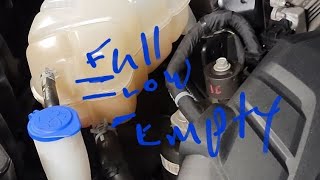
- The first and most obvious symptom is often a dropping coolant level in the reservoir with no visible puddles under the car.
- Diagnosis must focus on determining if the engine is truly overheating and finding the source of the coolant loss; simply replacing the temperature sensor is not a fix.
- The official and permanent repair for the common coolant intrusion issue is a complete engine long block replacement.
What's Unique About the 2015-2020 Ford EDGE

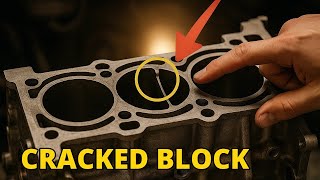
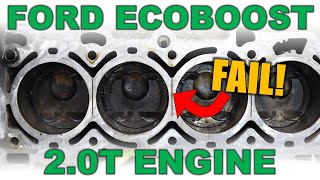
The 2015-2020 Ford Edge, particularly models with the 2.0L EcoBoost engine, is highly susceptible to a specific engine block design flaw. An open-deck block design has insufficient support between the cylinders, which can cause a crack to form. This allows coolant to leak directly into the combustion chamber. This internal leak leads to coolant loss, overheating, and the P1299 code. Ford has issued multiple Technical Service Bulletins (TSBs), such as TSB 22-2229, acknowledging this problem. 🎬 Watch: A deep dive into the 2.0L EcoBoost TSB details. The only permanent fix is a complete long block engine replacement with a redesigned part that has improved cooling passages.
Diagnostic Flowchart

Tap your situation to follow the diagnostic path that matches what you're seeing on this vehicle.
Symptoms You May Notice

- Check Engine Light is on.
- Engine overheating warning light or message on the dashboard. [SSM 48991]
- Noticeable loss of engine coolant without any visible external leaks.
- White, sweet-smelling smoke coming from the exhaust pipe, especially on a cold startup. [TSB 20-2234, 10, 11]
- Engine running rough, misfiring, or shaking, particularly when cold.
- Vehicle enters "limp mode" with reduced power.
- Gurgling sound from the dashboard area as air gets into the heater core.
- Engine oil appears milky or frothy on the dipstick or oil cap in advanced stages.
- Replacing only the Cylinder Head Temperature (CHT) sensor without verifying if the engine is actually overheating. If the engine has a real cooling problem, a new sensor will not fix it.
- Adding stop-leak products to the cooling system. This should be avoided, as it can clog the radiator, heater core, and small coolant passages in the engine, leading to more extensive and expensive repairs.
- Mistaking the symptoms of a leaking EGR cooler for the more severe internal engine block crack, or vice-versa.
Most Likely Causes

- Internal Coolant Leak (Cylinder Head/Block Crack) 🔴 High Probability A known design flaw in the 2.0L EcoBoost engine block used in 2015-2019 models creates a weak point between cylinders, which can crack over time and allow coolant to enter the cylinders. This is documented in Ford TSB 22-2229.
How to confirm: A mechanic can use a borescope to look inside the cylinders for evidence of coolant (unusually 'steam-cleaned' piston tops) or perform a chemical block test (combustion leak test) on the coolant to detect exhaust gases. A cooling system pressure test that loses pressure without external leaks is a strong indicator.
Typical fix: Replacement of the engine long block with a redesigned part is the only permanent fix recommended by Ford's TSBs. Owners on forums confirm this is the standard dealer repair.
Est. part cost: $4000-$7000 - Low Engine Coolant Level 🔴 High Probability This is a direct trigger for overheating and is often the first symptom of the aforementioned internal coolant leak. It can also be caused by more conventional external leaks from hoses, the radiator, or water pump.
How to confirm: Visually check the coolant reservoir. If it's below the 'MIN' line, there is a leak somewhere in the system.
Typical fix: Top off coolant with the correct type (Motorcraft Yellow VC-13-G) and perform a cooling system pressure test to find the source of the leak (internal or external).
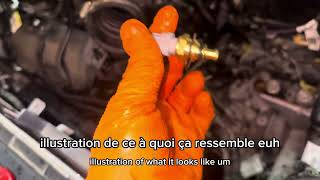
Est. part cost: $20-$40 for coolant - Faulty Cylinder Head Temperature (CHT) Sensor or Wiring 🟡 Medium Probability Sensors can fail, or wiring can become damaged, leading to false overheating signals. TSB SSM 48991 specifically mentions this as a possible cause. The sensor provides a direct reading of the metal's temperature, unlike an Engine Coolant Temperature (ECT) sensor.
How to confirm: Test the sensor's resistance with a multimeter at various temperatures to see if it matches the manufacturer's specifications. Inspect the wiring harness for any visible damage, chafing, or corrosion. A shorted sensor can cause a false overheat reading even on a cold engine.
Typical fix: Replace the CHT sensor and/or repair the damaged wiring.
Est. part cost: $30-$80 - Leaking EGR Cooler ⚪ Low Probability TSB SSM 48345 and TSB 20-2234 note that the EGR cooler can leak coolant internally into the intake and exhaust system, causing coolant loss, white smoke, and overheating, mimicking the symptoms of engine block failure.
How to confirm: Requires a cooling system pressure test and visual inspection of the EGR system for signs of coolant as outlined in TSB 20-2234.
Typical fix: Replace the EGR cooler assembly.
Est. part cost: $300-$500 - Stuck Thermostat ⚪ Low Probability
How to confirm: Check if the upper radiator hose gets hot as the engine warms up. If it stays cool, the thermostat is likely stuck closed, preventing coolant circulation.
Typical fix: Replace the thermostat and housing.
Est. part cost: $50-$150
Rare But Worth Checking
- Failing Water Pump: While less common than coolant intrusion, a failing water pump will stop coolant circulation and cause rapid overheating. Look for coolant drips from the pump's weep hole.
- Blocked Radiator: External debris (leaves, bags) or internal sludge can block airflow or coolant flow, reducing the system's ability to dissipate heat. Using incorrect coolant types can contribute to internal blockage.
- PCM Software Issue: TSB 19-2046 suggests that for some 2019 models, incorrect PCM software settings can falsely trigger P1299 and other codes, and a simple re-program may be the required fix.
Diagnosis Steps
- DO NOT open the coolant cap when the engine is hot. Wait for it to cool completely.
- Check the coolant level in the reservoir. If it is low, this is a key symptom of a leak.
- Scan the PCM for all stored trouble codes to see which other codes are present with P1299, such as misfire codes (P030x) or P1285.
- If coolant is low, top it off with the correct type (Motorcraft VC-13-G) and perform a cooling system pressure test to check for external leaks from hoses, the radiator, or the water pump.
- If no external leaks are found after a pressure test, the leak is likely internal.
- Perform a chemical block test (using a 'combustion leak detector') on the coolant reservoir to check for the presence of exhaust gases, which confirms an internal leak.
- Inspect the spark plugs. A plug from a cylinder with a coolant leak will often be 'steam-cleaned' and look much cleaner than the others.
- Use a borescope to visually inspect the inside of the cylinders through the spark plug holes. Look for coolant pooling on the piston tops or unusually clean surfaces.
- If a faulty sensor is suspected (and the engine is confirmed NOT to be overheating), test the CHT sensor's resistance and check its wiring for damage.
- If coolant intrusion is confirmed, consult a professional technician or dealership. The repair is an engine replacement as per TSB 22-2229.
Parts You'll Likely Need
- Engine Long Block
(OEM #J2GZ-6006-E (supersedes previous numbers for 2015+ models))— This is the official Ford-recommended repair for the common coolant intrusion issue on 2.0L EcoBoost engines, as it contains the updated block design.
Trusted brands: Motorcraft
OEM price range: $4500
Related Codes That Often Appear With This One
- P0217 — Engine Overtemperature Condition. This is a general overheating code that frequently accompanies the more specific P1299. [TSB 20-2234, 1, 8]
- P1285 — Cylinder Head Overtemperature Sensed. This is the first-stage warning code in Ford's fail-safe strategy, often triggered just before P1299. [TSB 22-2229, 6]
- P0300, P0301, P0302, P0303, P0304 — Random or specific cylinder misfire codes. These are triggered when coolant enters the cylinders, fouling the spark plugs and disrupting combustion. Cylinders 2 and 3 are common culprits. [TSB 22-2229, 9, 12]
- P0316 — Misfire Detected on Startup (First 1000 Revolutions). This often appears with the cylinder-specific misfire codes when coolant has pooled in a cylinder overnight.
- P0128 — Coolant Thermostat Rationality Check. This code often appears with overheating issues and can point to a faulty thermostat or general cooling system problems. [TSB 20-2234, 7]
Technical Service Bulletins (TSBs) & Recalls
- TSB 22-2229: Supersedes previous versions, confirms coolant intrusion in 2.0L EcoBoost engines in the Edge, Fusion, MKZ, Escape, and MKC, and recommends long block replacement as the fix.
- TSB 19-2346: An earlier version of the bulletin for the same coolant intrusion issue, also recommending engine replacement.
- TSB 20-2234: Addresses low coolant, white smoke, and various DTCs including P1299 in 2019-2020 Edge/Nautilus, pointing to a potentially faulty EGR cooler or PCM software.
- SSM 48991: Notes that on some vehicles (including the Edge, but referencing the 2.7L engine), P1299 can be caused by a faulty ECT/knock sensor wiring harness, not actual overheating.
- SSM 48345: Points to a leaking EGR cooler as a cause for coolant loss and overheating symptoms on 2019-2020 models with the 2.0L EcoBoost.
- TSB 19-2046: Suggests that on some 2019 models, a PCM software update is required to resolve erroneously triggered DTCs, including P1299.
Platform-Specific Known Issues
- Coolant Intrusion: The 2.0L EcoBoost engine in 2015-2018 Edge models has a documented design weakness in the engine block that allows coolant to leak into the cylinders, causing misfires, coolant loss, and overheating. Ford addresses this in TSB 19-2346, recommending a long block replacement.
Mechanic-Grade Diagnostic Values
- Cylinder Head Temperature (CHT) Sensor Resistance — expected: Resistance changes with temperature. Example values: ~40-60 kΩ at 60-70°F (15-21°C), dropping to ~2-3 kΩ at 212°F (100°C).. Failure: An open circuit (infinite resistance) or short circuit (near zero resistance) indicates a failed sensor. Readings that don't change with temperature are also a sign of failure.
- Cylinder Head Temperature (CHT) Sensor Voltage (at PCM) — expected: Voltage decreases as temperature increases. Example values: 1.33V at 60°C (140°F), 1.02V at 70°C (158°F), 0.78V at 80°C (176°F), 0.60V at 90°C (194°F).. Failure: Voltage below 0.244V (short circuit) or above 4.96V (open circuit) will trigger a fault code.
Scan Tool Commands That Help
- Ford IDS (Integrated Diagnostic System): Datalogger & Bidirectional Controls — To diagnose P1299, a technician uses IDS to monitor live data PIDs (Parameter IDs) for CHT, ECT, and cooling fan speed. Bidirectional controls allow the tech to manually command the cooling fans on/off to test their function, and to run system self-tests not available on generic scanners.
Wiring & Ground Locations
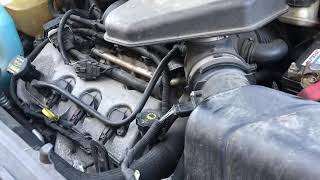
- Cylinder Head Temperature (CHT) Sensor — On the 2.0L EcoBoost, the CHT sensor is located on the cylinder head itself, but access can be difficult. On some models it is at the front of the engine, while on others it is on the back side, requiring removal of the air filter box and intake ducting for access.. This is the primary sensor that triggers the P1299 code. Its wiring is a common point of failure due to heat and vibration. A bad connection or damaged wire can send a false overheat signal to the PCM.
- Main Engine Ground — A primary ground cable runs from the negative battery terminal to a mounting bolt on the engine block, often one of the starter mounting bolts. Another ground strap typically connects the engine block to the chassis/firewall.. A poor engine ground can cause erratic behavior from all engine sensors, including the CHT sensor. Voltage fluctuations from a bad ground can lead to incorrect temperature readings and false P1299 codes.
Real Owner Repair Stories
- Reddit /r/FordEdge forum posts (2017 & 2018 Ford Edge 2.0L EcoBoost) — Coolant intrusion into the cylinders, leading to misfires, rough running, coolant loss, and eventually overheating codes like P1299.
❌ Tried (didn't work) Topping off coolant (level would drop again), Replacing spark plugs (new plugs would become fouled by coolant)
✅ What actually fixed it Multiple owners confirmed the only permanent solution was a complete long block engine replacement, performed by a Ford dealer under warranty or as a customer-pay repair. This is consistent with Ford's TSB for the issue.
OEM Part Supersession History
JJ7Z-6006-B, JS7Z-6006-A, JS7Z-6006-C→J2GZ-6006-E— This is the updated engine long block assembly for 2015+ 2.0L EcoBoost models. It incorporates the redesigned engine block with cross-drilled coolant passages between cylinders to prevent the coolant intrusion failures common in earlier versions.
Heads up: Older part numbers should not be used as they contain the original design flaw.N/A→GN1Z-6G004-A— This is a common OEM part number for the Cylinder Head Temperature sensor used on these engines.
Model Year Variations Within This Range
- 2015-2019: These model years use the 2.0L EcoBoost engine block with a slot cast between the cylinders for coolant flow. This design has a reduced head gasket sealing surface and is prone to cracking, leading to coolant intrusion.
- 2020+: Starting mid-2019 for the 2020 model year, Ford revised the 2.0L EcoBoost block. The slot between the cylinders was removed and replaced with smaller, cross-drilled holes. This provides more surface area for the head gasket to seal against, correcting the coolant intrusion flaw.
Helpful Videos


We Have This Part in Stock



The information in this article is provided for general reference and educational purposes only. Vehicle specifications, procedures, and part compatibility can vary by production date, trim level, and region. Always consult your vehicle's factory service manual and verify part numbers before purchasing or performing repairs. Safety-critical components such as airbags, seat belts, and braking systems should be installed by a qualified professional.
- Ford EDGE:
- 🎬 Helpful Videos
- 🛍️ Shop This Part
- What's Unique About the 2015-2020 Ford EDGE
- Diagnostic Flowchart
- Symptoms You May Notice
- Most Likely Causes
- Rare But Worth Checking
- Diagnosis Steps
- Parts You'll Likely Need
- Related Codes That Often Appear With This One
- Technical Service Bulletins (TSBs) & Recalls
- Platform-Specific Known Issues
- Mechanic-Grade Diagnostic Values
- Scan Tool Commands That Help
- Wiring & Ground Locations
- Real Owner Repair Stories
- OEM Part Supersession History
- Model Year Variations Within This Range
- 🎟️ Get 5% Off