

P1285 on 2015-2020 Ford Edge: Cylinder Head Overtemperature Causes and Fixes
P1285 on a 2015-2020 Ford Edge means the cylinder head is dangerously hot. This is a critical warning, often caused by a known coolant intrusion issue in 2.0L EcoBoost engines, a leaking water pump, or a faulty EGR cooler. Stop driving immediately to prevent catastrophic engine damage. The coolant intrusion issue is well-documented in Ford TSB 22-2229 and requires a long block engine replacement.
- P1285 is a critical code indicating your Ford Edge's cylinder head is overheating. Stop driving immediately.
- On 2015-2018 models with the 2.0L EcoBoost engine, the most likely cause is a serious internal coolant leak requiring engine replacement.
- Other common causes include a failed water pump or a leaking EGR cooler.
- Diagnosis should focus on finding the source of the overheating, not just replacing the sensor that triggered the code.
- Check for Ford's Technical Service Bulletins (TSBs) related to coolant intrusion, as your vehicle may be covered under special programs.
What's Unique About the 2015-2020 Ford EDGE

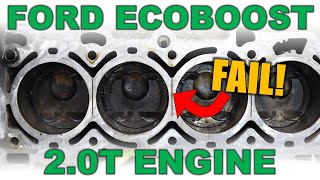
On the 2015-2018 Ford Edge with the 2.0L EcoBoost engine, this code is particularly alarming due to a well-documented engine design flaw. A defect in the open-deck engine block design can cause a crack to form between cylinders, allowing coolant to leak directly into the combustion chamber. This internal leak leads to rapid coolant loss, misfires, and severe overheating, triggering the P1285 code. Ford has acknowledged this widespread problem in multiple Technical Service Bulletins (TSBs), most notably TSB 22-2229, 🎬 Watch: A breakdown of the TSB and this major engine flaw which prescribes a full long block engine replacement as the only official fix.
Diagnostic Flowchart
Tap your situation to follow the diagnostic path that matches what you're seeing on this vehicle.
Symptoms You May Notice
- Check Engine Light illuminated
- Engine temperature gauge reading very high or in the red zone
- "Engine Overtemperature" warning message on the dashboard
- Noticeable loss of engine power as the PCM may enter a fail-safe mode
- White, sweet-smelling smoke from the exhaust pipe, especially on a cold start (a sign of coolant burning in the cylinders).
- Rough running engine or misfires, particularly on cold startup.
- Constantly low engine coolant level with no visible external leaks.
- Bubbling or gurgling sound from the heater core area behind the dashboard.
- Replacing the thermostat first. While a stuck thermostat can cause overheating, on this platform, it's crucial to first rule out the more common and severe issues like coolant intrusion and water pump failure before replacing less likely components.
- Replacing the CHT sensor without confirming a cooling system fault. The P1285 code is most often triggered by a genuine overheat condition, not a faulty sensor. The sensor is usually reporting the problem correctly. Always diagnose the cooling system first.
- Assuming a head gasket failure. While a failed head gasket can cause similar symptoms, the root cause on the 2.0L EcoBoost is often a crack in the engine block itself, making a head gasket replacement an ineffective repair. 🎬 See a teardown showing why these EcoBoost engines actually fail
Most Likely Causes

- Internal Coolant Leak (Coolant Intrusion) 🔴 High Probability A known design defect in some 2.0L EcoBoost engine blocks (open-deck design) used from 2015-2018 can cause a crack to form between cylinders, allowing coolant to enter the combustion chamber. Ford has issued multiple TSBs for this issue, with TSB 22-2229 being the most current.
How to confirm: Perform a cooling system pressure test; if it fails with no external leaks, use a borescope to inspect cylinders (especially #2 and #3) for coolant, which may look unusually clean or wet. A chemical block test can also detect combustion gases in the coolant. Misfire codes (P0302, P0303) are strong indicators.
Typical fix: Replacement of the engine long block assembly with a redesigned version is the only official Ford-recommended repair. Some owners on forums have attempted head gasket replacements, but the issue is typically the block itself and the repair fails again.
Est. part cost: $4000-$7000 - Failed Water Pump 🟡 Medium Probability The water pump can fail by leaking coolant externally from its weep hole or by the impeller ceasing to turn, which stops coolant circulation. An NHTSA complaint (ODI #11639979) specifically links a P1285 code to a water pump weep hole leak.
How to confirm: Visually inspect the water pump area (typically on the front of the engine) for signs of coolant leakage (stains, drips). With the engine off and cool, check for play in the water pump pulley. If the belt is off, the pulley should spin freely without noise or roughness; a seized pulley is a clear sign of failure.
Typical fix: Replace the water pump and serpentine belt. It is often recommended to replace the thermostat at the same time.
Est. part cost: $100-$300 - Leaking EGR Cooler 🟡 Medium Probability The EGR cooler can develop internal leaks, allowing coolant to be consumed by the engine through the intake system. Ford's service message SSM 48345 and TSB 20-2234 directly address this issue on 2019-2020 models, linking it to P1285 and other codes.
How to confirm: Inspect the EGR system for signs of coolant. This may require partial disassembly to check for wetness or white, crusty residue inside the cooler or connecting pipes.
Typical fix: Replace the EGR cooler assembly.
Est. part cost: $300-$600 - Low Engine Coolant ⚪ Low Probability While a symptom of other problems, simply having low coolant from a leaking hose, cracked reservoir, or faulty radiator cap will cause overheating. This is often the first and most obvious thing to check, but on this platform, it's critical to determine *why* the coolant is low.
How to confirm: Visually check the coolant level in the expansion tank. Perform a cooling system pressure test to find external leaks from hoses, the radiator, or the reservoir itself.
Typical fix: Identify and repair the source of the leak (e.g., replace hose, radiator, or cap) and refill the system with the correct Ford-specified coolant (Motorcraft Yellow VC-13-G).
Est. part cost: $20-$500
Rare But Worth Checking
- Faulty Cylinder Head Temperature (CHT) Sensor: While less common than an actual cooling system failure, the sensor itself can fail and send an incorrect high-temperature signal to the PCM. This often sets a P1290 code as well. A wiring issue to the sensor, such as a broken wire or damaged connector, can also cause these codes.
- PCM Software Issue: TSB 19-2046 indicates that on some 2019 models, various DTCs including P1285 could be stored due to PCM software settings, requiring a module update. TSB 20-2234 also notes that a PCM update may be required in conjunction with an EGR cooler inspection.
Diagnosis Steps

- DO NOT continue to drive the vehicle. Let the engine cool completely.
- Check the coolant level in the expansion tank. If it is low, note this as a key symptom. Top it off with the correct Ford-specified coolant (Motorcraft Yellow Concentrated Antifreeze/Coolant, VC-13-G).
- Scan the PCM for all stored trouble codes. Note any other codes that appear with P1285, such as P1299, P0217, or misfire codes (P0300-P0304, P0316).
- Visually inspect the entire engine bay for obvious signs of external coolant leaks. Check hoses, the radiator, the water pump area, and the coolant reservoir.
- If no external leaks are found and the coolant level was low, an internal leak is highly suspected. Perform a cooling system pressure test. Pressurize the system to the specification on the radiator cap (typically 20-21 PSI) and monitor for pressure loss over 30-60 minutes.
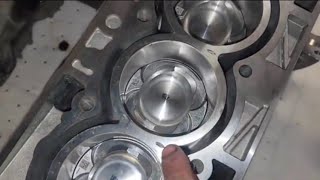
- If pressure drops but no external leak is visible, this strongly suggests an internal leak (coolant intrusion, EGR cooler). Use a borescope through the spark plug holes to look for coolant inside the cylinders. A washed-clean piston top or visible liquid is a definitive sign. 🎬 Watch: Everything you need to know about diagnosing coolant intrusion
- If coolant intrusion is confirmed, the engine long block needs replacement as per TSB 22-2229.
- If no coolant intrusion is found, thoroughly inspect the water pump for leaks or seizure and the EGR cooler for signs of internal leakage (white residue).
- If the cooling system is mechanically sound (holds pressure, no intrusion found), then proceed to test the CHT sensor and its wiring harness for proper resistance and voltage according to the service manual.
Parts You'll Likely Need

- Engine Long Block Assembly
(OEM #6006 (base part number, VIN specific))— This is the official Ford-mandated repair for the common coolant intrusion issue that triggers P1285 on 2.0L EcoBoost engines. Owner forums confirm this is the only long-term solution.
Trusted brands: Motorcraft
OEM price range: $4000-$7000
Aftermarket price range: $3500-$6000 - Water Pump
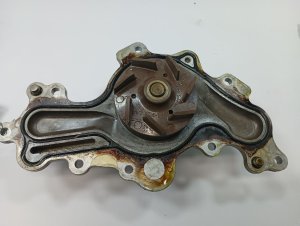
(OEM #EJ7Z-8501-H)— A leaking or seized water pump is a common cause of overheating that can trigger P1285. This is a critical maintenance item that should be inspected whenever overheating occurs.
Trusted brands: Motorcraft, Gates, Bosch
OEM price range: $60-$90
Aftermarket price range: $40-$70
Related Codes That Often Appear With This One
- P1299 — Cylinder Head Overtemperature Protection Active. This code indicates the PCM has initiated fail-safe measures, like cutting fuel to some cylinders, to prevent engine damage. It almost always appears with P1285.
- P0217 — Engine Overtemperature Condition. This is a more general engine overheat code that frequently accompanies the specific P1285 code, as noted in multiple TSBs.
- P0300-P0304 — Random or specific cylinder misfire codes (e.g., P0301, P0302). These are often triggered when coolant intrudes into the cylinders, fouling the spark plugs and preventing proper combustion. They are a key symptom of the coolant intrusion issue.
- P0316 — Misfire Detected on Startup (First 1000 Revolutions). This code is very common with coolant intrusion, as coolant pools in the cylinder overnight and causes a severe misfire when the engine is first started.
Technical Service Bulletins (TSBs) & Recalls
- TSB 22-2229: The primary TSB for 2015-2018 Edge models detailing the coolant intrusion issue and mandating a long block replacement.
- TSB 19-2346 / 19-2208: Earlier versions of the coolant intrusion TSB, also covering the Edge and its platform mates.
- TSB 20-2234: Addresses P1285 on 2019-2020 models, pointing to a leaking EGR cooler or a PCM software issue.
- SSM 48345: Service message identifying the leaking EGR cooler as a cause for overheating and various codes, including P1285.
- TSB 19-2046: Notes that a PCM software update may resolve erroneously stored codes, including P1285, on some 2019 models.
Platform-Specific Known Issues
- 2.0L EcoBoost Coolant Intrusion: On 2015-2018 Edge models, a defect in the engine block design can allow coolant to leak into the cylinders. This is not a simple head gasket failure but a flaw in the block itself. Ford has issued multiple TSBs (e.g., TSB 22-2229) acknowledging this issue, with the prescribed fix being a complete engine long block replacement with a redesigned part. This issue is also the subject of a class-action lawsuit covering the Edge and other Ford/Lincoln models with the same engine.
Mechanic-Grade Diagnostic Values
- Cylinder Head Temperature (CHT) Sensor Voltage — expected: The CHT sensor is a thermistor; its voltage decreases as temperature increases. Ford uses a dual-switching resistor circuit, causing two possible voltage ranges at a given temperature. At ~194°F (90°C), voltage can be ~0.60V (cold end) or ~3.71V (hot end). At ~212°F (100°C), voltage can be ~0.46V (cold end) or ~3.41V (hot end).. Failure: A reading of 5V suggests an open circuit, while 0V suggests a short to ground. Erratic readings or values that don't correlate with the known engine temperature after checking with an infrared thermometer point to a sensor or wiring fault.
- Cylinder Head Temperature (CHT) Sensor Resistance — expected: Resistance decreases as temperature increases. At ~212°F (100°C), resistance should be approximately 2.03 kΩ. At ~194°F (90°C), resistance should be approximately 2.75 kΩ.. Failure: An infinite resistance reading (OL) indicates an open sensor. A zero resistance reading indicates a shorted sensor. Any reading significantly outside the expected range for a given temperature indicates a faulty sensor.
Hidden / Shadow Codes Worth Checking
- Ford Fail-Safe Cooling Strategy Stages: P1285 is Stage 1 of Ford's fail-safe strategy, triggered when the CHT sensor reports a critical temperature, causing the temp gauge to peg high. Stage 2, which sets code P1299, begins actively shutting down fuel injectors in alternating patterns to pump air through the cylinders for cooling. Stage 3 will shut down the engine completely. (see via P1285 and P1299 are standard DTCs visible with most OBD-II scanners. Understanding their relationship as stages of a single strategy is key for diagnosis.)
Scan Tool Commands That Help
- Ford IDS (Integrated Diagnostic System): Datalogger for CHT PID — To monitor the CHT sensor voltage and temperature reading in real-time. This helps determine if the sensor is providing a steady, plausible reading or if it's erratic, indicating a sensor or wiring fault. This is a primary step before condemning the sensor.
- Ford IDS (Integrated Diagnostic System): Power Balance Test — If misfire codes (P0300-P0304) are present with P1285, this bidirectional test can help identify which specific cylinder(s) are misfiring. This is useful for pinpointing the location of a suspected coolant intrusion leak before using a borescope.
Wiring & Ground Locations
- CHT Sensor Connector — On the 2.0L EcoBoost, the CHT sensor is typically located on the cylinder head, often on the rear (firewall side), making access difficult. On some FWD applications, it's on the left-hand (driver's side) of the head, near the bellhousing.. The wiring harness to the CHT sensor can be damaged by heat, pulled too tight during other repairs, or chewed by rodents, causing a false P1285 code. Checking the connector and harness for integrity is a crucial step before replacing the sensor.
- Engine Block Grounds (e.g., G104) — Major ground points are typically found bolted directly to the engine block or chassis near the front of the engine bay. On an Edge, there are key grounding points on the chassis frame rails, accessible after removing the front bumper cover, and on the engine block itself.. A poor engine ground can cause erratic sensor readings across the board, including the CHT sensor. While not a primary cause, verifying that main ground straps are clean and tight is a good practice during any electrical diagnosis.
Real Owner Repair Stories
- Reddit user on r/FordEdge (2017 Ford Edge, 2.0L EcoBoost, ~50,000 miles) — Coolant leak into a cylinder.
❌ Tried (didn't work) Rebuilding the engine.
✅ What actually fixed it The user reported the coolant intrusion issue happened again less than 15,000 miles after the engine was rebuilt. Other users in the thread confirmed that a rebuild is not a solution and that the only permanent fix is a complete long block replacement with the updated engine design, as the flaw is in the engine block itself. - Reddit user on r/FordEdge (2017 Ford Edge, 2.0L EcoBoost, 102,000 miles) — Rough idling, intermittent check engine light, then sudden overheating and misfire on cylinder 1.
❌ Tried (didn't work) Initial regular maintenance., Spark plug replacement.
✅ What actually fixed it The diagnosis confirmed a coolant leak into the engine (coolant intrusion). The dealership quoted $10,000 for a new engine, confirming this was the required fix. The story highlights the classic symptom progression from intermittent issues to catastrophic failure.
OEM Part Supersession History
EJ7Z-8501-B, EJ7Z-8501-D, EJ7Z-8501-G→EJ7Z-8501-H— Standard part evolution and potential minor revisions to improve longevity or manufacturing.
Heads up: All previous versions are superseded by EJ7Z-8501-H, which is the current correct replacement part for this application.
Model Year Variations Within This Range
- 2015-2018: These model years use the original 2.0L EcoBoost block design with a cooling slit between the cylinders. This design is highly prone to the coolant intrusion failure outlined in TSB 22-2229.
- 2019-2020: Starting in mid-2019, Ford began using a redesigned engine block that eliminated the problematic cooling slit, replacing it with drilled passages. While this largely solved the coolant intrusion issue, 2019-2020 models became more susceptible to EGR cooler leaks, which can also cause coolant consumption and lead to overheating codes like P1285, as noted in TSB 20-2234.
Helpful Videos

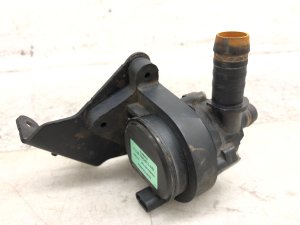
Used OEM Parts in Stock



New Aftermarket Parts Available



The information in this article is provided for general reference and educational purposes only. Vehicle specifications, procedures, and part compatibility can vary by production date, trim level, and region. Always consult your vehicle's factory service manual and verify part numbers before purchasing or performing repairs. Safety-critical components such as airbags, seat belts, and braking systems should be installed by a qualified professional.
- Ford EDGE:
- 🎬 Helpful Videos
- 🛍️ Shop This Part
- What's Unique About the 2015-2020 Ford EDGE
- Diagnostic Flowchart
- Symptoms You May Notice
- Most Likely Causes
- Rare But Worth Checking
- Diagnosis Steps
- Parts You'll Likely Need
- Related Codes That Often Appear With This One
- Technical Service Bulletins (TSBs) & Recalls
- Platform-Specific Known Issues
- Mechanic-Grade Diagnostic Values
- Hidden / Shadow Codes Worth Checking
- Scan Tool Commands That Help
- Wiring & Ground Locations
- Real Owner Repair Stories
- OEM Part Supersession History
- Model Year Variations Within This Range
- 🎟️ Get 5% Off