

P1247 on 2018-2026 Ford Expedition 3.5L EcoBoost: Low Boost Causes and Fixes
On a 2018-2026 Ford Expedition, code P1247 means the turbochargers are not producing enough boost. The most common causes are an air intake restriction (like a clogged or even wet air filter), a boost leak from a loose hose, or a faulty wastegate control solenoid. Always check the air filter first before attempting more complex repairs.
- P1247 means your Expedition's engine isn't making the boost it should, resulting in a major loss of power.
- Always start your diagnosis by inspecting the engine air filter for dirt and moisture. It's the easiest and one of the most likely fixes.
- If the filter is fine, your next step is to look for boost leaks. Check all the large air hoses connected to the turbo system for loose clamps or cracks.
- The small plastic vacuum lines and the wastegate control solenoid are also common failure points that are relatively inexpensive to fix.
- Do not assume the expensive turbochargers have failed. The problem is almost always a simpler, supporting component.
What's Unique About the 2018-2026 Ford Expedition
The 3.5L EcoBoost V6 relies entirely on its twin-turbo system for power and efficiency. While the Expedition itself doesn't have a widely documented design flaw leading to P1247, the identical engine in the Ford Transit van is famous for setting this code due to a water leak into the air filter housing (TSB 19-2091). This TSB details how undesired water entry can saturate the air filter, causing a severe restriction and triggering P1247, among other codes. Therefore, any air intake restriction has a significant impact and should be the first suspicion, especially after heavy rain. The complexity of the twin-turbo setup, with its numerous hoses, electronic wastegates, and control solenoids, also provides multiple potential failure points for boost leaks or control issues.
Symptoms You May Notice
- Check Engine Light is on
- Significant loss of engine power and sluggish acceleration
- Noticeable turbo lag or a feeling that the turbos are not working
- Poor fuel economy
- Hesitation when trying to accelerate
- The vehicle may enter 'limp mode' with severely restricted power
- Audible hissing or whistling sound from the engine bay during acceleration if a boost leak is present
- Replacing the turbochargers without first performing a thorough diagnosis. The cause is much more likely to be a cheaper, simpler component like a filter, hose, or solenoid.
- Replacing MAP or MAF sensors without checking for physical air restrictions or boost leaks first.
Most Likely Causes
- Restricted Air Intake / Clogged or Wet Air Filter 🔴 High Probability A severely clogged air filter will starve the turbos of air, preventing them from building boost. On the related Ford Transit with the same engine, a cowl leak can soak the filter with water, causing a severe restriction and triggering P1247, as documented in TSB 19-2091. While not a specific TSB for the Expedition, the shared engine architecture makes this a high-probability cause, especially after heavy rain or a car wash.
How to confirm: Open the air filter housing and visually inspect the engine air filter. Check for excessive dirt, debris, or any signs of moisture or water saturation. A filter that is saturated with water or ice is a direct cause.
Typical fix: Replace the engine air filter. If the filter is wet, you must identify and fix the source of the water intrusion, which may be a poorly sealed airbox or a blocked cowl drain issue.
Est. part cost: $20-$60 - Boost Leak (Charge Air Cooler System) 🟡 Medium Probability The pressurized air path from the turbos to the engine involves multiple sections of hose, tubing, and clamps. Over time, these connections can loosen, or plastic/rubber components can crack, allowing pressurized boost to escape. Forum users often report finding a boot that has popped off or a cracked plastic tube.
How to confirm: Visually inspect all intake ducting from the turbochargers to the throttle body for cracks, loose clamps, or hoses that have popped off. A smoke test is the most effective way to find small leaks by pressurizing the system with smoke and watching where it escapes. Listen for audible hissing sounds during acceleration.
Typical fix: Tighten the loose clamp or replace the cracked hose/coupler. Ensure all connections are secure.
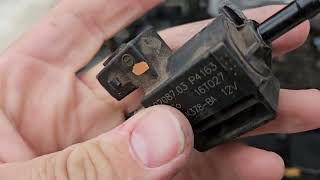
Est. part cost: $10-$200 - Faulty Turbocharger Wastegate Control Solenoid 🟡 Medium Probability This solenoid manages the vacuum/pressure that controls the turbo wastegates. The plastic nipples on the solenoid can become brittle with age and engine heat, causing them to crack or break, leading to a control leak and loss of boost. This is a very common failure point across many Ford EcoBoost platforms.
How to confirm: Visually inspect the solenoid and its connected vacuum lines for any physical damage, especially cracks on the plastic ports where hoses connect. You can also test the solenoid's function with a capable scan tool or a multimeter.
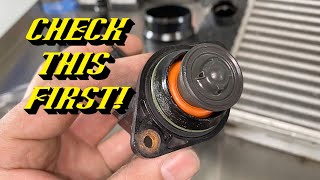
Typical fix: Replace the wastegate control solenoid assembly (OEM Part # BL3Z-9K378-A or superseding numbers) 🎬 Watch: How to replace the EcoBoost wastegate control solenoid and any damaged vacuum lines.
Est. part cost: $30-$70 - Faulty MAP (Manifold Absolute Pressure) Sensor ⚪ Low Probability
How to confirm: With the key on but the engine off, use a scan tool to compare the MAP sensor reading to the BARO (Barometric Pressure) reading. They should be nearly identical. If they differ significantly, or if the live data is erratic or flat during a test drive, the sensor is likely faulty. Some owners have replaced the MAP sensor to resolve the code.
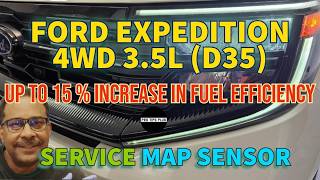
Typical fix: Replace the MAP sensor. It is often recommended to clean the sensor with dedicated MAF/sensor cleaner first as a simple diagnostic step. The sensor for 2021+ models is listed under OEM part number KK2Z-9F479-A. 🎬 See how to service a bad MAP sensor
Est. part cost: $40-$100
Rare But Worth Checking
- Mechanically Stuck Wastegate: The wastegate door or actuator arm could physically stick in a partially open position due to carbon buildup or mechanical failure, preventing the turbo from building full boost.
- Failing Turbocharger: In rare cases, especially on higher mileage vehicles, the turbocharger itself may be worn out (e.g., bearing failure) and unable to spin fast enough to generate the commanded boost pressure.
- Cracked Exhaust Manifold or Leaking Up-Pipes: A leak in the exhaust system before the turbocharger can reduce the exhaust gas energy available to spin the turbine, resulting in lower boost.
Diagnosis Steps
- Read the code with an OBD-II scanner to confirm P1247 is present. Note any other codes, as they can help pinpoint the root cause (e.g., P1548 points to the air filter).
- Inspect the Engine Air Filter: This is the most crucial first step. Open the airbox and check the filter for excessive dirt or any signs of moisture. A wet filter is a known cause. Replace the filter if it is dirty or wet.
- Visually Inspect the Intake and Charge Air System: Carefully check all hoses, pipes, and clamps from the airbox to the turbos and from the turbos through the intercooler to the throttle body. Look for anything disconnected, cracked, or loose. Pay close attention to the plastic tubing and rubber boots at connection points.
- Inspect Wastegate Control System: Locate the wastegate control solenoid (Part # BL3Z-9K378-A or similar). Check its vacuum lines for cracks or breaks. Inspect the solenoid's plastic ports for damage, as they are known to become brittle and break.
- Perform a Smoke Test: If no visual leaks are found, perform a smoke test on the charge air system to pinpoint any hard-to-see leaks. This is the definitive test for boost leaks.
- Test the MAP Sensor: Using a scan tool, monitor the Manifold Gauge Pressure (MGP) PID during a wide-open throttle run in a safe location. Compare the actual boost pressure to the desired boost pressure PID. A significant and persistent difference confirms an underboost condition. With the engine off, compare the MAP reading to the BARO reading; they should be almost identical.
- Check Wastegate Actuator Function: With the engine running, use a vacuum pump or capable scan tool to command the wastegate actuators and verify they move freely through their full range of motion without sticking.
- If all else fails, the issue may be with the turbocharger itself or a pre-turbo exhaust leak, which may require professional diagnosis.
Parts You'll Likely Need
- Engine Air Filter
(OEM #FA1883 (Motorcraft))— A clogged or wet air filter is a very common cause of air restriction that leads to a low boost condition.
Trusted brands: Motorcraft, Wix, Fram
OEM price range: $30-$50
Aftermarket price range: $20-$40
Related Codes That Often Appear With This One
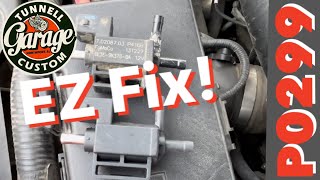
- P0299 — This is a generic code for 'Turbo/Supercharger Underboost Condition'. P1247 is the Ford-specific equivalent, 🎬 Watch: Quick diagnostic steps for Ford EcoBoost underboost codes and they often appear together to report the same fault.
- P0171/P0174 — If there is a boost leak, unmetered air can enter the system or measured air can escape, confusing the PCM's fuel calculations and potentially leading to lean condition codes. TSB 19-2091 also lists these codes as potential companions to P1247 in a water intrusion scenario.
- P1548 — This code indicates an 'Engine Air Filter Restriction'. It can be set alongside P1247, especially in cases of a water-soaked or extremely clogged air filter, as noted in TSB 19-2091.
- P00BD — This code for 'Mass or Volume Air Flow 'A' Circuit Range/Performance - Air Flow Too High' is also mentioned in TSB 19-2091 and can point to a water-damaged MAF sensor giving erratic readings along with the low boost condition.
Platform-Specific Known Issues
- While no specific TSB for the Expedition exists, the 3.5L EcoBoost engine in other Ford platforms is known to trigger P1247 from a water-saturated air filter. Owners should be especially vigilant about checking the air filter after heavy rain or car washes.
Mechanic-Grade Diagnostic Values
- Turbocharger Wastegate Control Solenoid Resistance — expected: 10 - 40 Ohms. Failure: A reading of 'OL' (Over Limit/infinite resistance) indicates an open circuit, while a reading near 0 Ohms indicates a shorted coil. Either requires solenoid replacement.
- Wastegate Control Solenoid Connector Power Pin Voltage (Key On, Engine Off) — expected: ~12 Volts (Battery Voltage). Failure: A reading significantly below 11V points to a fault in the power supply circuit, such as a chafed wire, blown fuse, or corroded ground connection.
- Wastegate Solenoid Voltage at Idle (Warm Engine) — expected: 0.5 - 1.0 V. Failure: Voltage remains high (>4.5V) or does not fluctuate during a bidirectional test, indicating a failed solenoid or circuit issue.
- MAP Sensor Signal Wire (Key On, Engine Off) — expected: Provides a 5V reference voltage from the PCM. The return signal corresponds to atmospheric pressure.. Failure: No 5V reference, or the signal voltage does not match the BARO sensor reading.
Scan Tool Commands That Help
- Ford IDS, FORScan, or equivalent: Wastegate Solenoid Actuation Test / Output State Control — Use this bidirectional command to actively cycle the wastegate solenoid. You should hear an audible clicking from the solenoid and see voltage fluctuate on a multimeter or on the scan tool's live data PIDs. A lack of clicking or voltage change confirms a failure in the solenoid or its control circuit.
- Ford IDS, FORScan, or equivalent: Monitor PIDs: 'Manifold Gauge Pressure' (MGP) vs. 'Desired Boost Pressure' — During a test drive under load (e.g., wide-open throttle), compare the actual boost (MGP) to the PCM's target boost. A large, sustained discrepancy where actual is much lower than desired confirms the underboost condition reported by P1247 and helps rule out a simple sensor error.
Wiring & Ground Locations
- GD200 — On the back side of the left (driver's side) cylinder head.. This is a primary ground point for the engine control harness. A loose or corroded connection here can cause intermittent and difficult-to-diagnose low voltage faults for multiple sensors and actuators, including the wastegate control solenoid, potentially leading to P1247 or related codes like P0245.
- Wastegate Control Solenoid Connector — The solenoid is typically mounted on the intake manifold or firewall, with three vacuum/pressure lines and one electrical connector.. This is the primary point for electrical testing. The connector pins can corrode or the harness can chafe nearby, especially on the corner of the driver's side cylinder head, causing a short or open circuit for the solenoid.
- MAP Sensor Connector — Located on the intake manifold, typically near the throttle body.. This connector provides the PCM with the manifold pressure reading. A poor connection here will cause the PCM to receive incorrect data, which can lead to an erroneous P1247 code. The circuit consists of a 5V reference, a ground, and a signal return wire to the PCM.
Real Owner Repair Stories
- Ford Transit USA Forum user (2016 Ford Transit 3.5L EcoBoost (Shared Engine)) — Check engine light on, code P1247, vehicle in limp mode with severely reduced power.
❌ Tried (didn't work) Initial diagnosis from a shop suggested a bad turbocharger.
✅ What actually fixed it The owner found the engine air filter was completely saturated with water. Replacing the air filter immediately resolved the performance issues. The owner then performed the fix from TSB 19-2091 (installing a cowl shield) to prevent it from happening again. - Ford Truck Enthusiasts Forum user (2001 F250 7.3L (Different engine, but same P1247 code logic)) — Pending P1247 code that would eventually trigger a CEL, but with no noticeable loss of power or drivability issues.
❌ Tried (didn't work) Visual inspection of boots and clamps., Monitoring boost gauge which showed 13-14 PSI at WOT., Unplugging ICP sensor.
✅ What actually fixed it A different truck with the same issue had its turbo replaced, which fixed the problem. Upon inspecting the old turbo, it was found to be missing blades on the exhaust side turbine wheel, which was not visible externally. This caused just enough of a boost deficit to set the code under certain conditions without causing a major power loss.
"I Checked Everything" — The Actual Cause
- A known edge case on the related Ford Transit with the same 3.5L EcoBoost is a cracked Turbocharger Coolant Control Valve (TCCV). This valve is part of the intake/charge air system. A hairline crack can open under heat and pressure, creating a boost leak that is extremely difficult to find with a cold engine smoke test. The crack may not be visible without removing the component for close inspection.
OEM Part Supersession History
AA5Z-9K378-A→BL3Z-9K378-A— Unknown, likely an internal revision for durability or material change to address the common issue of cracked nipples.
Model Year Variations Within This Range
- 2018-2026 (Gen 2 3.5L EcoBoost): The 2018+ Expedition uses the second-generation 3.5L EcoBoost. Compared to the first generation (pre-2018), this engine features a dual-injection system (port and direct injection) which reduces carbon buildup on intake valves, a common issue on Gen 1. It also uses larger turbochargers with electronic stepper-motor wastegates for more precise boost control, moving away from the vacuum-actuated wastegates of the past.
- 2022-2026 (Refresh): The 2022 model year refresh introduced a high-output 'Stealth Edition Performance Package' option, which boosted horsepower to 440 hp through different PCM tuning. While the fundamental turbo system hardware is the same as the standard output engine, the desired boost pressure targets in the PCM are higher, which could theoretically make the system more sensitive to minor leaks or restrictions.
Diagnostic Flowchart
Other Known Issues on This Vehicle
Issues unrelated to this code that are worth knowing about as an owner of this generation:
- 3.5L EcoBoost Cam Phaser Rattle 🔴 High — Very common, especially on 2017-2020 models. Typically presents as a loud rattle or knocking sound on cold starts. (Ref: Customer Satisfaction Program 21N03 and TSB 21-2119 were issued, extending warranty coverage for this specific repair.)
- 10R80 Transmission Harsh/Erratic Shifting 🟠 Medium — Widespread complaints of harsh shifting, clunking, jerking, and hesitation between gears. Subject of multiple class-action lawsuits. (Ref: TSB 22-2428 addresses a common internal failure of the CDF clutch drum bushing, which is a primary cause of these symptoms.)
- Brake Master Cylinder Leaks 🔴 High — A recall was issued for potential leaks from the brake master cylinder into the brake booster, which can lead to reduced front brake function. (Ref: NHTSA Recall 24V-099 (Ford #18S17) affects 2018 models.)
- HVAC Blend Door Failure 🟡 Low — Some vehicles may experience a loss of heating or cooling due to a binding temperature blend door inside the dashboard. (Ref: TSB 22-2133 (supersedes 21-2199) provides a repair procedure for related F-series trucks, indicating a known issue with the mechanism.)
Used vs. New Parts: Buying Guide for This Vehicle
When a used part is the smart pick: For structural, non-moving parts like charge air cooler pipes or intake manifold sections, a used part from a reputable salvage yard is a reasonable choice, provided it is inspected for cracks or damage. These parts have a low failure rate unless physically damaged in a collision.
Donor-vehicle mileage cap: roughly under 80000 miles for the part to have meaningful remaining life.
What to inspect on the donor part:
- For pipes/hoses: Check for any signs of cracking, brittleness, or oil saturation. Squeeze rubber couplers to ensure they are still pliable.
- For hard parts: Inspect mounting points for damage and look for hairline cracks, especially on plastic components.
- Verify the donor vehicle was not in a front-end collision, which could have caused unseen stress fractures in charge air system components.
OEM-only on this vehicle (don't cheap out):
- Turbocharger Wastegate Control Solenoid: While aftermarket versions exist, the OEM part (Motorcraft) is highly recommended due to the frequency of failure and the critical role it plays. Aftermarket solenoids can have incorrect calibration or lower-quality materials.
- MAP Sensor: Given its critical role in engine management, using an OEM (Motorcraft) or a high-quality OEM supplier (like Bosch) is the safest bet to avoid inaccurate readings that could lead to further misdiagnosis.
Aftermarket brands forum-validated for this vehicle:
- Engine Air Filter: Motorcraft (OEM), Wix, Fram, K&N are all well-regarded brands.
- Intercoolers/Piping: Mishimoto is a popular aftermarket brand for upgraded intercoolers and piping, often chosen to prevent issues like condensation buildup common on earlier EcoBoost designs.
Brands owners have reported issues with on this vehicle:
- Avoid unbranded, 'white-box' electronic sensors and solenoids from online marketplaces. These often lack proper calibration and quality control, and can fail quickly or provide incorrect data to the PCM, making diagnosis even more difficult.
Real Owner Stories
Aggregated from forums and TSBs cited above. Mileages and costs reflect what owners reported in those sources.
2021 Ford F-150 3.5L EcoBoost
Symptoms: Low boost condition immediately after pulling the engine to perform an oil pan gasket installation.
What fixed it: Inspection revealed a boost leak caused by a disconnected boot or a bad seal at the turbocharger during reassembly.
Source hint: https://www.ford-trucks.com/forums/1663914-p1247-low-boost-after-pulling-engine-for-oil-pan-gasket-install.html
2011 Ford F-150 3.5L EcoBoost
Symptoms: Vehicle throwing P1247 code with discussions centered around boost leaks and potential MAP sensor issues.
What fixed it: Diagnostic focus on checking for boost leaks in the charge air system and verifying MAP sensor operation.
Source hint: https://www.ford-trucks.com/forums/1110344-p1247-code.html
Ford F-150 3.5L EcoBoost
Symptoms: Owner experiencing both P0299 and P1247 underboost codes simultaneously.
What fixed it: The community recommended checking the wastegate control solenoid and inspecting for boost leaks in the intake ducting.
Source hint: https://www.f150forum.com/f38/p0299-p1247-underboost-368880/
Related OBD-II Codes
Frequently Asked Questions
Does TSB 19-2091 apply to my Ford Expedition?
What specific part number should I look for if my wastegate control solenoid is failing?
Can a car wash actually trigger a P1247 code on my 3.5L EcoBoost?
Is there a specific MAP sensor part number for the 2021+ Ford Expedition models?
Could my P1247 code be related to the common cam phaser rattle on the 2018-2020 Expedition?
How can I confirm if the MAP sensor is the cause of my low boost?
Helpful Videos
We Have This Part in Stock


The information in this article is provided for general reference and educational purposes only. Vehicle specifications, procedures, and part compatibility can vary by production date, trim level, and region. Always consult your vehicle's factory service manual and verify part numbers before purchasing or performing repairs. Safety-critical components such as airbags, seat belts, and braking systems should be installed by a qualified professional.
- Ford Expedition:
- 🎬 Helpful Videos
- 🛍️ Shop This Part
- What's Unique About the 2018-2026 Ford Expedition
- Symptoms You May Notice
- Most Likely Causes
- Rare But Worth Checking
- Diagnosis Steps
- Parts You'll Likely Need
- Related Codes That Often Appear With This One
- Platform-Specific Known Issues
- Mechanic-Grade Diagnostic Values
- Scan Tool Commands That Help
- Wiring & Ground Locations
- Real Owner Repair Stories
- "I Checked Everything" — The Actual Cause
- OEM Part Supersession History
- Model Year Variations Within This Range
- Diagnostic Flowchart
- Other Known Issues on This Vehicle
- Used vs. New Parts: Buying Guide for This Vehicle
- Real Owner Stories
- 2021 Ford F-150 3.5L EcoBoost
- 2011 Ford F-150 3.5L EcoBoost
- Ford F-150 3.5L EcoBoost
- Related OBD-II Codes
- Frequently Asked Questions
- 🎟️ Get 5% Off