

OBD-II Code P1548: Engine Air Filter Restriction
What P1548 means, why it triggers, and how to fix it
- For Ford vehicles, P1548 indicates a severe engine airflow restriction, fixable 80% of the time by replacing a clogged $20 engine air filter.
- On 2015-2018 Ford Transit vans, P1548 is the primary symptom of a known windshield cowl water leak that requires TSB 19-2091 to permanently fix.
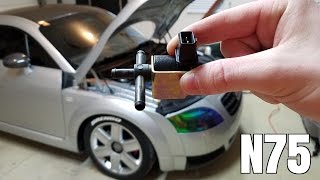
- The P1548 code definition changes by brand; on Audi and VW vehicles, it points to a failed N75 turbo boost control valve, not an air filter issue.
- Driving with an active P1548 code drops fuel economy by up to 15% and risks drawing debris into the turbocharger, causing upwards of $2,000 in damage.
What Does P1548 Mean?

P1548 means the Powertrain Control Module (PCM) detects a significant restriction in the engine's air intake system. It uses an airflow rationality check, comparing signals from the Mass Airflow (MAF) and Manifold Absolute Pressure (MAP) sensors against expected engine RPM. During hard acceleration, if intake manifold pressure is significantly lower than calculated for that airflow, the computer concludes something is blocking the air and triggers this code.
Technical definition: P1548 is a manufacturer-specific code. For Ford, Lincoln, and Mercury, it means 'Engine Air Filter Restriction.' The PCM sets this code when Manifold Absolute Pressure (MAP) drops below a calibrated threshold during high-demand conditions, like wide-open throttle. For Audi, VW, GM, and BMW, this code signifies entirely different problems.
Can I Drive With P1548?
Yes, But With Caution. Yes, but limit driving to short, necessary trips. The engine will experience reduced power, poor acceleration, and bad fuel economy. Continuing to drive with a water-saturated filter risks drawing moisture or debris into the turbocharger, causing repairs exceeding $2,000. A persistently rich or lean condition caused by the restriction damages the catalytic converter over time, adding a potential $800-$2,500 repair cost.
Common Causes

- Extremely Dirty or Clogged Engine Air Filter (Very Common) — The most frequent cause. The air filter becomes saturated with dust, dirt, and debris, physically blocking air from entering the engine.
- Water-Saturated Air Filter from Cowl Leak (Ford Transit) (Very Common) — On 2015-2018 Ford Transit vans built before July 24, 2018, a design flaw allows water to leak from the windshield cowl directly onto the air filter, causing it to soak, swell, and severely restrict airflow. In cold climates, this water freezes into a solid block of ice. Addressed by Ford TSB 19-2091.
- Obstruction in the Air Intake Tract (Common) — Foreign objects like leaves, plastic bags, shop rags, or rodent nests sucked into the air intake tube block airflow before or after the filter.
- Dirty or Faulty Mass Airflow (MAF) Sensor (Less Common) — A MAF sensor coated in oil or grime sends inaccurate, low airflow readings to the PCM. The computer misinterprets this bad data as an airflow restriction. Water contamination from the Transit cowl leak frequently causes MAF failure.
- Improper Aftermarket Air Intake (Less Common) — Poorly designed 'cold air' intakes, excessively oiled filters, or incorrect installations alter airflow dynamics or contaminate the MAF sensor, causing the PCM to falsely flag a restriction.
- Sticking EGR Throttle Plate or Clogged DPF (Diesel) (Rare) — On diesel engines like the Ford 6.7L Power Stroke, a sticking EGR throttle plate fails to open correctly, creating a restriction. A severely clogged Diesel Particulate Filter (DPF) creates excessive backpressure that skews the intake airflow model.
- Collapsed or Damaged Air Intake Hose (Rare) — The flexible rubber or plastic hose connecting the air filter box to the engine softens with age and collapses inward under engine vacuum during hard acceleration, pinching off airflow.
- Software Anomaly (Very Rare) — On certain models, like the 2019 Ford F-750 6.7L, the code triggers during heavy acceleration despite a clean filter, indicating the PCM's calibrated fault threshold is too sensitive.
Symptoms

- Reduced Engine Power and Sluggish Acceleration — The vehicle feels weak, slow to respond, and enters a 'limp mode' with severely limited power. This is the most common symptom.
- Check Engine Light is On — The Malfunction Indicator Lamp (MIL) illuminates on the dashboard.
- Poor Fuel Economy — The engine works harder and runs on a richer fuel mixture to compensate for the lack of air, increasing fuel consumption.
- Engine Hesitation, Stuttering, or Misfires — Under load, the engine stumbles, misfires, or feels jerky due to the incorrect air-to-fuel mixture caused by the restriction.
- Unusual Sucking or Whooshing Noises — A loud sucking or whistling sound emits from the engine bay during acceleration as the engine struggles to pull air through the blockage.
- Black Smoke from Exhaust (Especially Diesel) — A severe lack of air causes an overly rich fuel condition, resulting in black, sooty exhaust smoke on diesel engines.
Diagnostic Flowchart
Tap your situation to follow the diagnostic path that matches what you're seeing on this code.
Common Fixes & Costs
- Replace Engine Air Filter — Parts: $15-$60, Labor: $25-$75 (parts and labor), ~0.3 hr book time (DIY)
- Perform Ford Transit TSB 19-2091 (Cowl Leak Repair) — Parts: $50-$200 (includes new filter, updated cover, seals, and deflectors), Labor: $90-$200 (labor at a repair shop, based on 0.9 hr standard), ~0.9 hr book time (Professional)
- Clean Mass Airflow (MAF) Sensor — Parts: $10-$15 (cost of cleaner spray only), Labor: $60-$120 (if done by a shop), ~0.4 hr book time (DIY)
- Replace Mass Airflow (MAF) Sensor — Parts: $90-$350 (part cost only), Labor: $50-$100 (labor at a repair shop), ~0.7 hr book time (Intermediate)
- Replace Turbocharger Boost Control (N75) Valve (Audi/VW) — Parts: $45-$120 (aftermarket or OEM part cost), Labor: $100-$180 (labor at a repair shop), ~0.8 hr book time (Intermediate)
Used vs. New Parts: Buying Guide
When a used part is worth it: Buying used electronic parts like a MAF sensor is rarely recommended. Air filters must never be purchased used.
Donor-vehicle mileage cap: roughly under 50000 miles for the part to have meaningful remaining life.
Donor quality checklist:
- Verify the donor vehicle was in a collision and not scrapped for engine or electrical problems.
- Match the part number exactly; sensors can be visually identical but calibrated differently.
- Inspect the electrical connector pins for corrosion or damage.
Decision logic:
- If The part is an air filter → Always buy new. The cost is low and engine damage risk is high.
- If The part is a MAF sensor → Buy a new OEM or high-quality aftermarket part. Reliability outweighs the savings.
- If The budget is extremely tight → A used MAF sensor from a low-mileage donor is acceptable, but carries a high risk of premature failure.
Warranty tradeoff: Used parts typically have a 30-90 day warranty at best. New aftermarket sensors often come with a 1-year to limited lifetime warranty. New OEM parts carry a 1-2 year warranty.
Worst-case if a used part fails: $150-$300 if a used MAF sensor is dead on arrival or fails quickly, requiring repeat labor costs plus the price of another part.
What Happens If You Wait — Timeline
- 0-1 month: Code sets. Driver notices sluggish acceleration and a drop in fuel economy. No permanent damage yet. (MPG impact: 5-10%% · Added cost: $20-$60 in wasted fuel.)
- 1-3 months: Air starvation forces the turbocharger to work harder, increasing heat. Incorrect air/fuel ratio stresses the catalytic converter. (MPG impact: 10-15%% · Added cost: $50-$150 in wasted fuel and accelerated turbo/exhaust wear.)
- 3-6 months: Filter media tears under high vacuum. Wet filters grow mold and disintegrate. Debris contaminates the MAF sensor. (MPG impact: 15-20%% · Added cost: $200-$500 (potential MAF sensor replacement and continued fuel loss).)
- 6+ months: Catastrophic failure. Filter collapses, pulling debris directly into the turbocharger or engine, destroying the compressor wheel or scoring cylinder walls. (MPG impact: 20-30%% · Added cost: $2,000-$8,000+ (turbocharger replacement or full engine rebuild).)
Cost of Not Fixing It
- 0-1 month: Reduces fuel economy by up to 10-15%, causing sluggish performance and hesitation. (Added cost: $20-$60 per month in extra fuel costs, depending on driving habits.)
- 1-6 months: A persistently rich or lean air/fuel mixture overheats and destroys the catalytic converter. On turbo engines, air starvation strains the turbocharger. (Added cost: $800-$2,500 for catalytic converter replacement or $1,500-$2,500+ for turbocharger replacement.)
- 6+ months: The filter tears or collapses, pulling dirt directly into the engine. This scores cylinder walls and damages pistons, leading to permanent engine failure. (Added cost: $4,000-$8,000+ for a used or rebuilt engine replacement.)
Diagnosis Steps

- Visually Inspect the Engine Air Filter
Open the air filter housing and remove the filter. Check if it is wet, black with dirt, or full of debris. Hold it up to a light; if you cannot see light through it, it is clogged. This is the simplest check and most common fix.
Tools: Screwdriver or basic hand tools (Beginner) - Check for Water Intrusion (Especially Ford Transit)
If you own a 2015-2018 Ford Transit, check for water, ice, or rust stains in the airbox. A wet, swollen, or disintegrating filter confirms the cowl leak issue detailed in TSB 19-2091.
Tools: Flashlight (Beginner) - Inspect the Air Intake System for Obstructions
With the filter removed, use a flashlight to look down into the airbox and intake tubing for foreign objects like leaves, plastic, or animal nests.
Tools: Flashlight (Beginner) - Inspect the Air Intake Hose
Squeeze the flexible intake hose running from the airbox to the engine. Check for soft spots or visible cracks. Have a helper rev the engine in Park while you watch the hose to see if it collapses inward under vacuum.
Tools: Hands and a helper (Intermediate) - Clean the Mass Airflow (MAF) Sensor
Remove the MAF sensor from the intake tube. Spray the delicate sensor wires with dedicated MAF sensor cleaner. Do NOT touch the wires or use brake cleaner, which destroys the sensor.
Tools: Screwdriver/Torx driver, MAF sensor cleaner spray (Intermediate) - Analyze Scan Tool Live Data (Pro Tip)
Connect an OBD-II scanner and monitor live data. At a warm idle, the MAF (g/s) PID should read 1-1.5 times the engine's displacement in liters (e.g., a 3.5L engine reads 3.5-5.0 g/s). Perform a hard acceleration. If the actual MAF reading is significantly lower than the 'Desired MAF' value, it confirms a physical restriction.
Tools: Advanced OBD-II Scan Tool (Advanced) - Test MAF Sensor Voltage with a Multimeter (Pro Tip)
With the MAF sensor connected, back-probe the signal wire with a multimeter. Key on, engine off: voltage should be near zero. Warmed-up idle: 0.8-1.2 volts. Slowly increase RPM: voltage must rise smoothly without dropouts, reaching 3.5-4.5 volts at wide-open throttle. Erratic voltage means a bad sensor.
Tools: Multimeter, back-probe pins (Advanced) - Test N75 Valve Resistance (Audi/VW)
For Audi/VW vehicles where P1548 indicates an N75 valve fault, disconnect the electrical connector from the N75 valve. Measure resistance between the two pins with a multimeter. A healthy valve reads 25-35 Ohms. Infinite resistance indicates a failed valve.
Tools: Multimeter (Advanced) - Check for Exhaust Restrictions
A clogged catalytic converter or DPF causes extreme backpressure that the PCM misinterprets as an intake restriction. This usually triggers exhaust or turbo codes. A professional must perform an exhaust backpressure test to confirm.
Tools: Exhaust backpressure gauge (Advanced)
When This Code Triggers (Freeze-Frame Conditions)
- Engine Coolant Temp: 170-210°F (77-99°C) (The code sets when the engine is fully warmed up to ensure accurate sensor readings.)
- Engine RPM: 2500-4500 RPM (Triggers during moderate to heavy acceleration when air demand is high.)
- Engine Load: 60-100% (Triggers under high load conditions, like climbing a hill or wide-open throttle acceleration.)
- Vehicle Speed: 40-70 mph (64-112 kph) (Often occurs at highway speeds when accelerating to pass or merge.)
Related Codes
- P0171 / P0174 — System Too Lean. A restriction causes a faulty MAF reading, making the computer under-calculate fuel. O2 sensors detect excess oxygen. P1548 is the likely root cause.
- P0172 / P0175 — System Too Rich. A severely clogged filter reduces oxygen, creating a rich fuel mixture.
- P00BD — MAF Circuit Air Flow Too High. Mentioned in Ford's Transit TSB. Seeing P00BD and P1548 together strongly suggests a water-damaged MAF sensor giving erratic readings.
- P1247 — Turbocharger Boost Pressure Low. A major air restriction prevents the turbo from building commanded boost pressure. Listed in Ford Transit TSB 19-2091.
Climate & Environmental Factors
- High Humidity and Rain: The primary trigger for P1548 on 2015-2018 Ford Transits. Rainwater enters the intake via a cowl design flaw, saturating the paper air filter.
- Cold/Freezing Temperatures: Water leaked into the Ford Transit airbox turns to ice, creating a solid blockage. For F-Series Super Duty trucks, Ford issued TSB SSM 51648 for ice forming in the intake below -22°F (-30°C).
- High Altitude: Lower air density reduces Manifold Absolute Pressure (MAP). A partially clogged filter at high altitude drops the MAP reading below the fault threshold faster than at sea level.
How to Talk to a Mechanic About This Code
Say this: "I have a P1548 code. On my Ford, this means 'Air Filter Restriction.' Please inspect the air filter for dirt, water, or ice before checking sensors. If it's a Transit, check for the TSB 19-2091 water leak. If it's an Audi/VW, check the N75 valve circuit."
This proves you researched the issue and directs the technician to low-cost fixes first, preventing unnecessary diagnostic fees or sensor upsells.
Avoid saying:
- 'Just fix whatever's wrong'
- 'My check engine light is on, can you look at it?' (This is too vague and invites a wide-ranging, expensive diagnostic process).
- 'Whatever you recommend'
Questions to ask before authorizing the repair:
- For a Ford: Was the air filter dirty, wet, or clean? If wet, can you quote the TSB 19-2091 repair?
- For Audi/VW: What was the N75 valve resistance, and is the wiring harness intact?
- If recommending a MAF sensor, what live data readings led to that conclusion?
- Can you provide a written estimate with a clear breakdown of parts and labor costs?
- What is the warranty on this specific repair and the parts used?
Where to Take It: Dealer vs Independent vs Chain
- Dealer:
Recommended for the Ford Transit TSB or if the code is on a non-Ford vehicle (Audi, VW, GM) with complex manufacturer-specific definitions.
Best for: Vehicles under warranty., Performing manufacturer-specific TSBs like the Ford Transit water leak (TSB 19-2091)., Diagnosing manufacturer-specific code definitions (e.g., Audi/VW N75 valve or GM A/C circuit issues).
Downsides: Typically higher labor rates (1.5-2x) compared to independent shops., May be quicker to replace parts like the MAF sensor assembly rather than attempting a lower-cost cleaning first. (Typical cost: +50% vs. baseline) - Independent Shop:
Best fit for the most common cause on a Ford (clogged air filter). Provides the best balance of cost and quality for straightforward diagnosis.
Best for: Out-of-warranty Ford vehicles with a standard P1548 'Air Filter Restriction' code., Simple fixes like air filter replacement, MAF sensor cleaning, or intake inspection., Owners who have a trusted relationship with a local mechanic.
Downsides: Quality and expertise can vary greatly; vet shops by reviews and ASE certifications., May be less familiar with brand-specific TSBs or the alternate meanings of P1548 on German/GM vehicles. (Typical cost: +0% vs. baseline) - Chain Shop:
Acceptable ONLY for a simple air filter change. AVOID for further diagnosis, especially on Ford Transits, Audi/VW, or GM vehicles.
Best for: Simple, direct replacement of the engine air filter if you are unable to do it yourself.
Downsides: High pressure to upsell services; may push for a new MAF sensor or throttle body service when only a filter is needed., Technician skill varies dramatically; unlikely to correctly diagnose the Ford Transit TSB or the specific meaning of P1548 on non-Ford brands. (Typical cost: -10% vs. baseline)
When to Walk Away From the Repair
If the estimated repair cost exceeds 40-50% of the car's current private-party value, pause and consider alternatives.
- Car worth $4000, fix is $350: Fix it. The cost for a typical P1548 fix (filter, MAF clean, or even the Transit TSB) is very low relative to the car's value.
- Car worth $15000, fix is $2500: Walk away threshold applies. This cost implies the code was ignored and led to turbocharger failure. Get a second opinion before authorizing.
- Car worth $2500, fix is $1500: Walk away. The repair cost is over 50% of the vehicle's value. This likely indicates severe secondary damage.
What Scan Tool You Need for This Code
Minimum: A scanner that can read manufacturer-specific codes and display live sensor data, particularly for the MAF and MAP sensors.
A basic $20 code reader only shows the P1548 code. It lacks the live data (airflow, pressure) needed to determine if the restriction is real or a sensor is lying.
Budget: BlueDriver Pro or Foxwell NT301 (~$100) — Reads Ford-specific codes and streams live MAF/MAP data to verify sensor health.
Mid-range: Autel MaxiCheck MX808S or Innova 5610 (~$350) — Offers bidirectional controls to command the Audi/VW N75 valve to cycle, confirming if it is stuck.
Professional: Autel MaxiCOM MK906BT or XTOOL D8S (~$500-1200) — Provides dealer-level diagnostics. Overkill for a simple Ford P1548, but invaluable for complex Audi/VW or GM electrical faults.
Rent vs buy: For a one-time diagnosis, many auto parts stores (like AutoZone) will read your codes for free or rent a scanner. Buy a scanner only if you plan to perform your own diagnostics and repairs more than once a year.
How to Clear the Code After You Fix It
- Use an OBD-II scan tool to clear the diagnostic trouble codes (DTCs).
- Perform a complete drive cycle to allow the onboard diagnostic monitors to run.
- Check the readiness monitor status with the scan tool to confirm completion.
Drive cycle (~30 minutes): A Ford-specific drive cycle generally includes: a cold start (after sitting 8+ hours), 15 minutes of steady highway driving (around 55 mph), followed by 10-20 minutes of stop-and-go city driving with several idle periods.
Readiness monitors affected: Catalyst Monitor, Oxygen (O2) Sensor Monitor, Fuel System Monitor
Before emissions retest: drive at least 50 miles to fully set monitors.
Watch out for:
- Simply disconnecting the battery clears the code but resets all readiness monitors to 'Not Ready,' causing an automatic emissions test failure.
- The code returns immediately if the underlying physical restriction is not fixed.
- Fuel tank levels outside the 15%-85% range prevent the EVAP monitor from running, blocking a full system ready status.
Will This Fail Emissions / State Inspection?
Yes — this code typically fails an OBD-II emissions inspection.
- California: An illuminated Check Engine Light causes an automatic smog check failure. All required readiness monitors must be 'Ready.' Clearing the code right before the test results in failure.
- New York: An active Check Engine Light automatically fails the emissions inspection. Vehicles can pass with one monitor 'Not Ready' (two for 1996-2000 models).
- Texas: An illuminated Check Engine Light is an automatic failure in emissions-testing counties. After repairs, drive 50-100 miles to reset readiness monitors before re-testing.
Most Commonly Affected Vehicles
- Ford Transit (2015-2018) — Highly prone to P1548 due to a water leak from the windshield cowl onto the air filter. Addressed by TSB 19-2091.
- Ford F-150 (2015-2021) — Common on EcoBoost engines due to a dirty filter. Often appears with P0001, pointing to cascading electrical faults.
- Ford F-Series Super Duty (F-250, F-350, F-750) (2017-2020) — Seen on 6.7L Power Stroke diesels. Caused by a severely clogged filter, sticking EGR throttle plate, or sensitive PCM calibration.
- Ford Expedition (2017-2020) — Triggered by dirty filters or MAF sensor issues on the 3.5L EcoBoost platform.
- Lincoln Navigator (2018-2020) — Shares the same 3.5L EcoBoost engine and platform as the Expedition, making it susceptible to the same airflow monitoring logic.
- Audi A4, A6, TT (2000-2016) — P1548 means 'Boost Pressure Control Valve (N75) Open.' Indicates an electrical fault in the turbocharger boost solenoid, not an air filter restriction.
- Volkswagen Jetta, Golf, Passat, Tiguan (2005-2018) — Indicates a fault with the turbocharger's N75 control valve, pointing to a boost control issue.
- Chevrolet / GMC Silverado, Sierra, various models (1999-2013) — P1548 indicates a fault in the 'A/C Recirculation Circuit,' pointing to a problem with the climate control system's fresh air door actuator.
Manufacturer-Specific Notes
- Ford / Lincoln / Mercury: Definition is 'Engine Air Filter Restriction.' TSB 19-2091 is critical for 2015-2018 Transits. No active recalls exist for this issue.
- Audi / Volkswagen: Means 'Boost Pressure Control Valve Open,' pointing to a fault with the N75 turbo control solenoid circuit.
- Chevrolet / GM: Indicates an 'A/C Recirculation Circuit' malfunction related to the climate control system.
- BMW: Translates to 'Idle Speed Control (ISC) System, Bank 2 - Engine RPM,' indicating an idle control system problem.
Real Owner Stories
2017 Ford Transit 250 with 3.7L Engine
While driving in the rain, the Check Engine Light came on and the van went into 'limp mode' with a severe lack of power. The owner reported the filter was 'soaking wet and just came apart in my hands'.
What they tried:
- Initially thought it was just a dirty filter.
Outcome: The owner discovered the windshield cowl water leak caused the failure. The fix required replacing the disintegrated filter and performing Ford TSB 19-2091 to install new seals and a water deflector.
Lesson: On a 2015-2018 Transit, P1548 is almost never just a dirty filter. Always check for water intrusion in the airbox first, especially if the code appeared during or after rain.
2019 Ford F-350 with 6.7L Power Stroke
A fire department vehicle with only 5,100 miles suddenly went into reduced power mode with code P1548 while responding to a call.
What they tried:
- The technician visually inspected the air filter and noted it was only 'slightly dirty' and did not appear restrictive enough to cause a problem.
Outcome: Despite the filter appearing clean, replacing it resolved the code and restored full engine power.
Lesson: Even a visually clean or new-looking air filter can be restrictive enough to trigger P1548 on some sensitive modern engines, particularly the 6.7L Power Stroke. If in doubt, replace the filter as a low-cost diagnostic step.
Audi A4 1.8T (B5 Platform)
The car had a persistent Check Engine Light with code 17956 (P1548), defined as 'Boost Pressure Control Valve (N75) Open'. The car felt sluggish and lacked power.
What they tried:
- The owner cleared the code multiple times, but it kept returning. They suspected the N75 valve and replaced it, but the 'Open Circuit' code persisted.
Outcome: The owner found a broken wire in the harness 1cm from the N75 valve connector. Repairing the wire cleared the code and restored performance.
Lesson: On Audi/VW vehicles, P1548 points to an electrical issue with the N75 valve. An 'Open Circuit' code means the computer sees no connection. Before replacing the valve itself, thoroughly inspect the wiring and connector for breaks, as this is a common point of failure.
How to Prevent This Code From Triggering
- Replace the engine air filter at regular intervals (Every 15,000-30,000 miles, or as specified in your owner's manual) — The single most effective way to prevent P1548 on Ford vehicles.
- Proactively perform TSB 19-2091 on affected Ford Transits (Once for 2015-2018 Transits built before July 24, 2018) — Permanently fixes the factory cowl leak design flaw.
- Clean the Mass Airflow (MAF) sensor periodically (Every 30,000 miles) — Removes oil vapor and dust that cause inaccurate airflow readings.
- Keep windshield cowl and drain areas clear of leaves and debris (Every 6 months, especially during Autumn) — Prevents water from overflowing into the engine bay and soaking the air filter.
- Install Ford's snow pre-filter kit on 6.7L Power Stroke trucks (Once for trucks operating in regions with heavy snow and extreme cold) — Prevents snow ingestion and freezing (Part LC3Z-9K635-AA).
Frequently Asked Questions
Can I just replace the air filter to fix P1548?
Yes, replacing a dirty or clogged engine air filter solves the problem in most Ford vehicles. It is the first and most important diagnostic step. Clear the code afterward and drive to verify the fix.
Why did the code come back after I changed the air filter?
On a Ford Transit, check if the new filter is wet from a cowl leak. Otherwise, suspect a dirty MAF sensor giving false readings, a hidden intake obstruction, or a collapsing intake hose.
What is the Ford TSB for P1548 on a Transit?
Technical Service Bulletin 19-2091 applies to 2015-2018 Ford Transits built before July 24, 2018. It outlines installing a new air cleaner cover, seals, and water deflectors to prevent rain from soaking the air filter.
How much does the Ford Transit water leak fix cost?
Dealerships or independent shops typically charge $140 to $400 for the TSB 19-2091 repair. This includes parts and labor for the new filter, seals, and deflectors.
My car isn't a Ford. What does P1548 mean?
This code is manufacturer-specific. On Audi/VW, it indicates a turbocharger boost control valve (N75) fault. On GM vehicles, it points to an A/C recirculation door circuit issue.
What are the symptoms of a bad N75 valve on an Audi or VW?
A failing N75 valve triggers P1548 and causes erratic turbo boost. Symptoms include a sudden loss of power (limp mode), over-boosting, or surging during acceleration.
What is the most common mistake when diagnosing P1548?
The biggest mistake is replacing the air filter without checking why it was restricted. Failing to check for the Transit water leak, a contaminated MAF sensor, or intake obstructions guarantees the code will return.
Key Takeaways
- For Ford vehicles, P1548 indicates a severe engine airflow restriction, fixable 80% of the time by replacing a clogged $20 engine air filter.
- On 2015-2018 Ford Transit vans, P1548 is the primary symptom of a known windshield cowl water leak that requires TSB 19-2091 to permanently fix.
- The P1548 code definition changes by brand; on Audi and VW vehicles, it points to a failed N75 turbo boost control valve, not an air filter issue.
- Driving with an active P1548 code drops fuel economy by up to 15% and risks drawing debris into the turbocharger, causing upwards of $2,000 in damage.
Helpful Videos
![FREE FIX [GM Recirculation Door Actuator Failure]](https://img.youtube.com/vi/ZKJmKXxTF_U/mqdefault.jpg)

The information in this article is provided for general reference and educational purposes only. Vehicle specifications, procedures, and part compatibility can vary by production date, trim level, and region. Always consult your vehicle's factory service manual and verify part numbers before purchasing or performing repairs. Safety-critical components such as airbags, seat belts, and braking systems should be installed by a qualified professional.
- 🎬 Helpful Videos
- What Does P1548 Mean?
- Can I Drive With P1548?
- Common Causes
- Symptoms
- Diagnostic Flowchart
- Common Fixes & Costs
- Used vs. New Parts: Buying Guide
- What Happens If You Wait — Timeline
- Cost of Not Fixing It
- Diagnosis Steps
- When This Code Triggers (Freeze-Frame Conditions)
- Related Codes
- Climate & Environmental Factors
- How to Talk to a Mechanic About This Code
- Where to Take It: Dealer vs Independent vs Chain
- When to Walk Away From the Repair
- What Scan Tool You Need for This Code
- How to Clear the Code After You Fix It
- Will This Fail Emissions / State Inspection?
- Most Commonly Affected Vehicles
- Manufacturer-Specific Notes
- Real Owner Stories
- 2017 Ford Transit 250 with 3.7L Engine
- 2019 Ford F-350 with 6.7L Power Stroke
- Audi A4 1.8T (B5 Platform)
- How to Prevent This Code From Triggering
- Frequently Asked Questions
- Can I just replace the air filter to fix P1548?
- Why did the code come back after I changed the air filter?
- What is the Ford TSB for P1548 on a Transit?
- How much does the Ford Transit water leak fix cost?
- My car isn't a Ford. What does P1548 mean?
- What are the symptoms of a bad N75 valve on an Audi or VW?
- What is the most common mistake when diagnosing P1548?
- Key Takeaways
- 🎟️ Get 5% Off