

P1229 on 2010-2015 Hyundai Sonata LPG: Causes and Fixes for the Fuel Pump Relay Circuit
For a 2010-2015 Hyundai Sonata with an LPG engine, code P1229 almost always points to a faulty LPG fuel pump relay. Before replacing the expensive fuel pump, check the fuse and swap the relay, which is a very common, inexpensive, and easy fix. The most frequently cited part is the Hyundai Genuine Relay, part number 95224-38050.
- P1229 on an LPG Sonata is an electrical fault related to the fuel pump relay, not a fuel pressure problem.
- The most likely fix is replacing the fuel pump relay (Part #95224-38050), which is inexpensive and easy to access.
What's Unique About the 2010-2015 Hyundai Sonata

Unlike gasoline-powered Sonatas, the LPG (or LPI - Liquid Propane Injection) models have a dedicated fuel system with a unique in-tank pump and control relay. These models are primarily for the Korean Domestic Market (KDM). This P1229 code is exclusive to this system. While other manufacturers use P1229 for issues like high fuel pressure (Toyota) or intercooler pumps (Ford), on a Hyundai LPG vehicle, it is narrowly focused on the fuel pump relay's electrical circuit. Owners often experience a sudden no-start or stalling condition directly linked to this relay failing.
Generation note: The 2010-2015 range covers the end of the YF generation (2010-2014) and the start of the LF generation (2015). Both generations were offered with a 2.0L LPI engine in the Korean domestic market, and the causes and diagnostic principles for this code are consistent across both. The issue is also common in the preceding NF Sonata generation with the LPI engine.
Symptoms You May Notice
- Engine suddenly stalls while driving, especially when coming to a stop or at low RPM.
- Vehicle will not start (cranks but does not fire).
- Hard starting, where the engine takes a long time to turn over.
- Severe loss of engine power, sometimes referred to as 'limp mode'.
- Engine jerking, sputtering, or running rough.
- In some cases, the engine may start but will not accelerate, with the RPM needle staying fixed.
- Replacing the entire LPG fuel pump assembly when the actual problem was a simple, inexpensive fuel pump relay or fuse.
Most Likely Causes

- Faulty LPG Fuel Pump Relay 🔴 High Probability Relays are electromechanical switches that wear out over time from repeated use and heat cycles in the engine bay. This is the most common point of failure in the circuit for this specific code.
How to confirm: Locate the fuel pump relay in the engine bay fuse box. It is often a standard 4-pin black relay. You can test it with a multimeter or, more easily, swap it with an identical relay from a non-critical system (like the horn) and see if the car starts.
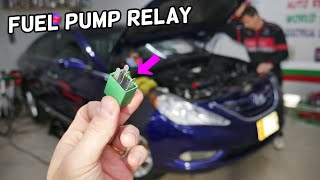
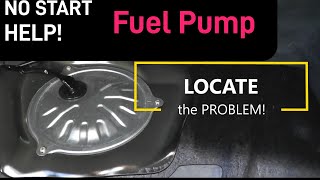
Typical fix: Replace the faulty relay with a new one. The most commonly referenced OEM part is Hyundai part number 95224-38050. 🎬 Watch: How to locate and replace your fuel pump relay.
Est. part cost: $15-$40 - Blown Fuel Pump Fuse 🟡 Medium Probability An electrical surge or a failing pump drawing too much current can blow the protective fuse.
How to confirm: Visually inspect the fuel pump fuse in the fuse box. A broken filament inside the fuse indicates it is blown. 🎬 See this guide on testing fuel pumps, relays, and fuses.
Typical fix: Replace the fuse. If it blows again immediately, there is an underlying short circuit that must be diagnosed.
Est. part cost: $1-$5 - Damaged Wiring or Connectors ⚪ Low Probability Vibration and heat can cause wires to chafe or connectors to become corroded or loose over the vehicle's lifespan, particularly at the relay socket or the pump connector.
How to confirm: Visually inspect the wiring and connector at the fuel pump relay socket and at the fuel pump itself (located on top of the LPG tank). Look for signs of corrosion (green or white powder), burnt plastic, or loose pins.
Typical fix: Clean corroded terminals, repair damaged wires, or replace the faulty connector.
Est. part cost: $5-$50 - Failed LPG Fuel Pump ⚪ Low Probability The fuel pump is a motor that can wear out over many miles, but it is less likely to fail than the relay for this specific code. Failure is more often preceded by whining noises or intermittent power loss.
How to confirm: After confirming the fuse and relay are good, use a multimeter to check for voltage at the fuel pump connector when the ignition is turned on. If voltage is present but the pump does not make a humming sound, the pump has failed.
Typical fix: Replace the LPG fuel pump assembly. This is more involved as it is located inside the high-pressure LPG tank.
Est. part cost: $200-$400
Rare But Worth Checking
- Faulty Engine Control Module (ECM): This is extremely rare. The ECM is responsible for sending the signal to activate the relay. All other possibilities, especially the relay and its wiring, should be exhaustively ruled out before considering the ECM as the cause.
Diagnosis Steps

- Check the Check Engine Light with an OBD-II scanner to confirm P1229 is the primary code.
- Open the fuse box in the engine compartment and locate the fuel pump fuse. Visually inspect it and replace if blown.
- Locate the LPG fuel pump relay in the same fuse box. It is often a black, 4-pin relay, identical to others like the horn relay. The specific OEM part number is typically 95224-38050.
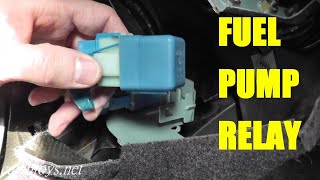
- Swap the fuel pump relay with the horn relay. Try to start the engine. If the engine starts and the horn no longer works, the relay is bad and needs to be replaced. This is the most common and effective diagnostic step. 🎬 Watch: A mechanic's guide to testing and replacing the relay.
- If the relay swap does not work, inspect the relay's socket and wiring for any signs of corrosion, burning, or damage.
- If the relay and fuse are confirmed good, access the LPG fuel pump connector on top of the fuel tank. Use a multimeter to test for voltage for a few seconds after turning the ignition key to the 'ON' position.
- If voltage is present at the connector but the pump is silent (no priming hum), the fuel pump has likely failed.
- If no voltage is present, there is a wiring fault between the relay and the pump that needs to be traced.
Parts You'll Likely Need

- LPG Fuel Pump Relay
(OEM #95224-38050)— This is the most common failure point for code P1229, as the relay's internal components wear out over time. It is a standard 4-pin power relay used across many Hyundai/Kia models.
Trusted brands: Hyundai Genuine, Kia Genuine, Bosch, Delphi
OEM price range: $25-$49
Aftermarket price range: $15-$30 - LPG Fuel Pump — If the relay and wiring are confirmed to be good, the fuel pump itself is the next logical point of failure, though much less common for this specific code.
Trusted brands: Hyundai Genuine
OEM price range: $250-$400
Aftermarket price range: $200-$300
Platform-Specific Known Issues
- This issue is specific to Korean Domestic Market (KDM) vehicles equipped with the 2.0L LPI engine. Parts may be more difficult to source outside of South Korea, though the common 95224-38050 relay is widely available.
Mechanic-Grade Diagnostic Values
- Fuel Pump Relay Coil Resistance — expected: 60 - 80 Ω between pins 85 and 86. Failure: A reading of infinite resistance (open circuit) or a significantly higher resistance (e.g., 340 Ω) indicates a faulty relay winding.
- Fuel Pump Relay Socket - Pin 30 Voltage — expected: Constant 12V (Battery Voltage). Failure: No voltage indicates a problem with the power supply to the relay, likely a blown main fuse or wiring issue.
- Fuel Pump Relay Socket - Pin 85 Voltage — expected: 12V with ignition key in 'ON' position. Failure: No voltage indicates a fault in the ignition switch circuit that provides power to the relay's control side.
- Fuel Pump Relay Socket - Pin 86 Control Signal — expected: Should show ground (continuity to ground) for a few seconds when the ignition is first turned on, and continuously while the engine is cranking or running. This signal comes from the ECM.. Failure: No ground signal means the ECM is not commanding the relay to turn on, which could be an ECM fault or a wiring issue between the ECM and the relay socket.
- Fuel Pump Connector Voltage — expected: 12V for a few seconds when the ignition is turned on (priming), and continuous 12V while cranking or running.. Failure: No voltage when the relay is known to be good and activated points to a break in the wiring between the relay socket (Pin 87) and the fuel pump connector.
Scan Tool Commands That Help
- Hyundai GDS (Global Diagnostic System): Actuation Test for Fuel Pump Relay — After checking fuses, use this command to force the ECM to activate the fuel pump relay. You can listen for the relay to click and simultaneously check for 12V output on pin 87 of the relay socket. This confirms the ECM and control circuit wiring are functioning correctly without needing to bypass the relay manually.
Wiring & Ground Locations

- Fuel Pump Relay — Located in the engine compartment fuse/relay box, on the driver's side. The cover diagram identifies it as 'FUEL PUMP'.. This is the central component indicated by code P1229. All electrical tests for the circuit begin here.
- Fuel Pump Fuse — A 20A fuse located in the engine compartment fuse box, labeled 'FUEL PUMP'.. This fuse protects the high-current side of the relay circuit (pins 30 and 87) and the fuel pump. A blown fuse is a common cause of a no-start condition.
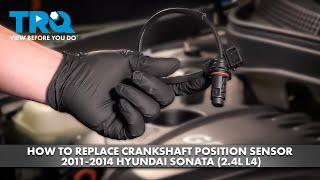
- SENSOR 2 Fuse — A fuse in the engine compartment fuse box that powers the Crankshaft Position Sensor (CKP).. A faulty CKP sensor can produce symptoms (stalling, no RPM reading) identical to a fuel delivery failure. If P1229 is present but the relay/pump circuit checks out, or if P0335 is also present, this fuse and the CKP circuit are the next logical place to inspect.
- Fuel Pump Access Panel — Under the rear seat cushion or in the trunk floor, typically held by four Phillips head screws.. This provides access to the fuel pump electrical connector for final voltage tests to confirm if power is reaching the pump.
Real Owner Repair Stories
- Korean Repair Blog (Naver Blog) (2010 Hyundai YF Sonata LPI) — Intermittent engine shuddering, stalling when coming to a stop, and the RPM gauge needle being stuck at zero even when the engine was running. The engine would sometimes not accelerate.
❌ Tried (didn't work) Initial diagnosis pointed towards a fuel system issue due to the stalling.
✅ What actually fixed it The diagnostic scan revealed code P0335 - Crankshaft Position Sensor Circuit Malfunction. The actual cause was a faulty Crankshaft Position Sensor (CKP), not the fuel pump or relay. Replacing the CKP sensor resolved all symptoms. The blog notes this is a common failure and an improved part is available.
When the Usual Fixes Don't Work
- While P1229 directly points to the fuel pump relay circuit, nearly identical symptoms of stalling, rough running, and no-start on the YF/LF Sonata LPI are very frequently caused by a failing Crankshaft Position Sensor (CKP), which will set code P0335. In one documented case, a 2010 YF Sonata with stalling and a dead RPM gauge was fixed by replacing the CKP sensor, not any part of the fuel system. This is a critical misdiagnosis path; if the fuel pump relay and fuse check out, the CKP sensor should be the next component tested, regardless of the P1229 code.
OEM Part Supersession History
Unknown (Original-fitment Crankshaft Position Sensor)→Improved OEM Part— The original CKP sensor on the YF Sonata is a known high-failure part, causing intermittent stalling and no-start conditions. Hyundai released an improved version to address this.
Model Year Variations Within This Range
- 2010-2015: While the YF (2010-2014) and LF (2015) Sonatas have different body styles and interiors, the 2.0L LPI engine and associated fuel delivery system are fundamentally the same. The diagnostic procedure for P1229 is consistent across these years.
Diagnostic Flowchart
Other Known Issues on This Vehicle
Issues unrelated to this code that are worth knowing about as an owner of this generation:
- Theta II GDI Engine Seizure and Failure 🔴 High — Extremely common on 2.0L and 2.4L GDI (gasoline) engines from 2011-2014. Manufacturing debris could block oil passages, leading to connecting rod bearing failure and catastrophic engine seizure, often with little warning. (Ref: Multiple recalls (e.g., NHTSA 15V-568, 17V-226) and a major class-action lawsuit settlement extending the engine short block warranty to lifetime for original and subsequent owners who complete a required software update.)
- Steering Coupler Degradation 🟠 Medium — Very common across the YF/LF Sonata and related Kia models. A small, flexible rubber coupler in the electronic power steering motor disintegrates over time, causing a noticeable 'clicking' or 'clunking' sound and a loose feeling in the steering wheel when turning. (Ref: No formal recall, but a widely known issue. The replacement part (OEM #56315-2K000-FFF) is very inexpensive, but labor can be a few hundred dollars as the steering column must be partially disassembled.)
- Transmission Speed Sensor Failure 🟠 Medium — Common on the YF generation. The input or output speed sensors on the automatic transmission can fail, leading to harsh shifting, getting stuck in gear, or the transmission entering limp mode. (Ref: No major recall, but a well-documented problem. Often requires replacing the sensor harness inside the transmission.)
- Parking Lights Remain On 🟡 Low — A frequent electrical complaint on the YF Sonata. The parking lights may stay on even when the car is off, draining the battery. It is often caused by a faulty junction box or a short in the wiring.
Used vs. New Parts: Buying Guide for This Vehicle
When a used part is the smart pick: For the LPG Fuel Pump assembly. This is an expensive part, and a low-mileage unit from a reputable salvage yard can be a cost-effective alternative to a new OEM part. For simple relays and fuses, the low cost of new parts makes buying used impractical.
Donor-vehicle mileage cap: roughly under 80000 miles for the part to have meaningful remaining life.
What to inspect on the donor part:
- Verify the donor vehicle's mileage.
- Inspect the fuel pump connector for any signs of overheating, melted plastic, or corrosion.
- If possible, ask the salvage yard if the vehicle was running before it was dismantled.
- Avoid parts from vehicles with significant rear-end collision damage, which could have impacted the tank and pump.
OEM-only on this vehicle (don't cheap out):
- LPG Fuel Pump: While aftermarket options may exist, the high-pressure nature and system integration of the LPI system make an OEM or OEM-equivalent pump the most reliable choice to avoid compatibility issues.
Aftermarket brands forum-validated for this vehicle:
- Relay: Bosch, Delphi, Standard Motor Products (SMP)
Brands owners have reported issues with on this vehicle:
- Ultra-cheap, unbranded relays from online marketplaces can have poor quality control and may fail prematurely.
Real Owner Stories
Aggregated from forums and TSBs cited above. Mileages and costs reflect what owners reported in those sources.
2010-2015 Hyundai Sonata 2.0L LPI
Symptoms: Stalling and no-acceleration symptoms.
What fixed it: The cause was diagnosed as a faulty crank position sensor, which can present symptoms similar to a fuel pump circuit failure.
Source hint: Korean blog post from a repair shop (m.blog.naver.com/master_com/222840130985)
Related OBD-II Codes
Frequently Asked Questions
What is the most common and cheapest fix for code P1229 on my 2010-2015 Sonata LPG?
How can I test the fuel pump relay on my Sonata without a multimeter?
I have a Kia K5 LPI with the same stalling problem. Does this P1229 information apply to my car?
My car cranks but won't start and has code P1229. I replaced the relay and the fuse is good. What should I check next?
Are parts for my Sonata's LPI fuel system hard to find in the US?
My Sonata is stalling and jerking, but the code is P1229. Could it be anything other than the fuel pump circuit?
Helpful Videos
Used OEM Parts in Stock

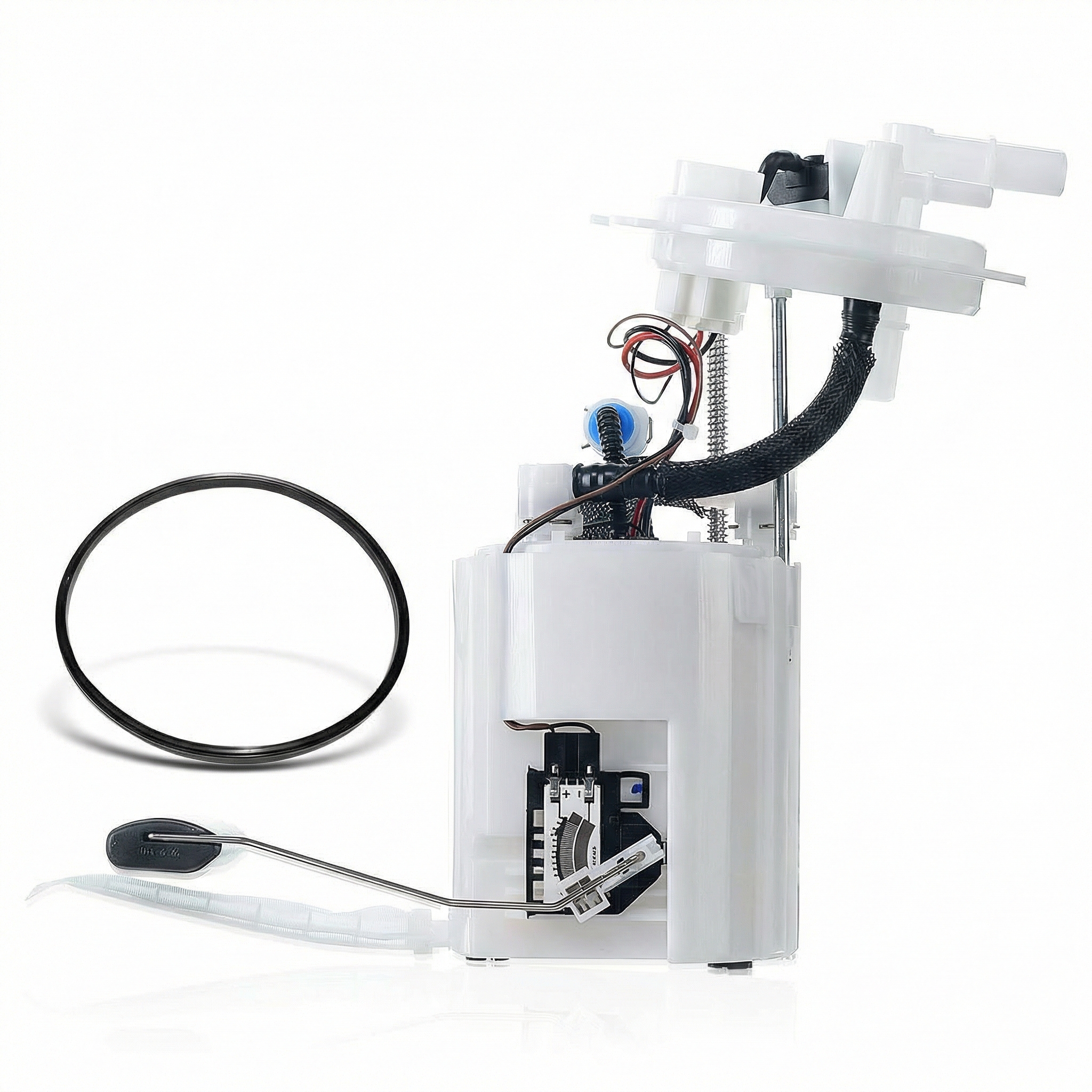
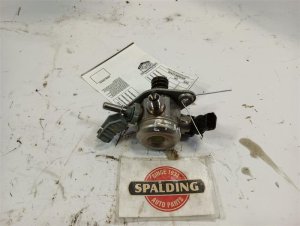
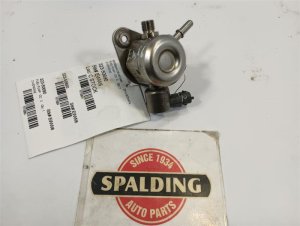
New Aftermarket Parts Available

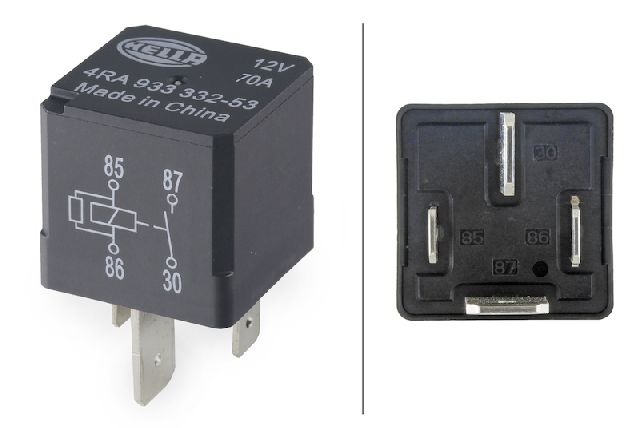


The information in this article is provided for general reference and educational purposes only. Vehicle specifications, procedures, and part compatibility can vary by production date, trim level, and region. Always consult your vehicle's factory service manual and verify part numbers before purchasing or performing repairs. Safety-critical components such as airbags, seat belts, and braking systems should be installed by a qualified professional.
- Hyundai Sonata:
- 🎬 Helpful Videos
- 🛍️ Shop This Part
- What's Unique About the 2010-2015 Hyundai Sonata
- Symptoms You May Notice
- Most Likely Causes
- Rare But Worth Checking
- Diagnosis Steps
- Parts You'll Likely Need
- Platform-Specific Known Issues
- Mechanic-Grade Diagnostic Values
- Scan Tool Commands That Help
- Wiring & Ground Locations
- Real Owner Repair Stories
- When the Usual Fixes Don't Work
- OEM Part Supersession History
- Model Year Variations Within This Range
- Diagnostic Flowchart
- Other Known Issues on This Vehicle
- Used vs. New Parts: Buying Guide for This Vehicle
- Real Owner Stories
- 2010-2015 Hyundai Sonata 2.0L LPI
- Related OBD-II Codes
- Frequently Asked Questions
- 🎟️ Get 5% Off