

P1101 on 2013-2019 Ford Escape EcoBoost: Airflow Performance Causes and Fixes
On a 2013-2019 Ford Escape with an EcoBoost engine, code P1101 is most often caused by a vacuum or boost leak from a cracked or loose intake hose. Before replacing parts, inspect all air ducts between the air filter and the engine for leaks. Cleaning the MAP/pressure sensors is also a common, low-cost fix. A faulty EVAP purge valve is another known cause on this platform.
- P1101 on an EcoBoost Escape points to a problem with the engine's calculated airflow, not necessarily a traditional MAF sensor.
- The most probable cause is a physical leak in the air intake system (a cracked hose or loose clamp) between the turbo and the engine.
- Always start diagnosis by visually inspecting all intake plumbing and cleaning the MAP/pressure sensors before buying new parts.
- This code is often accompanied by P0171 (lean condition) or P0299 (underboost), which are symptoms of the root airflow problem.
What's Unique About the 2013-2019 Ford Escape

Unlike many vehicles that use a single Mass Airflow (MAF) sensor, Ford's EcoBoost engines often use a 'speed density' system to measure airflow. This system relies on multiple sensors, including a Manifold Absolute Pressure (MAP) sensor and sometimes a Throttle Inlet Pressure (TIP) sensor, to calculate the mass of air entering the engine. Therefore, while the code definition is 'MAF Sensor Out of Self Test Range,' the fault on an EcoBoost Escape rarely involves a traditional MAF sensor. Instead, it points to a discrepancy in the overall calculated airflow, which is frequently caused by air leaks in the pressurized intake plumbing or faulty pressure sensors.
Symptoms You May Notice
- Check Engine Light illuminated
- Reduced engine power and sluggish acceleration
- Hesitation when accelerating
- Rough or unstable idle
- Poor fuel economy
- Engine may enter 'limp mode' with severely limited power
- Engine stalling when stopped or at low speeds
- Replacing the oxygen sensors, as they may report a lean condition (like code P0171) that is actually caused by the unmetered air from the P1101 fault.
- Searching for and attempting to replace a traditional Mass Airflow (MAF) sensor when the specific EcoBoost engine uses a speed-density system with MAP/pressure sensors instead.
Most Likely Causes


- Vacuum or Boost Leak 🔴 High Probability The EcoBoost engine's intake system is pressurized by the turbocharger. The plastic and rubber components, like hoses and charge air cooler pipes, can crack, become loose, or get improperly seated over time, causing unmetered air to enter or pressurized air to escape.
How to confirm: Visually inspect all intake ducting from the air filter box to the throttle body for cracks, loose clamps, or disconnections. A smoke test is the most effective way to pinpoint hard-to-see leaks. Spraying brake cleaner around suspected leak points and listening for a change in engine idle can also help.
Typical fix: Tighten loose clamps or replace the cracked hose/duct.
Est. part cost: $20-$200 - Contaminated MAP/Pressure Sensor(s) 🟡 Medium Probability Oil vapor from the PCV (Positive Crankcase Ventilation) system is common in EcoBoost engines and can contaminate the pressure sensors in the intake tract, leading to inaccurate readings.
How to confirm: Remove the accessible pressure sensors (one is often on the intake manifold, another near the throttle body or intercooler) and inspect for oil residue.
Typical fix: Clean the sensor element carefully with a dedicated electronics or MAF sensor cleaner. Do not use brake cleaner or carb cleaner. If cleaning doesn't resolve the issue, replace the sensor.
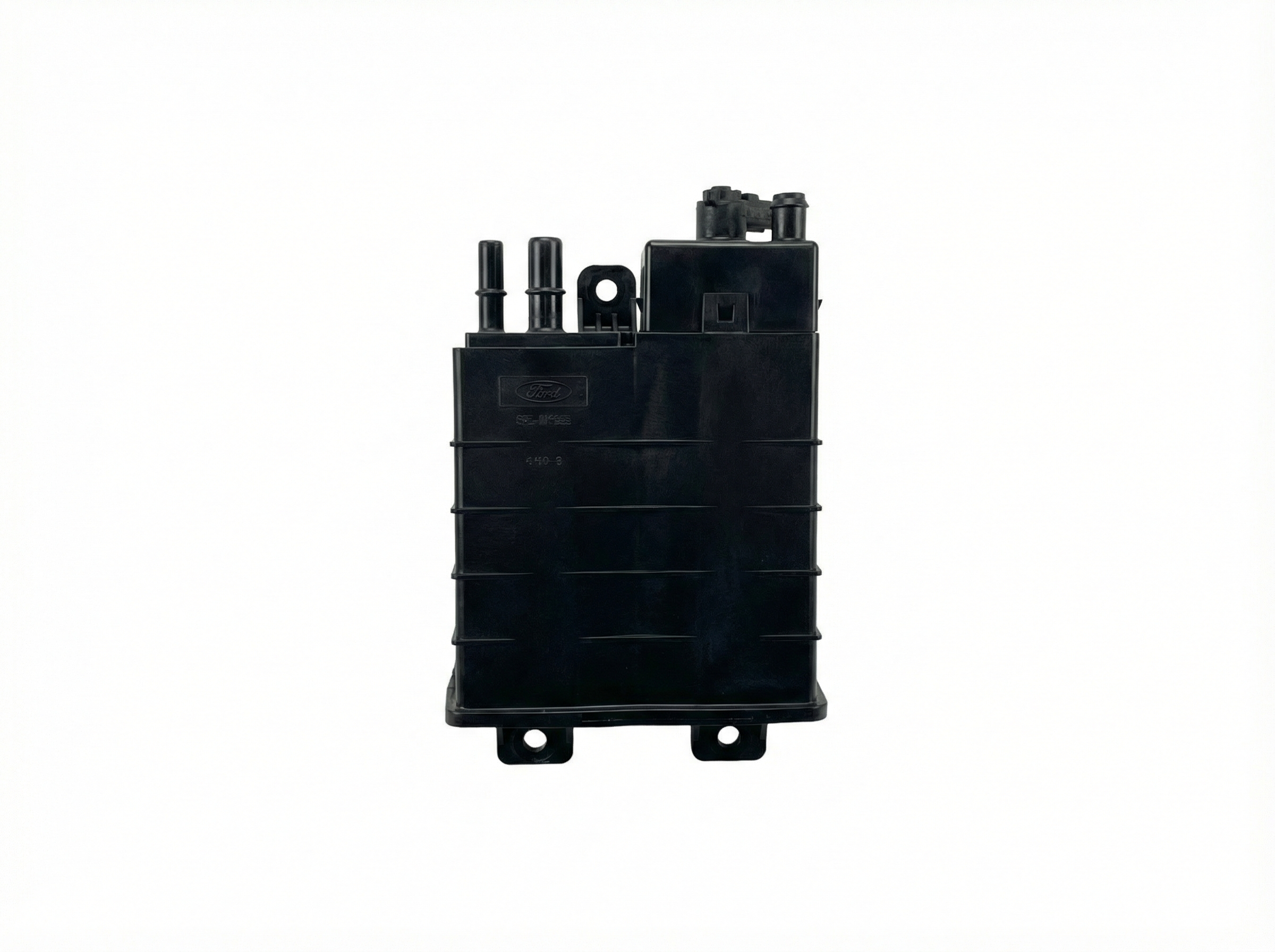
Est. part cost: $5-$15 (cleaner), $40-$100 (new sensor) - Faulty EVAP Purge Valve 🟡 Medium Probability The vapor canister purge valve is a known failure point on many Ford models, including the Escape. If it sticks open, it creates a constant vacuum leak, introducing unmetered fuel vapors into the intake manifold and triggering airflow-related codes.
How to confirm: A common symptom is difficulty starting the vehicle after refueling. With the engine running, you can disconnect the electrical connector and the intake-side hose from the valve. If you can feel suction from the valve's port, it is stuck open and needs replacement.
Typical fix: Replace the purge valve assembly. This is often a simple repair involving a few hose clamps and an electrical connector.
Est. part cost: $40-$110 - Clogged Engine Air Filter ⚪ Low Probability
How to confirm: Remove and inspect the engine air filter. If it is visibly dirty, clogged, or improperly seated, it can restrict or disrupt airflow.
Typical fix: Replace the engine air filter.
Est. part cost: $15-$50 - Faulty MAP/Pressure Sensor ⚪ Low Probability
How to confirm: After ruling out leaks and contamination, test the sensor's voltage output with a multimeter against the manufacturer's specifications. A scan tool showing live data can also reveal if a sensor's reading is stuck or unresponsive.
Typical fix: Replace the faulty sensor.
Est. part cost: $40-$100
Rare But Worth Checking
- Wiring Harness Issue: Damaged wires or corroded pins in the connector for a MAP/pressure sensor can cause an intermittent signal and trigger this code.
- Faulty Throttle Body: Failure of the electronic throttle body is a known issue on Ford Escapes. While it typically sets codes like P2111 or P2112, a dirty or malfunctioning throttle body can also disrupt airflow enough to contribute to a P1101 code.
- Faulty Powertrain Control Module (PCM): In very rare cases, the PCM itself may be faulty, causing it to misinterpret sensor data or have corrupted software. This should only be considered after all other possibilities have been exhausted.
Diagnosis Steps
- Scan the vehicle's computer for P1101 and any other stored codes. Note if P0171 is also present, as this strongly suggests a vacuum leak.
- Perform a thorough visual inspection of the entire air intake system, from the air filter housing to the throttle body. Check for cracked hoses, loose clamps, and disconnected pipes.
- Inspect the engine air filter to ensure it is clean and installed correctly.
- Locate, remove, and inspect the MAP/pressure sensors for any oil contamination. Clean gently with specialized sensor cleaner if dirty.
- Test the EVAP purge valve for proper function. Check if it's stuck open by feeling for vacuum at its port while the engine is running.
- Check the electrical connectors and wiring going to the intake pressure sensors for any signs of damage or corrosion.
- If no visible issues are found, perform a smoke test to identify any hard-to-see leaks in the intake manifold, gaskets, or vacuum lines.
- Using a scan tool with live data, monitor the calculated load and MAP sensor values while changing engine RPM to see if they respond correctly.
- If a sensor is confirmed to be faulty after ruling out leaks, replace the sensor.
Parts You'll Likely Need

- Manifold Absolute Pressure (MAP) Sensor
(OEM #KX7Z-9F479-A)— This sensor is critical for the PCM's airflow calculations on EcoBoost engines. It can become contaminated by oil vapor or fail electronically, leading to incorrect readings.
Trusted brands: Motorcraft, Bosch, Delphi
OEM price range: $50-$80
Aftermarket price range: $25-$60 - Vapor Canister Purge Valve / Solenoid
(OEM #CV6Z-9D289-S (supercedes CV6Z-9D289-C, D, F, H, R))— A very common failure item on Ford vehicles that causes a vacuum leak when it sticks open, leading to P1101 and P0171 codes.
Trusted brands: Motorcraft, Dorman
OEM price range: $80-$150
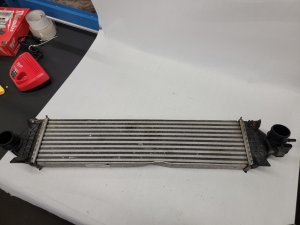
Aftermarket price range: $30-$70 - Intake Air Duct / Charge Air Cooler Hose — These hoses are the most common source of vacuum and boost leaks that trigger P1101. Cracks often form due to heat and vibration.
Trusted brands: Motorcraft, Gates
OEM price range: $75-$200
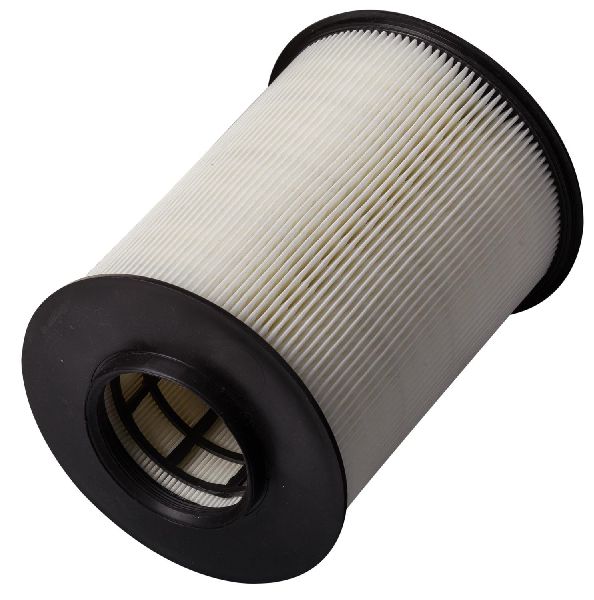
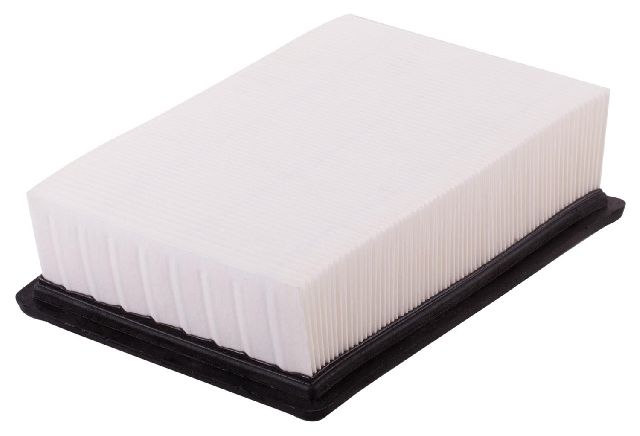
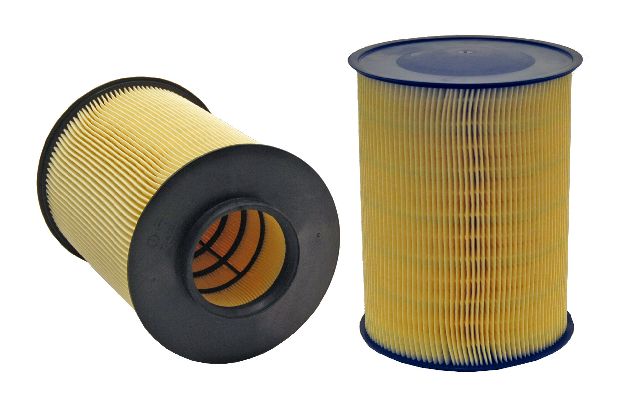
Aftermarket price range: $40-$120 - Engine Air Filter — A clogged air filter restricts airflow and is a simple, inexpensive maintenance item to rule out as a cause.
Trusted brands: Motorcraft, WIX, Fram
OEM price range: $25-$40
Aftermarket price range: $15-$30
Related Codes That Often Appear With This One
- P0171 — System Too Lean (Bank 1). A vacuum leak (from a cracked hose or stuck purge valve) that causes P1101 allows unmetered air into the engine. The oxygen sensors detect the excess air as a lean condition, triggering P0171. These two codes frequently appear together.
- P0299 — Turbocharger/Supercharger Underboost. A significant air leak in the pressurized charge pipes after the turbo can cause both an airflow calculation error (P1101) and a loss of boost pressure (P0299).
Platform-Specific Known Issues
- PCV Oil Contamination: The PCV system on EcoBoost engines can sometimes allow excessive oil vapor into the intake tract. This oil can coat the inside of hoses and, more critically, contaminate the MAP and TIP sensors, leading to incorrect readings and the P1101 code.
Mechanic-Grade Diagnostic Values
- MAF Sensor Signal Voltage (KOER Self-Test) — expected: Between 0.46V and 2.44V. Another source specifies ~2.44V with an allowable deviation of +/- 0.45V.. Failure: A voltage reading outside the expected range during the KOER self-test will cause the test to fail and log P1101.
- MAF Sensor Signal Voltage (KOEO) — expected: Approximately 0.27V with the key on, engine off.. Failure: A significantly higher voltage at KOEO indicates a sensor or wiring fault.
- MAP Sensor Signal Voltage — expected: Low voltage at high vacuum (idle) and high voltage at low vacuum (wide-open throttle).. Failure: Voltage stuck below 0.23V or above 4.49V for more than 2 seconds can indicate a sensor failure.
- Live Data Fuel Trims (STFT + LTFT) at Idle — expected: Close to 0%, typically within +/- 5%.. Failure: Combined fuel trims are high and positive (e.g., > +10%) at idle but return to normal at higher RPMs. This strongly indicates a vacuum leak.
- Crankcase Pressure at Hot Idle — expected: Between -1 and -5 inches of water (slight vacuum).. Failure: Pressure is positive (above 0 inches of water). This indicates a blockage in the PCV system, which can mimic a vacuum leak and cause P1101.
Scan Tool Commands That Help
- Ford IDS (or equivalent professional scanner): Key-On Engine-Running (KOER) Self-Test — This is the specific self-diagnostic routine that flags the P1101 code. Running this test manually can confirm the fault condition is active.
- Ford IDS, FORScan, professional scanner: Reset Keep Alive Memory (KAM) — After performing a repair (like fixing a vacuum leak or replacing a sensor), a KAM reset should be performed. This clears the PCM's adaptive learning tables for fuel trim and airflow, forcing it to relearn with the new, correct parameters. Failure to do so may cause the code to return or result in poor driveability.
- N/A - Manual Procedure: Hard KAM Reset (Battery Disconnect) — If a capable scan tool is not available, disconnecting the battery's negative terminal for at least 5 minutes can reset the KAM. A more thorough method involves connecting the disconnected positive and negative battery cables together with a jumper wire for 5-10 minutes to fully discharge all capacitors in the modules.
Wiring & Ground Locations
- G100, G105, G106, G107, G108, G109, G111, G112 — Various points in the left side of the engine compartment. For example, G100 is at the left rear of the engine compartment.. These are primary grounds for engine management components. A poor ground at any of these points can cause erratic sensor readings, including for the MAP/pressure sensors, leading to a P1101 code.
- G103, G110 — Various points on the right side of the engine. G103 is on the right side of the engine compartment, while G110 (2.0L) is on the right front of the engine.. Provides ground paths for the PCM and related sensors. Corrosion or looseness can cause intermittent voltage drops and trigger self-test failures.
- G104 — Located on the right rear of the transmission.. A critical ground point for the powertrain. A loose or corroded connection here can cause a wide range of seemingly unrelated electrical issues and codes.
- PCM Connector C1551E — This is one of the main connectors for the Powertrain Control Module (PCM).. When diagnosing a wiring issue, this is the termination point for the MAP sensor signal, reference voltage, and ground wires. Probing for continuity and voltage would be done between this connector and the sensor connector.
"I Checked Everything" — The Actual Cause
- A known pattern on similar direct-injection turbo engines (documented in GM TSB 20-NA-047) is a P1101 code that persists even when a smoke test shows no vacuum leaks. The actual cause was found to be a plugged Positive Crankcase Ventilation (PCV) orifice inside the camshaft/valve cover. This creates excessive positive crankcase pressure, which the system interprets as an airflow fault. The fix is to remove the valve cover, and clean or replace the small PCV orifice.
OEM Part Supersession History
CV6Z-9D289-C, CV6Z-9D289-D, CV6Z-9D289-F, CV6Z-9D289-H, CV6Z-9D289-R→CV6Z-9D289-S— Part has been revised and updated by the manufacturer over time to improve reliability.
Heads up: The newest part number, CV6Z-9D289-S, is the correct and most reliable replacement for all previous versions on the 2013-2019 Escape.
Diagnostic Flowchart
Real Owner Stories
Aggregated from forums and TSBs cited above. Mileages and costs reflect what owners reported in those sources.
2016 Ford Escape
Symptoms: Experienced engine stalling and a P0171 check engine light.
What fixed it: Changing the air filter, cleaning MAP sensors, and checking for vacuum leaks on the air intake side.
Source hint: Reddit r/fordescape - P0171 check engine light
2018 Ford Escape
Symptoms: Experienced multiple problems related to the EVAP system.
What fixed it: Replaced the EVAP purge valve in 2022.
Source hint: Ford Forums - 2018 Escape, multiple problems
Ford Fusion 2.0T EcoBoost
Symptoms: Triggered a P0171 code, noting that 9 out of 10 times it is a vacuum leak on the air intake side.
What fixed it: Changing the air filter, cleaning MAP sensors, and fixing vacuum leaks.
Source hint: Reddit r/fordescape - P0171 check engine light
Related OBD-II Codes
Frequently Asked Questions
Why is my 2013-2019 Escape EcoBoost throwing a P1101 code and stalling when I stop?
Can oil from the PCV system cause the P1101 code on my 1.6L or 2.0L EcoBoost?
I have a hard time starting my Escape after getting gas, and now I have a P1101 code. Are they related?
Should I use brake cleaner to clean the MAP sensor on my Ford Escape?
My 2016 Escape has both P1101 and P0171 codes. What does this mean?
Used OEM Parts in Stock


New Aftermarket Parts Available



The information in this article is provided for general reference and educational purposes only. Vehicle specifications, procedures, and part compatibility can vary by production date, trim level, and region. Always consult your vehicle's factory service manual and verify part numbers before purchasing or performing repairs. Safety-critical components such as airbags, seat belts, and braking systems should be installed by a qualified professional.
- Ford Escape:
- 🛍️ Shop This Part
- What's Unique About the 2013-2019 Ford Escape
- Symptoms You May Notice
- Most Likely Causes
- Rare But Worth Checking
- Diagnosis Steps
- Parts You'll Likely Need
- Related Codes That Often Appear With This One
- Platform-Specific Known Issues
- Mechanic-Grade Diagnostic Values
- Scan Tool Commands That Help
- Wiring & Ground Locations
- "I Checked Everything" — The Actual Cause
- OEM Part Supersession History
- Diagnostic Flowchart
- Real Owner Stories
- 2016 Ford Escape
- 2018 Ford Escape
- Ford Fusion 2.0T EcoBoost
- Related OBD-II Codes
- Frequently Asked Questions
- 🎟️ Get 5% Off