

P0965 on 2014-2020 Nissan Rogue: Pressure Control Solenoid 'B' Circuit Fixes
On a 2014-2020 Nissan Rogue, code P0965 almost always points to a failure within the CVT's valve body. The most common fix is replacing the entire valve body assembly, which can cost $2,000-$3,500 at a shop. Before condemning the valve body, check for the well-known Nissan CVT warranty extension, which may cover the repair for vehicles up to 7 years or 84,000 miles.
- P0965 on a 2014-2020 Rogue is a serious code that almost always points to an internal CVT issue, most commonly a faulty valve body.
- Before authorizing any repairs, contact a Nissan dealer with your VIN to see if your vehicle is covered under the extended CVT warranty (up to 84,000 miles).
- The first diagnostic step is to check the CVT fluid. If it's dark, burnt, or full of metal, a simple fluid change won't fix the problem.
- This is not a simple DIY fix. Replacing the valve body is a complex job that requires special tools and electronic reprogramming.
- Ignoring the symptoms can lead to complete transmission failure, a much more expensive repair than replacing the valve body.
What's Unique About the 2014-2020 Nissan Rogue
The 2014-2020 Nissan Rogue uses a Jatco CVT8 (model JF016E/RE0F10D) which is known for a high rate of valve body and internal component issues. Unlike a simple sensor replacement, P0965 on a Rogue is a strong indicator of a significant internal transmission problem. Nissan has acknowledged these issues through multiple Technical Service Bulletins (TSBs) that group P0965 with other codes 🎬 Watch: Real-world diagnosis of these three common failure codes. (like P0776 and P17F0) and often direct technicians to replace the valve body or the entire CVT assembly. This known failure pattern is so prevalent that Nissan extended the CVT warranty for many models, including some Rogues.
Generation note: The 2014-2020 model years cover the second generation (T32) of the Nissan Rogue. All vehicles in this range use a CVT and are susceptible to the issues described. No major differences regarding this specific code have been noted within this generation, though part numbers for the valve body may vary by model year.
Symptoms You May Notice
- Check Engine Light is on
- Transmission warning light may be illuminated
- Vehicle enters 'limp mode,' limiting speed and engine RPM
- Harsh or delayed gear engagement
- Shuddering, jerking, or hesitation on acceleration
- Engine RPMs fluctuate or flare without a corresponding increase in speed
- Reduced fuel economy
- Transmission overheating
- Replacing only a single solenoid when the entire valve body is contaminated or failing. The solenoids are not typically serviced individually on these units.
- Assuming the transmission is completely failed without first inspecting the fluid, checking for debris in the pan, and diagnosing the valve body.
- Mistaking the shuddering and hesitation for an engine misfire problem. The presence of transmission-specific codes like P0965 is the key differentiator.
Most Likely Causes
- Faulty Transmission Valve Body 🔴 High Probability The solenoids are integrated into the valve body, which is a widely documented failure point on this generation of Jatco CVTs. Fine metallic debris from normal wear can clog the small passages and cause solenoids to stick or fail electrically.
How to confirm: After confirming fluid is clean and wiring is intact, a technician will follow the diagnostic flowchart in a relevant TSB (e.g., NTB17-034f). This often involves dropping the pan to check for debris. If debris is minimal, the valve body is the presumed culprit.
Typical fix: Replacement of the entire CVT valve body assembly, followed by a fluid fill with Nissan NS-3, and reprogramming of the TCM with the new valve body's calibration data.
Est. part cost: $800-$1500 - Dirty or Low CVT Fluid and Clogged Filters 🟡 Medium Probability CVT fluid (NS-3) degrades and requires changing, typically every 30,000-60,000 miles. If neglected, the fluid loses its properties and metal shavings accumulate, clogging the internal filter and passages within the valve body, which can impede solenoid function.
How to confirm: Check the transmission fluid level and condition. This procedure is complex as there is no traditional dipstick. If the fluid is dark, smells burnt, or has a metallic sheen, it is contaminated. Dropping the pan will reveal debris on the magnets and the state of the filter.
Typical fix: Perform a CVT fluid drain and fill using only Nissan NS-3 fluid. Replace both the internal transmission filter (strainer) and the external cartridge filter. This is often a first step, but may not resolve the code 🎬 See how a fluid and filter service is performed first. if the valve body is already damaged.
Est. part cost: $100-$200 - Internal CVT Damage (Belt and Pulley Failure) ⚪ Low Probability
How to confirm: A large amount of metallic debris and chunks found in the transmission pan is a key indicator. A technician may use a borescope to inspect the CVT belt and pulleys through the valve body opening and find visible scoring or damage.
Typical fix: Complete replacement of the CVT assembly. Repairing internal CVT components is rarely feasible or cost-effective for a shop.
Est. part cost: $3500-$5000
Rare But Worth Checking
- Wiring Harness or Connector Damage: While less common than internal failures, damage to the wiring leading to the transmission can cause an electrical fault. This should be inspected before condemning expensive components. A multimeter can be used to check for continuity and proper resistance in the solenoid circuit.
- Faulty Transmission Control Module (TCM): In rare instances, the TCM itself can fail. However, this is unlikely and should only be considered after all other possibilities, especially the valve body and wiring, have been exhausted.
Diagnosis Steps
- Scan the vehicle for all stored trouble codes. Note any other transmission codes that appear alongside P0965, especially P0776 and P17F0.
- Check the level and condition of the CVT fluid using the proper service procedure (no dipstick). The fluid should be clear with a greenish tint (NS-3), not dark, brown, or smelling burnt.
- If fluid is suspect or service history is unknown, drop the transmission pan and inspect the magnets for metal debris. A fine metallic paste is normal, but large shavings or chunks indicate severe internal damage requiring CVT replacement.
- If debris is minimal, perform a CVT fluid and filter service, replacing both the pan filter/strainer and the external cartridge filter. Use only Nissan NS-3 fluid. Clear codes and test drive to see if the issue returns.
- If the code returns, inspect the transmission's main electrical connector and wiring harness for any corrosion, damage, or loose connections. Test the solenoid circuit for proper resistance per the service manual.
- If wiring is okay, the diagnostic path per Nissan TSBs points to replacing the valve body. This is best done by a professional.
- If significant metal was found in the pan in step 3, the entire CVT assembly needs to be replaced.
Parts You'll Likely Need
- CVT Valve Body Assembly
(OEM #31705-28X0B (verify by VIN, may be superseded by 31705-28X2B or other numbers))— This is the most common cause of P0965 on the Rogue. The solenoids are integrated into this unit, and it's replaced as a complete assembly.
Trusted brands: Nissan (OEM)
OEM price range: $1200-$1800
Aftermarket price range: $400-$800 - CVT Fluid (Nissan NS-3)
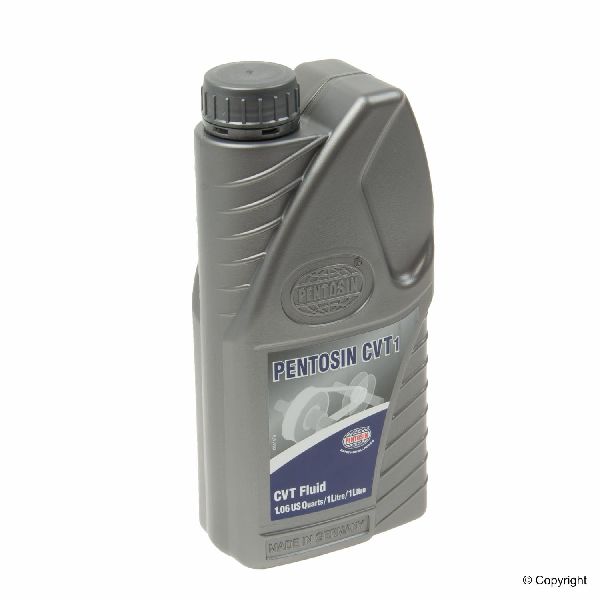
(OEM #999MP-NS300P)— This specific fluid is required for any service. Using incorrect fluid can cause severe damage and void warranties.
Trusted brands: Nissan, Idemitsu N3, Valvoline CVT for Nissan
OEM price range: $20-$25 per quart
Aftermarket price range: $15-$20 per quart - CVT Filter Kit
(OEM #31728-28X0A (Strainer/Pan Filter), 31726-28X0A (External Cartridge Filter))— Filters should always be replaced during a fluid service or valve body replacement to ensure the new components are protected from old debris.
Trusted brands: Wix, Fram, Nissan (OEM)
OEM price range: $50-$80
Aftermarket price range: $30-$50
Related Codes That Often Appear With This One
- P0776 — This code is for 'Pressure Control Solenoid 'B' Performance or Stuck Off'. It often appears with P0965 as they both relate to the same solenoid's function and are common indicators of valve body or internal CVT failure on these vehicles.
- P17F0 — This is a Nissan-specific code for 'CVT Judder'. It frequently accompanies solenoid codes like P0965 and points towards a mechanical problem within the CVT, often requiring valve body or full transmission replacement as per Nissan's own TSBs.
- P1715 — This code for 'Input Speed Sensor' can be stored along with P0776 and P0965 when there is a major internal issue, as belt slippage can cause erratic speed readings.
Technical Service Bulletins (TSBs) & Recalls
- NTB17-034 series (e.g., NTB17-034f): While for Sentra/Versa, this TSB is highly relevant as it outlines the diagnostic procedure for P0965, P0746, and P17F0, often leading to valve body or full CVT replacement, showing Nissan's approach to this code on similar Jatco CVTs.
- NTB16-110 / NTB18-077C: A TSB for other CVT issues (P0776) that explicitly states its procedure does *not* apply if P0965 is present, indicating this code requires a different, more involved repair path, further cementing its severity.
- NTB18-077: This manufacturer bulletin notes that if P0965 is stored along with P0776, technicians should not use the standard bulletin procedure and must instead refer to ASIST for diagnostic assistance.
- NTB22-021A: Lists P0965 as a relevant DTC for CVT issues on other Nissan models (Kicks), confirming its link to known problems across the brand's CVT lineup.
Platform-Specific Known Issues
- Nissan extended the original powertrain warranty on many CVTs, including those in some Rogues, from 5 years/60,000 miles to 7 years/84,000 miles due to widespread problems. This extension covered the CVT assembly, valve body, and TCM reprogramming. Owners should contact a Nissan dealer with their VIN to check for eligibility before paying for repairs.
- A class-action lawsuit was filed against Nissan regarding CVT issues in Rogue models, alleging problems like lurching, jerking, and delayed acceleration.
Mechanic-Grade Diagnostic Values
- Pressure Control Solenoid 'B' Resistance — expected: Specific ohm values are found in the factory service manual. No public-facing documents list the exact specification.. Failure: A reading of infinite resistance (open circuit) or zero resistance (short circuit) indicates a failed solenoid.
Scan Tool Commands That Help
- Nissan CONSULT III+ or equivalent high-end aftermarket scanner (Launch, Autel): Write IP CHARA - REPLACEMENT AT/CVT — This is a mandatory procedure after replacing the CVT assembly or the valve body. It writes the unique calibration data from the new part (provided on a CD or QR code) to the Transmission Control Module (TCM). Failing to perform this step will result in harsh shifting, persistent fault codes like P17F0 (CVT Judder), and will void the warranty on the new part.
- Nissan CONSULT III+ or equivalent: READ IP CHARA - REPLACEMENT TCM — This function is used to save the existing valve body's calibration data *before* replacing a faulty TCM. The saved data is then written to the new TCM to ensure it communicates correctly with the existing valve body.
Real Owner Repair Stories
- YouTube channel 'Video Service Information' (2016 Nissan Rogue, 2.5L engine, 75,000 miles) — RPMs were fluctuating and not increasing correctly with vehicle speed.
❌ Tried (didn't work) The diagnosis went straight to an internal inspection after seeing the combination of codes.
✅ What actually fixed it After finding codes P0965, P0776, P1715, and P17F0 (CVT Judder), the technician dropped the transmission pan and found significant metallic debris. A subsequent teardown revealed gouge marks on the CVT's primary pulleys from belt slippage. Due to the extensive internal damage, a complete replacement of the CVT transmission assembly was recommended as the only viable fix. - NHTSA ODI #11674233 — An owner reported that the car could not move forward and the Malfunction Indicator Light came on. Diagnostic codes P0776 and P0965 were found, indicating a Nissan CVT solenoid failure.
OEM Part Supersession History
31705-28X0A→31705-28X0B— Part revision or supplier change.
Heads up: These parts are generally for the T32 Nissan Rogue. Always verify with VIN.31705-28X1C→31705-28X2A— Part revision.
Heads up: CRITICAL: Part number 31705-28X2A is often listed for the 'Rogue Sport' (J11 chassis), which is a different vehicle from the standard 'Rogue' (T32 chassis). Installing this part on a standard Rogue will likely cause issues.
Model Year Variations Within This Range
- 2014-2016 vs 2017-2020: A facelift occurred in 2017, bringing cosmetic updates and additional safety features. However, the core powertrain (QR25DE engine and JF016E CVT) remained the same, and the P0965 failure pattern applies to the entire 2014-2020 range. Owner complaints of CVT issues appear more frequently for earlier models (2014-2016).
Diagnostic Flowchart
Other Known Issues on This Vehicle
Issues unrelated to this code that are worth knowing about as an owner of this generation:
- Automatic Emergency Braking (AEB) System Malfunction 🔴 High — Widespread issue, particularly on 2017-2018 models. Can occur at any mileage. (Ref: Voluntary Service Campaign P9327 (NTB19-064) was issued to reprogram the ADAS control unit.)
- A/C Compressor Failure 🟠 Medium — Common problem where the A/C stops blowing cold air. Often occurs between 60,000 and 100,000 miles.
- Sunroof Rattles or Explodes 🟠 Medium — Numerous owner complaints about rattling, binding, or, in rare cases, the glass shattering spontaneously.
- EVAP System Clogs / Fuel Spill-Back 🟡 Low — A clogged EVAP canister or vent control valve can cause the fuel nozzle to shut off prematurely when refueling.
- Worn Lower Control Arm Bushings 🟠 Medium — Bushings can wear out prematurely, causing clunking noises from the front suspension and a shifting sensation during braking.
- Center Display Screen Malfunctions 🟡 Low — Reported on 2014-2015 models, issues include the screen going blank, freezing, or rebooting continuously. (Ref: NTB15-011D)
Used vs. New Parts: Buying Guide for This Vehicle
When a used part is the smart pick: For this specific repair, a used valve body or complete CVT is an extremely high-risk purchase and is generally not recommended. The failure rate of the original components is very high. A used part should only be considered if the vehicle's value is very low and the owner accepts the strong possibility of another failure and the complex programming challenges.
Donor-vehicle mileage cap: roughly under 60000 miles for the part to have meaningful remaining life.
What to inspect on the donor part:
- If possible, get the VIN of the donor car to check for any service history.
- Inspect the transmission fluid from the donor unit. If it's dark, burnt, or has a metallic sheen, reject the part immediately.
- Ensure the QR code sticker on the valve body (or transmission case) is intact and readable, as it is required for programming.
OEM-only on this vehicle (don't cheap out):
- CVT Valve Body Assembly: A new OEM unit is strongly recommended because it includes the critical calibration data (on a CD or QR code) required for the 'Write IP CHARA' procedure. Without this data, proper function is not guaranteed.
Aftermarket brands forum-validated for this vehicle:
- No specific aftermarket brands have established a strong reputation for reliability that rivals a new OEM part for this component.
Brands owners have reported issues with on this vehicle:
- Unbranded, low-cost valve bodies from online marketplaces should be avoided. The risk of receiving a poorly remanufactured part without proper calibration data is very high.
Real Owner Stories
Aggregated from forums and TSBs cited above. Mileages and costs reflect what owners reported in those sources.
2016 Nissan Rogue — 75000 miles
Symptoms: Vehicle had codes P17F0, P0776, and P0965. A technician found significant metallic debris on the transmission pan magnets and visible scoring on the pulleys.
What fixed it: A full CVT replacement was recommended due to catastrophic internal failure.
Source hint: YouTube - 2016 Nissan Rogue CVT Failure...
2016 Nissan Rogue — 108000 miles
Symptoms: The owner was informed by the dealer that the specific issue was the valve body.
What fixed it: The dealer recommended a full transmission replacement.
Cost: $7000-$7000
Source hint: Reddit (r/NissanRogue) - Is it worth replacing
2013 Nissan Rogue
Symptoms: The owner was diagnosed with a bad CVT valve body.
What fixed it: A valve body replacement was quoted by the dealer.
Cost: $3100-$3100
Source hint: Reddit (r/MechanicAdvice) - 2013 Nissan rogue bad cvt valve body
NHTSA ODI #11674233
Symptoms: An owner reported that the car couldn't move forward with the Malfunction Indicator Light on. Diagnostic codes P0776 and P0965 were identified as a Nissan CVT solenoid failure.
What fixed it: The owner noted the vehicle was within the 84 months/84,000 miles extended warranty period.
Related OBD-II Codes
Frequently Asked Questions
I have a 2016 Nissan Rogue with 75,000 miles. Is a P0965 code repair covered by the extended CVT warranty?
My mechanic mentioned TSB NTB17-034f, but it's for a Sentra. Does it apply to my Rogue for code P0965?
Can I use a universal CVT fluid instead of the expensive Nissan brand to service my transmission for a P0965 code?
My Rogue has codes P0776 and P0965. Does TSB NTB16-110 provide the fix?
My 2017 Rogue is lurching and jerking, and now has a P0965 code. Is this related to the class-action lawsuit I heard about?
What is the very first thing I should check for a P0965 code on my 2015 Rogue?
Helpful Videos

Used OEM Parts in Stock

New Aftermarket Parts Available

The information in this article is provided for general reference and educational purposes only. Vehicle specifications, procedures, and part compatibility can vary by production date, trim level, and region. Always consult your vehicle's factory service manual and verify part numbers before purchasing or performing repairs. Safety-critical components such as airbags, seat belts, and braking systems should be installed by a qualified professional.
- Nissan Rogue:
- 🎬 Helpful Videos
- 🛍️ Shop This Part
- What's Unique About the 2014-2020 Nissan Rogue
- Symptoms You May Notice
- Most Likely Causes
- Rare But Worth Checking
- Diagnosis Steps
- Parts You'll Likely Need
- Related Codes That Often Appear With This One
- Technical Service Bulletins (TSBs) & Recalls
- Platform-Specific Known Issues
- Mechanic-Grade Diagnostic Values
- Scan Tool Commands That Help
- Real Owner Repair Stories
- OEM Part Supersession History
- Model Year Variations Within This Range
- Diagnostic Flowchart
- Other Known Issues on This Vehicle
- Used vs. New Parts: Buying Guide for This Vehicle
- Real Owner Stories
- 2016 Nissan Rogue — 75000 miles
- 2016 Nissan Rogue — 108000 miles
- 2013 Nissan Rogue
- NHTSA ODI #11674233
- Related OBD-II Codes
- Frequently Asked Questions
- 🎟️ Get 5% Off