

P0935 on 2010-2020 Hyundai Sonata: Transmission Pressure Sensor Circuit Causes and Fixes
On a 2010-2020 Hyundai Sonata, code P0935 almost always points to a failed internal transmission wiring harness (P/N 46307-3B650). This is a serious fault that can lead to transmission damage. The fix involves replacing the harness, which is a professional job costing between $600 and $1,200.
- P0935 on a Sonata is an electrical fault, almost always caused by a failed internal transmission wiring harness.
- Do not continue to drive the vehicle. This can cause severe, expensive damage to the transmission's mechanical parts.
- The correct repair is to replace the internal wiring harness, transmission pan gasket, and transmission fluid.
- This is not a DIY-friendly job and should be performed by a qualified professional.
- The repair cost is significant but is much cheaper than replacing the entire transmission.
What's Unique About the 2010-2020 Hyundai Sonata
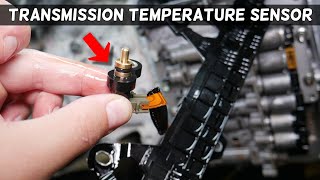
For the 6-speed automatic transmissions (A6MF1/A6LF series) found in most 2010-2019 Sonatas, the internal wiring harness is a well-documented, high-failure component. Over time, constant heat cycles make the wiring brittle, causing insulation to crack and wires to short-circuit. While Hyundai hasn't issued a TSB for P0935 specifically, numerous bulletins for related temperature sensor codes (P0711, P0712, P0713) on these exact transmissions call for replacing the entire internal harness, as all the sensors are integrated into it. The updated harness includes the temperature sensor as a single part. TSB 14-AT-010 explicitly notes 🎬 Watch: How to replace the integrated temperature sensor that from March 2013 onward, the temperature sensor was integrated into the harness, making it a single replacement part. This pattern strongly suggests the harness is the root cause for most electrical circuit faults in this transmission.
Generation note: This guide covers the 6th (YF, 2010-2014), 7th (LF, 2015-2019), and 8th (DN8, 2020) Sonata generations. The primary cause, a faulty internal wiring harness, is most documented for the 6-speed automatics (A6MF1) in the YF and LF generations. However, TSBs indicate a similar failure pattern exists for the 8-speed automatic in the 2020 DN8 model as well.
Symptoms You May Notice
- Harsh, erratic, or delayed gear shifts
- Transmission slipping between gears
- Vehicle stuck in 'limp mode' (fail-safe, often in 3rd or 4th gear)
- Illuminated Check Engine Light
- Illuminated transmission warning light
- Replacing the entire transmission: This is often unnecessary. The problem is typically a relatively inexpensive internal component, not a catastrophic failure of the gears or clutches (unless the vehicle was driven for a long time with the fault).
- Replacing only the pressure sensor: On many newer models, the sensor is part of the harness. Even if it's separate, the harness is the more likely failure point, and replacing only the sensor may not fix the issue.
Most Likely Causes
- Failed Internal Transmission Wiring Harness 🔴 High Probability The wiring insulation inside the A6-series transmission becomes brittle and cracks from repeated heat cycles, leading to short circuits. This is a widely recognized failure point.
How to confirm: A technician will drop the transmission pan to visually inspect the harness for signs of cracking, brittleness, or discoloration. They will also use a multimeter to test for a short-to-power on the pressure sensor circuit. If the sensor is unplugged and a scan tool still shows ~5V, the short is in the harness.
Typical fix: Replace the entire internal transmission wiring harness. The most common part number is 46307-3B650, which supersedes older versions like 46307-3B620 and 46307-3B610. This also requires replacing the transmission fluid and pan gasket.
Est. part cost: $150-$250 - Failed Hydraulic Line Pressure Sensor ⚪ Low Probability While possible, the sensor itself is more reliable than the harness it connects to. In most cases, the sensor is replaced along with the harness as it's often integrated.
How to confirm: If the wiring harness tests good, the sensor itself is the next suspect. A diagnostic test involves unplugging the sensor; if the 5V signal on the scan tool drops to 0V, the sensor is shorted internally.
Typical fix: Replace the hydraulic pressure sensor. On many models from 2013-onward, the sensor is part of the internal wiring harness (P/N 46307-3B650) and cannot be replaced separately.
Est. part cost: $50-$100
Rare But Worth Checking
- Faulty Transmission Control Module (TCM) or Powertrain Control Module (PCM): This is extremely rare. The control module should only be considered after the harness and sensor have been definitively ruled out by proper electrical testing.
Diagnosis Steps
- Verify the code with an OBD-II scanner.
- Check the transmission fluid level and condition. Low or burnt fluid indicates other potential problems but is not the direct cause of a 'circuit high' code.
- Using a scan tool with live data, monitor the transmission line pressure sensor voltage. A reading stuck near 5.0 volts confirms the fault.
- Perform a visual inspection of the external transmission wiring and connectors for any obvious damage.
- Drain the transmission fluid and remove the transmission oil pan.
- Visually inspect the internal wiring harness for brittle, cracked, or discolored wires.
- Disconnect the harness and use a multimeter to test the pressure sensor circuit for a short to power between the TCM connector and the sensor connector.
- If a short is found in the harness, it must be replaced. If the harness wiring tests good, the sensor itself is likely faulty.
Parts You'll Likely Need
- Internal Transmission Wire Harness
(OEM #46307-3B650)— This is the most common failure point for this code on this vehicle due to heat-related degradation of the wiring insulation. This part number supersedes 46307-3B620 and 46307-3B610.
Trusted brands: Hyundai Genuine, Transtar
OEM price range: $150-$250
Aftermarket price range: $100-$200 - Transmission Pan Gasket — The pan must be removed to access the harness, and the gasket is a one-time use part that must be replaced to prevent leaks.
Trusted brands: Hyundai Genuine, Fel-Pro
OEM price range: $20-$40
Aftermarket price range: $15-$30 - Hyundai SP-IV Automatic Transmission Fluid — The correct fluid is required when refilling the transmission after the repair. Using the wrong fluid type can cause severe damage.
Trusted brands: Hyundai Genuine
OEM price range: $15-$25 per quart (5-6 quarts needed)
Related Codes That Often Appear With This One
- P0711 — Transmission Fluid Temperature Sensor 'A' Circuit Range/Performance
- P0712 — Transmission Fluid Temperature Sensor 'A' Circuit Low
- P0713 — Transmission Fluid Temperature Sensor 'A' Circuit High. These codes often appear with P0935 because the temperature sensor is part of the same internal wiring harness that fails. 🎬 Watch: Step-by-step transmission temperature sensor replacement procedure
Technical Service Bulletins (TSBs) & Recalls
- 14-AT-010: Addresses P0711, P0712, P0713 on 2011-2015 Sonatas by replacing the internal harness. It specifically notes the temperature sensor was integrated into the harness from March 2013.
- 20-AT-014H: Supersedes previous TSBs, covering up to 2019 Sonatas for temperature sensor codes, with the fix being harness replacement.
- 20-AT-004H: Covers 2020+ DN8 Sonata for temperature sensor codes, also indicating a harness replacement.
Platform-Specific Known Issues
- Owner Experience: Harness Replacement Solves Shifting Issues: An owner of a Kia Optima with the same A6MF1 transmission reported that their vehicle was experiencing harsh shifting and transmission-related codes. After a shop diagnosed the issue, replacing the internal wiring harness and a solenoid resolved the problem, confirming that the harness was the root cause and a full transmission replacement was not needed.
Mechanic-Grade Diagnostic Values
- Line Pressure Sensor (LPS) Voltage - Normal Operating Range — expected: 0.35V - 4.75V. Failure: A voltage reading greater than or equal to 4.75V for 0.18 seconds will set code P0935.
- Line Pressure Sensor (LPS) Voltage - Live Data Example (Idle in Drive) — expected: ~1.15V (corresponds to ~63 PSI). Failure: A reading stuck at or near 5.0V regardless of engine load or gear.
- Linear Solenoid Resistance (Pressure Control, TCC, etc.) — expected: ~5.1 Ohms. Failure: Significantly higher resistance (open) or lower resistance (short). A solenoid can also pass a resistance test but fail mechanically.
- On/Off Solenoid Resistance (Shift Solenoids A/B) — expected: 10 - 11 Ohms. Failure: A reading far outside this range.
- Transmission Fluid Temperature Sensor Resistance — expected: ~2.5 kOhms at 68°F (20°C). Failure: Resistance will decrease as temperature increases. An open or shorted reading indicates failure.
Scan Tool Commands That Help
- Hyundai GDS (Global Diagnostic System): Data Analysis & Live Data — To monitor the Line Pressure Sensor voltage in real-time to confirm if it is stuck high.
- Hyundai GDS (Global Diagnostic System): Actuation Test — To command individual solenoids to function, helping to isolate a faulty solenoid from a wiring or TCM issue.
- Hyundai GDS (Global Diagnostic System): Resetting Adaptive Values — This is a critical step after replacing the valve body, solenoids, or internal harness to make the TCM relearn shift points and pressure control with the new components.
Wiring & Ground Locations
- Transmission Main Connector (A6MF1) — External connector on the transmission case where the internal harness connects to the main vehicle harness.. This is the primary point for testing circuits between the TCM and internal transmission components without dropping the pan.
- Pin 5 (Trans Main Connector) — Pin 5 of the main transmission connector.. Provides power to the SSB, 2-6, and UD solenoids. A short on this circuit could affect multiple components.
- Pin 10 (Trans Main Connector) — Pin 10 of the main transmission connector.. Provides power to the SSA, 3-5-R, OD, and TCC solenoids.
- Pins 9 & 13 (Trans Main Connector) — Pins 9 and 13 of the main transmission connector.. These are the two pins for the transmission fluid temperature sensor. Since this sensor is on the same harness that commonly fails and causes P0935, testing resistance across these pins can help confirm a faulty harness.
- TCM (Transmission Control Module) — On many Sonata models, the TCM is integrated within the Powertrain Control Module (PCM/ECM), which is typically located in the engine bay. However, location can vary by year and model.. This is the computer that receives the faulty voltage signal. In rare cases, the TCM itself is the source of the problem.
OEM Part Supersession History
46307-3B610, 46307-3B620→46307-3B650— The original harnesses were prone to heat-induced insulation cracking. The updated P/N 46307-3B650 uses improved materials, such as higher-temperature rated PVC insulation and tinned copper conductors, to increase durability and prevent the short circuits that cause P0935 and other related codes.
Heads up: The newer harness is the correct replacement for all previous versions.
Model Year Variations Within This Range
- 2010-2019: Owners can physically identify if they have the A6MF1 transmission by checking the driver's side door jamb sticker for 'A6MF1' under 'TRANSAXLE MODEL' or by looking for a blue cap on the transmission dipstick tube (if equipped).
- 2013-onward: Starting in March 2013, the transmission fluid temperature sensor was permanently integrated into the internal wiring harness. On earlier models, it was a separate component that connected to the harness.
Diagnostic Flowchart
Other Known Issues on This Vehicle
Issues unrelated to this code that are worth knowing about as an owner of this generation:
- Theta II GDI Engine Seizure 🔴 High — Widespread across 2011-2019 models with 2.0L and 2.4L GDI engines. Failures can occur at any mileage but often surface between 60,000 and 120,000 miles. (Ref: Multiple recalls (e.g., NHTSA 15V-568, 17V-226) and a major class-action lawsuit settlement extended engine warranties to lifetime for original and subsequent owners for this specific failure.)
- Steering Coupler Degradation 🟠 Medium — Extremely common on 2011-2015 Sonatas. Owners typically report a distinct clicking or clunking noise from the steering column when turning, usually starting around 50,000-80,000 miles. (Ref: Hyundai issued TSB #17-ST-002 and extended the warranty for this part (P/N 56315-2K000-FFF) to 10 years/100,000 miles.)
- Peeling White Paint 🟡 Low — Common on Sonatas (especially 2015-2019) with white or pearl-white paint finishes. Peeling often starts on the roof and hood after 3-5 years. (Ref: Hyundai extended the paint warranty to 10 years with unlimited mileage for this issue on specific models after numerous complaints and media investigations.)
Used vs. New Parts: Buying Guide for This Vehicle
When a used part is the smart pick: For this specific repair, a used part is almost never a smart choice. The primary failure is caused by heat and age degrading the wire insulation. A used harness from a salvage yard has experienced the same conditions and is likely to fail soon, if it hasn't already.
What to inspect on the donor part:
- Not applicable. The risk of premature failure is too high regardless of visual condition.
OEM-only on this vehicle (don't cheap out):
- Internal Transmission Wiring Harness: While some aftermarket options exist, using a new Genuine Hyundai harness (P/N 46307-3B650) is the safest bet, as it contains the latest material revisions designed to prevent this specific failure.
- Transmission Fluid: Only use Hyundai Genuine SP-IV fluid. Using a universal or incorrect fluid type can lead to shift quality issues and long-term damage.
Aftermarket brands forum-validated for this vehicle:
- Transtar: Often cited in transmission repair communities as a reliable source for aftermarket transmission components.
Brands owners have reported issues with on this vehicle:
- Unbranded, no-name harnesses from online marketplaces should be avoided. They often use lower-grade materials that will not withstand the high-temperature environment inside the transmission, leading to a repeat failure.
Real Owner Stories
Aggregated from forums and TSBs cited above. Mileages and costs reflect what owners reported in those sources.
2011-2015 Kia Optima (TF) 2.4L Theta II
Symptoms: The vehicle was experiencing harsh shifting and transmission-related codes.
What fixed it: Replacing the internal wiring harness and a solenoid resolved the problem, avoiding a full transmission replacement.
Source hint: vehicle_specific_issues: Owner Experience: Harness Replacement Solves Shifting Issues
2011-2019 Hyundai Sonata
Symptoms: Owners frequently report symptoms of harsh shifting and the vehicle entering limp mode.
What fixed it: Replacement of the internal wiring harness, often accompanied by addressing temperature sensor codes.
Source hint: hyundai-forums.com
Related OBD-II Codes
Frequently Asked Questions
My 2013 Sonata is stuck in limp mode. Does TSB 14-AT-010 apply to my vehicle?
Is there a newer TSB for my 2018 Sonata experiencing transmission codes?
What is the specific part number I need to fix the brittle internal wiring on my A6-series transmission?
Can I just replace the hydraulic pressure sensor on my 2015 Sonata to save money?
Does the 2020 Sonata have a different TSB for these transmission harness issues?
Should I use any universal transmission fluid when I replace the harness?
Helpful Videos
Used OEM Parts in Stock


New Aftermarket Parts Available

The information in this article is provided for general reference and educational purposes only. Vehicle specifications, procedures, and part compatibility can vary by production date, trim level, and region. Always consult your vehicle's factory service manual and verify part numbers before purchasing or performing repairs. Safety-critical components such as airbags, seat belts, and braking systems should be installed by a qualified professional.
- Hyundai Sonata:
- 🎬 Helpful Videos
- 🛍️ Shop This Part
- What's Unique About the 2010-2020 Hyundai Sonata
- Symptoms You May Notice
- Most Likely Causes
- Rare But Worth Checking
- Diagnosis Steps
- Parts You'll Likely Need
- Related Codes That Often Appear With This One
- Technical Service Bulletins (TSBs) & Recalls
- Platform-Specific Known Issues
- Mechanic-Grade Diagnostic Values
- Scan Tool Commands That Help
- Wiring & Ground Locations
- OEM Part Supersession History
- Model Year Variations Within This Range
- Diagnostic Flowchart
- Other Known Issues on This Vehicle
- Used vs. New Parts: Buying Guide for This Vehicle
- Real Owner Stories
- 2011-2015 Kia Optima (TF) 2.4L Theta II
- 2011-2019 Hyundai Sonata
- Related OBD-II Codes
- Frequently Asked Questions
- 🎟️ Get 5% Off