

OBD-II Code P0713: Transmission Fluid Temperature Sensor 'A' Circuit High
The Ultimate Guide to Diagnosing and Fixing P0713
- A scan tool showing a fixed transmission fluid temperature of -40°F or a voltage over 4.9V confirms an open electrical circuit, not a mechanical failure.
- Perform a jumper wire test at the main transmission connector to instantly determine if the open circuit is inside the transmission or in the external wiring.
- On 2011-2018 Ford 6R80 and Hyundai/Kia transmissions, replacing the internal molded lead frame or wiring harness ($600-$1,200 total cost) resolves 90% of P0713 codes.
- Do not drive with an active P0713 code for more than 50 miles, as the resulting maximum line pressure and disabled torque converter clutch will destroy the internal clutch packs.
What Does P0713 Mean?

Your vehicle's Powertrain Control Module (PCM) or Transmission Control Module (TCM) detected that the voltage signal from the transmission fluid temperature (TFT) sensor exceeds the manufacturer's maximum threshold (typically over 4.9 volts). This indicates a definitive electrical open circuit—such as a broken wire, disconnected plug, or internally failed sensor—rather than an actual overheating problem. The computer interprets this maximum voltage as an impossible temperature, defaulting the reading to -40°F.
Technical definition: The SAE/OBD-II definition is "Transmission Fluid Temperature Sensor 'A' Circuit High Input." The PCM/TCM registers a voltage from the TFT sensor circuit above 4.9 volts for a continuous period (typically 2 seconds). The module interprets this open circuit as a hard electrical fault and disables temperature-dependent shift strategies.
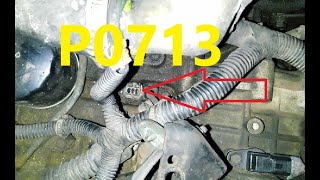
🎬 Watch: A quick overview of P0713 causes and fixes.Can I Drive With P0713?
yes_but_not_advised. You can drive short distances to a repair facility, but continued driving is dangerous and destructive. The transmission shifts harshly and enters a protective 'limp mode,' locking into 2nd or 3rd gear and severely limiting your speed in traffic. Ignoring this code forces the transmission to operate at maximum line pressure, which destroys internal clutch packs. This turns a $300 electrical repair into a $4,000 transmission rebuild.
Common Causes

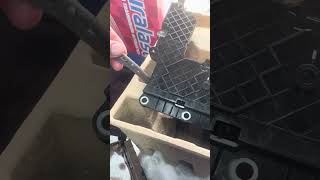
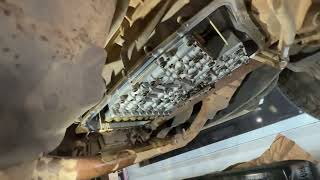
- Internal Transmission Harness Failure / Molded Lead Frame (Very Common) — On Ford, GM, and Hyundai/Kia vehicles, the TFT sensor is integrated into a plastic lead frame 🎬 Watch: How to rebuild and test 6L80 transmission circuits. or internal harness inside the oil pan. Constant heat exposure makes the plastic brittle, snapping the internal wires and creating an open circuit.
- Faulty Transmission Fluid Temperature (TFT) Sensor (Very Common) — The thermistor inside the sensor fails internally, breaking the electrical circuit. This sends a maximum 5V signal back to the computer, triggering the code.
- Faulty Transmission Solenoid Pack (Common) — On Ram trucks with the 68RFE transmission, the TFT sensor is permanently built into the solenoid pack. When the sensor fails, the entire solenoid assembly requires replacement.
- Damaged or Corroded External Wiring/Connectors (Common) — Road debris severs the external wiring harness, or exhaust heat melts it. Alternatively, road salt and water penetrate the main transmission connector, corroding the pins and breaking the electrical connection.
- Outdated PCM/TCM Software (Less Common) — Chrysler/Dodge released TSBs because original control module software was overly sensitive, setting false P0713 codes. A dealer software update resolves the issue without hardware changes.
- Faulty Powertrain/Transmission Control Module (PCM/TCM) (Rare) — The computer module itself suffers an internal circuit board failure, causing it to misread the signal from a perfectly functioning sensor and wiring harness. Rule out all other causes before replacing the PCM.
Symptoms

- Check Engine Light is On — The primary and immediate indicator of the P0713 fault.
- Vehicle Enters 'Limp Mode' — The computer locks the transmission in a single gear (usually 2nd or 3rd) and limits engine power to prevent perceived overheating damage.
- Harsh, Delayed, or Erratic Shifting — Lacking accurate temperature data, the computer defaults to maximum line pressure, causing violent, jerky gear changes.
- Torque Converter Clutch Fails to Engage — The TCM disables the torque converter clutch (TCC) lockup at highway speeds, resulting in abnormally high engine RPMs.
- False Transmission Overheat Warning — The dashboard displays a transmission overheat warning even when the vehicle is cold, driven by the false maximum voltage signal.
Diagnostic Flowchart

Tap your situation to follow the diagnostic path that matches what you're seeing on this code.
Common Fixes & Costs
- Replace the Internal Transmission Harness / Molded Lead Frame — Parts: $150-$300, Labor: $400-$1,200, ~4 hr book time (Advanced)
- Replace the Transmission Solenoid Pack — Parts: $350-$650, Labor: $450-$800, ~3.5 hr book time (Advanced)
- Repair Damaged External Wiring Harness or Connector — Parts: $20-$100, Labor: $150-$400, ~1.5 hr book time (Intermediate)
- Update/Re-flash PCM/TCM Software — Parts: $0, Labor: $100-$250, ~1 hr book time (Professional)
- Replace the Powertrain/Transmission Control Module (PCM/TCM) — Parts: $600-$1200, Labor: $200-$400, ~2 hr book time (Professional)
Used vs. New Parts: Buying Guide
When a used part is worth it: Never buy used internal electronic parts like lead frames or solenoid packs. They fail from heat cycles and age, making a used part a massive liability. Only buy used for external hard parts or a replacement PCM.
Donor-vehicle mileage cap: roughly under 60000 miles for the part to have meaningful remaining life.
Donor quality checklist:
- Verify the donor vehicle's mileage; lower is mandatory.
- Purchase from a reputable auto recycler with a physical location.
- Ensure the exact part number matches perfectly.
- Demand a minimum 90-day warranty.
Decision logic:
- If The failed part is an internal plastic component (lead frame, solenoid pack, internal harness) → Buy new OEM only. The labor cost to replace it dwarfs the part cost, making a used part a terrible financial risk.
- If The failed part is the PCM/TCM → A warrantied used or remanufactured module is a smart, cost-effective choice.
Warranty tradeoff: Used parts offer a 30-90 day warranty. New OEM parts carry a 1-2 year warranty. If a used internal part fails, you pay the $800 labor bill twice.
Worst-case if a used part fails: $1,200 if a used internal part fails, requiring a second teardown and replacement.
What Happens If You Wait — Timeline
- 0-1 week: Check Engine Light illuminates. Transmission occasionally shifts harshly. Scan tool shows P0713 and a fixed -40°F reading. (MPG impact: 0-5%% · Added cost: $0)
- 1 week - 2 months: Shifting becomes violently harsh. The torque converter clutch stops engaging, causing high RPMs on the highway. The vehicle frequently drops into 'limp mode' (locked in 3rd gear). (MPG impact: 5-12%% · Added cost: $50 in wasted fuel.)
- 2-6 months: The TCM constantly commands maximum line pressure to protect the transmission, which aggressively accelerates wear on internal clutch packs and seals. Fluid darkens and smells burnt. (MPG impact: 10-15%% · Added cost: $1,500 in premature internal clutch wear.)
- 6+ months: Catastrophic internal failure. The clutch packs burn out completely and the torque converter fails from excessive heat. The vehicle loses all forward gears. (MPG impact: 15-25%% · Added cost: $4,000+ for a complete transmission rebuild.)
Cost of Not Fixing It
- 0-1 Month: Persistent harsh shifting, frequent limp mode engagement, and a 10% drop in fuel economy. Drivability is severely compromised. (Added cost: $50 in wasted fuel.)
- 1-6 Months: Accelerated wear on transmission clutch packs due to the TCM commanding maximum line pressure. Fluid degrades rapidly from excess heat. (Added cost: $1,500 for premature clutch pack replacement.)
- 6+ Months: Catastrophic internal transmission failure. Burnt clutches and destroyed seals require a complete transmission overhaul. (Added cost: $4,000+ for a complete transmission rebuild or replacement.)
Diagnosis Steps
- Analyze Live Data with a Scan Tool
Connect an OBD-II scanner capable of reading live transmission data. With a cold engine, check the Transmission Fluid Temperature (TFT). If it reads a fixed, impossible value like -40°F, you have confirmed a hard electrical open circuit.
Tools: OBD-II Scanner with Live Data (Beginner) - Check the Transmission Fluid
Pull the transmission dipstick (if equipped). Low, black, or burnt-smelling fluid indicates severe mechanical damage that supersedes a simple electrical diagnosis.
Tools: Rag (Beginner) - Visually Inspect External Wiring and Connectors
Inspect the wiring harness running from the PCM to the transmission. Look for melted wires near the exhaust. Disconnect the main transmission connector and check for green corrosion or pushed-back pins.
Tools: Flashlight (Beginner) - Perform a Jumper Wire Test (Pro Tip)
Disconnect the main transmission harness connector. Insert a fused jumper wire between the TFT signal pin and the ground pin on the harness side. Watch the live data on your scanner. If the temperature jumps from -40°F to 300°F+, the external wiring and PCM are perfect; the fault is inside the transmission.
Tools: OBD-II Scanner, Fused Jumper Wire, Wiring Diagram (Intermediate) - Test for 5V Reference and Ground at the Connector
Turn the key ON (engine off). Use a multimeter to probe the harness connector. You must find a 5-volt reference signal from the PCM on one pin, and less than 0.1 ohms of resistance to chassis ground on the other. Missing either indicates a broken external wire.
Tools: Multimeter, Vehicle Wiring Diagram (Intermediate) - Check for an Open in the Signal Wire
If the 5V reference is missing, disconnect the PCM connector and the transmission connector. Use a multimeter to check continuity on the signal wire from end to end. An 'OL' reading confirms a severed wire requiring repair.
Tools: Multimeter, Vehicle Wiring Diagram (Advanced) - Perform a Voltage Drop Test on the Ground Circuit
Set your multimeter to DC volts. Connect the red lead to the ground pin on the sensor connector and the black lead to the negative battery terminal. With the key ON, the reading must be under 100 millivolts (0.1V). Higher readings indicate a corroded ground.
Tools: Multimeter, Back-probe Kit (Advanced) - Test the TFT Sensor's Resistance
If you can access the sensor pins directly, measure resistance (ohms) across them. Compare the reading to the manufacturer's temperature chart (e.g., 37,000 Ohms at 50°F). An 'OL' reading confirms the sensor has failed internally.
Tools: Multimeter, Vehicle Service Manual (Advanced)
When This Code Triggers (Freeze-Frame Conditions)
- Engine Coolant Temp: 180-200°F (Fully warmed up, stable operating temperature.)
- RPM: 1500-2500 (Steady throttle application, such as highway cruising.)
- Engine Load: 30-60% (Moderate load while maintaining speed on a flat road.)
- Vehicle Speed: 35-55 mph (Sustained driving at city or highway speeds.)
Related Codes
- P0710 — Indicates a general malfunction in the TFT sensor circuit. P0713 is the specific 'Circuit High' (open circuit) version of this generic code.
- P0712 — The exact opposite of P0713. P0712 means 'Circuit Low' (a short to ground), causing the computer to read an impossibly high temperature like 300°F+.
- P0711 — Indicates the sensor's readings are illogical or stuck at one temperature, whereas P0713 is a hard electrical open circuit.
- P0714 — Indicates the signal is dropping out sporadically (intermittent connection). P0713 is a constant, hard fault.
- P0869 — Transmission Line Pressure High. The TCM commands maximum pressure to protect clutches when it loses the temperature signal from the P0713 fault.
Climate & Environmental Factors
- Road Salt & Humidity: Saltwater spray penetrates external connector seals, causing copper pins to oxidize (turn green). This increases resistance and creates the open circuit that triggers P0713.
- Extreme Heat Cycles: Constant exposure to 200°F+ transmission fluid makes internal plastic components (lead frames, harnesses) brittle. The plastic cracks, severing the internal copper wires.
How to Talk to a Mechanic About This Code
Say this: "I have a P0713 code and the transmission is shifting harshly. I know this code indicates an open circuit for the transmission temp sensor. Can you please start by testing the external wiring and performing a jumper wire test before recommending any internal transmission work?"
This proves you understand the code is an electrical fault, not a mechanical failure. It directs the technician to perform the cheapest diagnostic steps first, preventing them from immediately quoting a $4,000 transmission rebuild.
Avoid saying:
- My transmission is failing, can you fix it?
- My check engine light is on, can you look at it?
- Just replace the transmission temperature sensor.
Questions to ask before authorizing the repair:
- Did you see a fixed -40 degree reading on the scan tool?
- Did you perform a jumper wire test to confirm the fault is internal?
- If the fault is internal, can you show me the failed part after it's removed?
- What is the warranty on the parts and labor for this specific repair?
Where to Take It: Dealer vs Independent vs Chain
- Dealer:
Recommended only if a TSB software flash is needed or the vehicle is under warranty. Otherwise, an independent shop is far more cost-effective.
Best for: Vehicles under warranty or covered by a specific recall/TSB., When a manufacturer-specific software update is the first recommended step (mandatory for Ram trucks).
Downsides: Highest labor rates., Quick to recommend replacing large, expensive assemblies (like a whole valve body) rather than smaller components. (Typical cost: +50% vs. baseline) - Independent Shop:
Best overall fit. A reputable independent transmission shop is perfectly equipped to diagnose and repair P0713 correctly.
Best for: Out-of-warranty vehicles where the cause is a well-known issue (Ford lead frame, Hyundai harness)., Cost-conscious owners who want a proper diagnosis without dealer prices.
Downsides: Quality varies widely; vetting is crucial., Lacks access to the latest manufacturer software updates. (Typical cost: +0% vs. baseline) - Chain Shop:
AVOID. The risk of misdiagnosis or an incorrect repair is extremely high. This code requires diagnostic capabilities beyond standard chain shops.
Best for: Reading the initial code for free.
Downsides: Technician skill varies dramatically., Not equipped for internal transmission work like replacing lead frames or solenoid packs., High pressure to upsell useless services (like a transmission flush) that will not fix an electrical code. (Typical cost: -10% vs. baseline)
When to Walk Away From the Repair
If the estimated repair cost for P0713 exceeds 40-50% of your car's private-party value, pause and consider your options.
- Car worth $10000, fix is $1200: Fix it. This repair cost is well below the threshold and restores critical vehicle function.
- Car worth $4500, fix is $2200: Borderline. At 50% of the car's value, get a second opinion. If the rest of the car is flawless, it is worth it. If not, consider selling.
- Car worth $3000, fix is $2500: Walk away. The repair cost is far too high relative to the vehicle's value. Do not authorize this repair.
What Scan Tool You Need for This Code
Minimum: An OBD-II scanner that reads and displays live transmission data. A basic $20 code reader is useless for diagnosing P0713.
To diagnose P0713, you must see the live transmission fluid temperature reading. Confirming it is stuck at -40°F is the mandatory first diagnostic step.
Budget: BlueDriver Pro Bluetooth Scanner (~$120) — Connects to your smartphone to display live data, including transmission temperature on most vehicles. Reads and clears specific transmission codes.
Mid-range: Autel MaxiCOM MK808 (~$350) — Offers dedicated access to the Transmission Control Module (TCM). Provides reliable live data graphing for the TFT sensor and performs manufacturer-specific resets.
Professional: Launch X431 Series (~$800) — Provides full bidirectional control to test components, access to all manufacturer data, and the ability to perform transmission relearn procedures after part replacement.
Rent vs buy: AutoZone's Loan-A-Tool program allows you to borrow a capable scanner for free (with a refundable deposit). This is the best option for a one-time diagnosis.
How to Clear the Code After You Fix It
- Use an OBD-II scan tool to clear the P0713 code and any related transmission codes.
- Perform a complete OBD-II drive cycle to allow the vehicle's readiness monitors to run.
- Verify the live TFT data matches the engine coolant temperature before driving.
Drive cycle (~30 minutes): Start with a cold engine. Idle for 3 minutes. Drive for 20 minutes with mixed stop-and-go city conditions and steady highway speeds (55 mph for 5 minutes). Allow the vehicle to cool down completely.
Readiness monitors affected: Catalyst Monitor, Oxygen (O2) Sensor Monitor, Evaporative System Monitor
Before emissions retest: drive at least 100 miles to fully set monitors.
Watch out for:
- Disconnecting the battery does not reliably clear transmission fault codes on modern vehicles.
- The P0713 code returns immediately upon startup if the electrical open circuit was not physically repaired.
- Attempting an emissions test before the readiness monitors set to 'Ready' guarantees a failure.
Will This Fail Emissions / State Inspection?
Yes — this code typically fails an OBD-II emissions inspection.
- California: A Check Engine Light from code P0713 is an automatic failure. You must complete a full drive cycle after repair to set all OBD-II readiness monitors.
- New York: An active P0713 code causes an immediate failure of the NYS DMV OBD-II emissions inspection.
- Texas: In the 17 emissions-testing counties, an illuminated Check Engine Light due to P0713 results in an automatic inspection failure.
Most Commonly Affected Vehicles
- Ford F-150, Explorer, Mustang (2011-2018) — Extremely common failure of the molded lead frame (Part #AL3Z-7G276-D) in the 6R80 transmission. Replaces the internal harness, TFT sensor, and speed sensors.
- Ram 2500/3500 (2013-2018) — On 68RFE transmissions, the TFT sensor is integrated into the solenoid pack. Always check for software update TSB #18-043-17 before replacing hardware.
- Hyundai/Kia Sonata, Optima, Elantra, Santa Fe (2011-2016) — TSB 14-AT-010 documents the failure of the internal transmission wire harness (Part #46307-3B650), which becomes brittle and cracks, causing an open circuit.
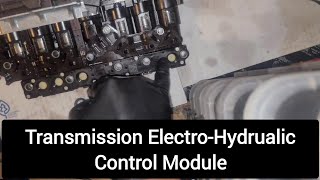
- Chevrolet / GMC Silverado, Sierra, Tahoe, Suburban (2007-2018) — The TFT sensor is part of the Transmission Electro-Hydraulic Control Module (TEHCM) on 6L80/6L90 transmissions. Sensor failure requires replacing and programming the entire TEHCM.
- Nissan Rogue, Sentra, Altima (2013-2019) — Triggered by a faulty internal wiring harness or TFT sensor located inside the CVT transmission pan.
- Honda Civic, Accord, CR-V (2016-2023) — Prone to faulty TFT sensors and external wiring corrosion in CVT models.
- Toyota Corolla, Camry, RAV4 (2015-2022) — Corroded wiring and connectors between the TFT sensor and the TCM are the primary cause in regions with heavy road salt.
- BMW X3, X5, 3-Series (2015-2024) — The sensor is integrated into the complex mechatronics unit inside the transmission, making replacement a highly specialized and expensive repair.
Manufacturer-Specific Notes
- Ford: The molded lead frame in the 6R80 transmission is the infamous cause. Ford extended the warranty to 10 years/150,000 miles under program 19N01, but this has expired for most vehicles.
- Ram (Dodge/Chrysler): Always check for a PCM software update first. TSB 18-043-17 changes P0713 from a one-trip to a two-trip fault, preventing false alarms and saving you from buying a $600 solenoid pack.
- General Motors (Chevy/GMC): On 6L80/6L90 transmissions, a simple $20 sensor failure forces you to replace the entire $600 TEHCM unit, which also requires dealer-level programming upon installation.
- Hyundai/Kia: The internal transmission wire harness is the weak link. The part is cheap ($150), but requires dropping the pan and valve body to replace per TSB 14-AT-010.
Real Owner Stories
2013 Ford F-150 5.0L at 100K miles
Check engine light illuminated, and the transmission randomly dropped into 'limp mode,' getting stuck in 3rd gear. Codes P0720 and P0722 (speed sensor circuit) were also present.
What they tried:
- Dealer flashed the PCM with a software update, but the issue returned immediately.
- Dealer misdiagnosed the problem as a failed transmission and quoted $6,700 for a replacement.
Outcome: The owner rejected the dealer's quote and identified the well-known 6R80 transmission molded lead frame failure. The lead frame houses both the speed sensors and the temperature sensor. An independent shop replaced the lead frame (Part #AL3Z-7G276-D) for $850, permanently resolving all codes.
Lesson: If you have P0713 alongside speed sensor codes (P0720, P0722) on a Ford 6R80 transmission, the molded lead frame is the culprit. Never authorize a full transmission replacement without replacing this $200 internal part first.
2013 Ram 3500 6.7L Cummins at 150K miles
Check Engine Light on with code P0713. Transmission shifted harshly and the torque converter refused to lock up at highway speeds. Scan tool showed a fixed -40°F temperature reading.
What they tried:
- Verified the truck's PCM software was up-to-date per Chrysler TSBs.
- Inspected the main transmission wiring harness and performed electrical continuity tests, confirming the external wiring was flawless.
Outcome: Diagnosis confirmed an internal failure. On the 68RFE transmission, the TFT sensor is permanently integrated into the solenoid pack. An independent shop replaced the solenoid pack (Mopar #68353383AC), fluid, and filters for $1,200. The code cleared and did not return.
Lesson: On Ram 68RFE transmissions, the TFT sensor is not a standalone part. After verifying external wiring and software updates, you must replace the entire solenoid pack.
2011 Hyundai Sonata at 120K miles
Check Engine Light on with P0713. The car experienced violent, delayed shifting after warming up. Scan tool showed TFT reading -40°F.
What they tried:
- A local mechanic quoted a $3,500 transmission rebuild, assuming the harsh shifting indicated destroyed internal clutches.
Outcome: The owner found Hyundai TSB 14-AT-010, which identifies brittle internal wire harnesses as the root cause. A different shop replaced the internal harness (Part #46307-3B650) for $900, completely resolving the issue.
Lesson: Always search for Technical Service Bulletins (TSBs). The Hyundai/Kia internal harness failure is incredibly common. A simple $150 harness replacement fixes the problem and prevents an unnecessary transmission rebuild.
How to Prevent This Code From Triggering
- Perform regular transmission fluid and filter changes (Every 30,000-60,000 miles) — Clean fluid manages heat effectively. Degraded fluid causes overheating, which accelerates the aging and brittleness of internal plastic parts like harnesses and lead frames.
- Install an auxiliary transmission cooler (One-time installation for towing vehicles) — Excess heat kills electronic components. An auxiliary cooler reduces operating temperatures, preserving the life of the internal plastic wiring components that trigger P0713.
- Protect and secure external wiring connectors (During any under-vehicle service) — Applying dielectric grease to the main transmission connector seals out moisture and prevents pin corrosion. Securing the harness away from hot exhaust pipes prevents melted wires and open circuits.
Frequently Asked Questions
My scanner shows -40°F for the transmission temp. Is that related to P0713?
Yes. When the sensor circuit breaks (opens), the computer loses the signal and defaults to its lowest programmed value, typically -40°F. This confirms an electrical open circuit, not an actual temperature problem.
What is the most common misdiagnosis for a P0713 code?
Mechanics frequently replace the internal sensor or lead frame without testing the external wiring first. A broken wire or corroded pin in the external harness causes the exact same code. Always test the external harness for continuity before opening the transmission.
Can I just clear the code and keep driving?
No. P0713 is a hard electrical fault that returns immediately upon clearing. Driving with this code forces the transmission into maximum line pressure, which destroys internal clutch packs within a few months.
Will a P0713 code cause my car to fail an emissions test?
Yes. P0713 illuminates the Check Engine Light, resulting in an automatic failure during an OBD-II emissions inspection. You must repair the fault and complete a full drive cycle to pass.
How much does it cost to fix P0713?
Costs range from $150 for a simple external wiring repair to $1,200+ for replacing an internal lead frame or solenoid pack. Dealer software updates cost around $150. Accurate diagnosis prevents wasting money on unnecessary $4,000 transmission rebuilds.
What's the difference between P0712 and P0713?
P0713 means the circuit voltage is too high (an open wire), causing the computer to read -40°F. P0712 means the voltage is too low (a short to ground), causing the computer to read an impossibly high temperature like 300°F+. Both are electrical faults on the same circuit.
Can I replace just the TFT sensor?
On older vehicles, the TFT is a standalone, inexpensive screw-in sensor. On most modern vehicles (Ford, Ram, GM, Hyundai), the sensor is permanently integrated into a larger, expensive component like a molded lead frame or solenoid pack. You must replace the entire assembly.
Key Takeaways
- A scan tool showing a fixed transmission fluid temperature of -40°F or a voltage over 4.9V confirms an open electrical circuit, not a mechanical failure.
- Perform a jumper wire test at the main transmission connector to instantly determine if the open circuit is inside the transmission or in the external wiring.
- On 2011-2018 Ford 6R80 and Hyundai/Kia transmissions, replacing the internal molded lead frame or wiring harness ($600-$1,200 total cost) resolves 90% of P0713 codes.
- Do not drive with an active P0713 code for more than 50 miles, as the resulting maximum line pressure and disabled torque converter clutch will destroy the internal clutch packs.
Helpful Videos

The information in this article is provided for general reference and educational purposes only. Vehicle specifications, procedures, and part compatibility can vary by production date, trim level, and region. Always consult your vehicle's factory service manual and verify part numbers before purchasing or performing repairs. Safety-critical components such as airbags, seat belts, and braking systems should be installed by a qualified professional.
- 🎬 Helpful Videos
- What Does P0713 Mean?
- Can I Drive With P0713?
- Common Causes
- Symptoms
- Diagnostic Flowchart
- Common Fixes & Costs
- Used vs. New Parts: Buying Guide
- What Happens If You Wait — Timeline
- Cost of Not Fixing It
- Diagnosis Steps
- When This Code Triggers (Freeze-Frame Conditions)
- Related Codes
- Climate & Environmental Factors
- How to Talk to a Mechanic About This Code
- Where to Take It: Dealer vs Independent vs Chain
- When to Walk Away From the Repair
- What Scan Tool You Need for This Code
- How to Clear the Code After You Fix It
- Will This Fail Emissions / State Inspection?
- Most Commonly Affected Vehicles
- Manufacturer-Specific Notes
- Real Owner Stories
- 2013 Ford F-150 5.0L at 100K miles
- 2013 Ram 3500 6.7L Cummins at 150K miles
- 2011 Hyundai Sonata at 120K miles
- How to Prevent This Code From Triggering
- Frequently Asked Questions
- My scanner shows -40°F for the transmission temp. Is that related to P0713?
- What is the most common misdiagnosis for a P0713 code?
- Can I just clear the code and keep driving?
- Will a P0713 code cause my car to fail an emissions test?
- How much does it cost to fix P0713?
- What's the difference between P0712 and P0713?
- Can I replace just the TFT sensor?
- Key Takeaways
- 🎟️ Get 5% Off