

P0934 on 2016-2022 Honda Pilot: Hydraulic Pressure Sensor Circuit Low Explained
P0934 is a generic code for a low voltage signal from the transmission hydraulic pressure sensor. However, this code is not a documented common issue for the 2016-2022 Honda Pilot. The problem is likely an electrical fault (sensor or wiring), but diagnosis requires identifying which transmission your Pilot has (6-speed or 9-speed) as the parts and procedures differ significantly. For the 6-speed, this often points to a faulty clutch pressure switch, while on the 9-speed, it may indicate a more c
- P0934 is a very rare code for a 2016-2022 Honda Pilot. The most common transmission problems on this vehicle are related to other issues and have different trouble codes.
- The first step in any diagnosis is to determine if your Pilot has the 6-speed or 9-speed transmission, as the parts and procedures are not interchangeable.
- The code indicates an electrical fault (bad sensor, bad wiring) and not necessarily a mechanical failure of the transmission.
- Due to the lack of specific information and the complexity of modern transmissions, it is highly recommended to have this code diagnosed by a professional mechanic with access to Honda-specific diagnostic tools and wiring diagrams.
What's Unique About the 2016-2022 Honda Pilot
The 2016-2022 Honda Pilot generation is unique because it was equipped with two different automatic transmissions: a Honda-built 6-speed automatic (in lower trims like LX, EX, EX-L) and a ZF-manufactured 9-speed automatic (in higher trims like Touring and Elite). The location, part number, and diagnostic procedure for a hydraulic pressure sensor are completely different between these two units. Critically, extensive searches for this code reveal no common complaints or forum posts linking P0934 specifically to the Honda Pilot. However, other vehicles using the same ZF 9-speed (like Jeeps and Chryslers) do report P0934, often caused by an internal transmission wiring harness or sensor module. For the Honda 6-speed, similar codes on platform-mate vehicles often point to a failure of a specific, externally-mounted clutch pressure switch. The most widely reported transmission issues for this Pilot generation involve torque converter judder (P0741) or general harsh shifting, not P0934.
Symptoms You May Notice
- Check Engine Light is on
- Transmission warning light is illuminated
- Flashing 'D' (Drive) indicator light on the dashboard
- Harsh or delayed gear shifts
- Vehicle is stuck in 'limp mode' (will not shift out of a single gear)
- Poor acceleration
- Transmission slipping (engine RPMs rise without an increase in speed)
- Replacing the entire transmission. This code points to a specific electrical circuit fault. Condemning the entire transmission without proper electrical diagnosis is almost always incorrect.
- Replacing the valve body. While the sensor may be located on the valve body (especially in the 9-speed), the valve body itself is usually not the cause of a 'circuit low' code.
Most Likely Causes
- Faulty Transmission Clutch Pressure Switch (6-Speed) 🟡 Medium Probability While not widely reported on the Pilot specifically, failure of individual clutch pressure switches (e.g., 3rd or 4th gear) is a very common issue on other Honda V6 models sharing similar transmission designs, like the Odyssey and older Pilots. These switches can fail electrically, causing a circuit low code.
How to confirm: A technician would identify the specific pressure switch in question using a wiring diagram, test its circuit for shorts, and monitor its status (On/Off) with a professional scan tool while driving or manually grounding the circuit.
Typical fix: Replace the faulty pressure switch. These are typically threaded into the outside of the transmission case and are relatively accessible after removing a splash shield.
Est. part cost: $40-$100 - Faulty Transmission Hydraulic Pressure Sensor / Internal Harness (9-Speed) 🟡 Medium Probability This is a known issue on other vehicles from manufacturers like Jeep and Chrysler that use the same ZF 9HP transmission. The pressure sensors may be integrated into an internal wiring harness or valve body assembly, making them susceptible to failure from heat and vibration over time.
How to confirm: Diagnosis requires a professional scan tool to monitor sensor voltage. If the voltage is stuck low, the technician must gain access to the transmission's internal valve body to test the harness and sensor directly. This is a labor-intensive process.
Typical fix: Replace the internal transmission wiring harness or the valve body assembly, depending on how the sensor is integrated. This requires removing the transmission pan and valve body.
Est. part cost: $200-$600 - Wiring Harness or Connector Issue 🟡 Medium Probability This is a generic potential cause. Wires can become damaged from heat, vibration, or impact on any vehicle. Connectors to the transmission are exposed to the elements and can corrode.
How to confirm: Visually inspect the wiring harness leading to the transmission pressure sensor(s) for any signs of damage, corrosion, or loose connections. A multimeter would be used to check for a short to ground or an open circuit between the TCM and the sensor connector.
Typical fix: Repair the damaged section of the wiring harness or clean/replace the faulty connector.
Est. part cost: $10-$100 - Low or Contaminated Transmission Fluid ⚪ Low Probability While possible on any vehicle, this code specifically points to an electrical circuit fault, not necessarily low pressure. However, extremely low or aerated fluid could cause erratic hydraulic behavior that might be misinterpreted by the system.
How to confirm: Check the transmission fluid level and condition according to the manufacturer's procedure. Note that the 9-speed transmission does not have a traditional dipstick and requires a specific service procedure to check the level.
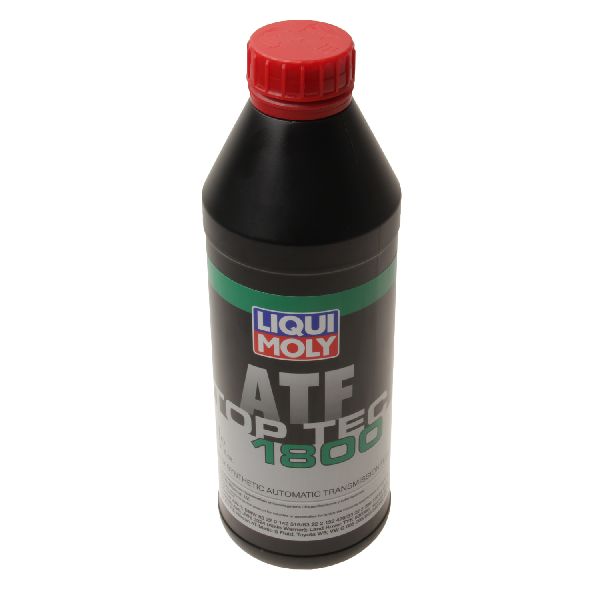
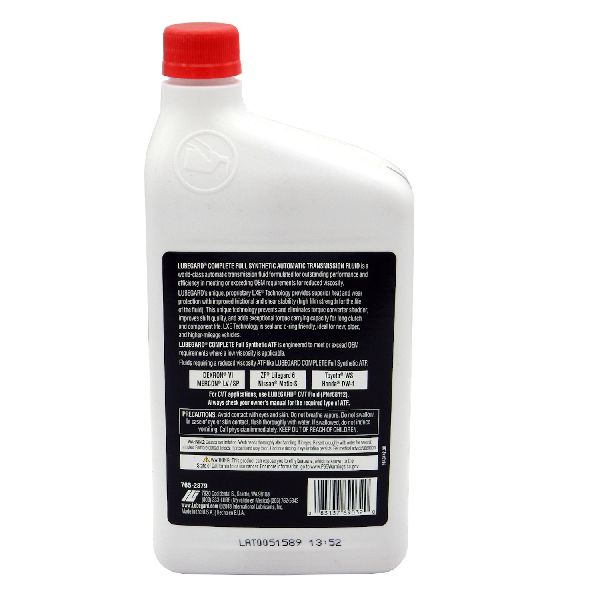
Typical fix: Perform a transmission fluid drain-and-fill or flush using the correct Honda-specified fluid (ATF DW-1 for the 6-speed, Type 3.1 for the 9-speed).
Est. part cost: $100-$300
Rare But Worth Checking
- Faulty Transmission Control Module (TCM) or Powertrain Control Module (PCM): This is extremely rare. The control module should only be considered after all other possibilities, including the sensor and wiring, have been exhaustively tested and ruled out. A weak vehicle battery can also sometimes cause erroneous low voltage codes.
Diagnosis Steps
- Confirm Transmission Type: First, identify if your Pilot has the 6-speed (with a conventional gear shift lever) or the 9-speed (with a push-button shifter). This is essential as all subsequent steps depend on it.
- Scan for Codes: Use an OBD-II scanner to confirm P0934 is the primary code. Note any other transmission-related codes, especially more specific pressure switch codes like P0847.
- Check Transmission Fluid: Check the level and condition of the transmission fluid. Ensure the correct fluid type is being used. Note that the 9-speed has a specific, more complex procedure for this.
- Inspect Wiring and Connectors: Visually inspect the main transmission wiring harness and any accessible sensor connectors. Look for obvious damage, corrosion, or loose pins.
- Research Specific Failures: Given the code's rarity on the Pilot, research common pressure sensor failures for your specific transmission (Honda 6AT or ZF 9HP) on other vehicles. For the 6-speed, this will point to individual clutch pressure switches. For the 9-speed, this will point to internal harness issues on other brands.
- Test the Circuit: Using a multimeter and the correct wiring diagram for your specific transmission, disconnect the sensor and check for the 5V reference signal from the TCM and for continuity to ground. A 'circuit low' code often indicates a short to ground.
- Test the Sensor: If the wiring is confirmed to be good, the sensor itself is the most likely culprit. It can be tested with a multimeter or by observing its voltage output on a professional scan tool.
- Seek Professional Help: Due to the complexity, the differences between the two transmissions, and the lack of specific information for this model, professional diagnosis is highly recommended.
Parts You'll Likely Need
- 3rd Clutch Transmission Fluid Pressure Switch (for 6-Speed)
(OEM #28600-RKE-004)— On Honda 6-speed automatic transmissions, this specific switch is a common failure point that can cause circuit-related fault codes.
Trusted brands: Honda (OEM), Standard Motor Products, Rostra
OEM price range: $60-$90
Aftermarket price range: $30-$50 - Internal Transmission Wire Harness (for 9-Speed)
Related Codes That Often Appear With This One
- P0700 — P0700 is a generic code that simply means the Transmission Control Module (TCM) has stored a fault code. P0934 is the specific fault that the TCM detected.
- P0935 — This is the opposite code, 'Hydraulic Pressure Sensor Circuit High'. Seeing either code points to a problem within the same sensor circuit.
- P0847 / P0848 — These codes refer to the '3rd Clutch Transmission Fluid Pressure Switch Circuit Low/High' respectively. On a Honda 6-speed, these are more specific versions of the general P0934 fault and strongly point to a failed 3rd gear pressure switch.
Technical Service Bulletins (TSBs) & Recalls
- TSB 15-086: Addresses a vibration or judder in 6-speed models, fixed by a software update and ATF change. While not for P0934, it's a key TSB for the 6-speed transmission.
- TSB 16-091: Also addresses torque converter judder on 2016 Pilots with the 6-speed, identifying deteriorated ATF as the cause and prescribing a fluid flush as a temporary fix pending a software update.
- TSB 17-040: A follow-up to 15-086 for judder that returns after the initial software update, potentially requiring torque converter replacement.
Mechanic-Grade Diagnostic Values
- 6-Speed Transmission Pressure Switch Voltage (at connector, key on) — expected: 5V or 12V reference from TCM/PCM. Failure: No voltage at the connector pin points to a wiring or TCM issue, not the switch itself.
- 6-Speed Transmission Pressure Switch State (on scan tool) — expected: Should change state from 'Off' to 'On' (or vice-versa) when the corresponding gear is engaged.. Failure: If the switch state does not change during a test drive, it indicates a faulty switch or circuit.
- 6-Speed Transmission Pressure Switch Manual Ground Test — expected: When the sensor wire is manually grounded with a jumper, the scan tool should show the switch status change to 'Closed' or 'On'.. Failure: If the status changes when manually grounded, it proves the wiring and TCM are good, isolating the fault to the switch itself.
- Generic Hydraulic Pressure Sensor Signal Voltage (P0934 Trigger) — expected: 0.5V to 4.75V. Failure: Voltage below 0.3V - 0.35V for a set period triggers the P0934 code.
Scan Tool Commands That Help
- Honda HDS (Honda Diagnostic System): Live Data Monitoring (Data List) — To monitor the On/Off status of individual transmission pressure switches in real-time during a test drive. This is the primary method to confirm if a specific switch on a 6-speed transmission is failing to actuate.
- Honda HDS (Honda Diagnostic System): Snapshot Function — To capture all vehicle data values at the exact moment a fault (like a harsh shift) occurs. This helps correlate the fault with the pressure switch status.
- Honda HDS (or capable bidirectional scanner): TCM Software Update — For 9-speed models experiencing harsh or jerky shifts. Honda issued TSB 20-029, which involves updating the TCM software to correct abnormal adaptation values. This should be checked before assuming a hardware fault.
- Honda HDS (or capable bidirectional scanner): PCM Idle Learn Procedure — Specifically required on 2016 Pilot models after performing the TCM software update per TSB 20-029. Failure to perform this step can cause a hard shift and a comeback.
Wiring & Ground Locations
- PCM Connector B (51-Pin) — Located at the Powertrain Control Module (PCM).. For the 6-speed transmission, the 3rd clutch pressure switch signal wire (OP3SW) goes to Pin 25 of this connector. A diagnostic step for the related code P0847 is to check for continuity to ground at this pin, which would indicate a short in the harness.
Real Owner Repair Stories
- YouTube channel 'Maverick Mike Kauai' (2010 Honda Fit (Note: Different model, but same Honda pressure switch design and P0847 code logic)) — Check engine light on, intermittent flashing 'D' indicator light.
❌ Tried (didn't work) Initial test drive did not immediately replicate the flashing 'D' light.
✅ What actually fixed it The problem was identified as a common failure of the transmission fluid pressure switch. The research noted that Honda had redesigned the part (new P/N 28600-RG5-004 for that model) because the original design allowed moisture entry. Replacing the faulty pressure switch resolved the P0847 code. - YouTube channel 'RB The Mechanic' (2009 Honda CR-V (Note: Different model, but same Honda pressure switch design and P0847 code logic)) — Flashing 'D' light and check engine light with code P0847.
✅ What actually fixed it The video diagnoses and replaces the 3rd clutch pressure switch. The fix was successful, and the codes were cleared. This confirms the pressure switch as the direct cause for the P0847 code on similar Honda platforms.
OEM Part Supersession History
28600-RAY-003, 28600-RAY-013, 28600-P7W-013, 28600-P7W-003, 28600-RGR-004→28600-RKE-004— Part consolidation and potential design updates across multiple Honda/Acura models.
Heads up: While 28600-RKE-004 is the primary replacement, always verify fitment with the vehicle's VIN as different switches are used for different clutch packs on the same transmission.
Model Year Variations Within This Range
- 2016: When performing the TCM software update for harsh shifting on 9-speed models (TSB 20-029), 2016 Pilots specifically require a subsequent 'PCM idle learn procedure'. Later model years (2017-2019) covered by the same TSB do not require this additional step.
- 2016-2020 (6-Speed A/T): These models are subject to TSB 23-073 for a 'Transmission Temp Too Hot' message caused by fluid deterioration. The fix involves a software update and a triple fluid flush. This issue is specific to the 6-speed transmission.
Diagnostic Flowchart
Other Known Issues on This Vehicle
Issues unrelated to this code that are worth knowing about as an owner of this generation:
- ZF 9-Speed Transmission Shift Quality 🟠 Medium — Very common on 2016-2020 models. Symptoms include harsh/jerky shifts (especially 1-2), hesitation, and software-related issues. Multiple TSBs were issued for software updates. (Ref: Multiple software update TSBs (e.g., A15110F) were released to improve shift logic.)
- 6-Speed Torque Converter Judder (P0741) 🔴 High — Common on 2016-2018 models. A vibration or judder is felt between 20-60 mph under light acceleration due to deteriorated transmission fluid and/or torque converter issues. (Ref: TSB 15-086 and TSB 16-091 address this with fluid flushes, software updates, and potential torque converter replacement under an extended warranty.)
- Fuel Injector Failures 🔴 High — Common enough on 2016-2019 models to warrant a warranty extension. Can cause misfires (P030x codes) and catalyst codes (P0420/P0430). (Ref: Warranty Extension (TSB 20-100, 21-010) covers fuel injectors for 10 years/150,000 miles.)
- Infotainment System Glitches 🟡 Low — Frequently reported across all years. Symptoms include the screen freezing, going black, and popping/crackling from speakers. (Ref: TSB 23-047 addresses issues with the MOST bus network connectors causing these problems.)
- Auto Idle Stop Restart Failure 🟠 Medium — Reported on 2016-2022 models. The engine may not restart after an auto-stop event, sometimes due to water intrusion in the starter motor or other software issues. (Ref: TSB 23-023 addresses starter motor replacement due to water intrusion.)
Used vs. New Parts: Buying Guide for This Vehicle
When a used part is the smart pick: For the 6-speed transmission, a used pressure switch is generally not recommended due to the low cost of a new aftermarket part and the high failure rate of the original components. For the 9-speed, if the issue is confirmed to be the internal harness, a used harness from a low-mileage, verified-compatible donor vehicle could be a cost-effective alternative to a new OEM part, provided it is thoroughly inspected.
Donor-vehicle mileage cap: roughly under 50000 miles for the part to have meaningful remaining life.
What to inspect on the donor part:
- For a used 9-speed internal harness, verify the donor vehicle was a 2017+ model to potentially avoid early production issues.
- Inspect all connectors for bent, corroded, or pushed-out pins.
- Check for wire brittleness; the outer sheathing should be flexible, not cracked.
- Ensure the harness came from a vehicle without a flood or fire salvage title.
OEM-only on this vehicle (don't cheap out):
- Transmission Control Module (TCM) - Aftermarket or used modules often have compatibility and programming issues.
- Internal Transmission Harness (9-Speed) - While a used part is an option, OEM is the safest bet for fitment and longevity. Part number 28220-5EY-000 is listed for some 9-speed applications, but VIN confirmation is mandatory.
Aftermarket brands forum-validated for this vehicle:
- Standard Motor Products (SMP)
- Rostra (for transmission switches and solenoids)
Brands owners have reported issues with on this vehicle:
- No-name, unbranded sensors from online marketplaces often have high defect rates and may not meet OEM specifications for pressure and temperature resistance.
Real Owner Stories
Aggregated from forums and TSBs cited above. Mileages and costs reflect what owners reported in those sources.
Jeep Cherokee with ZF 9-speed transmission
Symptoms: Check Engine Light with code P0934 stored.
What fixed it: The consensus fix was replacing a faulty internal wiring harness/sensor assembly, which required removing the transmission's valve body.
Source hint: JeepCherokeeClub.com
Honda Odyssey with V6 and 6-speed automatic
Symptoms: Flashing 'D' (Drive) indicator light and transmission codes like P0847.
What fixed it: Replacing the failed 3rd or 4th gear pressure switch (e.g., part 28600-RKE-004) resolved the issue.
Source hint: Odyclub.com
Ram truck
Symptoms: Check Engine Light with code P0934.
What fixed it: Repairs included replacing faulty sensors or cracked internal transmission filters.
Source hint: RamForum.com
Related OBD-II Codes
Frequently Asked Questions
How do I know if my Pilot has the 6-speed or 9-speed transmission, and why does it matter for code P0934?
I have a 9-speed Pilot. What's the most likely cause of P0934 based on other vehicles?
My 6-speed Pilot is showing a flashing 'D' light. What's the probable cause?
Can I check the transmission fluid myself to rule out a simple cause for P0934?
What specific transmission fluid does my 2016-2022 Pilot require?
My Pilot has a juddering feeling. Are any of the TSBs mentioned related to this?
Used OEM Parts in Stock

New Aftermarket Parts Available


The information in this article is provided for general reference and educational purposes only. Vehicle specifications, procedures, and part compatibility can vary by production date, trim level, and region. Always consult your vehicle's factory service manual and verify part numbers before purchasing or performing repairs. Safety-critical components such as airbags, seat belts, and braking systems should be installed by a qualified professional.
- Honda Pilot:
- 🛍️ Shop This Part
- What's Unique About the 2016-2022 Honda Pilot
- Symptoms You May Notice
- Most Likely Causes
- Rare But Worth Checking
- Diagnosis Steps
- Parts You'll Likely Need
- Related Codes That Often Appear With This One
- Technical Service Bulletins (TSBs) & Recalls
- Mechanic-Grade Diagnostic Values
- Scan Tool Commands That Help
- Wiring & Ground Locations
- Real Owner Repair Stories
- OEM Part Supersession History
- Model Year Variations Within This Range
- Diagnostic Flowchart
- Other Known Issues on This Vehicle
- Used vs. New Parts: Buying Guide for This Vehicle
- Real Owner Stories
- Jeep Cherokee with ZF 9-speed transmission
- Honda Odyssey with V6 and 6-speed automatic
- Ram truck
- Related OBD-II Codes
- Frequently Asked Questions
- 🎟️ Get 5% Off