

OBD-II Code P0933: Hydraulic Pressure Sensor Range/Performance
What P0933 means, why it triggers, and how to fix it
- P0933 indicates a severe transmission pressure mismatch; driving with this code causes accelerated clutch wear and can destroy the transmission within 1 to 3 months.
- The most frequent culprit is a failed hydraulic pressure sensor, accounting for the majority of P0933 codes on Ram and Dodge 68RFE/65RFE transmissions.
- Never replace the sensor without first using an advanced scan tool to compare 'Desired Line Pressure' against 'Actual Line Pressure' at idle (target is ~60 PSI).
- Always install a genuine OEM replacement sensor (e.g., Mopar 4799758AF); aftermarket sensors have a documented failure rate that frequently triggers a repeat P0933 code.
What Does P0933 Mean?

P0933 indicates the Powertrain Control Module (PCM) detects an irrational or out-of-range signal from the transmission hydraulic pressure sensor. This sensor measures internal fluid pressure required for gear changes. The code triggers when the sensor's reading deviates significantly from the computer's calculated target pressure for current driving conditions.
Technical definition: The PCM or Transmission Control Module (TCM) detects the transmission hydraulic pressure sensor signal falls outside pre-set specifications. It triggers when actual line pressure deviates significantly (e.g., >25 psi) from the TCM's desired pressure for a sustained period.
Can I Drive With P0933?

No — Do Not Drive. Driving is not recommended. The transmission enters 'limp mode' with limited gears, shifts harshly, or slips. Continuing to drive with incorrect line pressure causes accelerated clutch wear, leading to severe transmission damage and adding thousands to the repair bill. Tow the vehicle to a shop immediately.
Common Causes

- Faulty or Low-Quality Hydraulic Pressure Sensor (Very Common) — The sensor wears out, becomes contaminated, or fails electronically, sending inaccurate pressure readings. This is a known high-failure part on Ram and Dodge 68RFE/65RFE transmissions. 🎬 Watch: Diagnosing line pressure performance issues on a Ram truck. Furthermore, cheap aftermarket replacement sensors frequently fail out of the box, causing repeat codes.
- Corroded Wiring or Connector Issues (Common) — The wiring harness or main electrical connector for the pressure sensor becomes damaged, corroded, or loose. On many trucks, this connector is exposed to the elements. Water intrusion hides corrosion inside the connector pins, interrupting the 5-volt reference signal.
- Low, Old, or Contaminated Transmission Fluid (Common) — Low, degraded, or debris-filled transmission fluid cannot maintain correct hydraulic pressure. A clogged transmission filter restricts fluid flow, creating a genuine pressure drop that the sensor accurately reports, triggering the code.
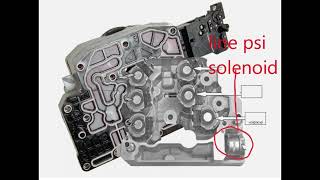
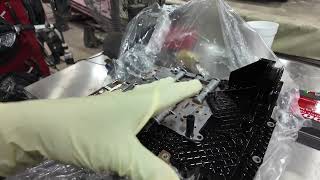
- Faulty Pressure Control Solenoid (PCS) or Solenoid Pack (Less Common) — The PCS regulates fluid pressure. A stuck or failed solenoid forces actual pressure too high or too low. In many modern transmissions, the pressure sensor is integrated directly into the solenoid pack, requiring replacement of the entire unit. 🎬 Watch this walkthrough on fixing common 68RFE solenoid and sensor faults.
- Cold Weather Fluid Spikes (Less Common) — In freezing temperatures, thick transmission fluid causes a sharp, momentary spike in hydraulic pressure on startup. Sensitive systems interpret this as a sensor performance fault, logging P0933 with pressure readings stuck at maximum (e.g., 252 psi) until the fluid warms up.
- Internal Transmission Mechanical Failure (Rare) — A failing transmission oil pump, a warped valve body, or an internal hydraulic leak prevents the system from building pressure. These worst-case scenarios are accompanied by severe symptoms like grinding noises or total loss of forward movement.
- Faulty Powertrain/Transmission Control Module (PCM/TCM) (Rare) — Computer failure is extremely rare and must only be considered after ruling out all wiring and sensor faults. Occasionally, overly sensitive factory software requires a dealer-programmed update to resolve false P0933 triggers.
Symptoms

- Harsh, Erratic, or Delayed Shifting — The vehicle jerks violently when shifting, hesitates before engaging a gear, or refuses to upshift at highway speeds.
- Transmission Stuck in 'Limp Mode' — The transmission locks into a single gear (usually 3rd or 4th) to prevent internal damage, severely limiting vehicle speed and acceleration.
- Check Engine Light or Transmission Warning Light is On — The Malfunction Indicator Lamp (MIL) illuminates immediately upon the PCM detecting the pressure variance.
- Reduced Engine Power — The vehicle feels sluggish as the computer cuts engine torque to protect the transmission from incorrect line pressure.
- Grinding Noises or a Burning Smell — Incorrect pressure causes clutch slippage, overheating the fluid and producing a distinct burnt smell. Grinding indicates severe mechanical failure.
Diagnostic Flowchart
Tap your situation to follow the diagnostic path that matches what you're seeing on this code.
Common Fixes & Costs
- Replace Hydraulic Pressure Sensor (Transducer) — Parts: $50-$150, Labor: $250-$450, ~2.5 hr book time (Intermediate)
- Repair or Replace Wiring Harness/Connector — Parts: $20-$100, Labor: $100-$300, ~2.0 hr book time (Intermediate)
- Transmission Fluid and Filter Change — Parts: $60-$150, Labor: $100-$250, ~1.5 hr book time (DIY)
- Replace Transmission Solenoid Pack — Parts: $300-$550, Labor: $400-$800, ~4.0 hr book time (Professional)
- Update or Reprogram PCM/TCM — Parts: $0, Labor: $100-$250, ~1.5 hr book time (Professional)
DIY vs Professional
- Transmission Fluid and Filter Change — Beginner: Yes
Tools: Socket set, drain pan, fluid pump or funnel, torque wrench. - Replace Hydraulic Pressure Sensor / Solenoid Pack — Beginner: No
Tools: Fluid change tools, inch-pound torque wrench, Torx bits, advanced scan tool for 'Quick Learn' procedure. - Repair or Replace Wiring Harness/Connector — Beginner: No
Tools: Digital multimeter, wire strippers, crimpers, heat shrink tubing, vehicle-specific wiring diagrams.
Used vs. New Parts: Buying Guide
When a used part is worth it: Buying used electronic transmission components is highly discouraged. The significant labor cost for installation makes it too risky to use a part with an unknown history.
Donor-vehicle mileage cap: roughly under 20000 miles for the part to have meaningful remaining life.
Donor quality checklist:
- Must be from a very low-mileage vehicle totaled due to a non-drivetrain accident.
- Verify the exact OEM part number matches.
- Avoid parts from flood-damaged or rust-belt vehicles.
Decision logic:
- If The repair requires replacing the hydraulic pressure sensor or solenoid pack. → Buy a new OEM part. Aftermarket and used sensors have a widely reported high failure rate.
- If Budget is the absolute primary concern and you accept a high risk of failure. → A used part from a verified low-mileage donor is a last resort.
Warranty tradeoff: Used parts typically have a 30-day warranty that does not cover the high cost of repeat labor. New OEM parts installed by a dealer provide the best coverage and reliability.
Worst-case if a used part fails: $500-$1200 if a used or cheap aftermarket part fails, factoring in repeat labor.
What Happens If You Wait — Timeline
- 0-1 month: Code P0933 sets, MIL is on. Driver notices occasional harsh shifts or a jump when shifting into gear. Transmission enters limp mode intermittently. (MPG impact: 0-5%% · Added cost: $0)
- 1-3 months: Incorrect line pressure causes clutch packs to slip. Fluid overheats and burns, losing lubrication. Shift quality degrades severely. (MPG impact: 5-10%% · Added cost: $250-$500 (Requires fluid flush and sensor replacement to save the transmission).)
- 3-6 months: Sustained slippage glazes the clutch friction material. The valve body warps from excessive heat, and seals harden. Grinding noises begin. (MPG impact: 10-20%% · Added cost: $1,500-$2,500 (Clutch packs are destroyed; requires a minor rebuild).)
- 6+ months: Catastrophic internal failure. The oil pump fails, clutches burn completely, and metal debris destroys the torque converter. Total loss of movement. (MPG impact: 20%+% · Added cost: $4,500-$7,500+ (Requires a complete major rebuild or full transmission replacement).)
Cost of Not Fixing It
- Immediate (0-1 month): Harsh shifting, vehicle stuck in limp mode, and a significant drop in drivability. Increased stress on internal transmission components begins immediately. (Added cost: Negligible, but high risk of getting stranded.)
- Short Term (1-3 months): Incorrect line pressure causes clutch packs to slip, leading to glazing and accelerated wear. Transmission fluid overheats and burns. (Added cost: $200-$500 for a fluid flush and diagnostics if addressed now.)
- Long Term (3+ months): Catastrophic internal transmission failure. Burnt clutches, damaged seals, and a warped valve body require a complete rebuild or replacement. (Added cost: $2,500-$6,000+ for a transmission rebuild or replacement.)
Diagnosis Steps
- Scan for Codes and Monitor Live Data
Check for related codes (P0868, P0869, P0934, P0935). View live transmission data PIDs. Compare 'Desired Line Pressure' with 'Actual Line Pressure'. At idle in gear, pressure should be ~60 PSI with less than 5-10 PSI variance. If actual pressure is stuck (e.g., 252 psi) or erratic, the sensor is faulty.
Tools: ['Advanced OBD-II Scanner'] - Check Transmission Fluid Level and Condition
Verify the fluid level is correct. Wipe the dipstick on a white paper towel; the fluid must be bright red and free of burnt odors. Low or brown fluid requires an immediate fluid and filter change.
Tools: ['Clean shop towel', 'White paper towel'] - Inspect and Wiggle-Test Wiring Connectors
Visually inspect the main transmission electrical connector (e.g., C107 on a 68RFE). Unplug it and check for green corrosion hidden under the internal cap. While monitoring live sensor voltage on a scanner, wiggle the harness; fluctuating voltage confirms a broken wire or loose pin.
Tools: ['Flashlight', 'Advanced OBD-II Scanner', 'Dielectric grease'] - Test the Sensor Circuit with a Multimeter
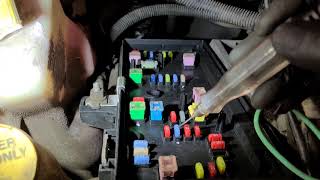
Disconnect the sensor. Verify a 5-volt reference signal from the PCM on the supply pin. Check the ground pin for continuity to the chassis. The signal wire voltage must read between 0.35 and 4.75 volts; readings outside this range indicate a short or open circuit.
Tools: ['Digital Multimeter (DVOM)', 'Vehicle-specific wiring diagram'] (Advanced) - Test Hydraulic Pressure Manually
Connect a mechanical pressure gauge to the transmission's line pressure port. Compare the gauge reading to the scanner's 'Actual Line Pressure'. If they do not match, the sensor is bad. If they match but are out of spec (e.g., below 60 PSI at idle), the transmission has an internal mechanical fault.
Tools: ['Mechanical Pressure Gauge Kit', 'Line Pressure Adapter'] (Advanced) - Check Pressure Control Solenoid (PCS) Electrical Integrity
Test the PCS resistance (e.g., 4.3 to 4.9 Ohms on a 68RFE). Next, use an amp clamp around the PCS control wire; it should draw up to 1 Amp when commanded by the scanner. Failure to meet these specs requires solenoid replacement.
Tools: ['Digital Multimeter (DVOM)', 'Inductive Amp Clamp', 'Advanced OBD-II Scanner'] (Advanced)
When This Code Triggers (Freeze-Frame Conditions)
- Engine Coolant Temp: 180-205°F (The code typically sets when the engine and transmission are at full operating temperature.)
- RPM: 1200-2500 RPM (Occurs during steady-state cruising or light acceleration, not necessarily during a hard pull.)
- Vehicle Speed: 30-60 MPH (Frequently detected at city or highway cruising speeds, often during or between shifts.)
- Transmission Gear: Any Forward Gear (Logged in any gear when the TCM detects a significant deviation between desired and actual line pressure.)
Related Codes
- P0869 — Transmission Fluid Pressure High. A faulty sensor sends a falsely high signal, triggering both a performance code (P0933) and a high-pressure code (P0869).
- P0868 — Transmission Fluid Pressure Low. Seeing P0868 and P0933 together suggests the sensor's signal is unstable, dropping out, or the pump is failing.
- P0934 — Hydraulic Pressure Sensor Circuit Low. Indicates a specific electrical problem like a short to ground. If present, the problem is electrical, not mechanical.
- P0935 — Hydraulic Pressure Sensor Circuit High. Indicates an open circuit or a short to power. Often caused by a broken ground wire in the sensor harness.
Climate & Environmental Factors
- Cold Weather: Thick transmission fluid on cold starts causes a sharp spike in hydraulic line pressure. A weak sensor reports an out-of-range value (e.g., 252 PSI) and triggers P0933. The issue often resolves once the transmission warms up.
- Humidity and Moisture: Driving in rain or snow forces moisture into the main transmission electrical connector. This corrodes the pins, creates high resistance, and disrupts the sensor's voltage signal (addressed in Ram TSB 21-016-17).
How to Talk to a Mechanic About This Code
Say this: "I have a P0933 code and the transmission is shifting harshly. I'd like to schedule a diagnostic. Can you please use a scan tool to compare the desired vs. actual line pressure readings and inspect the main transmission electrical connector for corrosion?"
This signals you understand the most common causes. It directs the technician to perform specific, efficient diagnostic steps (live data analysis, TSB check) rather than starting with a vague, open-ended inspection.
Avoid saying:
- 'My check engine light is on, can you look at it?'
- 'My transmission is acting weird.'
- 'Just fix whatever's wrong.'
Questions to ask before authorizing the repair:
- Did the live data show the actual pressure was stuck, erratic, or deviating significantly from the desired pressure?
- Will you be using a genuine OEM part or an aftermarket part? (Insist on OEM).
- Does the estimate include a new pan gasket, filter, and the correct OEM fluid?
- Will you perform the transmission 'Quick Learn' procedure after the repair is complete?
- What is the parts and labor warranty for this specific repair?
Where to Take It: Dealer vs Independent vs Chain
- Dealer:
A strong, safe option, especially for Ram/Dodge/Chrysler vehicles where dealer technicians are most familiar with the common TSBs related to this code.
Best for: Vehicles still under a powertrain warranty., Complex diagnostics involving software updates (PCM/TCM flash)., Guaranteeing an OEM part and factory repair procedure.
Downsides: Highest labor rates, often 1.5-2x more than an independent shop., May default to replacing a larger, more expensive assembly. (Typical cost: +50% vs. baseline) - Independent Shop:
Excellent choice if you find a reputable, well-reviewed transmission specialist. Ask if they are experienced with P0933 on your specific vehicle model.
Best for: Out-of-warranty vehicles where cost is a major factor., Finding a specialist who focuses only on transmissions.
Downsides: Quality and expertise vary dramatically., Some lack the manufacturer-specific scan tools required for post-repair 'Quick Learn' procedures. (Typical cost: +0% vs. baseline) - Chain Shop:
AVOID for this code. The diagnosis and repair require specialized knowledge and tools that are not the focus of most chain shops.
Best for: Simple, routine maintenance like oil changes or brake jobs.
Downsides: High potential for upselling and misdiagnosis on complex transmission issues., Technician skill with internal transmission work is highly inconsistent., Often use lower-quality aftermarket parts. (Typical cost: -10% vs. baseline)
When to Walk Away From the Repair
If the estimated repair cost exceeds 50% of the vehicle's current private-party market value, seriously consider selling it as-is or trading it in.
- Car worth $18000, fix is $1200: Fix it. The repair cost is a small fraction of the vehicle's value.
- Car worth $12000, fix is $4500: Borderline. The repair cost is significant but below the 50% threshold. Get a second opinion.
- Car worth $6000, fix is $3500: Walk away. The repair cost is over 50% of the car's value, making it a poor financial investment.
What Scan Tool You Need for This Code
Minimum: A scanner that can read manufacturer-specific live data PIDs for the Transmission Control Module (TCM).
A basic $20 code reader only shows the P0933 code. It cannot display essential live data, such as 'Desired Line Pressure' vs. 'Actual Line Pressure', which is mandatory to determine if the sensor is faulty.
Budget: OBDeleven 3 or similar Bluetooth dongle with Car Scanner ELM OBD2 app (~$70) — Accesses and graphs manufacturer-specific live data PIDs, including transmission pressure, allowing you to compare desired vs. actual pressure.
Mid-range: Foxwell NT510 Elite or XTOOL D5S (~$180) — Offers full-system diagnostics, live data graphing, and crucial bidirectional controls to perform the post-repair 'Quick Learn' procedure.
Professional: Autel MaxiCOM MK808 / MK900BT or Launch CRP919 (~$500-900) — Provides professional, OE-level diagnostics with fast live data graphing and full bidirectional control for all modules.
How to Clear the Code After You Fix It
- Use an OBD-II scan tool to clear all transmission-related fault codes.
- Perform a 'Quick Learn' procedure with a bidirectional scan tool (mandatory for Chrysler/Dodge/Ram RFE transmissions).
- Perform a 'drive learn' cycle to allow the TCM to adapt to the new components.
Drive cycle (~30 minutes): Drive for 25-30 miles in stop-and-go city conditions using light throttle (under 30%). Allow the transmission to shift up and down through all gears multiple times. Avoid sustained highway speeds or aggressive driving.
Readiness monitors affected: Comprehensive Component Monitor, Transmission Component Monitor
Before emissions retest: drive at least 100 miles to fully set monitors.
Watch out for:
- Disconnecting the battery does not perform the required 'Quick Learn' procedure.
- The code returns immediately if a cheap aftermarket sensor was used.
- Skipping the drive learn procedure results in continued poor shift quality.
Will This Fail Emissions / State Inspection?
Yes — this code typically fails an OBD-II emissions inspection.
- California: An illuminated Check Engine Light from code P0933 is an automatic test failure. A full drive cycle must be completed post-repair.
- New York: The NYS DMV emissions inspection includes an OBD-II scan. Active P0933 results in automatic failure.
- Texas: In the 17 Texas counties requiring emissions testing, an active P0933 code causes OBD inspection failure.
Most Commonly Affected Vehicles
- Ram 2500/3500 (2012-2020) — Extremely common on 68RFE transmissions. The hydraulic pressure sensor fails frequently. TSB 21-016-17 addresses water intrusion at the main connector.
- Dodge Ram 1500 (2011-2018) — Frequent on 545RFE or 65RFE transmissions due to sensor or solenoid pack failure. A Quick Learn procedure is required after replacement.
- Jeep Grand Cherokee (2011-2013) — Affects 5.7L V8 models with the 65RFE transmission, sharing the same sensor and solenoid vulnerabilities as Ram trucks.
- Ford F-150 (2009-2017) — On 6R80 transmissions, P0933 links to cracks in the internal molded lead frame connector (P/N AL3Z-7G276-A), causing electrical faults.
- Chevrolet / GMC Silverado / Sierra (2007-2018) — Points to issues within the valve body assembly or the internal Transmission Control Module (TCM) failing due to heat and fluid contamination.
- Dodge Grand Caravan (2010-2020) — Occurs on 62TE transmissions, frequently caused by a faulty transmission pressure sensor or issues with the TIPM (fuse box).
- Dodge Charger (2011-2014) — Appears in V8 models using RFE-family transmissions, stemming from pressure sensor performance problems.
- Chrysler 300 (2011-2014) — V8 models with RFE transmissions are susceptible to this code due to identical pressure sensor and solenoid pack issues as the Charger.
Manufacturer-Specific Notes
- Ram/Dodge/Chrysler (Stellantis): Exceptionally common on 68RFE and 545RFE/65RFE transmissions due to failed line pressure sensors. TSB 21-016-17 addresses water intrusion at the main transmission connector causing this exact code.
- Ford: On 6R80 transmissions, P0933 links to cracks in the internal molded lead frame connector, which houses connections for multiple sensors and solenoids.
- General Motors (Chevrolet/GMC): On 6-speed transmissions (like the 6L80), the TCM is located inside the transmission oil pan. Heat and fluid contamination cause TCM failure, triggering P0933.
- All Brands: A severely clogged transmission fluid filter creates a genuine pressure drop that the sensor correctly reports as out of range, triggering a false P0933.
Real Owner Stories
2015 Ram 2500 (68RFE) - The Cold-Start Failure
Check Engine Light illuminated with P0933 and P0869. On a 45°F morning, a scan tool showed line pressure stuck at a maximum 252 PSI right after startup.
Outcome: Replacing the line pressure sensor resolved the issue completely. The sensor had failed internally and was broadcasting false high-pressure readings.
Lesson: A pressure reading maxed out on a cold start is a definitive symptom of a failed sensor, regardless of fluid condition.
2013 Ram 2500 (68RFE) - The Aftermarket Parts Misdiagnosis
A shop installed a rebuilt transmission. Immediately after, P0933 appeared. Live data showed actual line pressure constantly higher than desired.
Outcome: The technician discovered the new pressure sensor was a cheap non-OEM clone. Replacing it with a genuine Mopar sensor fixed the problem instantly.
Lesson: If P0933 appears immediately after a repair, suspect the quality of the parts used. Low-quality aftermarket sensors are notoriously inaccurate out of the box.
2011 Ram 1500 (545RFE) - The Hidden Wiring Break
P0933 caused the truck to jump violently into Drive and enter limp mode. Clearing the code only worked for two drive cycles.
Outcome: Pulling back the insulation near the sensor connector revealed a completely broken wire inside. Repairing the wire cleared the code permanently.
Lesson: Visual inspections fail to catch internal wire breaks. A continuity test with a multimeter is mandatory before condemning the sensor.
2008 Dodge Ram 1500 (545RFE) - Total Loss of Movement
While driving at 25 mph, the transmission lost all forward and reverse gears, throwing codes P0933, P0868, and P0869.
Outcome: The combination of pressure codes and total gear loss indicated a catastrophic internal failure of the transmission oil pump, requiring a $4,000 rebuild.
Lesson: When P0933 is accompanied by a total loss of drive, the root cause is severe mechanical failure. Replacing sensors is futile.
How to Prevent This Code From Triggering
- Change transmission fluid and filter (Every 30,000 to 60,000 miles, or more often if towing heavily.) — Clean fluid prevents contamination and blockages that cause incorrect pressure readings and strain the pressure control solenoid.
- Use only OEM-specified transmission fluid (e.g., Mopar ATF+4) (Every fluid change) — Incorrect fluid causes foaming, overheating, and erratic pressure, directly triggering codes like P0933.
- Inspect and clean the main transmission electrical connector (Every 1-2 years, especially in wet or salty climates) — Applying dielectric grease prevents the corrosion and moisture intrusion that causes sensor circuit faults.
- Install an auxiliary transmission cooler or deep pan (One-time upgrade for towing vehicles) — Keeping fluid below 200°F preserves its lubricating properties and extends the life of internal sensors and solenoids.
- Always use high-quality OEM sensors and solenoids (Whenever a replacement is needed) — Aftermarket electronic parts have a notoriously high failure rate, frequently causing the P0933 code to return.
Frequently Asked Questions
Can I fix P0933 myself?
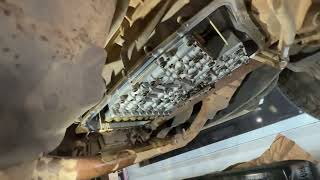
If the cause is low fluid, a DIY fluid and filter change is straightforward. However, replacing the sensor or solenoid pack requires removing the transmission pan and valve body. Stop DIY and consult a transmission specialist if you lack an inch-pound torque wrench or a bidirectional scan tool for the required post-repair relearn.
Will clearing the code fix the problem?
No. Clearing the code only turns off the check engine light temporarily. The code returns on the next drive cycle as soon as the computer detects the pressure performance mismatch again.
What are common misdiagnosis mistakes for P0933?
The biggest mistake is replacing the PCM/TCM without ruling out wiring faults or a bad sensor. Another major pitfall is installing a cheap aftermarket pressure sensor, which frequently fails out of the box. Finally, failing to inspect the inside of the main transmission connector for hidden corrosion leads to repeat codes.
Why did the code P0933 appear when it was cold outside?
Cold transmission fluid is thick, causing a brief, sharp increase in hydraulic pressure on startup. A weak sensor cannot process this spike accurately and reports a maxed-out value (e.g., 252 psi). This triggers P0933 until the transmission warms up and pressure normalizes.
How much does it cost to fix P0933?
A simple fluid and filter change costs $160 to $400. Replacing the line pressure sensor—the most common fix—ranges from $300 to $600 including parts and labor. A full solenoid pack replacement is more expensive, typically costing $700 to $1,350.
How do I know if it's the sensor or the transmission itself?
Compare the sensor's pressure reading on a scan tool with a reading from a manual mechanical pressure gauge. If the readings do not match, the sensor is bad. If they match but remain out of spec, the transmission has an internal mechanical failure.
Why did the code come back after replacing the sensor?
This frequently happens if a low-quality aftermarket sensor was installed instead of an OEM part. It also occurs if an underlying wiring issue, like a hidden corroded pin, was ignored. Always verify the main transmission connector is clean and use genuine manufacturer parts.
Can a bad battery cause P0933?
While a weak battery causes random electrical codes, it rarely triggers P0933 directly. This code specifically flags the performance of the pressure sensor's signal. However, ensuring stable voltage is a required first step before diagnosing any sensor circuit.
Key Takeaways
- P0933 indicates a severe transmission pressure mismatch; driving with this code causes accelerated clutch wear and can destroy the transmission within 1 to 3 months.
- The most frequent culprit is a failed hydraulic pressure sensor, accounting for the majority of P0933 codes on Ram and Dodge 68RFE/65RFE transmissions.
- Never replace the sensor without first using an advanced scan tool to compare 'Desired Line Pressure' against 'Actual Line Pressure' at idle (target is ~60 PSI).
- Always install a genuine OEM replacement sensor (e.g., Mopar 4799758AF); aftermarket sensors have a documented failure rate that frequently triggers a repeat P0933 code.
Helpful Videos


The information in this article is provided for general reference and educational purposes only. Vehicle specifications, procedures, and part compatibility can vary by production date, trim level, and region. Always consult your vehicle's factory service manual and verify part numbers before purchasing or performing repairs. Safety-critical components such as airbags, seat belts, and braking systems should be installed by a qualified professional.
- 🎬 Helpful Videos
- What Does P0933 Mean?
- Can I Drive With P0933?
- Common Causes
- Symptoms
- Diagnostic Flowchart
- Common Fixes & Costs
- DIY vs Professional
- Used vs. New Parts: Buying Guide
- What Happens If You Wait — Timeline
- Cost of Not Fixing It
- Diagnosis Steps
- When This Code Triggers (Freeze-Frame Conditions)
- Related Codes
- Climate & Environmental Factors
- How to Talk to a Mechanic About This Code
- Where to Take It: Dealer vs Independent vs Chain
- When to Walk Away From the Repair
- What Scan Tool You Need for This Code
- How to Clear the Code After You Fix It
- Will This Fail Emissions / State Inspection?
- Most Commonly Affected Vehicles
- Manufacturer-Specific Notes
- Real Owner Stories
- 2015 Ram 2500 (68RFE) - The Cold-Start Failure
- 2013 Ram 2500 (68RFE) - The Aftermarket Parts Misdiagnosis
- 2011 Ram 1500 (545RFE) - The Hidden Wiring Break
- 2008 Dodge Ram 1500 (545RFE) - Total Loss of Movement
- How to Prevent This Code From Triggering
- Frequently Asked Questions
- Can I fix P0933 myself?
- Will clearing the code fix the problem?
- What are common misdiagnosis mistakes for P0933?
- Why did the code P0933 appear when it was cold outside?
- How much does it cost to fix P0933?
- How do I know if it's the sensor or the transmission itself?
- Why did the code come back after replacing the sensor?
- Can a bad battery cause P0933?
- Key Takeaways
- 🎟️ Get 5% Off