

P0873 on 2012-2017 Honda Accord: 4th Clutch Pressure Switch Circuit High Causes and Fixes
This code typically points to a failed 4th clutch transmission fluid pressure switch on Accords with automatic (non-CVT) transmissions. Replacing the switch is the most common fix, a DIY-friendly job costing between $40 and $100 for the part.
- P0873 points to an electrical fault with the 4th gear clutch pressure switch, not usually a major mechanical transmission failure.
- The most common fix is replacing the switch and its sealing washer, a job accessible to most DIYers.
- This code applies to 2012 Accords and 2013-2017 V6 Accords with traditional automatic transmissions, not CVTs.
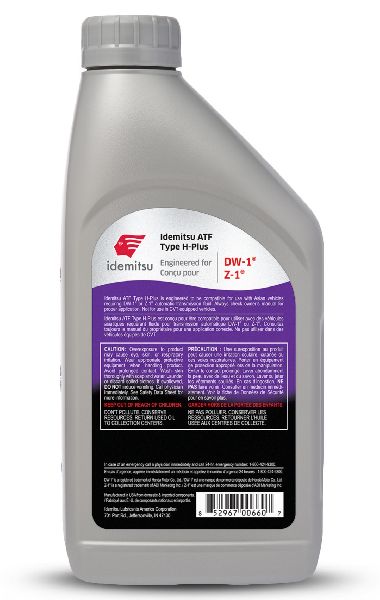
- Always use genuine Honda DW-1 ATF when servicing the transmission.
- Verify the correct OEM part number for your specific vehicle's VIN before purchasing a replacement switch.
What's Unique About the 2012-2017 Honda Accord

The 2012-2017 Accord spans two generations with different transmissions. This code only applies to models with traditional geared automatic transmissions, NOT the Continuously Variable Transmission (CVT). It is most relevant for the 2012 Accord (8th generation 5-speed automatic) and the 2013-2017 Accord V6 models (9th generation 6-speed automatic). Owners of 4-cylinder Accords from 2013-2017 with a CVT will not encounter this specific clutch-related code. Failure of these pressure switches is a well-documented issue across many Honda and Acura models of this era that share these transmissions.
Generation note: The 2012 model year is the final year of the 8th generation Accord, which used a 5-speed automatic. The 2013-2017 models are the 9th generation; V6 models used a 6-speed automatic, while 4-cylinder models used a CVT. This P0873 code applies to the 5-speed and 6-speed automatic transmissions, but not the CVT. The location and part number of the switch may differ between the 5-speed and 6-speed units.
Symptoms You May Notice

- Check Engine Light is on
- Flashing 'D' on the gear position indicator
- Harsh, erratic, or delayed gear shifts, particularly involving 4th gear
- Transmission may get stuck in a lower gear (limp mode) or fail to upshift
- Vehicle may start off in 2nd or 3rd gear
- Inability to shift into certain gears
- Replacing the entire transmission when only a simple, external switch has failed.
- Replacing other transmission solenoids before properly identifying the specific switch related to the 'C' circuit (4th clutch).
- Assuming it's a major internal mechanical failure due to the harsh shifting symptoms.
Most Likely Causes

- Failed 4th Clutch Transmission Fluid Pressure Switch 🔴 High Probability These pressure switches are a very common failure point on many Honda automatic transmissions from this period due to internal electrical faults. The issue is widely reported across owner forums and repair videos for Accords, Odysseys, Pilots, and Acuras.
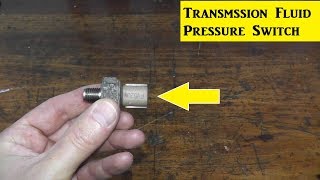
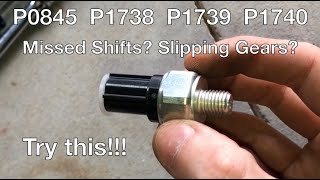
How to confirm: After checking wiring, the most definitive test is to replace the switch. A more technical test involves using a diagnostic scanner to monitor the switch status ('ON'/'OFF') while driving; if the switch status doesn't change to 'ON' when 4th gear is engaged, the switch is likely bad. You can also back-probe the connector and ground the signal wire; if the scanner then shows the switch as 'ON', it confirms the wiring and PCM are good, isolating the fault to the switch itself. 🎬 Watch: A step-by-step guide to replacing the pressure switch.
Typical fix: Replace the 4th clutch pressure switch and the associated aluminum sealing washer.
Est. part cost: $40-$100 - Wiring or Connector Issue 🟡 Medium Probability Wiring harnesses near the transmission are exposed to heat and vibration, which can lead to chafed insulation, broken wires, or corrosion in the connector pins over time.
How to confirm: Visually inspect the wiring harness and connector leading to the pressure switch for any signs of damage, corrosion, or loose connections. Use a multimeter to check for continuity to the PCM and to check for a short to voltage on the signal wire.
Typical fix: Repair the damaged section of wire or clean/replace the connector.
Est. part cost: $5-$50 - Low or Dirty Transmission Fluid ⚪ Low Probability While less likely to cause a 'Circuit High' code, extremely low or degraded fluid can cause erratic hydraulic pressure, which might contribute to the issue. Honda 5 and 6-speed automatics are known to be sensitive to fluid condition.
How to confirm: Check the transmission fluid level and condition using the dipstick. The fluid should be at the correct level, red in color, and not smell burnt.
Typical fix: Perform a transmission fluid drain-and-fill using only Honda DW-1 ATF. This is good maintenance but is unlikely to resolve the electrical code on its own.
Est. part cost: $40-$80
Rare But Worth Checking
- Faulty Powertrain Control Module (PCM): This is very rare. The PCM is the car's main computer. All other possibilities, especially the switch and wiring, should be exhaustively ruled out before considering a PCM replacement.
Diagnosis Steps
- Read the code with an OBD-II scanner to confirm P0873 is present and check for any other related transmission codes.
- Check the level and condition of the automatic transmission fluid. Top off or change if necessary, using only Honda genuine DW-1 ATF.
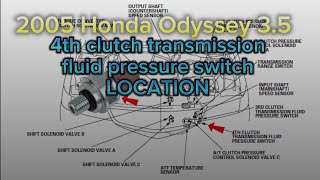
- Locate the 4th clutch pressure switch on the transmission case. On many V6 models, it is accessible from the top after removing the battery, battery tray, and air intake assembly. Look for a number '4' cast into the transmission housing, which often marks the 4th clutch switch port. 🎬 Watch this video to help locate the 4th clutch switch.
- Inspect the electrical connector and wiring going to the switch. Look for any signs of corrosion, damage, or loose pins. Ensure the connector is seated firmly.
- (Optional) With a diagnostic scanner, monitor the live data for the '4th Clutch Pressure Switch'. It should read 'OFF' when not in 4th gear and change to 'ON' when the transmission shifts into 4th. If it stays 'OFF', the switch or circuit is faulty.
- If wiring looks good, the most common and cost-effective next step is to replace the 4th clutch pressure switch.
- Disconnect the electrical connector. Use a deep socket (typically 22mm) to unscrew the old switch. A small amount of transmission fluid may leak out.
- Install the new switch with a new aluminum sealing washer. Thread it in by hand first to avoid cross-threading, then tighten until snug (approx. 14 lbf-ft). Do not overtighten.
- Reconnect the electrical connector, reinstall any removed components (airbox, battery), and clear the trouble code with the OBD-II scanner.
- Perform a test drive, ensuring the transmission shifts smoothly through all gears, especially into 4th gear. The 'D' light should no longer flash. It may take a few drive cycles for the permanent code to clear from the PCM's memory.
Parts You'll Likely Need

- 4th Clutch Transmission Fluid Pressure Switch
(OEM #28600-RKE-004)— This switch is the direct cause of the P0873 code in the vast majority of cases. Part number 28600-RKE-004 is the common OEM replacement that supersedes older numbers.
Trusted brands: Honda (Genuine OEM), Standard Motor Products (SMP), Dorman, Rostra
OEM price range: $70-$120
Aftermarket price range: $40-$75 - Transmission Pressure Switch Sealing Washer/Gasket
(OEM #90471-PW7-A00)— A new aluminum sealing washer is required to prevent leaks when replacing the pressure switch. It is a crush washer and should not be reused.
Trusted brands: Honda (Genuine OEM)
OEM price range: $2-$5
Aftermarket price range: $1-$3
Related Codes That Often Appear With This One
- P0848 — P0848 is for the 3rd clutch pressure switch ('B' Circuit High). It is extremely common for these switches to fail around the same time or be sold as a set, so seeing codes for multiple pressure switches is possible.
- P0872 — P0872 is for the 4th clutch pressure switch 'Circuit Low'. Seeing both high and low codes could indicate an intermittent wiring problem or a switch that is failing internally and providing erratic readings.
Platform-Specific Known Issues
- Owner Experience: 2008 Odyssey with P0873: An owner of a 2008 Honda Odyssey (which shares a similar V6 powertrain) experienced a flashing 'D' light and a P0873 code. The 4th gear pressure switch was located under the airbox, different from earlier models. Replacing the cream-colored sensor and its crush washer resolved the issue.
- Owner Experience: 2003 Acura MDX with P0873: A 2003 Acura MDX presented with a flashing D5 light and code P0873. A technician demonstrated diagnosing the fault by grounding the connector pin and watching the status change on a scan tool, confirming the wiring was good and the switch was bad. The fix was replacing the 4th clutch pressure switch.
- Forum Discussion on Part Number Supersession: On AcuraZine forums, owners of Acura TLs (a platform mate) discuss confusion when ordering pressure switches. They often received part number 28600-RKE-004 when they ordered older numbers like 28600-RAY-013, confirming that -RKE-004 is the superseding part for many applications.
Mechanic-Grade Diagnostic Values
- Voltage at the pressure switch signal wire connector (disconnected from switch), Key On Engine Off. — expected: 5V or 12V DC reference from the PCM.. Failure: 0V indicates an open in the power wire from the PCM or a faulty PCM driver. Voltage significantly different from 5V or 12V could indicate a short or high resistance.
- Continuity check of the signal wire. — expected: Continuity (near 0 ohms) between the switch connector pin and the corresponding pin at the PCM connector.. Failure: High resistance or OL (Over Limit) indicates a broken wire.
- Physical 4th clutch hydraulic pressure. — expected: While a specific PSI is not listed, pressure should build when the transmission is commanded into 4th gear at 2,000 RPM.. Failure: No pressure indicates an internal hydraulic issue (e.g., pump, valve body, clutch pack), not a sensor circuit fault.
Scan Tool Commands That Help

- Honda Diagnostic System (HDS): A/T Data List Monitoring — To watch the live status (ON/OFF) of the '4th Pressure Switch' while driving. If the status does not change to 'ON' when the transmission shifts to 4th gear, it points to a faulty switch or circuit.
- Honda Diagnostic System (HDS): SCS Line Jump/Short — This function is used to reset certain system faults before performing electrical tests like continuity checks on wiring to the PCM. A service procedure may call for activating the SCS line for one minute before disconnecting the PCM to test for an open or shorted wire.
Wiring & Ground Locations

- 4th Clutch Pressure Switch Port — On the automatic transmission case. On many Honda transmissions, the port is physically marked with a '4' cast into the housing next to the switch.. This provides positive physical identification of the correct switch, preventing misdiagnosis and replacement of the wrong component.
- G101 — On the right front of the engine compartment.. This is a primary engine and PCM ground. A poor connection here can cause a variety of erratic electrical issues, including faulty sensor readings.
- G102 / G3 — G102 is at the left rear of the engine; G3 is at the lower left front of the engine compartment, often the main transmission-to-chassis ground.. A faulty transmission ground can create a floating ground, causing the PCM to see incorrect voltage levels from sensors that are grounded through the transmission case.
- PCM Connectors — On V6 models, typically in the center rear of the engine compartment. On 4-cylinder models, it can be on the left or right side.. This is the termination point for the switch signal wire. Accessing the correct pin is necessary to test the full length of the wire for continuity or shorts.
Real Owner Repair Stories
- YouTube channel 'CarsNToys' (2006 Acura TL (shares V6 powertrain and switch design)) — Harsh shifting, transmission won't upshift, vehicle may go into limp mode.
✅ What actually fixed it The video demonstrates the replacement of the 4th clutch pressure switch, located under the battery and battery tray, as the direct fix for the associated trouble codes (P0872/P0873). - YouTube channel 'DIY Honda Garage' (2008 Honda Odyssey (shares V6 powertrain and switch design)) — Flashing 'D' light, P0873 code stored.
✅ What actually fixed it The video shows the diagnosis and replacement of the 4th clutch pressure switch (a cream-colored sensor) located under the airbox. Replacing the switch and crush washer resolved the code.
OEM Part Supersession History
28600-RAY-003, 28600-RAY-013, 28600-P7W-003, 28600-RGR-004→28600-RKE-004— Part consolidation and potential design updates by Honda over the years.
Heads up: The -RKE-004 part is the correct and current replacement for the listed older part numbers for this application. Using old stock or unverified equivalents is not recommended.
Model Year Variations Within This Range
- 2013-2017: 4-cylinder models use a Continuously Variable Transmission (CVT) which does not have clutch pressure switches and will not set this code. This code only applies to V6 models with the 6-speed automatic transmission.
- 2012-2017: On many Honda automatic transmissions of this era (both 5-speed and 6-speed), the transmission case has numbers (e.g., '2', '3', '4') cast into the metal next to the corresponding pressure switch ports, which greatly aids in correct identification.
Diagnostic Flowchart
Other Known Issues on This Vehicle
Issues unrelated to this code that are worth knowing about as an owner of this generation:
- VTC Actuator Rattle on Cold Start (4-Cylinder) 🟠 Medium — Very common on 2.4L K24 engines. A loud, metallic rattle for 1-2 seconds immediately after a cold start. (Ref: Honda TSB 09-010, TSB 16-012.)
- Premature Starter Motor Failure 🟠 Medium — Common on both 4-cylinder and V6 models, often failing between 30k-100k miles. Symptoms include grinding noises or intermittent no-start conditions. (Ref: Honda TSB 16-002 (for V6 models) suggests replacing the starter and rotating the torque converter.)
- Excessive Oil Consumption 🔴 High — A widely reported issue, particularly for 2008-2012 models but also noted in the 9th generation. Can be caused by sticking piston rings. (Ref: A previous class-action lawsuit and warranty extension covered some earlier models. For V6 models, a software update for the VCM system was sometimes recommended.)
- Dimming/Failing LED Daytime Running Lights (2016-2017) 🟡 Low — Common on 2016-2017 models, where the LED strip in the headlight assembly fails or becomes very dim. (Ref: Honda issued a warranty extension for this specific issue.)
- VCM Spool Valve Oil Leak (V6 Models) 🟠 Medium — The gasket for the Variable Cylinder Management (VCM) spool valve can leak oil directly onto the alternator, causing the alternator to fail prematurely.
Used vs. New Parts: Buying Guide for This Vehicle
When a used part is the smart pick: For this specific repair, buying a used pressure switch is not recommended. The part has a high failure rate and is relatively inexpensive to buy new. The labor to access the switch makes it unwise to risk installing a used part with unknown remaining life.
What to inspect on the donor part:
- Not applicable as used parts are not recommended.
OEM-only on this vehicle (don't cheap out):
- Transmission Fluid Pressure Switch
Aftermarket brands forum-validated for this vehicle:
- Standard Motor Products (SMP) is a generally respected aftermarket brand if OEM is unavailable.
Brands owners have reported issues with on this vehicle:
- Unnamed, no-brand parts from online marketplaces should be avoided due to inconsistent quality control. The cost savings are minimal compared to the risk of premature failure and repeated labor.
Real Owner Stories
Aggregated from forums and TSBs cited above. Mileages and costs reflect what owners reported in those sources.
2008 Honda Odyssey V6
Symptoms: A flashing 'D' light and a P0873 code.
What fixed it: Replacing the 4th gear pressure switch (a cream-colored sensor) and its crush washer resolved the issue.
Source hint: Owner Experience: 2008 Odyssey with P0873
2003 Acura MDX
Symptoms: A flashing D5 light and code P0873.
What fixed it: The fix was replacing the 4th clutch pressure switch after a diagnostic test confirmed the switch itself was faulty.
Source hint: Owner Experience: 2003 Acura MDX with P0873
Acura TL
Symptoms: Shifting issues and transmission-related trouble codes.
What fixed it: Owners frequently report replacing both the 3rd and 4th gear pressure switches to resolve these issues.
Source hint: AcuraZine: '3rd and 4th pressure switch' - Discussion confirming part number changes and owner experiences with replacing these common failure items on the related Acura TL.
Related OBD-II Codes
Frequently Asked Questions
Where is the 4th clutch pressure switch located on my 2012-2017 V6 Honda Accord?
I have a flashing 'D' light on my dashboard along with the Check Engine Light. Is this related to code P0873?
What type of transmission fluid should I use for my Accord if the level is low?
I'm trying to buy a replacement pressure switch and the part number 28600-RKE-004 came up. Is this correct?
How can a mechanic confirm the 4th clutch pressure switch is actually bad before replacing it?
Is it difficult to replace the 4th clutch pressure switch myself?
Helpful Videos
Used OEM Parts in Stock


New Aftermarket Parts Available


The information in this article is provided for general reference and educational purposes only. Vehicle specifications, procedures, and part compatibility can vary by production date, trim level, and region. Always consult your vehicle's factory service manual and verify part numbers before purchasing or performing repairs. Safety-critical components such as airbags, seat belts, and braking systems should be installed by a qualified professional.
- Honda Accord:
- 🎬 Helpful Videos
- 🛍️ Shop This Part
- What's Unique About the 2012-2017 Honda Accord
- Symptoms You May Notice
- Most Likely Causes
- Rare But Worth Checking
- Diagnosis Steps
- Parts You'll Likely Need
- Related Codes That Often Appear With This One
- Platform-Specific Known Issues
- Mechanic-Grade Diagnostic Values
- Scan Tool Commands That Help
- Wiring & Ground Locations
- Real Owner Repair Stories
- OEM Part Supersession History
- Model Year Variations Within This Range
- Diagnostic Flowchart
- Other Known Issues on This Vehicle
- Used vs. New Parts: Buying Guide for This Vehicle
- Real Owner Stories
- 2008 Honda Odyssey V6
- 2003 Acura MDX
- Acura TL
- Related OBD-II Codes
- Frequently Asked Questions
- 🎟️ Get 5% Off