

P0872 on 2012-2013 Mazda3 SKYACTIV: Transmission Pressure Switch Fault Guide
On a 2012-2013 Mazda3 with the SKYACTIV automatic transmission, code P0872 almost always indicates a failure of an internal pressure switch on the control valve body. This is a well-documented pattern failure addressed by Mazda TSBs. The repair involves dropping the transmission pan to replace the faulty pressure switches, or in some cases, the entire valve body assembly. The repair typically costs between $1,800 and $3,500.
- P0872 on a 2012-2013 Mazda3 SKYACTIV is a specific code for a stuck internal transmission pressure switch.
- This is a known pattern failure; the most common cause is a faulty oil pressure switch on the control valve body, due to contamination.
- The official Mazda repair, per TSB 05-002/15, is to replace the set of pressure switches, not necessarily the entire expensive valve body.
- The issue also affects other Mazdas with the same transmission, like the CX-5 and Mazda6.
What's Unique About the 2012-2013 Mazda Mazda3
The early SKYACTIV-Drive 6-speed automatic transmissions (model FW6A-EL) in the 2012-2013 Mazda3 are known for this specific failure. Mazda's official repair procedure has evolved. TSB 05-002/15 and its successors instruct technicians to first check if a TCM software update is available; if not, or if the problem persists, the fix is to replace the individual oil pressure switches (A and B) on the valve body. A separate, earlier TSB for related codes P0780/P1738 on some 2012-2014 models recommended replacing the entire control valve body assembly. This indicates that while switch replacement is the common fix, a full valve body replacement may be necessary in some instances, making the diagnosis more complex than on other vehicles.
Symptoms You May Notice
- Check Engine Light and/or AT (Automatic Transmission) warning light are on
- Harsh or erratic shifting
- Transmission gets stuck in one gear (often 3rd gear)
- Delayed engagement when shifting from Park to Drive or Reverse
- Hesitation when accelerating from a stop
- Banging or knocking noise from the transmission when braking or shifting at low speeds
- Spontaneous upshifts or downshifts
- Replacing only one pressure switch. The Mazda TSB procedure involves replacing both switches A and B as a set.
- Condemning the entire transmission. This specific set of codes points to a very targeted failure of the valve body/pressure switches, which is repairable without a full transmission replacement.
Most Likely Causes
- Faulty Oil Pressure Switches on Valve Body 🔴 High Probability This is a known pattern failure on early SKYACTIV-Drive transmissions. Mazda TSB 05-002/15 explicitly states the cause is 'oil pressure switch A and/or B at the control valve body temporarily or permanently getting stuck due to contamination entering the passage'.
How to confirm: A professional scan tool can monitor live data from the transmission's pressure switches. The presence of other pressure switch codes (P0842, P0847, P0877) or a shift malfunction code (P0780, P1738) strongly points to this specific failure as outlined in the TSBs.
Typical fix: Replace the oil pressure switches (A and B) on the valve body. This is a kit (OEM part FZ01-21-2C0). The fix also requires draining and refilling the transmission fluid and performing an initial learning procedure.
Est. part cost: $150-$250 for the switch kit - Faulty Control Valve Body Assembly 🟡 Medium Probability For some vehicles, particularly those with DTCs P0780/P1738, Mazda issued a TSB recommending the replacement of the entire valve body assembly with a new, pre-programmed unit. This may be required if the contamination is severe or if the valve body itself is damaged.
How to confirm: This is typically diagnosed after replacing the pressure switches fails to resolve the issue, or if a technician determines the valve body itself is beyond repair. The presence of significant metallic debris in the transmission pan is a strong indicator.
Typical fix: Replace the entire control valve body assembly. This part is a mechatronic unit that includes the valve body, solenoids, and sometimes the TCM.
Est. part cost: $1100-$1800
Rare But Worth Checking
- Low or Contaminated Transmission Fluid: While the TSB identifies contamination as the root cause of the switch failure, simply having low or extremely dirty fluid can cause a wide range of pressure issues and shifting problems on its own. It's a much cheaper initial check before condemning internal parts.
- Wiring Harness Issue: Damage to the wiring between the TCM and the transmission valve body could theoretically cause this code, but it is far less likely than the documented internal pressure switch failure itself. The TSBs do not list this as a common cause.
- Faulty Transmission Control Module (TCM): An independent TCM failure is rare. In many cases for this vehicle, the TCM is integrated with the valve body, so it gets replaced as part of that repair. The first step in the TSB is to check for a TCM software update, which can resolve issues with diagnostic logic.
Diagnosis Steps
- Verify the code with a professional OBD-II scanner capable of reading transmission-specific codes.
- Check for other related transmission codes (P0842, P0847, P0877, P0780, P1738). The presence of multiple codes strengthens the diagnosis of valve body failure.
- Using a Mazda-specific scan tool (like IDS), check the current TCM software version. Compare it to the latest calibration files listed in TSB 05-002/15 or its successors. If an update is available, reprogram the TCM as the first step.
- If reprogramming is not applicable or does not fix the issue, proceed with physical inspection. Check the transmission fluid level and condition. The fluid should be at the correct level and not appear burnt or excessively dirty. Note: The SKYACTIV transmission is a sealed unit, so checking the fluid requires a technician.
- Drop the transmission oil pan and inspect for excessive metallic debris or contamination. A large amount of foreign material may necessitate replacing the oil strainer (Part No. FZ01-21-500).
- Inspect the transmission wiring harness for any visible signs of damage, corrosion, or loose connections, paying close attention to the main connector at the transmission case.
- If fluid and wiring are good, but pressure switch codes are present, replace oil pressure switches A and B on the valve body following the TSB procedure.
- After reassembly and refilling with the correct fluid, perform the 'Initial Learning Procedure' using a compatible scan tool.
Parts You'll Likely Need
- Oil Pressure Switch Kit (A & B)
(OEM #FZ01-21-2C0)— This is the primary repair specified by Mazda TSB 05-002/15 to fix the cluster of pressure switch codes caused by contamination.
Trusted brands: Mazda (OEM)
OEM price range: $150-$250
Aftermarket price range: N/A - Control Valve Body Assembly — This is the more extensive repair, sometimes required if the pressure switch replacement fails or if mandated by a specific TSB (like the one for P0780/P1738). It is a complete mechatronic unit.
Trusted brands: Mazda (OEM)
OEM price range: $1100-$1800
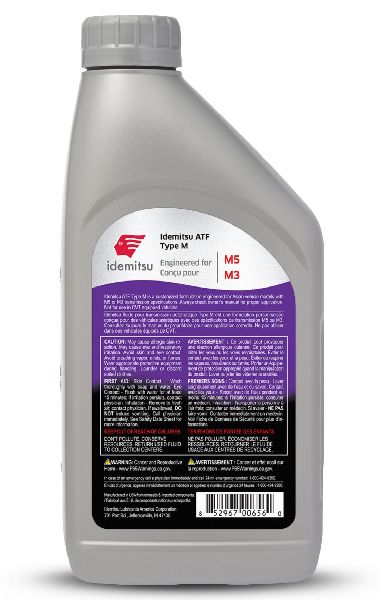
Aftermarket price range: N/A - Mazda SKYACTIV-Drive ATF FZ Automatic Transmission Fluid
(OEM #0000-FZ-113E-01)— The transmission must be drained to replace the valve body/switches and must be refilled with the correct OEM fluid. Using the wrong fluid can cause damage.
Trusted brands: Mazda (OEM)
OEM price range: $20-$30 per quart
Aftermarket price range: $15-$25 per quart
Related Codes That Often Appear With This One
- P0842 — This is for 'Oil pressure switch No. 1 (oil pressure switch B) stuck on', part of the same TSB and caused by the same contamination issue.
- P0847 — This is for 'Oil pressure switch No. 2 (oil pressure switch A) stuck on', also part of the same documented failure pattern.
- P0877 — This is for 'Oil pressure switch No. 4 (oil pressure switch B) stuck on', indicating a widespread issue within the valve body's pressure switches.
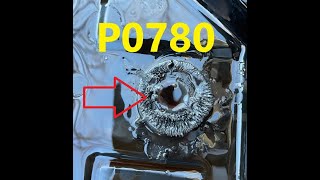
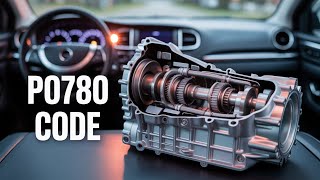
- P0780 — This is a general 'Shift Malfunction' code that is often triggered as a direct result of the pressure switch failures, confirming a systemic problem. 🎬 Watch: Understanding the causes and fixes for the P0780 code.
- P1738 — This code for 'Automatic transaxle internal malfunction' is also frequently stored with the pressure switch codes and points to the same valve body issue.
Technical Service Bulletins (TSBs) & Recalls
- TSB 05-002/15 (and its successors like 05-003/20): This is the key document. It identifies DTCs P0842, P0847, P0872, P0877, and P0780 as being caused by contamination sticking the internal oil pressure switches. It provides the repair procedure.
- TSB 05-005/14: An earlier version of the bulletin that also covers this issue and provides detailed instructions for replacing the pressure switches.
- TSB 05-003/23: A later TSB that continues to address shift quality concerns and related DTCs, indicating the ongoing nature of these valve body issues across different models.
- Bulletin #05-002-23: Confirms that vehicles may experience the check engine light and automatic transaxle warning light ON with DTCs P0842, P0847, P0872, P0877, P0780, and/or P1738 stored in the TCM memory.
- Bulletin #0500215: Reaffirms the presence of the Check Engine light and A/T Warning light with one or more of the same diagnostic trouble codes stored.
- Bulletin #05-003-14-2898A: Notes that to correct problems involving codes like P0872:00 and others, a new programmed valve body has been established.
- Bulletin #05-005-14-2902D: Specifically identifies P0842:00 as Oil Pressure Switch No. 1 (Switch B) stuck on and P0847:00 as Oil Pressure Switch No. 2 (Switch A) stuck on.
Platform-Specific Known Issues
- The early (2012-2013) SKYACTIV-Drive automatic transmissions are known to have issues with the control valve body, leading to a cluster of pressure switch-related fault codes, including P0872. Mazda issued a series of evolving TSBs (superseding each other, e.g., 05-005/13, 05-003/14, 05-002/15, 05-003/20) that address this problem. The primary cause is contamination causing internal switches to stick. The recommended repair is typically to replace the pressure switches, but in some cases, a full valve body replacement is required.
Mechanic-Grade Diagnostic Values
- Oil Pressure Switch A fitting bolts tightening torque — expected: 9—10 N·m {92—101 kgf·cm, 80—88 in·lbf}. Failure: N/A - This is an installation specification.
- ATF Temperature for Initial Learning Procedure — expected: 40—110 °C {72—198 °F}. Failure: The learning procedure may not initiate or complete correctly if the fluid is outside this temperature range.
Hidden / Shadow Codes Worth Checking
- P1738:00: Automatic transaxle internal malfunction. This is a Mazda-specific code that is frequently stored with the P0872 family of codes and points directly to the same internal valve body issue. (see via A professional OBD-II scanner capable of reading manufacturer-specific codes, such as the Mazda IDS.)
Scan Tool Commands That Help
- Mazda IDS (or equivalent M-MDS): Initial Learning Procedure — This procedure is mandatory after replacing the oil pressure switches or the entire control valve body. Failure to perform it can result in continued harsh shifting, incorrect shift points, or new trouble codes.
- Mazda IDS (or equivalent M-MDS): Retrieve CMDTCs & Clear DTCs — Used as part of the Initial Learning Procedure to verify the process is starting correctly and to clear codes after the procedure is complete.
- Mazda IDS (or equivalent M-MDS): Datalogger - PID: TFT (Transmission Fluid Temperature) — Used to monitor the transmission fluid temperature to ensure it is within the required range (40-110°C) before beginning the Initial Learning Procedure.
Wiring & Ground Locations
- G06 — Located at the left rear of the engine.. This is a primary ground point for multiple engine and transmission-related components. A poor connection at G06 could potentially cause erratic signals or low voltage faults in various sensors, including those related to the transmission.
- TCM Connector — The TCM is located in the left rear of the engine compartment.. This is the main connection point for the transmission's electronic controls. Verifying pin integrity and checking for corrosion here is a valid, though less common, diagnostic step if internal component replacement doesn't solve the issue.
Real Owner Repair Stories
- Reddit user in r/MechanicAdvice (2013 Mazda 3 Skyactiv, 130k miles) — While driving up a steep hill, the transmission shifted into neutral, and the traction control light came on. The car went into limp mode, only using 1st and 2nd gear.
❌ Tried (didn't work) The user was in the initial diagnostic phase, checking fluid and preparing to take it to a shop.
✅ What actually fixed it The user's reported symptoms and stored codes (P0780, P1738) are a textbook match for the known valve body/pressure switch failure described in Mazda TSBs. The resolution, though not posted by the user, would be the TSB-guided repair of replacing the pressure switches or valve body. - Reddit user in r/mazda (2013 CX-5 Auto 2WD (uses same FW6A-EL transmission)) — Check engine light came on, car lost power, then shut off and restarted, driving normally afterward but with the light still on. Code P0872 was diagnosed.
❌ Tried (didn't work) User was seeking information on how to perform the replacement.
✅ What actually fixed it Another user provided the specific Mazda DTC definition: 'Oil pressure switch No.3 (Oil pressure switch A) stuck on' and noted that the fix is to replace oil pressure switch A, confirming the TSB repair path.
OEM Part Supersession History
FZA1-21-2C0→FZ01-21-2C0— Part number update or revision by the manufacturer for the Oil Pressure Switch A.
Heads up: The new part number FZ01-21-2C0 is the correct replacement for the original.
Model Year Variations Within This Range
- 2012-2013 Mazda3 (through Sept 28, 2012 production): A TCM software update (reprogramming) is part of the repair procedure for these earlier models if the TCM file name is PE08-21-PS1-J or older, in addition to the physical parts replacement. Later models may not require this specific update.
Diagnostic Flowchart
Other Known Issues on This Vehicle
Issues unrelated to this code that are worth knowing about as an owner of this generation:
- Warped/Cracked Dashboard 🟡 Low — Commonly reported, especially in hot climates. The plastic dashboard above the infotainment screen can lift or crack.
- Squeaking Drive Belts / Failing Tensioner 🟠 Medium — A noticeable squeak or rattle on acceleration can be caused by a leaking hydraulic drive belt tensioner, which is a common failure item.
- Rear Tire Cupping / Road Noise 🟠 Medium — The rear suspension geometry can lead to uneven 'cupped' tire wear, causing significant road noise and vibration if tires are not rotated frequently.
- Leaking Rear Shock Absorbers 🟠 Medium — Not uncommon for rear shocks to start leaking at higher mileage, leading to a degraded ride quality.
- Driver's Seat Frame Weld Failure 🔴 High — A weld on the seat frame can fail, causing the seat to become loose. This was the subject of a safety recall. (Ref: Recall exists, owners should check with NHTSA or a dealer.)
Used vs. New Parts: Buying Guide for This Vehicle
When a used part is the smart pick: Given that this is a well-documented pattern failure due to internal contamination and wear, purchasing a used valve body or pressure switch set is a significant gamble. A complete, low-mileage used transmission assembly from a reputable salvage yard could be a cost-effective alternative if the cost of a new valve body replacement from a dealer is prohibitive, but it carries the same inherent risk of developing the fault.
Donor-vehicle mileage cap: roughly under 80000 miles for the part to have meaningful remaining life.
What to inspect on the donor part:
- Verify the donor vehicle's VIN to ensure it's from a later model year if possible, as improvements were made.
- Ask for service history if available, specifically looking for transmission fluid changes.
- Inspect the transmission fluid on the donor unit if possible; it should be bright red, not brown or black.
- Check for any visible damage to the transmission case, connectors, and wiring harness.
OEM-only on this vehicle (don't cheap out):
- Control Valve Body Assembly
- Oil Pressure Switch Kit (FZ01-21-2C0)
- Mazda SKYACTIV-Drive ATF FZ Fluid
Brands owners have reported issues with on this vehicle:
- Unknown/unbranded valve bodies or solenoids from online marketplaces. The precision and programming required for this component make OEM the only reliable choice. While some companies offer remanufactured units, their quality can be inconsistent.
Real Owner Stories
Aggregated from forums and TSBs cited above. Mileages and costs reflect what owners reported in those sources.
2013 Mazda CX-5 (SKYACTIV 6AT)
Symptoms: Owner reported diagnostic trouble code P0872.
What fixed it: Diagnostic information indicated that 'If there is a malfunction in oil pressure switch No.3, replace oil pressure switch A.'
Source hint: Reddit r/mazda
2013 Mazda3 SKYACTIV
Symptoms: Owner described hesitation and shifting issues.
What fixed it: The owner's mechanic suspected the valve body was the cause, noting that it was a known issue for this vehicle.
Source hint: Mazdas247.com
Related OBD-II Codes
Frequently Asked Questions
I have a 2012 Mazda3 with a P0872 code. Is this a common problem?
My mechanic says the whole valve body needs to be replaced. Is that the only fix for P0872?
What other symptoms might I experience with a P0872 code on my Mazda3?
Are other Mazda models affected by this same transmission issue?
What does TSB 05-002/15 say is the root cause of the problem?
After the pressure switches are replaced, is there any special procedure required?
Helpful Videos

Used OEM Parts in Stock

New Aftermarket Parts Available

The information in this article is provided for general reference and educational purposes only. Vehicle specifications, procedures, and part compatibility can vary by production date, trim level, and region. Always consult your vehicle's factory service manual and verify part numbers before purchasing or performing repairs. Safety-critical components such as airbags, seat belts, and braking systems should be installed by a qualified professional.
- Mazda Mazda3:
- 🎬 Helpful Videos
- 🛍️ Shop This Part
- What's Unique About the 2012-2013 Mazda Mazda3
- Symptoms You May Notice
- Most Likely Causes
- Rare But Worth Checking
- Diagnosis Steps
- Parts You'll Likely Need
- Related Codes That Often Appear With This One
- Technical Service Bulletins (TSBs) & Recalls
- Platform-Specific Known Issues
- Mechanic-Grade Diagnostic Values
- Hidden / Shadow Codes Worth Checking
- Scan Tool Commands That Help
- Wiring & Ground Locations
- Real Owner Repair Stories
- OEM Part Supersession History
- Model Year Variations Within This Range
- Diagnostic Flowchart
- Other Known Issues on This Vehicle
- Used vs. New Parts: Buying Guide for This Vehicle
- Real Owner Stories
- 2013 Mazda CX-5 (SKYACTIV 6AT)
- 2013 Mazda3 SKYACTIV
- Related OBD-II Codes
- Frequently Asked Questions
- 🎟️ Get 5% Off