

OBD-II Code P0780: Shift Malfunction
The Ultimate Guide to Understanding, Diagnosing, and Fixing P0780
- Check your transmission fluid level and condition first; low or burnt fluid causes over 50% of P0780 shift malfunction codes.
- Stop driving immediately when P0780 triggers to prevent a $300 solenoid repair from escalating into a $3,500 complete transmission rebuild.
- Scan for companion codes like P0731 or P0755 before replacing parts, as P0780 is a generic symptom code that rarely points to the exact failure on its own.
- Test shift solenoid resistance (typically 10-30 ohms) and verify wiring integrity before assuming the transmission requires a mechanical overhaul.
What Does P0780 Mean?

P0780 indicates the Powertrain Control Module (PCM) or Transmission Control Module (TCM) detected a malfunction in the automatic transmission's shifting process. This generic code triggers when the computer calculates a mismatch between the commanded gear and the actual gear ratio measured by the input and output speed sensors. This confirms a shift error occurred but requires further diagnosis 🎬 Watch: A quick overview of the P0780 shift malfunction code. to pinpoint the specific failed component. This code only applies to vehicles with automatic transmissions.
Technical definition: The official SAE/OBD-II definition for P0780 is "Shift Malfunction." This diagnostic trouble code (DTC) sets when the PCM or TCM detects a discrepancy between the commanded gear state and the actual, calculated gear ratio. The TCM continuously monitors the ratio of the Input Speed Sensor (ISS) to the Output Speed Sensor (OSS) to verify gear engagement. When this ratio misses the expected value for the selected gear, the TCM registers a slip or shift error and stores P0780.
Can I Drive With P0780?
No — Do Not Drive. Do not drive with a P0780 code. Operating the vehicle causes severe internal transmission damage. Most vehicles enter a protective 'limp mode,' limiting speed and available gears. Ignoring the code causes sudden power loss, unpredictable shifting, or complete transmission failure, posing a significant safety risk.
Common Causes


- Low, Dirty, or Incorrect Transmission Fluid (Very Common) — This is the most frequent cause. Transmission fluid (ATF) creates the hydraulic pressure required to actuate shifts. If the fluid level is low, degraded, or contaminated, it cannot provide the necessary pressure, leading to slipping, harsh shifts, and overheating. Using the wrong type of fluid also causes this code.
- Faulty Shift or Pressure Control Solenoids (Common) — Shift solenoids are electronically controlled valves that direct ATF to engage different gears, while the EPC solenoid regulates overall line pressure. If a solenoid becomes clogged with debris, fails electrically, or gets stuck, it prevents a gear change or causes erratic pressure, prompting the TCM to log a P0780.
- Clogged Transmission Filter or Hydraulic Passages (Common) — The filter prevents debris from circulating. If it becomes clogged, it restricts fluid flow and lowers line pressure. Similarly, internal passages in the valve body become blocked, preventing fluid from reaching clutches or solenoids.
- Damaged Wiring or Corroded Connectors (Less Common) — Frayed wires, loose pins, or corrosion in the wiring harness connecting the PCM/TCM to the transmission sensors and solenoids interrupts critical signals, leading to a shift error.
- Faulty Input (ISS) or Output (OSS) Speed Sensors (Less Common) — The TCM relies on these sensors to verify the transmission's gear ratio. If a sensor fails or sends erratic signals, the TCM incorrectly registers a shift malfunction and sets a P0780, even if the transmission is mechanically sound.
- Faulty Valve Body (Less Common) — The valve body is the hydraulic control center of the transmission. Warping, cracks, or sticking valves within the valve body cause incorrect fluid routing and pressure issues, directly leading to shift malfunctions.
- Internal Mechanical Failure (Rare) — This is the most severe cause and includes worn-out clutch packs, damaged gears, a failing transmission oil pump, or a broken torque converter. Excessive metal debris in the transmission pan indicates these issues.
- Faulty Transmission Control Module (TCM) or Powertrain Control Module (PCM) (Very Rare) — While possible, the control module itself is the least likely cause. Software glitches are sometimes resolved with a re-flash, but hardware failure is rare. Always exhaust all other diagnostic possibilities before condemning the TCM/PCM.
Symptoms

- Check Engine Light is On — This is often the first sign. The light triggers when the TCM/PCM stores the P0780 code. A flashing 'D' light (on Hondas) or a dedicated automatic transaxle (A/T) warning light often illuminates.
- Harsh, Delayed, or Erratic Shifting — The vehicle slams into gear, hesitates for a second or more before shifting, or shifts at unpredictable times.
- Transmission Slipping — The engine RPMs suddenly increase without a corresponding increase in vehicle speed, as if the transmission is momentarily in neutral between shifts.
- Failure to Shift or Stuck in Gear (Limp Mode) — The transmission refuses to shift into or out of a particular gear. To prevent further damage, the TCM forces a 'limp mode' or 'fail-safe' condition, locking the transmission into a single gear (usually 2nd or 3rd).
- Decreased Fuel Economy — Inefficient shifting forces the engine to operate outside its optimal RPM range, leading to increased fuel consumption.
- Transmission Overheating — Slipping clutches and improper fluid pressure create excess friction and heat, causing the transmission to overheat and sustain further damage.
- Whining or Clunking Noises — Unusual metallic whining, clunking, or buzzing sounds from the transmission area indicate hydraulic problems or mechanical wear.
Diagnostic Flowchart
Tap your situation to follow the diagnostic path that matches what you're seeing on this code.
Common Fixes & Costs
- Transmission Fluid and Filter Change — Parts: $50-$120, Labor: $100-$250, ~1.5 hr book time (Intermediate)
- Replace Shift Solenoid(s)
— Parts: $50-$150, Labor: $150-$400, ~3 hr book time
(Advanced)
Honda Odyssey (1999-2004): OEM 28250-P6H-024 (Shift Solenoid A/B), 28500-P6H-013 (Pressure Control Solenoid) (Alt: Standard Motor Products, Rostra, ATP)
Ford Explorer (5R55S/W): OEM 9L2Z-7G391-A (Solenoid Block) (Alt: Bosch (OEM supplier), Dorman, ATP)
GM (4L60E): OEM 24230298 (ACDelco Shift Solenoid A/B) (Alt: ACDelco (OEM), ATP, Delphi) - TCM/PCM Software Update — Parts: $0, Labor: $150-$300, ~1 hr book time (Professional)
- Replace Valve Body — Parts: $300-$800, Labor: $250-$600, ~4 hr book time (Professional)
- Transmission Rebuild or Replacement — Parts: $1,800-$4,500+, Labor: Included in total cost, ~9 hr book time (Professional)
Used vs. New Parts: Buying Guide
When a used part is worth it: For a common fix like a shift solenoid, a used OEM part from a low-mileage vehicle is a cost-effective alternative to a new aftermarket part, especially if it's a single, externally accessible solenoid. Used solenoid packs are riskier due to unknown history.
Donor-vehicle mileage cap: roughly under 80000 miles for the part to have meaningful remaining life.
Donor quality checklist:
- Verify the donor vehicle was not scrapped due to transmission failure.
- Match the part number exactly; solenoids look visually identical but have different internal specs.
- Ask about the warranty period; 30-90 days is standard for used mechanical parts.
Decision logic:
- If The part is a sealed solenoid pack and labor is expensive → Buy a new OEM or high-quality aftermarket part to avoid paying for the same labor twice if the used part fails.
- If Vehicle is older (>150K miles) and the budget is very tight → A used single solenoid is a reasonable risk, but understand it has a limited lifespan.
- If The fix requires removing the valve body or extensive disassembly → Favor new parts to maximize the longevity of the repair and justify the high labor cost.
Warranty tradeoff: Used parts typically come with a 30-90 day warranty that covers the part only, not labor. New aftermarket parts often have a 1-year or longer warranty. A rebuilt transmission usually carries a 1 to 3-year warranty.
Worst-case if a used part fails: $300-$600 if a used solenoid fails after installation, as you pay for repeat labor plus the cost of another part.
What Happens If You Wait — Timeline
- 0-2 weeks: Check Engine Light is on. Shifting feels slightly off (harsher or delayed), but is often subtle. The transmission begins to operate at slightly higher temperatures due to minor slipping. (MPG impact: 0-5%% · Added cost: $0-$50 in wasted fuel)
- 2 weeks - 3 months: Slipping becomes more frequent and noticeable, with engine RPMs flaring between shifts. The transmission fluid starts to darken and develops a burnt smell from overheating. Internal clutch material begins to wear at an accelerated rate. (MPG impact: 5-10%% · Added cost: $50-$200 in wasted fuel and early component wear)
- 3-6 months: Harsh shifting becomes violent, and the vehicle frequently enters 'limp mode,' getting stuck in one gear. The burnt, contaminated fluid causes solenoids and valves to stick. A simple fluid or solenoid fix is no longer sufficient; valve body damage or clutch pack failure is probable. (MPG impact: 10-15%% · Added cost: $1,500-$3,000 (a simple repair escalates to needing a valve body or rebuild))
- 6+ months: Catastrophic failure is imminent. Metal debris from worn clutches and gears circulates throughout the entire system, destroying the valve body, torque converter, and oil pump. The vehicle loses the ability to move altogether, creating a dangerous situation on the road. (MPG impact: 15-25%+% · Added cost: $2,500-$6,000+ (a complete transmission rebuild or replacement is required))
Cost of Not Fixing It
- 0-1 month: Continued harsh shifting and slipping causes accelerated wear on clutch packs and internal seals. Fuel economy drops by 5-10%. (Added cost: Negligible, but internal wear begins.)
- 1-6 months: Severe slipping causes the transmission to overheat, burning the fluid and destroying seals. This turns a simple solenoid repair into a valve body replacement or transmission rebuild. The vehicle becomes unreliable, entering limp mode frequently. (Added cost: $1,500-$4,000+)
- 6+ months: Catastrophic internal failure is likely. Metal debris from failed components circulates throughout the transmission, destroying the valve body, oil pump, and torque converter. A complete replacement is almost certain. The vehicle loses power completely while driving, creating a major safety hazard. (Added cost: $2,500-$6,000+)
Diagnosis Steps
- Check the Transmission Fluid (Level & Condition)
This is the first and most critical step. With the engine warm and running in Park or Neutral (consult your owner's manual), check the dipstick. The fluid must be at the 'Full' mark and bright red. If it is low, dark brown/black, or smells burnt, you found a significant issue. Note: Many modern cars have sealed transmissions and no dipstick; the level requires checking via a plug on the transmission case at a specific temperature.
Tools: Rag, owner's manual (Beginner) - Scan for All Powertrain Codes
Use an OBD-II scanner capable of reading manufacturer-specific transmission codes. P0780 is a general code and often accompanies more specific codes (e.g., P0731 for 1st gear ratio error, P0755 for shift solenoid 'B' fault) that are crucial for diagnosis. Record all codes before clearing them.
Tools: Advanced OBD-II Scanner (Beginner) - [PRO TIP] Analyze Live Sensor Data
Using an advanced scanner, monitor live data PIDs (Parameter IDs) from the transmission. Key PIDs to graph are: Commanded Gear, Input Speed Sensor (ISS) RPM, Output Speed Sensor (OSS) RPM, and Transmission Fluid Temperature (TFT). While driving, the ratio of ISS to OSS must change in predictable steps as the transmission shifts. An erratic sensor reading, or a mismatch between the commanded gear and the calculated gear ratio, points to a specific sensor, wiring, or internal slip issue.
Tools: Advanced OBD-II Scanner with graphing capabilities (Advanced) - Inspect Wiring and Connectors
Perform a thorough visual inspection of the main transmission wiring harness. Look for frayed wires, melted insulation (especially near exhaust components), and corrosion or bent pins in the main connector. A poor electrical connection mimics a failed component.
Tools: Flashlight, mirror (Intermediate) - [PRO TIP] Test Shift Solenoids (Resistance & Bench Test)
If a specific solenoid is suspected (often by a companion code like P0755), test its electrical resistance. Disconnect the solenoid and use a multimeter set to Ohms. Compare the reading to the manufacturer's specification (typically 10-30 ohms for shift solenoids, 3-10 ohms for EPC solenoids). Next, carefully apply a 12V power source to the solenoid's terminals. You must hear and feel a solid 'click' as the internal plunger moves. No click or an intermittent click indicates a failed solenoid.
Tools: Multimeter, 12V power source, vehicle service manual, socket set (Advanced) - Check Transmission Line Pressure
This professional-level test uses a specialized gauge set connected to ports on the transmission case to measure hydraulic pressure in Park, Reverse, and Drive, and during shifts. Low or erratic pressure points to a clogged filter, failing oil pump, faulty pressure control solenoid, or internal leaks. Consult the service manual for specific pressure ranges.
Tools: Transmission pressure gauge set, service manual (Professional) - Inspect Valve Body and Pan for Internal Damage
Remove the transmission pan. Inspect the pan magnets for metal debris. A fine metallic paste is normal wear, but large metal shavings or chunks indicate a severe internal mechanical failure, such as a worn clutch or damaged gear set. Visually inspect the valve body for cracks, scoring, or signs of warping, and ensure all valves move freely in their bores.
Tools: Socket set, torque wrench, drain pan, flashlight, service manual (Professional)
When This Code Triggers (Freeze-Frame Conditions)
- Engine Coolant Temp: 175-210°F (Vehicle fully warmed up.)
- RPM: 1500-3000 RPM (During or immediately after a commanded gear shift.)
- Engine Load: 20-70% (Moderate acceleration or steady cruise.)
- Vehicle Speed: 30-60 mph (The fault is often detected during a specific shift, such as 2-3 or 3-4, at city or highway speeds.)
Related Codes
- P0730 - P0736 — These 'Incorrect Gear Ratio' codes are highly specific. While P0780 is a general shift fault, a code like P0733 (Incorrect Gear Ratio in 3rd Gear) tells you the problem is happening specifically in that gear's circuit, narrowing the diagnosis to the clutches and solenoids responsible for 3rd gear.
- P0750 - P0774 — These codes point directly to an electrical fault in a specific shift solenoid circuit (e.g., P0750 for Shift Solenoid 'A'). If you have one of these codes alongside P0780, the problem is almost certainly electrical: the solenoid itself, its wiring, or the TCM driver. The solenoid code is the cause, and P0780 is the effect.
- P0741 — This code for 'Torque Converter Clutch (TCC) Circuit Performance or Stuck Off' causes symptoms that the TCM interprets as a shift fault. A malfunctioning TCC causes shuddering, stalling, and incorrect RPMs, leading the TCM to set P0780 as a secondary code.
- P1738 — On certain vehicles, particularly Mazdas, this manufacturer-specific code for 'Automatic Transaxle Internal Malfunction' is often stored along with P0780 and other pressure switch codes (P0842, P0847, etc.). Its presence strongly points to the known TSB issue with sticking oil pressure switches.
Climate & Environmental Factors
- Cold Weather: Extremely cold temperatures cause automatic transmission fluid (ATF) to thicken. This delays fluid flow, slows down hydraulic pressure build-up, and causes delayed or harsh shifts on initial startup. While this does not always set a P0780 code on its own, it exacerbates existing borderline issues with solenoids or internal seals, making a fault more likely to be detected by the TCM.
- High Humidity / Salt: Humid climates, especially in regions where road salt is used in winter, accelerate corrosion on external wiring harnesses and connectors. A corroded pin on the main transmission connector increases resistance or causes an intermittent signal for a speed sensor or solenoid, directly leading to a P0780 code.
- High Altitude: High altitude operation itself does not directly cause a P0780 code. However, the reduced engine power at altitude makes transmission slippage or shift quality issues more noticeable to the driver. The underlying transmission fault is the root cause, not the altitude.
How to Talk to a Mechanic About This Code
Say this: "I have an OBD-II code P0780 for a shift malfunction, and I'm experiencing [mention your specific symptom, e.g., 'harsh shifting,' 'slipping between gears']. I'd like to schedule a diagnostic. Can you tell me what your diagnostic process for transmission codes includes? I'd like to start with checking the fluid condition, scanning for any other manufacturer-specific codes, and checking live data from the speed sensors before we discuss major repairs."
This signals you are an informed consumer. It directs the shop toward a logical diagnostic sequence, starting with the simplest and most common causes. It helps prevent them from immediately quoting a costly transmission rebuild without proper investigation.
Avoid saying:
- 'My transmission is broken, how much to fix it?'
- 'My check engine light is on, can you just fix it?'
- 'A friend told me I need new solenoids, can you replace them?'
Questions to ask before authorizing the repair:
- What specific tests did you perform to arrive at this diagnosis?
- Can you provide me with a detailed, written estimate that breaks down parts and labor costs?
- If you're recommending a solenoid or sensor replacement, how did you confirm the part failed versus a wiring issue?
- If you are recommending a rebuild or replacement, can you show me the evidence of internal damage, like metal in the pan?
- What is the warranty on the proposed repair, and does it cover both parts and labor?
Where to Take It: Dealer vs Independent vs Chain
- Dealer:
Recommended if the vehicle is under warranty or has a known TSB requiring a software flash. For out-of-warranty vehicles, a transmission specialist is often more cost-effective.
Best for: Vehicles still under powertrain warranty, Known manufacturer-specific issues that require a software update (like on many modern Mazdas), Complex, newer transmissions (CVT, dual-clutch) where specialized knowledge is key
Downsides: Typically the highest labor rates., Often defaults to recommending a full component replacement (e.g., new valve body) when a smaller repair suffices., Some dealers outsource complex rebuilds to a specialty shop and add a markup. (Typical cost: +40% vs. baseline) - Independent Shop:
Excellent choice, especially a shop that specializes in transmissions. They often have more experience with a variety of failures on older vehicles and offer more repair options (e.g., rebuilding a valve body vs. replacing it).
Best for: Out-of-warranty vehicles where cost is a major factor., Common transmission models (like the GM 4L60E or Ford 5R55 series) that experienced technicians have seen many times., Getting a second opinion on a dealer's expensive quote.
Downsides: Quality and expertise vary widely; look for shops with ASE-certified technicians and positive reviews., Lacks access to the latest manufacturer-specific software or tools for very new vehicles. (Typical cost: +0% vs. baseline) - Chain Shop:
Use with caution. Acceptable for a fluid change if you suspect that's the issue, but for a full diagnosis of a P0780 code, a dedicated transmission specialist or trusted independent shop is a much safer bet.
Best for: Simple, routine maintenance like a transmission fluid and filter change.
Downsides: Technician experience with complex internal transmission diagnosis is often limited., Quick to recommend a complete transmission replacement with a remanufactured unit, as it's a simpler, higher-profit job for them than a detailed diagnosis and repair. (Typical cost: -10% vs. baseline)
When to Walk Away From the Repair
If the estimated repair cost for the transmission exceeds 50% of the car's private-party value, it's time to seriously consider whether the investment is worthwhile.
- Car worth $5000, fix is $2800: Borderline. This is a significant percentage of the car's value. Get a second opinion and carefully consider the car's overall condition before proceeding.
- Car worth $15000, fix is $3500: Fix it. The repair cost is well under the 50% threshold and restores a valuable asset.
- Car worth $3000, fix is $2500: Walk away. The repair cost is almost the entire value of the car. It is not an economically sound decision.
What Scan Tool You Need for This Code

Minimum: An OBD-II scanner that reads specific transmission codes and views live data for Transmission Fluid Temperature (TFT), Input Speed Sensor (ISS), and Output Speed Sensor (OSS).
A basic $20 code reader only shows you the P0780 code. It cannot see the essential live data from the transmission sensors needed to determine if the problem is electrical, hydraulic, or mechanical. Without live data, you are just guessing.
Budget: BlueDriver Pro (~$100) — This Bluetooth scanner connects to your smartphone and reads transmission-specific codes and, crucially, graphs live data from the input and output speed sensors to help diagnose the fault.
Mid-range: Innova 5610 (~$330) — Offers advanced features like viewing live data and provides bidirectional controls to test specific components like solenoids, which is very helpful in pinpointing the exact cause of the P0780 code.
Professional: Autel MaxiCOM MK900 / XTOOL D7 (~$500-700) — These are full bidirectional scan tools. They allow you to command specific solenoids to turn on and off to test their function directly, perform TCM relearn procedures after a repair, and access manufacturer-specific data, making diagnosis much more precise.
Rent vs buy: Most auto parts stores like AutoZone rent a basic code reader for free, but these usually lack the necessary transmission live data functions. For a P0780, you need a more advanced tool. If this is a one-time, complex diagnosis, it is more cost-effective to pay a shop's diagnostic fee. If you plan to do your own auto repairs regularly, buying a mid-range scanner is a worthwhile investment.
How to Clear the Code After You Fix It
- Use an OBD-II scan tool to clear the Confirmed and Pending DTCs.
- Disconnecting the battery for several minutes also clears the code, but is not the preferred method.
- Perform a specific transmission drive cycle to allow the TCM to relearn shift points and confirm the repair.
Drive cycle (~20 minutes): From a cold start, allow the engine to idle for 2-3 minutes. Drive the vehicle, gently accelerating and braking to allow the transmission to shift up and down through all gears. Include several minutes of steady-speed driving at around 50-60 mph. Allow the vehicle to cool completely and repeat if necessary.
Readiness monitors affected: Comprehensive Component Monitor (CCM), Catalyst (CAT) Monitor, Evaporative System (EVAP) Monitor
Before emissions retest: drive at least 50 miles to fully set monitors.
Watch out for:
- Simply clearing the code with a scanner without performing a drive cycle is not enough to confirm the fix; the code often returns.
- If the underlying mechanical or electrical fault is not corrected, the P0780 code reappears quickly.
- Disconnecting the battery resets all readiness monitors, causing an automatic failure at an emissions testing station.
Will This Fail Emissions / State Inspection?
Yes — this code typically fails an OBD-II emissions inspection.
- California: A P0780 code causes an automatic failure of the smog check. All OBD-II readiness monitors must be set to 'Ready' for the test to proceed, so you must complete a full drive cycle after repairs.
- New York: The NYS vehicle inspection includes an OBD-II scan. An active P0780 trouble code results in an emissions test failure.
- Texas: In the 17 Texas counties requiring emissions testing, a vehicle with an illuminated Check Engine Light and a P0780 code fails the inspection.
Most Commonly Affected Vehicles
- Honda Odyssey, Accord, Civic (1999-2004) — Early 2000s 4 and 5-speed automatic transmissions are known for premature failure of the second and third gear clutch packs and torque converter issues. A P0780 code on these models often indicates internal mechanical wear, not just a simple solenoid problem. Replacing solenoids alone rarely provides a permanent fix.
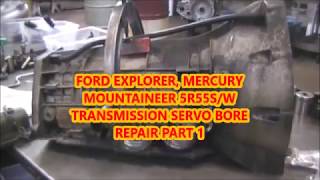
- Ford Explorer, Ranger, Mustang (1997-2010) — Vehicles with the 5R55E, 5R55W, and 5R55S transmissions are notorious for issues causing P0780. Common failures include a worn solenoid block (OEM P/N 9L2Z-7G391-A) and worn servo pin bores in the transmission case itself, causing a pressure loss that electronics cannot fix. TSB 09-12-12 addresses the servo bore issue.
- Chrysler/Dodge/Jeep Various models with 42RLE or NAG1 (W5A580) transmissions (2003-2014) — On 42RLE transmissions, P0780 traces to a faulty solenoid pack or corrosion in the 10-pin harness connector. NAG1 transmissions often experience valve body or solenoid issues leading to this code.
- General Motors (GM) Various models with 4L60E or 4T65E transmissions (1993-2010) — These widely used transmissions trigger P0780 due to failed shift solenoids (OEM P/N 24230298 for 4L60E) or, more commonly, a failing Pressure Control Solenoid (EPC), which leads to erratic line pressure and poor shift quality.
- Mazda CX-3, CX-5, CX-9, Mazda3, Mazda6 (2012-2021) — On SKYACTIV models, P0780 is commonly caused by sticking internal oil pressure switches due to fluid contamination. Mazda issued TSBs (e.g., 05-002/23) to address this. The required first step is a TCM software update; if that fails, the oil pressure switches in the valve body require replacement.
- Toyota Corolla, Camry (2003-2011) — On many Toyota models, a P0780 code frequently traces back to a specific malfunctioning shift solenoid or a wiring issue to the solenoid. Solenoid resistance is typically in the 11-15 ohm range.
- Nissan Maxima, Altima (2000-2008) — For Nissan vehicles with traditional stepped automatics, P0780 points to a variety of issues, from low fluid and bad solenoids to more complex valve body problems or a failing TCM.
- Volkswagen Jetta, Golf, Passat (2006-2014) — In VW models, P0780 indicates the ECU detected an incorrect gear change. This is often related to issues within the complex Mechatronics unit (valve body and TCM combined) or with dual-clutch packs in DSG transmissions.
Manufacturer-Specific Notes
- Honda: On early 2000s models, do not assume a P0780 is just a bad solenoid. These transmissions are known for internal clutch pack wear. A common misdiagnosis is replacing external solenoids when a full transmission rebuild is actually required.
- Ford: On 5R55 series transmissions, a common mechanical failure is the wearing of servo pin bores directly in the transmission case. This causes a hydraulic pressure leak that no electronic part replacement fixes. It requires specialized tools to re-sleeve the bores, though aftermarket kits exist for in-vehicle repair. TSB 09-12-12 addresses this problem.
- Mazda: For 2012+ SKYACTIV models, a P0780 code has a unique diagnostic path defined by TSBs like 05-002/23. The primary cause is often sticking oil pressure switches, not shift solenoids. The first step is a TCM software update. Only if the code returns should the switches be replaced.
- General Motors: On 4L60E/4T65E transmissions, the Pressure Control (PC or EPC) solenoid is a frequent failure point. A failing PC solenoid provides erratic line pressure, causing a wide range of shift quality issues that are often logged as a generic P0780 code.
Real Owner Stories
2015 Mazda CX-5 at 100K miles
Check Engine Light and A/T warning light came on simultaneously, vehicle went into 'limp mode'. Codes P0780 and P0847 were present.
What they tried:
- Owner had the vehicle towed to a Mazda dealership.
Outcome: The dealer identified Mazda Technical Service Bulletin (TSB) 05-002/15 for this issue. The fix was a TCM reprogramming, which cost $170. The owner also opted for a transmission flush for about $270. The repair resolved the codes and the vehicle returned to normal operation.
Lesson: For modern cars, especially Mazda SKYACTIV models, always check for TSBs related to P0780 before replacing parts. A simple software update is often the entire fix.
2002 Honda Odyssey with P0780
Vehicle was shifting harshly and the check engine light was on with code P0780. The owner suspected a common solenoid issue.
What they tried:
- Replaced the dual-linear shift solenoid.
- Performed multiple transmission drain-and-fills with correct Honda ATF.
Outcome: The problem persisted. Further forum research revealed that on this specific generation of Honda transmissions, P0780 often points to internal clutch pack failure, not just solenoids. The harsh shifting was a symptom of internal mechanical wear. The ultimate fix required a full transmission rebuild.
Lesson: On vehicles with known transmission weaknesses (like early 2000s Hondas), P0780 indicates a serious internal mechanical failure even if the symptoms seem electronic. Replacing external solenoids does not solve the root cause.
Chevrolet Truck with 4L60E Transmission
Vehicle intermittently showed P0780, with symptoms of slipping between gears and erratic shifting. Fluid level was correct.
What they tried:
- Initially suspected and replaced the 1-2 and 2-3 shift solenoids, but the code returned.
- Inspected wiring and found no visible damage.
Outcome: After the initial failed attempts, a professional diagnosis using a pressure gauge revealed erratic line pressure. The actual cause was a failing Electronic Pressure Control (EPC) solenoid. Replacing the EPC solenoid, which cost around $50 for the part plus labor to drop the pan, permanently fixed the issue.
Lesson: A general P0780 code is caused by a faulty pressure control solenoid, not just the gear change solenoids. Misdiagnosing this leads to replacing the wrong parts. A line pressure test is crucial for diagnosing this type of failure.
How to Prevent This Code From Triggering
- Change transmission fluid and filter at recommended intervals (Every 30,000-60,000 miles for most vehicles, or as specified by the owner's manual.) — Clean fluid maintains hydraulic pressure, lubricates moving parts, and removes heat. Old, broken-down fluid loses these properties, leading to overheating, wear, and sludge buildup that clogs solenoids and passages.
- Use the correct, OEM-specified transmission fluid (Every time fluid is added or changed) — Modern transmissions require fluid with specific friction and viscosity characteristics. Using a generic or incorrect fluid type causes clutch slippage, harsh shifting, and overheating, directly contributing to conditions that trigger P0780.
- Install an auxiliary transmission cooler (One-time installation for vehicles used for towing or heavy hauling) — Heat is the number one enemy of automatic transmissions. Towing and heavy loads generate excessive heat, which breaks down the fluid and damages internal seals and clutches. A cooler keeps the fluid within its optimal temperature range (around 175°F), dramatically extending transmission life.
- Avoid aggressive driving and improper shifting (Daily habit) — Hard acceleration, abrupt stops, and shifting from Drive to Reverse while the car is still moving puts immense stress on internal clutches, gears, and the valve body. Smooth driving habits reduce this shock loading and prevent premature mechanical wear.
- Check for and repair fluid leaks promptly (Periodically inspect your parking spot for red fluid spots) — Transmission fluid does not get 'used up'; if the level is low, there is a leak. Driving with low fluid starves the transmission pump, reduces hydraulic pressure, and causes slipping and overheating, leading to rapid and severe damage.
Frequently Asked Questions
Can I just clear the P0780 code and keep driving?
No. Clearing the code only extinguishes the light temporarily while the underlying mechanical or electrical problem persists. Ignoring it leads to severe, expensive transmission damage.
Will a transmission fluid flush fix a P0780 code?
It is risky for high-mileage vehicles. While a flush sometimes fixes minor contamination, it often dislodges large debris that clogs narrow passages and worsens the problem. A simple drain-and-fill with a new filter is a safer first step.
What is a common misdiagnosis for P0780?
The most common mistake is replacing shift solenoids without proper diagnosis. The actual cause is often simpler, like low fluid, a corroded wire, or a bad speed sensor. Systematically diagnosing the problem prevents unnecessary parts replacement.
Can a bad battery or alternator cause a P0780 code?
Yes, automatic transmissions rely heavily on stable electrical power. A weak battery or failing alternator providing below 10V to the TCM causes erratic behavior and triggers false codes. Always verify battery health during diagnosis.
How much does it cost to fix a P0780 code?
Costs vary drastically based on the root cause. A fluid change costs $150-$350, replacing a solenoid ranges from $200-$550, and a TCM update is typically $150-$300. Major repairs like a valve body replacement or full rebuild cost between $1,000 and $5,000+.
Why did the code return after I replaced the shift solenoids?
This usually means the solenoids were not the root cause. The problem likely stems from a wiring issue, low hydraulic pressure from a clogged filter, or internal mechanical failure like a worn clutch pack. Further diagnosis using live sensor data or pressure testing is required.
Is it critical to use OEM transmission fluid?
Yes, using OEM transmission fluid is highly recommended. Modern transmissions require fluids with specific frictional and viscosity properties to operate correctly. Generic fluids cause clutch slippage and overheating, directly triggering P0780.
Key Takeaways
- Check your transmission fluid level and condition first; low or burnt fluid causes over 50% of P0780 shift malfunction codes.
- Stop driving immediately when P0780 triggers to prevent a $300 solenoid repair from escalating into a $3,500 complete transmission rebuild.
- Scan for companion codes like P0731 or P0755 before replacing parts, as P0780 is a generic symptom code that rarely points to the exact failure on its own.
- Test shift solenoid resistance (typically 10-30 ohms) and verify wiring integrity before assuming the transmission requires a mechanical overhaul.
Helpful Videos

The information in this article is provided for general reference and educational purposes only. Vehicle specifications, procedures, and part compatibility can vary by production date, trim level, and region. Always consult your vehicle's factory service manual and verify part numbers before purchasing or performing repairs. Safety-critical components such as airbags, seat belts, and braking systems should be installed by a qualified professional.
- 🎬 Helpful Videos
- What Does P0780 Mean?
- Can I Drive With P0780?
- Common Causes
- Symptoms
- Diagnostic Flowchart
- Common Fixes & Costs
- Used vs. New Parts: Buying Guide
- What Happens If You Wait — Timeline
- Cost of Not Fixing It
- Diagnosis Steps
- When This Code Triggers (Freeze-Frame Conditions)
- Related Codes
- Climate & Environmental Factors
- How to Talk to a Mechanic About This Code
- Where to Take It: Dealer vs Independent vs Chain
- When to Walk Away From the Repair
- What Scan Tool You Need for This Code
- How to Clear the Code After You Fix It
- Will This Fail Emissions / State Inspection?
- Most Commonly Affected Vehicles
- Manufacturer-Specific Notes
- Real Owner Stories
- 2015 Mazda CX-5 at 100K miles
- 2002 Honda Odyssey with P0780
- Chevrolet Truck with 4L60E Transmission
- How to Prevent This Code From Triggering
- Frequently Asked Questions
- Can I just clear the P0780 code and keep driving?
- Will a transmission fluid flush fix a P0780 code?
- What is a common misdiagnosis for P0780?
- Can a bad battery or alternator cause a P0780 code?
- How much does it cost to fix a P0780 code?
- Why did the code return after I replaced the shift solenoids?
- Is it critical to use OEM transmission fluid?
- Key Takeaways
- 🎟️ Get 5% Off