

P0843 on 2011-2017 Honda Odyssey: 2nd Clutch Pressure Switch Failure Causes and Fixes
This code almost always points to a failed 2nd Clutch Transmission Fluid Pressure Switch. It is an external sensor located on top of the transmission housing. Replacing the switch, its crush washer, and ensuring the transmission has clean, correct Honda DW-1 fluid is the most common fix. Expect the part to cost between $40 and $80.
- P0843 on a 2011-2017 Odyssey is a very specific code pointing to the 2nd gear clutch pressure switch circuit.
- The most common fix is replacing the faulty pressure switch (P/N 28600-RKE-004) and its washer, which is an external part on the transmission located under the airbox.
- A flashing 'D' light is a key symptom to look for in addition to the Check Engine Light.
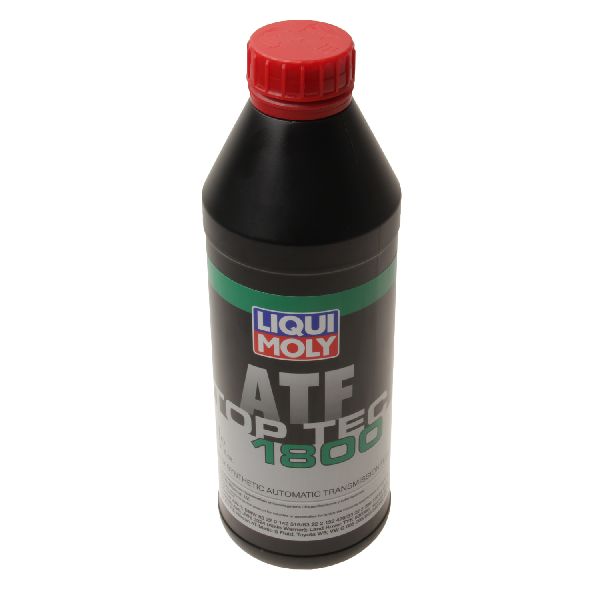
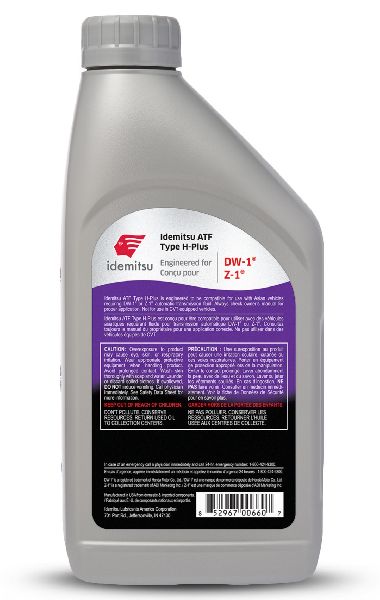
- Always use genuine Honda DW-1 transmission fluid. Using the wrong fluid can cause this and other transmission problems.
What's Unique About the 2011-2017 Honda Odyssey

The 2011-2017 Honda Odyssey uses a 6-speed automatic transmission (model series BYA/B97A) that relies on several external pressure switches to provide feedback to the computer for smooth shifting. These switches are a known failure point over time. Owners often find this code appears along with a flashing 'D' light on the dashboard. It is also critical to use only genuine Honda DW-1 automatic transmission fluid, as aftermarket fluids can cause shifting problems and potentially contribute to sensor and transmission damage. The 2nd clutch pressure switch is located on the top of the transmission case, accessible after removing the air filter box assembly.
Symptoms You May Notice
- Check Engine Light is on
- Flashing 'D' (Drive) indicator light on the instrument cluster
- Harsh or erratic shifting, especially involving 2nd gear
- Vehicle may feel hesitant or jerky during acceleration
- Transmission may get stuck in certain gears as a fail-safe measure
- Replacing internal transmission solenoids when the issue is just an external pressure switch.
- Assuming the entire transmission needs to be rebuilt or replaced without first diagnosing the simple external sensor and its circuit.
Most Likely Causes

- Failed 2nd Clutch Transmission Fluid Pressure Switch 🔴 High Probability These pressure switches are a common failure item on Honda automatic transmissions as they age due to heat cycles and internal wear.
How to confirm: Using a capable OBD-II scanner, monitor the live data for the '2nd Clutch Pressure Switch'. While driving, shift into 2nd gear. If the switch status remains 'OFF' when it should be 'ON', it confirms the switch is not activating as it should. The switch is located on top of the transmission, identifiable by its blue electrical connector.
Typical fix: Replace the 2nd clutch transmission fluid pressure switch and the corresponding crush washer. The switch requires a 22mm deep socket for removal. Torque spec is 14 lbf-ft (20 N.m), but do not tighten by holding the plastic connector.
Est. part cost: $40-$80 - Wiring Harness or Connector Issue 🟡 Medium Probability The switch is located on the front/top of the transmission, where its wiring is exposed to engine heat and potential chafing, which can lead to damage over time.
How to confirm: Visually inspect the wiring and the blue connector leading to the pressure switch for any signs of damage, corrosion, or loose pins. Use a multimeter to check for continuity and proper voltage between the switch connector and the PCM.
Typical fix: Repair the damaged section of the wiring harness or clean/replace the connector. Applying dielectric grease to the new connector can help prevent future moisture intrusion.
Est. part cost: $5-$50 - Dirty or Incorrect Transmission Fluid ⚪ Low Probability Honda transmissions are notoriously sensitive to fluid type and condition. Using non-OEM fluid or having old, contaminated fluid can affect hydraulic operation and potentially clog small passages within the switch or valve body, preventing proper operation.
How to confirm: Check the transmission fluid dipstick. The fluid should be reddish-pink and clear, not brown, black, or smelling burnt. Confirm service records to see if genuine Honda DW-1 fluid was used.
Typical fix: Perform a transmission fluid drain-and-fill (or multiple) using only genuine Honda DW-1 ATF. This is often done in conjunction with replacing the pressure switch.
Est. part cost: $50-$150
Rare But Worth Checking
- Faulty Powertrain Control Module (PCM): This is very rare. The PCM should only be considered after all other possibilities, including the switch and its entire circuit, have been thoroughly tested and ruled out. A faulty PCM will usually cause multiple other codes and issues.
Diagnosis Steps

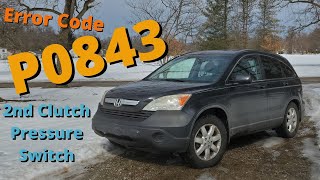
- Connect an OBD-II scanner and confirm P0843 is the primary code. 🎬 Watch: A diagnostic overview of the P0843 code and circuit. Note any other codes present.
- Check the transmission fluid level and condition. Ensure it is at the correct level and doesn't look or smell burnt. Note if the fluid appears to be non-Honda fluid.
- Use a scanner with live data capability to monitor the status of the 2nd clutch pressure switch.
- Safely test drive the vehicle. When the transmission shifts into 2nd gear, the switch status should change from 'OFF' to 'ON'. If it remains 'OFF', the fault is active.
- Turn off the vehicle and locate the 2nd clutch pressure switch on the top of the transmission case. It will have a blue connector. Access requires removing the air filter housing.
- Inspect the electrical connector and wiring going to the switch. Look for any signs of corrosion, damage, or loose connections.
- If the wiring looks good, the most likely cause is a faulty pressure switch.
- Using a 22mm deep socket, remove and replace the 2nd clutch pressure switch. Always use a new metal crush washer.
- It is highly recommended to perform a drain-and-fill with genuine Honda DW-1 transmission fluid at the same time.
- Clear the trouble code with the scanner and perform another test drive to ensure the 'D' light does not flash and the code does not return. Verify in live data that the switch now reads 'ON' in 2nd gear.
Parts You'll Likely Need

- 2nd Clutch Transmission Fluid Pressure Switch
(OEM #28600-RKE-004)— This switch is the most common failure point that triggers the P0843 code on this vehicle.
Trusted brands: Honda (Genuine OEM), Standard Motor Products, NTK
OEM price range: $50-$80
Aftermarket price range: $30-$60 - Pressure Switch Gasket / Washer (10mm)
(OEM #90471-PW7-A00)— A new crush washer is required to ensure a proper seal when replacing the pressure switch. It is often sold separately.
Trusted brands: Honda (Genuine OEM)
OEM price range: $2-$5
Aftermarket price range: $1-$3 - Honda Genuine ATF DW-1
(OEM #08200-9008)— Honda automatic transmissions require this specific fluid. Using other types can cause shifting problems and damage. A drain and fill requires approximately 3-4 quarts.
Trusted brands: Honda (Genuine OEM)
OEM price range: $10-$15 per quart
Aftermarket price range: N/A
Platform-Specific Known Issues
- On Odyclub.com, numerous threads for the 2011-2017 generation detail the P0843 code appearing with a flashing 'D' light. The consensus fix is replacing the 28600-RKE-004 switch and performing a 3x drain-and-fill with DW-1 fluid.
- A YouTube video by 'HOW TO' titled 'HOW TO: (Code P0843) Honda 2nd Clutch Pressure Switch Replacement' shows the exact repair process on a 2009 CR-V, which is mechanically very similar for this component. It highlights the need to remove the airbox for access and the interchangeability of a 7/8" s 🎬 See this replacement walkthrough for the 2nd clutch pressure switch.ocket for the 22mm switch.
Mechanic-Grade Diagnostic Values
- 2nd Clutch Pressure Switch Signal Wire Voltage (Key On, Engine Off, In Park) — expected: ~5V (or battery voltage). Failure: If voltage is 0V, this indicates a short to ground in the harness. The P0843 code (Circuit High) would not typically set in this case, but it's a key part of a complete circuit check.
- 2nd Clutch Pressure Switch Signal Wire Voltage (Engine running, transmission in 2nd gear) — expected: ~0V. Failure: If voltage remains at ~5V when the transmission is commanded into 2nd gear, it confirms the switch is not closing to ground. This is the direct cause for P0843.
- Pressure Switch Torque Specification — expected: 14 lbf-ft (20 N.m). Failure: Over-tightening can damage the switch or threads; under-tightening can cause leaks. Crucially, the torque must be applied to the metal hex body, not the plastic connector.
Scan Tool Commands That Help
- Honda HDS (or equivalent professional scanner): Live Data Monitoring (A/T Data List) — This is the primary method to confirm the fault. The technician watches the '2nd Clutch Pressure Switch' status while driving. If it fails to switch from 'OFF' to 'ON' when the transmission shifts to 2nd gear, the failure is confirmed.
Wiring & Ground Locations

- G101 — On the transmission housing, typically near the starter motor or on the thermostat housing bolted to the transmission.. This is a primary ground point for the PCM and transmission-related components. While a failure here would likely cause multiple codes, a corroded or loose G101 ground can cause intermittent and strange electrical issues, including sensor circuit faults.
- PCM Connector C (49-pin) — At the Powertrain Control Module (PCM) in the engine bay.. The signal wire from the 2nd clutch pressure switch terminates here. A continuity test between this connector and the switch connector is the definitive way to rule out a wiring harness break.
- Transmission Ground Cable — A braided strap (Part # 32601-STX-A01) connecting the transmission case directly to the vehicle's chassis/frame rail.. Ensures the entire transmission assembly has a solid ground path to the battery negative terminal. A broken or corroded strap can lead to a host of electrical problems, as sensor circuits may try to find ground through other, unintended paths.
Real Owner Repair Stories
- Odyclub.com forum user (2011+ Honda Odyssey) — Flashing 'D' light, Check Engine Light on, harsh shifting. Codes P0843 (2nd clutch) and P0873 (3rd clutch) were present.
❌ Tried (didn't work) Initially just clearing the codes, but they returned immediately.
✅ What actually fixed it Replaced both the 2nd clutch pressure switch (28600-RKE-004) and the 3rd clutch pressure switch at the same time. Also performed a 3x drain-and-fill with genuine Honda DW-1 ATF. This resolved both codes and the shifting issues. This indicates that these switches can fail in batches as the vehicle ages. - NHTSA ODI #11698241 — An owner reported that their vehicle was diagnosed with a cylinder 3 misfire and DTC P0843 was retrieved, along with an oil leak.
OEM Part Supersession History
28600-RAY-003, 28600-RAY-013, 28600-RGR-004→28600-RKE-004— Part consolidation and potential design updates by Honda over the years.
Heads up: While 28600-RKE-004 is the correct current part, ensure you are not using a similar-looking switch from a 4-cylinder application, such as 28600-RCL-004, as it has different pressure ratings and will not work correctly.
Model Year Variations Within This Range
- 2011-2013: Lower trim levels (LX, EX) of the 2011-2013 Odyssey used a 5-speed automatic transmission, while Touring models had the 6-speed. From 2014-2017, all trims came standard with the 6-speed automatic. While the P0843 code can exist for both, the part location and specific diagnostic procedures may vary slightly. This article specifically addresses the more common 6-speed transmission.
Diagnostic Flowchart
Other Known Issues on This Vehicle
Issues unrelated to this code that are worth knowing about as an owner of this generation:
- Variable Cylinder Management (VCM) Misfires 🔴 High — Common issue, particularly on earlier models in the generation. Can lead to oil consumption, fouled spark plugs (P0301-P0304), and eventual piston ring damage. (Ref: Honda TSB 13-081 extended the warranty for this issue to 8 years/unlimited miles, but this has since expired. The fix involves replacing piston rings.)
- Torque Converter Judder/Shudder 🟠 Medium — Widespread issue felt as a vibration or shudder during light acceleration between 20-60 mph. (Ref: Honda TSBs 17-043, 17-044, and 17-052 address this. The fix is a PCM software update and a 3x transmission fluid flush with DW-1. It is caused by premature fluid breakdown, not a faulty torque converter.)
- Power Sliding Door Failures 🟠 Medium — Commonly reported problem where doors fail to open, close, or latch properly. Can be caused by frayed cables, bad motors, or failed rollers. (Ref: A recall was issued for some 2018-2020 models, but earlier models in this generation suffer similar issues without a specific recall. Multiple dealer messages exist investigating the complaint.)
- VTEC Spool Valve Oil Leak 🟡 Low — The VCM spool valve assembly gasket is a very common place for an oil leak to develop. The oil drips down onto the alternator, potentially causing premature alternator failure.
- Warped Front Brake Rotors 🟡 Low — Many owners report premature warping of the front brake rotors, leading to steering wheel vibration during braking. This is often attributed to undersized brakes for a heavy vehicle.
Used vs. New Parts: Buying Guide for This Vehicle
When a used part is the smart pick: Not recommended for this repair. The pressure switch is a relatively low-cost electronic component that fails due to internal wear and heat cycles. The labor to access the part outweighs the minimal cost savings of a used part, which would have an unknown remaining lifespan and could fail shortly after installation.
What to inspect on the donor part:
- N/A - Avoid used switches.
OEM-only on this vehicle (don't cheap out):
- Honda Automatic Transmission Fluid (ATF) DW-1: This is non-negotiable. Honda transmissions are extremely sensitive to fluid chemistry, and using any other type of ATF, even those claiming to be 'universal' or 'Honda compatible', is a major risk that can lead to poor shifting, solenoid damage, and premature transmission failure.
Aftermarket brands forum-validated for this vehicle:
- Standard Motor Products (SMP)
- NTK/NGK
Brands owners have reported issues with on this vehicle:
- Generic, no-name brands from online marketplaces (e.g., Amazon, eBay) should be avoided. Forum users frequently report these parts being dead-on-arrival (DOA) or failing within a few months.
Real Owner Stories
Aggregated from forums and TSBs cited above. Mileages and costs reflect what owners reported in those sources.
2011-2017 Honda Odyssey
Symptoms: The P0843 code appeared along with a flashing 'D' light on the dashboard.
What fixed it: The consensus fix was replacing the 28600-RKE-004 pressure switch and performing a 3x drain-and-fill with genuine Honda DW-1 fluid.
Source hint: Odyclub.com (numerous threads)
Honda Odyssey
Symptoms: The check engine light and flashing 'D' light were on. A scanner with live data confirmed the 2nd clutch pressure switch was failing to turn 'ON' when shifting into gear.
What fixed it: The problem was resolved by replacing the faulty pressure switch and using the correct Honda DW-1 transmission fluid.
Source hint: https://www.youtube.com/watch?v=r3sc3c-yE5k (P0843 Honda Odyssey dianostic and repair.)
Honda Odyssey
Symptoms: An owner reported that the check engine light was illuminated and the vehicle was diagnosed with a cylinder 3 misfire and DTC P0843, along with an oil leak.
What fixed it: The vehicle was taken to a local dealer for diagnosis, though the report notes it was not repaired at that time.
Source hint: NHTSA ODI #11698241
Related OBD-II Codes
Frequently Asked Questions
My 2014 Odyssey has a flashing 'D' light and code P0843. What is the most likely part I need to replace?
What type of transmission fluid should I use when fixing the P0843 code on my Odyssey?
Where is the 2nd clutch pressure switch located on my 2011-2017 Odyssey?
I'm experiencing a shudder during light acceleration. Is this related to the P0843 code?
What tools do I need to replace the pressure switch?
What is the correct torque specification for the new pressure switch?
My Odyssey is also showing misfire codes like P0302 and P0303. Are these connected to the transmission problem?
Helpful Videos
We Have This Part in Stock


The information in this article is provided for general reference and educational purposes only. Vehicle specifications, procedures, and part compatibility can vary by production date, trim level, and region. Always consult your vehicle's factory service manual and verify part numbers before purchasing or performing repairs. Safety-critical components such as airbags, seat belts, and braking systems should be installed by a qualified professional.
- Honda Odyssey:
- 🎬 Helpful Videos
- 🛍️ Shop This Part
- What's Unique About the 2011-2017 Honda Odyssey
- Symptoms You May Notice
- Most Likely Causes
- Rare But Worth Checking
- Diagnosis Steps
- Parts You'll Likely Need
- Platform-Specific Known Issues
- Mechanic-Grade Diagnostic Values
- Scan Tool Commands That Help
- Wiring & Ground Locations
- Real Owner Repair Stories
- OEM Part Supersession History
- Model Year Variations Within This Range
- Diagnostic Flowchart
- Other Known Issues on This Vehicle
- Used vs. New Parts: Buying Guide for This Vehicle
- Real Owner Stories
- 2011-2017 Honda Odyssey
- Honda Odyssey
- Honda Odyssey
- Related OBD-II Codes
- Frequently Asked Questions
- 🎟️ Get 5% Off