

P0780 on 2001-2005 Honda Civic: Shift Malfunction Causes and Fixes
On a 2001-2005 Honda Civic, code P0780 indicates a 'Shift Malfunction.' While it can be caused by low fluid or bad solenoids, it is often an early warning of the well-documented internal automatic transmission failures common to this generation (models SLXA, BAXA, BMXA). Diagnosis is critical, as a full transmission replacement is a frequent outcome, especially if accompanied by a blinking 'D' light.
- P0780 on a 2001-2005 Civic is a serious code that often points to the known, widespread automatic transmission failures in this generation.
- Always start diagnosis by checking the transmission fluid level and condition. Dark, burnt, or metallic fluid is a strong sign of fatal internal damage.
- While faulty shift solenoids can cause this code, replacing them may not be a permanent fix if the internal clutches are already worn out.
- Due to the high probability of major mechanical failure, professional diagnosis is strongly recommended before purchasing any parts.
- If the transmission needs replacement, using a quality remanufactured unit is the most reliable long-term solution.
What's Unique About the 2001-2005 Honda Civic
The 7th generation Honda Civic (2001-2005) is known for having significant automatic transmission issues, especially in the 2001-2002 models. These transmissions (often SLXA or BAXA models) are prone to premature wear of internal clutch packs and torque converter failure, often related to overheating fluid and inadequate filtration. Therefore, while P0780 can point to simpler issues like solenoids on any car, on this specific Civic it carries a much higher risk of indicating serious internal mechanical failure that may require a complete transmission rebuild or replacement. A related code, P0730, has a Technical Service Bulletin (TSB 04-036) recommending a full transmission replacement for this issue due to excessive wear in the 2nd clutch.
Symptoms You May Notice
- Check Engine Light is on
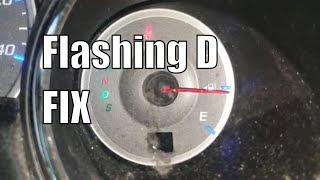
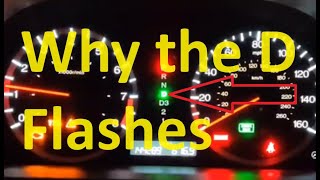
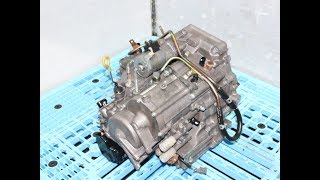
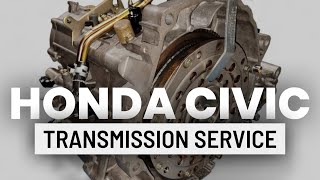
- Blinking 'D' (Drive) indicator light on the dashboard 🎬 Watch: Why your Honda's D light is flashing and how to fix it.
- Harsh, delayed, or erratic shifting
- Transmission slipping (engine revs but car doesn't accelerate properly)
- Vehicle gets stuck in one gear (limp mode)
- Whining, clunking, or grinding noises from the transmission
- Failure to engage Drive or Reverse from Park
- Replacing only the shift solenoids when the transmission has already suffered internal clutch failure. This may temporarily improve shifting but the code will likely return as the root mechanical problem persists.
- Performing a single drain-and-fill of the transmission fluid and expecting it to solve a major internal issue. While essential for maintenance, it's often not enough to fix an established problem.
Most Likely Causes
- Internal Transmission Failure (Worn Clutch Packs, Torque Converter) 🔴 High Probability The automatic transmissions in this generation of Civic (SLXA, BAXA, etc.) are widely documented to have a high failure rate due to design flaws, particularly related to the 2nd gear clutch pack and inadequate fluid circulation/cooling, which also damages the torque converter.
How to confirm: Check the transmission fluid for a burnt smell and the presence of excessive metallic debris or clutch material. A large amount of dark grey/black material on the magnetic drain plug is a definitive sign. A professional diagnosis involving pressure tests is the final confirmation.
Typical fix: Complete transmission rebuild or replacement with a remanufactured unit. Honda issued TSB 04-036 for a related code (P0730) that recommends full replacement. A user on Reddit reported a shop quote of ~$3,000 for this job in 2024. Similar findings are noted in NHTSA ODI #10693871, where a technician found no reverse or 3rd gear and burnt fluid, leading to a recommendation for a full transmission replacement.
Est. part cost: $1800-$3500 for a remanufactured transmission - Low or Burnt Transmission Fluid 🟡 Medium Probability Fluid is the lifeblood of the transmission, providing hydraulic pressure. On these prone-to-failure transmissions, old or low fluid can quickly accelerate wear and cause shifting problems. Over time, the fluid degrades and loses its ability to cool and lubricate effectively.
How to confirm: Check the transmission fluid dipstick (when the engine is warm and off). The fluid should be at the correct level and red/pink in color, not dark brown or black, and should not have a strong burnt smell.
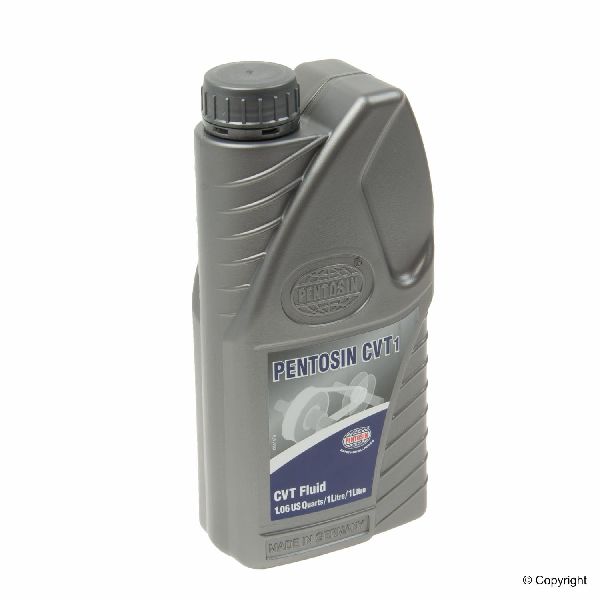
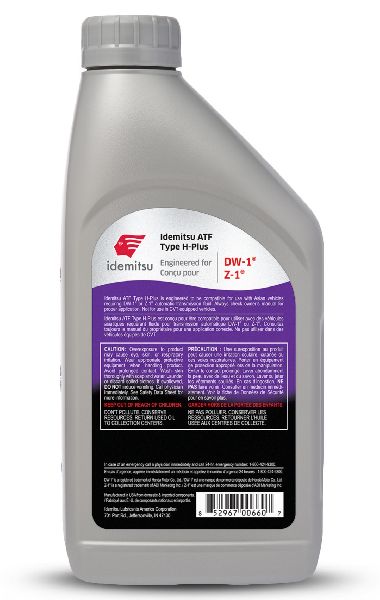
Typical fix: Perform a transmission fluid drain-and-fill using only Honda Genuine ATF-Z1 (or its modern equivalent, ATF DW-1). Multiple drain-and-fills may be needed to replace most of the old fluid. This is often a first step, but may not solve the problem if internal damage has already occurred.
Est. part cost: $40-$120 for fluid - Faulty Shift Solenoids ⚪ Low Probability While the solenoids themselves are not uniquely prone to failure, they can become clogged with debris from the failing internal components of the transmission. This makes solenoid failure a symptom more than a root cause in many cases.
How to confirm: Solenoids can be tested with a multimeter for correct resistance (typically 12-25 Ohms for these models). Often, other codes specific to a solenoid (e.g., P0753) will accompany P0780. The screens on the solenoids can also become clogged with debris, which is a key indicator of internal wear.
Typical fix: Replace the faulty shift solenoid assembly (OEM Part #28250-PLX-305). Cleaning the solenoid screens can be attempted, but if the screens are full of metal, the transmission is likely failing internally and replacing the solenoid will only be a temporary fix.
Est. part cost: $150-$400 for a solenoid assembly
Rare But Worth Checking
- Clogged External Transmission Filter: These Civics have a small, inline cartridge-style transmission filter (OEM Part #25430-PLR-003) that can become clogged with debris. If the fluid is dark and full of material, this filter is likely saturated and restricting flow. Replacing it is good practice during a fluid change but will not solve an internal failure.
- Faulty Transmission Control Module (TCM): While rare, the computer that controls the transmission can fail. This should only be considered after all other mechanical and electrical possibilities have been exhaustively ruled out by a professional.
Diagnosis Steps
- Check the level and condition of the automatic transmission fluid (ATF). If it is low, top it off with Honda ATF DW-1. If it is dark, burnt, or contains visible metallic particles, this strongly indicates internal failure.
- Scan for other transmission-related trouble codes with a scanner capable of reading Honda-specific transmission codes. A blinking 'D' light is a sure sign that transmission-specific codes are stored. NHTSA ODI #11265807 notes that P0780 may appear alongside codes like P1733 and P0796 when the transmission takes time to engage.
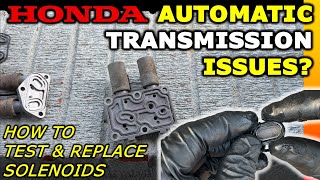
- Inspect the wiring and connectors going to the transmission solenoids for any visible damage or corrosion. The main linear solenoid assembly is located 🎬 Watch: How to test and replace your Civic's shift solenoids. on the front of the transmission housing.
- If the fluid is clean and at the correct level, consider testing the shift solenoids. They are typically located on the front of the transmission housing. Check their resistance with a multimeter against factory specifications (usually 12-25 ohms).
- Remove the shift solenoid assembly (Part #28250-PLX-305) and inspect the small mesh screens on the solenoid gaskets. Clean screens might suggest an electrical solenoid issue, while screens clogged with black/silver metallic clutch material confirm a definite internal transmission problem.
- Consider replacing the external inline transmission filter (Part #25430-PLR-003), especially if the fluid is dirty.
- If the above steps do not resolve the issue, a professional diagnosis involving hydraulic pressure testing is necessary to confirm internal transmission failure.
Parts You'll Likely Need
- Remanufactured Automatic Transmission — Due to the high rate of internal failure on this platform, this is the most common long-term solution for P0780 once internal wear is confirmed. Models include SLXA, BAXA, and BMXA.
Trusted brands: Honda (OEM Remanufactured), Jasper, Moveras, Street Smart Transmission
OEM price range: $2500-$3500
Aftermarket price range: $1800-$2800 - Automatic Transmission Fluid (ATF)
(OEM #08200-9008 (ATF DW-1))— Low or degraded fluid is a primary cause of transmission issues. Only use Honda-specific fluid. ATF-Z1 was the original fluid, but has been superseded by DW-1.
Trusted brands: Honda Genuine
OEM price range: $10-$15 per quart - Shift Solenoid Assembly (Linear)
(OEM #28250-PLX-305)— If the issue is confirmed to be electrical or a stuck solenoid without major internal damage, replacing the solenoid pack is the fix. It contains multiple solenoids in one assembly.
Trusted brands: Honda (OEM), WVE, Rostra
OEM price range: $250-$400
Aftermarket price range: $150-$250
Related Codes That Often Appear With This One
- P0730 — P0730 means 'Incorrect Gear Ratio.' It is very similar to P0780 and points to the same underlying problem of slipping or failure to engage a gear. A TSB for P0730 on this vehicle (04-036) points to internal failure and recommends transmission replacement.
- P0740 — This code relates to the Torque Converter Clutch (TCC) solenoid circuit. Issues with the torque converter or its control system can cause shifting problems and trigger a general shift fault like P0780. Torque converter failure is common along with clutch pack failure in these transmissions.
- P0700 — This is a general 'Transmission Control System Malfunction' code. It's an informational code set by the ECM to indicate that the TCM has stored a fault code. It will almost always be present when any other transmission code, like P0780, is active.
Technical Service Bulletins (TSBs) & Recalls
- TSB 04-036: Addresses code P0730 (Incorrect Gear Ratio) on 2001-04 Civics, recommending transmission replacement due to internal wear.
Platform-Specific Known Issues
- The automatic transmissions in 2001-2005 Civics (SLXA, BAXA) are known to fail prematurely, often between 80,000 and 120,000 miles.
- TSB 04-036 was issued for the related code P0730 on 2001-2004 models, indicating excessive wear in the 2nd clutch and recommending transmission replacement as the official repair.
- Some models (like the Civic HX and GX) were equipped with a Continuously Variable Transmission (CVT), which has different failure modes and does not use the same components as the conventional automatic transmission in the DX/LX/EX models. The P0780 code on a CVT model would point to different issues, such as pulley pressure control valves.
- The torque converter is also a common failure point, often failing in conjunction with the internal clutch packs due to contaminated fluid and overheating.
Documented NHTSA Reports
- NHTSA ODI #10246981 describes a scenario where the check engine light was on with a flashing PRNDL indicator; the service department diagnosed P0780 and recommended replacing the transmission.
- NHTSA ODI #11034501 reports that the vehicle lurches forward after stops and during acceleration, with diagnostics revealing a P0780 code while other gear changes functioned normally.
- NHTSA ODI #10298588 notes a case where the clutch slipped between the first three gears below 40 mph, resulting in code P0780, even though the transmission fluid was still pink and did not smell burnt.
Mechanic-Grade Diagnostic Values
- Shift Solenoid A & B Resistance (part of 28250-PLX-305 assembly) — expected: 12-25 Ohms. Failure: A reading outside this range indicates a faulty solenoid coil.
- Line Pressure Test — expected: Must be compared to factory service manual specifications for the specific transmission (BMXA/SLXA) at idle and stall speed in each gear.. Failure: Low pressure in drive ranges can indicate a weak pump, internal leaks, or a clogged filter/passages. High pressure can indicate a stuck regulator valve.
Hidden / Shadow Codes Worth Checking
- Flashing 'D' (Drive) Light: This is not a code itself, but a Honda-specific indicator that the Transmission Control Module (TCM) has detected a fault and stored one or more transmission-specific DTCs. A basic OBD-II scanner may only show P0700 (Transmission Control System Malfunction) or nothing at all, while the flashing 'D' light confirms a deeper issue. (see via Visually on the instrument cluster. A more advanced scan tool with Honda-specific software is required to read the underlying codes that caused the light to flash.)
Scan Tool Commands That Help
- Honda Diagnostic System (HDS) or equivalent: Clear DTCs & Test Drive Procedure — After a repair is performed, a technician uses the HDS to clear the codes. A specific test drive is then required, often accelerating to a set speed (e.g., 37 mph / 60 km/h), to allow the TCM to run its monitors and verify the fix. If the code does not return, the repair is considered successful.
Wiring & Ground Locations
- G101 — Top left side of the engine.. This is a primary engine and transmission ground. A poor connection here can cause erratic behavior from sensors and solenoids, potentially leading to incorrect diagnostic codes and shifting problems.
- Transmission Control Module (TCM) — Located behind the right kick panel or behind the glove box.. Knowing the physical location is critical for inspecting the TCM connectors for corrosion or damage, and for performing pin-out testing of the wiring harness between the module and the transmission components.
Real Owner Repair Stories
- civicforums.com user post (2005 Honda Civic with a failed BMXA transmission at 243,000 miles.) — Complete transmission failure, car left stranded.
❌ Tried (didn't work) The user's original BMXA transmission had completely failed.
✅ What actually fixed it The user replaced the failed US-market BMXA transmission with a used JDM (Japanese Domestic Market) SLXA transmission from a Honda Stream. The swap was successful and the car was drivable again. However, the user noted three key differences: 1) The SLXA had shorter gearing, making the car feel quicker but increasing highway RPM. 2) The gear shift indicator inside the car no longer aligned perfectly. 3) The original BMXA range sensor was not compatible; the SLXA's range sensor had to be used for it to work correctly.
OEM Part Supersession History
Honda Genuine ATF-Z1→Honda Genuine ATF DW-1 (08200-9008)— ATF DW-1 is a newer, lower-viscosity synthetic blend or full synthetic fluid that offers better performance, especially in low temperatures, and improved wear protection compared to the older mineral-based ATF-Z1.
Heads up: DW-1 is fully backward-compatible with transmissions that specified Z-1. The fluids can be mixed, but doing so will dilute the performance advantages of the newer DW-1 fluid. It is recommended to use existing stock of Z-1 before switching, or to perform multiple drain-and-fills with DW-1 to replace as much of the old fluid as possible.
Model Year Variations Within This Range
- 2001-2003: The automatic transmissions in the earlier years of this generation are widely reported to be more prone to premature failure. The 2004-2005 models received an updated transmission with improved internal components, such as revised clutch packs and a better internal filter design (a larger 'double filter' vs. the earlier 'single filter'), which resulted in better reliability.
- 2001-2005 (EX vs DX/LX): The automatic transmissions for EX (VTEC) and DX/LX (non-VTEC) models have different internal gear ratios, though they may be physically swappable. Using the wrong transmission could result in incorrect shift points and performance if not paired with the corresponding ECU.
Diagnostic Flowchart
Other Known Issues on This Vehicle
Issues unrelated to this code that are worth knowing about as an owner of this generation:
- Premature Head Gasket Failure 🔴 High — Common issue on the D17 engine series, particularly after 100,000 miles or if the cooling system has been neglected. Combustion gases leak into the coolant, causing overheating.
- Front Lower Control Arm (Compliance) Bushing Failure 🟠 Medium — The rubber compliance bushings are a known weak point, often failing and causing clunking noises from the front suspension when driving over bumps or braking.
- Cracked Exhaust Manifold 🟠 Medium — The factory exhaust manifold is prone to cracking, which causes a loud ticking or exhaust leak noise, especially when the engine is cold. This is a very common failure on this generation.
- Input Shaft Bearing (ISB) Failure (Manual Transmission) 🔴 High — On manual transmission models, the input shaft bearing is a frequent failure point, causing a loud whirring or grinding noise when the clutch is engaged that goes away when the clutch pedal is pressed. If left unaddressed, it can lead to catastrophic transmission failure.
Used vs. New Parts: Buying Guide for This Vehicle
When a used part is the smart pick: For a major internal failure resulting in P0780, sourcing a complete used transmission is a very common and cost-effective repair. It is particularly smart to find a lower-mileage unit from a 2004-2005 model to replace a failed transmission in a 2001-2003 car, as the later models are known to be more durable.
Donor-vehicle mileage cap: roughly under 120000 miles for the part to have meaningful remaining life.
What to inspect on the donor part:
- Prioritize transmissions from 2004-2005 models.
- Obtain a vehicle history report for the donor car to check for accidents or maintenance records.
- If possible, check the fluid on the dipstick of the donor transmission. It should be reddish/pink, not dark brown or burnt-smelling.
- Purchase from a reputable salvage yard that offers at least a 30-90 day warranty.
- When swapping, be sure to use the sensors (like the range sensor) that came with the donor transmission.
OEM-only on this vehicle (don't cheap out):
- Automatic Transmission Fluid (ATF): Strongly recommend using only Honda Genuine ATF DW-1. These transmissions are notoriously sensitive to fluid type, and using a generic 'multi-vehicle' fluid is a major risk.
Aftermarket brands forum-validated for this vehicle:
- Jasper (For professionally remanufactured transmissions)
- Rostra (For shift solenoid assemblies)
Brands owners have reported issues with on this vehicle:
- Unbranded, generic shift solenoids from online marketplaces like eBay or Amazon are a gamble and may fail quickly or be out-of-spec from the start.
Real Owner Stories
Aggregated from forums and TSBs cited above. Mileages and costs reflect what owners reported in those sources.
2001 Honda Civic
Symptoms: Vehicle stored a P0730 trouble code, a common companion to P0780 indicating severe internal transmission failure.
What fixed it: A professional shop quoted a complete transmission replacement as the necessary repair.
Cost: $3035-$3035
Source hint: Reddit r/MechanicAdvice: 2001 honda civic transmission replacement
2001-2004 Honda Civic — ~95000 miles
Symptoms: Stored DTC P0730 due to excessive wear in the 2nd gear clutch pack, a known design flaw.
What fixed it: The official repair documented in Honda's TSB 04-036 is a full automatic transmission replacement.
Source hint: Honda-Tech: Service Bulletin 04-036 -- FYI
Related OBD-II Codes
Frequently Asked Questions
My 2003 Civic's 'D' (Drive) light is blinking. What does this mean?
Is it worth just replacing the shift solenoids to fix P0780 on my 2001-2005 Civic?
What transmission fluid should I use for a drain-and-fill on my 2004 Civic?
I found TSB 04-036, but it's for code P0730. Does it apply to my P0780 problem?
How common is transmission failure on these 7th generation Civics?
I checked my transmission fluid and it's dark with metal shavings. Is my transmission failing?
Does this P0780 information apply to my 2002 Civic HX model?
Helpful Videos
We Have This Part in Stock



The information in this article is provided for general reference and educational purposes only. Vehicle specifications, procedures, and part compatibility can vary by production date, trim level, and region. Always consult your vehicle's factory service manual and verify part numbers before purchasing or performing repairs. Safety-critical components such as airbags, seat belts, and braking systems should be installed by a qualified professional.
- Honda Civic:
- 🎬 Helpful Videos
- 🛍️ Shop This Part
- What's Unique About the 2001-2005 Honda Civic
- Symptoms You May Notice
- Most Likely Causes
- Rare But Worth Checking
- Diagnosis Steps
- Parts You'll Likely Need
- Related Codes That Often Appear With This One
- Technical Service Bulletins (TSBs) & Recalls
- Platform-Specific Known Issues
- Documented NHTSA Reports
- Mechanic-Grade Diagnostic Values
- Hidden / Shadow Codes Worth Checking
- Scan Tool Commands That Help
- Wiring & Ground Locations
- Real Owner Repair Stories
- OEM Part Supersession History
- Model Year Variations Within This Range
- Diagnostic Flowchart
- Other Known Issues on This Vehicle
- Used vs. New Parts: Buying Guide for This Vehicle
- Real Owner Stories
- 2001 Honda Civic
- 2001-2004 Honda Civic — ~95000 miles
- Related OBD-II Codes
- Frequently Asked Questions
- 🎟️ Get 5% Off