

OBD-II Code P0763: Shift Solenoid 'C' Electrical Malfunction
The Ultimate Guide to What P0763 Means, Why It Triggers, and How to Fix It for Good
- Code P0763 indicates an electrical failure in the Shift Solenoid 'C' circuit, directly disabling your transmission's ability to shift into 3rd, 5th, or Reverse gears.
- Expect immediate drivability issues, including harsh shifting, being locked in 3rd gear (limp mode), and a 15-25% drop in fuel economy.
- The top 3 culprits are a dead solenoid coil, a brittle internal wiring harness (especially on 2010-2018 Hyundai/Kia models), or heavily contaminated transmission fluid.
- Stop driving immediately; continuing to drive with slipping clutches generates extreme heat that turns a $400 solenoid repair into a $3,500+ complete transmission rebuild within weeks.
What Does P0763 Mean?

Your car's Powertrain Control Module (PCM) or Transmission Control Module (TCM) detected an electrical problem with 'Shift Solenoid C'. This small, electronically controlled valve directs transmission fluid to execute gear shifts. When an electrical fault occurs—like an open circuit, a short, or abnormal resistance—the computer loses control over the gears managed by solenoid 'C' (typically 3rd, 5th, and Reverse).
Technical definition: The SAE/OBD-II definition is "Shift Solenoid 'C' Electrical". The TCM continuously monitors the voltage and resistance of the solenoid 'C' control circuit. When it detects a reading outside the manufacturer's specified range, it sets code P0763 and illuminates the Check Engine Light.
Can I Drive With P0763?
no_not_recommended. Driving is strongly discouraged. The transmission shifts harshly, gets stuck in one gear (limp mode), or fails to shift entirely, creating a significant safety hazard in traffic. Continuing to drive generates excessive heat from slipping components. This quickly turns a $400 solenoid or wiring repair into a $3,500+ transmission rebuild by destroying clutches, seals, and the valve body.
Common Causes

- Faulty Shift Solenoid 'C' (Very Common) — The solenoid itself is the most frequent failure point. The internal electronic coil shorts out or breaks (open circuit), disabling the valve.
- Damaged Internal Transmission Wiring Harness (Very Common) — The wiring harness inside the transmission oil pan becomes brittle from constant heat cycles and fluid exposure. Wires crack or break, creating an open or short circuit. This is extremely common on Hyundai, Kia, and Ford models.
- Damaged External Wiring or Connectors (Common) — External wires leading to the transmission fray, break, or short due to road debris, heat, or vibration. Connectors corrode, loosen, or suffer moisture contamination, interrupting the electrical signal.
- Low or Contaminated Transmission Fluid (Common) — Low fluid, or fluid contaminated with dirt and metal shavings, clogs hydraulic passages and transmission filters. This starves the solenoids of pressure, causing them to stick or fail.
- Faulty Transmission Valve Body (Less Common) — The valve body is the hydraulic control center where solenoids mount. If internal passages clog with debris, or the body warps, it triggers solenoid codes and shifting problems.
- Poor Ground Connection (Less Common) — A loose or corroded ground strap on the transmission case causes erratic electrical issues, including solenoid fault codes. The TCM requires a stable ground reference to operate solenoids.
- Internal Mechanical Failure (Rare) — A failing clutch pack or damaged transmission pump creates excessive debris that contaminates the entire system, leading to secondary solenoid failure.
- Faulty Powertrain/Transmission Control Module (PCM/TCM) (Rare) — Though rare, the transmission control computer fails when its internal driver circuit burns out. Consider this only after exhaustively ruling out wiring, solenoids, and fluid.
Symptoms

- Harsh, Delayed, or Failed Shifting — The transmission shifts roughly, hesitates, or fails to engage certain gears. Solenoid 'C' typically controls 3rd, 5th, and Reverse gears.
- Vehicle Enters 'Limp Mode' — The computer forces the transmission to stay in a single gear (usually 2nd or 3rd) to prevent further damage, severely limiting speed and acceleration.
- Transmission Slipping — The engine revs up, but the car fails to accelerate properly. This indicates the gear isn't fully engaged, creating excessive heat and rapid internal damage.
- Poor Fuel Economy — Unable to shift into the most efficient gear, the engine operates outside its optimal RPM range, significantly increasing fuel consumption.
- Engine Stalls When Stopping — A malfunctioning solenoid causes the torque converter clutch to remain locked when stopping, stalling the engine exactly like forgetting to press the clutch in a manual car.
- Check Engine Light On (also visible on scanner) — The Malfunction Indicator Lamp (MIL) illuminates on your dashboard immediately after the fault is detected.
Common Fixes & Costs
- Replace Shift Solenoid 'C'
— Parts: $50-$150, Labor: $200-$450, ~2.5 hr book time
(Intermediate)
: OEM - Replace Internal Transmission Wiring Harness
— Parts: $80-$250, Labor: $250-$550, ~3 hr book time
(Intermediate)
: OEM - Replace Transmission Solenoid Pack
— Parts: $150-$400, Labor: $300-$600, ~3.5 hr book time
(Intermediate)
: OEM
: OEM - Repair External Wiring or Replace Connector — Parts: $20-$100, Labor: $100-$300, ~1.5 hr book time (Intermediate)
- Change Transmission Fluid and Filter — Parts: $50-$120, Labor: $100-$250, ~1.2 hr book time (DIY)
- Replace Transmission Valve Body — Parts: $300-$800, Labor: $400-$1,000, ~4 hr book time (Professional)
Used vs. New Parts: Buying Guide
When a used part is worth it: For a simple, individual solenoid on an older, high-mileage vehicle where budget is the primary concern. It is a gamble, as solenoids suffer invisible internal electrical failures.
Donor-vehicle mileage cap: roughly under 80000 miles for the part to have meaningful remaining life.
Donor quality checklist:
- Verify the part number exactly; electronic parts have multiple non-interchangeable revisions.
- Ask for the donor vehicle's mileage and reason for salvage (accident damage is preferable to mechanical failure).
- Inspect connectors for corrosion or damage.
Decision logic:
- If The part is a complete solenoid pack or lead frame assembly → Buy new OEM or high-quality aftermarket. Used packs carry a high risk of containing other failing solenoids.
- If Vehicle is newer or has lower mileage (<100K miles) → Buy new to maximize transmission life. The cost savings of a used part do not justify the risk of repeat labor costs.
- If The repair requires programming (e.g., Ford lead frame, some TCMs) → Buy new. Used modules are often VIN-locked and cannot be reprogrammed.
Warranty tradeoff: Salvage yard parts offer a 30-90 day functional warranty on the part only; labor is excluded. New aftermarket parts carry a 1-year to limited lifetime warranty. OEM parts offer a 1-2 year warranty.
Worst-case if a used part fails: $400-$800 if a used part fails, representing the repeat labor cost to drop the transmission pan and replace the part again.
What Happens If You Wait — Timeline
- 0-1 month: Check Engine Light illuminates. Vehicle enters 'limp mode,' locking into one gear. Shifting is harsh or delayed. The issue remains contained to the electrical circuit. (MPG impact: 5-15%% · Added cost: $0)
- 1-3 months: Continued driving with erratic pressure forces transmission clutches to slip. This generates extreme heat, breaking down the transmission fluid and contaminating it with fine clutch material. (MPG impact: 10-20%% · Added cost: $50-$150 in wasted fuel and the cost of a fluid flush.)
- 3-6 months: Burnt, contaminated fluid circulates, causing other solenoids to stick and scoring the soft metal valve body. Seals harden and leak due to excessive heat. (MPG impact: 15-25%% · Added cost: $800-$1,500 (Valve body replacement is now required).)
- 6+ months: Catastrophic failure. Clutch packs burn out, internal seals fail, and hard parts like gears and the torque converter are destroyed by debris and heat. (MPG impact: >25% (if drivable)% · Added cost: $3,500-$5,000+ (Complete transmission rebuild or replacement required).)
Cost of Not Fixing It
- Immediate (0-1 month): Erratic shifting, poor fuel economy, and risk of being stranded. Slipping clutches generate excessive heat and contaminate fluid with debris. (Added cost: Negligible, beyond increased fuel usage.)
- Short-Term (1-3 months): Contaminated fluid accelerates wear on other solenoids and the valve body. Overheating damages seals and warps internal components. (Added cost: $800-$1,500 for valve body replacement.)
- Long-Term (3+ months): Catastrophic internal damage. Clutch packs burn out, hard parts score from debris, and the torque converter fails. The transmission requires a full rebuild. (Added cost: $3,500-$5,000+ for a complete transmission rebuild or replacement.)
Diagnosis Steps

- Read the Trouble Codes & Freeze Frame Data
Use an OBD-II scanner to confirm P0763. Note related transmission codes (P0700, other solenoids) and review freeze frame data to see the vehicle's exact state (speed, temp, load) when the code set.
Tools: OBD-II Scanner (Beginner) - Check Transmission Fluid Level and Condition
Verify fluid level and condition. Dark brown/black fluid, a burnt smell, or visible metal particles indicate severe internal transmission damage requiring a rebuild, not just a solenoid replacement.
Tools: Rag, Dipstick (if equipped) (Beginner) - Command the Solenoid with a Scan Tool (Pro Tip)
Use a bi-directional scan tool to manually command Solenoid 'C' on and off. Listen for a distinct 'click' from the transmission oil pan. A click confirms the solenoid and wiring are functional, pointing to a hydraulic issue. No click confirms an electrical failure.
Tools: Advanced Bi-Directional Scan Tool (Advanced) - Test Solenoid Resistance at the Connector
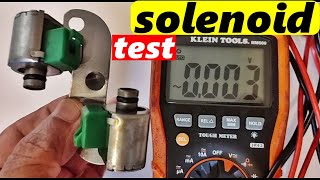
Disconnect the main transmission connector and measure resistance between the power and ground pins for solenoid 'C'. Compare to vehicle specs (typically 5-15 ohms). An infinite reading (OL) means an open circuit; <1 ohm means a short. Either result points to a failed solenoid or internal harness.
Tools: Multimeter, Vehicle Service Manual (Advanced) - Inspect External Wiring and Connectors
Visually inspect the external wiring harness leading to the transmission. Look for burnt, chafed, or bare wires. Unplug the main connector and check for corrosion, moisture, or bent pins. Apply dielectric grease after cleaning.
Tools: Flashlight, Dielectric Grease (Intermediate) - Test the Solenoid Circuit for Power and Ground
With the key on, check for battery voltage (12V ± 0.5V) at the solenoid power supply wire on the transmission connector. Check for ground continuity from the solenoid's ground pin to the chassis (<0.2 Ω). This isolates the fault to inside or outside the transmission.
Tools: Multimeter, Vehicle Wiring Diagram (Intermediate) - Perform a Loaded Circuit Voltage Drop Test
With the main harness reconnected and key on, back-probe the power and ground wires for Solenoid 'C'. A voltage drop exceeding 0.2 volts on either side indicates excessive resistance in the external wiring or connectors.
Tools: Multimeter with back-probe pins (Advanced) - Perform a Transmission Line Pressure Test
Connect a 300+ PSI fluid pressure gauge to the transmission's line pressure test port. At normal operating temperature, check pressure at idle in Drive and Reverse. Low pressure indicates a clogged filter, failing pump, or internal leaks affecting solenoid performance.
Tools: Transmission Pressure Gauge Set, Vehicle Service Manual (Advanced) - Test the TCM Driver Circuit with an Oscilloscope
Connect an oscilloscope to the signal wire for Solenoid 'C' at the TCM connector. While commanding the shift, look for a clear square wave or PWM signal. If wiring and solenoid are good but there is no signal, the TCM driver circuit failed.
Tools: Oscilloscope/Graphing Multimeter, Wiring Diagram (Professional)
When This Code Triggers (Freeze-Frame Conditions)
- Engine Coolant Temp: 170-220°F (77-104°C) (The code almost always sets when the vehicle reaches full operating temperature.)
- RPM: 1500-2500 RPM (Occurs during a command to shift, typically under light to moderate acceleration.)
- Engine Load: 25-60% (The fault is detected when the TCM actively tries to engage a gear, not during idle.)
- Vehicle Speed: 30-50 mph (48-80 km/h) (Typically occurs during the shift into 3rd or a higher gear managed by Solenoid 'C'.)
Related Codes
- P0700 — A general transmission fault code indicating the TCM stored a specific code (like P0763). It tells the main computer to illuminate the Check Engine Light.
- P0761 — 'Shift Solenoid C Performance or Stuck Off'. P0763 is an electrical fault; P0761 is a mechanical fault. The circuit tests fine, but the transmission doesn't shift, pointing to a physically stuck solenoid or hydraulic blockage.
- P0762 — 'Shift Solenoid C Stuck On'. The TCM detects a gear engaged when it shouldn't be, implying the solenoid is mechanically stuck open. This is a performance fault, not electrical.
- P0753 — 'Shift Solenoid A Electrical'. The exact same electrical fault as P0763, but for solenoid 'A'. Multiple solenoid electrical codes strongly suggest a common problem like a bad ground, faulty internal harness, or failing TCM.
- P0979 / P0980 — 'Shift Solenoid C Control Circuit Low / High'. More specific versions of P0763. P0979 indicates a short to ground (low voltage); P0980 indicates a short to power (high voltage).
Climate & Environmental Factors
- Moisture and Humidity: High humidity or direct water exposure (deep puddles, pressure washing) leads to corrosion in external connectors and wiring, causing intermittent shorts or open circuits that trigger P0763.
- Extreme Temperatures (Hot and Cold): Constant heat cycles cause internal wiring harnesses to become brittle and crack. Extreme ambient heat accelerates this. Solenoid coil resistance changes with temperature, frequently leading to an intermittent code that sets only when the transmission is very hot.
- High Altitude: Altitude does not directly cause electrical faults. However, it affects engine performance and cooling efficiency, placing additional stress on the transmission and exacerbating pre-existing borderline issues.
How to Talk to a Mechanic About This Code
Say this: "I have a P0763 code, which is a Shift Solenoid 'C' Electrical fault. Before authorizing internal transmission work, I need you to perform a diagnostic checking the solenoid circuit's resistance, power, and ground at the main external connector to rule out a wiring issue."
This signals you understand P0763 is an electrical circuit code and the fault could be external. It directs the shop to perform a logical, cost-effective diagnosis instead of immediately quoting an expensive internal repair.
Avoid saying:
- 'Just fix whatever's wrong'
- 'My check engine light is on, can you look at it?' (too vague — invites upsell)
- 'Whatever you recommend'
Questions to ask before authorizing the repair:
- What were the resistance (ohm) readings for the solenoid 'C' circuit when tested at the transmission connector?
- Did you confirm good 12V power and a solid ground connection at the harness connector?
- If an internal part is needed, what is the warranty on the parts and your labor?
- For my specific vehicle, are you replacing just the solenoid or also the internal harness as recommended by TSBs?
Where to Take It: Dealer vs Independent vs Chain
- Dealer:
Best for: Vehicles still under powertrain warranty., Repairs requiring manufacturer-specific software for programming new parts (e.g., Ford lead frames)., Complex issues covered by a Technical Service Bulletin (TSB).
Downsides: Highest labor rates., Prefers replacing larger, expensive assemblies (like a full valve body) rather than individual components. (Typical cost: +50% vs. baseline) - Independent Shop:
Best fit. A reputable independent transmission specialist offers the best balance of expertise and value, performing component-level diagnosis rather than replacing entire assemblies.
Best for: Out-of-warranty vehicles where cost is a major factor., Finding a transmission specialist with hands-on experience in component-level repair.
Downsides: Quality varies widely; finding a shop with strong transmission diagnostic skills is crucial., Lacks access to the latest manufacturer software updates. (Typical cost: +0% vs. baseline) - Chain Shop:
AVOID. P0763 requires specialized electrical and transmission knowledge. The risk of misdiagnosis and being oversold a new transmission is extremely high.
Best for: Simple, routine maintenance like oil changes or brake jobs.
Downsides: Technicians lack specialized complex transmission diagnostic skills., Business model incentivizes quick parts replacement over detailed electrical diagnosis. (Typical cost: -10% vs. baseline)
When to Walk Away From the Repair
If the total estimated repair cost exceeds 40-50% of your car's private-party value, seriously consider selling the car as-is or trading it in.
- Car worth $3500, fix is $1500: Walk away. The repair cost is nearly half the car's value. The risk of other age-related failures is high.
- Car worth $15000, fix is $1200: Fix it. The repair cost is well under the threshold and restores the vehicle's function and value.
- Car worth $5000, fix is $3500: Walk away. This repair cost indicates a full transmission replacement, which is not economical for a car of this value.
What Scan Tool You Need for This Code

Minimum: A scanner that reads specific transmission codes and views live transmission data, such as solenoid command status and fluid temperature.
A $20 code reader only shows 'P0763'. It cannot determine if the cause is the solenoid, wiring, or TCM. You must see what the computer commands the solenoid to do versus what actually happens in the circuit, requiring live data.
Budget: BlueDriver Pro Scan Tool (~$100) — Connects to a smartphone app to read transmission codes, view freeze frame data, and graph live data PIDs. Sufficient for a DIYer to compare commanded state vs. reality.
Mid-range: Foxwell NT510 Elite / Autel MaxiCOM MK808 (~$150-350) — Offers bi-directional control. This allows you to manually command the 'C' solenoid on and off to listen for a 'click', directly testing the solenoid's function without disassembly.
Professional: Autel MaxiSys MS906 / Launch X431 Series (~$600-1500) — Provides full OEM-level diagnostics, bi-directional control, advanced ECU coding for programming modules, and detailed topology mapping to visualize communication faults.
Rent vs buy: Free 'loaner' scanners from auto parts stores are basic code readers and insufficient for proper diagnosis. They confirm the code but lack live data or bi-directional functions. Buying a mid-range scanner with bi-directional control is a mandatory investment for this repair.
How to Clear the Code After You Fix It
- Use an OBD-II scan tool to clear the diagnostic trouble codes (DTCs).
- Ensure transmission fluid is at the correct level and the battery is fully charged.
- Perform a complete OBD-II drive cycle to run the system's readiness monitors.
Drive cycle (~30 minutes): 1) Cold start and idle for 2-3 minutes. 2) Drive in stop-and-go city traffic for 15-20 minutes, including several complete stops. 3) Drive at a steady highway speed (55-60 mph) for 10-15 minutes. 4) Allow the vehicle to cool down completely and repeat if necessary.
Readiness monitors affected: Comprehensive Component Monitor, Catalyst Monitor, Oxygen Sensor Monitor
Before emissions retest: drive at least 100 miles to fully set monitors.
Watch out for:
- Disconnecting the battery clears the code but resets all readiness monitors, guaranteeing an emissions test failure until a full drive cycle completes.
- The code returns immediately if the underlying electrical fault remains.
- Some vehicles require several days of normal driving to complete specific drive cycle requirements.
Will This Fail Emissions / State Inspection?
Yes — this code typically fails an OBD-II emissions inspection.
- California: An active Check Engine Light for P0763 is an automatic failure. After repair, all readiness monitors must be 'Complete' before passing a smog check.
- New York: The NYS DMV inspection includes an OBD-II scan. An illuminated Check Engine Light from P0763 causes an automatic emissions failure.
- Texas: In the 17 counties requiring emissions testing, a vehicle with P0763 automatically fails the OBD-II test.
Most Commonly Affected Vehicles
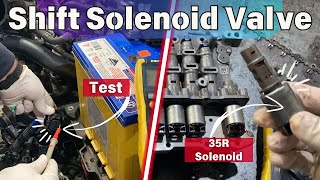
- Hyundai / Kia Optima, Sonata, Elantra, Sportage, Santa Fe (2010-2018) — Extremely common on 6-speed automatics. TSBs advise replacing the 3-5-R solenoid (Part #46313-3B030) and internal wire harness (Part #46307-3B650) simultaneously. 🎬 Watch: How to test and fix P0763 on Hyundai and Kia models.
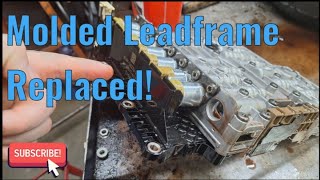
- Ford Explorer, F-150, Focus, Mustang (2002-2015) — Known for solenoid pack or molded lead frame failures. The entire solenoid block is replaced as a unit. 🎬 See this DIY tutorial for replacing a Ford solenoid lead frame.
- Dodge/Chrysler/Jeep Grand Caravan, Town & Country, Ram 1500 (2008-2016) — The solenoid pack is a frequent failure item on the 62TE transmission. The main electrical connector seal also leaks fluid, wicking into the wiring and causing codes. 🎬 Watch: Step-by-step guide to replacing a Chrysler 62TE solenoid pack.
- Chevrolet / GMC Silverado, Malibu, Equinox, Sierra (2005-2015) — Experiences this code due to individual solenoid failure or brittle internal wiring harnesses.
- Honda / Acura Odyssey, Accord, Pilot, MDX (2002-2013) — Known for issues with linear solenoids and pressure switches. Often requires replacing the solenoid and performing a 3x drain-and-fill with genuine Honda fluid.
- Toyota Camry, Sienna, RAV4 (2002-2010) — Generally reliable, but shift solenoid issues occur. Diagnosis is key, as the issue is often external wiring rather than a failed solenoid.
- Subaru Legacy, Outback (2005-2012) — Often appears with general transmission fault code P0700. Caused by a faulty valve body solenoid or intermittent wiring connection.
- BMW Various models with ZF transmissions (1995-2005) — Triggers a 'Trans Failsafe' warning. Often caused by low system voltage from a failing battery or alternator rather than a true transmission fault.
Manufacturer-Specific Notes
- Hyundai/Kia: TSBs explicitly advise technicians to replace the individual solenoid AND the internal wire harness. Ignoring the harness guarantees a repeat failure.
- Ford: On 6R80 transmissions, solenoids are integrated into a 'molded lead frame'. Ford issued Customer Satisfaction Program 19N01, extending the warranty on this part to 10 years/150,000 miles for certain 2011-2013 models.
- Chrysler/Dodge/Jeep: The main electrical connector at the transmission case on the 62TE transmission leaks fluid, wicking up into the wiring and causing connection problems that trigger electrical fault codes.
- Honda/Acura: Highly sensitive to fluid type and condition. Using anything other than genuine Honda ATF causes shifting problems and solenoid codes. A 3x drain-and-fill procedure is the required service method.
Real Owner Stories
2012 Hyundai Elantra at 110K miles
Check Engine Light came on with P0763 and P0700. Transmission locked in 3rd gear (limp mode). Shifting was harsh when moving from Park to Drive.
What they tried:
- A local shop quoted $1,800 for a valve body replacement.
- Owner researched Hyundai TSBs and found the internal wiring harness is a known failure point.
- A second shop agreed to replace only the 3-5-R solenoid ('C') and the internal wiring harness.
Outcome: The repair, using OEM parts (harness #46307-3B650 and solenoid #46313-3B030), cost $700. This fixed the problem completely, restoring smooth shifts.
Lesson: On Hyundai/Kia vehicles, P0763 is frequently caused by the internal wiring harness, not just the solenoid. Always replace both parts together per Hyundai's Technical Service Bulletins to avoid repeat failures.
2013 Ford F-150 with 6R80 Transmission
Vehicle intermittently lost power, shifted erratically, and the speedometer dropped to zero while driving. Threw multiple codes for the molded lead frame.
What they tried:
- Owner replaced the molded lead frame with a non-OEM part from an auto parts store due to Ford backorders.
- Immediately after repair, the truck entered limp mode and threw new codes P0763 and P0979 (Shift Solenoid 'C' Control Circuit Low).
Outcome: The aftermarket lead frame was faulty out of the box. The owner reinstalled the old part to make the truck drivable while waiting for a genuine Ford part. Only the OEM component resolved the issue.
Lesson: For complex electronic parts like the Ford 6R80 molded lead frame, cheaper aftermarket versions are a massive gamble. Faulty new parts introduce new codes, doubling labor costs and complicating diagnosis.
2010 Dodge Grand Caravan at 130K miles
P0763 code appeared with intermittent shifting problems, mostly occurring after the vehicle fully warmed up on longer drives.
What they tried:
- A mechanic initially suspected the solenoid pack, a common failure on the 62TE transmission.
- Visual inspection revealed transmission fluid weeping from the main electrical connector on the transmission case.
Outcome: Fluid contaminated the connector pins, causing an intermittent short circuit when hot. Replacing the leaking connector seal and cleaning the pins with electrical cleaner fixed it. The solenoid pack was fine. Repair cost under $200.
Lesson: An electrical code does not guarantee a failed component. Always inspect the full circuit, including connectors, for physical damage or fluid contamination before replacing expensive parts.
How to Prevent This Code From Triggering
- Perform regular transmission fluid and filter changes (Every 30,000-60,000 miles, or per manufacturer specification.) — Clean fluid lubricates moving parts and dissipates heat. Degraded fluid becomes abrasive, loses cooling properties, and builds sludge that clogs solenoid passages and causes overheating.
- Use only the manufacturer-specified transmission fluid (OEM fluid) (Every fluid change.) — Solenoids and clutch materials require a specific fluid viscosity and friction coefficient. Generic fluids cause solenoids to stick, clutches to slip, and seals to degrade.
- Install an auxiliary external transmission cooler (One-time installation, especially for towing or hot climates.) — Heat is the primary cause of automatic transmission failure. An external cooler provides significant additional cooling capacity, preventing fluid breakdown and protecting solenoids from heat damage.
- Check for and repair fluid leaks promptly (During every oil change or monthly check.) — Low fluid forces the transmission pump to work harder, causing pressure drops and overheating. This starves solenoids and clutches of hydraulic pressure, causing slipping and failure.
Frequently Asked Questions
What does the 'C' in Shift Solenoid C mean?
Automatic transmissions use multiple shift solenoids labeled A, B, C, etc. 'C' is the manufacturer's designation for the specific solenoid controlling the 3rd, 5th, and Reverse gears.
Does P0763 always mean the solenoid is bad?
No. The code indicates an electrical fault anywhere in the circuit. It is frequently caused by broken wiring, a corroded connector, a bad ground, or a failing control module. Proper diagnosis prevents replacing good parts.
Can I fix P0763 myself?
If the problem is low fluid or obvious external wiring damage, a DIY fix is possible. Replacing the solenoid requires draining fluid, removing the oil pan, and working in a highly sensitive environment, making it an intermediate-to-advanced job.
Will changing the transmission fluid fix a P0763 code?
Unlikely. If contaminated fluid causes the solenoid to stick and draw incorrect current, a fluid change might help. However, if the solenoid's internal coil has already failed or wiring is broken, new fluid will not solve the electrical problem.
Why does the P0763 code disappear and then come back?
This indicates an intermittent electrical fault. A wire shorts out only when hot, or vibration causes a loose connection to fail temporarily. Restarting the car resets the computer until conditions trigger the fault again.
What's the difference between a shift solenoid and a solenoid pack?
A shift solenoid is an individual electro-hydraulic valve. A solenoid pack is a single assembly containing multiple solenoids, commonly used by Ford and Chrysler, requiring replacement of the entire unit if one fails.
Can a bad battery cause a P0763 code?
Yes, particularly in European makes like BMW. Low system voltage from a failing battery or alternator causes erratic signals within the vehicle's modules, triggering false solenoid fault codes.
Is a P0763 repair covered by warranty?
This repair is covered under the vehicle's powertrain warranty. If your car is within the warranty period (e.g., 5 years/60,000 miles), contact your dealer.
Key Takeaways
- Code P0763 indicates an electrical failure in the Shift Solenoid 'C' circuit, directly disabling your transmission's ability to shift into 3rd, 5th, or Reverse gears.
- Expect immediate drivability issues, including harsh shifting, being locked in 3rd gear (limp mode), and a 15-25% drop in fuel economy.
- The top 3 culprits are a dead solenoid coil, a brittle internal wiring harness (especially on 2010-2018 Hyundai/Kia models), or heavily contaminated transmission fluid.
- Stop driving immediately; continuing to drive with slipping clutches generates extreme heat that turns a $400 solenoid repair into a $3,500+ complete transmission rebuild within weeks.
Helpful Videos


The information in this article is provided for general reference and educational purposes only. Vehicle specifications, procedures, and part compatibility can vary by production date, trim level, and region. Always consult your vehicle's factory service manual and verify part numbers before purchasing or performing repairs. Safety-critical components such as airbags, seat belts, and braking systems should be installed by a qualified professional.
- 🎬 Helpful Videos
- What Does P0763 Mean?
- Can I Drive With P0763?
- Common Causes
- Symptoms
- Common Fixes & Costs
- Used vs. New Parts: Buying Guide
- What Happens If You Wait — Timeline
- Cost of Not Fixing It
- Diagnosis Steps
- When This Code Triggers (Freeze-Frame Conditions)
- Related Codes
- Climate & Environmental Factors
- How to Talk to a Mechanic About This Code
- Where to Take It: Dealer vs Independent vs Chain
- When to Walk Away From the Repair
- What Scan Tool You Need for This Code
- How to Clear the Code After You Fix It
- Will This Fail Emissions / State Inspection?
- Most Commonly Affected Vehicles
- Manufacturer-Specific Notes
- Real Owner Stories
- 2012 Hyundai Elantra at 110K miles
- 2013 Ford F-150 with 6R80 Transmission
- 2010 Dodge Grand Caravan at 130K miles
- How to Prevent This Code From Triggering
- Frequently Asked Questions
- What does the 'C' in Shift Solenoid C mean?
- Does P0763 always mean the solenoid is bad?
- Can I fix P0763 myself?
- Will changing the transmission fluid fix a P0763 code?
- Why does the P0763 code disappear and then come back?
- What's the difference between a shift solenoid and a solenoid pack?
- Can a bad battery cause a P0763 code?
- Is a P0763 repair covered by warranty?
- Key Takeaways
- 🎟️ Get 5% Off