

P0776 on 2004-2006 Lexus ES 330: Pressure Control Solenoid 'B' Causes and Fixes
On a 2004-2006 Lexus ES 330, code P0776 almost always points to a failed Pressure Control Solenoid 'B' (also known as Shift Solenoid SL2) inside the U151E transmission. The fix typically involves replacing the solenoid, which requires dropping the transmission pan and changing the fluid and filter. This is a common failure point for this transmission.
- P0776 on your ES 330 means Pressure Control Solenoid 'B' (SL2) has a problem.
- The most common symptoms are harsh shifting and the transmission getting stuck in lower gears.
- The most likely fix is replacing the faulty solenoid, along with the transmission filter and fluid.
- This is a complex repair best left to a professional unless you are an experienced DIY mechanic with the right tools.
- Always use the correct Toyota Type T-IV transmission fluid to prevent future issues.
What's Unique About the 2004-2006 Lexus ES 330

The Lexus ES 330 from this era uses a U151E 5-speed automatic transaxle, which is shared with many other Toyota and Lexus 🎬 See a breakdown of common U151 transmission problems. models like the Camry, Sienna, Highlander, and RX 330. While generally reliable, this transmission is known for solenoid-related issues as it ages. Forum discussions among Lexus owners specifically confirm that P0776 is very commonly traced back to the SL2 shift solenoid failing either mechanically or electrically. A dealership's first instinct may be to replace the entire transmission for thousands of dollars, but forum user experiences show that a targeted solenoid replacement often resolves the issue for a fraction of the cost.
Symptoms You May Notice
- Harsh or jerky shifting
- Delayed gear engagement
- Inability to shift into higher gears (may feel stuck in 1st, 2nd, or 3rd)
- Transmission slipping between gears
- Illuminated Check Engine Light
- Vehicle enters limp mode, limiting available gears
- RPMs flare up without an increase in speed
- Replacing the entire transmission when only a single solenoid has failed. A Lexus dealer quoted a user $10,000 for a new transmission for a P0776 code, a repair that can often be done for under $1,000.
- Assuming the problem is a major mechanical failure without first checking the fluid condition and testing the solenoids.
- Performing multiple fluid flushes hoping to clear a stuck solenoid that has already failed electrically.
Most Likely Causes

- Faulty Pressure Control Solenoid 'B' (Shift Solenoid SL2) 🔴 High Probability This specific solenoid is a very common failure point in the U151E transmission as it ages. It can fail electrically (internal coil breaks) or mechanically (valve gets stuck from debris).
How to confirm: After dropping the transmission pan, the solenoid can be tested with a multimeter for correct resistance (specification is 5.0-5.6 Ohms at 68°F/20°C). It can also be tested by applying 12V power through a 21W bulb to see if the valve audibly clicks.
Typical fix: Replace the faulty solenoid. This is done by removing the transmission pan and filter to access the valve body where the solenoid is mounted. The SL2 solenoid can be replaced without removing the entire valve body. 🎬 Watch: How to replace the solenoid on an ES330.
Est. part cost: $90-$210 - Low, Burnt, or Dirty Transmission Fluid 🟡 Medium Probability The U151E is sensitive to fluid condition. Over time, fluid breaks down and collects clutch material and metal shavings. This contaminated fluid can clog the fine passages in the solenoids and valve body, causing them to stick. A standard drain-and-fill only replaces 🎬 Watch: Step-by-step guide for a fluid and filter change. about 3.5-4 quarts of the total ~9-quart capacity.
How to confirm: Check the transmission fluid dipstick. The fluid should be bright red and clear, not dark brown, black, or have a burnt smell. Low fluid level can also cause pressure issues leading to various codes.
Typical fix: Perform a transmission fluid and filter change. If the fluid is very dirty, multiple drain-and-fills or a full fluid exchange may be necessary. This is often the first step before replacing parts.
Est. part cost: $60-$150 for fluid and a filter kit. - Clogged Transmission Valve Body ⚪ Low Probability Debris from normal wear can accumulate in the valve body, blocking the small passages that direct fluid flow. This prevents the pressure commanded by the solenoid from reaching the clutch packs, even if the solenoid itself is functional.
How to confirm: This is diagnosed after removing the valve body and inspecting it for sludge, debris, or stuck valves. This is typically done by a transmission specialist.
Typical fix: The valve body may be professionally cleaned or replaced entirely if it is warped or damaged.
Est. part cost: $400-$1200 for a rebuilt or new valve body.
Rare But Worth Checking
- Wiring Harness or Connector Damage: The wiring harness inside the transmission is submerged in hot fluid, which can make insulation brittle over time. A ClubLexus user with multiple solenoid codes found a piece of pink wiring insulation in their pan, pointing to a harness issue. Check the connector at the transmission case and the wiring leading to the solenoid for any visible damage or corrosion.
- Faulty ECM/TCM: A failure in the Engine or Transmission Control Module is very rare but possible. This should only be considered after all other possibilities, including solenoids, fluid, and wiring, have been thoroughly ruled out. Sometimes an ECM reflash or reset is attempted after a repair.
Diagnosis Steps

- Check the transmission fluid level and condition. If it is low, dark, or smells burnt, address this first.
- Use an OBD-II scanner to confirm P0776 is the only code present. If other solenoid codes (e.g., P0746, P0796) are present, it could point to a wiring, computer, or major internal mechanical issue.
- Use a professional scan tool like Toyota Techstream to perform an 'Active Test'. This allows you to command individual gear shifts while driving below 31 mph (50 km/h). If the transmission fails to enter a gear when commanded, it helps confirm a fault in that gear's circuit.
- Inspect the external transmission wiring harness and connector for any obvious damage or corrosion.
- Safely raise the vehicle and drain the transmission fluid, removing the transmission pan.
- Inspect the pan for excessive metal shavings or debris. A small amount of fine, metallic paste on the magnet is normal, but large chunks indicate a more serious internal failure.
- Locate Shift Solenoid SL2 on the valve body (a service manual or diagram is essential here). It is one of the smaller solenoids that can be removed without dropping the valve body.
- Disconnect the solenoid and test its resistance with a multimeter. Compare the reading to the manufacturer's specification of 5.0-5.6 ohms at 68°F (20°C). An open circuit (infinite resistance) or out-of-spec resistance indicates a bad solenoid.
- If resistance is good, you can carefully apply 12V power (in series with a 21W bulb as per the service manual) to the solenoid to listen for a distinct click, which indicates mechanical operation. Lack of a click means it's mechanically stuck.
- If the solenoid tests good, the problem may lie in the valve body, internal wiring harness, or the ECM. At this point, professional diagnosis is strongly recommended.
Parts You'll Likely Need

- Automatic Transmission Shift Solenoid (SL2)
(OEM #35220-12010)— This is the most common component to fail and directly cause the P0776 code on this vehicle.
Trusted brands: Toyota (OEM), Aisin, Rostra, ATP
OEM price range: $180-$250
Aftermarket price range: $90-$150 - Automatic Transmission Filter Kit — The filter should always be replaced whenever the transmission pan is removed.
Trusted brands: Wix, ATP, Denso
OEM price range: $40-$60
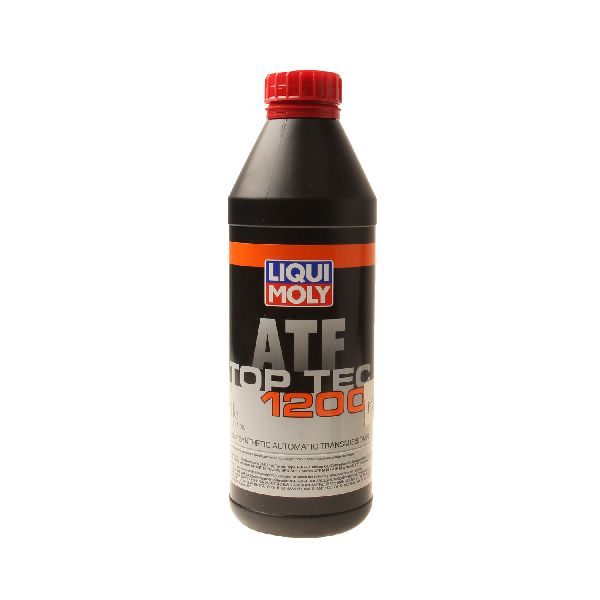
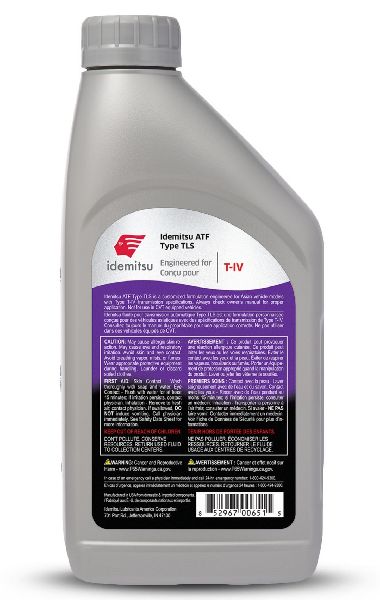
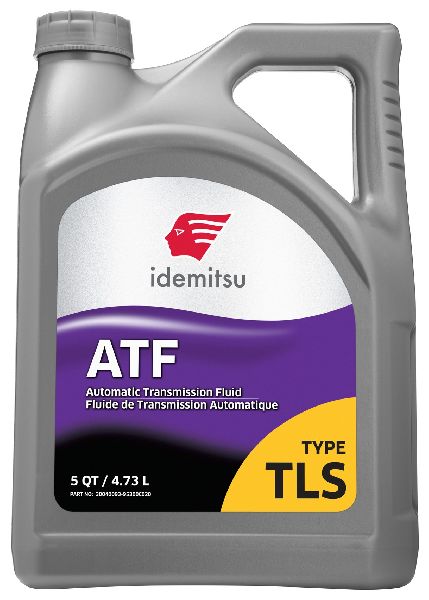
Aftermarket price range: $20-$40 - Toyota Type T-IV Automatic Transmission Fluid
(OEM #00279-000T4)— The correct type of fluid is critical for transmission health. A drain and fill requires approximately 4-5 quarts. Using the specified T-IV fluid is highly recommended.
Trusted brands: Toyota/Lexus (OEM), Idemitsu (TLS), Aisin (T-IV)
OEM price range: $10-$15 per quart
Aftermarket price range: $8-$12 per quart
Related Codes That Often Appear With This One
- P0746 (Pressure Control Solenoid 'A' Performance/Stuck Off)
- P0796 (Pressure Control Solenoid 'C' Performance/Stuck Off)
- P2714 (Pressure Control Solenoid 'D' Performance/Stuck Off)
Technical Service Bulletins (TSBs) & Recalls
- TSB TC005-03: While not a direct fix for a P0776 code caused by a failed part, this Technical Service Bulletin was issued for the 2004-2005 RX 330 (which shares the same powertrain) to address complaints of shift hesitation by recalibrating the ECM. This highlights the known sensitivity of the transmission's shift logic.
- Bulletin #L-SB-0008-13: Although issued for a different Lexus model, this bulletin notes that vehicles may exhibit a MIL "ON" condition with transmission performance DTCs such as P0776 and/or abnormal transmission shifting. It indicates that revised Engine Control Module (ECM) software logic was developed to address these conditions.
Platform-Specific Known Issues
- Dealer Recommends Full Transmission Replacement: A recurring story on forums is owners being quoted for a complete transmission replacement (costing $7,000-$10,000) by a dealership for a P0776 code. In many of these cases, the owner or an independent shop was able to fix the issue by simply replacing the single faulty SL2 solenoid for a small fraction of the cost.
Mechanic-Grade Diagnostic Values
- Shift Solenoid SL2 Resistance — expected: 5.0 to 5.6 Ω at 20°C (68°F). Failure: An open circuit (infinite resistance) or a reading outside of the specified range indicates a failed solenoid coil.
- Shift Solenoid SL2 Functional Test — expected: An audible 'click' should be heard from the solenoid.. Failure: No click indicates the solenoid's internal valve is mechanically stuck.
Scan Tool Commands That Help
- Toyota Techstream: Active Test: 'SHIFT' — This function allows the technician to manually command the transmission to shift up or down while driving at low speeds (under 31 mph / 50 km/h). It is used to verify if the solenoid and hydraulic circuit for a specific gear are working. If the ECM is commanded to shift to a gear that uses the SL2 solenoid and the shift fails, it strongly points to a problem with the SL2 solenoid or its circuit.
- Toyota Techstream: Reset Memory / AT Code Reset — This function should be used after replacing a solenoid or performing other transmission repairs to clear the learned values and diagnostic trouble codes from the ECM/TCM. A relearn procedure (driving gently through all gears for about 20 minutes) is often required afterward.
Wiring & Ground Locations
- ECM/TCM Connector — The Engine Control Module (ECM) is located behind the glove box. The transmission wiring harness connects to it.. For advanced diagnosis, a technician can test the resistance of the SL2 solenoid and its wiring directly from the ECM connector pins (SL2+ and SL2-). This can differentiate between a failed solenoid and a break in the wiring harness without having to drop the transmission pan first.
- Engine/Transmission Ground Strap — There is a primary ground strap running from the lower firewall area to the back of the engine block/transmission case.. A poor ground connection can cause a host of bizarre electrical issues, including erratic solenoid behavior. While not a common cause for a single solenoid code, it should be checked if multiple electrical codes are present or if other electrical symptoms exist.
Real Owner Repair Stories
- YouTube user 'The DIY Yardie' (2005 Toyota RAV4 (similar powertrain electronics)) — P0776 code, hard shift between 1st and 2nd, hard shift into reverse.
❌ Tried (didn't work) Dropped transmission pan and tested all solenoids; all were found to be functioning correctly.
✅ What actually fixed it The Engine Control Unit (ECU) was faulty. The owner had the original ECU rebuilt by a specialized service, which resolved all symptoms and cleared the code. - ClubLexus user 'Lextout' (2007 Lexus ES350 (U660E transmission, similar failure logic)) — Multiple solenoid codes (P0746, P0776, P2714), transmission slips and will not engage 4th gear or higher.
❌ Tried (didn't work) Replaced the entire valve body with a refurbished unit that included a new wiring harness, pressure switch, and speed sensor., Performed a transmission memory reset and AT code reset with a professional scan tool.
✅ What actually fixed it The issue was not resolved in the thread. After testing the solenoids from the TCM connector and finding they were all within resistance spec (5.6 ohms), the user suspected a deeper mechanical failure within the transmission, likely a worn C2 clutch pack responsible for gears 4-6.
When the Usual Fixes Don't Work
- While the vast majority of P0776 cases on this platform are fixed by replacing the SL2 solenoid, there are documented instances where this does not solve the problem. In one case involving a similar Toyota, the solenoids all tested good, and the root cause was a failed Engine Control Module (ECU) that required rebuilding. In another case on a Lexus, replacing the entire valve body and harness did not fix the issue, leading the owner to suspect a deeper mechanical failure in the clutch packs after confirming the solenoids were electrically sound. These cases highlight that if a new solenoid doesn't fix the code, the next steps should be to verify the wiring harness continuity to the ECM and then consider the ECM itself or a major internal mechanical fault.
OEM Part Supersession History
35220-12010→
Heads up: Be cautious not to order part number 35220-21010. It is a visually similar SL2 solenoid but is for the older 4-speed U140E/U240E transmissions and is not compatible with the 5-speed U151E in the 2004-2006 ES 330.
Diagnostic Flowchart
Other Known Issues on This Vehicle
Issues unrelated to this code that are worth knowing about as an owner of this generation:
- Melting/Cracked Dashboard 🟠 Medium — Very common, especially in regions with high heat and humidity. The issue is caused by material degradation. (Ref: Lexus initiated a Warranty Enhancement Program (ZLD) to address this, but the coverage period has likely expired for these model years.)
- Engine Oil Sludge Buildup 🟠 Medium — The 3MZ-FE engine can be prone to oil sludge if oil change intervals are extended or low-quality oil is used. This was a larger issue on the predecessor (1MZ-FE) but can still affect the 3MZ.
- Transmission Hesitation / Lag 🟡 Low — Some owners report a noticeable lag or hesitation when re-accelerating from a slow roll, which is related to the transmission's fuel-economy-focused software logic. (Ref: TSB TC005-03 was released for the related RX 330 to recalibrate the ECM for improved shift feel, which may address this.)
- Interference Engine Timing Belt 🔴 High — The 3MZ-FE is an interference engine with a timing belt that has a 90,000-mile replacement interval. Failure of the belt will cause catastrophic engine damage.
Used vs. New Parts: Buying Guide for This Vehicle
When a used part is the smart pick: A used valve body assembly from a low-mileage donor vehicle can be a cost-effective alternative to buying all new solenoids, especially if multiple solenoid codes are present. A complete used transmission is a viable option if major internal damage (e.g., clutch failure) is suspected, and may be cheaper than a questionable rebuild.
Donor-vehicle mileage cap: roughly under 120000 miles for the part to have meaningful remaining life.
What to inspect on the donor part:
- Check the donor vehicle's VIN to confirm it had the U151E transmission.
- If possible, inspect the transmission fluid from the donor vehicle. It should be reddish and not smell burnt.
- Ask for a warranty from the salvage yard (typically 30-90 days).
- For a complete transmission, look for signs of external leaks or damage to the case and connectors.
OEM-only on this vehicle (don't cheap out):
- Transmission Fluid: Strictly use Toyota Type T-IV or a fully compatible equivalent. Using universal or incorrect fluid (like Toyota WS) can cause shifting problems.
Aftermarket brands forum-validated for this vehicle:
- Solenoids: Aisin (often the OEM manufacturer), Rostra, ATP.
- Filter Kits: Wix, Denso, Beck/Arnley, ATP.
- T-IV Fluid Equivalents: Idemitsu TLS, Aisin T-IV.
Brands owners have reported issues with on this vehicle:
- Avoid unbranded, no-name solenoids from online marketplaces, as quality control can be highly inconsistent.
Real Owner Stories
Aggregated from forums and TSBs cited above. Mileages and costs reflect what owners reported in those sources.
2004-2006 Lexus ES 330
Symptoms: Owner was given a quote for a complete transmission replacement by a dealership after the vehicle set a P0776 code.
What fixed it: The issue was resolved by an independent shop or DIY repair by replacing only the single faulty SL2 solenoid.
Cost: $7000-$10000
Source hint: vehicle_specific_issues section: 'Dealer Recommends Full Transmission Replacement'
2007 ES 350
Symptoms: Vehicle was stuck in 3rd gear and had multiple solenoid codes, including P0746, P0776, P0796, and P2714.
What fixed it: The problem was diagnosed as a likely solenoid or internal wiring failure after pieces of wiring insulation were found in the transmission pan.
Source hint: ClubLexus.com - Thread 'Transmission problems, P0746, P0776, P0796, P2714'
2008 RX 350
Symptoms: A persistent P0776 code returned even after a transmission 'rebuild' was performed.
What fixed it: The owner suspected that an ECM reprogram was the ultimate fix that resolved the code, based on advice from a shop.
Source hint: ClubLexus.com - Thread 'Help ! Dyiers how to get rid of this P0776 code?!'
Related OBD-II Codes
Frequently Asked Questions
My Lexus dealer quoted me thousands for a full transmission replacement for code P0776. Is this really necessary?
Can I replace just the SL2 solenoid on my ES 330 without removing the entire valve body?
What is the correct electrical resistance for the SL2 solenoid in the U151E transmission?
I have P0776 along with other solenoid codes like P0746 and P0796. What does this mean for my ES 330?
How much fluid will I need for a simple drain-and-fill on my 2004-2006 ES 330?
Is there a TSB from Lexus that directly addresses a fix for the P0776 code?
What other common Toyota or Lexus models share this same P0776 transmission issue?
Helpful Videos
We Have This Part in Stock

The information in this article is provided for general reference and educational purposes only. Vehicle specifications, procedures, and part compatibility can vary by production date, trim level, and region. Always consult your vehicle's factory service manual and verify part numbers before purchasing or performing repairs. Safety-critical components such as airbags, seat belts, and braking systems should be installed by a qualified professional.
- Lexus ES 330:
- 🎬 Helpful Videos
- 🛍️ Shop This Part
- What's Unique About the 2004-2006 Lexus ES 330
- Symptoms You May Notice
- Most Likely Causes
- Rare But Worth Checking
- Diagnosis Steps
- Parts You'll Likely Need
- Related Codes That Often Appear With This One
- Technical Service Bulletins (TSBs) & Recalls
- Platform-Specific Known Issues
- Mechanic-Grade Diagnostic Values
- Scan Tool Commands That Help
- Wiring & Ground Locations
- Real Owner Repair Stories
- When the Usual Fixes Don't Work
- OEM Part Supersession History
- Diagnostic Flowchart
- Other Known Issues on This Vehicle
- Used vs. New Parts: Buying Guide for This Vehicle
- Real Owner Stories
- 2004-2006 Lexus ES 330
- 2007 ES 350
- 2008 RX 350
- Related OBD-II Codes
- Frequently Asked Questions
- 🎟️ Get 5% Off