

OBD-II Code P0778: Pressure Control Solenoid 'B' Electrical
What P0778 means, why it triggers, and how to fix it
- Code P0778 indicates a strict electrical failure—such as a shorted wire or burnt coil—in the transmission's 'B' pressure control circuit, not a mechanical blockage.
- Driving with an active P0778 code forces the transmission into a 30-40 mph 'limp mode,' which overheats the fluid and destroys clutch packs within weeks.
- Damaged internal or external wiring causes over 50% of P0778 codes, making a $15 multimeter resistance test mandatory before buying a $200 replacement solenoid.
- Expect severe drivability symptoms immediately, including violent gear shifts, engine revving without acceleration, and a permanent check engine light.
What Does P0778 Mean?

Your car's Powertrain Control Module (PCM) or Transmission Control Module (TCM) detected a critical electrical problem with the 'B' pressure control solenoid in your automatic transmission. This computer-controlled valve precisely manages transmission fluid flow and pressure to ensure smooth gear shifts. An electrical fault means the computer cannot control the hydraulic pressure in that circuit, leading to severe shifting problems and transmission damage.
Technical definition: The official SAE/OBD-II definition is "Pressure Control Solenoid 'B' Electrical". This code sets when the TCM detects an abnormal voltage reading or an open/short circuit in the electrical circuit for pressure control solenoid 'B'. The code triggers when the TCM detects 0 volts (an open circuit) or a short to ground when commanded on. The TCM monitors the difference between commanded and measured current in the solenoid circuit; a deviation greater than 0.3 amps triggers the code.
Can I Drive With P0778?

No — Do Not Drive. Driving is not recommended. The transmission is likely in 'limp mode,' which severely limits speed to 30-40 mph and locks it into 2nd or 3rd gear. Continuing to drive causes the transmission to overheat, leading to accelerated wear on clutch packs. Ignoring the issue turns a targeted electrical repair into a catastrophic transmission failure, adding thousands to the repair cost. A short trip to a local repair shop is possible, but carries significant risk.
Common Causes

- Damaged Wiring or Connectors (Very Common) — Wires leading to the solenoid fray, corrode, short, or break. This is especially common for the internal harness, which is constantly exposed to hot transmission fluid and vibration. External connectors also loosen or suffer moisture contamination from road salt.
- Failed Pressure Control Solenoid 'B' (Very Common) — The solenoid's electromagnetic coil burns out (creating an open circuit with infinite resistance) or short-circuits (very low resistance), preventing the valve from moving as commanded by the TCM.
- Low System Voltage (Less Common) — A weak battery or failing alternator causes unstable voltage. The TCM and its solenoids require a stable voltage (>12V) to function correctly; insufficient power triggers a false electrical fault code.
- Faulty Transmission Control Module (TCM) (Less Common) — The computer controlling the solenoid fails. It suffers a burnt internal driver circuit or corrupted software, causing it to send improper signals or falsely report a solenoid problem.
- Blown Fuse or Faulty Relay (Rare) — A blown fuse or faulty relay supplying power to the transmission control circuits interrupts power to the solenoid or TCM, directly causing an electrical fault code.
- Contaminated Transmission Fluid (Rare) — While P0778 is strictly an electrical code, severely degraded fluid causes the transmission to overheat. This extreme heat melts internal wire insulation or burns out the solenoid coil, resulting in an electrical failure.
Symptoms
- Harsh Shifting and Slipping — The car bangs into gear violently, hesitates before shifting, or the engine RPMs increase without a corresponding increase in vehicle speed.
- Transmission Stuck in 'Limp Mode' — The vehicle locks into a single gear (usually 2nd or 3rd) to prevent further damage. This results in poor acceleration, high engine RPMs at moderate speeds, and a 15-30% drop in fuel economy.
- Check Engine Light On — The computer illuminates the Check Engine or Transmission Warning light immediately upon detecting the electrical fault.
- Torque Converter Lockup Failure — The torque converter clutch fails to engage at highway speeds, or fails to disengage when stopping, causing a severe shudder or engine stalling.
- Transmission Overheating — Improper line pressure generates excess friction, causing the transmission to overheat, indicated by a dashboard warning or a burnt fluid smell.
Diagnostic Flowchart
Tap your situation to follow the diagnostic path that matches what you're seeing on this code.
Common Fixes & Costs
- Repair or Replace Wiring Harness/Connectors — Parts: $20-$150, Labor: $150-$450, ~2.0 hr book time (Intermediate)
- Replace Pressure Control Solenoid 'B' — Parts: $50-$200, Labor: $300-$600, ~3.0 hr book time (Advanced)
- Replace Transmission Control Module (TCM) — Parts: $300-$900, Labor: $200-$400, ~2.0 hr book time (Professional)
- Update or Reprogram TCM Software — Parts: $0, Labor: $100-$250, ~1.0 hr book time (Professional)
- Transmission Fluid and Filter Change — Parts: $50-$120, Labor: $100-$200, ~1.5 hr book time (DIY)
Used vs. New Parts: Buying Guide
When a used part is worth it: For an external wiring pigtail or an externally mounted solenoid (common on Hondas), a used part from a low-mileage vehicle is cost-effective. For internal parts (solenoid, internal harness, TCM), the high labor cost to access them makes a new part mandatory.
Donor-vehicle mileage cap: roughly under 60000 miles for the part to have meaningful remaining life.
Donor quality checklist:
- Verify the donor vehicle was not scrapped due to transmission failure.
- Inspect wiring carefully for corrosion, brittleness, or previous repairs.
- Match the part number exactly. Transmission components have multiple revisions that are not interchangeable.
Decision logic:
- If The part is internal (solenoid, internal harness, TEHCM) → Buy new or remanufactured. The labor to replace it a second time outweighs any savings.
- If The part is external and easy to access (e.g., Honda external solenoid) → A used part from a low-mileage donor is a reasonable option.
- If The vehicle is high-value or kept long-term → Always opt for new OEM parts to ensure reliability.
Warranty tradeoff: Used parts offer a 30-90 day warranty on the part only. New aftermarket parts offer a 1-year warranty. New OEM parts offer a 1-2 year warranty, which includes labor if installed by a dealer.
Worst-case if a used part fails: $400-$800 if a used internal part fails, requiring repeat labor to access and replace it.
What Happens If You Wait — Timeline
- 0-1 week: Check Engine Light illuminates. Shifting feels harsh or delayed. Vehicle occasionally enters limp mode. (MPG impact: 5-10%% · Added cost: $0-25 in wasted fuel)
- 1 week - 2 months: Vehicle is consistently in limp mode, stuck in 2nd or 3rd gear. Transmission temperatures rise due to slipping clutches, starting the process of fluid breakdown. (MPG impact: 15-30%% · Added cost: $50-150 in wasted fuel and fluid degradation)
- 2-6 months: Sustained high temperatures from driving in limp mode cause fluid to oxidize. Clutch packs glaze and slip excessively. The initial electrical problem causes irreversible mechanical wear. (MPG impact: 25-40%% · Added cost: $800-$1,800 (Burnt clutch packs require replacement))
- 6+ months: Catastrophic failure. Fluid is completely burnt. Clutch material contaminates the hydraulic system, clogging the valve body. A complete transmission rebuild is unavoidable. (MPG impact: N/A - Vehicle is undrivable% · Added cost: $3,000-$6,000+)
Cost of Not Fixing It
- 0-1 month: Harsh shifting, decreased fuel economy, and the vehicle stuck in limp mode. The immediate risk is drivability and safety. (Added cost: Negligible, beyond increased fuel costs.)
- 1-6 months: Continued driving with incorrect line pressure causes accelerated wear on clutch packs due to slipping and overheating. (Added cost: $800-$1,800 for clutch pack replacement.)
- 6+ months: Catastrophic internal transmission failure. Widespread mechanical damage requires a complete transmission rebuild or replacement. (Added cost: $3,000-$6,000+)
Diagnosis Steps

- Scan for Codes and Review Freeze Frame Data
Use an advanced OBD-II scanner to confirm P0778. Document any other codes (P0700 is common) and review the freeze frame data to see the exact speed, RPM, and temperature when the fault triggered.
Tools: Advanced OBD-II Scanner (Beginner) - Inspect External Wiring and Connectors
Visually inspect the wiring harness running to the transmission. Look for chafed wires, melted insulation, corrosion on the main connector pins, or loose connections.
Tools: Flashlight (Beginner) - Pro Tip: Test Solenoid Circuit Resistance from the TCM Connector
Disconnect the TCM connector. Using a wiring diagram, identify the pins for Solenoid 'B'. Use a multimeter to measure the resistance of the entire circuit. A typical reading is 5-30 ohms. An 'OL' reading indicates an open circuit; near 0 ohms indicates a short.
Tools: Multimeter, Vehicle-Specific Wiring Diagram (Intermediate) - Advanced: Check Solenoid Resistance at the Transmission
If Step 3 fails, disconnect the main harness at the transmission case and measure resistance directly at the transmission connector pins. This isolates the internal components. An out-of-spec reading here confirms a failed solenoid or internal harness.
Tools: Multimeter, Vehicle-Specific Wiring Diagram (Advanced) - Advanced: Check for Shorts to Power and Ground
With the solenoid connector disconnected, test for continuity between the control wire pin at the TCM connector and a known good ground. The reading must be OL. Turn the key on and check for voltage on the control wire; it must be 0V. Any continuity or voltage indicates a short.
Tools: Multimeter, Vehicle-Specific Wiring Diagram (Advanced) - Inspect Internal Transmission Harness
If external checks pass but the fault persists, drop the transmission pan to visually inspect the internal wiring harness. Look for chafing against the valve body, a common failure point on Toyota and GM vehicles.
Tools: Socket Set, Drain Pan, Gasket Scraper, New Gasket, New Fluid (Advanced) - Check Transmission Fluid Level and Condition
Check the transmission fluid. Dark, burnt, or low fluid indicates a severe internal overheating problem that likely damaged the solenoid coil.
Tools: Rag, Dipstick (if equipped) (Beginner) - Professional: Analyze Live Scan Tool Data
Monitor live data PIDs for Solenoid 'B'. Observe 'Commanded Current' and 'Actual Current'. A deviation greater than 0.3A between commanded and actual values confirms an electrical fault.
Tools: Advanced OBD-II Scanner (Professional) - Test TCM Output with a Scan Tool and Multimeter
If the solenoid and wiring test good, the TCM is suspect. Command the solenoid on with a bidirectional scanner while backprobing the control wire at the TCM with a multimeter. No voltage or PWM signal means the TCM's driver circuit failed.
Tools: Advanced OBD-II Scanner, Multimeter (Professional) - Advanced Diagnosis: Use an Oscilloscope
For intermittent issues, connect an oscilloscope to the solenoid's control wire. Monitor the waveform while driving. Glitches, voltage drops, or a missing PWM square wave point definitively to a wiring or TCM issue.
Tools: Oscilloscope, Wiring Diagram (Professional)
When This Code Triggers (Freeze-Frame Conditions)
- Engine Coolant Temp: 180-200°F (The fault often appears once the vehicle is fully warmed up and the transmission fluid reaches normal operating temperature, exposing thermal expansion shorts.)
- RPM: 1500-2500 RPM (The code frequently triggers during steady cruising or light acceleration, when the TCM actively modulates line pressure for a gear shift.)
- Engine Load: 30-60% (Moderate engine load, such as climbing a slight incline, exposes electrical faults as the TCM commands higher line pressures.)
- Vehicle Speed: 35-55 mph (The fault is common at cruising speeds, particularly when the transmission shifts or the torque converter clutch commands lock-up.)
Related Codes
- P0700 — A general transmission fault code telling the main engine computer to turn on the Check Engine Light. It provides no specific information but always appears alongside P0778.
- P0776, P0777, P0779 — These relate to Solenoid 'B' but describe different failures. P0778 is an electrical circuit fault. P0776/P0777 indicate performance problems (stuck off/on). P0779 indicates an intermittent electrical fault.
- P0748, P0964, P0965, P0966, P0967 — Electrical fault codes for other solenoids ('A', 'C', 'D'). Seeing these with P0778 indicates a wider issue, such as a shared power wire failure or a failing TCM losing control of multiple circuits.
- P0841 — Relates to Fluid Pressure Sensor 'A'. If seen with P0778, it suggests a major hydraulic issue, but P0778 as a primary code still points to an electrical fault in the solenoid circuit.
Climate & Environmental Factors
- High Humidity / Coastal Regions: Moisture penetrates electrical connectors over time, leading to corrosion on pins. This increases electrical resistance and causes intermittent signals, triggering P0778.
- Cold Climates / Road Salt: Salty water and brine aggressively corrode external wiring harnesses and ground points. Corrosion wicks deep inside a harness, causing hidden damage and intermittent faults.
- Extreme Heat: High ambient temperatures accelerate the breakdown of wire insulation, making it brittle and prone to cracking. This heavily impacts the internal transmission harness submerged in hot fluid.
How to Talk to a Mechanic About This Code
Say this: "I have an active P0778 code and the transmission is shifting harshly. I need a diagnostic, but please ensure the technician tests the solenoid's electrical circuit resistance, including the internal and external wiring, before quoting a solenoid or TCM replacement."
This signals you understand P0778 is an electrical code where wiring is the primary culprit. It directs the shop to perform a proper multimeter diagnosis instead of immediately quoting an expensive part replacement.
Avoid saying:
- 'My transmission is acting weird, can you check it?'
- 'Just fix whatever's wrong with the transmission.'
- 'I think I need a new solenoid, how much is that?'
Questions to ask before authorizing the repair:
- What were the exact resistance test results on the solenoid circuit? Was it open, shorted, or within spec?
- Did you drop the transmission pan to inspect the internal harness for chafing?
- If recommending a new solenoid, what tests confirmed the wiring and TCM are functioning correctly?
- Does the estimate for replacing the solenoid include a new pan gasket and OEM-spec transmission fluid?
- What is the warranty on this specific repair, including parts and labor?
Where to Take It: Dealer vs Independent vs Chain
- Dealer:
A strong, safe choice, especially if a TCM replacement or software update is required. Mandatory for warranty work.
Best for: Vehicles under powertrain warranty., Known manufacturer-specific issues covered by a Technical Service Bulletin (TSB)., Complex jobs requiring TCM replacement and VIN-specific programming.
Downsides: Highest labor rates, often 1.5-2x more than independent shops., Defaults to replacing entire assemblies (like a TEHCM) instead of component-level wire repairs. (Typical cost: +50% vs. baseline) - Independent Shop:
Excellent choice, provided it is a reputable transmission specialty shop. They are more likely to perform a $200 wire repair that a dealer refuses to do.
Best for: Out-of-warranty vehicles where cost is a major factor., Shops specializing in transmissions with deep diagnostic experience., Getting a second opinion on a high-cost dealer quote.
Downsides: Quality varies widely; vetting is crucial., General mechanics lack the specific tools or oscilloscope experience for internal transmission electrical issues. (Typical cost: +0% vs. baseline) - Chain Shop:
High risk. Approach with extreme caution. Not recommended for an initial transmission electrical diagnosis.
Best for: Simple, unrelated maintenance like oil changes or brakes.
Downsides: High-pressure sales tactics often lead to upselling a $4,000 transmission rebuild when only a minor electrical fix is needed., Technician skill for complex electrical diagnostics is inconsistent. (Typical cost: -10% vs. baseline)
When to Walk Away From the Repair
If the total estimated repair cost for the P0778 fault exceeds 40-50% of your car's private-party market value, consider selling or trading it in.
- Car worth $5000, fix is $750: Fix it. This is a reasonable cost for a solenoid or internal wiring repair and is well below the threshold.
- Car worth $4000, fix is $1800: Borderline. A repair cost this high likely means a TCM replacement. Get a second opinion before proceeding.
- Car worth $3000, fix is $3500: Walk away. The code was ignored, leading to a recommendation for a full transmission rebuild. The repair exceeds the vehicle's value.
What Scan Tool You Need for This Code

Minimum: A scanner that reads manufacturer-specific transmission codes and views live data PIDs, such as solenoid commanded state and actual current.
A basic $20 code reader only shows the P0778 code. It cannot display the live data needed to verify if the TCM is actually commanding the solenoid, which is critical for distinguishing a wiring problem from a dead TCM.
Budget: BlueDriver Pro (~$90) — Reads and clears transmission codes, shows freeze frame data, and displays some live transmission data PIDs on compatible vehicles. Lacks bidirectional control.
Mid-range: Foxwell NT510 Elite / Xtool D7 (~$150) — Offers bidirectional control to command the solenoid on and off, confirming if the solenoid, wiring, and TCM driver are functional.
Professional: Autel MaxiCOM MK808S (~$450) — Provides full professional-level diagnostics, extensive bidirectional controls, access to all manufacturer PIDs, and TCM software version checks.
Rent vs buy: Buying a mid-range scanner with bidirectional control is more cost-effective than paying for a single hour of shop diagnostic time. Free rental tools from auto parts stores are insufficient for this fault.
How to Clear the Code After You Fix It
- Use an OBD-II scan tool to clear the P0778 and related fault codes.
- Perform a complete drive cycle to allow the vehicle's readiness monitors to run.
- Reconnect the battery if disconnected, noting this clears engine readiness monitors.
Drive cycle (~20 minutes): Start the engine cold and idle for 3 minutes. Drive in the city at 25-40 mph, including several complete stops. Drive on the highway at 50-60 mph for 10 minutes. Drive in the city again before parking.
Readiness monitors affected: Comprehensive Component Monitor, Catalyst Monitor, Evaporative System Monitor
Before emissions retest: drive at least 100 miles to fully set monitors.
Watch out for:
- Clearing the code without fixing the electrical fault causes the code to return immediately upon the next drive cycle.
- Taking the vehicle for an emissions test immediately after clearing codes results in a 'Not Ready' failure.
Will This Fail Emissions / State Inspection?
Yes — this code typically fails an OBD-II emissions inspection.
- California: An illuminated check engine light is an automatic failure. All readiness monitors must be set to 'Ready', requiring a significant drive cycle after repair.
- New York: A vehicle automatically fails the NYS emissions inspection if the check engine light is on for any reason.
- Texas: In counties requiring an emissions test, an active P0778 code causes an automatic failure. Clearing the code is not enough; readiness monitors must be set.
Most Commonly Affected Vehicles
- Honda Accord, Civic, CR-V, Odyssey, Pilot (2003-2014) — Frequently reported on 5-speed and 6-speed automatics. Solenoids are bolted externally, making replacement much easier.
- Ford Focus, Explorer, F-150, Fusion (2005-2016) — Common in F-150s with the 6R80, where issues often point to the internal lead frame assembly.
- General Motors (Chevy/GMC) Silverado, Equinox, Malibu, Impala (2008-2019) — Damaged internal harnesses are a known issue on 6L80/6T70 transmissions. Often, the entire TEHCM must be replaced.
- Toyota / Lexus Camry, Corolla, RAV4, Sienna, ES350, RX350 (2007-2018) — A well-known issue on U660E/U760E transmissions is the internal wiring harness chafing against the valve body casting, causing an intermittent short.
- Nissan Altima, Sentra, Maxima, Murano (2007-2017) — Frequently seen on CVTs, often related to the solenoid itself or issues within the valve body assembly.
- Hyundai / Kia Elantra, Sonata, Optima, Sorento (2010-2020) — Typically points to a failed solenoid or an issue with the internal transmission temperature sensor harness, which is easily misdiagnosed.
- BMW 3-Series (E90), 5-Series, X3, X5 (2005-2013) — The fault is often traced to a leaking mechatronic connector sleeve that allows fluid to contaminate the connections, causing a short.
- Subaru Outback, Forester, Legacy (2005-2014) — Appears on 5EAT transmissions, usually caused by a failed pressure control solenoid or a wiring fault between the TCM and transmission.
Manufacturer-Specific Notes
- Toyota/Lexus: On U660E/U760E transmissions, P0778 is frequently caused by the internal wiring harness rubbing against a sharp edge on the valve body. Replacing the solenoid won't fix it; the harness must be repaired and secured away from the edge.
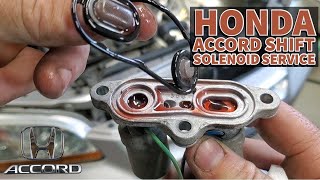
- Honda/Acura: On many V6 models, pressure control solenoids are bolted to the outside of the transmission case, making them significantly easier and cheaper to replace than internal solenoids.
- GM: On 6L-series transmissions, the TCM and solenoids are integrated into a single TEHCM inside the transmission. A failure of one solenoid requires replacing the entire expensive TEHCM.
- BMW: On ZF 6-speed transmissions, the plastic mechatronic sealing sleeve develops leaks, allowing fluid to wick up the wiring harness and cause shorts that trigger P0778.
Real Owner Stories
2007 Toyota Camry with U660E Transmission at 160K miles
Check engine light and harsh shifting. The P0778 code was intermittent, clearing after the car cooled down.
What they tried:
- Shop performed a resistance test from the external connector, showing the solenoid was within spec (5.0-5.6 Ω).
- Based on experience with this model, the mechanic dropped the transmission pan for visual inspection.
Outcome: Found the internal wiring harness chafed against a sharp edge on the valve body casting, causing an intermittent short when hot. Replaced the internal harness for $550. Problem solved.
Lesson: On Toyota/Lexus models with U660E/U760E transmissions, always suspect the internal harness for an intermittent P0778 before replacing the solenoid. Static resistance tests can be misleading.
2006 Dodge Sprinter (Mercedes 722.6 trans) with 200K+ miles
Vehicle stuck in limp mode with P0778 present. Clearing the code did nothing.
What they tried:
- Technician checked solenoid supply voltage at the TCM connector and found it correct (12V).
- Backprobed the control wire at the TCM and found voltage was incorrect when commanded.
- Swapped in a known-good test TCM.
Outcome: With the test TCM installed, voltage signals were correct, and the transmission shifted normally. The original TCM had a failed internal driver. Replaced the TCM to fix the issue.
Lesson: If the solenoid and wiring test good, and command signals from the TCM are absent, the module itself is the culprit.
2003 Toyota 100-Series Land Cruiser
Vehicle suddenly threw codes P0778 and P0748 (Solenoid 'A' Electrical) simultaneously.
What they tried:
- Owner suspected it was unlikely for two solenoids to fail at the exact same time.
- Inspected the main wiring harness running from the engine to the transmission.
Outcome: Found squirrels chewed through multiple wires in the harness. The repair involved splicing the damaged wires. Cost was minimal in parts but required careful labor.
Lesson: If multiple electrical codes appear at once, suspect a wiring harness issue affecting a shared power or ground line before diagnosing individual components. Rodent damage is common.
Duramax Diesel Swap with Allison 5-speed
Owner received P0748 and P0778 codes during cranking, but they cleared and wouldn't return until the next start.
What they tried:
- Checked solenoid resistance from the TCM connector, which was within spec.
- Noted the vehicle was running on a single, old battery during the build.
Outcome: Installed two new, properly sized batteries. The low voltage during cranking caused the TCM to throw false electrical codes. New batteries resolved the codes completely.
Lesson: Low system voltage from a weak battery causes the TCM to falsely report solenoid electrical faults. Always ensure the battery is healthy before diagnosing transmission codes.
How to Prevent This Code From Triggering
- Regular transmission fluid and filter changes (Every 30,000 to 60,000 miles) — Clean fluid lubricates and cools electrical components. Degraded fluid loses cooling properties, causing solenoids to overheat and burn out their electrical coils.
- Use only manufacturer-specified transmission fluid (OEM) (At every fluid change) — Wrong fluid types cause chemical reactions that degrade wire insulation and plastic connectors inside the transmission, leading to electrical shorts.
- Install an auxiliary transmission cooler (Once, especially if towing) — Heat kills transmission electronics. An auxiliary cooler keeps fluid temperatures stable (175-200°F), protecting solenoids from heat-related stress and coil burnout.
- Maintain a healthy battery and charging system (Ongoing) — Transmission solenoids require stable voltage. A weak battery provides erratic voltage, which the TCM misinterprets as a solenoid electrical fault, triggering a false P0778 code.
Frequently Asked Questions
What's the most common mistake when diagnosing P0778?
The most common mistake is replacing the pressure control solenoid without testing the wiring first. Damaged wiring is a frequent cause, meaning you could replace a good solenoid and still have the problem. Always test the circuit's resistance before buying parts.
What is the difference between P0778 (Electrical) and P0776 (Performance)?
P0778 means the computer detected a direct electrical failure in the solenoid's circuit, like a broken wire or shorted coil. P0776 means the computer commanded the solenoid, but the expected hydraulic pressure change didn't happen. P0776 points to a mechanically stuck valve or hydraulic blockage, while P0778 is strictly electrical.
Can a bad battery cause a P0778 code?
Yes, the TCM and solenoids require stable voltage to operate. A failing battery or alternator providing below 12 volts causes the TCM to misinterpret the voltage drop as an electrical fault in the solenoid circuit. Always test the charging system before starting transmission repairs.
Will clearing the code fix the problem?
No, clearing the code only turns the check engine light off temporarily. Because P0778 indicates a hard electrical fault, the TCM detects the open or shorted circuit immediately upon the next drive cycle. The code returns instantly.
Can P0778 cause the car to not have reverse?
Yes. Depending on the transmission design, Pressure Control Solenoid 'B' regulates the line pressure required to engage the reverse gear clutch pack. An electrical failure in this circuit prevents reverse from engaging or causes it to slam into gear violently.
What does the 'B' in Pressure Control Solenoid 'B' mean?
The letter 'B' is a manufacturer designation identifying a specific solenoid within the transmission valve body. Automatic transmissions use multiple solenoids (A, B, C) to control different hydraulic circuits. The exact gear or function 'B' controls varies entirely by transmission design.
Is a full transmission rebuild necessary for P0778?
Rarely. P0778 is a specific electrical code, meaning the fix is usually a targeted repair like replacing a solenoid, fixing a wire, or swapping the TCM. A rebuild is only necessary if the code was ignored for months, causing widespread internal damage from slipping clutches.
Key Takeaways
- Code P0778 indicates a strict electrical failure—such as a shorted wire or burnt coil—in the transmission's 'B' pressure control circuit, not a mechanical blockage.
- Driving with an active P0778 code forces the transmission into a 30-40 mph 'limp mode,' which overheats the fluid and destroys clutch packs within weeks.
- Damaged internal or external wiring causes over 50% of P0778 codes, making a $15 multimeter resistance test mandatory before buying a $200 replacement solenoid.
- Expect severe drivability symptoms immediately, including violent gear shifts, engine revving without acceleration, and a permanent check engine light.
Helpful Videos


The information in this article is provided for general reference and educational purposes only. Vehicle specifications, procedures, and part compatibility can vary by production date, trim level, and region. Always consult your vehicle's factory service manual and verify part numbers before purchasing or performing repairs. Safety-critical components such as airbags, seat belts, and braking systems should be installed by a qualified professional.
- 🎬 Helpful Videos
- What Does P0778 Mean?
- Can I Drive With P0778?
- Common Causes
- Symptoms
- Diagnostic Flowchart
- Common Fixes & Costs
- Used vs. New Parts: Buying Guide
- What Happens If You Wait — Timeline
- Cost of Not Fixing It
- Diagnosis Steps
- When This Code Triggers (Freeze-Frame Conditions)
- Related Codes
- Climate & Environmental Factors
- How to Talk to a Mechanic About This Code
- Where to Take It: Dealer vs Independent vs Chain
- When to Walk Away From the Repair
- What Scan Tool You Need for This Code
- How to Clear the Code After You Fix It
- Will This Fail Emissions / State Inspection?
- Most Commonly Affected Vehicles
- Manufacturer-Specific Notes
- Real Owner Stories
- 2007 Toyota Camry with U660E Transmission at 160K miles
- 2006 Dodge Sprinter (Mercedes 722.6 trans) with 200K+ miles
- 2003 Toyota 100-Series Land Cruiser
- Duramax Diesel Swap with Allison 5-speed
- How to Prevent This Code From Triggering
- Frequently Asked Questions
- What's the most common mistake when diagnosing P0778?
- What is the difference between P0778 (Electrical) and P0776 (Performance)?
- Can a bad battery cause a P0778 code?
- Will clearing the code fix the problem?
- Can P0778 cause the car to not have reverse?
- What does the 'B' in Pressure Control Solenoid 'B' mean?
- Is a full transmission rebuild necessary for P0778?
- Key Takeaways
- 🎟️ Get 5% Off