

OBD-II Code P2714: Pressure Control Solenoid 'D' Performance / Stuck Off
The Ultimate Guide to What P2714 Means, Why It Triggers, and How to Fix It for Good
- Code P2714 most frequently triggers due to degraded transmission fluid or a failed Pressure Control Solenoid 'D', requiring a fluid check as your immediate first step.
- Driving with an active P2714 code accelerates internal clutch wear, escalating a $400 solenoid replacement into a $6,000+ full transmission rebuild within months.
- Always test the solenoid's electrical resistance against exact manufacturer specifications (e.g., 5.0-5.6 Ω for Toyota A750E) before replacing any hard parts.
- If replacing the solenoid does not clear the code on a Toyota, Lexus, or GM vehicle, the root cause is typically a worn valve body bore or a dislodged internal retainer ring.
What Does P2714 Mean?

The Powertrain Control Module (PCM) detected a failure in the 'Pressure Control Solenoid D'. This solenoid is a computer-controlled valve that manages transmission fluid pressure, which is required to engage and disengage the clutches for smooth gear shifts. Code P2714 means this solenoid is either electrically failing or mechanically stuck in the 'off' position, preventing it from regulating hydraulic pressure.
Technical definition: The SAE/OBD-II definition is "Pressure Control Solenoid 'D' Performance/Stuck Off." The Transmission Control Module (TCM) sets this code when it detects an incorrect on-coming clutch gear ratio (a flare or slip) during a commanded shift, or when it identifies a performance issue in the solenoid's electrical circuit.
Can I Drive With P2714?
Yes, But With Caution. You can drive, but doing so accelerates internal transmission wear. Continued operation must be limited to short, necessary trips under 50 miles without towing. Driving with P2714 causes harsh shifting that destroys clutches and internal components. Ignoring the code leads to transmission overheating, catastrophic torque converter failure, and a repair bill that jumps from hundreds for a solenoid to thousands for a full transmission replacement.
Common Causes

- Low, dirty transmission fluid or clogged filter (Very Common) — Old fluid clogs the small passages in the valve body and prevents the solenoid from moving. Metal shavings or a clogged filter restrict fluid flow, causing pressure drops that trigger the code.
- Faulty Pressure Control Solenoid 'D' (Very Common) — The solenoid fails electrically (internal short or open circuit) or mechanically (stuck valve). This is the direct component flagged by P2714.
- Worn solenoid bore or leaking O-rings (Common) — The valve body bore where the solenoid sits wears down over time. This allows hydraulic pressure to leak past the O-rings, causing pressure loss even with a perfectly functional solenoid.
- Damaged wiring or loose connectors (Common) — Wires leading to the transmission fray, corrode, or short out. A loose connection at the solenoid or TCM interrupts the control signal.
- Faulty transmission valve body (Less Common) — Internal passages block, regulator valves stick, or the body warps, disrupting hydraulic pressure across multiple circuits.
- Faulty Transmission Speed Sensor (Rare) — The TCM misinterprets erratic data from a failing speed sensor as a gear ratio slip, incorrectly blaming the solenoid.
- Internal transmission mechanical failure (Rare) — Dislodged retainer rings or damaged clutch pistons cause massive internal pressure leaks, mimicking a stuck-off solenoid.
- Failing Transmission Control Module (TCM) (Rare) — The computer suffers a software glitch or hardware failure, sending incorrect or zero voltage to the solenoid.
Symptoms

- Harsh, delayed, or erratic shifting — The transmission jerks, slams into gear, or pauses for 2-3 seconds before engaging.
- Check Engine Light illuminated — The dashboard warning light activates immediately upon detecting the fault.
- Vehicle enters 'limp mode' — The transmission locks into 2nd or 3rd gear to prevent damage, capping speed at 30-40 mph.
- Transmission slipping — Engine RPMs spike without a corresponding increase in vehicle speed during gear changes.
- Loss of reverse gear — Specific mechanical failures linked to P2714 cause a sudden, complete inability to reverse.
- Decreased fuel economy — Inefficient shifting forces the engine to work harder, dropping efficiency by 5-15%.
Diagnostic Flowchart
Tap your situation to follow the diagnostic path that matches what you're seeing on this code.
Common Fixes & Costs
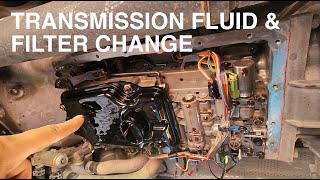
- Transmission Fluid and Filter Change — Parts: $50-$150, Labor: $100-$250, ~1.5 hr book time (Intermediate)
- Replace Pressure Control Solenoid 'D'
— Parts: $100-$300, Labor: $300-$600, ~3 hr book time
(Advanced)
Lexus GX460 / Toyota Tundra (A750E/F Trans): OEM Toyota/Lexus: 35290-34010 (Alt: Standard Motor Products: TCS281, Rostra: 52-0534) - Replace Transmission Valve Body
— Parts: $500-$1,500, Labor: $400-$800, ~4 hr book time
(Professional)
Chevrolet Silverado (10L80 Trans): OEM GM: 24049465 (Alt: Remanufactured units available from various suppliers.)
Lexus GX460: OEM Lexus: 35410-60090 (Alt: Sonnax oversized valve and plug kits.) - Replace Transmission Speed Sensor(s)
— Parts: $100-$300, Labor: $100-$200, ~1.5 hr book time
(Intermediate)
Toyota Tundra (2010-2015): OEM Toyota: 89413-0C011 (Alt: Denso, Standard Motor Products) - Replace Transmission Control Module (TEHCM)
— Parts: $400-$800, Labor: $300-$600, ~4 hr book time
(Professional)
Chevrolet Silverado (6L80 Trans): OEM ACDelco/GM: 24256861, 24275873 (Alt: Dorman, CARDONE (Remanufactured)) - Replace or Rebuild Transmission — Parts: $2,500-$5,000+, Labor: $1,000-$2,500, ~10 hr book time (Professional)
DIY vs Professional
- Transmission Fluid and Filter Change — Beginner: Yes, with caution.
Tools: Socket set, torque wrench, drain pan, fluid pump, gloves, safety glasses. - Replace Pressure Control Solenoid 'D' — Beginner: No. This is for experienced DIYers.
Tools: Full socket set, torque wrench, multimeter, drain pan, service manual. - Replace Transmission Speed Sensor(s) — Beginner: Yes, if externally mounted.
Tools: Socket or wrench set, flashlight. - Replace Transmission Valve Body / TEHCM — Beginner: No. Professional level only.
Tools: Extensive toolset, inch-pound torque wrench, scan tool with programming capabilities.
Used vs. New Parts: Buying Guide
When a used part is worth it: Used valve bodies or solenoid packs make sense only on high-mileage vehicles (>150k miles) where the owner has a tight budget. The donor part must come from a low-mileage vehicle scrapped due to an accident, not transmission failure.
Donor-vehicle mileage cap: roughly under 80000 miles for the part to have meaningful remaining life.
Donor quality checklist:
- Verify the donor vehicle's VIN to ensure exact part number compatibility.
- Require a minimum 30-90 day warranty.
- Confirm the donor vehicle's mileage and salvage reason.
- Reject parts with an unknown history.
Decision logic:
- If Vehicle has low mileage (<80k) and the new part is under $500 → Buy a new OEM or reputable aftermarket part. Savings do not justify the labor risk.
- If Vehicle has high mileage (>150k) and the repair is budget-constrained → A used part from a reliable salvage yard is a reasonable gamble.
- If The part is a single, simple solenoid → Buy a new aftermarket or OEM part. They are inexpensive enough to make used parts obsolete.
Warranty tradeoff: Used parts offer a 30-90 day functional warranty. Remanufactured parts include a 1-3 year warranty. New OEM parts carry standard manufacturer warranties.
Worst-case if a used part fails: $500-$1500. If the used part fails, you pay repeat labor costs plus the cost of another replacement part.
What Happens If You Wait — Timeline
- 0-2 weeks: Check Engine Light illuminates. Shifts become slightly harsh or delayed, especially when cold. The issue appears intermittent. (MPG impact: 0-5%% · Added cost: $0)
- 2 weeks - 3 months: Shifting becomes consistently erratic. The transmission slips, causing RPM flares. The vehicle enters 'limp mode' sporadically. Slippage generates heat, degrading the fluid. (MPG impact: 5-15%% · Added cost: $50-$150 in wasted fuel. Internal clutch wear accelerates.)
- 3-6 months: Heat from slipping clutches burns the transmission fluid. Contaminated fluid circulates, damaging seals and clogging the valve body. (MPG impact: 10-20%% · Added cost: $1,500-$2,500 as the repair escalates to a valve body replacement.)
- 6+ months: Catastrophic failure occurs. Widespread clutch failure or torque converter damage renders the vehicle undrivable. (MPG impact: 20%+% · Added cost: $6,000-$9,000+ for a complete transmission rebuild or replacement.)
Cost of Not Fixing It
- 0-1 month: Harsh shifting and a 5-15% drop in fuel economy due to inefficient power transfer. Wear on internal clutch packs accelerates. (Added cost: $20-$60 per month in extra fuel costs.)
- 1-6 months: Slipping generates excessive heat, rapidly degrading fluid and damaging seals. The repair escalates from a single solenoid to a valve body or clutch pack failure. (Added cost: $1,500-$2,500 for valve body replacement or major internal work.)
- 6+ months: Catastrophic internal failure. The transmission overheats, suffers widespread clutch failure, and the vehicle becomes undrivable. (Added cost: $6,000-$9,000+ for a full transmission replacement.)
Diagnosis Steps

- Check Transmission Fluid Level and Condition
Check the transmission fluid dipstick or follow the manufacturer's level-check procedure. Fluid must be bright red and not smell burnt. Dark, black fluid with metal particles requires immediate service.
Tools: Rag, gloves (Beginner) - Scan for Other Codes
Use an OBD-II scanner to check for other transmission codes. Codes like P0761 or P0796 indicate a systemic issue (fluid contamination or faulty valve body) rather than a single bad solenoid.
Tools: OBD-II scanner (Beginner) - Inspect External Wiring and Connectors
Visually inspect the transmission wiring harness. Look for melting, corrosion, or loose connections at the main plug. On VW Passats, check for harness chafing near the cooling fan.
Tools: Flashlight (Intermediate) - Test the Solenoid's Resistance
Unplug the solenoid and use a multimeter to measure resistance across its pins. Compare this to the manufacturer's specification. An open circuit (infinite resistance) or a short (near zero) confirms electrical failure.
Tools: Multimeter, socket set, service manual (Advanced) - Test the Solenoid's Mechanical Operation
If resistance is in spec, apply a fused 12V power source to the solenoid's pins. You must hear a distinct 'click' as the valve moves. No click means the solenoid is mechanically stuck.
Tools: 12V power source (e.g., car battery with fused jumper wires) (Advanced) - Drop the Transmission Pan for Internal Inspection
Drain the fluid, remove the pan, and inspect the magnets for excessive metal debris. Large shavings or chunks indicate serious internal wear requiring a rebuild.
Tools: Socket set, drain pan, gloves, torque wrench (Advanced) - [PRO TIP] Check Resistance with Exact Specifications
Use vehicle-specific resistance values. For a Toyota A750E, the SLT solenoid ('D') must measure 5.0-5.6 Ω at 68°F. On a Ford 6R80, the SSD solenoid is 4.8-5.6 Ω. Readings outside these narrow ranges confirm failure.
Tools: High-quality multimeter, vehicle-specific service manual (Professional) - [PRO TIP] Perform a Commanded Solenoid Active Test
Using a bidirectional scan tool, command Solenoid 'D' on and off while stationary. A healthy system shows a corresponding change in line pressure on live data, verifying TCM control and solenoid response.
Tools: Professional bidirectional scan tool (Professional) - [PRO TIP] Monitor Solenoid Duty Cycle, Voltage, and Line Pressure
Monitor the PWM signal from the TCM during a test drive. Connect a pressure gauge to the line pressure test port. No pressure change despite correct voltage and PWM signal confirms a mechanical/hydraulic issue (stuck solenoid, blocked valve body, or worn bore).
Tools: Oscilloscope or advanced scan tool, transmission pressure gauge set (Professional) - [PRO TIP] Check for Voltage Drops and Shorts to Ground
Check for a short to ground by measuring resistance between each solenoid pin and the transmission case (must be OL). Measure ohms from the TCM connector to the solenoid connector; the reading must be less than 5 ohms.
Tools: Multimeter, vehicle wiring diagrams (Professional)
When This Code Triggers (Freeze-Frame Conditions)
- Engine Coolant Temp: 180-210°F (The fault logs when the vehicle is fully warmed up and in closed-loop operation.)
- RPM: 1500-2500 (Sets during a commanded upshift under light to moderate acceleration.)
- Engine Load: 25-60% (Occurs under normal driving conditions, rarely at idle or full throttle.)
- Vehicle Speed: 35-55 mph (Triggers during highway cruising when the transmission shifts into higher gears.)
Related Codes
- P0761 — Shift Solenoid 'C' Performance/Stuck Off. If P2714 and P0761 appear together, it strongly suggests a systemic problem like contaminated fluid or a failing valve body, rather than two independent solenoid failures.
- P0796 — Pressure Control Solenoid 'C' Performance/Stuck Off. Seeing both P2714 and P0796 points toward shared components like fluid, filters, and the valve body.
- P2713 — Pressure Control Solenoid 'D' Stuck On. P2714 (Stuck Off) causes a loss of pressure and slipping. P2713 (Stuck On) causes excessive pressure, leading to harsh, jerky shifts or transmission binding.
- P2715 — Pressure Control Solenoid 'D' Intermittent. P2714 sets when the solenoid consistently fails. P2715 sets when the TCM detects an unstable signal from a loose wire or failing coil.
Climate & Environmental Factors
- High Operating Temperatures: Excessive heat from hot climates or heavy towing accelerates fluid breakdown and degrades internal solenoid seals and electrical windings.
- Corrosive Environments: Road salt and high humidity cause corrosion on external wiring harnesses and connectors, creating high resistance that interrupts the TCM signal.
How to Talk to a Mechanic About This Code
Say this: "I have a P2714 code and the transmission is shifting harshly. I'd like to schedule a diagnostic. Please check the fluid condition, test the resistance of solenoid 'D', and inspect the wiring harness before recommending major repairs. Also, check for any TSBs related to this code for my vehicle."
This directs the shop toward a logical diagnostic path (fluid, solenoid, wiring) instead of jumping to the most expensive conclusion. Mentioning TSBs shows you are informed.
Avoid saying:
- 'My car is shifting funny, can you fix it?'
- 'Just do a transmission flush.'
- 'I think I need a new transmission.'
Questions to ask before authorizing the repair:
- What was the condition and level of the transmission fluid?
- What was the resistance reading of the solenoid, and how does it compare to the manufacturer's spec?
- Did you find any damage to the wiring or connectors?
- Does this repair require a transmission relearn procedure, and is that included in the quote?
- What is the warranty on the parts and labor for this repair?
Where to Take It: Dealer vs Independent vs Chain
- Dealer:
Recommended if your vehicle has specific TSBs related to P2714 or if a TCM/valve body replacement is confirmed.
Best for: Vehicles under powertrain warranty., Complex, model-specific issues covered by TSBs (GM or VW models)., Repairs requiring proprietary software for programming or relearn procedures.
Downsides: Highest labor rates., Quick to recommend a full transmission replacement over a component repair. (Typical cost: +50% vs. baseline) - Independent Shop:
A good choice, but vet the shop. Ask if they have experience with transmission electrical diagnostics.
Best for: Out-of-warranty vehicles where the cause is a common failure (solenoid, fluid, wiring)., Getting a second opinion on a high quote from a dealer.
Downsides: Quality varies widely. Look for ASE certification and positive reviews for transmission work. (Typical cost: +0% vs. baseline) - Chain Shop:
AVOID for diagnosing P2714. They are generally not equipped for the in-depth electrical and hydraulic diagnostics required.
Best for: Basic fluid and filter changes.
Downsides: Technician skill varies dramatically. High pressure to sell services leads to misdiagnosis., Lack advanced diagnostic tools for complex transmission codes. (Typical cost: -10% vs. baseline)
When to Walk Away From the Repair
If the estimated repair cost exceeds 50% of the car's private-party market value, seriously consider selling the vehicle as-is or trading it in.
- Car worth $5000, fix is $3000: Walk away. The repair is 60% of the car's value. It is not a sound investment.
- Car worth $15000, fix is $2500: Fix it. The repair cost is 17% of the vehicle's value and is a worthwhile investment.
- Car worth $8000, fix is $3500: Borderline. At 44% of the car's value, get a second opinion before proceeding.
What Scan Tool You Need for This Code
Minimum: An OBD-II scanner that reads manufacturer-specific transmission codes and views live data for the Transmission Control Module (TCM).
A basic $20 code reader only shows the P2714 code. It cannot read transmission fluid temperature, command solenoids, or perform the critical 'relearn' procedure required after repairs.
Budget: Launch CR529 (~$40) — Reads and clears the code, shows freeze-frame data, and displays generic live data. Insufficient for a full diagnosis.
Mid-range: Foxwell NT604 Elite / Autel MaxiCOM MK808 (~$130-350) — Reads specific transmission DTCs, views live data streams (solenoid duty cycle, pressure), and performs transmission relearn/adaptive resets.
Professional: Autel MaxiCOM MK906BT / Launch X431 Torque (~$500-1200) — Provides full bidirectional control, allowing you to command the solenoid on and off to test its function directly. Essential for difficult cases.
Rent vs buy: To properly diagnose and fix P2714, you must monitor live data and perform a relearn procedure, making a mid-range scanner a mandatory purchase for any serious DIYer.
How to Clear the Code After You Fix It
- Use an OBD-II scan tool to clear the P2714 trouble code.
- Perform a transmission adaptive pressure relearn procedure using a bidirectional scan tool.
- Complete a full OBD-II drive cycle to set all readiness monitors.
Drive cycle (~30 minutes): A generic drive cycle requires a cold start (vehicle sits for 8+ hours), 2-3 minutes of idling, 10-15 minutes of mixed city driving, followed by 5-10 minutes of steady highway driving at 55-60 mph.
Readiness monitors affected: Comprehensive Component Monitor, Catalyst Monitor, Oxygen Sensor Monitor
Before emissions retest: drive at least 100 miles to fully set monitors.
Watch out for:
- Clearing the code without fixing the mechanical issue guarantees it will return.
- Skipping the transmission relearn procedure after replacing a solenoid causes continued harsh shifting.
- Failing to complete a full drive cycle leaves readiness monitors incomplete, causing automatic emissions test failure.
Will This Fail Emissions / State Inspection?
Yes — this code typically fails an OBD-II emissions inspection.
- California: An active P2714 code causes immediate smog check failure. A complete drive cycle must be performed to set OBD readiness monitors before re-testing.
- New York: An illuminated Check Engine Light and active transmission code results in automatic inspection failure.
- Texas: In the 17 emissions-testing counties, P2714 causes OBD inspection failure. Costly transmission DTCs may qualify for a repair waiver.
Most Commonly Affected Vehicles

- Lexus GX460 (2010-2015) — Notoriously common. The code often returns after replacing the solenoid, indicating a worn solenoid bore in the valve body.
- Toyota Tundra (2010-2015) — External transmission speed sensors frequently fail and mimic solenoid issues. High-mileage trucks often require a $6,500 rebuild due to worn internal clutch packs.
- Toyota Tacoma (2014-2022) — Experiences this code due to wiring issues in hot climates or after high mileage.
- Chevrolet Silverado, Tahoe, Suburban (2016-2025) — On 10-speed (10L80) models, TSB #PIP6008E points to a dislodged internal retainer ring. On 8-speed (8L90) models, a cracked C4 clutch piston is the cause. Older 6L80s require TEHCM replacement.
- Ford F-150, Explorer (2015-2023) — Solenoid wear is a known issue on 6R80 and 10R80 transmissions. On the 6R80, solenoids are calibrated and replaced as a set or with the molded leadframe.
- Honda Pilot, Odyssey, Accord (2011-2023) — Points to a failed clutch pressure control solenoid, contaminated fluid, or internal valve body issues.
- Volkswagen Passat (2014) — The transmission wiring harness routes too close to the cooling fan, which chafes the wires and causes an open circuit. The fix is repairing and re-routing the harness.
- Chevrolet Malibu (2019-2023) — On VT40 CVT transmissions, TSB #24-NA-009 identifies a sticking clutch regulator valve in the valve body as the primary cause.
- Subaru Various Models (2010-2024) — Related to solenoid or valve body issues caused by fluid contamination or age.
Manufacturer-Specific Notes
- Toyota/Lexus: Replacing just the solenoid often fails to fix the issue, indicating a worn solenoid bore in the valve body. On Tundras, the true culprit is often the external transmission speed sensors.
- General Motors (Chevrolet/Cadillac): For 10-speed (10L80) transmissions, TSB #PIP6008E identifies a dislodged internal retainer ring. For the 8-speed (8L90), a cracked C4 clutch piston is a known failure. For 2019-2023 Malibus, TSB #24-NA-009 points to a sticking clutch regulator valve.
- Volkswagen: On the 2014 Passat (09G transmission), the cooling fan cuts into the wiring harness, causing an open circuit. Repair and re-route the harness away from the fan.
- Volvo: Triggered by software glitches in the Transmission Control Module (TCM). A dealer software update is required before replacing hardware.
Real Owner Stories
2013 Lexus GX460 at 200K+ miles - The Misdiagnosis Loop
Check Engine Light, flashing '4lo' and 'trac off' lights appeared. Code reader showed P2714.
What they tried:
- AAMCO tested the solenoids and found 'C' and 'D' had bad readings.
- Replaced both solenoids 'C' and 'D', including labor, gaskets, and fluid, for nearly $2,000.
Outcome: Weeks later, the codes returned. Shifting problems began, including hesitation to engage reverse. The owner eventually opted for a rebuilt transmission for just under $6,000.
Lesson: On high-mileage Lexus/Toyota vehicles, P2714 indicates a worn valve body or internal seals. Replacing solenoids alone is an expensive gamble that rarely solves the root cause.
2015 Toyota Camry at 125K miles - The Easy Fix That Wasn't
Check Engine Light was on with minor shifting complaints and a shudder. Code P2714 was stored.
What they tried:
- Performed a transmission fluid drain and fill with fresh, synthetic ATF.
Outcome: After a 10-mile test drive, the P2714 code returned as 'pending'. The code's rapid return indicated a 'hard part' failure rather than a fluid quality problem.
Lesson: A simple fluid change is not a guaranteed fix. If the code returns quickly, the failure is mechanical or electrical.
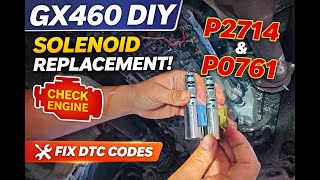
2015 Lexus GX460 with P2714 & P0761 - The DIY Attempt
Owner received both P2714 (Solenoid 'D') and P0761 (Solenoid 'C') codes. Attempted a DIY repair to avoid a rebuild.
What they tried:
- Dropped the transmission pan, drained the fluid, and replaced the two suspect solenoids in the valve body.
Outcome: The error codes returned immediately. The owner was forced to have the transmission professionally rebuilt for $4,500.
Lesson: If multiple solenoid codes appear, the problem is deeper within the valve body or internal components. Replacing solenoids will not fix systemic hydraulic failures.
How to Prevent This Code From Triggering
- Change transmission fluid and filter at recommended intervals (Every 30,000 to 60,000 miles. Ignore 'lifetime' fluid claims; change it to prevent solenoid failure.) — Clean fluid prevents sludge and metal shavings from clogging the tiny passages in the solenoids and valve body.
- Use the exact OEM-specified transmission fluid (Every time fluid is added or changed) — Using generic ATF instead of specified fluids (e.g., DEXRON-VI or Toyota WS) causes improper hydraulic pressure, seal degradation, and solenoid damage.
- Avoid aggressive driving and heavy towing beyond capacity (Daily habit) — Excessive heat breaks down transmission fluid rapidly, accelerating wear on electrical components like solenoids.
Frequently Asked Questions
Can I just clear the code and keep driving?
You can clear the code, but it will return quickly. Ignoring it causes severe transmission overheating and accelerated clutch wear. This turns a minor repair into a complete transmission failure costing thousands.
What is the most common misdiagnosis for P2714?
A common mistake is immediately assuming the entire transmission needs replacement. The root cause is often a cheaper component like the solenoid, wiring, contaminated fluid, or a speed sensor. Always perform a thorough diagnosis starting with the simplest causes first.
I replaced the solenoid, but the code came back. What now?
If a new solenoid fails to fix the issue, the problem lies deeper in the hydraulic or electrical system. Inspect the wiring harness for intermittent faults and check for worn solenoid bores in the valve body causing a pressure leak. A faulty valve body or TCM is the next logical culprit.
How much does it cost to fix P2714?
A simple solenoid replacement by a professional costs between $450 and $1,200. A valve body replacement ranges from $1,200 to $2,500. In a worst-case scenario, a full transmission rebuild or replacement costs $6,000 to $9,000+.
What exactly does the Pressure Control Solenoid 'D' do?
It is a computer-controlled valve that acts like a precise faucet for transmission fluid. The TCM sends it an electrical signal to adjust hydraulic pressure. This pressure engages and disengages the internal clutch packs, allowing your car to shift gears smoothly.
Can a faulty transmission speed sensor cause code P2714?
Yes, the TCM uses data from the input and output speed sensors to verify successful gear changes. If a speed sensor provides erratic data, the TCM assumes the transmission slipped and incorrectly blames the solenoid. This is a documented issue on several Toyota Tundra model years.
Is a transmission fluid flush a good idea for P2714?
If the fluid is old and contaminated, a fluid and filter change is a crucial first step. However, avoid high-pressure flushes on high-mileage transmissions (over 150,000 miles) as they dislodge debris that clogs other passages. A simple drain-and-fill is the safer alternative.
Key Takeaways
- Code P2714 most frequently triggers due to degraded transmission fluid or a failed Pressure Control Solenoid 'D', requiring a fluid check as your immediate first step.
- Driving with an active P2714 code accelerates internal clutch wear, escalating a $400 solenoid replacement into a $6,000+ full transmission rebuild within months.
- Always test the solenoid's electrical resistance against exact manufacturer specifications (e.g., 5.0-5.6 Ω for Toyota A750E) before replacing any hard parts.
- If replacing the solenoid does not clear the code on a Toyota, Lexus, or GM vehicle, the root cause is typically a worn valve body bore or a dislodged internal retainer ring.
Helpful Videos
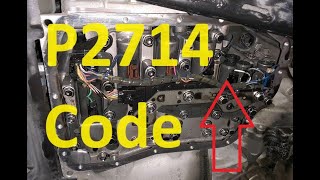
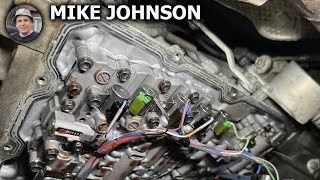

The information in this article is provided for general reference and educational purposes only. Vehicle specifications, procedures, and part compatibility can vary by production date, trim level, and region. Always consult your vehicle's factory service manual and verify part numbers before purchasing or performing repairs. Safety-critical components such as airbags, seat belts, and braking systems should be installed by a qualified professional.
- 🎬 Helpful Videos
- What Does P2714 Mean?
- Can I Drive With P2714?
- Common Causes
- Symptoms
- Diagnostic Flowchart
- Common Fixes & Costs
- DIY vs Professional
- Used vs. New Parts: Buying Guide
- What Happens If You Wait — Timeline
- Cost of Not Fixing It
- Diagnosis Steps
- When This Code Triggers (Freeze-Frame Conditions)
- Related Codes
- Climate & Environmental Factors
- How to Talk to a Mechanic About This Code
- Where to Take It: Dealer vs Independent vs Chain
- When to Walk Away From the Repair
- What Scan Tool You Need for This Code
- How to Clear the Code After You Fix It
- Will This Fail Emissions / State Inspection?
- Most Commonly Affected Vehicles
- Manufacturer-Specific Notes
- Real Owner Stories
- 2013 Lexus GX460 at 200K+ miles - The Misdiagnosis Loop
- 2015 Toyota Camry at 125K miles - The Easy Fix That Wasn't
- 2015 Lexus GX460 with P2714 & P0761 - The DIY Attempt
- How to Prevent This Code From Triggering
- Frequently Asked Questions
- Can I just clear the code and keep driving?
- What is the most common misdiagnosis for P2714?
- I replaced the solenoid, but the code came back. What now?
- How much does it cost to fix P2714?
- What exactly does the Pressure Control Solenoid 'D' do?
- Can a faulty transmission speed sensor cause code P2714?
- Is a transmission fluid flush a good idea for P2714?
- Key Takeaways
- 🎟️ Get 5% Off