

P0771 on 2006-2015 Honda Civic: Shift Solenoid 'E' Causes and Fixes
On 2006-2015 Honda Civics, P0771 is most often caused by low/dirty transmission fluid or a faulty dual linear solenoid assembly. Start by checking your fluid. If the fluid is okay, the likely fix for 2006-2013 models is replacing the external solenoid assembly (P/N 28260-RPC-004), which costs around $150-$280 for the part. For 2014-2015 CVT models, the diagnosis is more complex.
- For a P0771 code on a 2006-2015 Civic, always check the transmission fluid level and condition first; it's the most common and cheapest fix.
- If you have a 2006-2013 model, the problem is likely the externally-mounted dual linear solenoid (Part #28260-RPC-004), which is a manageable DIY replacement.
- If you have a 2014-2015 model, determine if you have the 5-speed automatic or the CVT, as the diagnosis and repair process is very different.
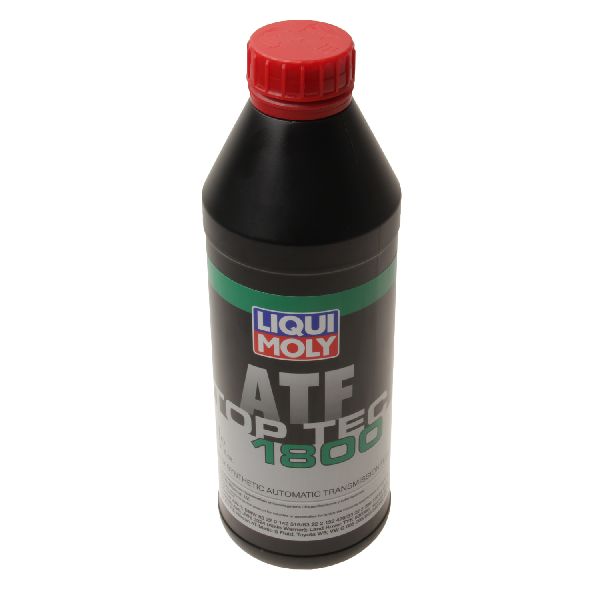
- Always use Honda-specific DW-1 transmission fluid to avoid causing further issues.
- Ignoring this code can lead to poor drivability and expensive, irreversible transmission damage.
What's Unique About the 2006-2015 Honda Civic
For the 8th generation (2006-2011) and early 9th generation (2012-2013) Civics with a 5-speed automatic, the 'Shift Solenoid E' is part of an externally mounted dual linear solenoid assembly. This makes it much more accessible and easier to replace than on many other vehicles where solenoids are inside the transmission pan. However, for later 9th generation models (2014-2015) equipped with a Continuously Variable Transmission (CVT), the repair is more complex as the solenoids are internal. Always use genuine Honda DW-1 or a compatible high-quality ATF, as these transmissions are very sensitive to fluid type and condition.
Generation note: This range covers two Civic generations: - 8th Generation (2006-2011): Used a 5-speed automatic transmission. The relevant part is typically the externally mounted dual linear solenoid assembly (Part No. 28260-RPC-004). - 9th Generation (2012-2015): Early models (2012-2013) also used a 5-speed automatic similar to the 8th gen. Later models (2014-2015) introduced a CVT, which has different internal solenoids. These CVT models were subject to a recall (NHTSA 15V574000) for a software update to prevent transmission damage, highlighting their different architecture.
Symptoms You May Notice
- Flashing 'D' (Drive) indicator light on the dashboard
- Check Engine Light is on
- Harsh, jerky, or delayed gear shifts
- Transmission gets stuck in one gear (limp mode)
- Failure to shift into certain gears, especially delayed 4th-gear engagement
- Reduced fuel efficiency
- Vehicle may not move in reverse
- Transmission overheating or a smell of burnt fluid
- Replacing the shift solenoid immediately without checking the fluid level and condition first. Dirty fluid is the most common and cheapest fix.
- Assuming the entire transmission needs to be rebuilt. On 5-speed models, this code is often caused by an inexpensive, externally-mounted part that can be replaced in under an hour.
Most Likely Causes
- Low, Burnt, or Incorrect Automatic Transmission Fluid (ATF) 🔴 High Probability Honda transmissions are notoriously sensitive to fluid level and type. Low fluid prevents proper hydraulic pressure, while old, contaminated, or incorrect fluid can cause solenoids to stick or clog passages.
How to confirm: Check the transmission fluid dipstick (engine off, on level ground, within 60-90 seconds of shutting off). The fluid should be at the correct level, pink/red in color, and not smell burnt. Honda DW-1 is the specified fluid.
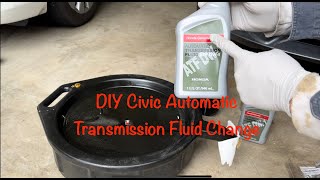
Typical fix: Perform a transmission fluid drain and fill using Honda DW-1 ATF. A single drain-and-fill only replaces about 1/3 of the fluid, so 3-4 cycles are often recommended 🎬 Watch: Step-by-step guide for a full transmission fluid drain and fill. to replace the majority of the old fluid.
Est. part cost: $40-$80 - Faulty Dual Linear Solenoid Assembly 🟡 Medium Probability The solenoid is an electro-mechanical part that wears out over time. Internal coils can fail, or the mechanical plunger can get stuck from debris in the fluid. This is the most common component failure for this code on 5-speed models.
How to confirm: After confirming fluid is good, test the solenoid. Disconnect the electrical connector and measure the resistance between the terminals with a multimeter. The specification for this part is typically 3-10 Ohms. A 'click test' can also be done by applying 12V power to the terminals to verify mechanical movement.
Typical fix: Replace the dual linear solenoid assembly and gasket. On 5-speed models (2006-2013), this is an external part held on by a few bolts, making it a very accessible DIY repair.
Est. part cost: $150-$280 - Damaged Wiring or Corroded Connector ⚪ Low Probability The solenoid connector is exposed to the elements, and battery acid leaks from above can sometimes drip onto the transmission wiring, causing corrosion and connection issues.
How to confirm: Visually inspect the wiring harness and connector leading to the solenoid for any signs of green/white corrosion, frayed wires, or loose pins. Wiggle the connector while monitoring solenoid data on a scan tool.
Typical fix: Clean the connector terminals with electrical contact cleaner or replace the connector pigtail if damage is severe.
Est. part cost: $15-$50
Rare But Worth Checking
- Clogged Transmission Filter or Internal Passages: If the transmission fluid is extremely dirty or contains metal shavings, it indicates a larger problem. Debris can clog the small filter screens on the solenoids themselves or the passages in the valve body.
- Faulty Transmission Fluid Pressure (TFP) Sensor: An inaccurate TFP sensor can send incorrect data to the TCM, leading it to misinterpret the transmission's hydraulic state and potentially set a solenoid performance code.
- Faulty Transmission Control Module (TCM): This is very rare. The TCM is the computer that controls the transmission. It should only be considered after all other possibilities (fluid, solenoid, wiring) have been exhaustively ruled out.
Diagnosis Steps
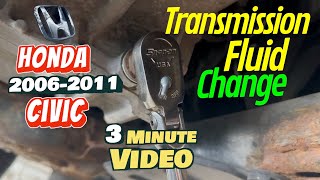
- Check the transmission fluid level and condition. If it's low, top it off. If it's dark, burnt, or has debris, perform at least one drain and fill 🎬 See this quick 3-minute walkthrough for changing your Honda transmission fluid. with Honda DW-1 ATF. Clear codes and test drive to see if the problem returns.
- Scan the vehicle for any other transmission-related codes. Address codes like P0700 or P0773 as part of the diagnosis.
- Visually inspect the wiring harness and connector for the dual linear solenoid. Look for corrosion, damage, or loose connections. Clean as necessary.
- If fluid and wiring are good, test the solenoid. Disconnect the connector and use a multimeter to check the resistance of the solenoid coils. The reading should be between 3 and 10 Ohms for P/N 28260-RPC-004.
- Perform a 'click test' by carefully applying a 12-volt power source to the solenoid's terminals to see if you can hear it click, indicating it's mechanically moving.
- If the solenoid fails the resistance or click test, replace the dual linear solenoid assembly and its gasket.
- If the solenoid passes all tests, the issue may be an internal blockage in the valve body or, rarely, a faulty TCM, which requires professional diagnosis with advanced scan tools.
Parts You'll Likely Need
- Dual Linear Solenoid Assembly
(OEM #28260-RPC-004)— This assembly contains the shift solenoids that commonly fail, causing P0771 on the 5-speed automatic models from 2006-2013.
Trusted brands: Genuine Honda, WVE/NTK, Rostra
OEM price range: $200-$280
Aftermarket price range: $80-$150 - Honda DW-1 Automatic Transmission Fluid
(OEM #08200-9008)— Honda transmissions require this specific fluid. Using generic ATF can cause shifting problems and damage. A drain and fill requires about 3-4 quarts.
Trusted brands: Genuine Honda
OEM price range: $10-$15 per quart
Aftermarket price range: N/A - Solenoid Gasket
(OEM #28261-RPC-004)— This gasket should always be replaced when replacing the solenoid assembly to prevent leaks. It is often included with a new solenoid.
Trusted brands: Genuine Honda
OEM price range: $10-$20
Aftermarket price range: $5-$10
Related Codes That Often Appear With This One
- P0773 — P0773 is 'Shift Solenoid E Electrical'. While P0771 is a performance fault (stuck), P0773 indicates a purely electrical problem like an open or short circuit in the solenoid's coil. They often point to the same faulty component or its wiring.
- P0741 — P0741 relates to the Torque Converter Clutch (TCC) solenoid. On many Honda models, the TCC and shift solenoids are part of the same assembly or share the same fluid passages, so a problem in one can sometimes trigger faults in the other.
- P0700 — P0700 is a generic 'Transmission Control System Malfunction' code. It's an informational code set by the ECM to let you know that the TCM has stored a more specific transmission-related fault, such as P0771.
Technical Service Bulletins (TSBs) & Recalls
- NHTSA ID: 10026087 / Honda TSB 08-020: Wh
Platform-Specific Known Issues
- On 8th generation Civics (2006-2011), corrosion on the solenoid wiring connectors due to battery acid leakage from above has been noted by owners.
- For 2014-2015 Civics with the CVT, a software issue could cause damage to the transmission drive pulley shaft. A recall (NHTSA Campaign Number: 15V574000) was issued to update the software. While not directly for P0771, it highlights the sensitivity of the CVT and the importance of correct software and fluid.
Mechanic-Grade Diagnostic Values
- Resistance of A/T Clutch Pressure Control Solenoid (part of 28260-RPC-004 assembly) — expected: 3 - 10 Ohms. Failure: A reading outside of this range (e.g., infinite for an open circuit, near zero for a short) indicates a faulty solenoid coil.
- Click Test for A/T Clutch Pressure Control Solenoid — expected: An audible click should be heard when 12V is applied.. Failure: No click indicates the solenoid plunger is mechanically stuck or the coil is dead.
Scan Tool Commands That Help
- Honda Diagnostic System (HDS): Clutch Pressure Control (Linear) Solenoid B/C Test — This is a bidirectional test found in the 'Miscellaneous Test Menu'. It allows the technician to command the solenoid on and off directly from the scan tool to verify its electrical and mechanical operation without removing it from the vehicle. This should be used after checking fluid and before deciding to replace the solenoid.
- Professional Scan Tool (various): Clear Transmission Adaptations — After replacing a solenoid or performing significant transmission service, it's recommended to clear the learned adaptive values. This forces the TCM to relearn the shift points and clutch engagement pressures with the new components. On this generation Civic, this can often be accomplished by disconnecting the battery for a period of time.
Wiring & Ground Locations
- G101 — Bolted to the thermostat housing on the engine.. G101 serves as a primary power and logic ground for the ECU/PCM. A poor connection here due to corrosion or looseness can cause a wide range of erratic electronic behaviors, including incorrect sensor readings and faulty commands to the transmission, potentially mimicking a solenoid failure. It is a critical point to clean and secure during any electrical diagnosis.
- Dual Linear Solenoid Connector — On the front of the 5-speed automatic transmission, easily visible from the top of the engine bay.. This is the direct electrical connection to the solenoid assembly. The pins for the resistance test and click test are located here. Pin 1 is typically the positive terminal and Pin 2 is the negative for testing purposes. It is exposed to potential battery acid drips from above, making it a key inspection point for corrosion.
Real Owner Repair Stories
- Autodana.eu case study (2010 Honda Accord (similar 5-speed transmission architecture)) — Erratic shifting and a check engine light with code P0771.
❌ Tried (didn't work) The report does not specify other failed attempts; diagnosis pointed toward the solenoid.
✅ What actually fixed it A transmission fluid change combined with the replacement of the shift solenoid valve E resolved the issue.
Model Year Variations Within This Range
- 2006-2013: These models use a conventional 5-speed automatic transmission with the externally mounted and easily accessible dual linear solenoid (P/N 28260-RPC-004).
- 2014-2015: These models use a Continuously Variable Transmission (CVT). The solenoids are internal to the transmission and part of a different valve body assembly. Diagnosis and repair are significantly more complex and labor-intensive, often requiring removal of the transmission pan or valve body.
Diagnostic Flowchart
Other Known Issues on This Vehicle
Issues unrelated to this code that are worth knowing about as an owner of this generation:
- Cracked Engine Block 🔴 High — Common on 2006-2008 models and some early 2009s with the 1.8L R18A1 engine. A casting defect causes a crack to form, leading to coolant loss and overheating. (Ref: Honda TSB 10-048 (Warranty was extended to 10 years, but has since expired for most vehicles).)
- Defective Sun Visors 🟡 Low — Extremely common on 8th gen (2006-2011) models. The visor's internal plastic cracks, causing it to droop and obstruct vision. (Ref: A class-action lawsuit resulted in an extended warranty (7 years/100,000 miles), which has now expired for most vehicles.)
- CVT Software and Drive Pulley Shaft Failure 🔴 High — Affects 2014-2015 models with the CVT. High hydraulic pressure commanded by the original software could stress and break the drive pulley shaft. (Ref: NHTSA Recall 15V574000; Honda campaign JU2. The fix was a software update to reduce stress on the component.)
- Failing Passenger-Side Engine Mount 🟠 Medium — Common on 8th gen (2006-2011) models. The hydraulic mount is prone to leaking fluid and collapsing, leading to significant engine vibration felt in the cabin, especially at idle, and clunking noises. (Ref: Honda TSB 06-060)
- Peeling Paint / Clear Coat Failure 🟡 Low — Widespread across both 8th and 9th generations, particularly on dark colors. The clear coat oxidizes and begins to peel, leading to a poor cosmetic appearance. (Ref: Honda extended the paint warranty for some colors and model years, but this was not a formal recall.)
- Excessive Oil Consumption 🟠 Medium — Noted on some early 9th gen (2012) 1.8L engines due to piston ring design. Also reported by some owners of the 9th gen Si with the K24 engine.
Used vs. New Parts: Buying Guide for This Vehicle
When a used part is the smart pick: A used OEM dual linear solenoid assembly from a junkyard can be a cost-effective option, especially if sourced from a low-mileage, front-end collision vehicle. This ensures the transmission was likely in good working order before the accident.
Donor-vehicle mileage cap: roughly under 80000 miles for the part to have meaningful remaining life.
What to inspect on the donor part:
- Verify the donor vehicle was in a wreck, not in the junkyard for transmission failure.
- Inspect the electrical connector pins on the solenoid for any corrosion, bending, or damage.
- Check the plastic body of the solenoid for any cracks or signs of extreme heat.
- If possible, perform a resistance check on the pins before purchasing to ensure they are within the 3-10 Ohm spec.
OEM-only on this vehicle (don't cheap out):
- Automatic Transmission Fluid (use only Honda DW-1)
Aftermarket brands forum-validated for this vehicle:
- Rostra
- WVE/NTK
- Standard Motor Products (SMP)
Brands owners have reported issues with on this vehicle:
- Unbranded, no-name solenoids from online marketplaces should be avoided, as their quality control and longevity can be highly questionable.
Real Owner Stories
Aggregated from forums and TSBs cited above. Mileages and costs reflect what owners reported in those sources.
2012 Honda Civic
Symptoms: The 'D' (Drive) indicator light on the dashboard was flashing and the Check Engine Light was on with code P0771.
What fixed it: The issue was resolved by replacing the faulty dual linear solenoid assembly.
Source hint: 9thGenCivic.com thread titled 'P0771 Shift Solenoid E Stuck Off - Flashing D'
2007 Honda Civic
Symptoms: Vehicle stored a P0771 code for 'Shift Solenoid E Performance/Stuck Off'.
What fixed it: The community recommended performing a triple drain-and-fill of the transmission fluid with Honda DW-1 as the first and most effective step before replacing any parts.
Source hint: Honda-Tech.com thread titled 'P0771 Code, Shift Solenoid E Performance/Stuck Off'
2009 Honda Civic
Symptoms: Experiencing harsh shifting issues and a P0771 code.
What fixed it: The problem was fixed by following a DIY guide to replace the 28260-RPC-004 dual linear solenoid assembly and its gasket.
Source hint: 8thCivic.com thread titled 'DIY: Transmission dual linear solenoid replacement'
Related OBD-II Codes
Frequently Asked Questions
What is the correct transmission fluid for my 2010 Civic with a P0771 code, and why is it so important?
I need to replace the dual linear solenoid on my 2008 Civic. What's the part number and is it a difficult job?
How can I test the dual linear solenoid on my Civic myself before buying a new one?
My 2007 Civic's transmission solenoid connector is covered in green corrosion. What would cause that?
My 2014 Civic has a CVT and is having transmission problems. Is this related to the recall I heard about?
Is just one transmission drain-and-fill enough to fix P0771 on my Civic?
Helpful Videos
We Have This Part in Stock


The information in this article is provided for general reference and educational purposes only. Vehicle specifications, procedures, and part compatibility can vary by production date, trim level, and region. Always consult your vehicle's factory service manual and verify part numbers before purchasing or performing repairs. Safety-critical components such as airbags, seat belts, and braking systems should be installed by a qualified professional.
- Honda Civic:
- 🎬 Helpful Videos
- 🛍️ Shop This Part
- What's Unique About the 2006-2015 Honda Civic
- Symptoms You May Notice
- Most Likely Causes
- Rare But Worth Checking
- Diagnosis Steps
- Parts You'll Likely Need
- Related Codes That Often Appear With This One
- Technical Service Bulletins (TSBs) & Recalls
- Platform-Specific Known Issues
- Mechanic-Grade Diagnostic Values
- Scan Tool Commands That Help
- Wiring & Ground Locations
- Real Owner Repair Stories
- Model Year Variations Within This Range
- Diagnostic Flowchart
- Other Known Issues on This Vehicle
- Used vs. New Parts: Buying Guide for This Vehicle
- Real Owner Stories
- 2012 Honda Civic
- 2007 Honda Civic
- 2009 Honda Civic
- Related OBD-II Codes
- Frequently Asked Questions
- 🎟️ Get 5% Off