

P0771 on 2003-2017 Honda Accord: Shift Solenoid 'E' Performance Causes and Fixes
Code P0771 on a 2003-2017 Honda Accord most often points to low or dirty transmission fluid, or a faulty Torque Converter Clutch (TCC) solenoid (which Honda calls 'Shift Solenoid E'). Start by checking the fluid level and condition. If the fluid is clean and full, the issue is likely a failing TCC solenoid, which can often be replaced by a DIYer for $50-$150 in parts.
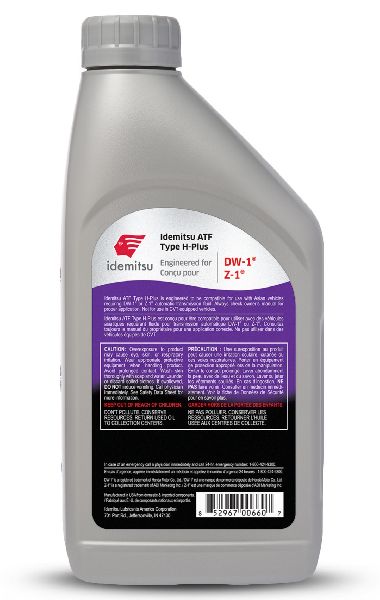
- Always check the transmission fluid level and condition first. Use only Honda ATF-DW1 fluid.
- P0771 indicates a performance problem with a shift solenoid, but the label 'E' is generic. The specific faulty solenoid needs to be identified through testing.
- On most 2003-2017 Accords, the shift solenoids are located on the outside of the transmission and are accessible for DIY replacement after removing the battery and tray.
- Symptoms like harsh shifting, slipping, or a flashing 'D' light should not be ignored, as they can lead to more severe transmission damage.
- For 2013-2017 models, inquire about TSB 17-017 with a dealer, as a fluid flush and software update may be required to solve related shifting problems.
What's Unique About the 2003-2017 Honda Accord

The term 'Shift Solenoid E' is a generic SAE designation. On these Honda Accord models, it specifically refers to the Torque Converter Clutch (TCC) Solenoid, not a typical gear selection solenoid. This is a critical distinction, as the fault affects the torque converter's lock-up function rather than the transmission's ability to shift between gears directly. On many V6 Accords from the 7th generation, the TCC solenoid is part of a dual-linear solenoid assembly located externally on the transmission case, making it more accessible for diagnosis and replacement than on vehicles where it is located inside the transmission oil pan.
Generation note: This guide covers the 7th (2003-2007), 8th (2008-2012), and 9th (2013-2017) generations of the Honda Accord. While the root causes are similar, the exact location and part numbers for solenoids differ. The 7th generation V6 models (2003-2007) are particularly known for transmission issues that can trigger this code. The 9th generation (2013-2017) has a known TSB (17-017) related to transmission fluid deterioration causing judder, which highlights the fluid sensitivity of later models.
Symptoms You May Notice
- Harsh, jerky, or delayed shifting
- Transmission slipping between gears
- Flashing 'D' (Drive) indicator light on the dashboard
- Check Engine Light is on
- Vehicle may enter 'limp mode,' getting stuck in a single gear
- Failure of the torque converter to lock up at cruising speed (engine RPMs remain higher than usual on the highway)
- Reduced fuel economy
- Transmission overheating
- Replacing a shift solenoid without first checking the transmission fluid level and condition. Dirty fluid is a very common cause and a much cheaper fix.
- Assuming the entire transmission needs to be rebuilt or replaced without performing proper electrical diagnostics on the solenoids and wiring.
- Replacing the wrong solenoid because the generic 'E' designation was not correctly identified as the TCC solenoid for this specific application.
Most Likely Causes

- Low or Dirty Transmission Fluid 🔴 High Probability Fluid can become contaminated with clutch material or break down from heat over time. For 2013-2017 models, TSB 17-017 specifically notes that fluid can deteriorate faster than expected. Degraded fluid can clog the small passages and screens in the solenoid body.
How to confirm: Check the transmission fluid dipstick for level and color. Honda ATF should be red. If it is dark brown/black, smells burnt, or is low, it needs service. On Hondas, check the fluid with the engine OFF and the vehicle on level ground after it has been warmed up.
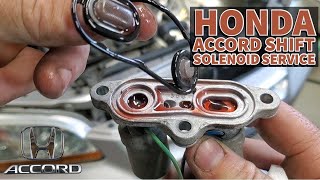
Typical fix: Perform a transmission fluid drain and fill using only Honda Genuine ATF-DW1 fluid. 🎬 Watch: How to service your transmission fluid and solenoids. A full flush (3x drain and fill) is often recommended to exchange most of the old fluid.
Est. part cost: $40-$120 for fluid - Faulty Torque Converter Clutch (TCC) Solenoid 🟡 Medium Probability Solenoids are a common failure point due to heat and wear over many cycles. Debris in old fluid can cause them to stick or clog internally. The 7th generation V6 transmissions were particularly prone to solenoid and related transmission failures.
How to confirm: After ruling out fluid issues, a mechanic can test the solenoid's resistance with a multimeter (typically 12-25 ohms) or use a bi-directional scan tool to command the solenoid on and listen for a click. The screens on the solenoid gasket should also be inspected for debris.
Typical fix: Replace the faulty TCC solenoid or the entire solenoid pack assembly. On many Accords, these are located externally on the transmission case, often under the battery tray or on the front of the transmission.
Est. part cost: $50-$200 for an individual solenoid or assembly - Damaged Wiring or Corroded Connector ⚪ Low Probability Solenoid connectors on the front of the transmission can be exposed to moisture and battery vapor, leading to corrosion over time.
How to confirm: Visually inspect the wiring harness and connectors leading to the TCC solenoid for any signs of corrosion, frayed wires, or loose pins.
Typical fix: Clean the connectors with an electrical contact cleaner or repair/replace the damaged section of the wiring harness.
Est. part cost: $10-$100 for cleaning supplies or a pigtail connector
Rare But Worth Checking
- Faulty Transmission Control Module (TCM) or Powertrain Control Module (PCM): This is rare, but if the fluid is good, the solenoid tests correctly, and the wiring is intact, the module's internal driver circuit for that solenoid may have failed.
- Internal Transmission Failure: If the fluid is full of metal shavings, it could indicate a more severe internal mechanical problem within the transmission (like a failing torque converter or clutch pack) that is preventing lock-up, even if the solenoid is functioning. This was a common end-of-life scenario for 7th gen V6 transmissions.
Diagnosis Steps
- Check the transmission fluid level and condition with the engine OFF. If low, top it off with Honda ATF-DW1 and re-test. If dirty or burnt, perform a drain-and-fill (or a 3x flush) and re-test.
- Use an advanced OBD-II scanner to view freeze frame data to see the conditions under which the code was set.
- Inspect all wiring and connectors for the Torque Converter Clutch (TCC) solenoid. Look for corrosion, damage, or loose connections.
- Using a bi-directional scanner, command the TCC solenoid on and off to see if it operates. Listen for an audible click from the solenoid body.
- If a specific solenoid is suspected, disconnect it and measure the coil resistance with a multimeter. Compare the reading to the manufacturer's specification (typically 12-25 ohms). An open circuit (infinite resistance) or short (near zero resistance) indicates a failed solenoid.
- Remove the suspect solenoid and inspect its filter screens for metallic debris or sludge. Clogged screens are a strong indicator of dirty fluid or internal transmission wear.
- If the fluid, wiring, and solenoid are all good, the issue may be a clogged passage in the valve body or, in rare cases, a faulty TCM/PCM.
Parts You'll Likely Need

- Honda Genuine ATF-DW1 Automatic Transmission Fluid
(OEM #08200-9008)— Incorrect or degraded fluid is a primary cause of solenoid performance issues. Using the OEM fluid is critical for Honda transmissions.
Trusted brands: Honda
OEM price range: $10-$15 per quart
Aftermarket price range: N/A - Torque Converter Clutch Solenoid Assembly (Dual Linear)
(OEM #28250-P7W-003 (for many 7th Gen V6 models))— This is the component most commonly associated with P0771 on these vehicles. It can fail electrically or become mechanically stuck.
Trusted brands: Genuine Honda, Denso, Standard Motor Products (SMP), Rostra
OEM price range: $150-$250
Aftermarket price range: $70-$150
Related Codes That Often Appear With This One
- P0700 — P0700 is a generic code that simply means the Transmission Control Module (TCM) has stored a fault code. It will almost always be present alongside a more specific transmission code like P0771.
- P0773 — P0773 is the electrical circuit fault code for Shift Solenoid 'E'. If you have both P0771 (performance) and P0773 (electrical), it strongly points to a bad solenoid coil or a wiring issue, rather than a hydraulic or mechanical problem.
- P0741 — P0741 is 'Torque Converter Clutch Circuit Performance or Stuck Off'. Since P0771 on these Hondas often points to the TCC solenoid, these two codes are closely related and can appear together, both indicating a problem with the torque converter lock-up system.
Technical Service Bulletins (TSBs) & Recalls

- 17-017: 2013-17 Accord: Judder from the Torque Converter Lock-Up Clutch
- 09-010: 2008-2009 Accord: Engine Rattles at Cold Start-Up (VTC Actuator)
- 16-002: 2013-15 Accord V6: Starter Motor Grinds or Spins
Platform-Specific Known Issues
- For 2013-2017 Accords, TSB 17-017 and 17-018 address a 'judder' from the torque converter clutch caused by deteriorated transmission fluid. The fix is a PCM software update and a transmission fluid flush. While not a direct cause of P0771, it highlights the sensitivity of these transmissions to fluid condition.
- For 2003-2007 V6 Accords, the 5-speed automatic transmission (codename BAYA/MAYA) is notoriously prone to failure. Code P0771 can be an early warning sign of a failing torque converter or internal clutch packs, which was a widespread issue beyond just a single solenoid.
Mechanic-Grade Diagnostic Values
- TCC / Shift Solenoid Coil Resistance — expected: 12-25 Ohms when measured with a multimeter.. Failure: A reading of infinite resistance (open circuit) or near-zero resistance (short circuit) indicates a failed solenoid coil.
- TCC / Shift Solenoid 'Click Test' — expected: An audible 'click' should be heard from the solenoid body when 12V power is briefly applied to its power pin and the body is grounded.. Failure: No click indicates the solenoid's internal plunger is mechanically stuck or the coil is dead, even if resistance is within spec.
Scan Tool Commands That Help
- Honda Diagnostic System (HDS) or equivalent professional bidirectional scanner: Shift Solenoid Valve E Functional Test — After confirming fluid is clean and full, use this command to electronically activate the solenoid. Listen for an audible click from the transmission case. This confirms the TCM, wiring, and solenoid coil are all working together to mechanically move the solenoid plunger. No click points directly to a failure in that command chain.
Wiring & Ground Locations
- G101 — On the left side of the engine bay, typically bolted to the transmission housing or nearby on the chassis.. This is a primary ground point for the engine and transmission control systems. Corrosion or a loose connection at G101 can create floating voltages and erratic behavior in sensors and solenoids, potentially triggering false performance codes like P0771 even if the solenoid itself is functional.
Real Owner Repair Stories
- AcuraZine forum user '02 TLS SSM' (2002 Acura TL-S (Uses a similar V6 and 5-speed automatic transmission to the 7th Gen Accord)) — Not specified, but was replacing the solenoid.
✅ What actually fixed it The user reported successfully replacing the transmission solenoid with an aftermarket unit purchased from eBay for $60 and had no subsequent problems. This demonstrates that affordable aftermarket parts can be a viable solution.
OEM Part Supersession History
28250-P7W-003→Current OEM part for many 7th Gen V6 models.— This is the dual linear solenoid assembly that includes the TCC solenoid.
Heads up: For 7th Gen Accords, other part numbers like 28400-PRP-004 and 28500-PRP-004 are also used. When buying aftermarket, be extremely careful to verify the pin count on the electrical connector. Some aftermarket parts are sold as compatible but may have the wrong connector (e.g., 4 pins instead of 5), which will not work with the car's TCM.
Model Year Variations Within This Range
- 2003-2007 (7th Gen V6): These models used a 5-speed automatic (BAYA/MAYA) that was notoriously prone to premature failure. P0771 on these cars is a very strong indicator of not just a bad solenoid, but potentially a failing torque converter or burned clutch packs, which was a widespread issue requiring a full transmission replacement or rebuild.
- 2008-2012 (8th Gen V6): The transmission was generally more reliable than the 7th Gen's. However, the V6 engine in this generation introduced Variable Cylinder Management (VCM), which could cause its own set of issues, including oil consumption that could lead to other engine problems if not monitored.
- 2013-2017 (9th Gen): Later model transmissions, particularly 6-speeds and CVTs, began using large integrated solenoid blocks instead of individual, externally-mounted solenoids. On these models, a single solenoid failure requires replacing the entire expensive assembly, which Honda may call the 'secondary valve body'.
Diagnostic Flowchart
Other Known Issues on This Vehicle
Issues unrelated to this code that are worth knowing about as an owner of this generation:
- 7th Gen (2003-2007) V6 Automatic Transmission Failure 🔴 High — Very common, especially on 2003-2004 models, often occurring before 100,000 miles. The 2nd gear clutch pack was a frequent failure point. (Ref: Honda had recalls and extended warranties, but most have expired. The issue was widespread across V6 models.)
- 8th Gen (2008-2012) K24 4-Cyl Engine Excessive Oil Consumption 🟠 Medium — Common issue, often starting around 60,000-80,000 miles. Caused by piston ring design intended to reduce friction. (Ref: Honda faced a class-action lawsuit and issued TSB 12-089. The fix involved replacing piston rings, but warranty coverage varied.)
- 8th Gen (2008-2012) K24 4-Cyl VTC Actuator Rattle on Cold Start 🟡 Low — Very common. A loud, brief rattle for 1-2 seconds on a cold start. Generally considered an annoyance but can worsen. (Ref: Honda TSB 09-010 addresses this issue. The fix is to replace the VTC (Variable Timing Control) actuator.)
- 9th Gen (2013-2017) Starter Motor Failure 🟠 Medium — Prevalent on both 4-cylinder and V6 models, often failing between 70,000-100,000 miles. Symptoms include a grinding noise on startup or a no-start click. (Ref: TSB 16-002 was issued for V6 models, involving a new starter and potentially rotating the torque converter to engage a fresh surface on the ring gear.)
- 7th Gen (2003-2007) Stereo Backlight / HVAC Display Failure 🟡 Low — Extremely common on 2003-2004 models. The circuit board for the radio and climate control display fails, causing the display to go dark. (Ref: Honda had an extended warranty (7 years/105,000 miles) for this, but it has long since expired.)
Used vs. New Parts: Buying Guide for This Vehicle
When a used part is the smart pick: For an older, high-mileage Accord (especially 7th or 8th gen), a used OEM solenoid from a low-mileage donor car is a very sensible option. Given that a new OEM solenoid can cost over $400, and the car's value may be low, a $50-$100 used part from a junkyard is a cost-effective repair.
Donor-vehicle mileage cap: roughly under 120000 miles for the part to have meaningful remaining life.
What to inspect on the donor part:
- Verify the donor vehicle's mileage if possible.
- Inspect the connector pins for any corrosion or damage.
- Check the small filter screens on the solenoid gasket; they should be clean and free of metallic debris. Heavy sludge or metal indicates the donor transmission was already failing.
- Ensure the part number or physical design (especially the connector) exactly matches your original part.
OEM-only on this vehicle (don't cheap out):
- Transmission Control Module (TCM). While aftermarket TCMs exist, they often have compatibility and programming issues. A VIN-matched OEM unit (new or used) is the safest bet.
Aftermarket brands forum-validated for this vehicle:
- Denso (often the original OEM manufacturer)
- Standard Motor Products (SMP)
- Rostra
Brands owners have reported issues with on this vehicle:
- Unnamed, no-brand parts from online marketplaces. While some may work, failure rates are higher, and incompatibility due to incorrect connectors is a common problem.
Real Owner Stories
Aggregated from forums and TSBs cited above. Mileages and costs reflect what owners reported in those sources.
2004 Honda Accord V6
Symptoms: Check Engine Light on with codes P0741 and P0771 after confirming the transmission fluid was clean.
What fixed it: Replaced the dual linear solenoid assembly (which includes the TCC solenoid). This required removing the battery and air filter housing for access.
Source hint: driveaccord.net thread titled 'P0741 and P0771 on 2004 Accord V6'
2003 Honda Accord V6 — ~92000 miles
Symptoms: Code P0771 appeared as an early warning sign of a larger problem. The underlying issue was the failure-prone '3 shaft' transmission design.
What fixed it: The context indicates this code often preceded a catastrophic failure of the 2nd gear clutch pack, which would require a full transmission rebuild or replacement.
Source hint: Reddit discussion on '7th gen tranny issues' and Known Issues section on 2003-2007 V6 Transmission Failure
2015 Honda Accord
Symptoms: A 'judder' from the torque converter lock-up clutch, caused by deteriorated transmission fluid.
What fixed it: The official fix was a PCM software update combined with a transmission fluid flush using Honda Genuine ATF-DW1.
Source hint: TSB 17-017
Related OBD-II Codes
Frequently Asked Questions
My 2014 Accord has a transmission 'judder'. Is this related to code P0771?
I have a 2004 Accord V6 with P0771. Should I be worried about the whole transmission failing?
What is the very first thing I should check for P0771 on my Honda Accord?
Where is the Torque Converter Clutch (TCC) solenoid located on my Accord?
Is it common for wiring to cause P0771 on these Accords?
I have a 2005 Honda Odyssey with P0771. Is this Accord article relevant to me?
Helpful Videos
Used OEM Parts in Stock


New Aftermarket Parts Available


The information in this article is provided for general reference and educational purposes only. Vehicle specifications, procedures, and part compatibility can vary by production date, trim level, and region. Always consult your vehicle's factory service manual and verify part numbers before purchasing or performing repairs. Safety-critical components such as airbags, seat belts, and braking systems should be installed by a qualified professional.
- Honda Accord:
- 🎬 Helpful Videos
- 🛍️ Shop This Part
- What's Unique About the 2003-2017 Honda Accord
- Symptoms You May Notice
- Most Likely Causes
- Rare But Worth Checking
- Diagnosis Steps
- Parts You'll Likely Need
- Related Codes That Often Appear With This One
- Technical Service Bulletins (TSBs) & Recalls
- Platform-Specific Known Issues
- Mechanic-Grade Diagnostic Values
- Scan Tool Commands That Help
- Wiring & Ground Locations
- Real Owner Repair Stories
- OEM Part Supersession History
- Model Year Variations Within This Range
- Diagnostic Flowchart
- Other Known Issues on This Vehicle
- Used vs. New Parts: Buying Guide for This Vehicle
- Real Owner Stories
- 2004 Honda Accord V6
- 2003 Honda Accord V6 — ~92000 miles
- 2015 Honda Accord
- Related OBD-II Codes
- Frequently Asked Questions
- 🎟️ Get 5% Off