

P0771 on 2013-2020 Ford Fusion: Shift Solenoid 'E' Causes and Fixes
P0771 on a Ford Fusion indicates a 'Shift Solenoid E Stuck Off' fault in the automatic transmission. The most common fix is replacing the transmission solenoid body inside the transmission, a job best left to a professional. Expect costs to range from $650 to $1250 depending on using OEM vs. aftermarket parts and shop labor rates.
- P0771 on a 2013-2020 Fusion points to a problem with an internal transmission shift solenoid ('E').
- This is not a common, well-documented issue for the Fusion, so diagnosis should start with the basics: checking transmission fluid level and condition.
- The most probable repair is replacing the entire solenoid body inside the transmission, which is a job for a professional mechanic.
- Driving with this code can lead to severe transmission damage, so it should be addressed promptly.
- Ensure your mechanic uses the correct fluid (Motorcraft MERCON LV) during the repair.
What's Unique About the 2013-2020 Ford Fusion
The 2013-2020 Ford Fusion, primarily equipped with the 6F35 6-speed automatic transmission, does not have a widely documented, recurring pattern of failure that specifically triggers a P0771 code. Unlike some vehicles with known TSBs for this exact issue, the Fusion is not one of them. However, the 6F35 transmission is shared with other Ford models like the Escape and Edge, which do report this code, pointing to the solenoid body as a common failure point. Therefore, this code requires a traditional diagnostic approach starting with the basics, rather than jumping to a known 'common fix' for the platform. This guide applies to non-hybrid models, as the hybrid's eCVT operates differently.
Generation note: The 2013-2020 year range covers the entire second generation of the Ford Fusion. This generation received facelifts in 2017 and 2019 which updated styling and features, but the core powertrain, including the 6F35 automatic transmission in non-hybrid models, remained largely consistent. Therefore, the information in this guide is applicable to the whole 2013-2020 range.
Symptoms You May Notice
- Harsh, jerky, or delayed shifts
- Transmission failing to shift into certain gears, especially higher gears
- Transmission slipping between gears
- Vehicle enters 'limp mode,' often stuck in 2nd or 3rd gear
- Illuminated Check Engine Light or Transmission Warning Light
- Reduced fuel economy
- Transmission overheating
- Engine stalls when coming to a stop in gear
- Replacing an individual shift solenoid when the entire solenoid body is faulty or when the issue is simply low/dirty fluid.
- Replacing the entire transmission when only the valve body or solenoid body needs service.
- Assuming the problem is mechanical when it is a wiring issue. One owner documented a lengthy repair process that ended up being a damaged wire from a rodent.
Most Likely Causes
- Low or Dirty Transmission Fluid 🔴 High Probability This is the most common cause for solenoid issues on any automatic transmission. Old, degraded fluid can cause solenoids to stick or clog hydraulic passages. On the 6F35, owners have reported very dark fluid even with regular changes, suggesting a tendency to run hot or break down fluid.
How to confirm: Check the transmission fluid level and condition via the service plug. The fluid should be at the correct level, red in color, and not smell burnt or contain debris. The 6F35 often lacks a dipstick, requiring a level-check plug on the side of the case to be checked when the fluid is at operating temperature (85-93° C).
Typical fix: Perform a transmission fluid drain-and-fill. A full flush is not recommended by some experts as it can dislodge debris and clog the non-serviceable internal filter. Use only the specified Motorcraft MERCON LV fluid. 🎬 Watch this full step-by-step guide on servicing 6F35 transmission fluid
Est. part cost: $50-$150 - Faulty Transmission Solenoid Body 🟡 Medium Probability The solenoids in the 6F35 transmission are part of a single assembly. An electrical failure or mechanical seizure of an individual solenoid (Solenoid 'E') requires replacing the entire solenoid body. This is the most common hard-part failure for this code.
How to confirm: After confirming fluid is good, a technician will use a scan tool to command the solenoid on and off while monitoring voltage. If the solenoid doesn't respond, it's likely faulty. Resistance can also be checked with a multimeter and compared to specifications.
Typical fix: Remove the transmission side cover and valve body to replace the entire solenoid body assembly. This requires programming the new solenoid's strategy ID to the TCM using a tool like FORScan.
Est. part cost: $200-$450 - Damaged Wiring or Connectors ⚪ Low Probability Wiring inside the transmission is bathed in hot fluid, which can make it brittle over time. External wiring is subject to road debris and corrosion. A common mistake is replacing the solenoid without first testing the circuit for opens or shorts.
How to confirm: Visually inspect the external transmission harness. A technician will need to drop the transmission pan/cover to inspect the internal wiring harness (lead frame) leading to the solenoid body for breaks, shorts, or corroded pins. The main external connector is often designated C175T.
Typical fix: Repair the damaged section of the wiring harness or replace the connector.
Est. part cost: $20-$100
Rare But Worth Checking
- Faulty Valve Body: The valve body contains the hydraulic channels that the solenoids control. If a channel is blocked with debris or a valve is stuck, it can mimic a solenoid failure. Often, the valve body and solenoid body are replaced as a single assembly for a more robust repair.
- Faulty Powertrain Control Module (PCM/TCM): In rare cases, the module that commands the solenoid can fail. This should only be considered after all other possibilities (fluid, solenoid, wiring) have been exhaustively ruled out.
Diagnosis Steps
- Check the transmission fluid level and condition. If low, top it off. If dark, burnt, or full of debris, perform a fluid and filter change. Use only MERCON LV fluid.
- Use a professional scan tool (like FORScan for Fords) to check for other transmission-related codes and to view live data for the commanded state of Shift Solenoid 'E' versus its actual state.
- Perform a visual inspection of the external transmission wiring harness and connectors for any signs of damage or corrosion, paying attention to the C175T connector.
- If fluid and external wiring are okay, the next step is to access the transmission's internals by removing the side cover.
- Inspect the internal wiring (lead frame) to the solenoid body for damage.
- Test the resistance of Shift Solenoid 'E' with a multimeter. At room temperature (68-86°F or 20-30°C), the expected resistance is between 19.05 and 27.95 ohms. An open (infinite resistance) or shorted (near zero resistance) solenoid requires replacement.
- If the solenoid tests good electrically, the issue may be a mechanical blockage within the solenoid or the valve body itself.
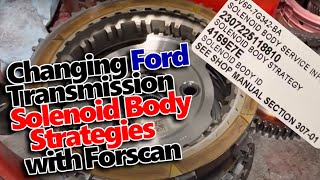
- If a new solenoid body is installed, the new solenoid characterization/strategy ID must be programmed into the TCM using a tool like FORScan. 🎬 Watch how to program a 6F35 transmission using FORScan
- If all components test good, the final step would be to diagnose the PCM, but this is very rare.
Parts You'll Likely Need
- Transmission Solenoid Body Assembly
(OEM #AL8Z-7G391-A)— This is the most direct fix for a failed Shift Solenoid 'E' in the 6F35 transmission. It replaces all the shift solenoids as a single unit, preventing future failures of the other original solenoids. This part is also listed under the remanufactured number AL8Z-7G391-DRM.
Trusted brands: Motorcraft, Rostra Precision Controls
OEM price range: $350-$500
Aftermarket price range: $200-$350 - Automatic Transmission Fluid
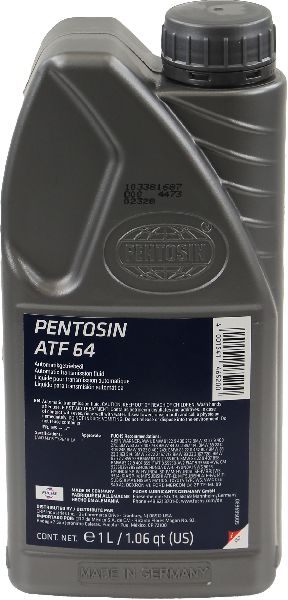
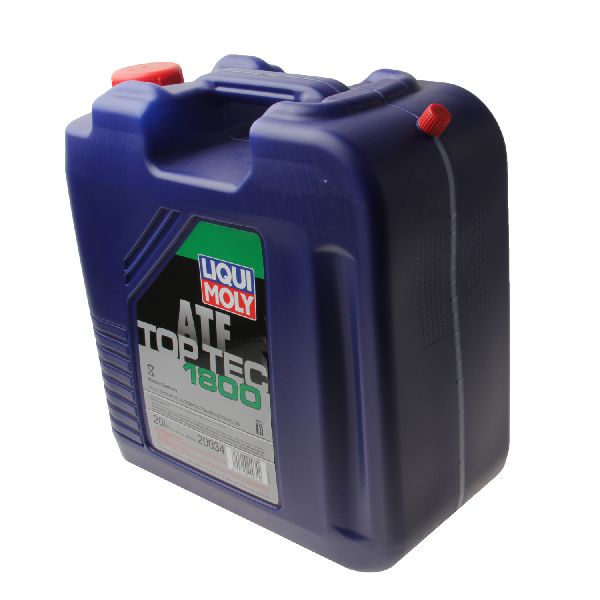
(OEM #XT-10-QLVC)— Required for any service that involves opening the transmission. The Ford 6F35 transmission requires Motorcraft MERCON LV fluid. Using the incorrect fluid can cause shifting problems.
Trusted brands: Motorcraft, Valvoline MaxLife LV, Castrol Transmax LV
OEM price range: $8-$12 per quart
Aftermarket price range: $7-$10 per quart
Related Codes That Often Appear With This One
- P2704 — This code relates to 'Transmission Friction Element E Apply Time Range/Performance'. It often appears with P0771 on Ford vehicles, including the Edge, indicating a problem in the same clutch circuit that Solenoid E controls. The provided NHTSA TSBs for other Ford models confirm this pairing.
- P0985 / P0986 — These codes are more specific electrical fault codes for the Shift Solenoid E Control Circuit, indicating a low (short to ground) or high (open circuit) condition, respectively. Seeing one of these alongside P0771 strongly points to an electrical problem in the wiring or the solenoid coil itself, rather than a mechanical blockage.
- P0751-P076F — Any code in this range relates to other shift solenoids (A, B, C, D, F). If multiple solenoid codes are present, it points more strongly toward an electrical issue, a fluid problem, or a failing TCM rather than a single faulty solenoid.
Platform-Specific Known Issues
- While not directly linked to P0771, a Customer Satisfaction Program (21N12) was issued for some 2017-2019 Fusions with the 1.5L engine for coolant intrusion into the cylinders, which can cause major engine problems.
- A widespread recall (NHTSA 22S43) was issued for the shifter cable bushing on 2013-2016 Fusions. A failed bushing can prevent the vehicle from being in the gear selected by the driver, potentially allowing it to roll away when in Park. This does not cause code P0771 but is a critical transmission-related safety issue for the platform.
Mechanic-Grade Diagnostic Values
- Shift Solenoid 'E' (SSE) Coil Resistance — expected: 19.05 - 27.95 Ω (Ohms) at 68-86°F (20-30°C). Failure: A reading of near-zero ohms indicates a short circuit. A reading of infinite resistance (OL) indicates an open circuit. Any reading significantly outside the specified range for a given temperature suggests a faulty solenoid coil.
Hidden / Shadow Codes Worth Checking
- P0985: Shift Solenoid 'E' Control Circuit Low. This indicates the circuit is shorted to ground. (see via Professional scan tools like Ford IDS or advanced tools like FORScan.)
- P0986: Shift Solenoid 'E' Control Circuit High. This indicates an open in the circuit (broken wire or disconnected connector). (see via Professional scan tools like Ford IDS or advanced tools like FORScan.)
Scan Tool Commands That Help
- FORScan: Clear Transmission Adaptive Tables — This service function should be run before programming a new solenoid body to reset the transmission's learned shift parameters.
- FORScan: Transmission Characterization Update — This is a mandatory step after replacing the solenoid body assembly. It programs the unique 16-digit Solenoid Strategy ID from the sticker on the new part into the TCM. Failure to do this will result in poor shift quality and potential transmission damage.
- FORScan: Halt/Disable Adaptive Learning — Some users report disabling the adaptive learning function after clearing the tables provides a more consistent shift feel, especially on higher-mileage vehicles. This freezes the shift strategy.
Wiring & Ground Locations
- C175T — This is the 50-pin connector that links the main engine wiring harness to the transmission components, including the solenoids. It is a critical junction point for testing the solenoid circuit from outside the transmission.. A corroded pin or damaged wire at this connector can cause an open or short in the Shift Solenoid E circuit, triggering code P0771. Testing for continuity and voltage at the specific pins for Solenoid E in this connector is a key diagnostic step before opening the transmission.
Real Owner Repair Stories
- YouTube video by a transmission specialist (Precision Transmission) (2016 Ford Escape with 6F35 transmission) — A Shift Solenoid E code was present, along with metal contamination in the transmission.
❌ Tried (didn't work) The initial diagnosis might point to replacing the solenoid body, but the actual cause was deeper.
✅ What actually fixed it Upon disassembly of the valve body, the technician found that a plastic piece from a broken internal transmission filter had traveled through a fluid passage and physically jammed one of the valves in the valve body, preventing it from moving. This mechanical blockage mimicked a solenoid failure. The fix required replacing the valve body and addressing the source of the broken filter.
OEM Part Supersession History
AL8Z-7G391-A→AL8Z-7G391-A (Reman: AL8Z-7G391-DRM)— This part number appears to be stable for the Gen 1 6F35 transmission used in this Fusion generation.
Heads up: Ensure the solenoid body purchased is for the correct generation of the 6F35. Also, the Solenoid Strategy ID sticker MUST be present and legible on the new part for programming.
Model Year Variations Within This Range
- 2013-2020: While the 6F35 was used throughout this period, there were minor running changes to valve body design and software calibrations. However, the fundamental causes and repair procedures for P0771 remain the same. All non-hybrid models use the 6F35; it was not replaced by the 8-speed 8F35 in the Fusion as it was in the 2020 Escape.
Diagnostic Flowchart
Other Known Issues on This Vehicle
Issues unrelated to this code that are worth knowing about as an owner of this generation:
- 1.5L EcoBoost Coolant Intrusion 🔴 High — Common on 2014-2019 Fusions with the 1.5L engine. Can occur under 100k miles. Leads to misfires, white smoke, and eventual engine failure. (Ref: TSB 20-2100, Customer Satisfaction Program 21N12)
- Shifter Cable Bushing Failure 🔴 High — Very common on 2013-2016 models. The bushing degrades, causing a disconnect between the shifter and the transmission. The car may not be in the gear selected (e.g., not in Park when it appears to be). (Ref: Ford Recall 18S20, 22S43)
- Power Steering Failure 🟠 Medium — More common on earlier models of the generation (2013-2014), but can occur on others. May require expensive replacement of the entire steering rack assembly.
- Harsh or Delayed Shifting (General) 🟠 Medium — A common complaint related to the 6F35 transmission, sometimes resolved with software updates or fluid changes, but can be a precursor to internal issues.
- Engine Leaks and Overheating (Early Models) 🔴 High — The 2013 model year, in particular, was subject to recalls for engine oil and coolant leaks that posed a fire risk. (Ref: Yes, multiple recalls on early models.)
Used vs. New Parts: Buying Guide for This Vehicle
When a used part is the smart pick: For this specific repair, using a part from a junkyard is strongly discouraged. The risk of getting a part with existing wear or a missing/illegible Solenoid Strategy ID sticker is very high.
Donor-vehicle mileage cap: roughly under 40000 miles for the part to have meaningful remaining life.
What to inspect on the donor part:
- The Solenoid Strategy ID sticker must be attached and perfectly legible. Without it, the part cannot be correctly programmed to the vehicle.
- Inspect connectors for any signs of corrosion, damage, or fluid intrusion.
- Ask for the donor vehicle's VIN to verify it had low mileage and no reported transmission issues.
OEM-only on this vehicle (don't cheap out):
- Transmission Solenoid Body Assembly
Aftermarket brands forum-validated for this vehicle:
- Motorcraft (OEM)
- Rostra Precision Controls (Often cited as a reliable aftermarket alternative)
Brands owners have reported issues with on this vehicle:
- Unnamed, low-cost brands from online marketplaces are a significant gamble. Forum discussions are filled with stories of cheap aftermarket solenoid bodies failing quickly or being defective out of the box.
Real Owner Stories
Aggregated from forums and TSBs cited above. Mileages and costs reflect what owners reported in those sources.
2019 Ford Edge (8F35 Transmission)
Symptoms: "park not available" message, rough shifts, and the transmission not engaging properly.
What fixed it: The owner identified the issue alongside codes P0771 and P2704, indicating a failure in the transmission's clutch/solenoid E circuit.
Source hint: Ford Edge Forum: '"park not available" rough shifts not engaging p0771, p2704 codes'
Related OBD-II Codes
Frequently Asked Questions
Can I just replace the single Shift Solenoid 'E' on my 2013-2020 Ford Fusion?
Is there a recall for the transmission issues causing P0771 on my Fusion?
What type of transmission fluid should I use for my 2013-2020 Fusion to prevent solenoid sticking?
Do I need to program anything if I replace the solenoid body on my Fusion?
My 2017 Fusion 1.5L has P0771 and engine misfires; are they related?
Can I check the transmission fluid level myself on a 2015 Fusion?
Helpful Videos

![Change 6F35 Transmission Fluid 09-19 Ford Escape, Fusion, and Edge [OEM process to check level]](https://img.youtube.com/vi/uqeqjceKtU0/mqdefault.jpg)
Used OEM Parts in Stock

New Aftermarket Parts Available


The information in this article is provided for general reference and educational purposes only. Vehicle specifications, procedures, and part compatibility can vary by production date, trim level, and region. Always consult your vehicle's factory service manual and verify part numbers before purchasing or performing repairs. Safety-critical components such as airbags, seat belts, and braking systems should be installed by a qualified professional.
- Ford Fusion:
- 🎬 Helpful Videos
- 🛍️ Shop This Part
- What's Unique About the 2013-2020 Ford Fusion
- Symptoms You May Notice
- Most Likely Causes
- Rare But Worth Checking
- Diagnosis Steps
- Parts You'll Likely Need
- Related Codes That Often Appear With This One
- Platform-Specific Known Issues
- Mechanic-Grade Diagnostic Values
- Hidden / Shadow Codes Worth Checking
- Scan Tool Commands That Help
- Wiring & Ground Locations
- Real Owner Repair Stories
- OEM Part Supersession History
- Model Year Variations Within This Range
- Diagnostic Flowchart
- Other Known Issues on This Vehicle
- Used vs. New Parts: Buying Guide for This Vehicle
- Real Owner Stories
- 2019 Ford Edge (8F35 Transmission)
- Related OBD-II Codes
- Frequently Asked Questions
- 🎟️ Get 5% Off