

OBD-II Code P0770: Shift Solenoid 'E' Malfunction
The Ultimate Guide to P0770: What It Means, Why It Triggers, and How to Fix It for Good
- Check your transmission fluid first; dark, burnt fluid or a single $50 faulty solenoid causes over 80% of P0770 codes, not a catastrophic transmission failure.
- Stop driving at highway speeds immediately; driving without torque converter lock-up generates extreme heat that turns a $300 solenoid repair into a $4,000 transmission rebuild.
- Identify your specific part name before ordering, as Toyota calls this the 'SL Solenoid' (11-15 Ohms) while Honda integrates it into an external linear solenoid pack.
- Scan for companion codes like P0117; a faulty $30 Engine Coolant Temperature (ECT) sensor prevents the computer from commanding lock-up and perfectly mimics a transmission failure.
What Does P0770 Mean?

P0770 means your Powertrain Control Module (PCM) detected a malfunction with 'Shift Solenoid E'. This electro-hydraulic valve directs transmission fluid to execute gear shifts and, in most vehicles, controls the Torque Converter Clutch (TCC). The TCC locks the engine's output to the transmission's input at cruising speeds, creating a 1:1 mechanical link for fuel economy. When P0770 triggers, the TCC fails to engage, causing high highway RPMs and poor fuel efficiency.
Technical definition: The PCM triggers P0770 when it detects a discrepancy between the commanded solenoid state and the actual gear ratio. The computer monitors engine RPM and transmission shaft speeds; if it commands TCC lock-up via Solenoid E but detects significant RPM slip, it logs the code. This fault stems from electrical circuit failures, stuck mechanical plungers, or hydraulic blockages.
Can I Drive With P0770?
Yes, But With Caution. You can drive short distances (under 50 miles) at city speeds, but highway driving is strongly discouraged. The transmission cannot engage the torque converter lock-up clutch. Continuing at high speeds generates excessive heat that rapidly degrades fluid, burning out clutch packs and turning a $300 solenoid repair into a $4,000 rebuild.
Common Causes

- Low, Dirty, or Incorrect Transmission Fluid (Very Common) — Old, burnt fluid becomes thick with sludge and microscopic metal debris. This abrasive mixture clogs the transmission filter, blocks tiny passages in the valve body, and causes the solenoid's plunger to stick.
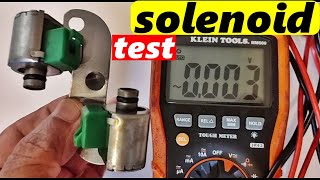
- Failed Shift Solenoid 'E' (Common) — The solenoid's internal electrical coil burns out over time (creating an open or short circuit 🎬 Watch: How to test a shift solenoid with a multimeter.), or its internal plunger becomes mechanically stuck.
- Wiring Harness or Connector Issues (Common) — Wires inside the hot transmission pan become brittle and break. External connectors suffer from corrosion, moisture intrusion, or physical damage, interrupting the signal from the TCM.
- Failed Torque Converter (Less Common) — A mechanical failure within the torque converter's lock-up clutch prevents engagement. The computer sees the failure to lock up and incorrectly blames the control solenoid. 🎬 See this guide on common failing torque converter symptoms.
- Worn Transmission Valve Body (Less Common) — The valve body's complex maze of channels warps from heat or scores from metal debris. Even with a perfect solenoid, a damaged valve body prevents correct fluid routing.
- Faulty Engine Coolant Temperature (ECT) Sensor (Rare) — The TCM prevents torque converter lock-up until the engine warms up. A faulty ECT sensor reporting a cold engine stops the TCM from activating Solenoid 'E', mimicking a transmission fault.
- Failing Powertrain/Transmission Control Module (PCM/TCM) (Rare) — A failed driver circuit within the computer module prevents it from sending the correct signal to the solenoid. Diagnose this only after eliminating all other possibilities.
Symptoms

- Transmission Won't Shift Into Highest Gear / No Overdrive — Engine RPM runs unusually high at highway speeds (e.g., 3000 RPM at 65 MPH instead of 2200 RPM) because the torque converter fails to lock up.
- Check Engine Light is On — The PCM/TCM immediately illuminates the Check Engine Light when the P0770 fault is detected.
- Significantly Decreased Fuel Economy — Because the engine runs at higher RPMs during cruising, fuel consumption noticeably increases.
- Harsh, Erratic, or Delayed Shifting — The transmission slams into gear, hesitates before shifting, or slips between gears as the TCM struggles to compensate.
- Engine Stalling When Coming to a Stop — Occurs if the solenoid or TCC gets stuck ON. The engine remains mechanically coupled to the wheels, stalling the vehicle when stopping.
- Vehicle Enters 'Limp Mode' — To prevent catastrophic damage, the TCM locks the transmission in a single gear (usually 2nd or 3rd) and severely limits speed.
- Transmission Overheating (also visible on scanner) — Constant fluid shearing from a slipping torque converter generates massive excess heat, potentially triggering a transmission temperature warning light.
Diagnostic Flowchart
Tap your situation to follow the diagnostic path that matches what you're seeing on this code.
Common Fixes & Costs
- Transmission Fluid and Filter Change — Parts: $50-$150, Labor: $150-$300, ~1.5 hr book time (Intermediate)
- Replace Shift Solenoid 'E'
— Parts: $50-$150, Labor: $200-$450, ~2.5 hr book time
(Advanced)
: OEM 35280-33010 (SL Solenoid) (Alt: Aisin SOL-6010)
: OEM 28250-P6H-024 (Alt: Beck/Arnley 259-1010) - Replace Transmission Solenoid Pack
— Parts: $150-$500, Labor: $300-$600, ~3 hr book time
(Professional)
: OEM 68353383AB (Alt: Dorman 609-040) - Replace Molded Lead Frame (Ford)
— Parts: $200-$400, Labor: $400-$700, ~4.5 hr book time
(Professional)
: OEM AL3Z-7G276-D (Alt: Dorman 609-040) - Repair or Replace Wiring Harness — Parts: $20-$200, Labor: $200-$500, ~3.5 hr book time (Professional)
- Replace Engine Coolant Temperature (ECT) Sensor — Parts: $25-$70, Labor: $75-$150, ~0.8 hr book time (Intermediate)
Used vs. New Parts: Buying Guide
When a used part is worth it: A used OEM single shift solenoid from a low-mileage donor vehicle is cost-effective for older, high-mileage vehicles where a new part represents a significant portion of the car's value.
Donor-vehicle mileage cap: roughly under 80000 miles for the part to have meaningful remaining life.
Donor quality checklist:
- Verify the donor vehicle was not scrapped due to transmission failure.
- Match the part number exactly; solenoids look identical but have different resistance values.
- Inspect the electrical connector for corrosion.
Decision logic:
- If The part is a complete solenoid pack or a molded lead frame. → Buy new OEM. The labor to replace these is too high to risk a used part failing.
- If Vehicle is less than 10 years old. → Buy new OEM to guarantee correct performance and longevity.
- If The vehicle is over 15 years old and the repair is strictly budget-driven. → A used single solenoid is acceptable, but carries a higher risk of premature failure.
Warranty tradeoff: Used parts offer a 30-90 day warranty on the part only. New OEM parts carry a 1-year warranty.
Worst-case if a used part fails: $300-$600 to pay for repeat labor to drop the transmission pan.
What Happens If You Wait — Timeline
- 0-1 month: Code P0770 sets. The TCC fails to lock up on the highway. Engine RPMs run 500-800 RPM higher than normal at cruising speeds. (MPG impact: 5-10%% · Added cost: $20-$60 in wasted fuel.)
- 1-4 months: Constant slipping generates excessive heat. Transmission fluid overheats, breaks down, darkens, and acquires a burnt smell. (MPG impact: 10-15%% · Added cost: $200-$400 for a transmission fluid flush, which may not solve the problem if wear has begun.)
- 4-8 months: Burnt fluid causes accelerated wear. Internal rubber seals harden and crack. Clutch packs slip and burn. Shifting becomes harsh in all gears. (MPG impact: 15-25%% · Added cost: $500-$1,200 as damage spreads to the valve body and clutch packs.)
- 8+ months: Catastrophic failure. The transmission overheats severely, destroying clutches and warping hard parts. The vehicle loses the ability to move. (MPG impact: >25% (or vehicle is undrivable)% · Added cost: $2,500-$5,000+ for a complete transmission rebuild or replacement.)
Cost of Not Fixing It
- 0-1 month: A 5-15% decrease in fuel economy due to higher cruising RPMs. (Added cost: $20-$50 in extra fuel costs.)
- 1-6 months: Constant slipping generates excess heat, causing fluid breakdown and accelerated wear on internal seals and clutches. (Added cost: $250-$500 for a transmission flush, hoping to prevent further damage.)
- 6+ months: Catastrophic transmission failure. Overheated fluid cooks internal seals, warps the valve body, and destroys clutch packs. (Added cost: $2,500-$5,000+ for a complete transmission rebuild or replacement.)
Diagnosis Steps

- Check Transmission Fluid Level and Condition
Verify the fluid is at the correct level when hot. Healthy fluid is bright red. If it's brown, black, smells burnt, or has glittery metal particles, you have internal wear.
Tools: Rag, Transmission Dipstick (Beginner) - Scan for All Powertrain Codes
Check for companion codes. P0773 indicates a strict electrical fault. P0117 (ECT sensor) means the engine thinks it's cold, preventing lock-up.
Tools: OBD-II Scanner (Beginner) - Inspect External Wiring and Connectors
Perform a visual inspection of the main transmission wiring harness connector. Look for pushed-out pins, corrosion, or melted wires.
Tools: Flashlight (Intermediate) - Test Solenoid Electrical Resistance
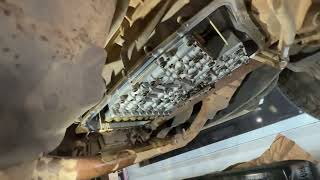
Drop the transmission pan, disconnect the solenoid, and measure resistance across its pins. Compare to specs (e.g., Toyota SL is 11-15 Ohms, Ford 6R80 is 10.5-18 Ohms). 'OL' means open; near-zero means shorted. Both require replacement.
Tools: Multimeter, Socket set, Drain pan, Service manual (Advanced) - Test Solenoid Activation (Click Test)
Briefly apply 12V power and ground to the solenoid pins. A healthy solenoid produces a sharp 'click'. No click means it is mechanically stuck.
Tools: 12V power source, Fused jumper wires (Advanced) - Pro Tip: Scan Tool Control Circuit Test
Use a bidirectional scanner to command Solenoid 'E' on and off while driving. Monitor the TCC Slip Speed PID; it should drop to <50 RPM when commanded on. If slip remains >200 RPM, the issue is hydraulic or mechanical.
Tools: Bidirectional Scan Tool (Professional) - Pro Tip: Transmission Line Pressure Test
Connect a pressure gauge to the transmission test port. Command the TCC solenoid on. A significant pressure drop indicates a hydraulic circuit problem, like a clogged valve body or failing pump.
Tools: Transmission Pressure Gauge Set, Service Manual (Professional) - Inspect Valve Body and Internal Harness
Inspect the valve body for heavy sludge buildup around the solenoid bore. Examine the internal wiring harness for heat damage or brittle plastic connectors.
Tools: Flashlight, Inspection mirror (Advanced)
When This Code Triggers (Freeze-Frame Conditions)
- Engine Coolant Temp: 180-200°F (The PCM requires the engine to reach full operating temperature before commanding torque converter lock-up.)
- Vehicle Speed: 45-65 mph (The fault logs at steady highway cruising speeds when the computer commands the TCC to engage.)
- Engine RPM: 1800-3000 RPM (RPM runs higher than normal for the given speed because the torque converter slips instead of locking.)
- Engine Load: 20-50% (Occurs under light to moderate engine load, typical of maintaining speed on a flat highway.)
Related Codes
- P0700 — A general transmission fault code. It provides no specific information but always accompanies a specific code like P0770.
- P0773 — Points specifically to an electrical problem in the Solenoid 'E' circuit. If present, the diagnosis is purely electrical, not mechanical or hydraulic.
- P0741 — Set when the computer commands lock-up and definitively measures clutch slip. If present alongside P0770, focus on a mechanical or hydraulic cause.
- P0771, P0772 — Specific performance codes indicating Solenoid 'E' is Stuck Off (P0771) or Stuck On (P0772).
Climate & Environmental Factors
- Extreme Cold: Thickens transmission fluid, increasing hydraulic resistance and making it harder for solenoids to actuate properly on a cold start.
- Extreme Heat: Accelerates fluid breakdown. Thinned, overheated fluid loses lubrication properties, causing erratic solenoid operation.
- High Humidity / Coastal Air: Accelerates corrosion on external wiring harness connectors and pins, interrupting the TCM signal.
How to Talk to a Mechanic About This Code
Say this: "I have a P0770 code for Shift Solenoid 'E'. I'm experiencing [mention specific symptoms]. I'd like you to start by checking the transmission fluid condition, inspecting the external wiring, and testing the solenoid circuit resistance before recommending a major repair."
This directs the mechanic to follow a logical, component-level diagnostic path instead of immediately quoting a full transmission rebuild.
Avoid saying:
- 'My check engine light is on, can you fix it?'
- 'The car is shifting weirdly.'
- 'Just do whatever it takes to fix it.'
Questions to ask before authorizing the repair:
- What was the condition and level of the transmission fluid?
- Did you test the resistance of the solenoid itself? What was the reading in Ohms?
- If you recommend a rebuild, can you explain why a solenoid or valve body repair is not sufficient?
Where to Take It: Dealer vs Independent vs Chain
- Dealer:
Good for in-warranty work, but the most expensive option for an out-of-warranty vehicle.
Best for: Vehicles still under powertrain warranty., Complex, manufacturer-specific issues like a faulty molded lead frame on a Ford.
Downsides: Highest labor rates., Quick to recommend full transmission replacement over component-level repair. (Typical cost: +50% vs. baseline) - Independent Shop:
Best fit. An independent transmission specialist is most likely to correctly diagnose and perform a cost-saving component-level repair.
Best for: Out-of-warranty vehicles., Shops specializing in transmission repair with deep diagnostic expertise.
Downsides: Quality varies; ensure they have ASE-certified technicians. (Typical cost: +0% vs. baseline) - Chain Shop:
AVOID for P0770 diagnosis. They are generally not equipped for the in-depth electrical and hydraulic diagnostics required.
Best for: Simple fluid and filter changes.
Downsides: Lack specialized diagnostic equipment for complex internal transmission work. (Typical cost: -10% vs. baseline)
When to Walk Away From the Repair
If the estimated repair cost for a transmission rebuild exceeds 50% of your car's private-party value, seriously consider selling the car instead of repairing it.
- Car worth $4000, fix is $2500: Walk away. The repair cost is over 60% of the car's value.
- Car worth $10000, fix is $3000: Fix it. The repair cost is 30% of the car's value. A rebuilt transmission provides several more years of service.
- Car worth $3000, fix is $450: Fix it. A confirmed solenoid or wiring issue is a low-cost repair well under the threshold.
What Scan Tool You Need for This Code
Minimum: A scanner that reads manufacturer-specific transmission codes and displays live data for the Transmission Control Module (TCM).
A cheap code reader won't show critical diagnostic data like TCC slip speed or the solenoid on/off command, leaving you guessing at the cause.
Budget: Foxwell NT301 / Ancel BD310 (~$70) — Reads and clears generic transmission codes. Lacks access to manufacturer-specific PIDs needed for a definitive diagnosis.
Mid-range: BlueDriver Pro / Foxwell NT510 Elite (~$120) — Reads manufacturer-specific codes and graphs live data (TCC slip, solenoid commands). Essential for distinguishing between a sensor, solenoid, or torque converter issue.
Professional: Autel MaxiCOM MK808S / XTOOL D7 (~$500) — Provides full bidirectional control to command the solenoid on and off directly from the tool. Essential for confirming if the solenoid is truly the problem before dropping the pan.
How to Clear the Code After You Fix It
- Use an OBD-II scan tool to clear the diagnostic trouble codes.
- Perform a specific transmission drive cycle to allow the computer to relearn shift points.
- Check for pending codes after the drive cycle is complete.
Drive cycle (~30 minutes): Cold start the engine. Idle in Park for 2 minutes. Drive in stop-and-go city traffic. Accelerate onto a highway and maintain 55-65 mph for 10 minutes. Decelerate smoothly, park, and idle for 2 minutes before shutting off.
Readiness monitors affected: Transmission Control Module (TCM) adaptive learn, Comprehensive Component Monitor (CCM)
Before emissions retest: drive at least 100 miles to fully set monitors.
Watch out for:
- Disconnecting the battery clears the code but erases all readiness monitors, guaranteeing an emissions test failure.
- The code returns immediately if the underlying mechanical or electrical issue remains unfixed.
Will This Fail Emissions / State Inspection?
Yes — this code typically fails an OBD-II emissions inspection.
- California: An active Check Engine Light is an automatic failure. Clearing the code without repair results in a 'Not Ready' failure.
- New York: P0770 causes an automatic failure of the NYS OBD-II emissions inspection.
- Texas: In emissions-testing counties, an illuminated Check Engine Light prevents vehicle registration until repaired.
Most Commonly Affected Vehicles
- Toyota Camry (1997-2003) — Extremely common on A140E transmissions. The part is called 'Shift Solenoid SL' or 'No. 3 Solenoid'.
- Toyota Tacoma / 4Runner (1997-2004) — Prone to P0770 at high mileage due to the failure of the TCC lock-up solenoid.
- Honda Accord / Civic / Odyssey (2000-2010) — Solenoids are external to the main case and identified by brown or black electrical connectors. Diagnosis involves testing multiple solenoids in a pack.
- Ford F-150 (2009-2014) — On 6R80 transmissions, P0770 is frequently caused by a faulty molded lead frame requiring a PCM reflash after replacement.
- Hyundai / Kia Elantra / Sonata (2001-2012) — Corresponds to the 'RED solenoid' and forces the transmission into a 3rd gear fail-safe mode. Internal harness failure is a known issue.
Manufacturer-Specific Notes
- Toyota / Lexus: Toyota rarely uses the 'E' designation. The solenoid responsible for P0770 is called the 'SL' solenoid (Torque Converter Lock-Up) or 'Shift Solenoid No. 3'.
- Ford: On 6R80 transmissions, internal speed sensors and wiring are integrated into a 'molded lead frame'. Failure of this frame is the primary cause of solenoid codes.
- Honda / Acura: The TCC solenoid is part of an external dual or triple linear solenoid pack, making it much easier to access and replace than internal solenoids.
- GM / Chrysler: Individual solenoids are not sold separately. They are integrated into a larger 'solenoid pack' that must be replaced entirely if one solenoid fails.
Real Owner Stories
2000 Toyota 4Runner - The Intermittent Highway Code
Owner reported a P0770 code appeared after a 50-mile highway trip. Fluid was clean, and there were no noticeable shifting problems.
What they tried:
- Checked fluid level and condition.
- Cleared the code to see under what specific driving conditions it returned.
- Replaced the single TCC/SL solenoid after the code returned consistently on long drives.
Outcome: Replacing the single lock-up solenoid resolved the issue. The fault was in its early stages, only failing when the coil became heat-soaked.
Lesson: If P0770 appears without drivability symptoms, the issue is likely in its early stages. Clearing the code and noting the exact conditions when it returns provides a critical diagnostic clue.
1999 Toyota Camry - The Misleading 'Transmission Failure' Diagnosis
A mechanic immediately recommended a $3,000 transmission replacement for a P0770 code, despite the car driving perfectly fine in the city.
What they tried:
- Sought a second opinion from an independent transmission specialist.
- Performed a DIY repair by dropping the pan and replacing only the lock-up solenoid (Toyota Part #85420-20110).
Outcome: Replacing the single faulty solenoid resolved the code for under $150 in parts and fluid, saving thousands.
Lesson: P0770 is frequently misdiagnosed as a catastrophic transmission failure. Always insist on a solenoid resistance test before agreeing to a rebuild.
3rd Gen Toyota 4Runner - The Torque Converter Rabbit Hole
Owner experienced P0770 and engine stalling when coming to a stop, pointing to a TCC stuck ON.
What they tried:
- Replaced the shift solenoid, but the stalling persisted.
- Had the transmission rebuilt and a new torque converter installed.
Outcome: The transmission required a full rebuild because the torque converter had failed internally, sending metal debris through the valve body.
Lesson: Stalling at stops almost always points to a mechanical failure in the torque converter itself, not just an electrical solenoid fault.
How to Prevent This Code From Triggering
- Perform regular transmission fluid and filter changes (Every 30,000-60,000 miles.) — Clean fluid lubricates effectively, while a new filter removes clutch material. This prevents abrasive particles from clogging solenoid passages.
- Use only the manufacturer-specified transmission fluid (Every time fluid is added or changed.) — Using the wrong fluid type causes incorrect hydraulic pressure, leading to solenoid and clutch control failures.
- Install an external transmission cooler (One-time installation for vehicles used for towing or in hot climates.) — Reduces operating temperatures by 20-50°F, dramatically slowing fluid breakdown and extending the life of solenoids and clutches.
Frequently Asked Questions
Can I just clear the P0770 code and keep driving?
Clearing the code only provides a temporary fix; it returns when the TCM runs its self-test. Ignoring the root cause leads to transmission overheating and severe internal damage. Fix the underlying issue to avoid a multi-thousand dollar rebuild.
My mechanic quoted me $3,000 for a new transmission for a P0770 code. Is this right?
No, this is often a misdiagnosis by shops calling P0770 a 'death code'. In most cases, the fix is a much less expensive component like the solenoid, fluid, or wiring. Always get a second opinion from a transmission specialist who performs detailed electrical tests.
What is the most common misdiagnosis for P0770?
The most common mistake is replacing the shift solenoid without checking fluid condition or testing the wiring. Mechanics also frequently overlook a faulty Engine Coolant Temperature (ECT) sensor. A bad ECT sensor prevents TCC lock-up and perfectly mimics a solenoid failure.
Can a bad battery or alternator cause a P0770 code?
Yes, the TCM and solenoids are highly sensitive to voltage drops. A weak battery or failing alternator provides unstable voltage, causing the TCM to falsely trigger solenoid codes. Always test your charging system first if you experience other electrical gremlins.
Is replacing a shift solenoid a DIY job?
It is an advanced DIY job requiring you to safely raise the vehicle, drain hot fluid, and remove the transmission pan. You must work meticulously to avoid introducing dirt into the valve body. Stop and take it to a shop if you lack the tools to safely drop the pan or test electrical resistance.
My car has a P0770 but shifts perfectly. What could be the cause?
This indicates an intermittent electrical issue or a very early stage of failure. The TCM detected a momentary circuit fault during a self-test that hasn't impacted performance yet. The problem will worsen over time, so diagnose the wiring and fluid now.
Should I use an OEM or aftermarket shift solenoid?
Always use OEM (Original Equipment Manufacturer) parts for transmission components. Transmissions require precise electrical resistance and hydraulic flow characteristics to shift correctly. An aftermarket solenoid that is slightly out of spec causes persistent shifting problems and returning codes.
Key Takeaways
- Check your transmission fluid first; dark, burnt fluid or a single $50 faulty solenoid causes over 80% of P0770 codes, not a catastrophic transmission failure.
- Stop driving at highway speeds immediately; driving without torque converter lock-up generates extreme heat that turns a $300 solenoid repair into a $4,000 transmission rebuild.
- Identify your specific part name before ordering, as Toyota calls this the 'SL Solenoid' (11-15 Ohms) while Honda integrates it into an external linear solenoid pack.
- Scan for companion codes like P0117; a faulty $30 Engine Coolant Temperature (ECT) sensor prevents the computer from commanding lock-up and perfectly mimics a transmission failure.
Helpful Videos




The information in this article is provided for general reference and educational purposes only. Vehicle specifications, procedures, and part compatibility can vary by production date, trim level, and region. Always consult your vehicle's factory service manual and verify part numbers before purchasing or performing repairs. Safety-critical components such as airbags, seat belts, and braking systems should be installed by a qualified professional.
- 🎬 Helpful Videos
- What Does P0770 Mean?
- Can I Drive With P0770?
- Common Causes
- Symptoms
- Diagnostic Flowchart
- Common Fixes & Costs
- Used vs. New Parts: Buying Guide
- What Happens If You Wait — Timeline
- Cost of Not Fixing It
- Diagnosis Steps
- When This Code Triggers (Freeze-Frame Conditions)
- Related Codes
- Climate & Environmental Factors
- How to Talk to a Mechanic About This Code
- Where to Take It: Dealer vs Independent vs Chain
- When to Walk Away From the Repair
- What Scan Tool You Need for This Code
- How to Clear the Code After You Fix It
- Will This Fail Emissions / State Inspection?
- Most Commonly Affected Vehicles
- Manufacturer-Specific Notes
- Real Owner Stories
- 2000 Toyota 4Runner - The Intermittent Highway Code
- 1999 Toyota Camry - The Misleading 'Transmission Failure' Diagnosis
- 3rd Gen Toyota 4Runner - The Torque Converter Rabbit Hole
- How to Prevent This Code From Triggering
- Frequently Asked Questions
- Can I just clear the P0770 code and keep driving?
- My mechanic quoted me $3,000 for a new transmission for a P0770 code. Is this right?
- What is the most common misdiagnosis for P0770?
- Can a bad battery or alternator cause a P0770 code?
- Is replacing a shift solenoid a DIY job?
- My car has a P0770 but shifts perfectly. What could be the cause?
- Should I use an OEM or aftermarket shift solenoid?
- Key Takeaways
- 🎟️ Get 5% Off