

P0771 on 2020-2023 Ford Explorer: Shift Solenoid 'E' Performance/Stuck Off Guide
P0771 on a 2020-2023 Ford Explorer is most often caused by sticking valves in the transmission's main control valve body, a known issue covered by multiple Ford Technical Service Bulletins. The fix typically involves replacing the main control valve body, which is a complex repair best left to a professional. In some cases, the issue can also be related to a failing CDF clutch drum inside the transmission.
- P0771 on your Explorer is very likely related to a known issue with the 10-speed transmission's main control valve body.
- Do not immediately assume the shift solenoid itself has failed; the problem is often the hydraulic valves that the solenoid controls.
- Reference Ford TSBs 22-2428 and 23-2250 when speaking with a service advisor, as they contain the official diagnostic and repair procedures.
- This is not a DIY-friendly repair. It requires professional-level tools and expertise for diagnosis and parts replacement.
- Driving with these symptoms can cause further, more severe transmission damage, so it's best to have it inspected promptly.
What's Unique About the 2020-2023 Ford EXPLORER
The 2020-2023 Ford Explorer uses a 10-speed automatic transmission (10R60) that is known to have issues with harsh or delayed shifting. Ford has released numerous Technical Service Bulletins (TSBs) acknowledging that for this code and others, the root cause is often not the solenoid itself, but rather sticking valves within the main control valve body. Later TSBs, like 23-2250, have expanded the diagnosis to also include potential failure of the CDF clutch drum sleeve, a separate internal mechanical part. This makes diagnosis different than on other vehicles, as the problem is frequently a specific mechanical/hydraulic failure in the valve body assembly or CDF drum rather than a simple electrical fault with the solenoid.
Diagnostic Flowchart
Tap your situation to follow the diagnostic path that matches what you're seeing on this vehicle.
Symptoms You May Notice
- Harsh, abrupt, or delayed gear shifts, particularly noted by some owners during the 3-5 upshift.
- Check Engine Light or Malfunction Indicator Lamp (MIL) is on.
- Transmission may feel like it's slipping or flaring (RPMs rise without acceleration) between gears.
- Vehicle may enter "limp mode," getting stuck in a single gear.
- Increased fuel consumption due to inefficient shifting.
- Loud clunking sounds when the transmission attempts to shift, especially when slowing down.
- Replacing only Shift Solenoid 'E' without addressing the underlying valve body issue. Given the prevalence of TSBs pointing to the main control valve body, simply swapping the solenoid may not provide a lasting fix.
- Performing a transmission fluid flush without addressing the root mechanical cause. While low or dirty fluid can cause problems, if the valve body or CDF drum is faulty, a fluid change will not solve the problem.
Most Likely Causes
- Sticking Valves in Main Control Valve Body 🔴 High Probability This is a well-documented issue for Ford's 10-speed transmissions in this year range, as cited in multiple TSBs (e.g., TSB 20-2403, TSB 22-2428, TSB 23-2250). The aluminum valve body can experience wear or warping, causing valves to stick and preventing proper hydraulic pressure control.
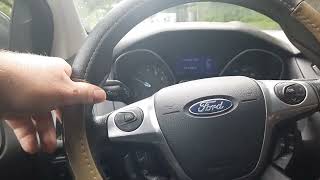
How to confirm: A professional technician will follow the diagnostic procedure outlined in the relevant TSB, which starts with a PCM reprogram and adaptive learning drive cycle. 🎬 Watch: How to perform a simple transmission adaptive relearn. If symptoms persist, inspection and replacement of the valve body is the next step.
Typical fix: Replacement of the main control valve body assembly. 🎬 Watch: A breakdown of Ford's harsh shifting TSB and fixes. This is a complex job that involves draining the fluid, dropping the pan, and carefully swapping the component.
Est. part cost: $500-$900 - Low or Contaminated Transmission Fluid 🟡 Medium Probability While not specific to the platform, the complexity of the 10-speed transmission makes it sensitive to fluid level and condition. A fluid leak or internal contamination from component wear can cause widespread issues.
How to confirm: Check the transmission fluid level and condition. The fluid should be at the correct level, red in color, and free of debris or a burnt smell. Note: The 10R60 transmission does not have a traditional dipstick, requiring a technician to check it from under the vehicle at a specific temperature. The correct fluid is Motorcraft MERCON ULV (Ultra-Low Viscosity).
Typical fix: Perform a transmission fluid drain-and-fill or flush with the correct Motorcraft MERCON ULV fluid (Part # XT-12-QULV for quarts). A simple fluid change is often attempted before more expensive repairs.
Est. part cost: $150-$300 - CDF Clutch Drum Failure 🟡 Medium Probability Later versions of Ford's TSBs (like 23-2250) added inspection and replacement of the CDF clutch cylinder sleeve as a potential cause. A bushing in the drum can move out of position, damaging a seal and causing severe, erratic shifting. This is a known failure point across the 10R transmission family.
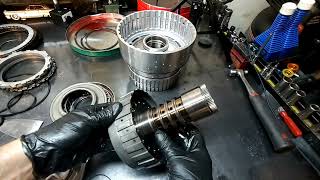
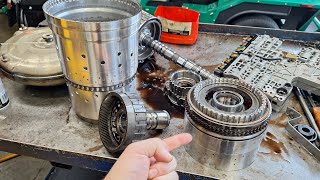
How to confirm: This is a diagnosis of exclusion. If a valve body replacement does not fix the issue, or if specific symptoms like flares into 4th and 6th gear are present, a technician will follow the TSB path that leads to inspecting the CDF drum. This requires significant transmission disassembly. 🎬 See a teardown showing exactly how the CDF bushing fails.
Typical fix: Replacement of the CDF clutch drum, which involves a partial or full transmission rebuild. Some owners have had entire transmissions replaced under warranty due to this issue.
Est. part cost: $200-$400 for the drum, but labor costs will be very high. - Failed Shift Solenoid 'E' ⚪ Low Probability While possible, the TSBs suggest the valve body or CDF drum are more frequent culprits for these symptoms on this platform. The code often points to a hydraulic or mechanical issue preventing the solenoid's action from having the desired effect, rather than an electrical failure of the solenoid itself.
How to confirm: A technician can test the solenoid's resistance with a multimeter and command it on/off with a high-level scan tool to check for an audible click. This requires dropping the transmission pan.
Typical fix: Replace the individual shift solenoid. However, since it's part of the valve body, and the valve body itself is the more likely failure point, replacing the entire valve body assembly is the recommended and more robust repair.
Est. part cost: $50-$150 for the solenoid, but labor is significant.
Rare But Worth Checking
- Wiring Harness or Connector Issue: Damage to the wiring leading to the transmission or corrosion in the main connector can interrupt the signal to the solenoid, mimicking a component failure. A visual inspection of the harness is a key diagnostic step.
- Powertrain Control Module (PCM) or Transmission Control Module (TCM) Fault: In rare cases, the control module itself can fail, but all other possibilities, especially the known TSB issues, should be ruled out first. Sometimes a software update (reflash) as prescribed by a TSB can resolve the issue without hardware replacement.
Diagnosis Steps
- Check for Technical Service Bulletins (TSBs) related to your vehicle's VIN. Specifically look for TSB 22-2428, TSB 23-2250, or any newer superseding bulletins for the 10R60/10R80 transmission.
- Scan the PCM/TCM for all stored trouble codes to see if other solenoid or gear ratio codes are present, which strengthens the case for a known TSB issue.
- Have a technician check the transmission fluid level and condition. This is critical but requires the vehicle to be on a lift and the fluid to be at a specific temperature. The fluid must be Motorcraft MERCON ULV.
- Inspect the transmission wiring harness and connectors for any visible damage, corrosion, or loose connections.
- If fluid and wiring are good, follow the diagnostic path from the relevant TSB. This typically starts with a PCM software update and an adaptive learning drive cycle.
- If software updates do not resolve the issue, the TSB will guide the technician to replace the main control valve body and/or inspect and replace the CDF clutch drum.
Parts You'll Likely Need
- Main Control Valve Body
(OEM #JL1Z-7A100-B (or superseding part number like ML3Z-7A100-A/B))— This is the most common cause of P0771 and related shifting issues on the 2020-2023 Explorer, as identified in multiple Ford TSBs. It contains the hydraulic valves that are prone to sticking.
Trusted brands: Motorcraft
OEM price range: $600-$900
Aftermarket price range: $450-$700 - Motorcraft MERCON ULV Automatic Transmission Fluid
(OEM #XT-12-QULV)— This is the required fluid for any service on the 10R60/10R80 transmission. A full service including valve body replacement will require several quarts.
Trusted brands: Motorcraft
OEM price range: $15-$25 per quart
Aftermarket price range: N/A (OEM fluid is strongly recommended)
Related Codes That Often Appear With This One
- P0751, P0756, P0761, P0766 — These are codes for other shift solenoids ('A', 'B', 'C', 'D'). When multiple solenoid codes appear with P0771, it strongly points to a systemic issue like the main valve body, low fluid, or a power/ground problem, rather than multiple individual solenoid failures.
- P0729, P0731-P0736 — These codes relate to incorrect gear ratios. They often accompany solenoid codes because a stuck solenoid or failing clutch directly causes the transmission to be in the wrong gear, which these sensors then detect.
Technical Service Bulletins (TSBs) & Recalls
- TSB 20-2403: The initial bulletin for 2020 models that first linked harsh shifts and DTC P0771 to sticking valves in the main control body.
- TSB 22-2428: Superseded earlier bulletins and expanded the vehicle list. It provided a more detailed diagnostic procedure, including software updates and valve body service, and introduced the CDF clutch sleeve as a possible cause.
- TSB 23-2250: Supersedes TSB 22-2428, further refining the service procedure and parts list for addressing the sticking valves and/or CDF clutch cylinder sleeve movement. This is a key document for current repairs.
Platform-Specific Known Issues
- Ford has issued multiple TSBs for the 10R60 and 10R80 transmissions used in the 2020-2023 Explorer. TSB 20-2403 first mentioned that DTCs including P0771 may be due to "sticking valves in the main control valve body". Subsequent TSBs like 22-2428 and 23-2250 supersede the original, providing an updated, multi-step repair procedure. This procedure may involve software updates, valve body replacement, and in more severe cases, inspection and replacement of a CDF clutch cylinder sleeve, which requires significant transmission disassembly.
Mechanic-Grade Diagnostic Values
- Shift Solenoid Resistance — expected: Approximately 11 to 15 Ω at 68°F (20°C).. Failure: A reading significantly outside this range, or an open/short circuit.
Scan Tool Commands That Help
- Ford IDS/FDRS: PCM - Transmission Accelerated Main Control Break In — This is a primary diagnostic step outlined in Ford TSBs 20-2403 and 23-2250. It is used to attempt to free sticking valves in the main control valve body before component replacement. A successful routine can resolve shifting issues without parts replacement.
- Ford IDS/FDRS, Forscan, high-end Snap-on: Clear Transmission Adaptive Tables — This function must be performed after any transmission repair, such as replacing the valve body, or as a first step before performing the adaptive learning drive cycle. It resets the transmission's learned shift strategy to factory defaults.
- Ford IDS/FDRS: Transmission Strategy Download / Solenoid Body Strategy — This is mandatory when replacing the main control (valve) body. The technician must enter the 13-digit solenoid body strategy number from the tag on the new part into the scan tool to ensure the PCM/TCM can control the new hardware correctly. Failure to do so can result in transmission damage or persistent drivability concerns.
- N/A - Manual Procedure: Adaptive Learning Drive Cycle — This specific driving procedure must be performed after clearing the adaptive tables or replacing major transmission components to allow the TCM to relearn shift pressures and timing. The procedure involves a series of light-throttle accelerations through all gears followed by gentle braking and shifting through P-R-N-D, repeated multiple times.
Wiring & Ground Locations
- C175T — This is a 52-pin connector at the Powertrain Control Module (PCM).. The C175T connector houses numerous circuits for transmission components, including various sensors and solenoids. While a specific pin for Shift Solenoid 'E' is not identified in public documents, a technician troubleshooting a persistent electrical fault would inspect this connector for corrosion, damage, or backed-out pins as a potential point of failure for the entire solenoid control system.
- TCCM (Transfer Case Control Module) — Located under the driver's seat, beneath the carpet and an HVAC vent.. While not the primary controller for this fault, the TCCM is an integral part of the powertrain control network. Its location under the carpet makes it susceptible to water damage, which could cause network communication issues that might manifest as various powertrain codes. A technician might check this location if multiple, seemingly unrelated powertrain codes are present.
Real Owner Repair Stories
- Reddit user on r/f150 (2020 F-150 with 10R80 transmission (shared with Explorer), 102k miles) — Started with a hard shift into 3rd on cold starts, which went away. Then developed a delayed shift into 4th. Eventually, RPMs would shoot up during acceleration as it failed to shift into higher gears, and the gear indicator on the dash would jump around randomly (e.g., 10th to 7th to 1st).
❌ Tried (didn't work) The user initially suspected a valve body issue based on common knowledge.
✅ What actually fixed it The dealership diagnosed a bad CDF drum. The quoted repair cost was approximately $6,500. This highlights a case where symptoms could be mistaken for a valve body, but the actual cause was the more deeply internal CDF drum. - YouTube video by a technician (2020 Ford Explorer with 10,000 miles) — Sudden onset of very hard, erratic shifting.
❌ Tried (didn't work) A simple test drive confirmed the issue was significant and not normal.
✅ What actually fixed it The technician performed the 'PCM - Transmission Accelerated Main Control Break In' routine using a scan tool, as prescribed by a TSB. This 2-hour software procedure cleared up almost all of the shifting issues without replacing any parts. A subsequent clutch relearn procedure resolved the final remaining downshift issue. - YouTube video by an owner (2020/2021 Ford Explorer) — When putting the car in Drive, it would take off rough, then hunt for gears before slamming into 2nd or 3rd and entering a limp mode.
❌ Tried (didn't work) Driving in 'Normal' mode would consistently trigger the problem.
✅ What actually fixed it The owner found that driving exclusively in 'Sport Mode' prevented the issue from recurring over a period of three weeks. While not a true repair, this suggests the issue is related to the shift strategy and pressure mapping in the default drive mode, which is what the TSB software updates and valve bodies aim to fix.
"I Checked Everything" — The Actual Cause
- In the context of this transmission code, the equivalent of a 'smoke test clean' scenario is when replacing the main control valve body does not fix the problem. TSB 23-2250 and owner experiences show that if a new valve body and software updates fail to resolve the harsh shifting and codes like P0771, the next likely culprit is a mechanical failure of the CDF clutch drum. The sleeve inside the drum can move, causing a hydraulic leak that mimics valve body symptoms.
OEM Part Supersession History
ML3Z-7A100-A→ML3Z-7A100-B— Part revision to address performance issues, likely related to sticking valves.
Heads up: When replacing the valve body (control assembly), it is critical to perform the Solenoid Body Strategy download with a factory scan tool. The new part comes with a 13-digit code that must be programmed into the PCM/TCM for correct operation.JL1Z-7A100-B (Referenced in Pass 2)→ML3Z-7A100-A/B (Example of supersession)— Ford frequently updates part numbers for the 10R80 valve body across different platforms (Explorer, F-150). The latest available part number should always be confirmed by VIN.
Heads up: Using a valve body from a different application (e.g., a Mustang part in an Explorer) may not work correctly even if it physically fits, due to differences in calibration and solenoid strategy. Always use the VIN-specific part.
Model Year Variations Within This Range
- 2020-2023: The official diagnostic procedure from Ford evolved. Early TSBs for 2020 models (like TSB 20-2403) primarily focused on performing a 'break-in' routine and replacing the main control valve body for harsh shifting issues. Later TSBs that cover up to 2023 models (like TSB 23-2250) expanded the procedure to include the inspection and potential replacement of the CDF clutch drum as a possible cause if the valve body replacement does not work. This means a 2020 model diagnosed in 2021 might have missed the CDF drum issue, whereas the same vehicle diagnosed in 2023 would be subject to the more comprehensive procedure.
Helpful Videos

Used OEM Parts in Stock


New Aftermarket Parts Available


The information in this article is provided for general reference and educational purposes only. Vehicle specifications, procedures, and part compatibility can vary by production date, trim level, and region. Always consult your vehicle's factory service manual and verify part numbers before purchasing or performing repairs. Safety-critical components such as airbags, seat belts, and braking systems should be installed by a qualified professional.
- Ford EXPLORER:
- 🎬 Helpful Videos
- 🛍️ Shop This Part
- What's Unique About the 2020-2023 Ford EXPLORER
- Diagnostic Flowchart
- Symptoms You May Notice
- Most Likely Causes
- Rare But Worth Checking
- Diagnosis Steps
- Parts You'll Likely Need
- Related Codes That Often Appear With This One
- Technical Service Bulletins (TSBs) & Recalls
- Platform-Specific Known Issues
- Mechanic-Grade Diagnostic Values
- Scan Tool Commands That Help
- Wiring & Ground Locations
- Real Owner Repair Stories
- "I Checked Everything" — The Actual Cause
- OEM Part Supersession History
- Model Year Variations Within This Range
- 🎟️ Get 5% Off