

P0757 on 2019-2022 Ford E-450 6.2L V8: Shift Solenoid 'B' Stuck On Causes and Fixes
P0757 on a Ford E-450 means the Shift Solenoid 'B' is stuck on, often causing harsh shifting, failure to shift, or getting stuck in gear. The most common fixes are checking for low or dirty transmission fluid, replacing the shift solenoid 'B' itself, or addressing related wiring issues. In some cases, particularly on these heavy-duty vehicles, it can indicate a more serious internal mechanical failure requiring professional diagnosis.
- P0757 means Shift Solenoid 'B' is stuck on, which severely impacts shifting.
- Always start diagnosis by checking the transmission fluid level and condition; low or dirty fluid is a common cause.
- The problem could be the solenoid itself, the wiring, or low/dirty fluid.
- Be aware that this code can sometimes point to a more serious internal mechanical failure, especially if code P2701 is also present. [TSB 26-2112]
- Due to the complexity and risk of further damage, professional diagnosis is strongly recommended for this code.
What's Unique About the 2019-2022 Ford E-450
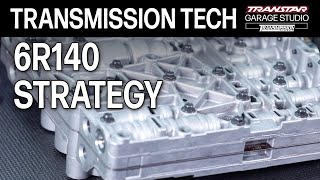
The 2019-2022 Ford E-450 with the 6.2L V8 engine uses the heavy-duty TorqShift 6-speed 6R140 automatic transmission. While P0757 points to an electrical solenoid, this code on heavy-duty platforms can be misleading. Ford has issued TSBs for other models (like TSB 26-2112 for the Explorer) where this code was caused by an internal *mechanical* failure of a one-way clutch. [TSB 26-2112] Given that E-450s are frequently subjected to high stress and heavy loads, a P0757 code warrants a careful diagnosis to rule out a more serious internal problem, like valve body bore wear or clutch failure, before simply replacing the solenoid.
Symptoms You May Notice
- Check Engine Light is on.
- Transmission gets stuck in a gear and will not upshift (e.g., stuck in 2nd or 3rd gear).
- Harsh, jerky, or delayed shifts, sometimes with a loud bang or clunk.
- Abruptly stopping or lurching. [ODI #11602736]
- Engine revs high between shifts (transmission slip). [ODI #11564701, 19]
- Inability to engage Drive or Reverse.
- Reduced fuel economy.
- Transmission enters 'limp mode', locking into a single gear (often 3rd or 5th) to protect itself.
- Immediately replacing the shift solenoid without checking the fluid condition first. Dirty fluid can cause a perfectly good solenoid to stick.
- Replacing an individual solenoid without programming the new solenoid's calibration/band number into the PCM, which will cause persistent shifting problems.
- Replacing the entire transmission when the problem is a simple wiring issue or a single solenoid.
- Blaming the solenoid when the root cause is a deeper internal mechanical failure, like a worn valve body or damaged clutch.
Most Likely Causes
- Low or Dirty Transmission Fluid 🔴 High Probability E-450s are work vehicles that often operate under heavy loads, leading to faster fluid degradation and potential leaks. Burnt or debris-filled fluid can cause solenoid valves to stick.
How to confirm: Check the transmission fluid level and condition using the dipstick. The fluid should be at the correct level, pink/red in color, and not smell burnt or contain metallic debris.
Typical fix: Perform a transmission fluid and filter change using the correct Motorcraft fluid (MERCON LV). This is often the first and most crucial diagnostic step.
Est. part cost: $150-$250 - Failed Shift Solenoid 'B' 🟡 Medium Probability Solenoids can fail electrically (internal short/open) or mechanically (stuck from debris) over time due to heat cycles and wear.
How to confirm: After dropping the transmission pan, the solenoid can be tested for resistance with a multimeter. More importantly, an advanced scan tool can command the solenoid on/off to check its response. Visually inspect the solenoid for debris.
Typical fix: Replace the individual shift solenoid. The 6R140 uses calibrated solenoids with specific band numbers (e.g., 2, 3, 4, or 5) that must match the original and be programmed to the PCM/TCM. It is often recommended to replace the entire solenoid body.
Est. part cost: $70-$300 for a single solenoid, $600+ for a complete solenoid body. - Wiring Harness or Connector Issue 🟡 Medium Probability
How to confirm: Visually inspect the wiring harness leading to the transmission for any signs of damage, melting, or corrosion, particularly at the main connector. Check for a short to power or ground in the solenoid's control circuit using a multimeter.
Typical fix: Repair the damaged section of the wiring harness or clean/replace the corroded connector.
Est. part cost: $50-$400 - Internal Mechanical Failure (e.g., Valve Body, One-Way Clutch) ⚪ Low Probability As noted in TSB 26-2112 for another Ford model, a mechanical failure can mimic a solenoid fault. [TSB 26-2112] On a heavy-duty 6R140, this could be worn bores in the valve body causing valves to stick, or a damaged clutch pack from heavy use.
How to confirm: This is difficult to confirm without a transmission teardown. A transmission shop can perform a vacuum test on the valve body to check for bore wear. It's usually suspected when replacing fluid and solenoids does not fix the issue.
Typical fix: Requires a valve body overhaul, or a complete transmission rebuild or replacement.
Est. part cost: $2500-$6000+
Rare But Worth Checking
- Faulty Powertrain Control Module (PCM) or Transmission Control Module (TCM): This is very rare and should only be considered after all other possibilities have been exhaustively ruled out. A failed driver circuit in the module can cause it to continuously send power to the solenoid, making it appear 'stuck on'.
Diagnosis Steps
- Check and record any stored trouble codes. Note if P2701 or other transmission codes are present.
- Inspect the transmission fluid level and condition. If the fluid is low, top it off. If it is dark, burnt, or contains metallic debris, a fluid and filter change is the first step.
- Visually inspect the transmission's external wiring harness and connectors for any obvious signs of damage, melting, or corrosion.
- Using an advanced scan tool, monitor the live data for the commanded state of Shift Solenoid 'B' versus its actual state while driving. Also monitor transmission fluid temperature and input/output speed sensors.
- If the solenoid appears stuck electrically, drop the transmission oil pan to access the valve body and solenoids.
- Test the resistance of Shift Solenoid 'B' with a multimeter. Compare the reading to the manufacturer's specification (typically 5-30 ohms).
- Inspect the valve body for debris, scoring, or stuck valves that could cause the solenoid's valve to stick. A professional may perform a vacuum test on the valve body bores.
- If a solenoid is replaced, the new solenoid's calibration band number must be programmed into the PCM/TCM using a compatible scan tool, followed by an adaptive learning drive cycle.
- If all other steps fail, the issue is likely a significant internal mechanical failure requiring a transmission rebuild.
Parts You'll Likely Need
- Transmission Shift Solenoid 'B'
(OEM #BC3Z-7G383-Q (example, verify band #))— This is the component directly identified by the code. For the 6R140, solenoids are calibrated and have a specific 'band number' (e.g., 2, 3, 4, 5) printed on them that must match the replacement.
Trusted brands: Motorcraft, Dorman
OEM price range: $100-$200
Aftermarket price range: $50-$120 - Transmission Filter Kit (Filter and Gasket)
(OEM #BC3Z-7A098-B)— A fluid and filter change is a required first step and is necessary to access the solenoids inside the transmission pan.
Trusted brands: Motorcraft, Wix, ATP
OEM price range: $50-$80
Aftermarket price range: $30-$60 - Automatic Transmission Fluid
(OEM #XT-10-QLVC (Motorcraft MERCON LV))— The correct type and amount of fluid is critical for proper transmission function. The 6R140 requires Motorcraft MERCON LV.
Trusted brands: Motorcraft
OEM price range: $10-$15 per quart
Aftermarket price range: $8-$12 per quart
Related Codes That Often Appear With This One
- P2701 — This code for 'Transmission Friction Element B Apply Time/Range Performance' is often seen with P0757. It indicates a problem with the timing of a clutch application, which can be caused by the same hydraulic circuit issue as the stuck solenoid. It is mentioned alongside P0757 in TSB 26-2112. [TSB 26-2112, ODI #11696930]
- P0700 — This is a generic code indicating that the Transmission Control Module (TCM) has stored a fault. It acts as a general alert and will always be present with more specific transmission codes like P0757.
- P0756 — This code indicates 'Shift Solenoid 'B' Performance or Stuck Off', the opposite of P0757. Seeing both intermittently could point to a wiring issue or a solenoid that is mechanically binding rather than electrically failed.
Technical Service Bulletins (TSBs) & Recalls
- TSB 26-2112
- TSB 21-2420
- TSB 18-2274
Platform-Specific Known Issues
- A Ford Technical Service Bulletin (TSB 26-2112) for other models with similar powertrain control logic indicates that P0757, especially when paired with P2701, can be caused by a damaged one-w
Mechanic-Grade Diagnostic Values
- Shift Solenoid 'B' (SSB) Resistance — expected: A general range for Ford solenoids is 4-7 Ω, though some sources cite up to 30 Ω. The key is consistency between solenoids of the same type.. Failure: A reading of 0 ohms indicates a short, while an infinite reading (OL) indicates an open circuit. A reading far outside the typical range suggests a failing coil.
- Shift Solenoid 'B' (SSB) Type — expected: SSB in a 6R140 is a 'Normally High' (NH) solenoid. This means it provides full pressure with low or no current and very low pressure with high current.. Failure: Incorrectly diagnosing or replacing it with a 'Normally Low' (NL) solenoid will cause severe shifting issues.
- Solenoid Command Voltage (Live Data) — expected: The voltage should pulse or vary as the TCM commands different gears.. Failure: A constant ~12V reading on the Solenoid B circuit, even when an 'off' state is commanded, points to a short to power or a stuck driver in the TCM.
Hidden / Shadow Codes Worth Checking
- P0757:00-E8: The ':00' is a standard suffix. The '-E8' is a Ford-specific Failure Type Code. While a public decoder for this exact code is not available, it provides more granular detail for technicians using Ford's IDS, indicating the specific test that failed (e.g., circuit continuity, stuck on/off state). It was reported by an owner in NHTSA ODI #11696930. (see via Ford Integrated Diagnostic System (IDS) or high-end scan tools with Ford-specific software (like FORScan).)
Scan Tool Commands That Help
- Ford IDS (or equivalent like FORScan): Transmission Characterization / Solenoid Identification — This function is critical *before* ordering parts. It reads the Solenoid Body ID and Strategy from the TCM, which then displays the required band number (1-5) for each individual solenoid. This prevents purchasing the wrong calibrated part.
- Ford IDS (or equivalent): Programmable Module Installation (PMI) or Transmission Characterization — This is mandatory *after* replacing the solenoid body or the entire transmission. The 13-digit Solenoid Body Strategy and 8-digit Solenoid Body ID from the new part's tag must be programmed into the TCM. Failure to do so will result in harsh shifts and potential damage.
- Ford IDS (or equivalent): Reset All Adaptations / Clear Transmission Adaptive Tables — This must be performed after programming the new solenoid strategy. It clears the old learned shift behavior (Keep Alive Memory - KAM) to allow the transmission to learn the characteristics of the new parts.
- Advanced Scan Tool: Solenoid On/Off Bidirectional Control — During diagnosis, this command directly energizes and de-energizes Solenoid B while the pan is off. The technician can listen for the solenoid's 'click' and verify its mechanical operation, helping to distinguish between a failed solenoid and a wiring or TCM issue.
Wiring & Ground Locations
- Main Transmission Connector — On the driver's side of the 6R140 transmission case. It's a large, round, twist-lock connector.. This is the primary connection point for all solenoids. It is exposed to road debris and can be snagged, leading to pulled wires or a loose connection. One owner reported it being pulled loose by brush on a pipeline right-of-way. It's a critical point for checking pin integrity and testing circuit continuity back to the TCM.
- Chassis Ground Points — On Ford Super Duty platforms, a primary and easily accessible ground stud is located in the passenger side footwell, behind the kick panel. The entire metal frame of the dashboard is also grounded.. A poor ground connection for the TCM can cause erratic behavior, including false solenoid codes. While less common than a direct circuit fault, verifying clean and tight grounds is a fundamental step in any electrical diagnosis.
- Internal Transmission Harness — Inside the transmission, connecting the solenoid body to the main case connector pass-through.. This harness (Part example: 126431) lives in hot transmission fluid and can become brittle or have its connector pins fail over time, causing an intermittent open or short in the solenoid circuit. It should be inspected whenever the pan is dropped.
OEM Part Supersession History
Varies by Band Number→Varies by Band Number— Ford uses a system of calibrated solenoids to account for manufacturing tolerances in the valve body. Shift Solenoid 'B' is a Normally High (NH) solenoid and must be replaced with the correct band number (1, 2, 3, 4, or 5).
Heads up: Installing a solenoid with the wrong band number will lead to shift quality issues. For example, a BC3Z-7G383-L is an NH Band 3 solenoid, while a BC3Z-7G383-N is an NH Band 5. They are not interchangeable. The correct part number must be determined by checking the original part or using a scan tool to query the TCM's strategy.
Diagnostic Flowchart
Other Known Issues on This Vehicle
Issues unrelated to this code that are worth knowing about as an owner of this generation:
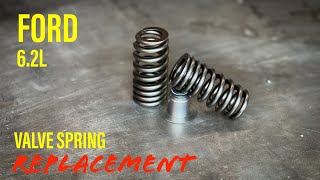
- Broken Valve Springs (6.2L V8) 🔴 High — Considered an internet-amplified issue but does occur. If a spring breaks, it can drop a valve into the cylinder, causing catastrophic engine failure. Often happens without warning at various mileages.
- Worn Spark Plugs and Coils Causing Rough Idle 🟡 Low — The 6.2L V8 uses two spark plugs per cylinder (16 total). Worn plugs are a common cause of rough idle and misfires if not changed at recommended intervals (typically 60k-100k miles).
- Oil Leaks from Gaskets 🟠 Medium — As the engine ages, oil pan gaskets and valve cover gaskets can become brittle and leak. This is common on higher-mileage work vehicles.
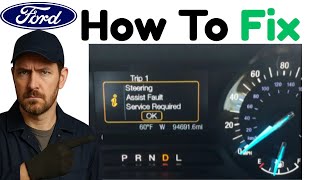
- Electronic Power Assist Steering (EPAS) Failure 🔴 High — While not specific to the E-450 which often retains hydraulic steering, many Ford trucks of this era experience sudden failure of the EPAS system, resulting in a 'Steering Assist Fault' message and extremely difficult steering. This is often caused by a bad sensor, low battery voltage, or internal rack failure.
- Molded Lead Frame Failures (in other Ford transmissions) 🔴 High — While more notorious on the 6R80 transmission in F-150s, issues with the internal transmission lead frame (which houses speed sensors and solenoid connections) are a well-documented Ford problem that can cause erratic shifting and speed sensor codes. While less common on the 6R140, it's a known failure pattern for the brand. (Ref: Customer Satisfaction Program 19N01 (for 6R80))
Used vs. New Parts: Buying Guide for This Vehicle
When a used part is the smart pick: A complete, used valve body/solenoid pack assembly from a low-mileage donor vehicle can be a cost-effective alternative to buying a new assembly from Ford. This is only viable if the 13-digit strategy and 8-digit ID numbers from the donor part's tag are legible and can be programmed into your vehicle's TCM.
Donor-vehicle mileage cap: roughly under 75000 miles for the part to have meaningful remaining life.
What to inspect on the donor part:
- Verify the donor vehicle's mileage and ensure it was not involved in a severe collision that could have damaged the transmission.
- The solenoid body ID and strategy tags on the transmission case and the solenoid body itself must be present, legible, and match each other.
- Inspect the main electrical connector pins for any signs of corrosion, bending, or damage.
- Ask for a history report if possible to check for prior transmission issues.
OEM-only on this vehicle (don't cheap out):
- Solenoid Body / Valve Body Assembly: Due to the complex solenoid strategy programming required, using a new OEM Motorcraft part or a professionally remanufactured unit with a provided strategy tag is the safest option to avoid compatibility nightmares.
- Transmission Control Module (TCM): A used TCM will be programmed to a different vehicle's VIN and solenoid strategy. Replacement requires a new OEM module and dealer-level programming.
Aftermarket brands forum-validated for this vehicle:
- Sonnax (for individual components like solenoids or valve body repair kits)
- Rostra (for individual solenoids and internal harnesses)
Brands owners have reported issues with on this vehicle:
- Unbranded, no-name complete solenoid bodies from online marketplaces. These often fail to program correctly or have poor long-term reliability due to inconsistent solenoid calibration.
Real Owner Stories
Aggregated from forums and TSBs cited above. Mileages and costs reflect what owners reported in those sources.
2019 Ford E-450 6.2L V8
Symptoms: The transmission was stuck in 3rd gear even when Reverse was commanded on a scan tool. The vehicle exhibited a harsh 'clunk' when shifting into gear.
What fixed it: The technician diagnosed the issue as P0757 'Shift Solenoid B Stuck On' using a scan tool to monitor the commanded vs. actual state of the solenoid.
Source hint: YouTube video '2019 ford E 450 6.2 diagnosis codes p0757 shift solenoid B stuck on'
2012 Ford F-250 6.2L V8 — ~150000 miles
Symptoms: The vehicle experienced burnt fluid, gear skipping, and a loss of power.
What fixed it: The discussion suggested a vacuum test on the valve body to check for bore wear or a potential lead frame connector issue.
Source hint: 6r140 issues - Ford Truck Enthusiasts Forums
Related OBD-II Codes
Frequently Asked Questions
My 2019 Ford E-450 is stuck in 3rd gear and won't shift into Reverse. Does TSB 26-2112 apply to this issue?
What specific transmission fluid should I use for my E-450 6.2L V8 to prevent solenoid sticking?
Can I just replace the Shift Solenoid 'B' myself on the 6R140 transmission?
Is the P0757 code on my E-450 related to the 'Molded Lead Frame' issues I've heard about in Ford trucks?
Could a rough idle on my 6.2L V8 be related to the transmission code P0757?
Helpful Videos

Used OEM Parts in Stock

New Aftermarket Parts Available


The information in this article is provided for general reference and educational purposes only. Vehicle specifications, procedures, and part compatibility can vary by production date, trim level, and region. Always consult your vehicle's factory service manual and verify part numbers before purchasing or performing repairs. Safety-critical components such as airbags, seat belts, and braking systems should be installed by a qualified professional.
- Ford E-450:
- 🎬 Helpful Videos
- 🛍️ Shop This Part
- What's Unique About the 2019-2022 Ford E-450
- Symptoms You May Notice
- Most Likely Causes
- Rare But Worth Checking
- Diagnosis Steps
- Parts You'll Likely Need
- Related Codes That Often Appear With This One
- Technical Service Bulletins (TSBs) & Recalls
- Platform-Specific Known Issues
- Mechanic-Grade Diagnostic Values
- Hidden / Shadow Codes Worth Checking
- Scan Tool Commands That Help
- Wiring & Ground Locations
- OEM Part Supersession History
- Diagnostic Flowchart
- Other Known Issues on This Vehicle
- Used vs. New Parts: Buying Guide for This Vehicle
- Real Owner Stories
- 2019 Ford E-450 6.2L V8
- 2012 Ford F-250 6.2L V8 — ~150000 miles
- Related OBD-II Codes
- Frequently Asked Questions
- 🎟️ Get 5% Off