

OBD-II Code P2701: Transmission Friction Element 'B' Apply Time Range/Performance
The Ultimate Expert Guide to P2701: What it means, why it triggers, and how to fix it for good.
- Code P2701 triggers when transmission clutch 'B' takes more than the standard 30-70 milliseconds to engage, signaling a critical hydraulic or mechanical failure.
- For 2017+ Ford F-150 and Super Duty trucks, P2701 almost exclusively points to a faulty main control valve body or a failed CDF clutch drum requiring a $2,500+ repair.
- Stop driving immediately; continuing to drive with P2701 risks sudden rear-wheel lockup on the highway and escalates a valve body repair into an $8,000 complete transmission rebuild.
- Never replace parts based on P2701 alone; always check your VIN for Technical Service Bulletins (TSBs) and use a bi-directional scanner to monitor live 'Friction Element B Apply Time' data.
What Does P2701 Mean?

P2701 means your Transmission Control Module (TCM) detected a timing failure in a specific internal clutch pack known as 'Friction Element B'. This clutch takes too long to engage when a gear change is commanded. The TCM monitors hydraulic pressure and the exact milliseconds required for the clutch to apply; when this timing falls outside the pre-programmed window, the code sets. The transmission expected a rapid, smooth shift, but a delay or slip occurred due to a hydraulic, mechanical, or electronic fault.
Technical definition: Transmission Friction Element 'B' Apply Time Range/Performance. The Transmission Control Module (TCM) detects the 'B' friction element (clutch) apply time exceeds the manufacturer's specified millisecond range. In modern 10-speed transmissions (e.g., Ford 10R80/10R140), the 'B' clutch controls overdrive, making its performance critical for the 3-5 upshift.
Can I Drive With P2701?
No — Do Not Drive. Do not drive. The vehicle shifts harshly, gets stuck in a low gear ('limp mode'), or stalls, creating a severe safety risk. On Ford trucks, this fault triggers sudden, unexpected downshifts causing the rear wheels to lock up and skid. Continuing to drive escalates a $2,500 valve body repair into a catastrophic $8,000 transmission failure.
Common Causes

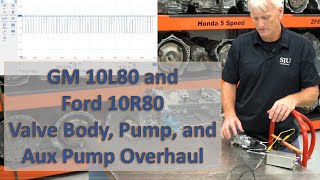
- Faulty Transmission Valve Body (Very Common) — On modern vehicles, especially Ford F-Series trucks with 10-speed transmissions, sticking valves within the main control valve body 🎬 Watch: How to overhaul the 10R80 valve body and oil pump. are the primary cause of this code, heavily documented by Technical Service Bulletins (TSBs).
- Low, Dirty, or Incorrect Transmission Fluid (Very Common) — Low fluid prevents proper hydraulic pressure. Dirty, burnt fluid clogs passages and causes valves to stick. Using the wrong fluid type (e.g., failing to use Mercon ULV in Ford 10R series) directly causes this code.
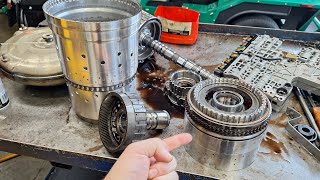
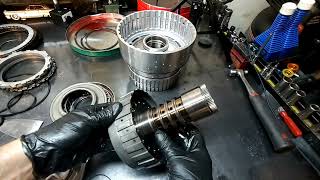
- Internal Mechanical Transmission Failure (Common) — Includes worn clutch plates, a failed CDF clutch drum (a massive known issue in Ford 10R80s) 🎬 See a teardown of the common CDF drum bushing failure., a broken one-way clutch (OWC), or damaged seals. These components physically break, preventing correct engagement.
- Failed Shift Solenoid (Common) — The electronic solenoid controlling hydraulic fluid flow to the 'B' clutch fails electrically (open/shorted coil), sticks mechanically, or leaks pressure.
- Transmission Control Module (TCM) Fault (Less Common) — The computer controlling the transmission suffers corrupted software, outdated calibration files, or internal hardware failure, causing it to miscalculate clutch apply times.
- Degraded Internal Wiring Harness (Rare) — The internal transmission wiring harness becomes brittle from heat and fluid exposure, leading to poor connections or shorts at the solenoid connectors.
Symptoms

- Harsh, Delayed, or Banging Shifts — You feel a noticeable pause followed by a sudden jolt or 'clunk' when the transmission changes gears or shifts from Park to Drive. Highly prominent during the 3-5 upshift in Ford 10-speeds.
- Vehicle Stuck in 'Limp Mode' / Won't Upshift — The transmission locks into a single gear (often 2nd or 3rd) to prevent damage. On Ford trucks, the inability to upshift past second gear strongly points to an internal mechanical failure.
- Transmission Slipping — Engine RPMs flare up between shifts, but vehicle speed does not increase accordingly, indicating the gear is not fully engaged.
- Engine Stalling When Stopping — The clutch fails to disengage properly when coming to a stop, stalling the engine as if you forgot to press the clutch on a manual transmission.
- Check Engine Light / Wrench Light — The Malfunction Indicator Lamp (MIL) or a specific transmission warning light (shaped like a gear or wrench) illuminates on the dashboard.
Diagnostic Flowchart
Tap your situation to follow the diagnostic path that matches what you're seeing on this code.
Common Fixes & Costs
- Replace or Overhaul Valve Body
— Parts: $800-$1500, Labor: $500-$1200, ~4.5 hr book time
(Professional)
Ford F-150 (10R80): OEM HL3Z-7A100-B (Alt: SunCoast (SUNSC-10R80-PVB))
Ford F-250/F-350 (10R140): OEM PC3Z-7A100-A or LC3Z-7A100-B (Alt: SunCoast (SUNSC-10R140-PVB))
GM Silverado/Sierra (10L80): OEM 24071206 (Updated Design) (Alt: ACDelco (24296077)) - Rebuild or Replace Transmission
— Parts: $3000-$5500, Labor: $1500-$3000, ~22 hr book time
(Professional)
Ford F-150 (10R80): OEM JL3Z-7H351-B (Updated CDF Drum) (Alt: Sonnax CDF Drum Saver Kit (5781)) - Transmission Fluid and Filter Change — Parts: $75-$200, Labor: $150-$250, ~1.5 hr book time (DIY)
- Replace Shift Solenoid 'B'
— Parts: $50-$250, Labor: $200-$500, ~3.5 hr book time
(Intermediate)
Ford F-150 / GM Silverado (10-Speed): OEM Not Serviced Separately (Alt: ATP, Rostra) - TCM Reprogram or Replacement — Parts: $650-$1400, Labor: $150-$400, ~1.5 hr book time (Professional)
DIY vs Professional
- Replace or Overhaul Valve Body — Beginner: No, professional only.
Tools: Comprehensive socket set, torque wrench, professional-grade scan tool for post-installation programming. - Rebuild or Replace Transmission — Beginner: No, professional only.
Tools: Transmission jack, engine hoist, specialized transmission tools, clean room environment. - Transmission Fluid and Filter Change — Beginner: Yes
Tools: Socket set, drain pan, fluid pump, torque wrench. - Replace Shift Solenoid 'B' — Beginner: No
Tools: Jack stands, socket set, inch-pound torque wrench, multimeter, service manual.
Used vs. New Parts: Buying Guide
When a used part is worth it: A used valve body or transmission from a low-mileage donor is a budget-friendly option for an older vehicle where repair costs exceed the car's value.
Donor-vehicle mileage cap: roughly under 60000 miles for the part to have meaningful remaining life.
Donor quality checklist:
- Verify the donor VIN to check for accident history vs. mechanical failure.
- Match part numbers exactly, including hardware or calibration codes.
- For 10R80/10R140, favor parts from 2023+ models to get updated internal components.
Decision logic:
- If The known failure is a widespread design flaw (e.g., 10R80 CDF drum, 10R140 valve body) → Buy a new OEM or high-quality remanufactured part that includes the updated design. A used part likely has the same defect.
- If Vehicle is under 100K miles and you plan to keep it long-term → Favor a new or remanufactured unit with a long-term warranty.
- If Budget is the primary constraint and the vehicle has high mileage → A warrantied used part is viable, but accept the risk of a shorter lifespan.
Warranty tradeoff: Used parts offer a 30-90 day part-only warranty. Remanufactured units come with a 1-3 year parts and labor warranty. New OEM parts carry a 1-2 year warranty.
Worst-case if a used part fails: $1500-$3000 if a used transmission fails after installation, requiring you to pay labor a second time.
What Happens If You Wait — Timeline
- 0-1 month: Intermittent symptoms appear. You notice a single harsh shift when cold. The check engine light illuminates and turns off. The underlying issue (e.g., a slightly sticky valve) is just beginning. (MPG impact: 0-2%% · Added cost: $0)
- 1-4 months: Harsh shifts or slips happen daily. The check engine light stays on. The slipping clutch generates excess heat, degrading the transmission fluid. A valve body or solenoid repair is now required. (MPG impact: 3-8%% · Added cost: $1,500 - $4,000)
- 4-8 months: Excess heat and clutch material circulating in burnt fluid damage other components. Valve body bores become scored, and other clutch packs slip. Multiple transmission codes appear. (MPG impact: 8-15%% · Added cost: $4,000 - $6,000)
- 8+ months: Catastrophic failure. The CDF drum or a clutch pack fails completely. The transmission gets stuck in limp mode or fails to engage entirely, leaving you stranded. Requires full replacement. (MPG impact: 15-25%+% · Added cost: $6,000 - $9,000+)
Cost of Not Fixing It
- 0-1 month: Intermittent harsh shifts and slipping, especially when cold. Reduced fuel efficiency due to slipping clutches. (Added cost: Negligible, but internal wear accelerates rapidly.)
- 1-6 months: Slipping generates excessive heat, contaminating fluid with clutch material. This damages solenoids and scores valve body bores, turning a single-part fix into a multi-part one. (Added cost: $1500-$4000)
- 6+ months: Catastrophic failure. Widespread damage from heat and debris requires a full transmission rebuild or replacement. The vehicle breaks down suddenly. (Added cost: $5000-$9000+)
Diagnosis Steps

- Scan for Codes and Review Freeze Frame Data
Use an OBD-II scanner to confirm P2701 and check for related codes (e.g., P0757, P07A4). Review freeze-frame data to see vehicle conditions (speed, RPM, gear, temperature) at the exact moment the fault triggered. Do not clear codes before this step.
Tools: ['OBD-II Scanner'] (Beginner) - Check for Technical Service Bulletins (TSBs)
Search online for TSBs related to P2701 for your specific VIN. Manufacturers like Ford have released numerous bulletins for this code pointing directly to the cause (sticking valve body, CDF drum) and the exact repair procedure.
Tools: ['Internet Access', 'Vehicle VIN'] (Beginner) - Check Transmission Fluid Level and Condition
With the vehicle running and in Park on a level surface, check the transmission fluid. The level must be within the 'Full' range. Fluid must be clean and its specified color, not brown, black, or smelling burnt.
Tools: ['Shop Towels', 'Gloves', 'Dipstick or Level Plug Access Tools'] (Beginner) - Live Data Analysis with an Advanced Scan Tool
Monitor the 'Friction Element B Apply Time' and Transmission Fluid Temperature (TFT) PIDs. During a controlled upshift, compare the live value in milliseconds (ms) to spec (typically 30-70 ms). A consistent reading >150 ms confirms the fault. Normal TFT is 175°F - 225°F.
Tools: ['Advanced Bi-Directional Scan Tool'] (Advanced) - Perform Manufacturer-Specific Diagnostic Routines
For known issues, run guided routines. On Ford 10R140 transmissions, use FDRS to run the 'Transmission Accelerated Main Control Break-In' routine. This cycles clutches multiple times to free sticking valves without disassembly.
Tools: ['Manufacturer-Specific Diagnostic Software (e.g., Ford FDRS)'] (Professional) - Test the Shift Solenoid Circuit
Command solenoid 'B' on with a scan tool and listen for a click. Back-probe the connector to verify voltage (±0.5 V of battery voltage). Disconnect the solenoid and test resistance (e.g., 5.0–5.4 Ω at 68°F for Ford 10R80). Readings outside spec confirm a failed solenoid.
Tools: ['Advanced Bi-Directional Scan Tool', 'Digital Multimeter', 'Back-Probe Kit'] (Advanced) - Inspect External Wiring and Connectors
Visually inspect the main wiring harness connector at the transmission. Look for corrosion, bent pins, fluid contamination, or frayed wires. A damaged connector easily causes this code.
Tools: ['Flashlight', 'Electrical Contact Cleaner'] (Beginner) - Perform a Transmission Hydraulic Pressure Test
Connect pressure gauges to test ports on the transmission case to measure hydraulic pressure in the 'B' clutch circuit. Low pressure relative to factory specs confirms an internal leak, failing pump, or valve body issue.
Tools: ['Transmission Pressure Gauge Set', 'Factory Service Manual', 'Vehicle Lift'] (Professional)
When This Code Triggers (Freeze-Frame Conditions)
- Transmission Fluid Temp: 175-225°F (Fully warmed up, during normal operation.)
- Engine RPM: 1300-2000 (During a commanded upshift under light to moderate throttle.)
- Engine Load: 20-50% (Steady acceleration or cruising when a shift is required.)
- Vehicle Speed: 30-50 mph (Most common during the 3-5 upshift on Ford 10-speed transmissions.)
Related Codes
- P07A4 — P07A4 ('Transmission Friction Element 'B' Performance/Stuck Off') signifies the clutch fails to engage entirely. P2701 is a slow shift; P07A4 is a failed shift.
- P0757 — When paired with P2701 on Ford 10R80/10R140 transmissions, P0757 ('Shift Solenoid 'B' Stuck On') strongly points to a mechanical failure of the one-way clutch (OWC), preventing shifts past second gear.
- P2700, P2702, P2703, P2704, P2705 — These indicate apply time issues with other friction elements. Multiple codes point to a systemic hydraulic issue (failing pump, widespread valve body problem, low line pressure) rather than a single worn clutch.
- P0729, P0731-P0736 — Incorrect gear ratio codes accompany P2701 when a major hydraulic leak occurs. The clutch slips due to low pressure (P2701), and the resulting speed difference flags a ratio code.
Climate & Environmental Factors
- Cold Weather: Low temperatures increase transmission fluid viscosity, exacerbating sticking valves or slow solenoids. This causes the apply time to exceed limits during the first few shifts before the transmission reaches normal operating temperature (175-225°F).
How to Talk to a Mechanic About This Code
Say this: "I have a P2701 code on my [Year/Make/Model] and experience [harsh 3-5 shift / delayed engagement]. I need a diagnostic focused on internal transmission components. Please check my VIN for any Technical Service Bulletins related to the main control valve body or CDF drum before starting."
This proves you understand the complexity of this specific code. It directs the shop away from useless fluid flushes and toward high-probability internal failures. Mentioning TSBs is mandatory for P2701.
Avoid saying:
- 'My transmission is acting weird.'
- 'Just fix whatever is wrong with the check engine light.'
- 'I think I just need a transmission fluid change.'
Questions to ask before authorizing the repair:
- Did you check for TSBs for my specific VIN, and does this repair align with the manufacturer's recommendation?
- Can you provide the freeze-frame data, specifically the transmission fluid temperature when the code set?
- If replacing the valve body or CDF drum, is the new part the updated design that corrects the original factory flaw?
- Does this repair require a transmission adaptive learning procedure afterward, and is it included in the quote?
- What is the warranty on this transmission repair, and does it cover both parts and labor?
Where to Take It: Dealer vs Independent vs Chain
- Dealer:
Recommended for in-warranty vehicles or dealer-only diagnostic procedures outlined in a TSB.
Best for: Vehicles under powertrain warranty., Vehicles with known TSBs requiring manufacturer-specific software (e.g., Ford FDRS) for routines like the 'accelerated break-in'.
Downsides: Highest labor rates., Often defaults to replacing the entire transmission when a specialist performs a targeted internal repair. (Typical cost: +50% vs. baseline) - Independent Shop:
Best overall fit for out-of-warranty vehicles, provided it is a reputable transmission specialty shop.
Best for: Out-of-warranty vehicles., Dedicated 'Transmission Specialists' with deep expertise in complex internal rebuilds.
Downsides: General mechanics lack the specialized tools and clean-room environment for internal transmission work., Quality varies; ASE certification in automatic transmissions (A2) is mandatory. (Typical cost: +0% vs. baseline) - Chain Shop:
AVOID. P2701 requires complex internal transmission diagnostics beyond the scope of chain repair shops.
Best for: Nothing related to this code.
Downsides: Technicians lack training for complex internal transmission diagnostics., High risk of misdiagnosis leading to unnecessary work or low-quality transmission replacement. (Typical cost: -10% vs. baseline)
When to Walk Away From the Repair
If the estimated repair cost for P2701 exceeds 50% of your car's current private-party market value, sell the vehicle as-is or trade it in.
- Car worth $28000, fix is $3500: Fix it. The repair cost is significant but represents only 12.5% of the vehicle's value.
- Car worth $8000, fix is $4500: Borderline. The repair cost is 56% of the car's value. Get a second opinion. If the cost is firm, sell the vehicle 'as-is' to a private buyer or CarMax.
- Car worth $4000, fix is $3000: Walk away. The repair cost is 75% of the vehicle's value. Sell it as a 'mechanic's special' or scrap it.
What Scan Tool You Need for This Code
Minimum: A scanner that reads manufacturer-specific transmission codes and displays live data PIDs, specifically Transmission Fluid Temperature (TFT) and 'Friction Element Apply Time'.
A $20 code reader only shows 'P2701'. It omits the live data (apply times in milliseconds, fluid temperature) required to understand why the code set, making diagnosis impossible.
Budget: BlueDriver Pro / OBDeleven (~$100) — Connects to a smartphone app to display generic and some manufacturer-specific live data, including transmission fluid temperature. It is the absolute minimum for observing conditions but often omits the specific apply time PID.
Mid-range: Foxwell NT510 Elite / Autel MaxiCOM MK808S (~$180) — The best category for serious DIYers. Offers manufacturer-specific software, reads detailed transmission PIDs (apply times), features limited bidirectional controls to test solenoids, and performs the critical 'transmission adaptive relearn' procedure.
Professional: Autel MaxiSys MS906 / Launch X431 Series (~$1200) — Provides full bidirectional control to run manufacturer-specific diagnostic routines, such as the Ford 'Transmission Accelerated Main Control Break-In'. Mandatory for advanced diagnostics and programming.
Rent vs buy: Rent a basic scanner only to confirm the code. For real diagnosis, buy a mid-range scanner with live data and transmission-specific functions. Otherwise, take the vehicle to a professional.
How to Clear the Code After You Fix It
- Use an OBD-II scan tool to clear Diagnostic Trouble Codes (DTCs) and reset the Transmission Adaptive Tables.
- Perform the manufacturer-specific transmission adaptive learning drive cycle.
- Verify the repair by checking for pending codes after the drive cycle.
Drive cycle (~30 minutes): A typical Ford 10-speed relearn involves: warm up to normal temp, accelerate lightly (15% throttle) from a stop through 10th gear, gently brake to a stop and hold for 5 seconds, shift through N-R-N-D, and repeat the cycle at least six times.
Readiness monitors affected: Transmission-related monitors, Comprehensive Component Monitor
Before emissions retest: drive at least 100 miles to fully set monitors.
Watch out for:
- Clearing the code with a scanner does not reset the adaptive learn values, a critical step after transmission repair.
- The code returns immediately if the underlying mechanical or hydraulic fault remains unfixed.
- Failing to complete the specific drive cycle results in continued poor shift quality.
Will This Fail Emissions / State Inspection?
Yes — this code typically fails an OBD-II emissions inspection.
- California: An illuminated Check Engine Light is an automatic failure. After repairs, a full drive cycle must be completed to set all readiness monitors before a retest.
- New York: An active P2701 code causes an automatic failure of the OBD-II emissions inspection.
- Texas: An illuminated Check Engine Light results in automatic failure. Clearing the code right before the test causes a failure due to 'Not Ready' monitors.
Most Commonly Affected Vehicles

- Ford F-150, Ranger, Mustang, Explorer, Transit (2017-2025) — The 10R80 10-speed transmission is highly prone to this code. Known issues include a faulty main control valve body, a failed CDF clutch drum (pre-2023 models), and a damaged one-way clutch (OWC).
- Ford F-250/F-350/F-450 Super Duty (2020-2025) — The heavy-duty 10R140 transmission has a well-documented issue with sticking valves in the main control valve body. Ford issued multiple TSBs (e.g., 21-2420) outlining diagnostic and repair procedures.
- Ford F-150 (2015-2017) — Models with the 6R80 6-speed transmission are subject to a major NHTSA investigation for sudden downshifts locking the rear wheels, often caused by a degraded lead frame triggering P2701.
- Lincoln Navigator (2018-2025) — Uses the same 10R80 transmission as the F-150 and suffers identical high-probability failures: valve body, CDF drum, and one-way clutch issues.
- General Motors Silverado, Sierra, Camaro, Suburban, Tahoe (2017-2025) — GM co-developed the 10-speed automatic with Ford (10L80/10L90). They experience similar internal hydraulic failures and torque converter issues leading to this code.
- Ford Focus (2012-2018) — Models with the DSP6 PowerShift (dual-clutch automatic) set this code due to intermittent clutch actuator behavior, worn shift forks, or failing clutches.
- Honda Accord, Odyssey, Pilot (2010-2022) — Commonly associated with a failing clutch pressure control solenoid or degraded transmission fluid. Solenoids become clogged with debris over time.
Manufacturer-Specific Notes
- Ford (10R80): On F-150s and Explorers, P2701 is frequently caused by a failed CDF clutch drum (a sleeve walks out causing a leak) or a damaged one-way clutch (OWC). Ford updated the CDF drum design for vehicles built after August 15, 2022 (TSB 22-2428).
- Ford (10R140): On Super Duty trucks, P2701 is almost always caused by sticking valves in the main control valve body. TSB 21-2420 recommends a dealer-only 'break-in' procedure to free the valves before authorizing replacement.
- Ford (DPS6 PowerShift): In the 2012-2018 Focus, this code indicates a failing clutch actuator, worn clutches, or damaged shift forks in the notoriously problematic dual-clutch transmission.
- General Motors (10LXX): GM vehicles using the co-developed 10-speed automatic suffer from similar internal hydraulic failures. An updated valve body design (part number 24071206) was released to address these concerns.
Real Owner Stories
2018 Ford F-150 with 10R80 at 75,000 miles
Owner experienced harsh 3-5 upshifts and a 'clunk' when stopping. Check engine light showed P2701.
Outcome: A transmission specialist diagnosed a faulty main control valve body per Ford TSBs. The valve body was replaced with an updated OEM part (HL3Z-7A100-B) and the TCM reprogrammed for $2,800. Shifting issues resolved completely.
Lesson: On a Ford 10R80, P2701 is frequently a valve body issue. A fluid change is a good first step, but persistent problems require a professional with knowledge of Ford-specific procedures.
2020 Ford F-350 with 10R140 at 40,000 miles
Truck developed extremely harsh shifts and would not shift past second gear. Codes P2701 and P0757 were present.
Outcome: Following Ford TSB 26-2112, the technician diagnosed a mechanical failure of the one-way clutch (OWC). This required a complete transmission rebuild under warranty.
Lesson: Code P0757 alongside P2701 on a Ford 10-speed points to a severe internal mechanical failure (the OWC), not a valve body issue. Do not drive the vehicle.
2012 Ford Focus with DPS6 at 126,000 miles
Car became jerky, sluggish, and stalled when accelerating. Code P2701 stored.
Outcome: The issue worsened. This is a classic symptom of failing clutches or actuators in the PowerShift transmission, requiring a multi-thousand dollar clutch replacement.
Lesson: On a Ford Focus DPS6, P2701 is an early warning of well-known clutch/actuator failures. It is not a simple fluid problem and will inevitably worsen.
How to Prevent This Code From Triggering
- Perform regular transmission fluid and filter changes. (Every 30,000 to 60,000 miles.) — Clean fluid maintains proper hydraulic pressure and prevents debris from clogging solenoids and valve body passages. This is the single most important preventive action for sensitive transmissions like the Ford 10R80.
- Use only the manufacturer-specified transmission fluid. (Every fluid change.) — Using the wrong fluid (e.g., Mercon LV instead of ULV in a 10R80) causes shifting problems, seal degradation, and triggers performance codes like P2701.
- Install an auxiliary transmission cooler. (One-time installation for towing/hauling vehicles.) — Heat destroys automatic transmissions. An auxiliary cooler significantly reduces fluid temperature, preventing fluid breakdown and reducing wear on clutches and solenoids.
- Apply TCM software updates. (During regular dealer service visits.) — Manufacturers release software updates to improve shift logic and adjust clutch apply times, preventing erroneously set codes.
Frequently Asked Questions
Can I fix P2701 myself?
If the cause is low or dirty fluid, a fluid and filter change is a DIY-friendly job. However, replacing a bad solenoid, valve body, or internal clutch requires advanced skills, special tools, and transmission removal. Leave internal repairs to a professional transmission specialist.
How much does it cost to fix P2701 on a Ford F-150?
A valve body replacement on a 10R80 transmission typically costs between $1,300 and $2,700. If the failure is a damaged CDF drum requiring a full transmission rebuild, the cost ranges from $4,500 to over $8,500.
What are common misdiagnosis mistakes for P2701?
Clearing the code before reviewing freeze-frame data erases valuable diagnostic clues. Another mistake is replacing a shift solenoid without checking for TSBs, as a known valve body issue is the likely cause on modern Fords.
My car drives fine after restarting it. Can I ignore the code?
No. An intermittent P2701 code is the first sign of a developing problem, like a sticking valve or hydraulic leak. Ignoring it guarantees the problem worsens, leading to sudden breakdowns and severe transmission damage.
Will clearing the code fix the problem?
No. Clearing the code only turns off the check engine light temporarily. The TCM will set the code again as soon as it detects the timing fault, often on the very next shift.
What is a 'friction element'?
A 'friction element' is the technical term for a clutch pack or band inside an automatic transmission. Hydraulic pressure compresses these alternating steel and friction plates to lock a gear set and engage a specific gear ratio.
Can a bad battery cause transmission codes like P2701?
Yes. The TCM and shift solenoids require stable voltage. A weak battery causes erratic electronic behavior and faulty solenoid actuation, triggering performance codes like P2701.
What is the 'Transmission Accelerated Main Control Break-In'?
This is a diagnostic routine a Ford dealer runs using the FDRS scan tool for 10R140 transmissions. It automatically cycles the transmission clutches hundreds of times to dislodge debris and free sticking valves, potentially avoiding a costly replacement.
Key Takeaways
- Code P2701 triggers when transmission clutch 'B' takes more than the standard 30-70 milliseconds to engage, signaling a critical hydraulic or mechanical failure.
- For 2017+ Ford F-150 and Super Duty trucks, P2701 almost exclusively points to a faulty main control valve body or a failed CDF clutch drum requiring a $2,500+ repair.
- Stop driving immediately; continuing to drive with P2701 risks sudden rear-wheel lockup on the highway and escalates a valve body repair into an $8,000 complete transmission rebuild.
- Never replace parts based on P2701 alone; always check your VIN for Technical Service Bulletins (TSBs) and use a bi-directional scanner to monitor live 'Friction Element B Apply Time' data.
Helpful Videos


The information in this article is provided for general reference and educational purposes only. Vehicle specifications, procedures, and part compatibility can vary by production date, trim level, and region. Always consult your vehicle's factory service manual and verify part numbers before purchasing or performing repairs. Safety-critical components such as airbags, seat belts, and braking systems should be installed by a qualified professional.
- 🎬 Helpful Videos
- What Does P2701 Mean?
- Can I Drive With P2701?
- Common Causes
- Symptoms
- Diagnostic Flowchart
- Common Fixes & Costs
- DIY vs Professional
- Used vs. New Parts: Buying Guide
- What Happens If You Wait — Timeline
- Cost of Not Fixing It
- Diagnosis Steps
- When This Code Triggers (Freeze-Frame Conditions)
- Related Codes
- Climate & Environmental Factors
- How to Talk to a Mechanic About This Code
- Where to Take It: Dealer vs Independent vs Chain
- When to Walk Away From the Repair
- What Scan Tool You Need for This Code
- How to Clear the Code After You Fix It
- Will This Fail Emissions / State Inspection?
- Most Commonly Affected Vehicles
- Manufacturer-Specific Notes
- Real Owner Stories
- 2018 Ford F-150 with 10R80 at 75,000 miles
- 2020 Ford F-350 with 10R140 at 40,000 miles
- 2012 Ford Focus with DPS6 at 126,000 miles
- How to Prevent This Code From Triggering
- Frequently Asked Questions
- Can I fix P2701 myself?
- How much does it cost to fix P2701 on a Ford F-150?
- What are common misdiagnosis mistakes for P2701?
- My car drives fine after restarting it. Can I ignore the code?
- Will clearing the code fix the problem?
- What is a 'friction element'?
- Can a bad battery cause transmission codes like P2701?
- What is the 'Transmission Accelerated Main Control Break-In'?
- Key Takeaways
- 🎟️ Get 5% Off