

P0751 on 2004-2013 Toyota Highlander: Shift Solenoid 'A' Causes and Fixes
P0751 on a 2004-2013 Toyota Highlander most often means Shift Solenoid 'A' is stuck or not responding. The most common fixes are topping off or changing the transmission fluid and filter, or replacing the faulty shift solenoid itself. A fluid service costs $150-$300, while a solenoid replacement can range from $400-$700.
- P0751 on a Highlander indicates a performance problem with Shift Solenoid 'A', which controls gear changes.
- Always start diagnosis by checking the transmission fluid. Low, old, or dirty fluid is the most frequent and cheapest cause to fix.
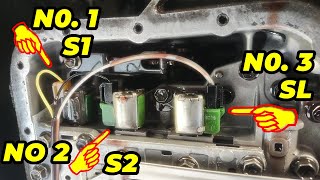
- If fluid service doesn't resolve the issue, the Shift Solenoid 'A' (S1) itself is the next most likely part to have failed.
- This is not a beginner-friendly DIY repair, as it requires removing the transmission pan and potentially the valve body.
- Ignoring this code can lead to severe and expensive internal transmission damage.
What's Unique About the 2004-2013 Toyota Highlander
For the 2004-2013 Highlander, this code is almost always a mechanical or hydraulic issue rather than a software glitch. While later Toyota models sometimes receive software updates for shift quality, Highlanders in this year range typically experience P0751 due to old, dirty fluid, a physically stuck solenoid, or debris in the valve body. The problem is common across the different automatic transmissions used. The 6-speed U660E, in particular, has been noted to generate fine metal debris from bearing wear over time, which can clog solenoids and valve body passages, leading to shifting issues.
Generation note: This guide covers two Highlander generations: - First Generation (2004-2007): Used 4-speed (U140E) and 5-speed (U151E/F) automatic transmissions. These typically require Toyota Type T-IV fluid. - Second Generation (2008-2013): Used 5-speed (U151E/F) and 6-speed (U660E) automatic transmissions. These models use Toyota World Standard (WS) fluid.
Symptoms You May Notice
- Check Engine Light is illuminated
- Harsh, delayed, or erratic gear shifts
- Transmission gets stuck in one gear (fail-safe or 'limp' mode), often 3rd gear
- Vehicle hesitates or has poor acceleration
- Transmission slipping between gears
- Decreased fuel economy
- Inability to downshift when coasting
- Immediately replacing the shift solenoid without first checking the transmission fluid condition and level. Dirty or low fluid is a very common cause and a much cheaper fix to attempt first.
Most Likely Causes
- Low or Dirty Transmission Fluid 🔴 High Probability Over time, transmission fluid breaks down and collects clutch material and metal shavings. This contaminated fluid can clog the small passages in the shift solenoid, causing it to stick. Using the incorrect fluid type can also cause shifting problems.
How to confirm: Check the transmission fluid level and condition. For older models with a dipstick, check with the engine warm and running. For sealed transmissions (most 2nd Gen), it requires a specific overflow check procedure at a certain temperature (99-111°F). If the fluid is dark brown/black, smells burnt, or is low, it needs service.
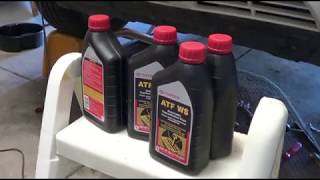
Typical fix: Perform a transmission fluid drain-and-fill or a full fluid exchange and replace the transmission filter. Ensure the correct fluid is used: Toyota ATF Type T-IV for U140E/U151E (early models) or Toyota ATF WS for U151E/U660E (later models).
Est. part cost: $60-$180 for fluid and a filter kit. - Failed Shift Solenoid 'A' (S1) 🔴 High Probability Like any electronic component, the solenoid can fail with age and heat cycles. The internal coil can develop an open or short, or the mechanical plunger can become physically stuck from debris.
How to confirm: After ruling out fluid issues, a technician will remove the transmission pan to access the solenoid. The solenoid's electrical resistance is tested with a multimeter (Toyota specs are often 11-15 Ohms at 68°F). It can also be bench-tested by applying 12V power to see if it makes an audible 'click'.
Typical fix: Replace the faulty shift solenoid. This part is located on the transmission's valve body.
Est. part cost: $100-$250 for an OEM-quality solenoid. - Clogged Transmission Valve Body 🟡 Medium Probability Debris from normal wear-and-tear that circulates in old fluid can get lodged in the intricate passages of the valve body, blocking fluid flow to or from the solenoid. This is more common on higher-mileage vehicles.
How to confirm: This is diagnosed after confirming the solenoid itself is functional. A technician will visually inspect the valve body for sludge and scoring once it's removed from the transmission.
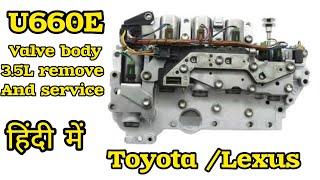
Typical fix: In some cases, the valve body can be professionally cleaned. More often, it requires replacement with a new or remanufactured unit. 🎬 Watch: How to remove and service a U660E valve body.
Est. part cost: $500-$1200 for a remanufactured or new valve body.
Rare But Worth Checking
- Damaged Wiring Harness or Connector: The wiring inside the transmission or the main connector outside can become damaged from heat and vibration, causing a poor connection to the solenoid. This is worth checking while the transmission pan is off.
- Faulty Engine Control Module (ECM) / Transmission Control Module (TCM): It is very rare for the ECM/TCM to be the cause. This should only be considered after all other possibilities—fluid, solenoid, valve body, and wiring—have been exhaustively ruled out by a professional.
Diagnosis Steps
- Check and document any other stored trouble codes.
- Inspect the transmission fluid level and condition. For sealed units, this must be done at a specific temperature (99-111°F) using a scan tool. If low, top off with the correct fluid (T-IV or WS). If dark, burnt, or full of debris, perform a fluid and filter change first, clear the codes, and re-test.
- If the fluid is fine, the next step is to gain access to the solenoid by removing the transmission oil pan.
- Visually inspect the wiring harness inside the pan for any obvious damage or loose connectors.
- Test the resistance of Shift Solenoid 'A' (S1) using a multimeter. Compare the reading to the manufacturer's specification (typically 11-15 Ohms for these models).
- Perform an actuation test by carefully applying a 12V source to the solenoid and listening for a distinct 'click'. A solenoid that passes the resistance test can still be mechanically stuck.
- If the solenoid fails either test, replace it.
- If the solenoid tests good, the problem likely lies within the valve body (blockage), internal wiring, or, in rare cases, the ECM/TCM.
Parts You'll Likely Need
- Shift Solenoid 'A' (S1)
(OEM #35210-33030 (verify by VIN, multiple solenoids exist))— This is the component directly identified by the code. It is a common failure point due to electrical burnout or mechanical sticking.
Trusted brands: Toyota (Genuine), Aisin, Rostra
OEM price range: $150-$250
Aftermarket price range: $70-$140 - Automatic Transmission Fluid and Filter Kit
(OEM #Fluid: Toyota ATF WS (00289-ATFWS) or Toyota ATF T-IV (00279-000T4))— Low or contaminated fluid is a primary cause of this code. A fluid and filter service is the first logical repair step. Using the correct OEM fluid is critical for proper transmission function.
Trusted brands: Toyota (Genuine WS or T-IV fluid), Idemitsu (TLS-LV for WS, Type-T for T-IV), Beck/Arnley, WIX (Filter Kits)
OEM price range: $100-$180
Aftermarket price range: $50-$90
Related Codes That Often Appear With This One
- P0753 — This code indicates a purely electrical fault (open or short) in the Shift Solenoid 'A' circuit, whereas P0751 is a performance fault (stuck). Seeing them together points strongly to a bad solenoid or wiring issue.
- P0756 — This is the same performance code but for Shift Solenoid 'B'. Seeing multiple solenoid codes together suggests a widespread problem like very dirty fluid, low system pressure, or a failing valve body affecting multiple components.
Platform-Specific Known Issues
- Owners often report that a simple drain-and-fill of the transmission fluid does not resolve the P0751 code if the solenoid is already sticking or the valve body is partially clogged. In many cases, replacing the Shift Solenoid 'A' is the required fix after a fluid service fails to solve the problem. The issue is common enough that many DIY-focused owners will replace the solenoid as a preventative measure while performing a fluid and filter change on a higher-mileage vehicle.
Mechanic-Grade Diagnostic Values
- Shift Solenoid S1 (SL) Resistance — expected: 11 to 15 Ohms at 68°F (20°C). Failure: A reading outside this range indicates a faulty solenoid coil.
- Linear Solenoid (SLT, SLU, SL1, SL2, SL3, SL4) Resistance (U660E) — expected: 5.0 to 5.6 Ohms at 68°F (20°C). Failure: A reading outside this range indicates a faulty linear solenoid. This is important as other solenoid failures can present similar symptoms.
- Solenoid to Ground Resistance — expected: Above 10k Ohms. Failure: Resistance below 10k Ohms indicates a short to ground, requiring solenoid replacement.
Scan Tool Commands That Help
- Toyota Techstream: Active Test: Control the Shift Position — While driving below 30 mph, this allows a technician to manually command gear shifts. By comparing the commanded gear to the actual gear shown in live data, you can confirm if the solenoid is mechanically failing to actuate the shift.
- Toyota Techstream: Active Test: Activate the Solenoid (S1) — With the vehicle stationary (Key On, Engine Off), this test directly energizes the S1 solenoid. It's used to listen for the audible 'click' of the solenoid actuating, which helps verify electrical function without removing the oil pan.
- Toyota Techstream: Utility: A/T Code Reset / Reset Memory — After replacing a solenoid, valve body, or the entire transmission, this function must be used to clear the old learned adaptive values. Failure to do so can result in continued poor shift quality even with new parts.
Wiring & Ground Locations
- Transaxle Case Connector (U660E) — External connector on the transmission case where the main vehicle harness connects to the internal transmission wiring.. This is the primary point for testing solenoid circuits from outside the transmission. For the U660E, the TCM is often bolted directly to the transmission, making this connection critical.
- U660E Internal Harness Connector Pin 14 (SL1 Positive) — On the internal wiring harness connector that plugs into the TCM/valve body assembly.. Pin 14 (Red wire) is the positive feed for the SL1 (Shift Solenoid 'A') linear solenoid. This pin can be used for direct resistance and voltage tests of the solenoid circuit if the pan is removed.
- U660E Internal Harness Connector Pin 13 (SL1 Ground) — On the internal wiring harness connector that plugs into the TCM/valve body assembly.. Pin 13 (Black wire) is the ground for the SL1 (Shift Solenoid 'A') linear solenoid. Checking for continuity to ground from this pin is a key diagnostic step.
- Ground Point O2 — On the body behind the left rear wheel well.. While not a direct transmission ground, poor body grounds can cause electrical noise and voltage issues that may affect sensor readings and TCM operation, indirectly contributing to shifting problems.
OEM Part Supersession History
35210-73010→35210-33030— Part update or consolidation by the manufacturer.
Heads up: The new part number (35210-33030) is the correct replacement for the original. Using the old number may lead to sourcing old stock.
Model Year Variations Within This Range
- 2008-2013 (U660E equipped): On U660E models, the Transmission Control Module (TCM) is often bolted directly to the transmission case, integrated with the valve body connector. This differs from earlier models where the TCM might be a separate unit in the cabin or engine bay. When replacing a TCM on these models, it is 'plug-and-play' for testing, but a new or used module must be initialized by entering the unit compensation code with a scan tool like Techstream.
Diagnostic Flowchart
Other Known Issues on This Vehicle
Issues unrelated to this code that are worth knowing about as an owner of this generation:
- Excessive Oil Consumption (2AZ-FE Engine) 🔴 High — Common on 4-cylinder models (2009-2013). Caused by defective piston ring design, often appearing after 60,000 miles. (Ref: T-SB-0094-11)
- Rupturing VVT-i Oil Line (2GR-FE V6) 🔴 High — Affects V6 models from approx. 2005-2010. A rubber section of a high-pressure oil line can burst, leading to rapid oil loss and catastrophic engine failure. (Ref: Toyota issued a Limited Service Campaign (LSC) to replace the rubber line with an all-metal one (Part No. 15772-31030).)
- Steering Intermediate Shaft Clunk 🟠 Medium — Very common on 2nd Gen (2008-2013) Highlanders. A clunking or popping noise is heard when turning the steering wheel, caused by wear in the shaft's splines. (Ref: T-SB-0034-13)
- Stripped Head Bolts (2AZ-FE Engine) 🔴 High — A known issue on the 2.4L 4-cylinder engine where the rear head bolt threads in the engine block can strip, causing coolant leaks and overheating. Often occurs over 100,000 miles.
Used vs. New Parts: Buying Guide for This Vehicle
When a used part is the smart pick: A complete, used valve body assembly from a verified low-mileage donor vehicle can be a cost-effective alternative to a new one, which can be very expensive. This is especially true if multiple solenoids are suspected or if there is a concern about bore wear in the original valve body.
Donor-vehicle mileage cap: roughly under 80000 miles for the part to have meaningful remaining life.
What to inspect on the donor part:
- Verify the donor vehicle's mileage and check its history for accidents or transmission-related issues.
- If possible, inspect the transmission fluid from the donor; it should be red or brownish, not black or burnt-smelling.
- Look for a seller that offers a short warranty (e.g., 30-90 days) on used electronic components like a valve body assembly.
OEM-only on this vehicle (don't cheap out):
- Transmission Fluid: Strictly use Toyota Genuine ATF WS or T-IV as specified. Incorrect fluid is a primary cause of transmission problems.
- Transmission Control Module (TCM): While a used one can work for testing, programming and compatibility issues make a new, genuine part the safest long-term solution.
Aftermarket brands forum-validated for this vehicle:
- Aisin: Aisin is the Original Equipment Manufacturer (OEM) for many Toyota transmissions and parts. Their solenoids and valve bodies are equivalent to genuine Toyota parts and are a top-tier choice.
- Idemitsu: A known supplier of high-quality fluids that often meet or exceed OEM specifications for Japanese vehicles.
Brands owners have reported issues with on this vehicle:
- Unbranded 'white box' solenoids from online marketplaces. These often have high failure rates, incorrect resistance values, or are made with inferior materials that cannot withstand the heat and pressure of the transmission environment. While Rostra is a known aftermarket brand, OEM/Aisin is generally preferred for reliability.
Real Owner Stories
Aggregated from forums and TSBs cited above. Mileages and costs reflect what owners reported in those sources.
2004-2013 Toyota Highlander
Symptoms: A simple drain-and-fill of the transmission fluid did not resolve the P0751 code; the solenoid was already sticking.
What fixed it: Replacing the Shift Solenoid 'A' after the initial fluid service failed to solve the problem.
Source hint: vehicle_specific_issues
2007-2018 Lexus ES350 (U660E Transmission)
Symptoms: Harsh shifting and solenoid performance issues.
What fixed it: Replacement of faulty solenoids within the U660E 6-speed automatic transmission.
Source hint: platform_mates
Toyota Highlander (U660E Transmission)
Symptoms: Mixed reliability, specifically noting issues with valve bodies and hard shifts.
What fixed it: Professional cleaning or replacement of the transmission valve body.
Source hint: forum_citations - https://carkiller.com/topic/toyota-transmission/
Related OBD-II Codes
Frequently Asked Questions
My 2004 Highlander uses Toyota ATF Type T-IV, but the newer models use WS. Which one should I use to fix P0751?
I have a 2nd Gen Highlander (2008-2013) with a sealed transmission. How do I check the fluid level for this code?
Is there a TSB for the steering clunk I'm hearing along with this transmission issue on my 2010 Highlander?
Can I just clean the Shift Solenoid 'A' (S1) to clear the P0751 code?
Is the P0751 code related to the VVT-i oil line failure on my V6 Highlander?
Should I replace the whole valve body or just the solenoid for a P0751?
Helpful Videos

We Have This Part in Stock


The information in this article is provided for general reference and educational purposes only. Vehicle specifications, procedures, and part compatibility can vary by production date, trim level, and region. Always consult your vehicle's factory service manual and verify part numbers before purchasing or performing repairs. Safety-critical components such as airbags, seat belts, and braking systems should be installed by a qualified professional.
- Toyota Highlander:
- 🎬 Helpful Videos
- 🛍️ Shop This Part
- What's Unique About the 2004-2013 Toyota Highlander
- Symptoms You May Notice
- Most Likely Causes
- Rare But Worth Checking
- Diagnosis Steps
- Parts You'll Likely Need
- Related Codes That Often Appear With This One
- Platform-Specific Known Issues
- Mechanic-Grade Diagnostic Values
- Scan Tool Commands That Help
- Wiring & Ground Locations
- OEM Part Supersession History
- Model Year Variations Within This Range
- Diagnostic Flowchart
- Other Known Issues on This Vehicle
- Used vs. New Parts: Buying Guide for This Vehicle
- Real Owner Stories
- 2004-2013 Toyota Highlander
- 2007-2018 Lexus ES350 (U660E Transmission)
- Toyota Highlander (U660E Transmission)
- Related OBD-II Codes
- Frequently Asked Questions
- 🎟️ Get 5% Off