

P0751 on 2005-2010 Pontiac G6: Shift Solenoid 'A' Causes and Fixes
P0751 on a Pontiac G6 usually means the 1-2 Shift Solenoid 'A' in the 4T45-E transmission has failed or transmission fluid is low/dirty. Expect harsh shifting, no 1st gear, or being stuck in 'limp mode'. Replacing the solenoid is the most common fix, costing $20-$50 for the part, but the labor is intensive as it requires accessing the transmission's side cover.
- P0751 on a 2005-2010 Pontiac G6 almost always points to a problem with the 1-2 shift solenoid ('A') or the transmission fluid.
- The first and easiest diagnostic step is to check the transmission fluid level and condition. A fluid and filter change may solve the problem if it's caught early.
- The most likely repair is replacing the shift solenoid. This is a difficult DIY job (4/5) due to the labor required to access the part.
- Due to the difficulty of the job, it is highly recommended to replace both shift solenoids ('A' and 'B') at the same time.
- Do not continue to drive with these symptoms for an extended period, as it can cause severe, and much more expensive, damage to the transmission.
What's Unique About the 2005-2010 Pontiac G6
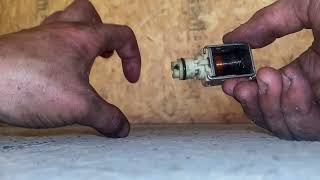
The Pontiac G6 primarily used the 4-speed 4T45-E automatic transmission, where P0751 is a very common code indicating a failed 1-2 shift solenoid. While the official definition is generic, on this specific GM platform, it almost always points directly to the solenoid itself. The repair is well-documented and involves accessing the solenoids through the side cover of the transmission. 🎬 See this walkthrough on accessing and replacing the shift solenoids. This is a complex job that requires supporting the engine, removing the driver's side wheel, CV axle, and various mounts to split the transmission case while it's still in the vehicle. Some later models used a 6-speed transmission which had its own set of issues, notably a wave plate failure, but P0751 is most associated with the 4-speed 4T45-E.
Symptoms You May Notice
- Harsh or delayed shifting, especially between 1st and 2nd gear
- Transmission getting stuck in one gear (usually 2nd or 3rd), also known as 'limp mode'
- Vehicle feels sluggish or has no power from a stop, as if starting in a higher gear
- Check Engine Light is on
- Increased fuel consumption
- Transmission slipping or overheating
- Jerking when shifting from Park into a drive gear 🎬 Watch: A breakdown of common shift solenoid failure symptoms.
- Replacing the entire transmission when only a simple solenoid is needed.
- Replacing the TCM when the fault is a much cheaper wiring or solenoid issue.
- Performing a fluid flush on a high-mileage, un-serviced transmission, which can sometimes dislodge debris and worsen the problem.
Most Likely Causes
- Failed 1-2 Shift Solenoid 'A' 🔴 High Probability The shift solenoids in the 4T45-E transmission are a known, extremely common failure point on this platform and its mates like the Cobalt and HHR.
How to confirm: After checking fluid, the definitive test is to measure the solenoid's resistance with a multimeter. A healthy solenoid should be within the manufacturer's specified range (typically 19-24 ohms for this model). An open circuit (infinite resistance) or shorted circuit (very low resistance) confirms failure. This test requires accessing the solenoids inside the transmission side pan. A bidirectional scan tool can also command the solenoid on and off; a lack of an audible 'click' indicates failure.
Typical fix: Replace the Shift Solenoid 'A'. It is highly recommended to replace the 'B' (2-3) solenoid at the same time, as the labor cost to access them is the main expense and they often fail around the same time. Many are sold as a two-piece kit.
Est. part cost: $20-$50 for a single aftermarket solenoid, $40-$80 for an ACDelco part. - Low or Dirty Transmission Fluid 🟡 Medium Probability The 4T45-E is sensitive to fluid level and condition. Old, degraded fluid can cause solenoids to stick or clog the small passages in the valve body. The correct fluid is DEXRON-VI, which is a full synthetic and an improvement over prior fluids.
How to confirm: Check the transmission fluid level using the dipstick (if equipped) or the side fill plug. The fluid should be at the correct level, pinkish-red, and not smell burnt. Dark, brown, or gritty fluid indicates it is worn out or there may be internal damage.
Typical fix: Perform a transmission fluid and filter change using DEXRON-VI fluid. If the fluid is very dirty, a full flush may be needed, but this is sometimes debated on high-mileage transmissions with no service history.
Est. part cost: $60-$120 for fluid and a filter kit. - Wiring or Connector Issue ⚪ Low Probability The internal transmission wiring harness, which connects to the solenoids, can become brittle from heat and age. The external connector can also corrode. A poor ground at location G105 is also a known issue that affects the TCM.
How to confirm: Visually inspect the main wiring harness connector at the transmission for corrosion or damage. Testing the internal harness requires accessing the transmission side cover and checking for continuity and shorts between the main connector and the solenoid connectors. The Shift Solenoid 'A' circuit is on Pin A (PNK/BLK wire) of the main 20-pin transmission connector.
Typical fix: Repair the damaged section of the external wiring harness or clean/replace the corroded connector. If the internal harness is faulty, it must be replaced, which is done at the same time as the solenoids. Ensure ground G105 is clean and tight.
Est. part cost: $10-$50 for external repair, $50-$100 for an internal harness.
Rare But Worth Checking
- Faulty Transmission Control Module (TCM): This is very rare. The TCM is the computer that controls the transmission. It should only be considered after all other possibilities (fluid, solenoid, wiring) have been definitively ruled out with testing. A bad TCM driver could fail to properly command the solenoid.
- Internal Hydraulic Leak / Valve Body Issue: Debris from normal wear can score the valve body bores, causing hydraulic pressure to leak past the solenoid, preventing the shift. This usually requires a valve body replacement or rebuild, a job for a transmission specialist.
Diagnosis Steps
- Check the transmission fluid level and condition. The correct fluid is DEXRON-VI. Top off or change if necessary. If the fluid is dark brown, smells burnt, or contains metal shavings, a more serious internal transmission problem is likely.
- Use a quality OBD-II scanner to confirm P0751 is the primary code. Check for other related transmission codes, especially P0756 (Solenoid B) or P0700 (General Fault).
- Use a bidirectional scanner to perform an 'Active Test' on Shift Solenoid 'A'. Command the solenoid on and off while listening for an audible click from the transmission case. No click strongly suggests a failed solenoid or wiring issue.
- Inspect the external transmission wiring harness and main connector for any visible damage, corrosion, or loose connections. Pay special attention to the main ground point G105, located on an engine/transmission stud.
- If an active test isn't possible, or if it passes but the problem persists, test the circuit electrically. Access the 20-pin transmission connector. With the key on, check for battery voltage (approx. 12V) at Pin A (PNK/BLK wire).
- If the electrical supply is good, the next step is to test the solenoid itself. This requires accessing the solenoid by removing the transmission side cover, which is a significant job.
- Once accessed, disconnect the solenoid and measure its resistance with a multimeter. It should read between 19 and 24 ohms. A reading that is out of spec (open or shorted) confirms a bad solenoid.
- While inside, inspect the internal wiring harness for brittleness or damage. Also, check the 'B' solenoid's resistance, as it's best practice to replace both. Inspect the solenoid's inlet screen for debris.
- A critical step during reassembly is to ensure the manual valve is correctly engaged with the shift linkage. Failure to do so will result in no forward or reverse gears after the repair is complete. 🎬 Watch: Step-by-step guide to replacing the solenoids on a G6.
- If the solenoids and wiring test good, the issue may be in the valve body (clogged passage, stuck valve) or the TCM, which typically requires professional diagnosis.
Parts You'll Likely Need
- 1-2 Shift Solenoid (Solenoid 'A')
(OEM #ACDelco 24207236)— This is the most common part to fail and directly cause the P0751 code on the 4T45-E transmission. Note: Solenoid 'A' and 'B' are the same part.
Trusted brands: ACDelco, Standard Motor Products (SMP), ATP, Rostra
OEM price range: $40-$70
Aftermarket price range: $20-$40 - Transmission Filter and Gasket Kit
(OEM #ACDelco 24208576 (Example, verify by VIN))— A fluid and filter change is a critical first step and should be done whenever the transmission is serviced. Note: The side cover gasket is often reused if not damaged.
Trusted brands: ACDelco, Wix, Fram
OEM price range: $30-$50
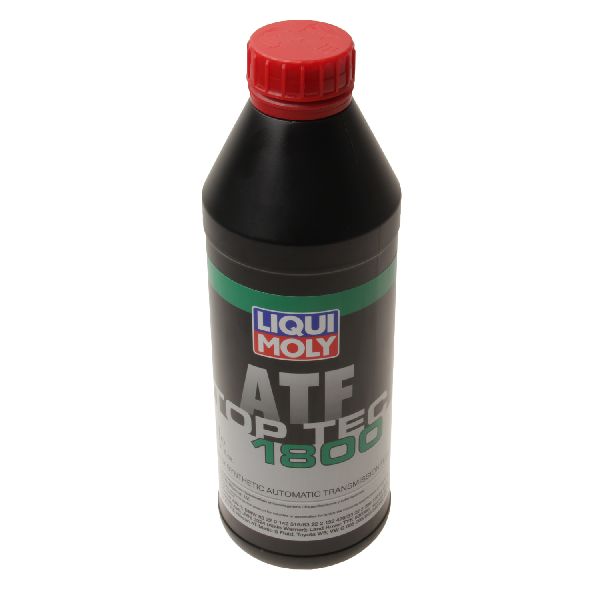
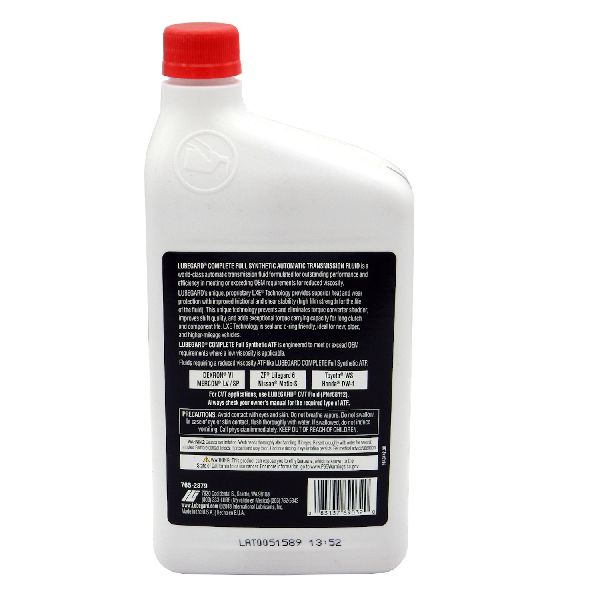
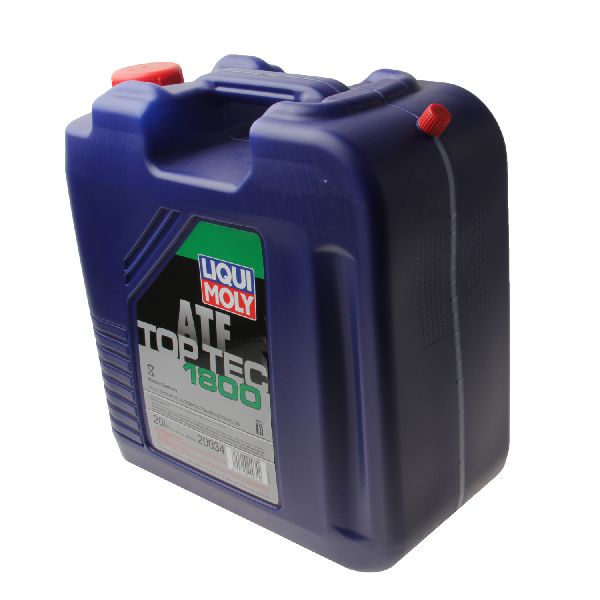
Aftermarket price range: $15-$30 - DEXRON-VI Automatic Transmission Fluid
(OEM #GM 88865601 (quart) or 88865618 (gallon))— This is the required fluid type for the 4T45-E. A partial drain and fill for this job will require approximately 7-8 quarts.
Trusted brands: ACDelco, Valvoline, Castrol
OEM price range: $10-$15 per quart
Aftermarket price range: $8-$12 per quart
Related Codes That Often Appear With This One
- P0756 — This code points to Shift Solenoid 'B' (2-3 shift). Since the solenoids are located together and subject to the same conditions, it's common for them to fail around the same time. Mechanics strongly recommend replacing them as a pair.
- P0700 — This is a general transmission fault code requested by the TCM. It simply means the TCM has stored a specific fault code (like P0751) and has asked the main engine computer (ECM) to turn on the Check Engine Light.
Technical Service Bulletins (TSBs) & Recalls
- 14404B: Special Coverage Adjustment – Transmission Clutch Wave Plate (for 6-speed models, not a direct cause of P0751 but a major related issue).
- NHTSA #10058221 / GM PIT5251B: While for 6-speed transmissions (6L45/50/80/90), this TSB discusses diagnosis for P0751 caused by a sticking Clutch Select Solenoid Valve 2, indicating that valve body issues can be a cause across GM platforms.
Platform-Specific Known Issues
- For G6 models equipped with the 6-speed 6T70/6T75 automatic transmission, a fractured 3-5-R wave plate was a common issue, leading to a loss of 3rd, 5th, and Reverse gears. GM issued a special coverage (14404B) extending the warranty for this specific failure. While this does not cause P0751, it is a major known issue for the 6-speed variants.
- There have been multiple recalls (e.g., NHTSA 14V452000, GM recall 14152C) for a fractured tab on the transmission shift cable for 4-speed models, which can cause the gear indicator to not match the actual gear or prevent the key from being removed. This can be a safety issue but is not a direct cause of P0751.
Mechanic-Grade Diagnostic Values
- Shift Solenoid 'A' Coil Resistance — expected: 19-25 Ohms. Failure: Infinite resistance (open circuit) or near-zero resistance (short circuit).
- Voltage at Transmission Main Connector, Pin A (Solenoid 'A' Power Feed) — expected: ~12 Volts (Battery Voltage). Failure: Voltage significantly lower than battery voltage (greater than 0.5V drop) or 0V indicates a wiring or TCM issue upstream.
Scan Tool Commands That Help
- Tech2 / GDS2 / High-End Bidirectional Scanner: Solenoid Control / Active Test / Output Control — This is used to command Shift Solenoid 'A' on and off with the engine running in Park. A distinct 'click' should be heard from the transmission side cover. The absence of a click is a strong indicator that the solenoid is dead or the wiring to it is open, allowing for diagnosis without disassembly.
Wiring & Ground Locations
- Transmission Connector (20-Pin) — The main external electrical connector on the 4T45-E transmission case.. Pin A (Pink/Black wire) is the control circuit for Shift Solenoid 'A'. This is the primary external test point for checking voltage and continuity to the solenoid.
- G105 — On the left rear side of the engine compartment, on an engine-to-transmission stud, often below the upper coolant hose.. This is a shared ground point for the Transmission Control Module (TCM), Park/Neutral Position Switch, and Internal Mode Switch. A poor connection here can cause erratic behavior and multiple transmission codes, including P0751.
- TCM (Transmission Control Module) — For the 3.5L V6, it is located at the front of the engine bay on the right (passenger) side, low down.. This is the computer that commands the solenoid. Knowing its location is necessary for diagnosing potential TCM or wiring-harness-to-TCM faults.
Real Owner Repair Stories
- YouTube video by 'Beast Mode Garage' (Pontiac G6 with 4T45-E transmission) — Stuck in 2nd and 3rd gear, would not shift into 1st or 4th (overdrive). Check engine light was on with code P0974 (Shift Solenoid 'A' Control Circuit High), which has the same root cause and fix as P0751.
❌ Tried (didn't work) A fluid and filter change did not resolve the issue.
✅ What actually fixed it Replacing the 1-2 Shift Solenoid 'A'. The old solenoid's connector broke upon removal, confirming it was faulty. A bidirectional scan tool was used to confirm the new solenoid was clicking when commanded, while the old one was silent. - Reddit user in r/Transmission (2008 Pontiac G6 with 3.5L V6) — Code for 'shift solenoid a low voltage', missing 1st and overdrive gears, only has 2nd and 3rd.
✅ What actually fixed it The consensus from professional technicians in the thread was that the solenoids are a notorious failure point and replacing them has a near 100% success rate for these exact symptoms. The final fix is replacing the shift solenoids.
OEM Part Supersession History
Unknown→24207236— This is the current ACDelco OEM part number for the 1-2 ('A') and 2-3 ('B') shift solenoids for the 4T45-E in this vehicle.
Heads up: Part number 24227792 is often confused with the shift solenoid but is typically the TCC PWM solenoid for this transmission; it is not the correct part for a P0751 fault.
Diagnostic Flowchart
Used vs. New Parts: Buying Guide for This Vehicle
When a used part is the smart pick: Almost never for the individual solenoids. The labor cost to access the part is extremely high, making the risk of a used solenoid failing prematurely a poor financial decision. A complete, low-mileage valve body assembly from a reputable salvage yard could be considered if a valve body issue is diagnosed.
Donor-vehicle mileage cap: roughly under 50000 miles for the part to have meaningful remaining life.
What to inspect on the donor part:
- Verify the donor vehicle's mileage.
- Ask to see the transmission fluid from the donor; it should be pink/red and not smell burnt.
- If buying a valve body, visually inspect for any scoring, metal shavings, or discoloration.
- Ensure all connectors on a used harness or component are free of corrosion and the plastic is not brittle.
OEM-only on this vehicle (don't cheap out):
- Internal Transmission Wiring Harness: Aftermarket harnesses can use lower-quality plastic and wire insulation that becomes brittle more quickly in the high-heat transmission environment.
Aftermarket brands forum-validated for this vehicle:
- ACDelco (OEM)
- Standard Motor Products (SMP)
- Rostra
- Superior Transmission Parts
Real Owner Stories
Aggregated from forums and TSBs cited above. Mileages and costs reflect what owners reported in those sources.
Pontiac G6
Symptoms: The vehicle set a P0751 code and went into 'limp mode'.
What fixed it: Replacing both shift solenoids (A and B) was the standard and successful repair.
Source hint: g6ownersclub.com - P0751 Shift Solenoid A Stuck Off
2006 Pontiac G6
Symptoms: Solenoid failure requiring a transmission rebuild.
What fixed it: The owner rebuilt the 4T45E transmission for the solenoid failure, but made an error during reassembly which resulted in having no Drive gear, only Reverse and manual selections. This highlights the complexity of the repair.
Source hint: 2CarPros.com - 2006 Pontiac G6 Shift Solenoid Location
Related OBD-II Codes
Frequently Asked Questions
What is the most common reason for a P0751 code on my Pontiac G6?
I'm going to replace the shift solenoid myself. Is there anything specific I need to watch out for on the G6?
Is it okay to just replace the one bad 'A' solenoid to save money?
What type of transmission fluid should I use in my 2005-2010 G6?
I heard about a big transmission recall for the G6. Is my P0751 code related to that?
How can I test the shift solenoid without taking the transmission apart?
Helpful Videos

We Have This Part in Stock



The information in this article is provided for general reference and educational purposes only. Vehicle specifications, procedures, and part compatibility can vary by production date, trim level, and region. Always consult your vehicle's factory service manual and verify part numbers before purchasing or performing repairs. Safety-critical components such as airbags, seat belts, and braking systems should be installed by a qualified professional.
- Pontiac G6:
- 🎬 Helpful Videos
- 🛍️ Shop This Part
- What's Unique About the 2005-2010 Pontiac G6
- Symptoms You May Notice
- Most Likely Causes
- Rare But Worth Checking
- Diagnosis Steps
- Parts You'll Likely Need
- Related Codes That Often Appear With This One
- Technical Service Bulletins (TSBs) & Recalls
- Platform-Specific Known Issues
- Mechanic-Grade Diagnostic Values
- Scan Tool Commands That Help
- Wiring & Ground Locations
- Real Owner Repair Stories
- OEM Part Supersession History
- Diagnostic Flowchart
- Used vs. New Parts: Buying Guide for This Vehicle
- Real Owner Stories
- Pontiac G6
- 2006 Pontiac G6
- Related OBD-II Codes
- Frequently Asked Questions
- 🎟️ Get 5% Off