

P0751 on 2020-2023 Ford Explorer: Shift Solenoid 'A' Performance and Fixes
On a 2020-2023 Ford Explorer, code P0751 almost always indicates a serious internal transmission problem, not just a single bad solenoid. The most common culprits are a faulty main control valve body or a failed CDF clutch drum sleeve, repairs that can cost between $2,000 and $4,500. This is not a typical DIY fix and is widely documented in Ford's own service bulletins.
- P0751 on a 2020-2023 Explorer is a serious code that points to an internal transmission problem, not a simple sensor failure.
- The most likely cause is a faulty main control valve body, as documented by Ford in multiple TSBs.
- Do not assume replacing just the single shift solenoid will fix the problem; it is often a symptom of a larger issue.
- This is not a DIY-friendly repair. Professional diagnosis and service are strongly recommended.
- Repair costs are high, typically ranging from $1,500 to over $4,000, depending on the root cause.
What's Unique About the 2020-2023 Ford EXPLORER
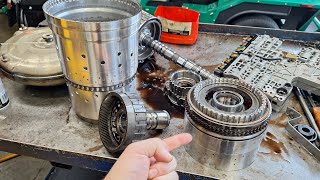
The 2020-2023 Ford Explorer uses a 10-speed automatic transmission (10R60 or 10R80) which is known for shifting concerns. Ford has issued numerous Technical Service Bulletins (TSBs) for this platform that list P0751 alongside many other codes for symptoms like harsh or delayed shifts. 🎬 Watch: Why your Ford slams into gear and how to fix it. Unlike many vehicles where this code might point to a single solenoid, on this specific Explorer, it frequently points to one of two more complex failures: sticking valves in the main control valve body or a mechanical failure within the CDF clutch drum where an internal sleeve slips and causes a hydraulic leak.
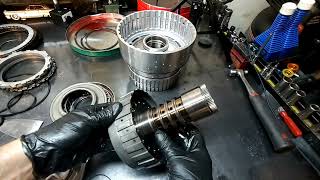
🎬 See how the CDF drum fails and causes these shifting issues.Diagnostic Flowchart
Tap your situation to follow the diagnostic path that matches what you're seeing on this vehicle.
Symptoms You May Notice
- Harsh or abrupt shifts, sometimes described as a 'slam' or 'jerk'.
- Delayed gear engagement, especially when shifting from Park to Drive or Reverse.
- Transmission gets stuck in one gear (limp mode).
- Illuminated Check Engine Light.
- Vehicle feels like it's been rear-ended when shifting.
- Engine RPMs flare up between shifts, indicating slipping.
- Reduced fuel economy due to inefficient shifting.
- A burning smell from the transmission fluid, indicating overheating.
- Replacing only the 'A' solenoid when the entire valve body is faulty or the CDF drum has failed.
- Resetting the transmission's adaptive learning tables. While sometimes recommended as a first step, a software reset will not fix an underlying mechanical or hydraulic failure. On a failing transmission, this can make the harsh shifting feel even worse because the computer's compensations are erased.
Most Likely Causes
- Sticking Valves in Main Control Valve Body 🔴 High Probability Multiple Ford TSBs for the 2020-2023 Explorer (including 20-2403 and 23-2250) explicitly state that harsh shifts and codes like P0751 may be due to sticking valves in the main control valve body. This is the most frequently cited cause in official repair procedures.
How to confirm: A technician with a high-level scan tool can monitor solenoid commands vs. actual gear state and perform pressure tests. Diagnosis often involves following the specific procedure outlined in TSB 20-2403, which may include a 'break-in' routine before recommending replacement.
Typical fix: Replacement of the entire main control valve body assembly. Ford has released several part numbers for this assembly.
Est. part cost: $800-$1500 - Internal CDF Clutch Drum Failure 🔴 High Probability A widely known issue on the 10R80 transmission involves a sleeve inside the CDF clutch drum that can move or 'walk' out of position, causing a significant hydraulic pressure loss. TSB 24-2254 directly attributes codes like P0751 to this axial movement of the CDF clutch cylinder sleeve. This is considered a major design flaw.
How to confirm: This is a deep internal issue. If a valve body replacement does not fix the issue, this is the next likely cause. It requires transmission removal and partial teardown to visually inspect the CDF drum sleeve.
Typical fix: Transmission removal and rebuild to replace the CDF clutch drum with an updated part. Ford has released an updated drum with a machined lip to prevent the sleeve from moving. The part number for the drum itself is often cited as 7H351 in TSBs.
Est. part cost: $400-$700 for the drum, plus seals and gaskets. - Low or Contaminated Transmission Fluid 🟡 Medium Probability Some early 2020 Explorers were subject to issues with leaking transmission oil coolers, which could lead to low fluid levels. Dirty or incorrect fluid can cause valves and solenoids to stick, leading to performance codes.
How to confirm: Check the transmission fluid level and condition. This transmission lacks a traditional dipstick, requiring a specific service procedure to check the level from underneath the vehicle. The fluid should be clean and bright red.
Typical fix: Top off the fluid or perform a complete fluid and filter change. Use only the specified Ford Mercon ULV fluid.
Est. part cost: $150-$300 - Faulty Shift Solenoid 'A' ⚪ Low Probability While the code directly names the solenoid, it's often a symptom of a larger problem (like valve body or pressure issues) rather than the root cause on this platform. TSBs and owner experiences overwhelmingly point to the valve body or CDF drum as the true culprit.
How to confirm: A technician can test the solenoid's resistance with a multimeter or command it with a scan tool after removing the transmission pan and valve body. The solenoids in the 10R80 are mechanical and do not have fluid pass through them.
Typical fix: Replace the individual solenoid. However, solenoids are typically integral to and replaced as part of the complete valve body assembly on the 10R80/10R60.
Est. part cost: $60-$150
Rare But Worth Checking
- Faulty Powertrain Control Module (PCM) or Wiring: A damaged wire or a faulty module can mimic solenoid failure. This should be considered only after all mechanical and hydraulic causes have been ruled out. One owner on an Explorer ST forum found the transmission wiring harness was drooping onto the hot exhaust, causing the issue, which was resolved by repositioning the harness and reseating the connector pins. Corrosion or bent pins at the main transmission connector can also cause this code.
Diagnosis Steps
- Check the transmission fluid level and condition using the correct service procedure. Ensure it is clean, full, and does not smell burnt.
- Use a professional scan tool to check for all DTCs in the PCM and Transmission Control Module (TCM). Note all codes present, as multiple codes are common.
- Check for applicable Technical Service Bulletins (TSBs) using the vehicle's VIN. Specifically look for TSB 24-2254 which details the CDF drum issue.
- If the vehicle has low mileage (under 5,000 miles), TSB 20-2403 suggests performing a 'Transmission Accelerated Main Control Break-In Routine' with a dealer scan tool. This attempts to free sticking valves.
- If the break-in routine fails or TSBs point to it, the next step is to inspect and replace the main control valve body.
- Inspect the wiring harness and connectors leading to the transmission for any signs of damage, corrosion, or looseness. Ensure the harness is properly secured away from heat sources like the exhaust.
- If a new valve body does not resolve the issue, a full transmission teardown is likely necessary to inspect for the CDF clutch drum sleeve failure, as outlined in TSB 24-2254.
Parts You'll Likely Need
- Main Control Valve Body Assembly
(OEM #L1MZ-7A100-C (for 10R60), JL1Z-7A100-A / JL3Z-7A100-C (for 10R80, check VIN))— This is the most common cause of P0751 and related shifting issues on this platform, as documented in multiple Ford TSBs.
Trusted brands: Motorcraft
OEM price range: $800-$1500
Aftermarket price range: $600-$1200 - Transmission Fluid and Filter Kit
(OEM #Motorcraft MERCON ULV Automatic Transmission Fluid (XT-12-QULV))— Required for any internal transmission service. Low or dirty fluid can be a direct cause of the code. Using the correct ULV fluid is critical.
Trusted brands: Motorcraft
OEM price range: $200-$300
Aftermarket price range: $120-$200 - CDF Clutch Cylinder/Drum Assembly
(OEM #7H351 (component number, full assembly part number varies))— Required if the internal sleeve has failed, causing a pressure leak. This is the second most common major failure. TSB 24-2254 details this repair.
Trusted brands: Motorcraft
OEM price range: $400-$700
Aftermarket price range: N/A
Related Codes That Often Appear With This One
- P0756 — Shift Solenoid 'B' Performance. Codes for multiple solenoids appearing together strongly suggest a systemic issue like the valve body or fluid pressure, not multiple individual solenoid failures.
- P0761 — Shift Solenoid 'C' Performance. Similar to P0756, this points to a wider transmission problem.
- P2700, P2701, P2702, P2703, P2704, P2705 — These are codes for Transmission Friction Element (Clutch) Apply Time/Range Performance. They are listed alongside P0751 in Ford's TSBs and indicate the clutches are not engaging correctly, often due to the valve body or CDF drum issue.
- P0729, P0731, P0732, P0733, etc. — These codes indicate incorrect gear ratios are being detected. They are a direct result of the transmission's inability to shift properly due to the underlying fault causing P0751.
Technical Service Bulletins (TSBs) & Recalls
- TSB 20-2403: Addresses harsh/delayed shifts with DTCs including P0751, pointing to sticking valves in the main control valve body and recommending a break-in procedure or replacement.
- TSB 24-2254: For 2020-2022 models, this bulletin focuses on the CDF clutch cylinder sleeve moving out of position, causing hydraulic leaks and a long list of codes including P0751. Recommends inspection and replacement of the CDF clutch cylinder.
- TSB 23-2250: Supersedes TSB 22-2428. A broad TSB covering 2020-2023 models that lists software, valve body, and the CDF clutch sleeve as potential causes for harsh shifts and numerous DTCs including P0751.
- TSB 22-2428: Mentions P0751 in a list of codes related to harsh/delayed shifts across many Ford models with the 10-speed transmission.
Platform-Specific Known Issues
- TSB 20-2403 specifically notes that 2020 Explorers with the 10R60/10R80 transmission can exhibit harsh shifts and a host of DTCs, including P0751, due to sticking valves in the main control valve body.
- TSB 24-2254, which applies to 2020-2022 Explorers, identifies a more severe mechanical failure: axial movement of the CDF clutch cylinder sleeve causing hydraulic leaks and triggering P0751.
- TSB 23-2250 is a comprehensive bulletin that supersedes many previous ones and lists multiple potential causes: PCM/TCM software, solenoid ID strategy, sticking valves (valve body), and the CDF clutch sleeve movement.
- A known mechanical failure point within the 10R80 transmission is the CDF clutch drum, where an internal sleeve can fail and cause pressure loss, leading to solenoid performance codes like P0751. Repair videos show the updated part has a machined lip to prevent this.
Mechanic-Grade Diagnostic Values
- Shift Solenoid 'A' (SSA) Resistance — expected: 16-45 Ohms. Failure: A reading outside of this range indicates a faulty solenoid coil.
- Voltage at Solenoid Connector — expected: Approximately 12.6V (Battery Voltage). Failure: A deviation greater than 0.5V from battery voltage points to a wiring or power supply issue.
Scan Tool Commands That Help
- Ford IDS (Integrated Diagnostic System): Solenoid Body Strategy Programming — This function is required after replacing the main control valve body. The technician must enter the 12-digit solenoid body identification and 13-digit strategy number from the new part into the TCM/PCM to ensure proper transmission operation.
- Ford IDS (Integrated Diagnostic System): Transmission Accelerated Main Control Break-In Routine — Mentioned in TSB 20-2403 for low-mileage vehicles, this routine attempts to free up sticking valves within the main control body before resorting to replacement.
- Ford IDS or equivalent: Hydraulic Circuit Leakage Verification — As per TSB 24-2254, this procedure uses a Pressure Vacuum Transducer Kit (Rotunda 164-R9833) and a VCMM Transmission Extension Kit (Rotunda 164-R9534) to test the CDF clutch hydraulic circuit for leaks, confirming the need for CDF drum replacement.
Wiring & Ground Locations
- Main Transmission Case Connector — On the side of the transmission case, where the main vehicle harness connects to the internal transmission wiring.. This is the primary electrical interface for all solenoids. Corrosion from moisture, bent pins, or a loose connection here can interrupt the signal to Shift Solenoid 'A', causing code P0751. A visual inspection and testing for voltage/ground at specific pins is a critical diagnostic step.
Real Owner Repair Stories
- Reddit user on r/f150 (2018 Ford F-150 EcoBoost with 145k miles (same 10R80 transmission)) — Crazy shift problems, floating gears then slamming into others, attempted to shift into first gear at 80mph.
❌ Tried (didn't work) Transmission relearn procedure, Valve body replacement
✅ What actually fixed it The user self-diagnosed the issue as the CDF drum failure based on TSB 22-2428. The internal sleeve had moved, causing a teflon ring seal to fail. The final fix is the replacement of the CDF drum with the updated part.
OEM Part Supersession History
L1MZ-7A100-B→L1MZ-7A100-F— Updated design to address valve sticking issues.L1MZ-7A100-A / L1MZ-7A100-E→L1MZ-7A100-K— Updated design for the 10R80-MHT (Hybrid) transmission valve body.
Heads up: Part L1MZ-7A100-K is specifically for the Hybrid (10R80-MHT) Explorer and is not compatible with non-hybrid models.JL1Z-7A100-A→JL3Z-7A100-C— Updated design to improve shift quality and address solenoid/valve issues.
Model Year Variations Within This Range
- 2020-2022 (built on or before August 15, 2022): Vehicles built before this date are more susceptible to the CDF clutch drum sleeve failure. TSB 24-2254 specifically targets these vehicles. Ford introduced a redesigned CDF drum with a machined lip to prevent the sleeve from moving on vehicles built after this date.
Helpful Videos

Used OEM Parts in Stock


New Aftermarket Parts Available


The information in this article is provided for general reference and educational purposes only. Vehicle specifications, procedures, and part compatibility can vary by production date, trim level, and region. Always consult your vehicle's factory service manual and verify part numbers before purchasing or performing repairs. Safety-critical components such as airbags, seat belts, and braking systems should be installed by a qualified professional.
- Ford EXPLORER:
- 🎬 Helpful Videos
- 🛍️ Shop This Part
- What's Unique About the 2020-2023 Ford EXPLORER
- Diagnostic Flowchart
- Symptoms You May Notice
- Most Likely Causes
- Rare But Worth Checking
- Diagnosis Steps
- Parts You'll Likely Need
- Related Codes That Often Appear With This One
- Technical Service Bulletins (TSBs) & Recalls
- Platform-Specific Known Issues
- Mechanic-Grade Diagnostic Values
- Scan Tool Commands That Help
- Wiring & Ground Locations
- Real Owner Repair Stories
- OEM Part Supersession History
- Model Year Variations Within This Range
- 🎟️ Get 5% Off