

P0750 on 2000-2007 Dodge Dakota 4.7L: Causes and Fixes for Shift Solenoid 'A' Fault
On a 2000-2007 Dodge Dakota with the 4.7L V8, P0750 almost always means the transmission solenoid pack has failed. This causes the truck to go into 'limp mode,' stuck in one gear. The fix is to replace the solenoid pack, filters, and fluid, which costs about $150-$300 for parts and is a moderately difficult DIY job. For 2000-2003 models, this repair requires an updated part.
- P0750 on your Dakota almost certainly means the transmission solenoid pack has failed, forcing the truck into 'limp mode'.
- The fix involves dropping the transmission pan and replacing the solenoid pack, along with both transmission filters and fresh ATF+4 fluid.
- Check your existing solenoid pack's connector color. If you have a pre-2004 truck with a black connector and are upgrading to the newer white one, you must also buy a new TRS cam plate.
- Before ordering parts, do a quick visual inspection of the transmission wiring harness for obvious damage, as this is a less common but possible cause.
- Do not use any fluid other than ATF+4. Using the wrong fluid will cause further transmission damage.
What's Unique About the 2000-2007 Dodge Dakota

The 4.7L Dakota uses the 45RFE or 545RFE transmission, where the individual shift solenoids are integrated into a single, replaceable assembly known as the solenoid pack or solenoid block. This entire block is a very common failure point. Unlike systems with individual, externally accessible solenoids, fixing a P0750 on this truck requires dropping the transmission pan and removing the valve body to access the pack. This transmission design also features a dual internal filter system (a sump filter and a spin-on cooler return filter) that should both be changed during the service. Owner and technician experiences overwhelmingly point to replacing the entire solenoid pack as the definitive fix.
Generation note: This range covers the end of the second generation (2000-2004) and the start of the third generation (2005-2007). Both generations used the 4.7L V8 with the 45RFE/545RFE transmission, and the cause and repair for P0750 are the same. However, there is a critical part difference: models from 1999-2003 used a solenoid pack with a black connector. Later models (2004+) used an updated pack with a white or gray connector. When replacing an original black-connector pack, you must use the updated white-connector version and also install a new transmission range sensor (TRS) cam plate to ensure compatibility.
Symptoms You May Notice
- Check Engine Light is on
- Transmission is stuck in one gear (usually 2nd or 3rd), known as 'limp mode'
- Vehicle has very poor acceleration from a stop
- Inability to shift into higher gears or downshift properly
- Harsh or abrupt engagement when shifting from Park to Drive or Reverse
- Flashing transmission or O/D off light (on some models)
- Replacing only the transmission fluid and filter without addressing the electrical fault. While good maintenance, it will not fix a failed solenoid.
- Condemning the entire transmission for rebuild when only the external solenoid pack is faulty. This is a very common and costly mistake.
- Replacing individual speed sensors, as they are less likely to cause this specific code in isolation.
Most Likely Causes

- Failed Transmission Solenoid Pack 🔴 High Probability The solenoid pack on the 45RFE/545RFE is a widely documented failure point due to internal electrical faults developing over time from heat and vibration. Original packs with date codes between 2001 and 2003 are particularly suspect.
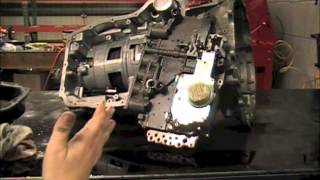
How to confirm: With the transmission pan removed, the solenoid pack can be tested for resistance with a multimeter. A reading on the LR solenoid circuit that is out of spec (typically should be 1-3 ohms, but an open or shorted reading is definitive) confirms failure. However, most DIYers and shops replace it based on the P0750 code alone 🎬 Watch: Step-by-step diagnosis and repair for the P0750 code. due to the extremely high failure rate.
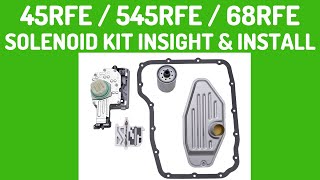
Typical fix: Replace the entire solenoid pack assembly. This involves dropping the transmission pan, removing the valve body, swapping the solenoid pack, and reinstalling with new filters (both sump and spin-on) and fresh ATF+4 fluid. If the vehicle is pre-2004, the TRS cam plate must also be replaced.
Est. part cost: $150-$350 - Damaged Wiring or Connector 🟡 Medium Probability The wiring harness to the transmission is exposed to road debris, exhaust heat, and moisture, which can lead to chafed wires, corrosion, or loose pins at the main round connector on the driver's side of the transmission.
How to confirm: Visually inspect the wiring harness leading to the transmission for any signs of damage. Disconnect the main round connector on the driver's side of the transmission and check for corrosion or bent/backed-out pins. Test for continuity between the TCM connector and the transmission connector for the LR solenoid circuit (Pin 2 on the transmission connector).
Typical fix: Repair the damaged section of wire or clean/repair the connector pins. In some cases, a harness repair kit may be needed.
Est. part cost: $5-$50 - Low or Contaminated Transmission Fluid ⚪ Low Probability While P0750 is an electrical code, extremely low or dirty fluid can cause erratic hydraulic pressure and solenoid overheating, potentially leading the TCM to flag errors. It's a less likely cause but the easiest to check and should be the first step.
How to confirm: Check the transmission fluid level and condition using the dipstick (engine running, in neutral, on a level surface after cycling through gears). The fluid must be at the 'FULL' mark, red in color, and not smell burnt. Use only Mopar ATF+4 or a licensed equivalent.
Typical fix: Top off or perform a fluid and filter change if the fluid is low, old, or dirty. If the fluid is very dark or contains metal particles, more serious internal damage may be present.
Est. part cost: $60-$120
Rare But Worth Checking
- Faulty Powertrain Control Module (PCM) or Transmission Control Module (TCM): This is uncommon, but documented. The PCM/TCM should only be condemned after the solenoid pack and wiring have been thoroughly tested and ruled out. The TCM provides the ground signal to the transmission control relay; a failure of this driver circuit can prevent the solenoids from getting power.
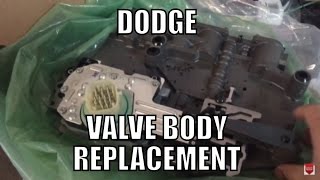
- Internal Valve Body Issue: Some owners have reported that if a new solenoid pack doesn't fix the issue, a remanufactured or new valve body is required due to 🎬 Watch: How to replace the valve body and solenoid pack. worn bores or stuck check balls. This is more likely if the transmission fluid was severely contaminated.
Diagnosis Steps

- Use a scan tool to confirm P0750 is present, and check for P0700, which is expected. A more advanced scanner can read the TCM directly.
- Check the transmission fluid level and condition. Ensure it is full and clean, using only ATF+4 fluid.
- Thoroughly inspect the main transmission wiring harness and the round connector on the driver's side of the transmission for any visible damage, corrosion, fluid intrusion, or loose connections.
- If the fluid and wiring appear okay, the next logical step is to replace the transmission solenoid pack. This is the most common failure by a wide margin.
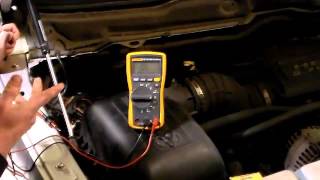
- To be 100% certain before buying parts, you can drop the transmission pan and test the resistance of the LR solenoid circuit at the solenoid connector. Measure between pin 10 (Transmission Control Relay Output) and pin 2 (Low/Reverse Solenoid Control). The reading should be between 1.0 and 3.0 ohms. An open circuit (infinite resistance) or short circuit (near-zero resistance) confirms a bad solenoid.
- If a new solenoid pack does not resolve the issue, perform a pin-to-pin continuity test on the wiring between the TCM connector and the transmission connector to definitively rule out a hidden wire break.
- If wiring and the solenoid are confirmed good, the issue may be a faulty TCM. Check if the transmission relay is receiving power from the TCM. This is a rare but possible cause.
Parts You'll Likely Need

- Transmission Solenoid Pack (Block)
(OEM #Mopar 52119435AF (Updated white connector, fits 2004+ and is the upgrade for pre-2004). Supersedes 5170877AA, AB, AC, AD, AF.)— This is the most common point of failure for a P0750 code on this platform. The internal electronics of the solenoid fail, creating an open or short in the circuit.
Trusted brands: Mopar (OEM), Rostra, Dorman, Sonnax (Remanufactured)
OEM price range: $250-$350
Aftermarket price range: $150-$250 - Transmission Filter Kit (Sump and Spin-on)
(OEM #Mopar 5013470AC, 4799507)— The filters should always be replaced when the pan is dropped for the solenoid replacement. The RFE transmission has two filters.
Trusted brands: Mopar, Wix, ATP
OEM price range: $40-$60
Aftermarket price range: $20-$40 - ATF+4 Transmission Fluid
(OEM #Mopar 68218057AC (Quart), 68218058AC (Gallon))— The transmission must be refilled with approximately 6-7 quarts of ATF+4 fluid after the service. Using any other type of fluid can cause severe transmission damage.
Trusted brands: Mopar, Valvoline, Castrol, Pennzoil
OEM price range: $10-$15 per quart
Aftermarket price range: $8-$12 per quart - Transmission Range Sensor (TRS) Cam Plate
(OEM #Mopar 4799654AC)— Only needed if upgrading a pre-2004 vehicle from the original black-connector solenoid pack to the updated white-connector pack. It ensures the new solenoid communicates correctly with the vehicle's shifter position sensor.
Related Codes That Often Appear With This One
- P0700 — P0700 is a general transmission fault code. It simply means the Transmission Control Module (TCM) has detected a fault and has requested the main engine computer to turn on the Check Engine Light. P0750 is the specific fault that the TCM has stored.
Mechanic-Grade Diagnostic Values
- Low/Reverse (LR) Solenoid Coil Resistance — expected: 1.0 - 3.0 Ohms at room temperature.. Failure: A reading of infinite resistance (open circuit) or near-zero resistance (short circuit) indicates a failed solenoid.
- All other shift solenoids (2C, 4C, OD, UD, MS) resistance — expected: 1.0 - 3.0 Ohms (typically around 1.3 Ohms).. Failure: A significant deviation from this range, an open, or a short indicates a failure in that specific solenoid circuit within the pack.
Scan Tool Commands That Help
- DRB III or equivalent (Autel, Snap-on): Solenoid Actuation Test / L/R Solenoid State — This bidirectional command allows a technician to manually command the LR solenoid on and off while monitoring the circuit's response. It can confirm if the TCM is capable of sending the signal and if the solenoid clicks or responds electrically, helping to isolate the fault between the TCM, wiring, and solenoid pack without dropping the pan.
- DRB III or equivalent (Autel, Snap-on): Quick Learn Procedure — This function must be performed after replacing the solenoid pack or valve body. It resets and relearns the transmission's adaptive values for clutch fill volumes and shift timing. Skipping this step can result in harsh shifts, clunks, or flares even after the repair is complete.
Wiring & Ground Locations
- Transmission Main Connector (20-way round connector) — On the driver's side of the transmission case, where the main vehicle harness connects.. This is the single point of failure for all transmission electronics. For P0750, Pin 2 (T20 L/R Solenoid Control circuit) and Pin 10 (Transmission Control Relay Output) are the most critical to inspect for corrosion, damage, or backed-out pins.
- G107 — On the right side of the engine compartment, near the frame.. This is a major engine and chassis ground. While not directly for the TCM on all years, a poor ground here can introduce electrical noise and voltage drops that affect sensor readings and module behavior, indirectly contributing to transmission faults.
- G113 (2000-2004 models) — On the left inner fender, near the frame.. This is a primary ground point for components in the left side of the engine bay. A loose or corroded connection here can cause intermittent issues with modules grounded in this area.
- Passenger-side cylinder head to firewall ground strap — Connects from the passenger-side cylinder head to the firewall or chassis, often near the battery tray.. This is the main engine-to-body ground strap. If it becomes corroded or broken, the engine's electrical system can have a floating ground, causing all manner of erratic electronic behavior, including phantom transmission codes and module communication errors.
Real Owner Repair Stories
- Reddit user in r/ram_trucks (2013 Ram 1500 (uses a related 6-speed transmission but the solenoid pack design and failure mode are similar)) — Truck went into limp mode with a buzzing sound from the transmission. Initially threw code P0755 (2-4 solenoid), then P0750 (LR solenoid) after a new solenoid pack was installed.
❌ Tried (didn't work) Replacing the solenoid pack with a new OEM Mopar unit initially seemed to work but the problem returned with a different solenoid code (P0750).
✅ What actually fixed it The user reported that disconnecting, cleaning, and reconnecting the main transmission connector provided a temporary fix for about a week. This strongly suggests the ultimate root cause was not the solenoid pack itself, but an intermittent fault in the wiring or connector pins leading to the transmission. - NHTSA ODI #10208215 (Dodge Caravan) — An owner reported that their check engine light came on and they had to drive on the shoulder at 30 MPH. A technician pulled a P0750 DTC (described as a Solenoid A fault), though the transmission intermittently reset itself, making the fault difficult to replicate during a test drive.
OEM Part Supersession History
Multiple PNs ending in 5170877AA, AB, AC, AD→52119435AF— The original black connector solenoid packs (pre-2004) were updated to a more robust white connector design. The white connector pack became the universal service replacement.
Heads up: When replacing an original black connector solenoid pack on a 1999-2003 vehicle with the updated white connector pack (52119435AF), you MUST also replace the TRS cam plate (Mopar P/N 4799654AC) to ensure the transmission range sensor functions correctly.
Model Year Variations Within This Range

- 2000-2003: These models used a separate Transmission Control Module (TCM) located in the cabin, often near the driver's side kick panel. Diagnosing wiring issues requires checking continuity between the transmission and this internal module.
- 2004-2007: These models integrated the TCM functions into the main Powertrain Control Module (PCM), also known as the Next Generation Controller (NGC). Wiring checks for the transmission go directly to the main PCM connectors in the engine bay.
Diagnostic Flowchart
Other Known Issues on This Vehicle
Issues unrelated to this code that are worth knowing about as an owner of this generation:
- 4.7L PowerTech Engine Oil Sludge & Overheating 🔴 High — Very common, especially on engines with neglected oil changes or frequent short trips. The engine's design with tight oil passages makes it intolerant of poor maintenance.
- Front Upper Ball Joint Failure 🔴 High — Extremely common on 2000-2003 4x4 models, leading to a major safety recall. Failure can cause wheel separation and loss of control. (Ref: NHTSA Campaign ID: 04V596000 (Chrysler Recall D47))
- HVAC Blend Door Failure 🟠 Medium — A very frequent problem where the plastic blend doors inside the dashboard break, resulting in a clicking noise and loss of temperature or airflow direction control.
- Dropped Valve Seats / Blown Head Gaskets 🔴 High — Often a direct result of the engine's tendency to overheat. Dropped valve seats can cause catastrophic engine damage. Blown head gaskets are also a known weakness.
- Coil-on-Plug (COP) Ignition Coil Failure 🟠 Medium — The individual ignition coils on the 4.7L V8 are a common failure item, leading to engine misfires (P030x codes), rough idle, and poor performance.
Used vs. New Parts: Buying Guide for This Vehicle
When a used part is the smart pick: A used part is NOT recommended for the solenoid pack. This part has a very high failure rate due to internal electronics degrading from heat and vibration. A used part from a junkyard has an unknown history and is very likely to fail soon after installation, forcing you to repeat the difficult labor.
What to inspect on the donor part:
- Not applicable, as a used solenoid pack is not advised.
OEM-only on this vehicle (don't cheap out):
- ATF+4 Fluid: While licensed aftermarket versions exist, using genuine Mopar fluid eliminates any risk of incompatibility or additive package issues.
Aftermarket brands forum-validated for this vehicle:
- Sonnax (Remanufactured): Widely regarded in the transmission industry for quality remanufacturing processes, often with improved components.
- Rostra (New): A well-known OEM and aftermarket supplier that manufactures new solenoid packs considered to be a reliable alternative to Mopar.
Brands owners have reported issues with on this vehicle:
- Unbranded, no-name solenoid packs from online marketplaces should be avoided. These often use inferior materials and lack proper quality control, leading to a high rate of premature failure.
Real Owner Stories
Aggregated from forums and TSBs cited above. Mileages and costs reflect what owners reported in those sources.
1999-2004 Jeep Grand Cherokee 4.7L
Symptoms: Owner was attempting a P0750 repair, which implies symptoms like a Check Engine Light and the transmission being stuck in limp mode.
What fixed it: After replacing the solenoid pack did not fix the issue, the problem was ultimately traced to a faulty Transmission Control Module (TCM).
Source hint: YouTube - 99-04 Jeep Grand Cherokee: how to replace Transmission Solenoid Pack on a 45RFE
2000-2007 Dodge Dakota 4.7L
Symptoms: Check Engine Light on with code P0750, transmission in limp mode.
What fixed it: The issue was resolved by replacing the solenoid pack, along with the transmission filters and fluid.
Source hint: Dakota-Durango.com & DodgeForum.com
Related OBD-II Codes
Frequently Asked Questions
My Dakota is a 2002 model. Is there anything special I need to know when replacing the solenoid pack for a P0750 code?
I have a P0750 code. Is it definitely the solenoid pack, or should I check other things first?
What specific transmission fluid should I use in my 4.7L Dakota?
How can I be 100% certain the solenoid pack is bad before I buy a new one?
I replaced the solenoid pack, but the P0750 code came back. What's the next most likely cause?
My truck is stuck in 'limp mode' with a P0750. What gear is it actually in?
Helpful Videos
We Have This Part in Stock

The information in this article is provided for general reference and educational purposes only. Vehicle specifications, procedures, and part compatibility can vary by production date, trim level, and region. Always consult your vehicle's factory service manual and verify part numbers before purchasing or performing repairs. Safety-critical components such as airbags, seat belts, and braking systems should be installed by a qualified professional.
- Dodge Dakota:
- 🎬 Helpful Videos
- 🛍️ Shop This Part
- What's Unique About the 2000-2007 Dodge Dakota
- Symptoms You May Notice
- Most Likely Causes
- Rare But Worth Checking
- Diagnosis Steps
- Parts You'll Likely Need
- Related Codes That Often Appear With This One
- Mechanic-Grade Diagnostic Values
- Scan Tool Commands That Help
- Wiring & Ground Locations
- Real Owner Repair Stories
- OEM Part Supersession History
- Model Year Variations Within This Range
- Diagnostic Flowchart
- Other Known Issues on This Vehicle
- Used vs. New Parts: Buying Guide for This Vehicle
- Real Owner Stories
- 1999-2004 Jeep Grand Cherokee 4.7L
- 2000-2007 Dodge Dakota 4.7L
- Related OBD-II Codes
- Frequently Asked Questions
- 🎟️ Get 5% Off